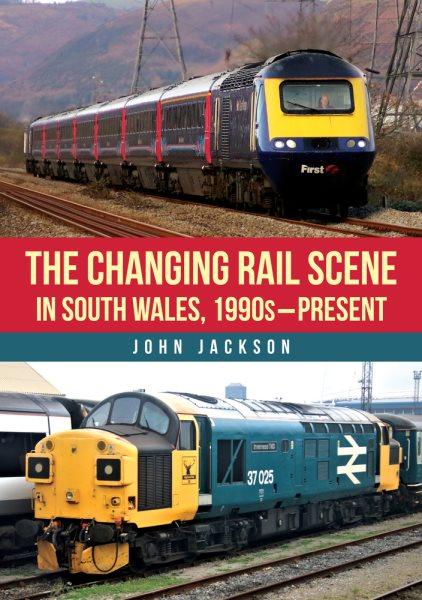
South Wales has long been a popular destination for railway enthusiasts, and this book documents the many changes to the regions rail scene in the last thirty years. The areas industrial heartland has ensured a continuous procession of trains carrying a variety of freight traffic. Whilst most of the coal traffic may have gone, the visitor to Cardiff or Newport can still be rewarded with a mix of twenty-first-century rail freight. The 1990s will be remembered as the decade of privatisation. The assortment of freight trains on display before the arrival of the ubiquitous Class 66 saw the end of much of this variety of motive power is explored here. In particular, the English Electric Type 3s and Brush Type 4s which gave way to General Motors Class 66 locos shortly after privatisation. On the passenger front, most Welsh services have been in the hands of Arriva, under their Arriva Trains Wales branding. More recently, these services have been rebranded as Transport for Wales. The electrification of the Great Western Main Line from London Paddington to Cardiff has seen the end of the ever-popular High Speed Trains on services to the UK capital. The long-serving Pacers have also gone and there have been motive-power changes in the Valleys as well as on the main line.John Jackson draws on his substantial photographic archive to showcase the evolving South Wales rail scene. South Wales has long been a popular destination for railway enthusiasts, and this book documents the many changes to the regions rail scene in the last thirty years.
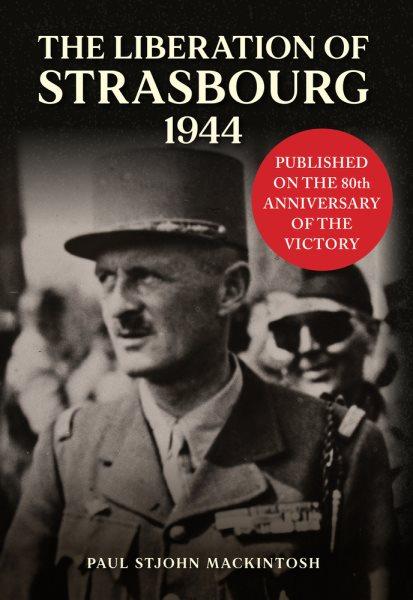
The Strasbourg liberation story has been both neglected by wider audiences in favour of the Battle of the Bulge, and disputed in France, between promoters of the recently commissioned Free French resistance fighters, and the claims of the colonial divisions from the then French Empire, who fought and died on French soil. And no popular historical account of the heroic and often brutal campaign exists in English. For half a century, Strasbourg was a hotly contested prize fought over between France and Germany. As the historic capital of the border region of Alsace, it passed into German hands after the Franco-Prussian war of 1870-71, then returned to France after World War 1. Following Vichy Frances capitulation to Nazi Germany in 1940, Strasbourg and Alsace were incorporated into the Greater German Reich. Strasbourgs historic significance to France was attested by General Leclercs oath of Kufra in March 1941, when he and his troops swore to fight until our flag flies over the Cathedral of Strasbourg.De Gaulle insisted that French forces should be tasked with the liberation of Strasbourg. In November 1944, the French 2nd Armored Division moved into position through narrow routes in the Vosges mountains, the so-called Saverne Gap. Advancing over 40 km in one day, General Leclercs forces liberated Strasbourg on 23 November. Hitler designated the recapture of Strasbourg as a major prestige goal of the offensive, and put Heinrich Himmler in personal charge of the operation. The French 1st Army, comprising many Moroccan and Algerian troops, fought off five German divisions, at the cost of some units being virtually wiped out, such as the Tahiti Battalion (Bataillon du Pacifique). By mid-January 1945 the German counter-offensive had been defeated. A neglected passage of World War II history, when French forces liberated this trophy city in the aftermath of a Nazi collapse, only to almost lose it again in the Battle of the Bulge. De Gaulle described the liberation of Strasbourg one of the most brilliant episodes in our military history. But who did the fighting?
Over half of the Wirrals built environment is Victorian; the era has left a huge imprint on the area. In this period the first docks across the River Mersey from Liverpool opened and Birkenhead became a pioneering planned Victorian town, including its municipal park and lodges which later provided the template for Central Park in New York. The coastal town of New Brighton was also developed as a coastal resort at this time and Lord Leverhulme built his masterpiece garden village at Port Sunlight. Alongside these, many grand Victorian public buildings, town halls, baths, markets, libraries and such were built as well as more humble but equally noteworthy structures. Another Victorian gem on Wirral is the magnificent cemetery at Flaybrick and the work of many nineteenth-century architectural greats such as Pugin, Gilbert Scott, Norman Shaw and George Street can be found throughout the area. Fully illustrated throughout, all those interested in the history of the Wirral will find this a fascinating exploration of the Victorian heritage of this area. Autorid: Les Jones
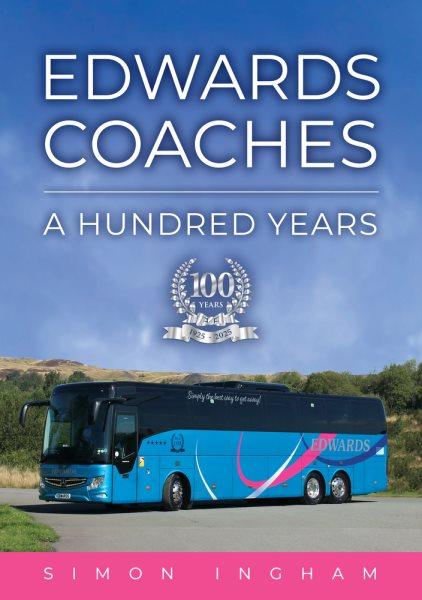
A celebration of 100 years of Edwards Coaches, the largest family owned and independent public transport operator in South Wales. In 2025, highly regarded Edwards Coaches will celebrate its 100-year anniversary. Based in Llantrisant, Edwards is a large employer and operates over 250 vehicles, ranging from local service buses to coaches for its own tour program as well as home-to-school student transport, private hires and corporate and National Express contracts. This book captures some of the vehicles that Edwards have operated from its humble beginnings in 1925 to the present day. Photographs from the Edwards family archive are included, as well as those taken by valued clients, employees and enthusiasts. Together these images form a wonderful tribute to Wales largest independent and family owned public-transport operator, the multi-award-winning Edwards Coaches. Autorid: Simon Ingham
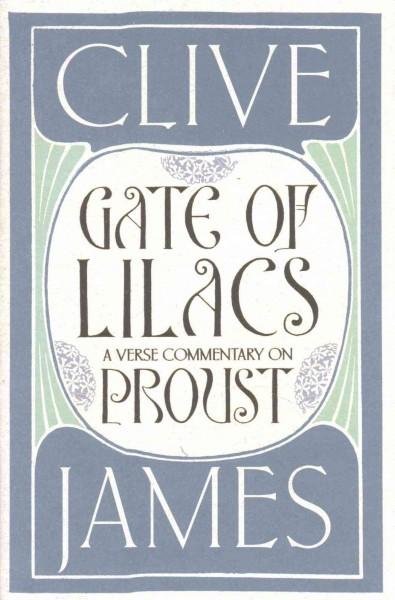
Blending the critical essay with poetry, Gate of Lilacs is a collection of verse written by Clive James in response to and profoundly inspired by the work of Marcel Proust. 'James picks out the characters, the motifs and the moments that set his memory ablaze, just as Marcel was able to conjure such visions from a tisane-infused madeleine' Literary Review Over a period of fifteen years Clive James learned French by almost no other method than reading À la recherche du temps perdu commonly translated as In Search of Lost Time, or Remembrance of Things Past. Then he spent half a century trying to get up to speed with Proust's great novel in two different languages. Gate of Lilacs is the unique product of James's love of and engagement with Proust's masterpiece. With À la recherche du temps perdu, Proust, in James's words, 'followed his creative instinct all the way until his breath gave out', and now James has done the same. In Gate of Lilacs, James, a brilliant critical essayist and poet, has blended the two forms into one. I had always thought the critical essay and the poem were closely related forms . . . If I wanted to talk about Proust's poetry beyond the basic level of talking about his language if I wanted to talk about the poetry of his thought then the best way to do it might be to write a poem. In the end, if À la recherche du temps perdu is a book devoted almost entirely to its author's gratitude for life, for love, and for art, this much smaller book is devoted to its author's gratitude for Proust. Clive James (19392019) was a broadcaster, critic, poet, memoirist and novelist. His acclaimed poetry includes the collection Sentenced to Life and a translation of Dante's The Divine Comedy, both Sunday Times bestsellers. His passion for and knowledge of poetry are distilled in his book of criticism on the subject, Poetry Notebook, and, written in the last year of his life, his personal annotated anthology of favourite poems, The Fire Of Joy. Praise for Clive James: 'He will be seen, I think, as one of the most important and influential writers of our time' Bryan Appleyard, Sunday Times 'Wise, witty, terrifying, unflinching and extraordinarily alive' A.S. Byatt, critic and author of Possession: A Romance 'Clive James is a true poet' Peter Porter, London Review of Books Autorid: Clive James
Guides cyclists through iconic climbs, celebrating the challenges and triumphs of Le Tour.Simon Warrens 100 Greatest Cycling Climbs of the Tour de France is the ultimate cyclists guide to the iconic climbs of Le Tour. From the Col du Tourmalet to Alpe dHuez, and from Mont Ventoux to Planche des Belles Filles, these climbs are the beating heart of the worlds greatest bike race. Technology may advance, training and diet may evolve, but these mountains are a constant. They have witnessed triumph and despair, courage and heartache; they are where champions are made and where dreams are shattered. And, yes, the greatest arenas of the worlds oldest and most prestigious Grand Tour are open 365 days of the year for every one of us to go and ride. So, take up the challenge and emulate your heroes on the greatest cycling climbs of the Tour de France. This second edition is fully updated for 2024. Autorid: Simon Warren
Embark on a beautiful day of self-love and self-care with this enchanting Self-Love Colouring Book! Within these pages, you'll discover 40 beautiful illustrations about self-care and personal wellness. From cosy reading nooks with inspirational books to serene meditation corners, relaxing bubble baths to peaceful garden retreats, each page invites you to imagine and colour your perfect self-care sanctuary. This book includes the following: 40 EASY COLOURING PAGES: To inspire yourself. SINGLE-SIDED PAGES: Each illustration is printed on one side only to prevent bleed-through. STANDARD PAGE DESIGN: 210x210mm ENTERTAINING: Good to fill up your leisure time with a sense of calm. IDEAL GIFT: This book provides a relaxing activity for all ages. Autorid: Hikaru Kotz
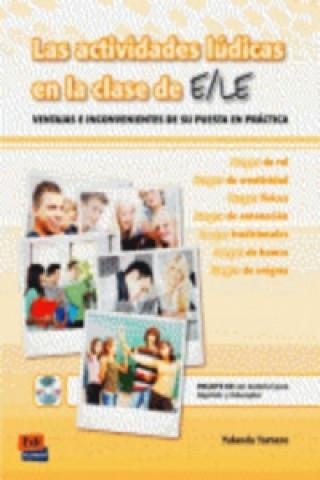
Ventajas e inconvenientes de su puesta en práctica Estructura del libro: Las actividades vienen presentadas en fichas, cada una de las cuales incluye los siguientes apartados: objetivos, nivel recomendado, duración, material necesario, desarrollo de la actividad, variante(s), ventajas e inconvenientes de su puesta en práctica, evaluación y, por último, ejemplo de actividad más tradicional que trabaja el mismo objetivo lingüístico. Para facilitar la presentación de datos, se han clasificado las prácticas en: juegos de rol, juegos de creatividad, juegos físicos, juegos de entonación, juegos tradicionales, juegos de humor y juegos de enigma.
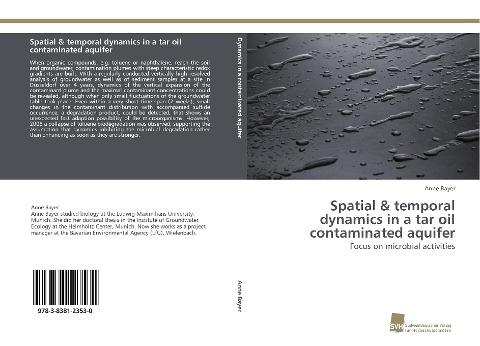
When organic compounds, e.g. toluene or naphthalene, reach the soil and groundwater, contamination plumes with steep characteristic redox gradients are built. With a regularly conducted vertically high resolved analysis of groundwater as well as of sediment samples at a site in Düsseldorf over 4 years, dynamics of the vertical expansion of the contaminant plume and the maximal contaminant concentrations could be revealed, although when only small fluctuations of the groundwater table took place. Even within a very short time span (2 weeks), small changes in the contaminant distribution with accompanied sulfide occurrence, a degradation product, could be detected, that shows an unexpected fast adaption possibility of the microorganisms. However, 2008 a collapse of toluene biodegradation was observed, supporting the assumption that dynamics inhibiting the microbial degradation rather than enhancing as soon as they are stronger.