
 Archaeopress Anfänge des kontinentalen Transportwesens und seine Auswirkungen auf die Bolerázer und Badener Kulturen GTIN: 9781784913175 Raamatud The earliest finds of wheeled vehicles in northern and central Europe date to 3900-3600 BC. However finds (3400-3300 BC) from the Boleraz sites of Arbon/Bleiche 3 and Bad Buchau/Torwiesen II, linked to pile-dwelling settlements, indicate methods of transport typical for higher altitudes (slides, sleds, etc.). The earliest finds of wheeled vehicles in northern and central Europe date to 3900-3600 BC. However finds (3400–3300 BC) from the Boleráz sites of Arbon/Bleiche 3 and Bad Buchau/Torwiesen II, linked to pile-dwelling settlements, indicate methods of transport typical for higher altitudes (slides, sleds, etc.). The Boleráz and Baden cultures overlap in the Carpathian Basin between 3300–3000 BC and this period seems to have produced transport models that parallel finds in today’s Austria, Slovakia, Hungary, and other regions. These suggest that generally the Boleráz settlers inside the Carpathian Basin did not know, or use, the wheel in the fullest sense. Cart and wheel forms are indicated only from Grave 177 at Budakalász (2800–2600 BC). The Hungarian Baden finds follow the Danube and to the East there are no certain vehicle remains. It is difficult to tell whether the Boleráz finds are linked to the wider Alpine zone, and the Baden finds are perhaps associated with the mixed-culture sites along the eastern slopes of the Carpathians. The four-wheeled wagon was a development linked to the plains and the Steppes (Cucuteni–Tripolje, Pre-Yamnaja, Yamnaja). The nature of the finds relating to vehicles associated with lake and riverine settlements reveal technical and material features: there is evidence of a high degree of carving, if not decoration, and these communities pointed the way for future skills and developments in wheel and cart/wagon manufacture. The earliest finds of wheeled vehicles in northern and central Europe date to 3900-3600 BC. However finds (3400&;3300 BC) from the Boleráz sites of Arbon/Bleiche 3 and Bad Buchau/Torwiesen II, linked to pile-dwelling settlements, indicate methods of transport typical for higher altitudes (slides, sleds, etc.). The Boleráz and Baden cultures overlap in the Carpathian Basin between 3300&;3000 BC and this period seems to have produced transport models that parallel finds in today&;s Austria, Slovakia, Hungary, and other regions. These suggest that generally the Boleráz settlers inside the Carpathian Basin did not know, or use, the wheel in the fullest sense. Cart and wheel forms are indicated only from Grave 177 at Budakalász (2800&;2600 BC). The Hungarian Baden finds follow the Danube and to the East there are no certain vehicle remains. It is difficult to tell whether the Boleráz finds are linked to the wider Alpine zone, and the Baden finds are perhaps associated with the mixed-culture sites along the eastern slopes of the Carpathians. The four-wheeled wagon was a development linked to the plains and the Steppes (Cucuteni&;Tripolje, Pre-Yamnaja, Yamnaja). The nature of the finds relating to vehicles associated with lake and riverine settlements reveal technical and material features: there is evidence of a high degree of carving, if not decoration, and these communities pointed the way for future skills and developments in wheel and cart/wagon manufacture. The earliest finds of wheeled vehicles in northern and central Europe date to 3900-3600 BC. However finds (3400-3300 BC) from the Boleraz sites of Arbon/Bleiche 3 and Bad Buchau/Torwiesen II, linked to pile-dwelling settlements, indicate methods of transport typical for higher altitudes (slides, sleds, etc.). The Boleraz and Baden cultures overlap in the Carpathian Basin between 3300-3000 BC and this period seems to have produced transport models that parallel finds in today's Austria, Slovakia, Hungary, and other regions. These suggest that generally the Boleraz settlers inside the Carpathian Basin did not know, or use, the wheel in the fullest sense. Cart and wheel forms are indicated only from Grave 177 at Budakalasz (2800-2600 BC). The Hungarian Baden finds follow the Danube and to the East there are no certain vehicle remains. It is difficult to tell whether the Boleraz finds are linked to the wider Alpine zone, and the Baden finds are perhaps associated with the mixed-culture sites along the eastern slopes of the Carpathians. The four-wheeled wagon was a development linked to the plains and the Steppes (Cucuteni-Tripolje, Pre-Yamnaja, Yamnaja). The nature of the finds relating to vehicles associated with lake and riverine settlements reveal technical and material features: there is evidence of a high degree of carving, if not decoration, and these communities pointed the way for future skills and developments in wheel and cart/wagon manufacture. Autorid: Tünde Horváth | 1 | 35,40 € | Vaata | ||
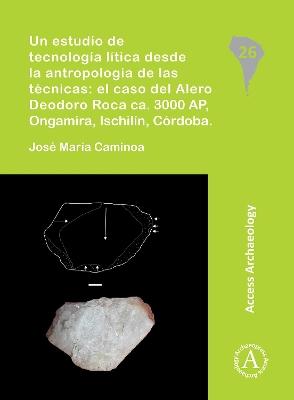 Archaeopress estudio de tecnología lítica desde la antropología de las técnicas: el caso del Alero Deodoro Roca ca. 3000 AP, Ongamira, Ischilín, Córdoba GTIN: 9781784913496 Raamatud As part of a series of research projects on the Archaeology of hunter-gatherers societies in the Southern Pampean Hills this presents, among other things, the study of various aspects of the organization of lithic technology and strategies for the use of lithic resources by prehistoric populations. As part of a series of research projects on the Archaeology of hunter-gatherers societies in the Southern Pampean Hills this presents, among other things, the study of various aspects of the organization of lithic technology and strategies for the use of lithic resources by prehistoric populations. This is in order to understand the social aspects that allow us to recognize and describe habitus or ways of doing things. In this book we studied lithic assemblages, in the manner described above from stratigraphic levels of the Alero Deodoro Roca (Deodoro Roca Rockshelter) comprising chronologies between ca. 3000 years BP to ca. 3600 years BP. We propose that behind the technical movements, organization of the production, distribution of activities in space, the selection of raw materials and any other technological activity, there are people and groups who make decisions based on the context, needs, history and knowledge. We ask ourselves: What affected material selection for the production of stone tools rocks? Was there a differential selection depending on the desired end product? And if so, was it different in diachronic moments? What techniques were used in the production of what instruments? What productive activities were conducted in Alero Deodoro Roca and which were not? What role did the tools produced have? This study aims to produce relevant and new information that expands our knowledge of technological strategies used by the human groups in order to compare them with those produced in other areas of the Sierras. It will contribute to a process of constructing knowledge about hunter-gatherers of the valleys of Cordoba province, by studying lithic technology and therefore raising new questions for further studies. As part of a series of research projects on the Archaeology of hunter-gatherers societies in the Southern Pampean Hills this presents, among other things, the study of various aspects of the organization of lithic technology and strategies for the use of lithic resources by prehistoric populations. This is in order to understand the social aspects that allow us to recognize and describe habitus or ways of doing things. In this book we studied lithic assemblages, in the manner described above from stratigraphic levels of the Alero Deodoro Roca (Deodoro Roca Rockshelter) comprising chronologies between ca. 3000 years BP to ca. 3600 years BP. We propose that behind the technical movements, organization of the production, distribution of activities in space, the selection of raw materials and any other technological activity, there are people and groups who make decisions based on the context, needs, history and knowledge. We ask ourselves: What affected material selection for the production of stone tools rocks? Was there a differential selection depending on the desired end product? And if so, was it different in diachronic moments? What techniques were used in the production of what instruments? What productive activities were conducted in Alero Deodoro Roca and which were not? What role did the tools produced have? This study aims to produce relevant and new information that expands our knowledge of technological strategies used by the human groups in order to compare them with those produced in other areas of the Sierras. It will contribute to a process of constructing knowledge about hunter-gatherers of the valleys of Cordoba province, by studying lithic technology and therefore raising new questions for further studies. Autorid: José María Caminoa | 1 | 63,75 € | Vaata | ||
 Archaeopress Cedar Forests, Cedar Ships: Allure, Lore, and Metaphor in the Mediterranean Near East GTIN: 9781784913656 Raamatud It is commonly recognized that the Cedars of Lebanon were prized in the ancient world, but how can the complex archaeological role of the Cedrus genus be articulated in terms that go beyond its interactions with humans alone? It is commonly recognized that the Cedars of Lebanon were prized in the ancient world, but how can the complex archaeological role of the Cedrus genus be articulated in terms that go beyond its interactions with humans alone? And to what extent can ancient ships and boats made of this material demonstrate such intimate relations with wood? Drawing from object-oriented ontologies and other new materialisms, Cedar Forests, Cedar Ships constructs a hylocentric anti-narrative spreading from the Cretaceous to the contemporary. With a dual focus on the woods and the watercraft, and on the considerable historical overlap between them, the book takes another step in the direction of challenging the conceptual binaries of nature/culture and subject/object, while providing an up-to-date synthesis of the relevant archaeological and historical data. Binding physical properties and metaphorical manifestations, the fluctuating presence of cedar (forests, trees, and wood) in religious thought is interpreted as having had a direct bearing on shipbuilding in the ancient East Mediterranean. Close and diachronic excavations of the interstices of allure, lore, and metaphor can begin to navigate the (meta) physical relationships between the forested mountain and the forest afloat, and their myriad unique realities. It is commonly recognized that the Cedars of Lebanon were prized in the ancient world, but how can the complex archaeological role of the Cedrus genus be articulated in terms that go beyond its interactions with humans alone? Autorid: Sara A. Rich | 1 | 62,40 € | Vaata | ||
 Archaeopress Patrones de asentamiento del Malpaís de Zacapu (Michoacán, México) y de sus alrededores en el Posclásico GTIN: 9781784913878 Raamatud This publication presents the results of the archaeological studies relative to the settlement pattern, realized between 1983 and 1996 within the framework of the Michoacán Projects I and III led by the researchers of the Centre of Mexican and Centro-American studies (CEMCA). The Michoacán project (1983-1987) aimed at the realization of a study of all the perceptible demonstrations of the prehispanic occupations in the region. After the first three field's seasons of the year 1983, dedicated essentially to survey and test pits, we directed all our efforts to the resolution of more specific objectives, the main objective being the settlement patterns study of the very numerous postclassical sites of the south region of the Project, located in the Tarascan Sierra and Malpais of Zacapu. The excavations directly connected to this subject were made in 1984 and 1985, but various test pits and surveys realized between 1983 and 1986 brought very useful data for the study. The author presented a doctoral thesis sustained in January 1991, in Paris I University on 'the sites and residential and civic-ceremonial structures of the region of Zacapu, during the Postclassic'. This thesis constituted the first synthesis in French on this subject. As a consequence of the criticisms emitted during the defense of this thesis, and of insufficient data concerning the Early Postclassic occupation of the Zacapu Region, the Michoacán III (1993-1996) project was established. Both main purposes of this Project were the study of the transition between the Palacio phase (900-1200) and the Milpillas phase (1200-1450) as well as the systematic recording of sites and various structures of these sites localized in the Zacapu Malpais and dated from the Milpillas phase. This publication will present mainly the results of the surveys, surface collections and test-pits and allow inferences on the settlement patterns of the region of Zacapu and particularly the rapid growth in the Malpais of Zacapu of large sites at the beginning of Postclassic. This publication presents the results of the archaeological studies relative to the settlement pattern, realized between 1983 and 1996 within the framework of the Michoacan Projects I and III led by the researchers of the Centre of Mexican and Centro-American studies (CEMCA). The Michoacan project (1983-1987) aimed at the realization of a study of all the perceptible demonstrations of the prehispanic occupations in the region. After the first three field's seasons of the year 1983, dedicated essentially to survey and test pits, we directed all our efforts to the resolution of more specific objectives, the main objective being the settlement patterns study of the very numerous postclassical sites of the south region of the Project, located in the Tarascan Sierra and Malpais of Zacapu. The excavations directly connected to this subject were made in 1984 and 1985, but various test pits and surveys realized between 1983 and 1986 brought very useful data for the study. The author presented a doctoral thesis sustained in January 1991, in Paris I University on "The sites and residential and civic-ceremonial structures of the region of Zacapu, during the Postclassic". This thesis constituted the first synthesis in French on this subject. As a consequence of the criticisms emitted during the defense of this thesis, and of insufficient data concerning the Early Postclassic occupation of the Zacapu Region, the Michoacan III (1993-1996) project was established. Both main purposes of this Project were the study of the transition between the Palacio phase (900-1200) and the Milpillas phase (1200-1450) as well as the systematic recording of sites and various structures of these sites localized in the Zacapu Malpais and dated from the Milpillas phase. This publication will present mainly the results of the surveys, surface collections and test-pits and allow inferences on the settlement patterns of the region of Zacapu and particularly the rapid growth in the Malpais of Zacapu of large sites at the beginning of Postclassic. Autorid: Gérald Migeon | 1 | 43,50 € | Vaata | ||
 Archaeopress Dignified Passage through the Gates of Hades: The Burial Custom of Cremation and the Warrior Order of Ancient Eleutherna GTIN: 9781784913830 Raamatud Archaeological excavations at the Eleuthernian burial ground of Orthi Petra continue to yield significant elements of the archaeo-anthropological record, the subject matter of continuous interdisciplinary research, outreach, national and international acclaim. Among a plethora of features discovered, unearthing components of a unique nexus to the Geometric-Archaic Periods, was an unspoiled time capsule in astonishing contextual preservation, a hand carved tomb with a drómos into the softer bedrock material of Orthi Petra. Designated in short as contextual association A1K1, the tomb as a funerary activity area yielded a remarkable collection of jar burials in complex internal tomb stratification, containing cremated human bones accompanied by a most noteworthy assembly of burial artifacts of exquisite wealth, along a multitude of traces of fossilized behavior left resolutely behind by the ancients in their transactions on the paths of their perceived realities and obligations of life norms, but also of the arcane matters of afterlife. Such evidentiary data of funerary behavior in conjunction with the rest of the archaeo-anthropological record afford the opportunity to document where possible and deduce where pertinent aspects of the transitional period, overlapping the end of lifes journey and the unfolding of death in light of a number of the principles, the values, and the modes that guided the lives of the ancients as mortuary habits may have the transcending power to be revealing of certain codes of ante mortem conduct, of main beliefs, of ideologies and viewpoints, characteristic of their ideational world and hence of their attitudes toward, and expectations of, post mortem life. Such understandings, based on critical and deductive thinking combined with the data offered through the scope of anthropological archaeology and forensics by the decoding of traces permanently recorded on bone and dental surfaces, construct a persuasive dialectic, regarding important facets of the human condition in Eleutherna from Geometric through Archaic times. Autorid: Anagnostis P. Agelarakis | 1 | 13,80 € | Vaata | ||
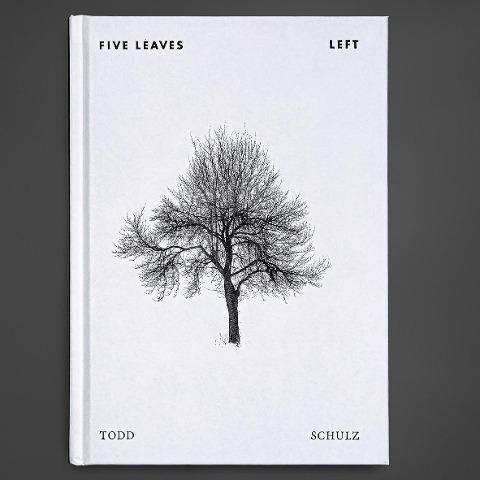 Favoritenpresse Five Leaves Left: Bäume - Fotografien An einem kalten nebligen Wintertag entdeckte Todd Schulz die Motive für sein aktuelles Projekt. Die Schlichtheit und der Purismus entkleideter Bäume in einer durch Schnee und Nebel weißgetünchten Landschaft faszinierten ihn derart, daß er über zwölf Jahre immer wieder diese seltenen magischen Momente abpasste, in denen die Obst- und Laubbäume in ihrer Form ganz vor natürlichem weißem Hintergrund stehen. Seine Fotografien haben etwas wahrhaft poetisches: »Solitäre, jeder Baum mit seiner einzigartigen Persönlichkeit und Biografie, geformt durch den Kreislauf der Jahreszeiten, dem Kampf mit den Elementen und dem Streben nach Licht.!« 56 seiner faszinierenden minimalistischen Fotografien erscheinen nun in einem aufwändig produzierten Fotobuch. Dargestellt so pur und so filigran, wie sie sich in der weißen Winterlandschaft präsentieren. Five Leaves Left is a photographic Project by Berlin based Creative Todd Schulz. All Images from the Series "Five Leaves Left" were photographed on Location in the County of Brandenburg, Germany on special Winter Conditions of heavy Snow and Fog. While walking his Dog, Todd found a Situation that has always been on the back of his Mind. Capturing the Beauty and minimal Structure of Trees as if they had been brought into a Photo Studio and presented against a white Backdrop. Anything that would normally interfere with the basic and pure Shape of the Trees had vanished for a few magic Hours and released a rare View of the minimal and fragile Beauty of Trees. All Visuals capture the real Photographic Scenes and have only been retouched slightly. | 1 | 26,38 € | Vaata | ||
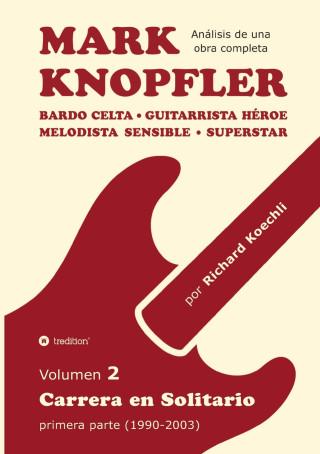 tredition Mark Knopfler - Volumen 2 (Los primeros años de su carrera en solitario) GTIN: 9783384913982 Raamatud El músico de blues y autor suizo Richard Koechli continúa su profunda exploración del universo musical de Mark Knopfler. Tras su primer volumen dedicado a Dire Straits, este segundo libro recorre los inicios de la carrera en solitario de Knopfler: desde las colaboraciones de raíces folk con The Notting Hillbillies y Chet Atkins hasta los álbumes atmosféricos y profundamente personales que definieron su identidad artística durante los años noventa y comienzos de los 2000. A lo largo de más de 400 páginas, Koechli presenta la primera exploración integral canción por canción de la obra solista de Mark Knopfler, combinando análisis musical con una gran sensibilidad hacia la atmósfera sonora, la poesía de las letras, el arte de la guitarra y la evolución artística. Cada álbum se sitúa dentro de su contexto musical y cultural más amplio, revelando cómo Knopfler fue alejándose gradualmente de los años de rock de estadios con Dire Straits para desarrollar un lenguaje musical más íntimo, sutil y profundamente humano, influido por las tradiciones del folk celta, el blues, el country y la Americana. Sin caer en la pesadez académica y ofreciendo al mismo tiempo un nivel poco habitual de profundidad y detalle, el libro incluye además una entrevista exclusiva de dieciocho páginas con Mark Knopfler, realizada en el año 2000 por los periodistas suizos Hanspeter Kuenzler y Miguel Cid, que permite descubrir de forma directa el pensamiento musical del artista en una etapa decisiva de su carrera en solitario. Combinando investigación rigurosa, sensibilidad musical y un estilo narrativo accesible, Richard Koechli traza un retrato vibrante de uno de los compositores y guitarristas más singulares de la música contemporánea. Una lectura imprescindible para los fans de Mark Knopfler, los amantes de la guitarra, los audiófilos y todos aquellos fascinados por la historia de la música, las grandes canciones y el arte de escuchar con atención. | 1 | 19,79 € | Vaata | ||
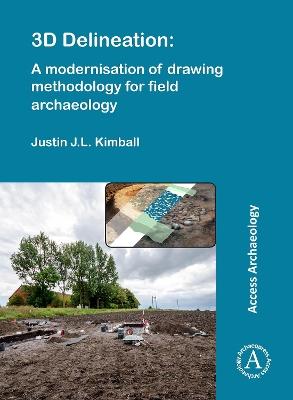 Archaeopress 3D Delineation: A modernisation of drawing methodology for field archaeology GTIN: 9781784913052 Raamatud A recent trend concerning archaeological research has focused on producing a real-time methodology for 3D digital models as archaeological documentation within the excavation setting. While such methodologies have now firmly been established, what remains is to examine how 3D models can be integrated more fully alongside other forms of archaeological documentation. This work explored one avenue by developing a method that combines the interpretative power of traditional archaeological drawings and the realistic visualisation capacity of 3D digital models. An experiment was initiated during archaeological excavations at Uppåkra, Sweden where photographic data was captured to produce 3D digital models through Photoscan. These models were geospatially located within ESRIs 3D GIS ArcScene where shapefile editing tools were used to draw overtop of their surfaces in three-dimensions. All drawings closely followed the single context method of drawing, were allotted context numbers, and given descriptive geodatabase attributes. This methodology resulted in the further integration of 3D models alongside other forms of archaeological documentation. The drawings increased the communicative powers of archaeological interpretation by enabling the information to be disseminated in a 3D environment alongside other formats of data that would have otherwise been disconnected in 2D space. Finally, the database attributes permitted the drawings complete integration within the geodatabase, thereby making them available for query and other analytical procedures. Archaeological information is three-dimensional; therefore, archaeologists must begin to approach documentation bearing this in mind. This technique has demonstrated that 3D models are a fluidic form of documentation allowing for accurate preservation of archaeology while enabling new forms of data to be derived all within a limited amount of time. Archaeologists must begin to affect change towards embracing 3D models and their associated applications as a standard tool within the excavators toolbox. Autorid: Justin J.L. Kimball | 1 | 35,40 € | Vaata | ||
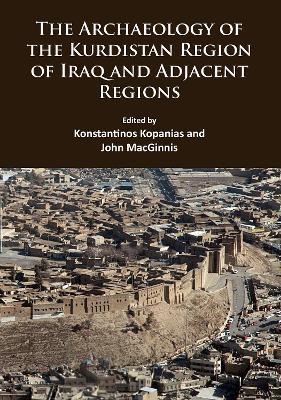 Archaeopress Archaeology of the Kurdistan Region of Iraq and Adjacent Regions GTIN: 9781784913939 Raamatud The burgeoning of archaeological research in the Kurdish Autonomous Region of Iraq is one of the great success stories of world archaeology today. For twenty years it was impossible for western archaeologists to work in Iraq, and for most of this time there were also heavy restrictions on the activity of Iraqi archaeologists. In addition to this Kurdistan remains a region never systematically explored. The conference presented the first opportunity for the leading figures in this renaissance of research in the area to gather and present all the key new projects which are revolutionising our understanding of the region. The following papers are available to download in Open Access: Current Investigations into the Early Neolithic of the Zagros Foothills of Iraqi Kurdistan - Roger Matthews, Wendy Matthews, Kamal Rasheed Raheem and Kamal Rauf Aziz: Download About Bakr Awa - Peter A. Miglus: Download Autorid: Konstantinos Kopanias, John MacGinnis | 1 | 111,00 € | Vaata |