In this bestseller, praised as "a magnificent achievement" ("Wall Street Journal"), the author of "Modern Times" offers a challenging reinterpretation of American history.
A Lambda Literary Award Finalist A Finalist for the PEN/Jacqueline Bograd Weld Award for BiographyA Finalist for the Publishing Triangle's Judy Grahn Award for Lesbian Nonfiction
The author of the number one bestseller "Men Are from Mars, Women Are from Venus" speaks to the Baby Boomer generation about raising their kids. Gray shows how the crucial years between the ages of one to nine present a golden opportunity to give children messages of encouragement that will guide them throughout their lives.
Imagine a capitalist paradise. An island utopia governed solely by the rules of the market and inspired by the fictions of Ayn Rand and Robinson Crusoe. Sound far-fetched? It may not be. The past half century is littered with the remains of such experiments in what Raymond Craib calls libertarian exit. Often dismissed as little more than the dreams of crazy, rich Caucasians, exit strategies have been tried out from the southwest Pacific to the Caribbean, from the North Sea to the high seas, often with dire consequences for local inhabitants. Based on research in archives in the US, the UK, and Vanuatu, as well as in FBI files acquired through the Freedom of Information Act, Craib explores in careful detail the ideology and practice of libertarian exit and its place in the histories of contemporary capitalism, decolonization, empire, and oceans and islands. Adventure Capitalism is a global history that intersects with an array of figures: Fidel Castro and the Koch brothers, American segregationists and Melanesian socialists, Honolulu-based real estate speculators and British Special Branch spies, soldiers of fortune and English lords, Orange County engineers and Tongan navigators, CIA operatives and CBS news executives, and a new breed of techno-utopians and an old guard of Honduran coup leaders. This is not only a history of our time but, given the new iterations of privatized exitseasteads, free private cities, and space colonizationit is also a history of our future. Autorid: Raymond Craib
My Mom Had an Abortion is a unique coming-of-age tale told by a self-described dyslexic-asexual-lesbian-feminist teenager and illustrated by body-positive comic artist Tatiana Gill. We follow our protagonist Beezus B. Murphy as she chronicles her evolving understanding of menstruation, reproduction, and abortion and finds her place in a confusing world. Initially influenced by harmful narratives in pop media such as the &;the pregnant teenager&; cliche, we watch Beezus&;s ideas change as her body changes and as she learns more about the intricacies of her family history and her mom&;s own reproductive experiences. She grows from a confused, out-of-place kid into a self-assured, empathetic, and strong-willed activist teen. As Beezus says, &;People shouldn&;t be shamed for getting or not getting abortions. Young people absorb the information that we gather from our surroundings. Sometimes it&;s good information and other times it can be harmful. But now I realize abortion is perfectly normal and should be kept safe and legal.&; Sprinkled with pop culture references, hilariously apt descriptions of unwanted body changes and menstruation like the chapter &;Blood, Bath, and Beyond,&; and instantly understandable revelations of growing-up, this beautifully illustrated short graphic novel crucially fills a cultural gap around complexities of abortion, pop culture, body changes, and finding out where we fit in. Autorid: Beezus B Murphy, Tatiana Gill
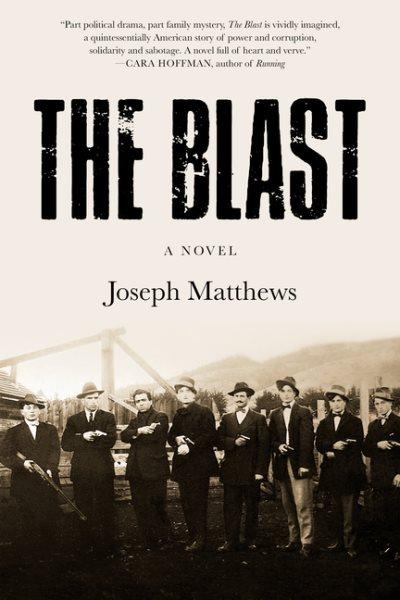
"San Francisco, 1916. The streets roiling: pitched battles between radical workers and the henchmen of industrial barons, and between a vibrant, largely Italian anarchist milieu and the forces of state and church. All in the shadow of Europe's raging war, and of a push for the US to enter it, a war that resisting workers call; killing and dying for profits. Into this maelstrom arrives Kate Jameson, a novice envoy from Washington tasked to secretly investigate the tenor of war support among San Francisco's business elite. She's also hoping to glimpse her wayward daughter, Maggie, whose last message to Kate had come from there. And, too, Kate is seeking the ghost of her husband Jamey, who fifteen years earlier had landed there upon his return, shattered, from the Philippines war. Arriving back in the city at the same moment is Baldo Cavanaugh, a Sicilian-Irish son of San Francisco whose militant beliefs and special skills have led him time and again to the ragged edges of the city's turbulent history, and to the limits of political violence. And who now must confront the intertwined doubts and demons of his own character, which he'd sought to escape by fleeing the city three years before. This stunning tale explores how these two seemingly disparate people-plus a wide cast of historical characters-become engaged with the city's and nation's turmoil, and with the related complexities of their pasts in Boston, Dublin, London, Cuba, and the Philippines. A vivid picture of a city and a moment, the novel brilliantly reveals the explosive admixture of the deeply personal and the deeply political."-- San Francisco, 1916. The streets
roiling: pitched battles between radical workers and the henchmen of industrial
barons, and between a vibrant, largely Italian immigrant anarchist milieu and
the forces of state and church. All in the looming shadow of Europe’s raging
war, and of a fierce struggle over whether the U.S. should commit its might,
and human fodder, to the slaughter in the trenches.
Into this maelstrom arrives Kate
Jameson, a novice envoy from Washington tasked to secretly investigate the
tenor of support for war entry among San Francisco’s business elite. She’s also
hoping to glimpse her wayward daughter, Maggie, whose last message to Kate had
come from there. And, too, she’s seeking the ghost of her husband Jamey, who
fifteen years earlier had landed there upon his return, shattered, from his
part in the U.S. occupation of the Philippines.
Arriving back in the city at the
same moment is Baldo Cavanaugh, a Sicilian-Irish son of San Francisco whose militant
beliefs and special skills have led him time and again to the violent extremes of
the city’s turbulent history. And who now must confront the doubts and demons of
his own character, which he’d sought to escape by fleeing the city three years
before.
This stunning tale
explores how these two seemingly disparate characters become engaged with the city’s
and nation’s turmoil, and with the complexities of their related pasts in
Boston, Dublin, London, Cuba, and the Philippines. A vivid picture of a city
and a moment, the novel brilliantly reveals the explosive admixture of the
deeply personal and the deeply political. Autorid: Joseph Matthews
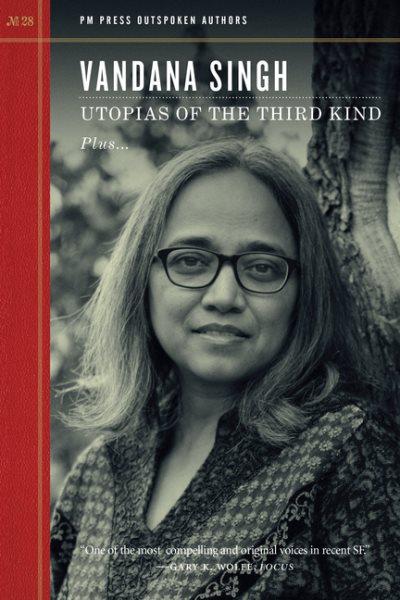
&;Arctic Sky&; tells of a young climate activist who discovers her own courage in the frozen depths of a Russian prison. &;Palimpsest&; is set on a bionic (living)space station that launches explorers into the farthest reaches of Time and Space. In &;The Room on the Roof&; an ancient culture meets modern mysteries with unexpected results. Our non-fiction title piece, &;Utopias of the Third Kind,&; is a first look at actual utopias that are responding to our looming dystopian nightmare. &;Hunger&; is a short story that finds both understanding and forgiveness for humankind&;s original sin. Our Outspoken Interview and a bibliography round out this new collection. Autorid: Vandana Singh
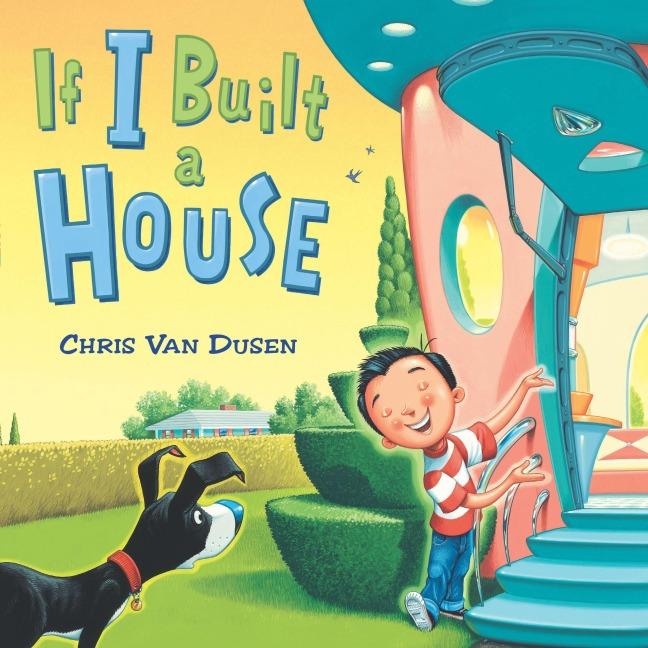
The much-anticipated follow-up to the E. B. White Award-winning picture book If I Built a Car In If I Built a Car, imaginative Jack dreamed up a whimsical fantasy ride that could do just about anything. Now he's back and ready to build the house of his dreams, complete with a racetrack, flying room, and gigantic slide. Jack's limitless creativity and infectious enthusiasm will inspire budding young inventors to imagine their own fantastical designs. Chris Van Dusen's vibrant illustrations marry retro appeal with futuristic style as he, once again, gives readers a delightfully rhyming text that absolutely begs to be read aloud.
Since ancient times, herbs and species have been added to different types of food to improve the flavor and biological properties. Among the various species or genera of plants investigated, we cite the genus Teucrium (Lamiaceae), which are known for their medicinal uses and exhibit interesting biological properties, such as anti-inflammatory, antiulcer, antitumor, and antibacterial activities. Besides, some Teucrium species are used in the traditional medicine to treat various ailments like stomach and intestinal troubles, colds, and feminine sterility. In Tunisian traditional medicine, the use of Teucrium differs according to the species and according to the region of the country. Based in information gathered from traditional healers, herbalists, and inhabitants from rural regions, Teucrium ramosissimum is frequently used in such diverse applications as the treatment of gastric ulcer, intestinal inflammation and particularly as cicatrisant in external use. The main aim of this project was to screen the species of Teucrium ramosissimum, with respect to their phytochemicals contents and their several interesting biological activities.
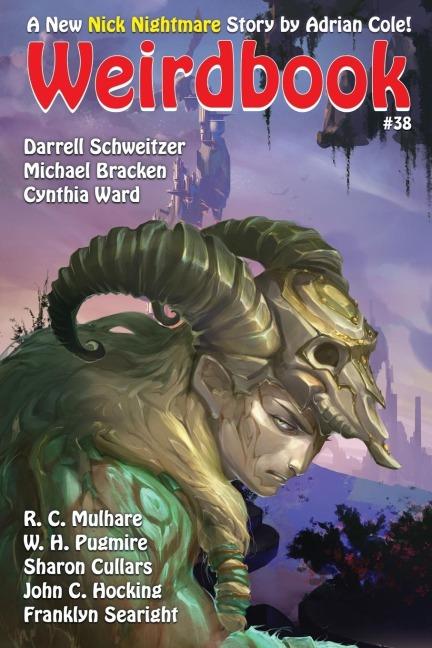
Weirdbook returns with another jam-packed issue full of great fantasy and horror tales! Included this time are: • HARLOT ROAD, by Michael Bracken • WITH A POET'S EYES, by John C. Hocking • THE WISHING WELL, by Robert Graves • O KING OF PAIN AND SPLENDOR!, by Darrell Schweitzer • YOU'D DO IT FOR DIAMONDS, by Adrian Cole • DREADFUL APPETITE, by Franklyn Searight • THE HANDMAID OF THE KEY, by R.C. Mulhare • BLUE MOON, by Allen Mark Price • SHE WHO GIVES LIFE, by C. I. Kemp • AN IMPLEMENT OF ICE, by W. H. Pugmire • NIGHT OF THE CIRCUS, by Sharon Cullars • WOLVERS HILL, by Tim Jeffreys • RAFTS, by Lorenzo Crescentini • CLEAN SWEEP, by Edward Ahern • LEAVING MALAGA, by Cynthia Ward • CATTLE CALL, by Gregg Chamberlain • ABOMINATION IS HER NAME, by J.N. Cameron • KACHINA, by Kenneth Bykerk • FLAT IS FLAT AND THAT IS THAT, by David J. Gibbs • DEATH IS NOT MY MASTER, by Scott Harper Poetry: • THE OLD ROCK, by Russ Parkhurst • SLEEPING WITH MAD SHADOWS, by Frederick J. Mayer • THE LIQUID PROFESSOR, by Jeff Barnes • THE TOAD STOOL PEOPLE, by Chad Hensley • THE PROMISE OF A POLIDORI SORE THROAT, by Clay F. Johnson • THIS HUNGRY EARTH, by Andrew Ivey
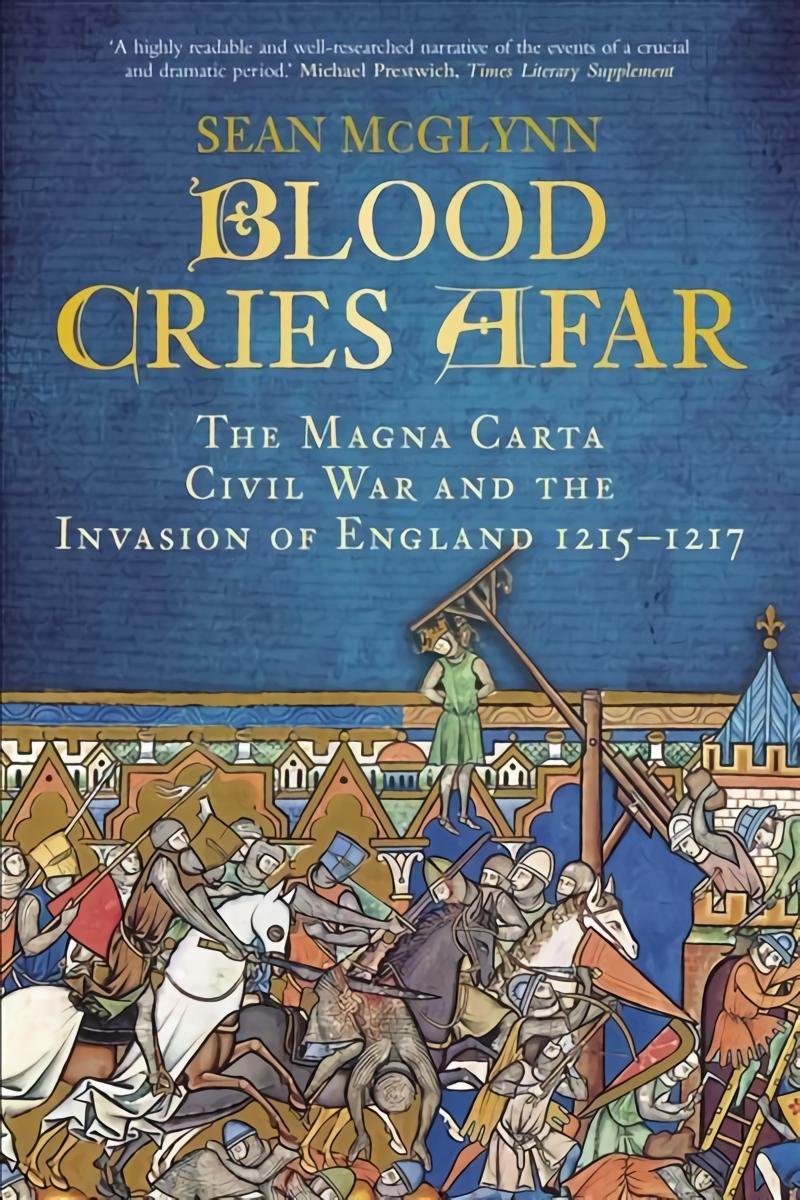
Exactly 150 years after the Norman Conquest of England in 1066, history came extremely close to repeating itself when another army set sail from the Continent with the intention of imposing foreign rule on England. This time the invasion force was under the command of Louis the Lion, son and heir of the powerful French king Philip Augustus. Taking advantage of the turmoil created in England by the civil war over Magna Carta and by King Johns disastrous rule, Prince Louis and his army of French soldiers and mercenaries allied with the barons of the English rebel forces. The prize was England itself.The invasion was one of the most dramatic episodes of British history. This specially updated edition of Blood Cries Afar contains new material on the importance of the Magna Carta and the conflict that surrounded its birth. It tells a dramatic and violent but overlooked story, with a broad appeal to those interested in the history of England and France, and war in an age of kings, knights, castles, battles and brutality. Autorid: Sean McGlynn