piano. Sonata B flat major HWV 434 - Chaconne G major HWV 435 - Suite d minor HWV 436 - Suite d minor HWV 437 - Suite e minor HWV 438 - Suite g minor HWV 439 - Suite B flat major HWV 440 - Suite G major HWV 441 - Prelude and Chaconne G major HWV 442 - Appendix Early versions of single movements
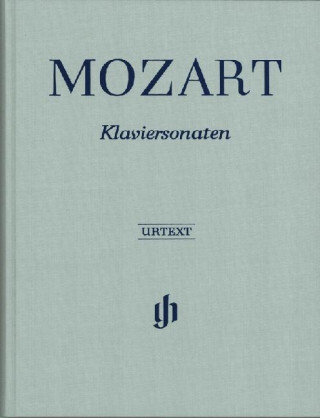
piano. Sonata g minor K 4 - Sonata d minor K 9 - Sonata c minor K 58 - Sonata d minor K 64 - Sonata C major K 72 - Sonata D major K 96 - Sonata G major K 125 - Sonata d minor K 141 - Sonata C major K 200 - Sonata f minor K 238 - Sonata a minor K 265 - Sonata C major K 270 - Sonata D major K 278 - Sonata A major K 280 - Sonata g minor K 347 - Sonata b minor K 377 - Sonata d minor K 396 - Sonata D major K 397 - Sonata d minor K 417 - Sonata C major K 423 - Sonata g minor K 426 - Sonata G major K 477 - Sonata C major K 513 - Sonata B flat major K 544 - Appendix Sonata different version D major K 96
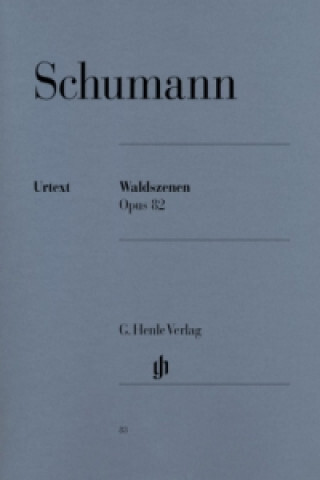
Language: English, Binding: Paperback, Number of pages: 280, Publishers: Henle, G. Verlag, Author: Robert Schumann,Ernst Herttrich,Wiltrud Haug-Freienstein, ISBN-13: 9790201809281, Date of issue: 2010
piano. Suite A major HWV 426 - Suite F major HWV 427 - Suite d minor HWV 428 - Suite e minor HWV 429 - Suite E major HWV 430 - Suite f sharp minor HWV 431 - Suite g minor HWV 432 - Suite f minor HWV 433 - Appendix Early versions of single movements
Although Frédéric Chopin was one of the greatest piano virtuosos of his time, even pianists of moderate technical ability can enter into his Romantic, magical realm. His mastery was such that his own, unmistakeable style is tangible even in his shorter, less difficult pieces such as his mazurkas and waltzes. Our selection offers a progressive introduction to the musical language of this Polish-French master.
Eine heimliche Verlobung, ein komponierender Brautvater und mehrere konkurrierende Verlagshäuser - das waren die Zutaten für die komplizierte Entstehungsgeschichte dieses Werkes. Nur kurz währte Schumanns jugendlich-stürmische Liebe zu Ernestine von Fricken, doch sie veranlasste ihn 1837, zu einem von ihrem Vater verfassten Thema "pathetische Variationen" zu schreiben, die sich schließlich zu "Etüden in Orchestercharakter" entwickeln sollten. 15 Jahre später erschien eine von Schumann autorisierte Neufassung, die so wichtige Eingriffe vornahm, dass wir beide Fassungen komplett wiedergeben. In unserer revidierten Ausgabe kommentiert der Herausgeber Ernst Herttrich jede Fassung in einem eigenen Vorwort und einem ausführlichen Bemerkungsteil.?
Bach's Inventions and Sinfonias are rightly considered as indispensable to every pianist. In his famous preface to the collection, Bach himself called it an "Instruction" which teaches students and keyboard lovers to "treat correctly" both two and three voices, to "achieve a singing style in playing" and to "acquire a strong foretaste of composition". To this end, Bach created timelessly beautiful music which has lost nothing of its relevance to us nearly 300 years after its creation. We are now presenting a new edition of this classic collection, which draws upon all known sources and offers the best in "instruction", especially with respect to the transmitted embellishment variants. The new Bach - ideal for pianists of every age!
You do not need to be a piano virtuoso to enter into the dream world of French Impressionism. With Debussy this is especially straightforward because he knows how to create masterly miniatures possessing poetic depth, even with simple technical means. Clair de lune is probably the best known of these, though by no means the only example, as our selection here proves. And whoever works through this volume successfully can then play a real concert piece in the shape of "La cathédrale engloutie", the final work in our selection.
The epithet "English Suites" - as with the "French Suites" - did not originate with Bach himself. In contrast to the six intimate French Suites, Bach's English Suites adopt a grander tone, each one opening with a prelude in concertante style. Two of the sarabandes survive in additional versions that feature ornamentation by Bach himself; an impressive testimony to his intended virtuosic and opulent harpsichord style in these pieces.Despite the lack of autograph sources, the musical text of these works has survived extraordinarily well and reliably thanks to several contemporary manuscript copies. For this revised Urtext edition Ullrich Scheideler has undertaken an exemplary investigation of authentic variants, especially in the ornamentation. All are documented here, and made directly accessible to the player in the musical text itself. This new edition also has another Bach specialist on board: Ekaterina Derzhavina, whose carefully-devised fingerings will guide players securely through the cosmos of Bach's English Suites.
Als Günter Henle seinen Urtextverlag im Jahre 1948 gründete, eröffnete er den Katalog mit der zweibändigen Ausgabe der 18 Klaviersonaten Mozarts (HN 1 und HN 2). Unverändert zählen diese Sonaten zum Kernrepertoire aller Pianisten. Beide Bände wurden im Laufe der Jahrzehnte mehrfach überarbeitet, so dass der G. Henle Verlag stets den Notentext auf dem aktuellen Stand der Forschung bietet. Die jüngste Aktualisierung betrifft KV 331 ("Alla turca", aus Band II) und stammt aus dem Jahr 2015. Vorwort und Kritischer Bericht der Herausgeber geben über alle Quellen und Textfragen ausführlich Auskunft. HN 1 und HN 2 enthalten Fingersätze. Beide Bände liegen nun zusätzlich hiermit ohne Fingersatz vor - für all jene Pianisten, die sich ihren eigenen Zugang zu Mozarts Klavier-Kosmos erarbeiten möchten.
This volume opens with especially easy minuets written by Mozart when he was just eight years old. A successful mix of well-known and unusual pieces leads the player all the way to the profound Fantasy in d minor. A special feature here is the C-major study, which has not been available in any Henle edition until now. Selected individual movements from Mozart's piano sonatas show the stylistic and emotional breadth and subtlety of his music, and offer manifold opportunities to practise and overcome specific technical challenges.
Franz Liszt is still regarded as one of the greatest pianists of all time: a superb virtuoso whose own piano works also bristle with extreme technical difficulties. But no one needs to be afraid of big names. Our carefully chosen selection from Liszt's immense oeuvre ranges here from the easy to the moderately difficult. These pieces are truly charming, and well-suited for "ordinary mortalsż. And for those who reach the end of the volume, there's a worthwhile reward: perhaps Liszt's best-known piano piece, the third "Liebestraumż ...
The piano does not lack for virtuoso showpieces. But this Etude in d-sharp minor from Scriabin's op. 8 definitely ranks among the highest in terms of popularity. A Horovitz concert without this explosive study in octaves would have been almost inconceivable. Its title is "patetico", and it does indeed unleash a passionate frenzy of sound. Henle offers its single Urtext edition of this dazzling Etude with fingering by the world-renowned pianist Boris Giltburg: an open invitation to all current or budding virtuosi!
Sergei Rachmaninoff embarked on his compositional career with five short piano pieces, which he presented for the first time in December 1892 in a concert in Charkow (now Kharkiv). The second piece, with the unremarkable title "Prélude", is the famous Prélude in C sharp minor which was soon played throughout the world and was to become Rachmaninoff's most-performed encore. But the other pieces, quite different in character, continue to enjoy general popularity amongst pianists to this day. For they are all "typical" Rachmaninoff and at the same time technically easy to master, even for amateurs. The edition is based on the first edition and the autograph preserved in the Glinka Museum, Moscow. As well as the original version of 1892, this Urtext edition also includes two revisions which Rachmaninoff made of Mélodie and Sérénade almost 50 years later in the USA, thereby allowing a direct insight into his changed pianistic ideas. The fingering is by the Rachmaninoff expert Marc-André Hamelin.
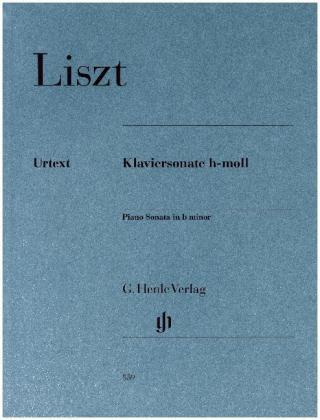
Nachdem 2015 unser Faksimile der h-moll-Sonate revidiert erschien (HN 3227), legen wir nun auch die entsprechende Henle-Urtextausgabe neu durchgesehen vor. Mithilfe der brillanten Faksimilereproduktion konnte jetzt das Autograph an einigen Stellen zuverlässiger ausgewertet werden; zudem konsultierte der Herausgeber Ernst Herttrich nicht nur die Erstausgabe, sondern auch das Exemplar eines Liszt-Schülers, in das der Komponist eigenhändig Eintragungen vornahm. Clara Schumann reagierte auf die Zusendung der Sonate durch Liszt mit Unverständnis: Das ist nur noch blinder Lärm kein gesunder Gedanke mehr, alles verwirrt. Heute empfinden wir das anders. Unsere Neuausgabe dieses zentralen Werks der Klavierliteratur wird zusätzlich aufgewertet durch die raffinierten Fingersatzvorschläge des Klaviertitanen Marc-André Hamelin.
55 Sonatas, 55 Pianists - Edition in 3 volumes: HN 1336 (Volume I), HN 1338 (Volume II), HN 1340 (Volume III)55 internationally celebrated pianists were invited to adopt one Haydn piano sonata each and provide it with their personal fingerings - a "who's who" on the contemporary piano scene. G. Henle Publishers now presents this classic, revised and with a new look, to all pianists in the certainty that Haydn's sonatas will further cement their place in the world of music. Volume II contains three sets of six sonatas, each more famous than the last and all replete with delightful thematic ideas - it is here one finds the core of Haydn's sonata production, which amateurs and professionals alike simply cannot do without!Fingering:Paul Lewis (Hob. XVI:20 c minor)Wolfram Schmitt-Leonardy (Hob. XVI:21 C major)Igor Levit (Hob. XVI:22 E major)Paul Badura-Skoda (Hob. XVI:23 F major)Martin Helmchen (Hob. XVI:24 D major)Ronald Brautigam (Hob. XVI:25 E flat major)Pascal Rogé (Hob. XVI:26 A major)Alexei Lubimov (Hob. XVI:27 G major)Kirill Gerstein (Hob. XVI:28 E flat major)Yukio Yokoyama (Hob. XVI:29 F major)Ekaterina Derzhavina (Hob. XVI:30 A major)Severin von Eckardstein (Hob. XVI:31 E major)Stephen Hough (Hob. XVI:32 b minor)Dénes Várjon (Hob. XVI:35 C major)Robert Levin (Hob. XVI:36 c sharp minor)Lars Vogt (Hob. XVI:37 D major)Andreas Groethuysen (Hob. XVI:38 E flat major)Michael Korstick (Hob. XVI:39 G major)
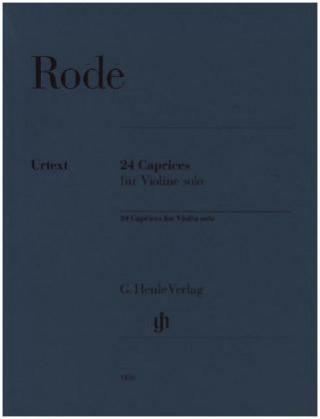
Together with Pierre Baillot and Rodolphe Kreutzer, Pierre Rode founded the important Franco-Belgian violin school at the end of the eighteenth century. Celebrated throughout Europe, this violinist gives impressive testament to his technique with his "24 Caprices en Forme d'Études" in all keys. While concentrating completely on studying technical phenomena, he created valuable compositions that recall Paganini's pieces of the same name. To this day, the "Caprices" are a milestone in every violinist's education (conservatory level). For the first time, G. Henle Publishers' Urtext edition clarifies in detail the matter of the source situation (first edition and revised edition) and offers the musical text in the "definitive version" with all historical notations. As a Rode specialist of the first order, violinist Friedemann Eichhorn assisted with the preparation of this edition and contributed fingering and bowing suggestions ideal for contemporary violin instruction.
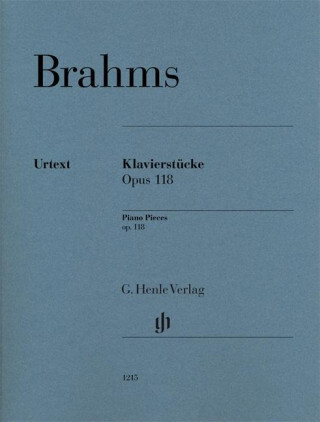
piano. Intermezzo a minor op. 118,1 - Intermezzo A major op. 118,2 - Ballad g minor op. 118,3 - Intermezzo f minor op. 118,4 - Romance F major op. 118,5 - Intermezzo e flat minor op. 118,6
Language: English, Binding: Hardback, Number of pages: 320, Publishers: Henle, G. Verlag, Author: Wolfgang Amadeus Mozart,Ernst Herttrich, ISBN-13: 9790201800035, Date of issue: 2009
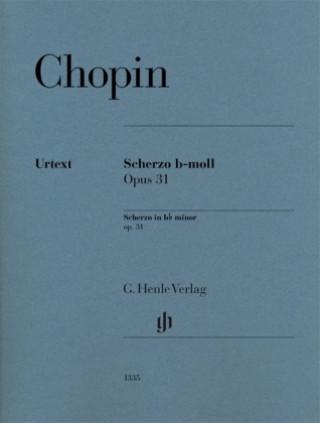
Das zweite Scherzo ist vermutlich das bekannteste der vier Werke aus jener Gattung, der Chopin einen ganz eigenen Charakter verlieh. Im Gegensatz zum 1. Scherzo sind glücklicherweise zusätzlich zu den Erstausgaben auch handschriftliche Quellen überliefert. Schülerexemplare mit Eintragungen von Chopin ergänzen das reichhaltige Quellenmaterial, das in der revidierten Henle-Urtextausgabe neu ausgewertet wurde. Ein Fußnotenapparat gibt Auskunft über autorisierte Varianten - ein detaillierter Kritischer Bericht im Internet (zusätzlich zum in der Ausgabe abgedruckten) erlaubt es allen Interessierten, in die quellengeschichtlichen Tiefen zu gehen.
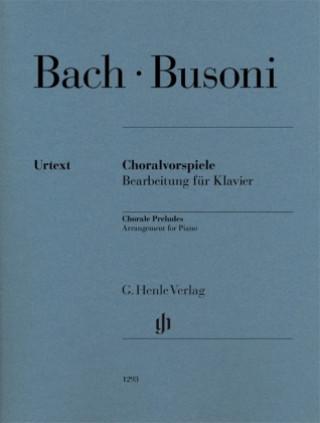
Neben der Violin-Chaconne sind die zehn Orgelchoralvorspiele die bekanntesten Klaviertranskriptionen Busonis von Werken J. S. Bachs. Im Unterschied zur Chaconne, die Busoni für den "Konzertvortrag" bestimmt sah, übertrug er die Choralvorspiele im "Kammerstil": Vieles in diesem Orgel/Klavier-Kosmos ist auch für den fortgeschrittenen Hobbypianisten zu bewältigen. Wir bringen Busonis Fassung letzter Hand erstmals in einer modernen Urtextedition, versehen mit wertvollen Fingersatz-Spielhilfen von Marc-André Hamelin. Der Anhang enthält überdies als Erstveröffentlichung ein elftes Choralvorspiel, Busonis Übertragungsversuch von "Aus tiefer Not". Der Komponist selbst spricht im Hinblick auf den Vortrag von dessen sechsstimmigem Satz von einer "äußersten Leistungsgrenze" - aber urteilen Sie selbst!
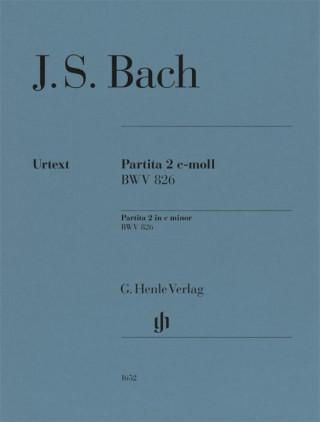
Bach's Six Partitas form what is presumably the most famous and challenging collection of suites in music history. Bach was aware of the weightiness of his cycle as he initially had these multi-movement partitas, composed in Leipzig between 1726 and 1730, published in individual editions. This culminated in their publication in an anthology that proudly sports the opus number "1" in 1731. Their diversity of forms knows no bounds and the musical texture is infused with the most ingenious counterpoint, but at the same time performers will not miss out on the enjoyment of virtuosic playing in any way. G. Henle Publishers presents this magnum opus in a revised Urtext edition that consults the original editions as well as autograph sources while also extensively documenting the numerous entries in correction copies from Bach's circle.In keeping with Bach's model, the 2nd Partita, in c minor, is available both in the collective volume and in a handy, inexpensive separate edition that is ideal for advanced learners and for self-study.The helpful fingerings by pianist William Youn are notable for their particular ergonomics, and carefully follow the phrasing and sense of Bach's music.Interesting deviations in the different sources are made easily accessible in footnotes or in square brackets in the musical text itself.
Bei Saint-Saëns' Doppelbegabung als Pianist und Komponist lag es nahe, sich schon früh mit der Gattung Klavierkonzert auseinanderzusetzen. Dem damals in Frankreich vorherrschenden Typus des "Concerto brillant" erteilte er eine klare Absage: "Das Solo eines Konzerts muss wie eine dramatische Rolle angelegt und behandelt werden". Dieses Konzept des "symphonischen Konzerts" lässt sich sehr gut bei seinem 1868 entstandenen 2. Klavierkonzert nachvollziehen. Der Solopart ist technisch sehr anspruchsvoll und gleichzeitig dicht mit dem Orchester verbunden. Für den Klavierauszug - auf der Basis der vom Komponisten selbst stammenden Fassung für zwei Klaviere - zeichnet Johannes Umbreit verantwortlich, für den Fingersatz der Solopartie Pascal Rogé.
Drei große Suitenzyklen von Johann Sebastian Bach gehören zum festen Kanon der Klavierliteratur: Die Partiten sowie die sogenannten Englischen und Französischen Suiten. Auf der Beliebtheitsskala liegen die Französischen Suiten dabei ganz weit vorn - und das war schon zur Zeit ihrer Entstehung der Fall. Die Kehrseite der großen Beliebtheit für den Urtext-Herausgeber ist eine kaum überschaubare Zahl an Abschriften aus Bachs Schülerkreis, die viele vermutlich authentische Varianten überliefern. Ullrich Scheideler stellt die komplizierte Quellenlage in dieser revidierten Henle-Urtextausgabe in mustergültiger Klarheit dar. Kleinere Varianten aus den Quellen gibt er in Fußnoten wieder - bei großen Unterschieden werden einzelne Sätze in zwei Fassungen abgedruckt. Ein Anhang mit alternativen oder zusätzlichen Stücken rundet die üppig ausgestattete Edition ab. Pianisten und Bach-Enthusiasten können sich mit dieser vollständig revidierten Henle-Urtextausgabe den Bach'schen Kosmos neu erschließen!
Liszts Funérailles, ein groß angelegter virtuoser Trauermarsch, hat seinen Stammplatz im Repertoire der großen Pianisten und bleibt dennoch auch in der Reichweite des begabten Amateurs. Diese Einzelausgabe aus dem Zyklus "Harmonies poétiques et religieuses" (Gesamtband bei Henle: HN 639) wird durch ein neues, auf Funérailles bezogenes Vorwort des Herausgebers eingeleitet. Am Ende des Heftes finden sich die Kritischen Bemerkungen zu den Quellen und zu den Besonderheiten des Notentextes.?
These piano studies, fully worked out in summer 1848, but presumably sketched earlier, were published in the German original edition at the beginning of 1849 simply with the numbering 1-3. In the first French edition published at the end of that year, they were given the new title "Trois Caprices poétiques" - possibly at the publisher's request - and also received the characteristic individual titles "Il lamento", "La leggierezza" and "Un sospiro", which have remained for these pieces that are still popular today. In comparison with the early studies, in which the purely technical performing aspect is to the fore, the idea of poetic sound is at the heart of these compositions, which were clearly written for concert performance. For this revised version, several newly-discovered or newly-available sources were available, including the autograph which served as the engraver's copy.
Brahms early on engaged with the violin sonata genre. As early as 1853 he wrote a sonata in a minor, which - like so many other youthful works of this self-critical composer - no longer survives. Thus the G-major sonata op. 78, written in 1878/79, is now counted as his first contribution to the genre; it has the nickname "Regenlied Sonata" (literally "rain-song sonata") because of the quotation from a song that appears in the finale. In summer 1886 Brahms composed, almost simultaneously, the two sonatas op. 100 and 108. All three works now have a firm place in the violinistic canon. We round off our volume with the Scherzo in c minor that Brahms contributed to the so-called "F.A.E Sonata", which he composed together with Robert Schumann and Albert Dietrich as a gift for violinist Joseph Joachim in 1853. With its stark contrast between the turbulent allegro and the emotional più moderato part, his scherzo has become a popular bravura and encore piece. The present new edition is based on the New Brahms Complete Edition, and offers a musical text and commentary that have been revised according to the latest research. The fingering is by respective masters of their instruments Frank Peter Zimmermann and Martin Helmchen.
piano. Piano Sonata in d minor, K. 1 - Piano Sonata in g minor, K. 8 - Piano Sonata in c minor, K. 11 - Piano Sonata in E major, K. 20 - Piano Sonata in b minor, K. 27 - Piano Sonata in D major, K. 29 - Piano Sonata in d minor, K. 32 - Piano Sonata in D major, K. 33 - Piano Sonata in b minor K. 87 - Piano Sonata in A major, K. 113 - Piano Sonata in D major, K. 118 - Piano Sonata in D major, K. 119 - Piano Sonata in C major, K. 132 - Piano Sonata in E major, K. 135 - Piano Sonata in G major, K. 146 - Piano Sonata in E major, K. 162 - Piano Sonata in A major K. 208 - Piano Sonata in f minor, K. 239 - Piano Sonata in c sharp minor, K. 247 - Piano
Alexander Scriabin occupies a special position among the Russian piano composers around the turn of the 19th to the 20th century. Already in his early works, he went beyond the Chopinesque traditions of his contemporaries Glazunov and Rachmaninoff. As he also did in his innumerable preludes, of which he brought together 24 in his op. 11, allowing for each major and minor key. However, in spite of keeping to the strict order of the circle of fifths, he took care to ensure that "each prelude is a small composition which can exist self-contained, independent of the other preludes". By comparing the autograph and the first edition of 1897, this Henle Urtext edition has corrected a number of errors and inaccuracies. A grandiose work which should belong in the repertoire of every pianist!
Language: English, Binding: Paperback, Number of pages: 8, Publishers: Henle, G. Verlag, Author: Frédéric Chopin,Ewald Zimmermann, ISBN-13: 9790201806631, Date of issue: 2009
piano. January - At the Fireplace - February - Carnival - March - Song of the Lark - April - Snowdrops - May - White Nights - June - Barcarole - July - Song of the Reaper - August - The Harvest - September - The Hunt - October - Song of Autumn - November - At the Troika - December - Christmas
Beethoven's Piano Sonata no. 7 in D major is the third from his Opus 10, which appeared in 1798, and simultaneously the heavyweight of this group of works. As one of the most powerful sonatas from the early years, it captivates with its very broad spectrum of moods and highly elaborate interplay of motivic elements. At the centre is the famous Largo e mesto, mournful, plaintive and almost tragic in the profundity of its emotion. It is framed by an energetic first movement and a nimble Menuetto. The conclusion is formed by a vivacious-playful Finale which is reminiscent of Haydn's humourful escapades. In an in-depth introduction, Murray Perahia discusses this masterpiece. A further edition from the Gertsch-Perahia workshop for the new edition of Beethoven's Complete Piano Sonatas, as always with fingerings by the cult pianist.
For decades, the two-volume Henle Urtext edition of Beethoven’s piano sonatas has maintained its status across the globe as the standard edition of reference among pianists. After its publication at the beginning of the 1950s, edited by the Munich musicologist Bertha Antonia Wallner – with the support of the Beethoven Archive in Bonn – this outstanding editorial achievement was quickly recognised by the world of pianists as a new benchmark. Its decades-long, rigorous field testing led to improvements and refinements such that this Henle Urtext edition of Beethoven’s piano sonatas is universally regarded today as the reference source.The printed fingerings provided by the pianist and important musical pedagogue Conrad Hansen are regarded as meaningful suggestions for solving technical and musical problems: "as few fingerings as possible, albeit instructive ones” (Hansen).G. Henle Publishers also offers the Beethoven sonatas in an alternative Urtext print edition without any fingerings (HN 1032 and HN 1034), as well as a pocket score in our study score series (HN 9032 and HN 9034) And interested parties may also find the sonatas in the digital version in the "Henle Library” app, here in conjunction with a variety of subjective, selectable fingerings by the likes of Eugen d’Albert, Claudio Arrau, Conrad Hansen and Artur Schnabel.Beethoven’s 32 piano sonatas unfurl before us a virtually inexhaustible wealth of pianistic and musical flights of fancy, predominantly works of the greatest familiarity in piano lessons, concert halls, and recordings. Hans von Bülow emphasised the importance and significance of Beethoven’s piano sonatas with his bon mot that they constituted the "New Testament of music.” The 32 sonatas with opus numbers are a conscious choice; the three "Electoral” Sonatas by the thirteen-year-old boy, WoO 47, are not included in the "New Testament.” These are available from Henle in a separate Urtext edition (HN 255). G. Henle Publishers also offers every Beethoven sonata as a standalone Urtext edition (in print or in the app).
A new and exciting way for alto and baritone saxophone players to learn and practice basic jazz style.§This book/CD set features 15 solo etudes based on blues and standard chord progressions, demonstrated by Jim Snidero on alto saxophone along with a world-class rhythm section: Mike LeDonne, piano; Peter Washington, bass; and Kenny Washington, drums.§The recording features two separate versions of each etude: one with the soloist and rhythm section and one with the rhythm section only. See and hear how the soloist phrases, play with or without the soloist on the CD and learn basic jazz style first-hand.