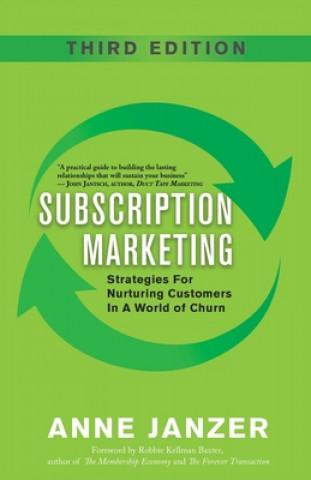
The marketing playbook for the Subscription Economy, now in its 3rd editionSubscriptions are upending industries and reshaping customer expectations. Have you changed your marketing practices to thrive in this new reality?
The perfect gift for all diving enthusiasts Our fancy and high quality dive logbook offers space for 100 dives. The Dive Log was developed by people who know the science of diving and comes with expertly laid out templates and plenty of space for d
Piduriklotsi komplekt Esiosa/Tagumine Wabco MAXX22 (ilma paigalduskomplektita) sobib: MAN LION´S COACH, TGA, TGS I, TGS II, TGX I, TGX II D0836LF41-D3876LF16 06.99-
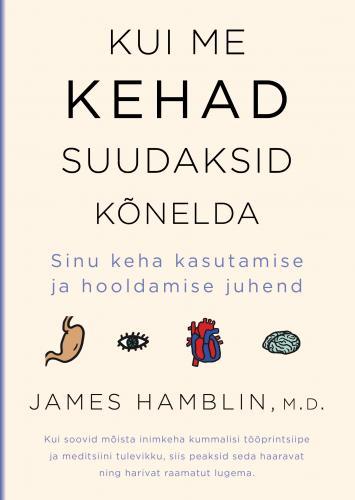
See raamat vastab kõikidele küsimustele, mis Sul kunagi tervise kohta on olnud " lisaks tervele hulgale küsimustele, mida Sa pole veel küsinud, aga peaksid. Isegi kui Sa ei hooli oma tervisest, peaksid seda ikkagi lugema, kuna Hamblin on nii kaasahaarav autor. Kui soovid mõista inimkeha kummalisi tööprintsiipe ja meditsiini tulevikku, siis peaksid seda haaravat ning harivat raamatut lugema. Autorid: James Hamblin
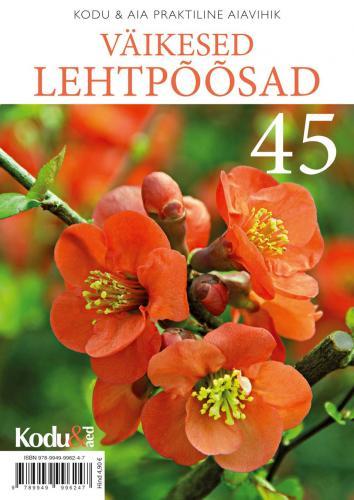
Autor Jüri Annist tutvustab väikesesse koduaeda sobivaid madalakasvulisi lehtpõõsaid, nende mitmekesist ja kirevat sordimaailma ning edukaks kasvatuseks vajalikke hooldusnippe. Autorid: Jüri Annist
Saksamaa kõige lõbusam arst Johannes von Borstel on kirja pannud vaimuka ja põneva teekonna läbi südame. Raamatus seletatakse tükkhaaval lahti kogu südame-veresoonkonna süsteem ja uuritakse, mis on meie südamele kasulik ja milles peituvad ohud. Kõik kirjeldatud lood ja olukorrad on pärit tema enda praktikast Autorid: Johannes Hinrich Von Borstel
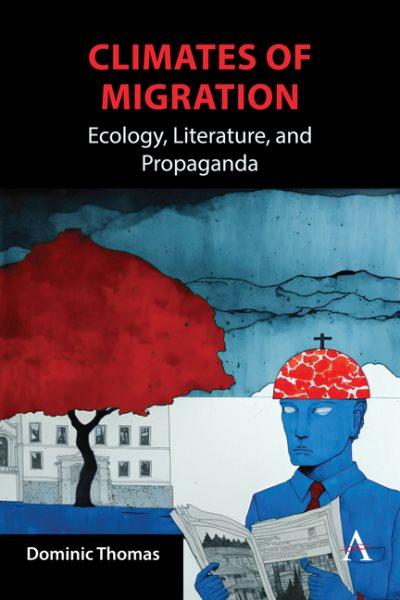
Climate and migration provide the organizational pillars, and the plural climates in the title accentuates the figurative non-literal sense to signify the atmosphere that is attached to anxiety, disinformation, fear and violence. Competing narratives and storytelling mechanisms conjointly operate over a longer history of colonial conquest and remain present in the mind-sets informing the afterlives of empire, as evidenced in debates on identity politics, nationalism, environmental, racial and social justice. The broad transregional (Africa, the Caribbean, Europe) and transdisciplinary framework privileges comparative analysis between various disciplines and fields, notably migration studies, environmental humanities, eco-feminism, nationalism, and decolonial and postcolonial studies, while adopting multigenre approaches that include a diversity of perspectives from literature, media discourse, art, propaganda, visual culture and new technologies. Together, these challenge the criminalizing, debasing and often dehumanizing logic associated with official policymaking and propose instead alternative forms of humanization and identification aimed at fostering modes of empathy. Climates of Migration explores various forms of environmental exploitation and degradation, especially in African literatures where the thematic transformations that have resulted from engagement with environmental ecocide have contributed to a revitalization of writing. Planetary climate change and the accompanying disruption to the global ecosystem is traced to European territorial conquest and expansion and subsequently mapped onto the contemporary institutional (European Union) and political discourses that are structuring our present, while also enabling unforeseen forms of planetary consciousness. The prologue and chapter 1 situate the discussion in Climates of Migration in a broader context defined by a resurgence of attention on colonialism and postcolonial legacies, as evident in debates on restitution, reparation, historical accountability and responsibility. Colonial exploration and conquest are thereby connected with the environmentalmigration nexus and accordingly chart the coordinates of the book as readers navigate the tentacular planetary reach of European colonial powers. This was of course an era when overseas travel was not even an option for the majority of people, yet one defined by sophisticated propagandist mechanisms that encouraged Europeans to travel through the imagination thanks to the immersive experiences offered at Worlds Fairs and Colonial Exhibitions as well as in various board games and other ephemera that promoted the benefits of having colonies, glorified conquest and expansion, while molding young minds and bolstering patriotic fervor. The lessons to be learned were manifold, concerning as they did a recognition of the importance to the economy ofand dependency oncolonies, while implanting a deep familiarity with goods and products. These games capitalized upon the experiential realities of colonial assignments, and the design replicated the defining elements of the colonial enterprise, while also of course mobilizing support. Yet, as we know today, agricultural and extraction practices contributed to anthropogenic global warming, as communities were removed or driven off their lands, displaced and compelled to migrate elsewhere. As such, questions of mobility were therefore central to the production and visualization of Empire, and today, heated debates pertaining to border control and sovereignty can be traced back to this era.The catalyst for chapter 2 is to be found in French philosopher Bruno Latours statement whereby We can understand nothing about the politics of the last fifty years if we do not put the question of climate change and its denial front and center. The focus thus shifts to the multiple ways in which climate change has bent the arc of politics in new directions, most notably in the conjunction between the eco-colonial dimension and migration itself given that What makes the migratory crisis so difficult to conceptualize is that it is the symptom, to more or less excruciating degrees, of an ordeal common to all: the ordeal of finding oneself deprived of land. Extensive recourse has been made to climate metaphors to amplify anti-immigration rhetoric, collectively delineating the parameters of an invasion narrative that alleges cultural, political and social saturation, submersion and replacement. Recourse to such terminology to describe migration exploits a simple tautology: climate change is a negative development, and therefore, conflating metaphors allows for a seamless twinning with the ills of immigration, grafting a pernicious meaning on the process (migration) and people concerned (migrants). In the associative context of climate change, this logic operates optimally since it coincides with a diagnosis of catastrophic global warming and the long-term projected impact, and has been present in European Union policy-making (Green Deal and New Pact on Migration and Asylum of the EU) and broader discussions pertaining to climate migrants and climate refugees.Two strands intersect in chapter 3 and build on the conclusions of the previous chapters, simultaneously reappraising the coexistence of insular and open thinking and complex and simplistic reasoning and shifting the discussion toward an engagement with categories such as empathy and sympathy. This is achieved through a consideration of how cultural productions by artists and writers have enhanced modes of identification and relationality rather than detachment, and offered alternatives to racist and xenophobic media and political discourses. Chapter 4 subsequently provides an in-depth analysis of an emerging corpus of works by African writers for whom transhistorical violence motivates political commitment based on scrutiny and witnessing, documenting, recording and calls for accountability. The works considered have in common an adherence to an environmental turn that has culminated in a thematic greening of fiction (Cheryll Glotfelty) and a revitalization of writing. Writers have engaged with the longstanding consequences of environmental ecocide on the continent, while ultimately reflecting on the broader context of climate change and environmental derangement that accounts for shifting patterns of population mobility. The concluding chapter establishes a conjunction between new technologies of communication and extraction, more prominently in terms of the interplay between ecology and propaganda, and examines how the later has been used to further an anti-ecological agendadenouncing warnings concerning global warming as fake news or promoting a lifestyle founded on the exponential use of industrial technologiesand pro-ecology positions centered on an unrelenting effort to prevent the systematic destruction of the environment and aimed at raising awareness and consciousness as well as encouraging behavior modification. The conclusion considers how new digital technologies have taken an age-old apparatus and amplified it, enabling information wars to run alongside physical ones, while discussing how disinformation and misinformation campaigns and algorithms now influence every facet of contemporary life, most prominently in terms of the climate change and migration nexus. Climates of Migration offers a transcultural, transhistorical, transcolonial and transnational analysis of the interplay between migration and climate change. The emphasis is on the anxiety, disinformation and fear generated by the political instrumentalization of these issues, and examines how the afterlives of empire are shaping contemporary societies as evident in media discourse, propaganda, literature, art, visual culture, policy-making and new technologies. Autorid: Dominic Thomas
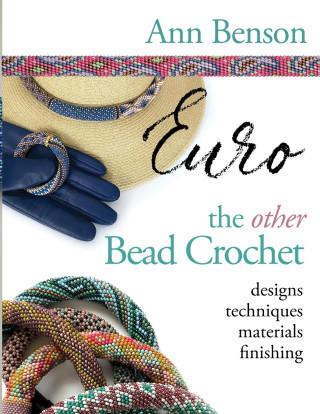
Ann Benson brings her unmatched ability to simplify how-it's-done to the elegant art of Euro tubular bead crochet, also sometimes called double bead crochet. This gorgeous technique yields smooth, perfect crocheted tubes with intricate pattern detail and highly adjustable size. It's easy to master, following Ann's exceptionally clear and detailed tutorials for basic techniques, materials, design-your-own, and finishing. Ms. Benson's renowned artistic perspective on color and pattern are reflected in almost five hundred unique designs; this work of art will bring you many hours of joyful crafting.
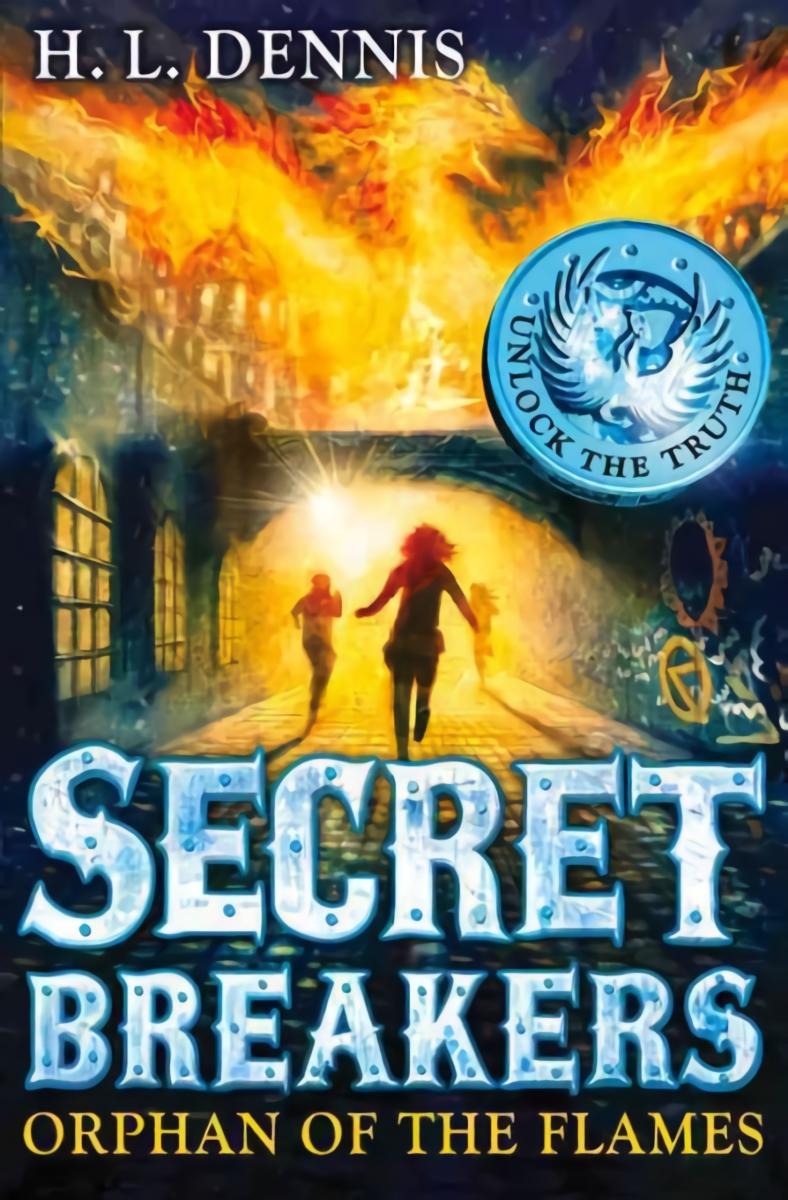
The team of code-crackers face a new code that has never been solved. Brodie, Hunter and Tusia are back at Station X, the secret code-cracking station at Bletchley Park. And they are still wrestling with the great unanswered question: what secret lies behind the ancient, coded Voynich Manuscript? Their first adventure left them with a musical box that plays a tune by the composer, Elgar. Elgar loved codes. At once they are off on a new search which takes them to the stories behind Elgar's famous music and a coded letter he wrote to a young friend, Dorabella. The 'Dorabella Cipher' has never, ever been solved. Now our team of code-breakers are on a twisting trail via medieval book burnings in Florence, a mysterious boy known as the Orphan of the Flames, and a one-time famous prisoner in London's Newgate Prison who wrote about King Arthur. Where is it all leading? And will they survive, when hot on their trail is a secret organisation that has always thwarted the search for Truth and is prepared to kill to stop them ... The second story in this highly original puzzle-solving series - a Da Vinci Code for kids. The reader races along with the Secret Breakers team to break the code ... Enter the world of the Secret Breakers at http://hldennis.com/ Teachers' resources and full reading guide available here: http://hldennis.com/docs/HDreadingguide.pdf
This book confirms the splendid eccentricity of the British, which often involves oddly dressed men opting to walk long distances for no apparent reason. BBC Countryfile magazine Laws sprightly, often arch, account of Britains hiking heroes is a pleasure to read. Walk magazine 'The great affair is to move: to come down off this feather-bed of civilisation, and find the globe granite underfoot,' wrote Robert Louis Stevenson. This book celebrates the history of walking for leisure and pleasure. Theres no shortage of the famous, and the not-so-famous, exponents of a good, long walk: Dr Jonson and his faithful Boswell on their Hebridean jaunt; John Taylor, whose Penniless Pilgrimage a record of his 1618 journey from London to Edinburgh provided the first account of a walking tour; and Samuel Coleridge who conceived his epic tale of the Ancient Mariner on a ramble through Devon. Celebrating the history of walking for leisure and pleasure, Bill Laws tells the stories behind key walking inventions such as the rucksack, bloomers, youth hostels and the long-distance route. Fully illustrated throughout, A Ramble Through the History of Walking is sure to delight anyone interested in the engaging history of one of mans favourite pastimes. Autorid: Bill Laws
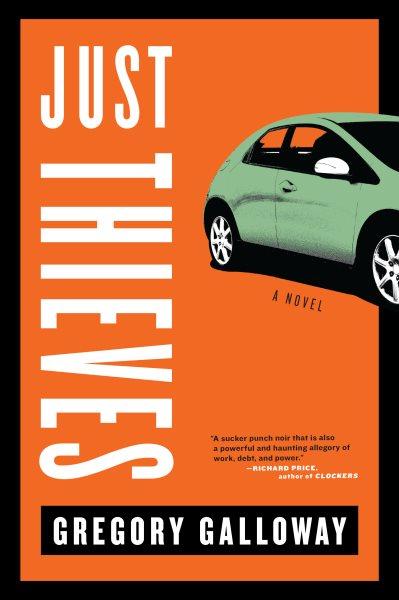
A CrimeReads "Best Noir Novel of 2021""A sucker punch noir that is also a powerful and haunting allegory of work, debt, and power." Richard Price "An unreliable narrator makes this thriller all the more gripping." WBUR A down and dirty gem of a talea twisty and twisted crime novel that evokes the worlds of George V. Higgins, Patricia Highsmith, and David Mamet, destined to be a Neo-noir classic. Rick and Frank are recovering addicts and accomplished house thieves. They do not steal randomly - - they steal according to order, hired by a mysterious handler. The jobs run routinely until theyre tasked with taking a seemingly worthless trophy: an object that generates interest and obsession out of proportion to its apparent value. Just as the robbery is completed, the two are involved in a freak car accident that sets off a chain of events and Frank disappears with the trophy. As Rick tries to find Frank, he is forced to confront his past, upending both his livelihood and his sense of reality. The narrative builds steadily into a powerful and shocking climax. Reveling in its con-artistry and double-crosses, Just Thieves is a nail-biting, noirish exploration of the working lives of two unforgettable crooks and the hidden forces that rule and ruin their lives. Autorid: Gregory Galloway
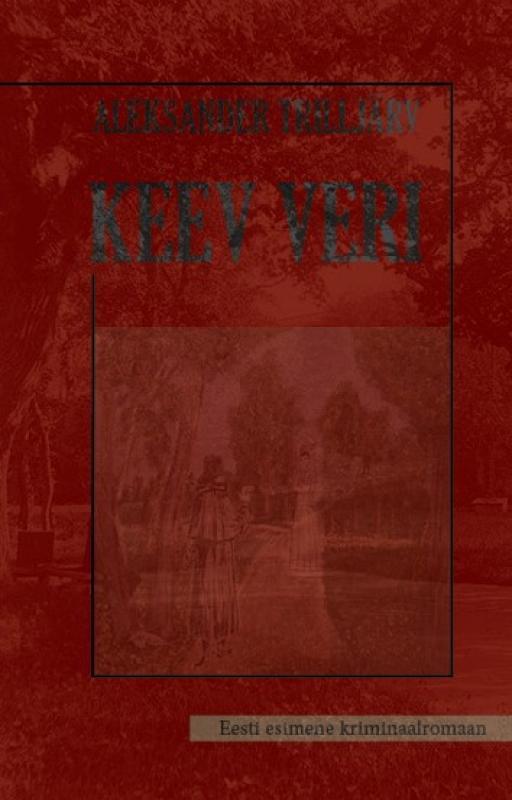
1Keev veri1 võiks kanda esimese enam-vähem tõupuhta Eesti kriminaalromaani tiitlit. Loo pani 1893. aastal kirja tuntud teatritegelane. Aleksander Trilljärv. See oli aeg, mil säärast tüüpi kirjandus alles alustas oma võidukäiku. Ühtlasi on tegu esimese ajaloolise kriminaalromaaniga. Tegevus toimub Tallinnas aastal 1830. Kadrioru pargis tapetakse kaunil sügisõhtul külmavereliselt tundmatu, heast soost noor ja nägus naisterahvas. Politseimeister usaldab asja uurimise oma abi, härra Normanni kätte. Lugu võtab viimase jaoks isikliku pöörde, kui selgub, et tapetu on tema endine kihlatu. Kiht kihi haaval avaneb nii saladuslik kuritegu kui ka Normanni minevik. Ohvreid on rohkem kui üks... Mõnus lugemine nii krimkasõpradele kui ka ajaloo- ja kultuurihuvilistele. Autorid: Aleksander Trilljärv
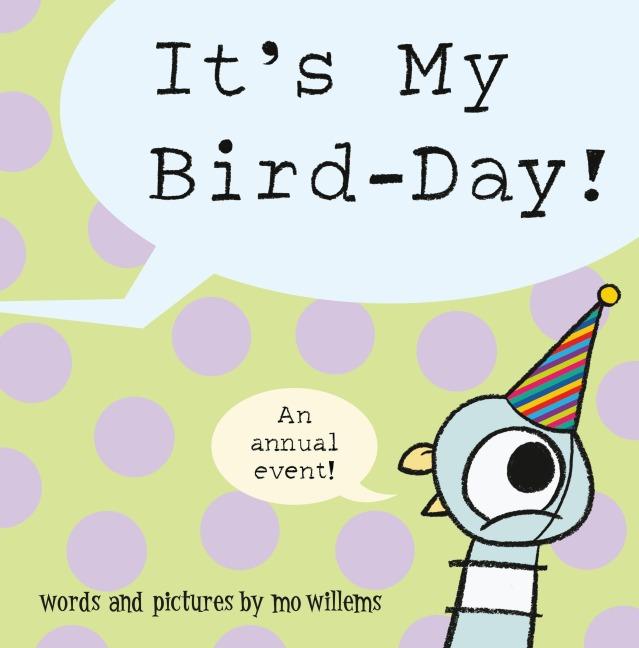
The Pigeon has the hat. And the hot dog cake! He is ready for the presents! But . . . do YOU think The Pigeon can handle his BIG bird-day surprise!?!Get ready for a very special birthday celebration from three-time Caldecott honoree Mo Willems.
Zoe Zenghelis paintings create an unprecedented imaginary inspired by metropolitan structures, landforms and abstract tectonics. Born in Athens in 1937, she began her career as a founding member of Office for Metropolitan Architecture (OMA), where her contributions created new opportunities for the group at the vanguard of architectural representation. Within, alongside and beyond this collaboration, Zenghelis developed a body of work exhibiting a playful and iconoclastic evocation of a very particular urban form one that is perhaps a surreal mix of the Aegean landscape of her youth and metropolitan cities such as Paris, Berlin, New York or London. She has lived and worked in the latter since 1955.Do You Remember How Perfect Everything Was? traces the development of Zenghelis artistic career through her paintings, projects and teaching. Published to accompany her first major retrospective exhibition, this monograph assembles an extensive selection of Zenghelis work from the early 1960s to 2020, alongside a unique collection of her paintings as a member of OMA. Containing a number of studies, sketches and archival documents, it reviews the working process behind Zenghelis OMA projects and teaching methods at the Architectural Association. Autorid: Hamed Khosravi
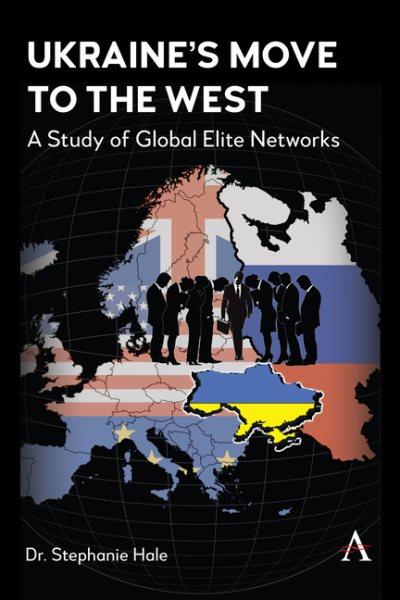
This book examines the intervention of global elite networks in the context of Ukraines EU-IMF deal within the overall Euromaidan moment (late 2013early 2014). It develops an empirically grounded investigation focused on three sets of modalities within the EU-IMF package during this time period namely, GM agriculture (biotechnology), hydraulic fracking and an internationally enabled regime change as proposed solutions for urgent problems confronting Ukraine. There is a particular spotlight on the intersections between corporate actors, political players, foundations and think tanks in the reproduction of particular constellations of power between Western (particularly U.S.-based) networks and Ukrainian agents and intermediaries. The complexity of social dynamics allow for multiple forms of power to operate at once in this space of international politics. This book details and analyses how the global elite network operating around Ukraine at this time produced the three unusual outcomes associated with the agreed EU-IMF policy agenda (GM agriculture, fracking and a regime change). It contributes to the analysis of how global elite networks operate and power works in international relations, and also enhances how the tumultuous politics of Ukraine in the current century are understood.The subject of this book is fairly controversial and is a high-profile current political problem. Looking at these issues through the analytical framework of social networks brings forward a welcomed investigation into agency in international studies. The attention to personal and political ties of mutual interdependence differs from more commonly used mainstream accounts of global politics that rely on US versus Russia narratives or on corporate elites pursuing business deals. This book shows how close ties of social acquaintance and political-economic compacts prove crucial to understanding how the key issue areas evolved. This book advances the understanding of how power works in international politics, showing how it is built through different forms. It also advances the understanding of how global elite networks are formed and operate, along with specific investigation into the importance of gatekeepers, and thus explains the international political economy of Ukraine at a key moment and should prove invaluable to many academic and popular explanations. Using as case studies the three key outcomes during Ukraines Euromaidan moment (late 2013early 2014) namely, the introduction of GM agriculture; the opening up of the countrys energy industry to TNC-led fracking (shale gas extraction); and, the sudden and violent regime change this book examines the processes by which such foreign policy and international development outcomes came about; it does so by focussing on configurations of multiple influential actors political, corporate, philanthropic and intellectual actors (e.g., academics, researchers at think tanks) all of whom are connected by various combinations of social, personal, structural and political ties. More specifically, these outcomes are best explained by focusing on global webs of diverse social relations between elites spanning governments, international institutions, philanthropic foundations, research institutions and think tanks, civil society organizations, and multi-national corporations. Some of the actors in this global elite network may be state or corporate actors, but their connections are not based just on national interest or structural affiliation, and their primary allegiance is to the global elite network. Elites can exercise forms of power within policy settings, but only a global elite network can influence policy to the extent that all three of these outcomes were produced.The overall outcomes were broken down into the processes and the events that produced them. These events include conferences, parties, business meetings and mergers, political speeches, policies, and so on. The key players in each of these events are identified and analysed, along with the multiple types of connections that link the various actors. The connections that link the different types of nodes into a cohesive global elite network were generated into maps as a visual aid to help follow the strong analysis of these relations and interactions.First, this book details the multiple types of relationships, especially social and personal that enabled the outcomes. This is crucial in demonstrating how sensitive information flows along informal ties in a network. For example, social relations allow for the transfer of insider knowledge that is unregulated and has no oversight information that the rest of the population (the masses) is not privy to. Social relations can allow for collusion, including in ways that may be legal, but unethical and thus potentially damaging in the public domain. This book also deploys a groundbreaking definition of the term gatekeepers used throughout the analysis. Gatekeepers link people together; they link think tanks, corporations, politicians and foundations together, and also link nodes in different industries and sectors together (e.g., the development and foreign policy sectors, the philanthropic and corporate sectors, etc.). They bridge multiple industries, sectors, events and processes.Second, this book focuses on the spaces where these social connections were fostered, revealing the key places for global elites to convene, align diverse agendas, collaborate, and thus produce outcomes and agendas. Such spaces are crucial in enabling structural connections to become social connections. Mutual membership to think tanks and foundations and attending the same conferences/panels at places like Davos or Bilderberg can serve as a space for meetings and allow for the exchange of information and ideas outside of a state capacity context and regulation. Third, this book explains how the official narrative surrounding the unusual outcome differs from the motives and actions of the members of the global elite network. There are discrepancies with expressed intent in narratives and the outcome. Questioning political narratives with a focus on relations helps to explore how political elites can control the mainstream narrative. Identifying the linkages of political actors (social, personal, financial, professional and political) outwards to TNCs, organisations, institutions, councils and other elites reveals the process by which a dominant narrative is re/produced, and thus shows an alternate reality behind political and development narratives. It is important to study these connections to understand how opposition groups are forced to exist within a dualistic narrative so that anything going against the mainstream and accepted narrative is not only wrong but also suppressed and sometimes erased. This book provides a great backstory of what is happening in Ukraine. It contextualises Ukraines 2014 EU-IMF aid deal and provides up to date empirical information and analysis through the lens of a socially connected global elite network. It contributes to the understanding of how power operates in international politics. Autorid: Stephanie Hale
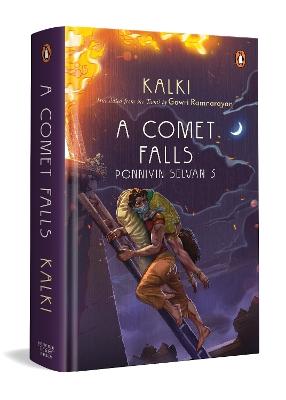
In this gripping penultimate volume of the Ponniyin Selvan series, Kalki masterfully draws the threads of intrigue, love, and vengeance towards a breathtaking crescendo. The Chozha empire reels from the shock of an assassination and finds itself on the brink of chaos. Even as rumors swirl, and conspirators move in the shadows, the question of rightful succession grows ever more urgent. Fearless and quick-witted, Vandiyatevan navigates treacherous waters as he uncovers secrets that could shatter the royal line. Arulmozhi Varmantorn between personal convictions and imperial dutymust confront the weight of destiny as he stands poised to shape the future of the kingdom. Meanwhile, Nandinis tragic past and her thirst for revenge arrive at a critical juncture, pushing key players into making impossible choices. As destinies converge and sacrifices are made, the stage is set for a climactic resolution that will determine the future of the Chozha dynasty. Autorid: Kalki, Gowri Ramnarayan