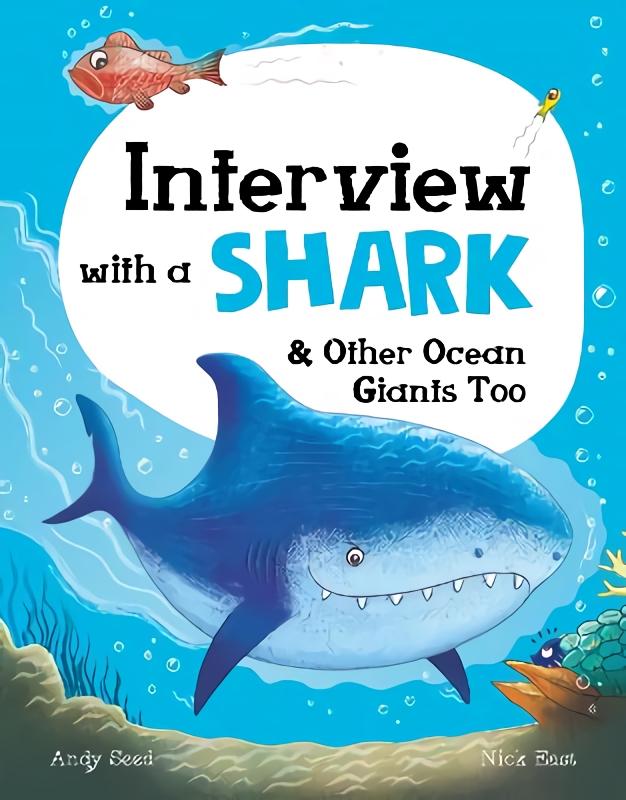
If you could talk to animals, what would you ask? Get familiar with 10 extraordinary ocean giants as they step up to the mic and share their habits, behaviour, likes and dislikes, favourite foods, and more. Each animal has its own story to tell... and its own attitude! In this fun and fact-filled book, bite-sized text in a question-and-answer format is paired with colourful and engaging illustrations throughout, perfect for emerging or reluctant readers, or any young animal enthusiast who enjoys a bit of humour! Features 'interviews' with a great white shark, blue whale, orca, sunfish, giant squid, narwhal, manta ray, octopus, conger eel, and angler fish. Plus, ideas for how to do your bit to help endangered species. Look out for other titles in the series: Interview with a Tiger and Other Clawed Beasts Too and Interview with a Kangaroo and Other Marsupials Too.
The bestselling introduction to designing the written word Typographic Design: Form & Communication is the definitive reference for graphic designers, providing a comprehensive introduction to the visual word. Done well, typopgraphy can communicate so much more than the words themselves. Typographic design determines how you feel about a message, the associations you make, and ultimately, the overall success of the communication. Typographic design extends from the page to the screen, and is a critical element of almost any graphic design project. This book provides essential guidance on everything related to type: from letterforms and negative space, to messaging, processes, and history, aspiring designers will find great utility in mastering these critical concepts. This new seventh edition has been fully updated with new coverage of contemporary typography processes, updated case studies, and new examples from branding, print, web, motion, and more. On-screen typographic design concepts are discussed in greater detail, and the online supplemental materials include new flashcards, terminology and quizzes. Understand design factors as they relate to type Explore communication and typographic messaging Learn how typography has evolved, and where it is headed Adopt established approaches to designing with type The irony of typographic design is that, when done well, it often goes unnoticedbut its impact on a projects overall success is undeniable. Typography can make or break a page, can enhance or overpower an image, and can obscure a message or bring it into sharp focus. It is one of the most powerful tools in the graphic designers arsenal, and Typographic Design is the complete, practical introduction. Autorid: Rob Carter, Sandra Maxa, Mark Sanders, Philip B. Meggs, Ben Day
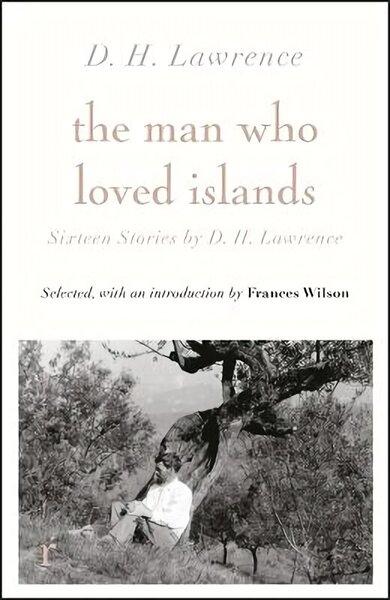
'Everyone who met him commented on the arresting power of Lawrence's bright and sharp blue eyes, and the beard he later grew would be as red as a fox's brush, but it was not his appearance that Ford was describing. It was his menace' Frances Wilson, from her Introduction to The Man Who Loves Islands ------------------------------------------------ The Man Who Loved Islands presents Lawrence's skilled, intimate and lively portraits of humanity. In the title story a man buys a ninety-nine year lease on an island and finds himself cast off in its timeless world; in 'The Last Laugh' a couple are confronted with uncanny spectral visions, and an eerie faceless laugh; in 'The Fox' two women maintaining a farm feel the dark shadows of war, and a cunning creature threatens to destroy their livelihood. The stories in this collection are about what the characters know and do not know - about themselves, one another, and the circumambient universe. Autorid: D H Lawrence, Frances Wilson
Lucy Frickes Daughters tells the story of two women either side of forty on a road trip across Europe, each of them dealing with difficult fathers along the way. A bestseller and booksellers favourite in Germany, Daughters evokes laughter and tears by way of life and death, friendship and family. Autorid: Lucy Fricke, Sinéad Crowe
A new 2019 edition, edited and introduced by Meg Harris Williams.These two talks given in 1977 and 1978 in New York and Sao Paulo respectively are an edited version of discussions and spontaneous contributions made by Bion, in the main without notes. Autorid: Wilfred R. Bion
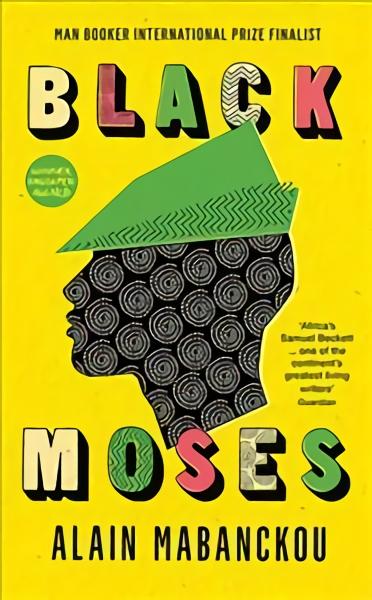
LONGLISTED FOR THE MAN BOOKER INTERNATIONAL PRIZE 2017 It's 1970, and in the People's Republic of Congo a Marxist-Leninist revolution is ushering in a new age. But over at the orphanage on the outskirts of Pointe-Noire where young Moses has grown up, the revolution has only strengthened the reign of terror of Dieudonné Ngoulmoumako, the institution's corrupt director. So Moses escapes to Pointe-Noire, where he finds a home with a larcenous band of Congolese Merry Men and among the Zairian prostitutes of the Trois-Cents quarter. But the authorities won't leave Moses in peace, and intervene to chase both the Merry Men and the Trois-Cents girls out of town. All this injustice pushes poor Moses over the edge. Could he really be the Robin Hood of the Congo? Or is he just losing his marbles? Black Moses is a larger-than-life comic tale of a young man obsessed with helping the helpless in an unjust world. It is also a vital new extension of Mabanckou's extraordinary, interlinked body of work dedicated to his native Congo, and confirms his status as one of our great storytellers. Autorid: Alain Mabanckou, Helen Stevenson
This volume has grown over the years as a family project of Martha Harris, her two daughters Meg and Morag and her husband, Donald Meltzer. It therefore has its roots in English literature and its branches waving wildly about in psychoanalysis. It is earnestly hoped that it will reveal more problems than it will solve. Autorid: Donald Meltzer, Meg Harris Williams
The Kleinian Development derives from lectures delivered at the Institute of Psychanalysis, London, and the Tavistock Clinic (1965-78). It is divided into three volumes that examine, in turn, the writings of Sigmund Freud, Melanie Klein, and Wilfred Bion. Autorid: Donald Meltzer
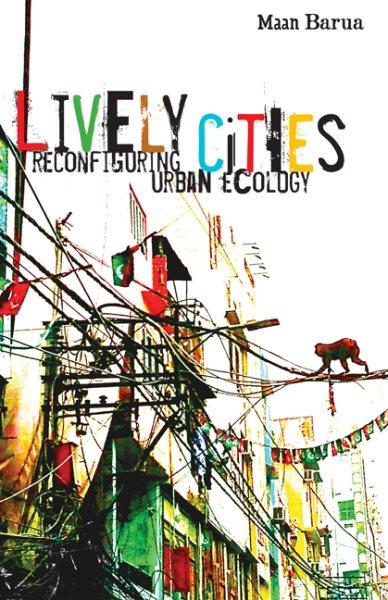
"Lively Cities departs from conventions of urban studies to argue that cities are lived achievements forged by a multitude of entities-human and nonhuman-that make up the material politics of city making. Generating fresh conversations between posthumanism, postcolonialism, and political economy, Barua reveals how these actors shape, integrate, subsume, and relate to urban space in fascinating ways"-- A journey through unexplored spaces that foreground new ways of inhabiting the urban One of the fundamental dimensions of urbanization is its radical transformation of nature. Today domestic animals make up more than twice the biomass of people on the planet, and cities are replete with nonhuman life. Yet current accounts of the urban remain resolutely anthropocentric. Lively Cities departs from conventions of urban studies to argue that cities are lived achievements forged by a multitude of entities, drawing attention to a suite of beingshuman and nonhumanthat make up the material politics of city making.From macaques and cattle in Delhi to the invasive parakeet colonies in London, Maan Barua examines the rhythms, paths, and agency of nonhumans across the city. He reconceptualizes several key themes in urban thought, including infrastructure, the built environment, design, habitation, and everyday practices of dwelling and provides a critical intervention in animal and urban studies. Generating fresh conversations between posthumanism, postcolonialism, and political economy, Barua reveals how human and nonhuman actors shape, integrate, subsume, and relate to urban space in fascinating ways.Through novel combinations of ethnography and ethology, and focusing on interlocutors that are not the usual suspects animating urban theory, Baruas work considers nonhuman lifeworlds and the differences they make in understanding urbanicity. Lively Cities is an agenda-setting intervention, ultimately proposing a new grammar of urban life. Autorid: Maan Barua
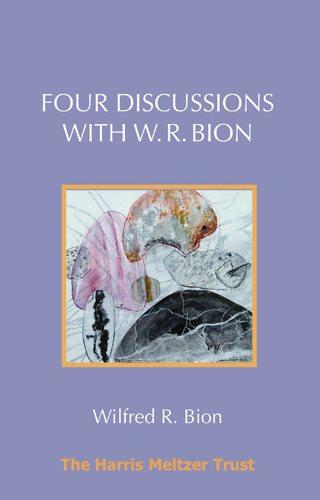
These four discussions held by Wilfred Bion with a small group of psychiatrists and psychotherapists in Los Angeles in 1976 were first published in 1978, edited by Francesca Bion. Despite its brevity the book covers in a very accessible way the main features of Bion's model of the mind and his view of the psychoanalyst at work. It therefore provides a useful introduction to his thinking, whilst the vitality of the exchanges demonstrates the creation and operation of a genuine 'work group' .This new 2019 edition also includes an introduction to Bion's model of the mind and glossary by Meg Harris Williams. Autorid: Wilfred R. Bion
The contents of the three volumes are grouped not chronologically but under the headings of 'Personality and Family Structure', 'Philosophy and History of Psychoanalysis', and 'The Psychoanalytic Process and the Analyst'. Together they present his interpretation of the 'Kleinian development' from Freud, through Abraham and Klein, to Bion and the post-Kleinian model; and within this evolution, his view of the natural history of the psychoanalytic process, the aesthetics of the method, and his insights into the operation of the transference and countertransference. Meltzer saw the psychoanalytic process as a new method that contributes alongside more traditional art-forms to our scientific knowledge of the mind. Working with both adults and children, he viewed psychoanalysis in developmental rather than narrowly therapeutic terms, with potential for both analyst and analysand. All his theories derived from clinical work, above all from dream-reading and children's phantasy play; and owing to his extensive international teaching experience, his own material was enriched by that of many supervisees. This collection of papers, read as a whole, invites new readers to follow and partake in what he called 'the most interesting conversation in the world'. Autorid: Donald Meltzer, Meg Harris Williams
The contents of the three volumes are grouped not chronologically but under the headings of 'Personality and Family Structure', 'Philosophy and History of Psychoanalysis', and 'The Psychoanalytic Process and the Analyst'. Together they present his interpretation of the 'Kleinian development' from Freud, through Abraham and Klein, to Bion and the post-Kleinian model; and within this evolution, his view of the natural history of the psychoanalytic process, the aesthetics of the method, and his insights into the operation of the transference and countertransference. Meltzer saw the psychoanalytic process as a new method that contributes alongside more traditional art-forms to our scientific knowledge of the mind. Working with both adults and children, he viewed psychoanalysis in developmental rather than narrowly therapeutic terms, with potential for both analyst and analysand. All his theories derived from clinical work, above all from dream-reading and children's phantasy play; and owing to his extensive international teaching experience, his own material was enriched by that of many supervisees. This collection of papers, read as a whole, invites new readers to follow and partake in what he called 'the most interesting conversation in the world'. Autorid: Donald Meltzer, Meg Harris Williams
This is one of a new two volume edition of Collected Papers of Martha Harris and Esther Bick, which includes some papers not published in the first edition. The companion volume, Adolescence, by Martha Harris and Donald Meltzer, contains those papers by Martha Harris specifically related to adolescence. Autorid: Martha Harris
Reviews of Environmental Contamination and Toxicology attempts to provide concise, critical reviews of timely advances, philosophy and significant areas of accomplished or needed endeavor in the total field of xenobiotics, in any segment of the environment, as well as toxicological implications.
Dreams are my landscape, said Meltzer. In this book he re-establishes psychoanalysis as the art of reading dreams, and dream-life as the core of mental processes. Dreams are not just puzzles to be decoded, the effluence of past trauma or future wish-fulfilment; they are the psyche's attempt - with a varying level of aesthetic achievement - to symbolise its present emotional conflicts in order to re-orient itself toward the real world - meaning external and internal reality Autorid: Donald Meltzer
Der Band BLACK & GREY TATTOO 2 - Dark/Horror stellt sich persönlichen Dämonen, die auf der Haut getragen werden. Paul Booth, oft der ¿Dark Lord of Tattooing¿ genannt, verrät hier einige der Gründe, warum sich Menschen solche Tattoos stechen lassen, und schildert, wie seine eigenen Dämonen zum Motor seines Schaffens wurden. Andere Tätowierungen wiederum sind Hommagen an die Horrorschöpfungen in der populären Kultur. So sagt etwa der Tattookünstler Xu Zhicheng von Tianzhilong Tattoo in Peking im Interview, dass er die Inspirationen zu seinen großformatigen, düsteren Arbeiten nicht etwa aus persönlichen Ängsten, sondern einfach aus Vampirfilmen bezieht. In diesem Kapitel findet sich alles von Schrumpfköpfen über Frankensteins bis hin zu bekannten Tattookünstlern, die als Zombies dargestellt sind. The BLACK & GREY TATTOO 2 - Dark/Horror volume delves into personal demons relayed on skin. Paul Booth, often described as the ¿Dark Lord of Tattooing,¿ reveals some of the reasons why people get these tattoos as well as how his own demons have driven his art. Other tattoos pay homage to horror in pop culture. Artist Xu Zhicheng of Tianzhilong Tattoo in Beijing says in his interview that he finds inspiration for his large-scale dark work in vampire films, not personal angst. In this chapter, you¿ll find everything from shrunken heads to Frankensteins to even famous tattoo artists rendered as zombies.
One of the challenges the field of clinical neuropsychology faces is to develop an assessment process that is relevant and responsive to the needs of patients. Indeed, it has been suggested that the survival of neuropsychology as a clinical discipline may be threatened due to an overemphasis on diagnosing cognitive deficits as opposed to developing methods that meet patients¿ needs. One way to meet this need is for psychologists to extend their services by developing clinical interventions that contribute to enhancing patients¿ cognitive and emotional well-being. Providing feedback from the results of neuropsychological tests is one method suggested as a way to enhance patient care and satisfaction with the assessment process while providing a link between clinical assessment and therapeutic interventions. In current practice, providing feedback to patients about the results of neuropsychological assessments has been considered an optional procedure by clinicians and thus received little attention in the literature. Yet there is evidence that when feedback is provided to patients the effects are overwhelmingly positive. Feedback provides a bridge between assessment and treatment by facilitating the development of applicable treatment plans. There is no agreed upon conceptual framework for providing feedback from neuropsychological assessment, although researchers have made recommendations. However, these recommendations have done little to affect clinical practice and training despite the fact that including patient-oriented feedback enhances the likelihood that neuropsychological assessment will remain a relevant and important component of patient care. The purpose of this proposed book is to first describe developments in methods of neuropsychological assessment feedback that involve active collaboration with patients in an open exchange of information and results. Second, we will present a comprehensive model for conducting neuropsychologicalassessment feedback. The authors of this book are expert clinical practitioners and academic researchers who are at the forefront of the development and implementation of Collaborative Therapeutic Neuropsychological Assessment methods. Table of contents follows.
Kvaliteetne Almo Nature HFC Natural Plus täiendtoit täiskasvanud kassidele, sisaldades 98,5% naturaalset kanarinda. Pakub suurepärast valguallikat ja loomulikku maitset, ilma lisanditeta.
Neu in Band 6 Der Band schließt das Curriculum der 6-jährigen Sekundarstufe I im Hinblick auf Themen, Skills und Strukturen ab. Der Mediation Course trainiert die Fertigkeit, zwischen der deutschen und der englischen Sprache zu vermitteln - mündlich wie schriftlich. Die Unit Love Reading widmet sich den drei literarischen Hauptgattungen Fiction, Drama, Poetry und bereitet auf die oberstufenspezifische Auseinandersetzung mit Literatur vor. Das Grammar File liefert einen systematischen Überblick über die Grammatikthemen der Sekundarstufe I. Die Units lassen sich weiterhin linear bearbeiten. Das systematische Methodentraining (einschließlich Viewing Skills), die bilingualen Module sowie die Testvorbereitung (Getting Ready for a Test) schließen an die vorangegangenen Bände an. Neu in Band 6 Der Band schließt das Curriculum der 6-jährigen Sekundarstufe I im Hinblick auf Themen, Skills und Strukturen ab. Der Mediation Course trainiert die Fertigkeit, zwischen der deutschen und der englischen Sprache zu vermitteln - mündlich wie schriftlich. Die Unit Love Reading widmet sich den drei literarischen Hauptgattungen Fiction, Drama, Poetry und bereitet auf die oberstufenspezifische Auseinandersetzung mit Literatur vor. Das Grammar File liefert einen systematischen Überblick über die Grammatikthemen der Sekundarstufe I. Die Units lassen sich weiterhin linear bearbeiten. Das systematische Methodentraining (einschließlich Viewing Skills), die bilingualen Module sowie die Testvorbereitung (Getting Ready for a Test) schließen an die vorangegangenen Bände an. Konzeption Kompetenzen: Kommunikative Fertigkeiten Methodenkompetenz Lern- und Arbeitstechniken ( study skills ) Differenzierung: Zahlreiche Extra-Angebote zum binnendifferenzierten Arbeiten Vorbereitung auf die Sekundarstufe II: Literarische Texte analysieren Viewing -Abschnitte zur Arbeit mit Filmen Mediation trainieren Text File (ab Band 3): Anhang mit fiktionalen und nichtfiktionalen Texten. Ab Band 5: Dem Lead-in jeder Unit folgen drei bis vier Parts mit Text- und Practice -Teilen. Diese lassen sich linear bearbeiten. Aufgaben zum Hör-Sehverstehen sind mit Viewing -Abschnitten in jeder Unit integriert. Außerdem: Speaking Course in Band 5 und Mediation Course in Band 6. Der Nachschlageteil Skills File, Grammar File, Vocabulary, Dictionary Begleitmaterialien Neben den vertrauten Begleitmaterialien wie Workbook, Wordmaster und Folien finden Sie folgende Angebote: Lehrerfassung des Schülerbuchs Digitaler Unterrichtsplaner (DVD-ROM) Software für Lehrkräfte English G 21 - Digital Teaching Aids DVDs mit Filmausschnitten und Dokumentationen zum Hör-Sehverstehen CD-ROM im Workbook ( e-Workbook ) mit vielen Übungen für das selbstständige Arbeiten zu Hause. Das Schulwörterbuch English G 21 Abgestimmt auf das Lehrwerk Weist das Vokabular bis Klasse 10 aus Unterstützt den Spracherwerb mit Patterns , Beispielsätzen und Seiten zur Wortschatzarbeit Über 200 Info-Kästen mit Wissenswertem zur englischen Sprache und Kultur. Vokabeltrainer-App: Wortschatztraining Ob nachhaltiges Lernen oder schnelles Pauken: Mit der App passend zum Lehrwerk effektiv zu Hause oder unterwegs per Smartphone oder Tablet üben. Das Vokabeltraining ist genau auf das jeweilige Schulbuch ausgerichtet. Einzelne Wortschatzpakete können kostenlos als Testversion ausprobiert werden.
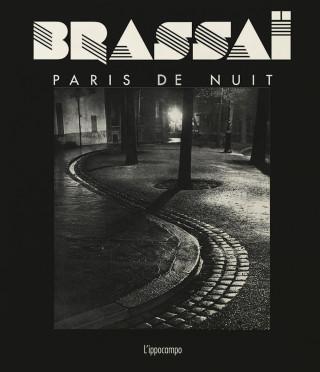
Utilizzando come nessun altro il nero profondo dell’eliotipia, in Paris la nuit il grande fotografo Brassaï ha fissato per sempre il mondo notturno della capitale negli anni Trenta. Una Ville Lumière misteriosa e al contempo molto reale, fatta di bassifondi e cabaret, clochard e aristocratici, ma anche di fornai, orto lani, guardie e stampatori di giornali… Brassaï considerava il biennio 1932-1933 il più importante della sua vita, poiché in quel periodo aveva incontrato Picasso, pubblicato questo volume e collaborato con la rivista surrealista Minotaure. Ma aggiungeva subito, quasi a voler prendere le distanze dal gruppo: « Il surrealismo delle mie immagini non è altro che la realtà resa fantastica dallo sguardo. Io cercavo soltanto di esprimere il reale, perché nulla è più surreale… La mia ambizione è sempre stata far vedere un aspetto della vita quotidiana come se lo si scoprisse per la prima volta ». La poesia ipnotica di Paris la nuit, suo primo libro fotografico, esprime fedelmente questo credo nelle risorse inesauribili della quotidianità.