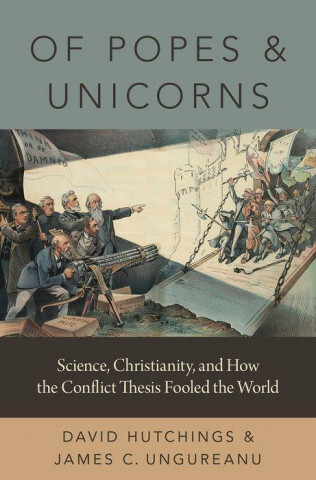
This is the story of John Draper, Andrew White, and the conflict thesis: a centuries-old misconception that religion and science are at odds with one another. Renowned scientist John William Draper (1811-1882) and celebrated historian-politician Andrew Dickson White (1832-1918) were certain that Enlightened Science and Dogmatic Christianity were mortal enemies--and they said as much to anyone who would listen. More than a century later, their grand and sweeping version of history dominates our landscape; Draper and White's "conflict thesis" is still found in countless textbooks, lecture series, movies, novels, and more. Yet, as it would later be discovered, they were mistaken. Their work has been torn to shreds by the experts, who have declared it totally at odds with reality. So how, if this is the case, does their wrongheaded narrative still live on? Who were these two men, and what, exactly, did they say? What is it about their God-versus-Science "conflict thesis" that convinced so many? And what--since both claimed to love Science and love Christ--were they actually trying to achieve in the first place? In this book, physicist David Hutchings and historian of science and religion James C. Ungureanu dissect the work of Draper and White. They take readers on a journey through time, diving into the formation and fallacy of the conflict thesis and its polarizing impact on society. The result is a tale of Flat Earths, of anesthetic, and of autopsies; of Creation and Evolution; of laser-eyed lizards and infinite worlds. It is a story of miracles and mathematicians; souls and Great Libraries; the Greeks, the scientific method, the Not-So-Dark-After-All Ages... and, of course, of popes and unicorns.
Language: English, Binding: Hardback, Number of pages: 40, Publishers: Penguin Young Readers Group, Author: Oliver Jeffers, ISBN-13: 9780593622360, Date of issue: 2025
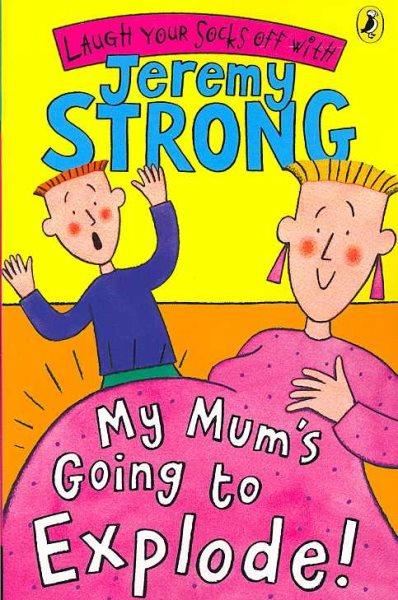
Oooh! Im going to be a granny! she cried. You already are a granny, Granny. I pointed out. . . . Oh yes. So I am! Nicholass mum is having a baby. Its going to mean some big changes. His mums getting ENORMOUS and Granny wants to live in the garden! But thats not all, because theres an even bigger shock to come . . . Autorid: Jeremy Strong
"Emmanuelle" is, alongside "Story of O," a classic book of erotica and the most famous French underground novel of the late twentieth century and a work of seductive literary merit. "Emmanuelle II" continues the story of an unforgettable woman, a happy sensualist, whose unusual erotic experimentation explores the philosophy of sexuality in a novel of literary and philosophical merit. The beautiful heroine's initiation into the ecstasies of love are here set against the exotic background of Thailand, where she easily moves from the attentions of a handsome Siamese prince at an elegant soiree to the dark ante-chamber of a Buddhist temple to learn how the vow of celibacy can be cleverly circumvented by a venerable old monk. A sensual delight, "Emmanuelle II" succeeds, like few novels before it, in pushing the philosophy of eroticism to the frontiers of myth. This is one of the few erotic novels of ideas since Sade. Its exploration of delightful fantasy transformed into exquisite fulfillment makes this one of the finest erotic novels every published. It is as pertinent today as it was four decades ago.
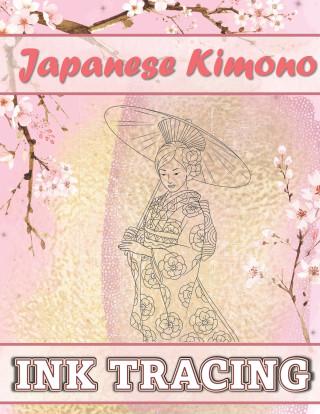
Discover the elegance of traditional Japanese attire with "Japanese Kimonos Ink Tracing: Follow the White Lines to Reveal the Beautiful Kimonos."This unique coloring book invites you to trace intricate white lines, unveiling stunning kimono designs.Perfect for both beginners and experienced artists, each page offers a relaxing and creative experience.Immerse yourself in the art of Japanese fashion, bringing these beautiful kimonos to life with your personal touch.Ideal for stress relief, artistic exploration, and cultural appreciation, this bookis for anyone who loves Japanese culture and artistic pursuits
FP&A is now in the cloud! In this comprehensive guide, begin by provisioning your data for financial planning and analysis in SAP Analytics Cloud. Then follow step-by-step instructions to set up the planning process and use SAP Analytics Cloud's automated planning logic to calculate key metrics. Learn how to perform simulations to model what-if scenarios, streamline your planning workflow, and share results with stakeholders. With details on implementation best practices, this is your all-in-one resource! In this book, you'll learn about: a. Defining and Modeling Data Provision and model your FP&A data in SAP Analytics Cloud. Evaluate and configure source connectors, step by step; then model your data metrics and dimensions for planning and analysis. b. Planning Process Get planning up and running! Manage your planning versions and inject your own inputs and assumptions into SAP Analytics Cloud. Learn how to run driver-based planning and perform allocations and currency conversion. c. Analysis Assess your financial data in SAP Analytics Cloud. Explore your reporting and analysis options, use simulations for what-if analysis, and leverage augmented analytics capabilities and predictive scenarios. Highlights include: 1) Data modeling 2) Planning versions and inputs 3) Automated planning 4) Planning allocations 5) Currency conversion 6) Reporting 7) What-if analysis 8) Simulations 9) Planning workflows 10) Stakeholder groups 11) Implementation
A detailed investigation of sugar beets differing in tolerance and resistance properties at fields with varying Heterodera schachtii infestation in Northern Germany was conducted. The effect of nematode infestation on water consumption, nitrogen uptake, yield and water use efficiency (WUE) of susceptible, tolerant and resistant sugar beet varieties was studied. Varietal differences in WUE were primarily associated with differences in yield. Yield of all varieties decreased with increasing nematode population while the susceptible variety showed the steepest decline. Nitrogen status of all varieties was reduced at very high nematode infestation. Further objectives were to investigate the effects of catch crop cultivation (nematode resistant mustard (Sinapis alba L.), catch crop mixture, straw mulch as control), nematicide application and the cultivation of sugar beet varieties on population dynamics of H. schachtii and sugar yield. Establishment of a sufficient catch crop stand was difficult under Northern German cropping practices. Thus, a significant nematode reduction by cultivation of mustard compared to straw mulch was not achieved. In this study, the resistant sugar beet variety showed the best nematode control while maintaining a high sugar yield. Catch crops and nematicide application had no effect on population dynamics of H. schachtii.
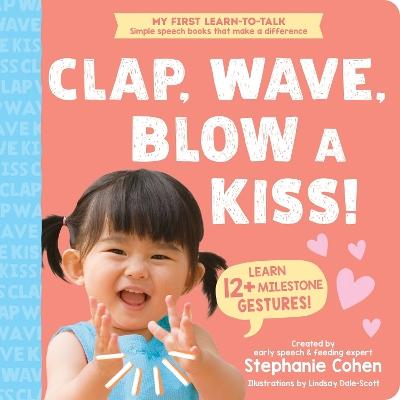
Build little ones' communication skills by clapping, pointing, waving, and more with this fun-to-read board book created by an early speech expert! Gestures are important milestones that support language learning. Clap, Wave, Blow a Kiss! helps you teach them first gestures using an expert-created approach and features: Simple gestures that little ones can use to communicate and support language skills Adorable photographs that encourage social emotional learning Rhythm and rhyme to encourage repetition and keep babies and toddlers engaged Whether you're a parent, caregiver, or educator, Clap, Wave, Blow a Kiss! is a joyful, research-backed way to nurture your child's first steps toward talkingone gesture at a time! Autorid: Stephanie Cohen, Lindsay Dale-Scott
Long renowned as the master of suspense, Alfred Hitchcock is one of the rare filmmakers to achieve both a critical reputation for cinematic artistry and enduring popularity with everyday moviegoers around the world. His distinctive public image brought together a serious, even tormented artist and a mischievous magician with a penchant for practical jokes. This book presents an engaging overview of Hitchcocks life and work along with close studies of ten films spanning nearly five decades of his remarkable career. David Sterritt examines the fundamental themes that recur throughout Hitchcocks films, including the ambiguities of reality and illusion, the blurred boundaries between guilt and innocence, the lures and perils of voyeurism, and the many ways in which the act of seeing can either reveal essential truths or lead to deception and danger. He highlights the directors sophistication as an audiovisual stylist and audacity as a technical innovator while also exploring the religious undertones of key works. Sterritt considers films ranging from Blackmail (1929), the first talkie made in England, to Family Plot (1976), the directors last completed movie. He analyzes canonized masterpieces such as Vertigo (1958) and Psycho (1960) alongside overlooked works including Rope (1948) and Under Capricorn (1949). Spotlighting the directors extraordinary artistic range and thematic depth, The Films of Alfred Hitchcock offers new insights for both cinephiles and casual viewers. Autorid: David Sterritt