Cybernetic Capitalism develops a critical systems theory in order to conceptualize the cybernetic rationalization of contemporary capitalism. Today, the book argues, capital no longer aims at total communicability, but seeks to put the incommunicable to work. This book offers a conceptual interrogation of how capital navigates its cybernetic environment. Taking an immanent perspective, the book develops a unique synthesis between Niklas Luhmanns systems theory and the critical theory tradition. Overwijk shows how neoliberal capitalisms version of rationalization depends on the organization and management of society on the basis of cybernetic principles. Overwijk seeks to update earlier critiques of cybernetic capitalism that stressed the systems colonization of its environment, its making the entirety of social life communicable. Under todays cybernetic rationalization, things are radically different. Neoliberal political economy aims to incite the incalculability of the market; platform capitalists venture to capitalize on the unpredictable efforts of their users; and post-Fordist management seeks to encourage the creativity of service workers. As this book uniquely shows, capital no longer aims at total communicability, but instead seeks to provoke and exploit the incommunicability of its environment. In this sense, it offers an ecological theory of capitalism, laying conceptual the groundwork for understanding the extractivist logic of the Anthropocene.Cybernetic Capitalism shows how the cultural obsession with incommunicability that animates cybernetic rationalization has taken an irrationalist turn, resurfacing in the mysticism of conspiracy theory and radical-right politics. The book offers a novel and compelling materialist interpretation of todays paradoxical connections between neoliberal rationalism and radical-right irrationalism. Autorid: Jan Overwijk
Hermione, Countess of Ranfurly, kept a diary all her life. To War with Whitaker is an account of the most adventurous, most defiant and most valiant of those years. Hermione and Dan Ranfurly married only months before the Second World War erupted. So when Dan was posted to the Middle East, taking their faithful butler Whitaker with him, Hermione resolved to join them there. This memoir offers astounding displays of commitment and independence. After vowing not to go home without her husband, Hermione travelled alone from Cape Town to Cairo, and remained in the Middle East and North Africa for the two and a half years he was imprisoned by the Germans - meeting many notable characters along the way. With wit and exuberance, Hermione's diary entries take us To War with Whitaker and back again, providing sharp insight into the strong and outspoken woman she was.'Few diaries from any era could be as fascinating . . . This is truly compulsive reading' Woman & Home
Regain focus. Select relevant information. Make quick and clear decisions. We are dealing with too many options, too much information, conflicting advice on general choices like what diet to choose, or who to choose as a mate. It's hard to maintain focus and be confident in our decisions under such conditions. The Systems Thinker -Mental Models helps you make decisions based on your relevant thought patterns and true values. Finding the most relevant information to YOU, the best decision to YOU is a matter of exploring YOUR thoughts and wants. Mental models are cognitive frameworks that you can use to make order in your head, tune out the noise, and focus on what's important - without getting overwhelmed. Mental models provide transparency, order, deeper understanding, context, and most importantly, a clear solution or conclusion about problems. Using systems thinking as your leading cognitive tool will provide depth AND width to your mental analysis. Learn how corporate executives, economists, and policy makers analyze big data and make decisions based on it. •Discover 12 powerful thinking tools to facilitate your though processes •Understanding and model dynamic systems •Learn to use mental models through real-life examples Mental models are so much more than a cognitive tool; they help with productivity, enhance understanding, boost critical thinking, and analytical skills. •Understand how corporations make multidimensional decisions •Learn to design your own mental models to map out your real priorities •Learn to include soft variables such as emotions into your analysis •Shift your mindset from blaming to accountability and resolve conflicts easier.
Language: English, Binding: Paperback, Number of pages: 368, Publishers: St Martins Mass Market, Author: DIANE KELLY, ISBN-13: 9781250315083, Date of issue: 2011
This book provides a rigorous and comprehensive exposition of vectors and vector fields, designed for advanced undergraduate students in physics. It presents detailed derivations of essential vector identities, relations involving quantum vector operators, and vector calculus theorems commonly encountered in undergraduate and graduate physics coursework. A complete catalogue of vector identities—spanning both classical and quantum contexts—is presented using index notation and the Einstein summation convention, fostering fluency with tensorial methods and streamlining complex derivations.Core topics include vector algebra, differential and integral vector calculus, and three-dimensional Taylor expansions, supported by careful treatments of the essential underlying mathematical tools. Advanced subjects—such as the Dirac delta function, Green’s functions, multipole expansions, and Cartesian tensors—are introduced with a balance of formal clarity and pedagogical accessibility. A dedicated chapter on tensor transformations, invariants, and the Levi-Civita and Kronecker symbols offers a foundation for further study in areas such as general relativity and quantum field theory. Each chapter contains numerous worked examples and end-of-chapter problems, all accompanied by complete solutions, making the text well-suited for both structured coursework and independent study.
From #1 New York Times bestselling author Debbie Macomber comes an uplifting story of an unforgettable chance encounter between a successful yet jaded businessman, and a woman who sees—but also expects—the best in everyone, sparking an unlikely romance that challenges their assumptions about generosity, trust, and the gifts of unforeseen love.Maisy Gallaher has always dreamt of becoming a nurse, a beacon of hope and healing for those in need. But when her father passed away, she selflessly set aside her aspirations to help her family. Despite knowing it was the right thing to do, she can’t help but wish for the path not taken.Chase Furst, on the other hand, is primarily focused on his own life and his work as a hardened bank executive and heir to a financial empire. His childhood was marred by his mother’s struggle with addiction, leaving him jaded and emotionally distant.Then he meets Maisy, a beautiful woman full of optimism and kindness who can see past his defenses. To his surprise and annoyance, Maisy offers to help Chase in a time of need, despite just meeting him. The two butt heads, especially when Maisy declines his offer of payment. Instead, she asks him to pay it forward to someone else—not with money or a quick fix, but through an act of true selflessness. Chase doesn’t know where to begin.Despite his skepticism, Chase is determined to rise to this challenge. And doing good for others leads Chase back to Maisy, who begins to break down his walls, even as she resists risking her own gentle heart. But the more time they spend together, the more they realize how much they have to learn from each other . . . and how much love could make a difference in their future.
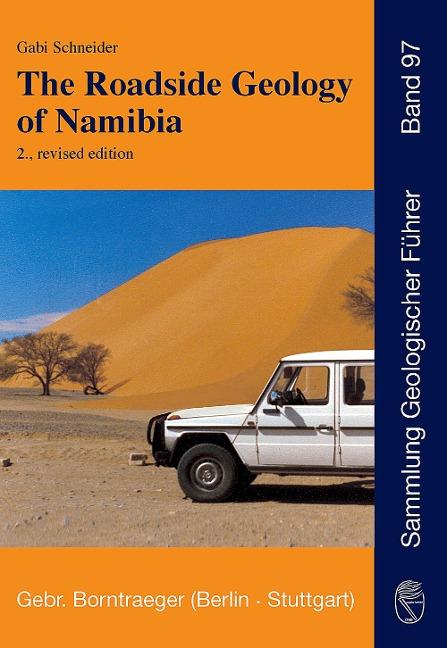
Namibia has over the years attracted scientists from all over the world to study its geology, uniquely exposed in the desert environment. Their research has shaped geological thinking worldwide, and led to the development of many new concepts. Due to an arid climate and low population density, geological features are ever present and eye-catching in Namibia. It is for these reasons, that both scientists and laymen are attracted to the country, and many a tourist develops a keen interest in geology when touring this beautiful country. In this second, revised edition, text, figures and cover have been corrected and optimized to again increase the high quality of this valuable field guide.
This book focuses on practical use of the Dominant Language Constellations (DLC) approach, not only in formal settings, but also in social and family domains. It addresses the daily needs of all those who deal with multilingual reality. The key unique feature of the volume is its focus on giving practical advice, recommendations, and suggestions that can help individuals deal with real-life multilingual situations. It covers multiple social and geographical contexts, bringing insights into working directly with family members, children and adults, and educational stakeholders. While based on DLC theory and empirical studies, this volume appeals directly to practitioners, both in-service and future teachers, as well as teacher educators, parents and social workers in multilingual settings.
Nancys book offers nothing less than a philosophy of the city. Drawing on his widely discussed accounts of sense and of the fraught question of community, Nancy views the city as the site of a disposition that is constantly undergoing metamorphoses. In The City in the Distance, Jean-Luc Nancy embarks on nothing less than a philosophy of the city. Drawing on his widely discussed accounts of sense and of the fraught question of community, Nancy views the city as the site of a disposition that is constantly undergoing metamorphoses.Far from an abstract account, Nancy attends in the most concrete way possible to the workings of a city not typically taken as paradigmatic, Los Angeles. As Jean-Christophe Bailly suggests in his foreword, Nancy joins Walter Benjamin in thinking the city not from an external vantage point, but on its own terms. Autorid: Jean-Luc Nancy, Cory Stockwell, Jean-Christophe Bailly
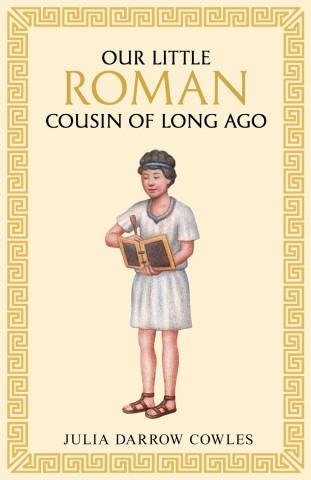
Walk the bustling streets, grand forums, and quiet courtyards of ancient Rome alongside Faustus, a lively Roman boy growing up during the glory of the Empire. In Our Little Roman Cousin of Long Ago, readers follow Faustus through lessons with his tutor, thrilling chariot races at the Circus Maximus, solemn religious festivals, and everyday life in a Roman household.From visits to the public baths and marketplaces to encounters with soldiers, slaves, and senators, Faustus' adventures reveal the customs, discipline, and civic pride that shaped one of history's greatest civilizations.Told with warmth and rich historical detail, this engaging story offers a child's-eye view into the bustling world of ancient Rome-its traditions, challenges, and enduring legacy.
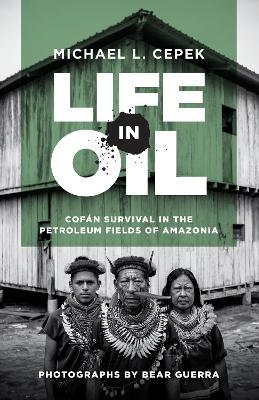
Oil is one of the world’s most important commodities, but few people know how its extraction affects the residents of petroleum-producing regions. In the 1960s, the Texaco corporation discovered crude in the territory of Ecuador’s indigenous Cofán nation. Within a decade, Ecuador had become a member of OPEC, and the Cofán watched as their forests fell, their rivers ran black, and their bodies succumbed to new illnesses. In 1993, they became plaintiffs in a multibillion-dollar lawsuit that aims to compensate them for the losses they have suffered. Yet even in the midst of a tragic toxic disaster, the Cofán have refused to be destroyed. While seeking reparations for oil’s assault on their lives, they remain committed to the survival of their language, culture, and rainforest homeland.Life in Oil presents the compelling, nuanced story of how the Cofán manage to endure at the center of Ecuadorian petroleum extraction. Michael L. Cepek has lived and worked with Cofán people for more than twenty years. In this highly accessible book, he goes well beyond popular and academic accounts of their suffering to share the largely unknown stories that Cofán people themselves create—the ones they tell in their own language, in their own communities, and to one another and the few outsiders they know and trust. Their words reveal that life in oil is a form of slow, confusing violence for some of the earth’s most marginalized, yet resilient, inhabitants. Autorid: Michael L. Cepek, Bear Guerra