Kohei is a college student who, because of his hearing loss, tends to distance himself from others. His attitude starts to change after he crosses paths with an ever-optimistic classmate named Taichi. And over time, the two begin to develop feelings for each other. As the story continues, the pair tries to balance their budding relationship alongside Taichi’s inspiring new career and Kohei’s continued studies at school. But the harder they try to make things work, the more misunderstandings they seem to encounter.
A distinguished guide to Jewish prayerWhy do Jews pray? What is the role of prayer in their lives as moral and ethical beings? From the simplest details of how to comport oneself on entering a synagogue to the most profound and moving
Predator Helios Neo 18 AI on 18-tolline mängu- ja tööarvuti, mis ühendab Intel Core Ultra 7 jõudluse, IPS-ekraani ja nutika jahutuse. PredatorSense hoiab seadistused kontrolli all, et saaksid mängida või töötada stabiilselt. • 18″ IPS 16:10 ekraan • AI-võimed pildis ja helis • AeroBlade jahutus • Wi-Fi 6E ja Thunderbolt 4
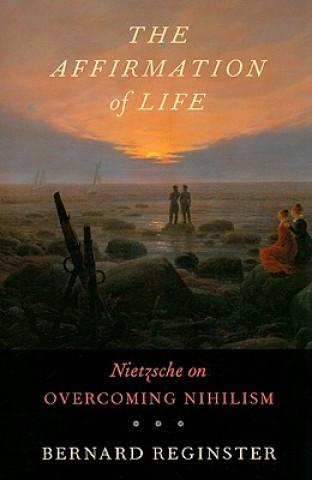
Nietzsche continues to occupy a special place - not only for a broad range of academics but also for members of a wider public, who find some of their most pressing existential concerns addressed in his works. Central among these concerns is the question of the meaning of a life characterized by inescapable suffering, at a time when the traditional responses inspired by Christianity are increasingly losing their credibility. While most recent studies of Nietzsche's works have lost sight of this fundamental issue, Bernard Reginster brings it sharply into focus.
This is a history of the railways of Oxford ,looking at the operations and development of services , from the opening of the Oxford Railway by the Great Western on 12 June 1844 through to the present day. This volume covers the development of the railway locally, including the London and North Western Buckinghamshire Railway from Bletchley, together with the five local branch lines.The opening of the Great Western / Great Central joint line from Culworth Junction to Banbury Junction in August 1900 resulted in the growth of inter regional cross country services passing through Oxford .The advent of the second world war saw the construction of a new junction at Oxford North giving for the first time a direct link from the Great Western to the London Midland & Scottish Railway branch to Bletchley and beyond.The opening of these two new junctions saw a considerable increase in both passenger and freight traffic which resulted in Oxford becoming a major railway center . For many years one of the highlights was the arrival and departure of locomotives on a daily basis from all of the big four railway companies. Those days are long gone, but today Oxford is as busy as ever, with passenger services to London operated by Great Western Railway and Chiltern Trains, and by Cross Country Trains the South and the North of England. This is a history of the railways of Oxford ,looking at the operations and development of services , from the opening of the Oxford Railway by the Great Western on 12 June 1844 through to the present day. Autorid: Laurence Waters
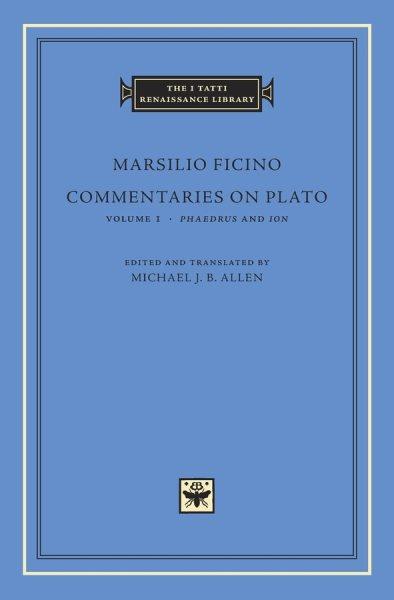
Marsilio Ficino (1433–1499), the Florentine scholar-philosopher-magus, was largely responsible for the Renaissance revival of Plato. The publication of his Latin translations of the dialogues in 1484 was an intellectual event of the first magnitude, making the Platonic canon accessible to western Europe after the passing of a millennium and establishing Plato as an authority for Renaissance thought. This volume contains Ficino’s extended analysis and commentary on the Phaedrus, which he explicates as a meditation on “beauty in all its forms” and a sublime work of theology. In the commentary on the Ion, Ficino explores a poetics of divine inspiration that leads to the Neoplatonist portrayal of the soul as a rhapsode whose song is an ascent into the mind of God. Both works bear witness to Ficino’s attempt to revive a Christian Platonism and what might be called an Orphic Christianity. Autorid: Marsilio Ficino, Michael J. B. Allen
William Miller embarks on an alluring journey into the world of disgust, showing how it brings order and meaning to our lives even as it horrifies and revolts us. Our notion of the self, intimately dependent as it is on our response to the excretions and secretions of our bodies, depends on it. Cultural identities have frequent recourse to its boundary-policing powers. Love depends on overcoming it, while the pleasure of sex comes in large measure from the titillating violation of disgust prohibitions. Imagine aesthetics without disgust for tastelessness and vulgarity; imagine morality without disgust for evil, hypocrisy, stupidity, and cruelty. Miller details our anxious relation to basic life processes: eating, excreting, fornicating, decaying, and dying. But disgust pushes beyond the flesh to vivify the larger social order with the idiom it commandeers from the sights, smells, tastes, feels, and sounds of fleshly physicality. Disgust and contempt, Miller argues, play crucial political roles in creating and maintaining social hierarchy. Democracy depends less on respect for persons than on an equal distribution of contempt. Disgust, however, signals dangerous division. The high's belief that the low actually smell bad, or are sources of pollution, seriously threatens democracy. Miller argues that disgust is deeply grounded in our ambivalence to life: it distresses us that the fair is so fragile, so easily reduced to foulness, and that the foul may seem more than passing fair in certain slants of light. When we are disgusted, we are attempting to set bounds, to keep chaos at bay. Of course we fail. But, as Miller points out, our failure is hardly an occasion for despair, for disgust also helps to animate the world, and to make it a dangerous, magical, and exciting place. Autorid: William Ian Miller
A study of the gap between the promise and practice of American democracy examines the historical national unity derived from the democratic ideal and the frustration of that ideal by political institutions and hierarchies Huntington examines the persistent gap between the promise of American ideals and the performance of American politics. He shows how Americans have always been united by the democratic creed of liberty, equality, and hostility to authority, but how these ideals have been frustrated through institutions and hierarchies needed to govern a democracy. This stunningly persuasive book examines the persistent, radical gap between the promise of American ideals and the performance of American politics. Samuel P. Huntington shows how Americans, throughout their history as a nation, have been united by the democratic creed of liberty, equality, and hostility to authority. At the same time he reveals how, inevitably, these ideals have been perennially frustrated through the institutions and hierarchies required to carry on the essential functions of governing a democratic society.From this antagonism between the ideals of democracy and the realities of power have risen four great political upheavals in American history. Every third generation, Huntington argues, Americans have tried to reconstruct their institutions to make them more truly reflect deeply rooted national ideals. Moving from the clenched fists and mass demonstrations of the 1960s, to the moral outrage of the Progressive and Jacksonian Eras, back to the creative ideological fervor of the American Revolution, he incisively analyzes the dissenters objectives. All, he pungently writes, sought to remove the fundamental disharmony between the reality of government in America and the ideals on which the American nation was founded.Huntington predicts that the tension between ideals and institutions is likely to increase in this country in the future. And he reminds us that the fate of liberty and democracy abroad is intrinsically linked to the strength of our power in world affairs. This brilliant and controversial analysis deserves to rank alongside the works of Tocqueville, Bryce, and Hofstadter and will become a classic commentary on the meaning of America. Autorid: Samuel P. Huntington
This unsettling and original book offers a radical new understanding of the context-dependent nature of female sexuality. Lisa Diamond argues that for some women, love and desire are not rigidly heterosexual or homosexual but fluid, changing as women move through the stages of life, various social groups, and, most important, different love relationships.
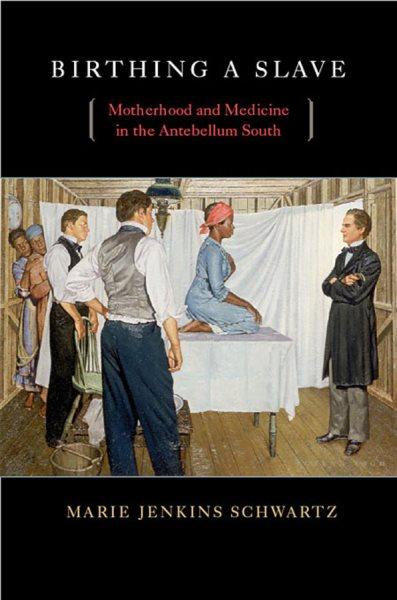
The deprivations and cruelty of slavery have overshadowed our understanding of the institution's most human dimension: birth. We often don't realize that after the United States stopped importing slaves in 1808, births were more important than ever; slavery and the southern way of life could continue only through babies born in bondage. In the antebellum South, slaveholders' interest in slave women was matched by physicians struggling to assert their own professional authority over childbirth, and the two began to work together to increase the number of infants born in the slave quarter. In unprecedented ways, doctors tried to manage the health of enslaved women from puberty through the reproductive years, attempting to foster pregnancy, cure infertility, and resolve gynecological problems, including cancer. Black women, however, proved an unruly force, distrustful of both the slaveholders and their doctors. With their own healing traditions, emphasizing the power of roots and herbs and the critical roles of family and community, enslaved women struggled to take charge of their own health in a system that did not respect their social circumstances, customs, or values. Birthing a Slave depicts the competing approaches to reproductive health that evolved on plantations, as both black women and white men sought to enhance the health of enslaved mothers--in very different ways and for entirely different reasons. Birthing a Slave is the first book to focus exclusively on the health care of enslaved women, and it argues convincingly for the critical role of reproductive medicine in the slave system of antebellum America. Autorid: Marie Jenkins Schwartz
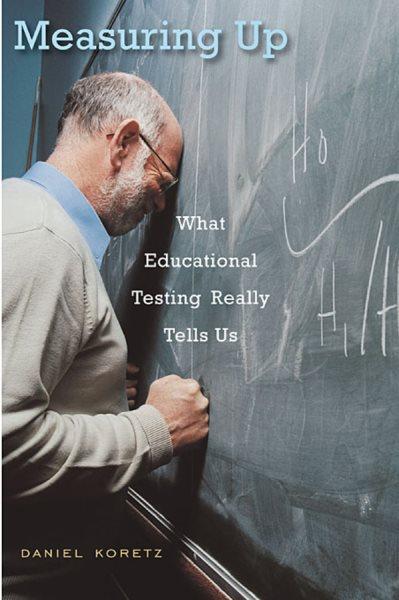
How do you judge the quality of a school, a district, a teacher, a student? By the test scores, of course. Yet for all the talk, what educational tests can and can’t tell you, and how scores can be misunderstood and misused, remains a mystery to most. The complexities of testing are routinely ignored, either because they are unrecognized, or because they may be—well, complicated. Inspired by a popular Harvard course for students without an extensive mathematics background, Measuring Up demystifies educational testing—from MCAS to SAT to WAIS, with all the alphabet soup in between. Bringing statistical terms down to earth, Daniel Koretz takes readers through the most fundamental issues that arise in educational testing and shows how they apply to some of the most controversial issues in education today, from high-stakes testing to special education. He walks readers through everyday examples to show what tests do well, what their limits are, how easily tests and scores can be oversold or misunderstood, and how they can be used sensibly to help discover how much kids have learned. Autorid: Daniel Koretz
Queen of culinary capers Joanne Fluke cooks up the most delicious gift of all: a recipe-filled Hannah Swensen holiday mystery in a festive trade paperback package! As December turns Lake Eden into the North Pole, the heat is on in Hannah Swensen's kitchen to honor two Christmas promises: baking irresistible holiday cupcakes and preventing a person who attempted murder from succeeding the second time around...While Hannah speeds through a lengthy holiday checklist, drama in town grows like Santas waistline on Christmas Eve. Her sister Andrea wants to stave off the blues by helping out at The Cookie Jar, Michelles love life is becoming complicated, Lisa needs Hannahs advice, and Delores has a Christmas secret shes not willing to share. But nothing dampens the holiday mood more than the chilling mystery surrounding the man found near death in an abandoned storefront two doors down from Hannahs bakery . . .The befuddled John Doe cant recall a thing about himselfexcept for his unusual knowledge of restoring antique furniture. With a smattering of clues and barely enough time to frost Christmas cookies, Hannah must solve a deadly puzzle that could leave her dashing through the snow for her life! Autorid: Joanne Fluke
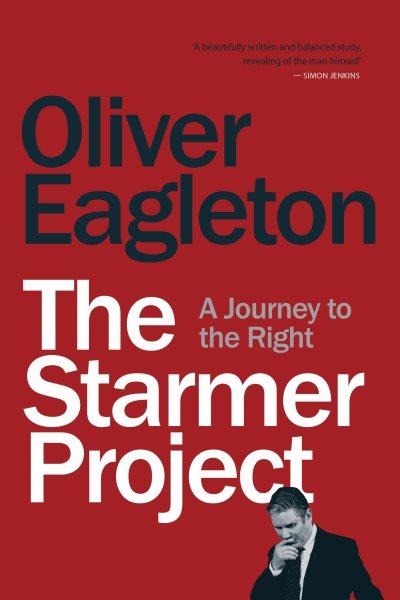
The Starmer Project is a forensic and revealing account of Keir Starmer's rise to the top of British politics. Oliver Eagleton paints a fascinating picture of a human-rights barrister turned chief prosecutor and his handling of a number of cases involving the police and security services. He traces Starmer's political alliances and his leading role in Labour's Brexit agony. When Starmer stood for party leader, he pledged to revitalise Corbynism with a dose of lawyerly competence. The Starmer Project details how he instead purged Jeremy Corbyn and pulled Labour to the right. Helped into power by the Conservatives' collapse in 2024, Starmer was soon as unpopular as his Tory predecessors. Embroiled in austerity and allegations of sleaze, he has further alienated the public and disappointed business interests as well. He stands accused by critics on the left and right alike of lacking principles. But although devoid of charisma, Starmer is anything but an empty political vessel. Indeed, the implications of his authoritarian politics for a country in need of renewal, not retrenchment, appear dire. This is the definitive, updated and revealing biography of the Labour Prime Minister. Autorid: Oliver Eagleton
A scathing critique of proposals to geoengineer our way out of climate disaster, by the bestselling author of How to Blow Up a PiplineWarming is about to hit one and a half degrees, perhaps two degrees soon after. What do we do then?In the overshoot era, schemes abound for turning the heat down at a later date, by means of technologies for removing CO2 from the air or blocking sunlight. Such technologies are by no means safe: they come with immense risks. Like magical promises of future redemption, they provide reasons for continuing emissions in the present. But do they also hold some potentials? Can the catastrophe be reversed, masked or simply adapted to, once it is a fact? Or will any such roundabout measure rather make things worse? This book maps the new frontlines in the struggle for a liveable planet and insists on the climate revolution long overdue. In the end, no technologies can absolve us of its tasks. Autorid: Andreas Malm, Wim Carton
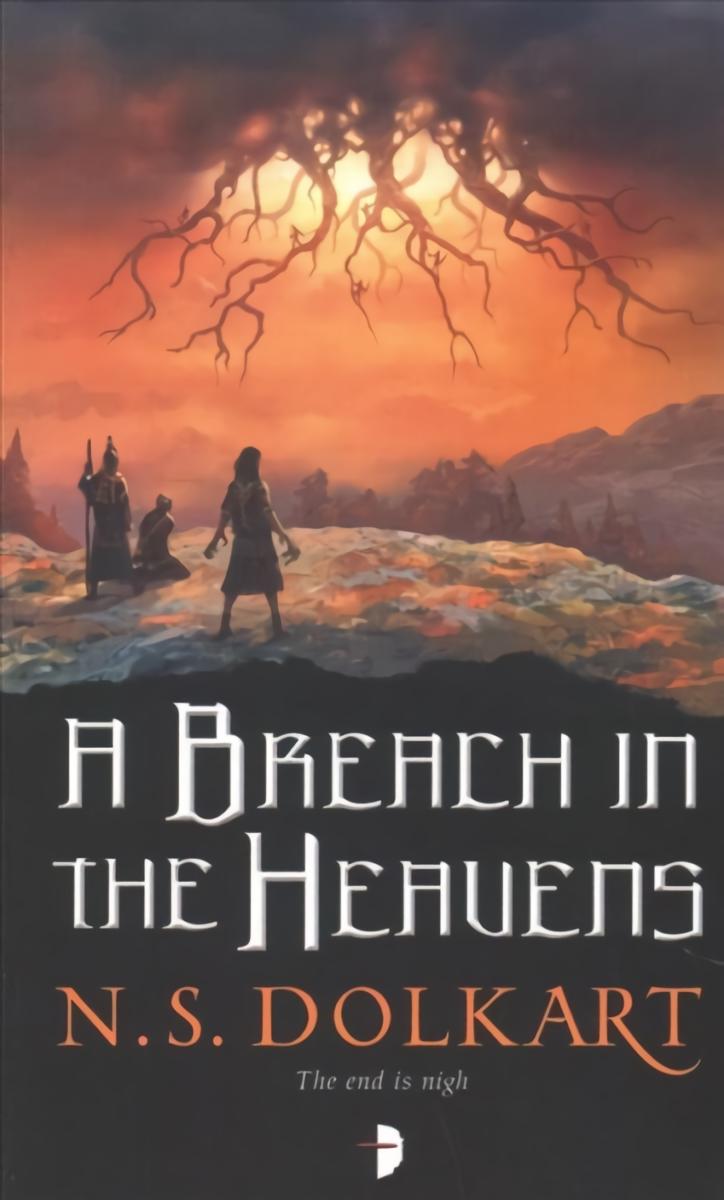
Wizards war against gods to save the world, in the electrifying conclusion to the Godserfs epic fantasy series. The End Times have arrived. For over a decade, the sorceress Phaedra has had a single, vital task: to keep the world of the elves separated from humanity’s. But when her world experiences its first skyquake, it’s clear that something is very wrong. Has all Phaedra’s work been for nothing? She’ll need a new plan – and her friends’ help – to keep the worlds from smashing into each other and shredding all of creation. Unfortunately, not everyone likes the new plan. To the God of the Underworld, destroying creation doesn’t seem like such a bad idea… File Under: Fantasy ( Fresh Start | The Band’s Back | Merging Worlds | All Good Things ] Autorid: N S Dolkart, Andreas Rocha
This book assesses the historical significance of the International Military Tribunal for the Far East (IMTFE)—commonly called the Tokyo trial—established as the eastern counterpart of the Nuremberg trial in the immediate aftermath of World War II.Through extensive research in Japanese, American, Australian, and Indian archives, Yuma Totani taps into a large body of previously underexamined sources to explore some of the central misunderstandings and historiographical distortions that have persisted to the present day. Foregrounding these voluminous records, Totani disputes the notion that the trial was an exercise in “victors’ justice” in which the legal process was egregiously compromised for political and ideological reasons; rather, the author details the achievements of the Allied prosecution teams in documenting war crimes and establishing the responsibility of the accused parties to show how the IMTFE represented a sound application of the legal principles established at Nuremberg.This study deepens our knowledge of the historical intricacies surrounding the Tokyo trial and advances our understanding of the Japanese conduct of war and occupation during World War II, the range of postwar debates on war guilt, and the relevance of the IMTFE to the continuing development of international humanitarian law. Autorid: Yuma Totani
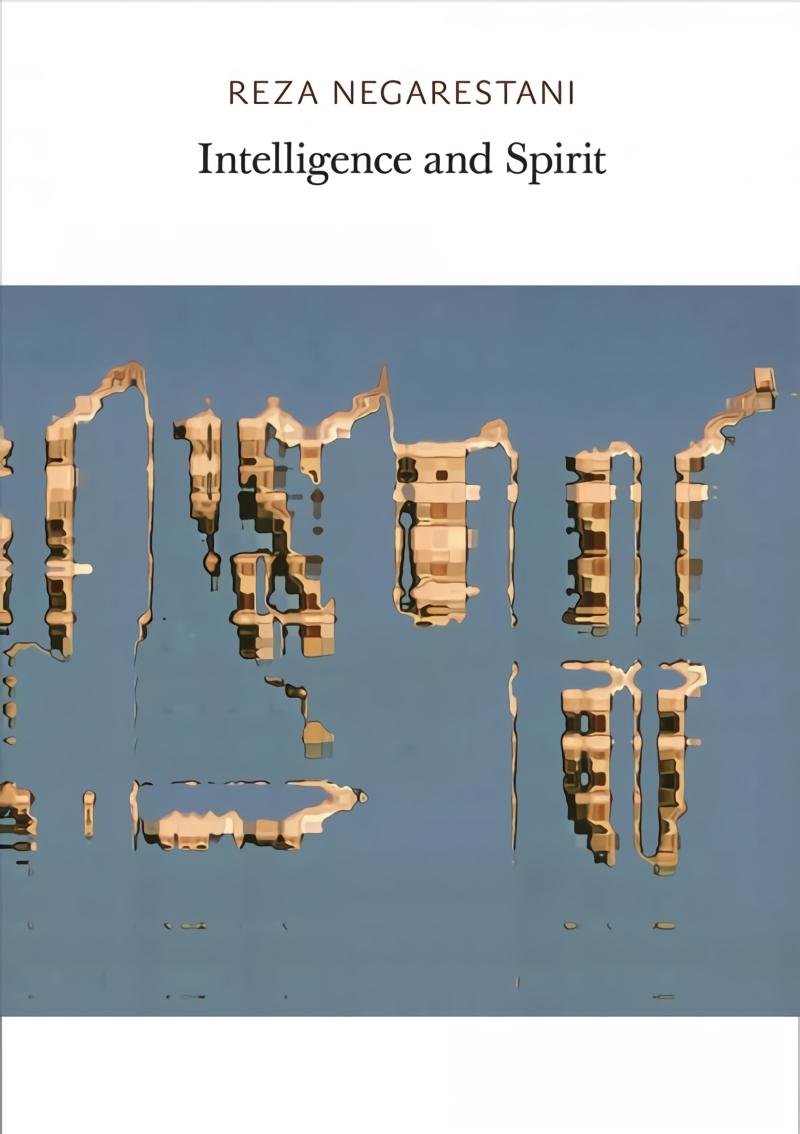
A critique of both classical humanism and dominant trends in posthumanism that formulates the ultimate form of intelligence as a theoretical and practical thought unfettered by the temporal order of things. A critique of both classical humanism and dominant trends in posthumanism that formulates the ultimate form of intelligence as a theoretical and practical thought unfettered by the temporal order of things.In Intelligence and Spirit Reza Negarestani formulates the ultimate form of intelligence as a theoretical and practical thought unfettered by the temporal order of things, a real movement capable of overcoming any state of affairs that, from the perspective of the present, may appear to be the complete totality of history. Intelligence pierces through what seems to be the totality or the inevitable outcome of its history, be it the manifest portrait of the human or technocapitalism as the alleged pilot of history.Building on Hegel's account of geist as a multiagent conception of mind and on Kant's transcendental psychology as a functional analysis of the conditions of possibility of mind, Negarestani provides a critique of both classical humanism and dominant trends in posthumanism. The assumptions of the former are exposed by way of a critique of the transcendental structure of experience as a tissue of subjective or psychological dogmas; the claims of the latter regarding the ubiquity of mind or the inevitable advent of an unconstrained superintelligence are challenged as no more than ideological fixations which do not stand the test of systematic scrutiny.This remarkable fusion of continental philosophy in the form of a renewal of the speculative ambitions of German Idealism and analytic philosophy in the form of extended thought-experiments and a philosophy of artificial languages opens up new perspectives on the meaning of human intelligence and explores the real potential of posthuman intelligence and what it means for us to live in its prehistory. Autorid: Reza Negarestani
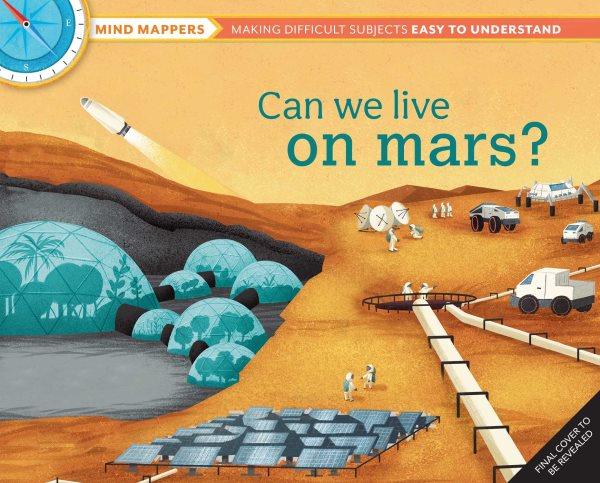
Take a thrilling journey to the Red Planet. Find out how to get there, where to land, and how to survive.No one has ever been to Mars. It is between 35 million and 250 million miles away, depending on the calendar. But Space scientists are developing a rocket to take us. How do we know when to go? Can we land without crashing and burning? How will we survive when we get there? Mars has a thin and unbreathable atmosphere, intense radiation (especially after a solar storm), and sandstorms the size of North America. There is no fuel, and the only water is locked in the frozen icecaps and particular rocks. Mind Mappers Can We Live on Mars? unravels the complicated science and logistics of this incredible challenge. Structured in a unique way using the visual-thinking techniquemind mappingcomplex ideas are broken down into a clear flow of visual information. The mind map connects the information, making it easy to grasp. Even the youngest wannabe astronaut can learn how humans may be able to reach and live on the Red Planet in their own lifetime. BEAUTIFUL ILLUSTRATIONS: Combines the beauty of a picture book with science-based facts and information. UNIQUE APPROACH: Can We Live on Mars? is structured using a visual thinking technique called mind mapping, where complex ideas are broken down into a clear flow of visual information. The mind map connects the information, making it easy to grasp. ACCESSIBLE TO EVERY READER: The text is carefully layered and leveled for emerging to proficient readers. COMPLETE THE MIND MAPPERS COLLECTION: How Do We Stop Climate Change?, Are We Running Out of Water?, and Why Does Plastic Hurt the Planet? are also available. Autorid: Giles Sparrow
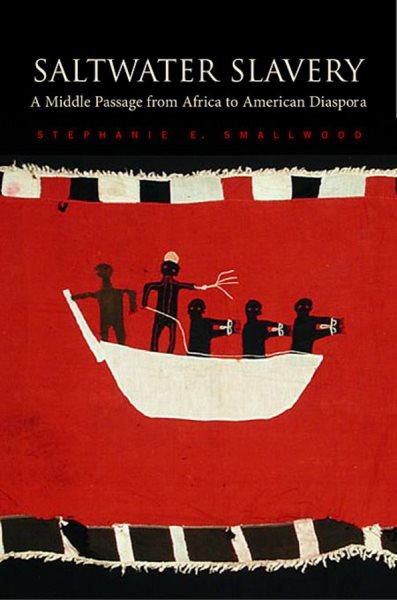
This bold, innovative book promises to radically alter our understanding of the Atlantic slave trade, and the depths of its horrors. Stephanie E. Smallwood offers a penetrating look at the process of enslavement from its African origins through the Middle Passage and into the American slave market.Smallwoods story is animated by deep research and gives us a startlingly graphic experience of the slave trade from the vantage point of the slaves themselves. Ultimately, Saltwater Slavery details how African people were transformed into Atlantic commodities in the process. She begins her narrative on the shores of seventeenth-century Africa, tracing how the trade in human bodies came to define the life of the Gold Coast. Smallwood takes us into the ports and stone fortresses where African captives were held and prepared, and then through the Middle Passage itself. In extraordinary detail, we witness these men and women cramped in the holds of ships, gasping for air, and trying to make sense of an unfamiliar sea and an unimaginable destination. Arriving in America, we see how these new migrants enter the market for laboring bodies, and struggle to reconstruct their social identities in the New World.Throughout, Smallwood examines how the people at the center of her storymerchant capitalists, sailors, and slavesmade sense of the bloody process in which they were joined. The result is both a remarkable transatlantic view of the culture of enslavement, and a painful, intimate vision of the bloody, daily business of the slave trade. Autorid: Stephanie E. Smallwood
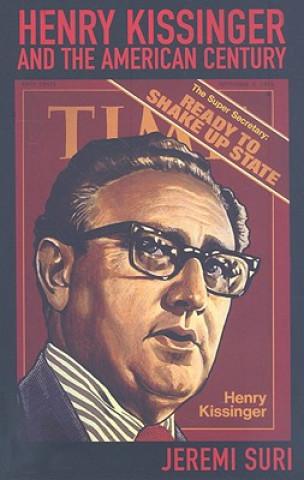
What made Henry Kissinger the kind of diplomat he was? What experiences and influences shaped his worldview and provided the framework for his approach to international relations? Jeremi Suri offers a thought-provoking, interpretive study of one of the most influential and controversial political figures of the twentieth century. Drawing on research in more than six countries in addition to extensive interviews with Kissinger and others, Suri analyzes the sources of Kissinger's ideas and power and explains why he pursued the policies he did. Kissinger's German-Jewish background, fears of democratic weakness, belief in the primacy of the relationship between the United States and Europe, and faith in the indispensable role America plays in the world shaped his career and his foreign policy. Suri shows how Kissinger's early years in Weimar and Nazi Germany, his experiences in the U.S. Army and at Harvard University, and his relationships with powerful patrons--including Nelson Rockefeller and Richard Nixon--shed new light on the policymaker. Kissinger's career was a product of the global changes that made the American Century. He remains influential because his ideas are rooted so deeply in dominant assumptions about the world. In treating Kissinger fairly and critically as a historical figure, without polemical judgments, Suri provides critical context for this important figure. He illuminates the legacies of Kissinger's policies for the United States in the twenty-first century.
Five students at a Buddhist college in Japan find there's little call for their job skills...among the living, that is! But their unique talents allow them to work with the dead...carrying out the last wishes of those whose spirits are still trapped in their corpses, and can't move on to the next life! Book Six brings Kurosagi back to work...on some of their oddest jobs yet! When Numata'sfujoshi acupuncturist becomes the target of a manga-banning politician, it's up to the Kurosagi gang to stick the needle into his power-hungry scheme. Next, a contest prize vacation to Shanghai turns into a side gig on the set of a Chinese zombie movie...but are all those corpses method acting? Then, we know the tragic story of Yata's sister, but will things turn out happier for his partner Kereellis? For Kereellis's sister, that is. His puppet sister.And that's just three of nine all-new bizarre stories in omnibus Book Six ofThe Kurosagi Corpse Delivery Service!
Alex Katz is a towering figure in contemporary painting, a key New York-based artist since the early 1960s. Katz is best known for his distinct portraits of sophisticated, irresistible women, masterfully painted using precise, broad areas of colour.Alex Katz first emerged on the New York art scene during the heyday of Abstract Expressionism and before the birth of Pop art, but always worked independently of these movements. Katz is best known for his distinctive portraits of sophisticated, irresistible women, masterfully painted using precise, broad areas of colour. Alongside these unmistakably 'Katzian' female portraits are pictures of men, groups, landscapes and interiors, rendered in paint on canvas or metal cut-outs as well as drawing and collage. All attest to the artist's attention to detail, economy of means and consummate technique. Larger-than-life paintings such as The Black Dress (1960), Blue Umbrella (1972), Red Coat (1982) and White Visor (2003) have entered the collective consciousness as the epitome of a particular, late twentieth-century feminine ideal. A major touring retrospective was organized by New York's Whitney Museum of American Art in 1986, and Katz has exhibited widely all over the world. His works are in the collections of The Museum of Modern Art, New York; Tate, London; the Musée National d'Art Moderne, Paris; and the Nationalgalerie, Berlin, among many others. A leading world expert on Katz, distinguished New York art critic Carter Ratcliff writes the definitive, comprehensive Survey, following Katz's work from the 1950s to the present. In the Interview New York-based curator and critic Robert Storr discusses in detail with the artist his practice and technique in the context of a changing art world. Curator Iwona Blazwick enters in her Focus the silent world of Sylvia (1962-63), a classic Katz portrait that resonates with the urban landscape occupied by both artist and sitter. For Artist's Choice Katz has selected nine works by New York School Poets, all of whom share a particular, often personal connection to his work. Artist's Writings range from an early text from 1959 on Katz's dislike of the term 'academy' to a recent text that reflects on his beginnings as an artist. Key interviews with some of the of the twentieth century's most prestigious art figures - including critic David Sylvester and artists Francesco Clemente, Jane Freilicher and Richard Prince - are also included.
In September 1938, the Munich Agreement delivered the Sudetenland to Germany. Six months later, Hitler's troops marched unopposed into Prague and established the Protectorate of Bohemia and Moravia - the first non-German territory to be occupied by Nazi Germany. Although Czechs outnumbered Germans thirty to one, Nazi leaders were determined to make the region entirely German. Chad Bryant explores the origins and implementation of these plans as part of a wider history of Nazi rule and its consequences for the region. To make the Protectorate German, half the Czech population (and all Jews) would be expelled or killed, with the other half assimilated into a German national community with the correct racial and cultural composition. With the arrival of Reinhard Heydrich, Germanization measures accelerated. People faced mounting pressure from all sides. The Nazis required their subjects to act (and speak) German, while Czech patriots, and exiled leaders, pressed their countrymen to act as 'good Czechs'.By destroying democratic institutions, harnessing the economy, redefining citizenship, murdering the Jews, and creating a climate of terror, the Nazi occupation set the stage for the postwar expulsion of Czechoslovakia's three million Germans and for the Communists' rise to power in 1948. The region, Bryant shows, became entirely Czech, but not before Nazi rulers and their postwar successors had changed forever what it meant to be Czech, or German.
Jacopo Sannazaro (1456-1530), considered by some authorities the finest Neo-Latin poet of the Italian Renaissance, spent most of his career in Naples, where he was a member and ultimately the head of the Academia Pontaniana. He is most famous for having written, in Italian, the first pastoral romance in European literature, the Arcadia (1504). But after this early work, Sannazaro devoted himself entirely to Latin poetry modeled on his beloved Vergil. In addition to his epic "The Virgin Birth" (1526), which earned him the title of 'the Christian Vergil', he also composed "Piscatory Eclogues", an innovative adaption of the eclogue form, as well as elegies, epigrams, and a number of shorter works. This volume contains the first complete English translation of all of Sannazaro's poetry in Latin.
This book is about the Homeric figure Nestor. This study is important because it reveals a level of deliberate irony in the Homeric poems that has hitherto not been suspected, and because Nestor’s role in the poems, which is built on this irony, is a key to the circumstances of the poems’ composition.Nestor’s stories about the past, especially his own youth, often lack purpose on the surface of the poems, but with a slight shift of focus they provide a deep commentary on the present action of both poems. Nestor’s Homeric epithet, hippota, “the horseman,” permits the necessary refocus. The combination of epithet and name, hippota Nestor, has Indo-European roots, as a comparison with Vedic Sanskrit shows. Interpreted in the context of the Indo-European twin myth, Nestor’s role clearly points beyond itself to the key question in Homeric studies: the circumstances of the poems’ composition.Nestor has a special relation to Ionia, where the Homeric poems were composed, and through Ionia to early Athens. The relationship between the Ionian city of Miletus and early Athens is particularly important. In addition to the role of these cities, the location of Nestor’s city Pylos, an ancient conundrum, is sharply illuminated by this new interpretation of Nestor’s Homeric role. Autorid: Douglas Frame
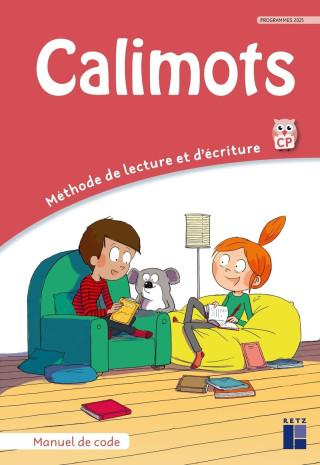
Découvrez une méthode de lecture et d'écriture qui réunit tous les domaines du français à enseigner au CP : décodage, compréhension, rédaction, expression orale, écriture et copie ! Conforme aux programmes 2025. Calimots est une méthode de lecture et d'écriture complète, conçue pour vous permettre de travailler avec vos élèves toutes les compétences qui sont au programme de l'enseignement du français au CP , via un seul et même dispositif : • décoder, • comprendre, • rédiger, • s'exprimer à l'oral, • écrire et copier. Les travaux de recherche de ces dernières années préconisent en effet d'associer systématiquement apprentissage de la lecture et de l'écriture en utilisant une démarche d'enseignement explicite . De même, l'importance de l'enrichissement du langage oral et du lexique dans le cadre de cet apprentissage font consensus. C'est pour vous aider à tenir compte de ces préconisations porteuses de réussite que la méthode Calimots a été conçue. Testée durant plus de 3 ans dans les classes d'enseignants experts et débutants , Calimots propose une progression graphophonologique rigoureuse , en adéquation avec les recommandations ministérielles et permet une mise en oeuvre simple, souple et efficace . Elle vous offre également un enseignement plus confortable et cohérent : v ous n'avez plus besoin de composer votre propre outil à partir de différents ouvrages . Le dispositif Calimots vous fait gagner du temps dans la mise en place de vos séances de français et offre à vos élèves une continuité dans leurs apprentissages. Dans le manuel de code proposé ici, la progression graphophonologique s'appuie sur les directives ministérielles. Les textes, entièrement décodables, favorisent rapidement l'autonomie de l'élève. Pour compléter le dispositif, découvrez aussi : • un manuel de lecture pour travailler la compréhension à partir de genres différents : récits, poésie, documentaires, contes... Les textes, notamment issus de la littérature jeunesse, abordent des thèmes proches des élèves, afin de susciter le plaisir de lire. • un mémo des mots (glissé dans le manuel de lecture ou vendu en pack) étroitement articulé avec le manuel de lecture, les séances d'oral, de vocabulaire et de rédaction. • le guide pédagogique "clé en main", indispensable pour utiliser la méthode. Organisé par domaine, il prend en compte la complexité de gestion des classes de CP actuelles : différenciation, autonomie, pédagogie, numérique, croisements disciplinaires. • deux cahiers d'exercices : un pour le code , un pour la compréhension et la rédaction. • un cahier d'écriture pour une programmation rationnelle de cet enseignement sur l'année. Il tient compte de la complexité du geste graphique et propose un travail spécifique sur les stratégies de copie. • les albums de premières lectures (unités 1 à 5), selon la progression de code du manuel Calimots CP. • les manuels numériques de code (manuel enseignant et manuel élève) et de lecture (manuel enseignant et manuel élève). LE SITE WEB CALIMOTS : Le site web www.calimots.fr offre aux enseignants adoptants de la méthode un accompagnement renforcé pour les aider à enseigner le français au CP avec Calimots. Tout le contenu du guide pédagogique papier y est présenté sous la forme d'un véritable site à la navigation simple et fluide, enrichi de contenus additionnels et d'une véritable offre de ressources numériques (matériel, vidéos, textes lus) ! ************************************************************** Rejoignez le groupe de discussion Facebook " Calimots - Méthode de lecture " : https://www.facebook.com/groups/564575467403831/ **************************************************************