LA NUEVA NOVELA DEL PREMIO NOBEL DE LITERATURA MARIO VARGAS LLOSA La historia de un hombre que soñó un país unido por la música y enloqueció queriendo escribir un libro perfecto que lo contara Toño Azpilcueta pasa sus días entre su trabajo en un colegio, su familia y su gran pasión, la música criolla, sobre la que lleva investigando desde su juventud. Un día, una llamada le cambia la vida. Una invitación para ir a escuchar a un guitarrista desconocido, Lalo Molfino, personaje del que nadie sabe demasiado pero de gran talento, parece confirmar todas sus intuiciones: el amor profundo que siente por los valses, marineras, polkas y huainos peruanos tiene una razón más allá del placer de escucharlos (o bailarlos). Tal vez lo que ocurra es que la música criolla sea, en realidad, no sólo una seña de identidad de todo un país y expresión de esa actitud tan peruana de la huachafería («la mayor contribución de Perú a la cultural universal», según Toño Azpilcueta), sino algo mucho más importante: un elemento capaz de provocar una revolución social, de derribar prejuicios y barreras raciales para unir al país entero en un abrazo fraterno y mestizo. En un país fracturado y asolado por la violencia de Sendero Luminoso, la música podría ser aquello que recuerde a todos los que conforman la sociedad que, por encima de cualquier otra cosa, son hermanos y compatriotas. Y en esto, es posible que el virtuosismo de la guitarra de Lalo Molfino tenga mucho que ver. Toño Azpilcueta decide investigar más sobre Molfino, viajar a su lugar de origen, conocer a este personaje esquivo, saber de su historia, de su familia y amores, de cómo llegó a convertirse en un guitarrista tan excelso. Y se propone también escribir un libro donde contar la historia de la música criolla y desarrollar esa idea que ha inoculado en su mente el descubrimiento de este músico extraordinario. La ficción y el ensayo se entremezclan así, de forma magistral, en esta novela en la que el premio nobel peruano vuelve sobre un tema que le obsesiona desde hace años: las utopías. Eso es lo que persigue Toño Azpilcueta en última instancia: la utopía de generar, a través del arte, una idea de país.La crítica ha dicho: «La escritura de Mario Vargas Llosa ha dado forma a nuestra imagen de Sudamérica y tiene su propio capítulo en la historia de la literatura contemporánea. En sus primeros años, fue un renovador de la novela, hoy, un poeta épico». Per Wastberg, presidente del Comité Nobel «Bienvenido sea [...] el gran recreador de la novela realista, queleemos con el mismo entusiasmo con el que otros leen los excesos imaginativos -bienvenidos también ellos- del realismo mágico». J. A. Masoliver Ródenas, La Vanguardia «Sus libros contienen la más compleja, apasionada y persuasiva visión de la novela y del oficio de novelista de la que tengo noticia;también contienen el mejor estímulo que un novelista puede encontrar para escribir, un estímulo solo inferior al que contienen las propias novelas de Vargas Llosa». Javier Cercas, El País «Un sentido del ritmo narrativo intacto, una intachable rigurosidad en los datos y referencias que maneja y que provienen de una investigación abrumadora, la destreza de unos diálogos sin alambiques y la pretensión de escribir un libro que señala con exactitud su doble condición genérica. […] Su escritura disidente hace pedazos el mundo como había leído que lo hacían los héroes en las novelas de caballerías y vuelve por sus fueros, arremete y da cuenta de una insurrección atemporal contra el hombre y contra el mundo». Ricardo Baixeras, El Periódico
Language: English, Binding: Paperback, Number of pages: 64, Publishers: Dover Publications Inc., Author: David Dutkanicz, ISBN-13: 9780486849034, Date of issue: 2021
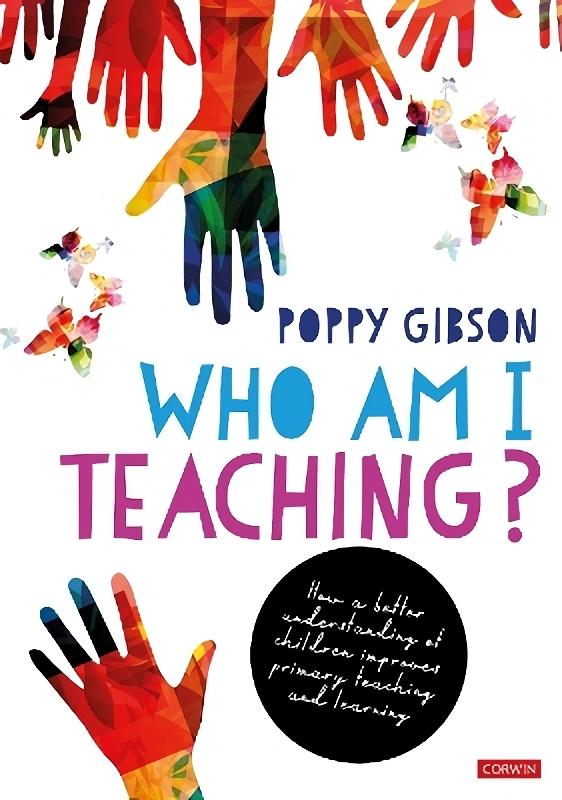
Who are the children you are teaching? It is easy amidst the termly chaos to lose sight of the importance of every single daily interaction that takes place between you as a primary school teacher, and the learners in your class. In this book, educator Dr Poppy Gibson offers a deep dive into some of the complexities children may bring to your classroom. Understanding the diverse nature of our primary school children and their experiences is essential if we are to fully engage and support them as learners.This book brings essential professional learning to teachers. It explores childrens development, mental health, wellbeing, community, identity, trauma, communication challenges and more. It offers practical advice for classroom teaching to ensure and enhance Quality First Teaching. Supports teachers to develop a sound understanding of children to empower teaching and learning. Autorid: Poppy Gibson
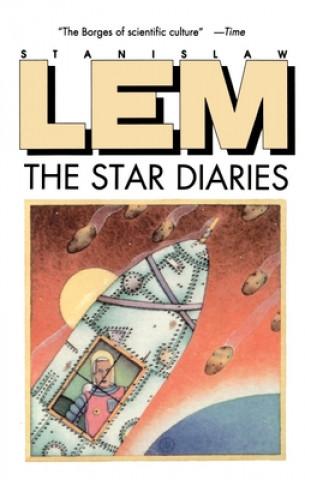
Ijon Tichy, Lem's Candide of the Cosmos, encounters bizarre civilizations and creatures in space that serve to satirize science, the rational mind, theology, and other icons of human pride. Line drawings by the Author. Translated by Michael Kandel. A Helen and Kurt Wolff Book
To inhabitants of the Gulf Coast region of Louisiana, food is much more than nourishment. The acts of gathering, preparing, and sharing food are ways to raise children, bond with friends, and build community. In Bayou Harvest: Subsistence Practice in Coastal Louisiana, Shana Walton and Helen A. Regis examine how coastal residents deploy self-reliance and care for each other through harvesting and sharing food. Pulling from four years of fieldwork and study, Walton and Regis explore harvesting, hunting, and foraging by Native Americans, Cajuns, and other Bayou residents. This engagement with Indigenous thinkers and their neighbors yields a multifaceted view of subsistence in Louisiana. Readers will learn about coastal residents love for the land and water, their deep connections to place, and how they identify with their food and game heritage. The book also delves into their worries about the future, particularly storms, pollution, and land loss in the coastal region. Using a set of narratives that documents the everyday food practices of these communities, the authors conclude that subsistence is not so much a specific tasks like peeling shrimp or harvesting sassafras, but is fundamentally about what these activities mean to the people of the coast. Drawn together with immersive writing, this book explores a way of life that is vibrant, built on deep historical roots, and profoundly threatened by the gulfs shrinking coast. Autorid: Helen A. Regis, Shana Walton
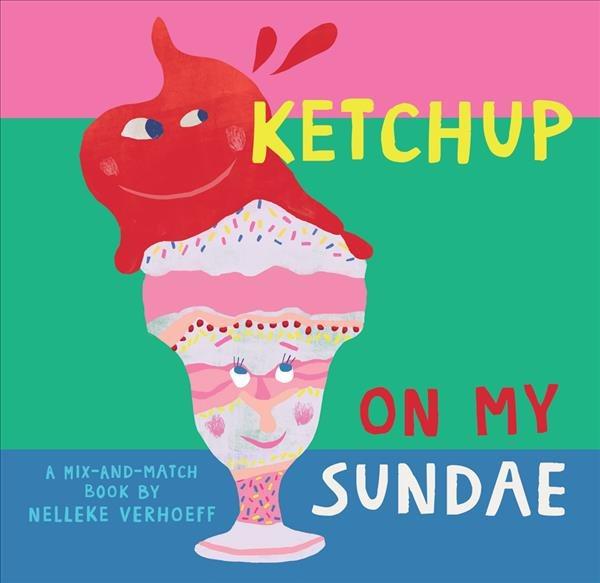
"Mix and match foods in this flavorful split-page board book to create dishes that sound delicious . . . or hilariously revolting! This interactive addition to the Mix-and-Match Series will build vocabulary and spark conversations about the flavors and textures of different foods. Explore the sensory experience of eating various foods in a safe, clean way!"-- Mix and match foods in this flavorful split-page board book to create dishes that sound delicious . . . or hilariously revolting! This interactive addition to the Mix-and-Match Series will build vocabulary and spark conversations about the flavors and textures of different foods. Explore the sensory experience of eating various foods in a safe, clean way! Mix and match foods in this flavorful split-page board book to create dishes that sound delicious . . . or hilariously revolting! Autorid: Nelleke Verhoeff, Nelleke Verhoeff
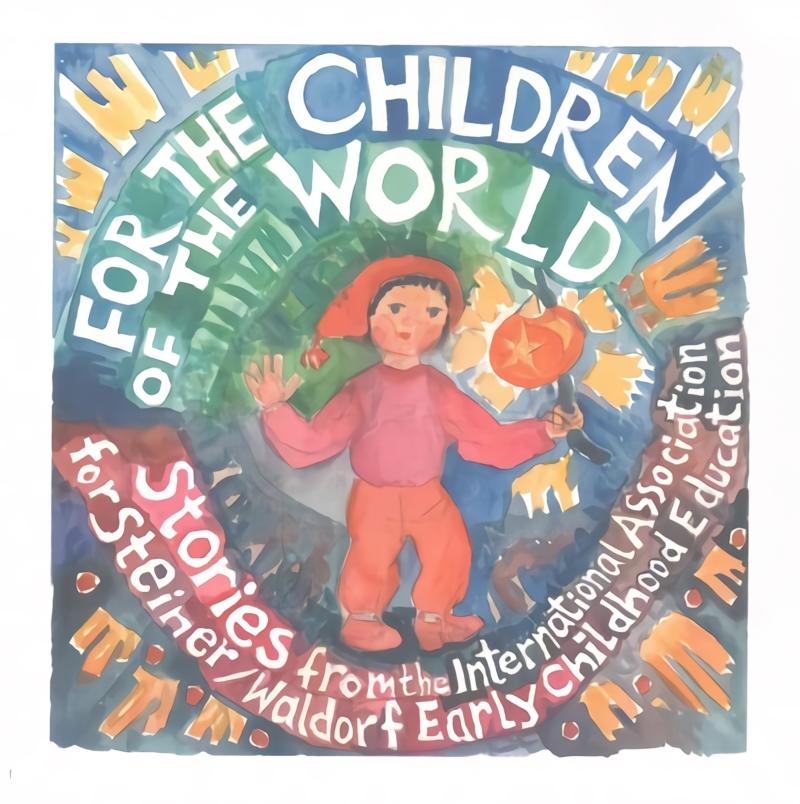
Have you heard about the little possum who wanted a peach? Why did a princess wish for speaking grapes, smiling apples and ringing peaches? Do you know how the robin got his red breast, or what happened when Taijin went to live with the Seven Thunders? This little book gathers 24 delightful stories from all corners of the globe, along with 10 delicious recipes, all suitable for young children. The stories and recipes were sent by representatives of the 29 Member Associations that are part of IASWECE, the International Association for Steiner/Waldorf Early Childhood Education, and all proceeds from the sale of this book will support IASWECEs work on behalf of Waldorf early childhood education around the world. Autorid: Louise deForest
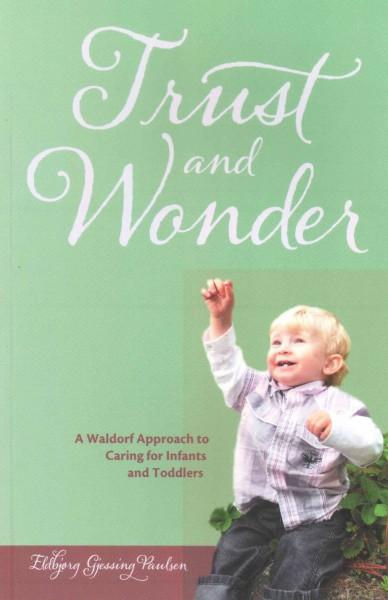
What do infants and toddlers need from us? It is said that human beings learn more in the first three years than in the next thirty. With the utmost reverence for this amazing period of life, a firm grounding in anthroposophy, and many practical examples, an experienced Waldorf kindergarten teacher and mentor here offers the fruits of her many years of living and working with the youngest children. This concise, accessible book is written out of the author's experience with integrating children under three into a Waldorf kindergarten in Norway. Perfect for a parent/child group study, or for schools considering how to integrate infants and toddlers in their program, it includes sections on the fourfold human being as a basis for Waldorf education; stages of child development in the first three years; the importance of imitation; the development of the foundational senses; creating a good daily routine; play and play materials; and much more. Autorid: Eldbjorg Gjessing Paulsen
Burns and other mechanical trauma cause a brutal destruction of the skin. It represents 6% of hospitalizations in reanimation service of the Yaounde central hospital. The mortality of this trauma has reduced but remains preoccupying. Depending on the depth of the burn, the epidermis and the dermis are completely destroyed. The anarchy created by the destruction of the corresponding extra cellular matrix (ECM) compels the cells to fill the gap by secreting masses of collagen during normal scaring processes. This scarring could evolve into contractures which have aesthetic and more importantly functional consequences.Scar reconstruction techniques have evolved with time. Split thickness grafts, and full grafts are been used with certain advantages and inconveniences. In the last ten years, new studies have been carried out in developed countries using artificial dermis which are biological bio-materials of collagen and sulfated glycosaminoglycans, made similar to normal ECM, with interesting perspectives. in poor Cameroon, we contribute to the management of functional disabilities due to scar contractures by showing the feasibility and the interest of using this regeneration template
The Bloodline Feud: an omnibus edition of the first two novels in Charles Stross's The Merchant Princes seriesThe six families of the Clan rule the kingdom of Gruinmarkt from behind the scenes. They are a mixture of nobility and criminal conspirators whose power to walk between their world and ours makes them rich in both. Miriam, a hip tech journalist from Boston, discovers her alternate-world relatives with explosive results that shake three worlds. Now, as the prodigal Countess Helge Thorold-Hjorth, she finds herself ensnared in schemes and plots centuries in the making. She is surrounded by unlikely allies, lethal contraband, and-most dangerous of all-her family. To avoid a slippery slope down to an unmarked grave, Miriam must build a power base of her own-with unexpected consequences for three different time lines, including the quasi-Victorian one exploited by the hidden family.
All Texts in German and Englisch Seine Kritik an der deutschen Sprache beginnt Twain mit der Feststellung, dass es keine andere Sprache gebe, die so ungeordnet und unsystematisch sei wie die deutsche. In einer intensiven Auseinandersetzung mit der deutschen Sprache hat sich die aus Detroit stammende Lizzie Roberts mit diesem faszinierenden Text auseinandergesetzt. In ihre Illustrationen fließen viele Jahre ihres eigenen Erlernens der deutschen Sprache ein. Es erscheint eine Vorzugsausgabe mit einem signierten Multiple von Lizzie Roberts, einer hochwertiger Künstlertasche und signiertem Buch.
All Texts in German and Englisch Früher sah man nach Amsterdam oder Kopenhagen, heute ist die Liebe zum Fahrrad auch in anderen europäischen Metropolen nicht mehr zu übersehen. Bunt, vielseitig und kreativ bewegen sich die Radfahrer:innen durch die Städte. Die Wahl des Rades sagt dabei viel darüber aus, wer sie sind oder sein wollen. Der Berliner Zeichner Jakob Hinrichs, Fahrer eines betagten Hollandrades, hat genau hingesehen und mit seinem unvergleichlichen Strich eine Typologie entwickelt, die nicht nur für Zweirad-Fans eine Augenweide ist. Von Trash-Radler:innen über die Speed-Queen bis zur Beigen Brigade vom Lande rollen die "Modern Cyclists" durch die Stadt. Hinrichs' Zeichnungen lassen sofort weitere Bilder im Kopf entstehen und die Beschreibungen seiner Radler-Typen werden zu einer pointierten Gesellschaftssatire: Der moderne Mensch fährt Fahrrad! Ein garantiert autofreies Buch. Mit einem Vorwort von Ingwar Perowanowitsch und einem wiederentdeckten Text von Theodor Herzl über das Radfahren. Colorful, versatile and creative, cyclists move through the cities. Their choice of bike says a lot about who they are or want to be. The Berlin based illustrator Jakob Hinrichs, rider of an old but beloved Dutch bike, has taken a close look and created a trenchant social satire with his incomparable stroke: 55 humorously described and portrayed cyclists types - from the trash cyclist to the speed queen to the beige brigade from the countryside. With a foreword by Ingwar Perowanwitsch and a rediscovered tribute to cycling by Theodor Herzl from the year 1896.
Janice Campbell Paul was just an ordinary American woman, not particularly religious or spiritual, when she was stricken with fibromyalgia, an illness so inexplicable that even the doctors were left puzzled. Slowly, as the sickness took over, she lost the life she had known. As friends and family eased their way out of her life, she was left alone, completely dependent on a wheelchair as she struggled to adjust to her new world. It was then that she discovered love. First, the love of God, which, she believes, created a series of miraculous events that set her life on a different course completely, and enabled her to walk again. The other love, no less powerful, was for a young man, many years her junior, in faraway West Bengal. Their long-distance relationship gave her the courage to dream again. It also gave her the courage to follow her calling and, equipped with a Bible and a heart full of faith, she travelled to the remote village of Bhat Bandh in Bengal. Together, she and the young man built a church, worked with an orphanage and struggled in a culture that would never accept their love or secret marriage. The couple moved to Kathmandu, where Janice lived for many years, though the struggles and challenges they faced eventually destroyed their marriage and their faith in their purpose together. Now 64, Janice is still walking...a bit slower but still determined to go out and tell the world about her healing, about a God that lives in a most imperfect woman and to show others that there is hope in a very dark world.
Von Erich Kästner bis zum Widerstand gegen die Nazis. Walter Triers Rolle in der britischen Propaganda. Vom britischen Informationsministerium bekam Walter Trier den Auftrag, ein Flugblatt zu der bedeutungsvollen Geste zu gestalten. Er tat es meisterhaft in Form eines Leporellos. Auf der Vorderseite sieht man den Diktator vor einem blauen Himmel mit großem V in Form von Kondensstreifen eines britischen Fliegers. Auf der Rückseite wird Hitler in Posen mit dem V konfrontiert, bis er sich schließlich an einem Balken in V-Form aufhängt. Dieser Band, der die Reproduktion des Original-Flugblatts enthält, beschäftigt sich eingehend mit dem Widerstand Walter Triers gegen die Nazis. In einem erhellenden Text von Philip Oltermann wird detailliert die Entstehungsgeschichte der britischen Propaganda erklärt sowie die Rolle des Kästner-Illustrators Walter Trier darin. Aus dem großen Fundus des Walter-Trier-Archivs speisen sich die zahreichen schaurig-satirischen Zeichnungen Triers, die seinen Widerstand gegen die Deutschen belegen. Widerstand bis zum Sieg über die Nazis, dafür stand das V. Nachdem Nazideutschland Belgien besetzt hatte, war der frühere Justizminister mit der Regierung ins Exil geflohen. In London moderierte er am 14. Januar 1941 eine denkwürdige Sendung bei Radio Belgique, dem französischsprachigen Sender der BBC. Dort schlug er seinen Landsleuten einen gemeinsamen Code vor - den Buchstaben V, »weil V der Anfangsbuchstabe der Worte >VictoireVrijheid Vom britischen Informationsministerium bekam Walter Trier den Auftrag, ein Flugblatt zu der bedeutungsvollen Geste zu gestalten. Er tat es meisterhaft in Form eines Leporellos. Auf der Vorderseite sieht man den Diktator vor einem blauen Himmel mit großem V in Form von Kondensstreifen eines britischen Fliegers. Auf der Rückseite wird Hitler in Posen mit dem V konfrontiert, bis er sich schließlich an einem Balken in V-Form aufhängt. Unser Band enthält zwei erklärende Texte: vom deutsch-englischen Guardian-Korrespondenten Philip Oltermann und der Trier-Expertin Antje M. Warthorst. Mit zahlreichen satirischen Illustrationen von Walter Trier gegen Adolf Hitler und die Nazis. Beigelegt ist die Reproduktion des Original-Leporellos.
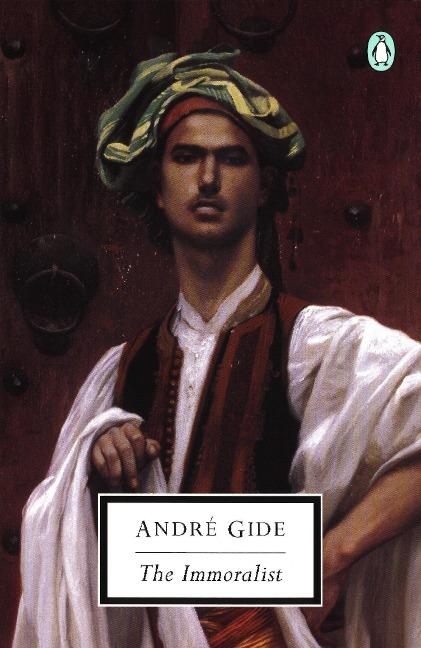
"The humanist has four leading characteristics-curiosity, a free mind, belief in good taste, and a belief in the human race-and all four are present in Gide. . . . The humanist of our age." -E. M. ForsterA Penguin ClassicIn The Immoralist, André Gide presents the confessional account of a man seeking the truth of his own nature. The story's protagonist, Michel, knows nothing about love when he marries the gentle Marceline out of duty to his father. On the couple's honeymoon to Tunisia, Michel becomes very ill, and during his recovery he meets a young Arab boy whose radiant health and beauty captivate him. An awakening for him both sexually and morally, Michel discovers a new freedom in seeking to live according to his own desires. But, as he also discovers, freedom can be a burden. A frank defense of homosexuality and a challenge to prevailing ethical concepts, The Immoralist is a literary landmark, marked by Gide's masterful, pure, simple style.For more than seventy years, Penguin has been the leading publisher of classic literature in the English-speaking world. With more than 1,800 titles, Penguin Classics represents a global bookshelf of the best works throughout history and across genres and disciplines. Readers trust the series to provide authoritative texts enhanced by introductions and notes by distinguished scholars and contemporary authors, as well as up-to-date translations by award-winning translators.
The first ICBM to be developed and deployed by the United States, the Atlas had a range of 5500 nautical miles and could achieve a speed of 15,500 mph. Depending on configuration, it could be equipped with either a W-49 (1.45 megaton) or W-38 (4.5 megaton) thermonuclear warhead. The Atlas' development can be traced to a series of research and development studies performed in the wake of WWII by the Convair company. These led to the company winning a contract in 1951 for a long range missile. The three-engine XSM-65A design that eventually emerged featured a thin skin, inflated by internal fuel pressure like a balloon, and had "one and a half" stages. In this configuration, both the main booster and sustainer engines ignited at lift-off, with the boosters dropped in flight. (This unique feature was intended to make certain the sustainer engine could fire at high altitudes, something later determined to not be a problem). The missile burned kerosene and liquid oxygen fuel, and relied on a radio-command / inertial guidance system. After some teething problems including the loss of the prototype Atlas, the missile flew successfully on December 17, 1957. A little under two years later, the first USAF Atlas ICBM squadron consisting of three missiles on unprotected pads was activated at Vandenburg AFB. Subsequent deployments featured hardened "coffins" in which the missile would be stored horizontally. After a launch order was issued, the Atlas would be raised, fueled, and launched - a hazardous process that took about fifteen minutes. The system's inherent vulnerability and long reaction time eventually led the Air Force to construct silos similar to those used with the Titan I, which lowered the response time considerably. The use of volatile fuel mixtures in the confined silo environment proved to be extremely dangerous however, and led to four catastrophic accidents. As second generation missiles came on the scene such as the Titan II and Minuteman, Atlas became obsolete. By April 1965, all Atlas ICBMs were phased out. At the peak 129 of the missiles were deployed, and nearly 350 were built during the program. Many of these would be recycled as launch vehicles for satellites. Notably, members of the Atlas family placed four of America's Mercury astronauts in orbit. Created by the Air Force for the men who stood "on alert" with the Atlas, this technical manual contains descriptions of the HGM-16F missile, launch complex, handling and transport, checkout and launch operations, emergency procedures, and more. Originally restricted, it has been declassified and is reprinted here in book form. Some portions have been reformatted, but care has been taken to preserve the integrity of the text.
The gods are here.And they want blood.Mal Blackburn has uncovered truths that were buried for a lifetime; secrets that reshaped her past and shattered her future. Now crowned the God-Killer, she may be the keeper of the most dangerous secret of all. Beside her husband, Ash Acheron, she must learn to survive a world remade by gods and war and perhaps return to places she swore she would never see again.Alina Acheron burns for revenge. With princess Mareena Noor, Kai Blackburn, and Dawn at her side, she might finally have the strength to claim it. But vengeance is never simple. Old grudges fester, secrets refuse to stay buried, and even the ghost of the one she loved may stand in her way.Arden Briar and Ylva set out on a journey that will alter their fates forever, while princess Rio Hawthorne fights to save her people from the tightening grip of the witches.Bryn Wynter searches for his younger brother, though the path ahead may cost him himself. And as the witches draw ever closer to their final battle, the world stands on the brink of ruin.Blood will be spilt.No one is safe.
"Welch eine herrliche Hommage an die Berge und die Liebe" Su¿ddeutsche ZeitungIn einem fotografischen Nachlass entdeckte die holländische Fotografin Andrea Stultiens diese Serie von Doppelportaits eines Paares bei ihrem jährlichen Alpen-Urlaub. Auf erstaunlich gut komponierten Fotografien sehen wir die beiden langsam altern und erleben sie in der malerischen Kulisse der Alpen. In dieser Neuausgabe des mit dem Deutschen Fotobuchpreis ausgezeichneten Bandes ist ein Essay der FAZ-Journalistin Melanie Mühl mit abgedruckt, die sich auf die Spuren der beiden Unbekannten begeben hat und dabei auf interessante Fragen stieß.