A delightfully illustrated selection of the great Daoist writings of Zhuangzi by bestselling cartoonist C. C. TsaiC. C. Tsai is one of Asia's most popular cartoonists, and his editions of the Chinese classics have sold more than 40 million
Language: English, Binding: Paperback, Number of pages: 288, Publishers: Princeton University Press, Author: C. C. Tsai,Brian Bruya, ISBN-13: 9780691179766, Date of issue: 2021
Language: English, Binding: Paperback, Number of pages: 352, Publishers: Princeton University Press, Author: Jonathan Marc Gribetz, ISBN-13: 9780691176802, Date of issue: 2024
Democracy for Realists assails the romantic folk-theory at the heart of contemporary thinking about democratic politics and government, and offers a provocative alternative view grounded in the actual human nature of democratic citizens. Christopher Achen and Larry Bartels deploy a wealth of social-scientific evidence, including ingenious original analyses of topics ranging from abortion politics and budget deficits to the Great Depression and shark attacks, to show that the familiar ideal of thoughtful citizens steering the ship of state from the voting booth is fundamentally misguided. They demonstrate that voters - even those who are well informed and politically engaged - mostly choose parties and candidates on the basis of social identities and partisan loyalties, not political issues. They also show that voters adjust their policy views and even their perceptions of basic matters of fact to match those loyalties. When parties are roughly evenly matched, elections often turn on irrelevant or misleading considerations such as economic spurts or downturns beyond the incumbents' control; the outcomes are essentially random. Thus, voters do not control the course of public policy, even indirectly.
Featuring comedic captions revealing what dogs are really thinking while they do their number twos, this eye-watering collection of photos is guaranteed to gross you out while cracking you up. The perfect gift for lovers of toilet humour, this poo-blication is a steaming tribute to the bodily functions of our four-legged friends.
Calculus. For some of us, the word conjures up memories of ten-pound textbooks and visions of tedious abstract equations. And yet, in reality, calculus is fun and accessible, and surrounds us everywhere we go. In Everyday Calculus, Oscar Fernandez demonstrates that calculus can be used to explore practically any aspect of our lives, including the most effective number of hours to sleep and the fastest route to get to work. He also shows that calculus can be both useful--determining which seat at the theater leads to the best viewing experience, for instance--and fascinating--exploring topics such as time travel and the age of the universe. Throughout, Fernandez presents straightforward concepts, and no prior mathematical knowledge is required. For advanced math fans, the mathematical derivations are included in the appendixes. The book features a new preface that alerts readers to new interactive online content, including demonstrations linked to specific figures in the book as well as an online supplement. Whether you're new to mathematics or already a curious math enthusiast, Everyday Calculus will convince even die-hard skeptics to view this area of math in a whole new way.
Most attempts to explain market failures seek to pinpoint triggering mechanisms that occur hours, days, or weeks before the collapse. Sornette proposes a radically different view: the underlying cause can be sought months and even years before the abrupt, catastrophic event in the build-up of cooperative speculation, which often translates into an accelerating rise of the market price, otherwise known as a "bubble." Anchoring his sophisticated, step-by-step analysis in leading-edge physical and statistical modeling techniques, he unearths remarkable insights and some predictions--among them, that the "end of the growth era" will occur around 2050. Sornette probes major historical precedents, from the decades-long "tulip mania" in the Netherlands that wilted suddenly in 1637 to the South Sea Bubble that ended with the first huge market crash in England in 1720, to the Great Crash of October 1929 and Black Monday in 1987, to cite just a few. He concludes that most explanations other than cooperative self-organization fail to account for the subtle bubbles by which the markets lay the groundwork for catastrophe.
Language: English, Binding: Paperback, Number of pages: 624, Publishers: Princeton University Press, Author: Sarah Rose,Eric R. Eaton, ISBN-13: 9780691175614, Date of issue: 2022
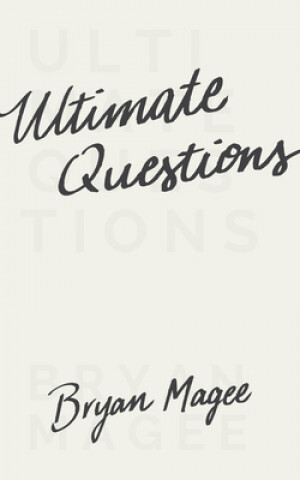
We human beings had no say in existing - we just opened our eyes and found ourselves here. We have a fundamental need to understand who we are and the world we live in. Reason takes us a long way, but mystery remains. In Ultimate Questions, acclaimed philosopher Bryan Magee provocatively argues that we have no way of fathoming our own natures or finding definitive answers to the big questions we all face. Magee urges us to be the mapmakers of what is intelligible, and to identify the boundaries of meaningfulness. He traces this tradition of thought to his chief philosophical mentors - Locke, Hume, Kant, and Schopenhauer - and shows why this approach to the enigma of existence can enrich our lives and transform our understanding of the human predicament. As Magee puts it, "There is a world of difference between being lost in the daylight and being lost in the dark."
In Climate Shock, Gernot Wagner and Martin Weitzman explore in lively, clear terms the likely repercussions of a hotter planet, drawing on and expanding from work previously unavailable to general audiences. They show that the longer we wait to act, the more likely an extreme event will happen. A city might go underwater. A rogue nation might shoot particles into the Earth's atmosphere, geoengineering cooler temperatures. Zeroing in on the unknown extreme risks that may yet dwarf all else, the authors look at how economic forces that make sensible climate policies difficult to enact, make radical would-be fixes like geoengineering all the more probable. What we know about climate change is alarming enough. What we don't know about the extreme risks could be far more dangerous. Wagner and Weitzman help readers understand that we need to think about climate change in the same way that we think about insurance--as a risk management problem, only here on a global scale.
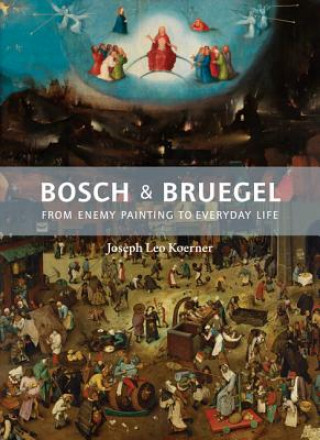
In this visually stunning and much anticipated book, acclaimed art historian Joseph Koerner casts the paintings of Hieronymus Bosch and Pieter Bruegel in a completely new light, revealing how the painting of everyday life was born from what seems its polar opposite: the depiction of an enemy hell-bent on destroying us. Supreme virtuoso of the bizarre, diabolic, and outlandish, Bosch embodies the phantasmagorical force of painting, while Bruegel, through his true-to-life landscapes and frank depictions of peasants, is the artistic avatar of the familiar and ordinary. But despite their differences, the works of these two artists are closely intertwined. Bruegel began his career imitating Bosch's fantasies, and it was Bosch who launched almost the whole repertoire of later genre painting. But Bosch depicts everyday life in order to reveal it as an alluring trap set by a metaphysical enemy at war with God, whereas Bruegel shows this enemy to be nothing but a humanly fabricated mask. Attending closely to the visual cunning of these two towering masters, Koerner uncovers art history's unexplored underside: the image itself as an enemy.
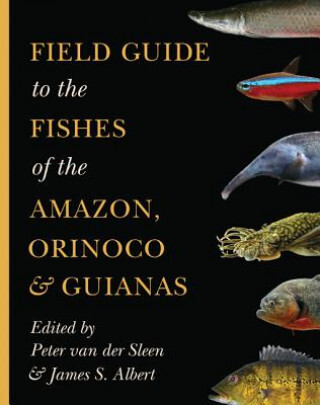
The Amazon and Orinoco basins in northern South America are home to the highest concentration of freshwater fish species on earth, with more than 3,000 species allotted to 564 genera. Amazonian fishes include piranhas, electric eels, freshwater stingrays, a myriad of beautiful small-bodied tetras and catfishes, and the largest scaled freshwater fish in the world, the pirarucu. Field Guide to the Fishes of the Amazon, Orinoco, and Guianas provides descriptions and identification keys for all the known genera of fishes that inhabit Greater Amazonia, a vast and still mostly remote region of tropical rainforests, seasonally flooded savannas, and meandering lowland rivers.
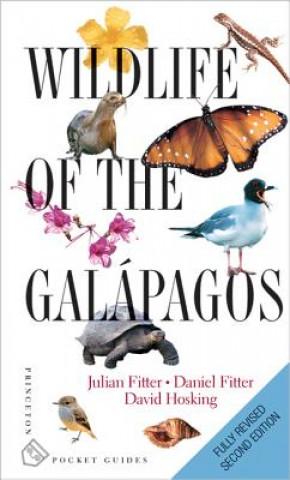
The most comprehensive identification guide to the wildlife of the Gal pagosSince its first publication more than a decade ago, Wildlife of the Gal pagos has become the definitive, classic field guide to the natural splendors of thi
Language: English, Binding: Paperback, Number of pages: 304, Publishers: Princeton University Press, Author: Joseph S. Wilson,Olivia Messinge Carril, ISBN-13: 9780691175492, Date of issue: 2021
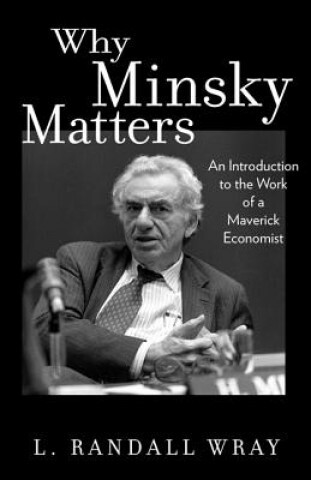
Perhaps no economist was more vindicated by the global financial crisis than Hyman P. Minsky (1919 - 96). Although a handful of economists raised alarms as early as 2000, Minsky's warnings began a half-century earlier, with writings that set out a compelling theory of financial instability. Yet even today he remains largely outside mainstream economics; few people have a good grasp of his writings, and fewer still understand their full importance. Why Minsky Matters makes the maverick economist's critically valuable insights accessible to general readers for the first time. L. Randall Wray shows that by understanding Minsky we will not only see the next crisis coming but we might be able to act quickly enough to prevent it.
Stalin was the unchallenged dictator of the Soviet Union for so long that most historians have dismissed the officials surrounding him as mere yes-men and political window dressing. On Stalin's Team overturns this view, revealing that behind Stalin was a group of loyal men who formed a remarkably effective team with him from the late 1920s until his death in 1953. Drawing on extensive original research, Sheila Fitzpatrick provides the first in-depth account of this inner circle and their families. She vividly describes how these dedicated comrades-in-arms not only worked closely with Stalin, but also constituted his social circle. Stalin's team included the wily security chief Beria; Andreev, who traveled to provincial purges while listening to Beethoven on a portable gramophone; and Khrushchev, who finally disbanded the team four years after Stalin's death. Taking readers from the cataclysms of the Great Purges and World War II to the paranoia of Stalin's final years, On Stalin's Team paints an entirely new picture of Stalin within his milieu--one that transforms our understanding of how the Soviet Union was ruled during much of its existence.
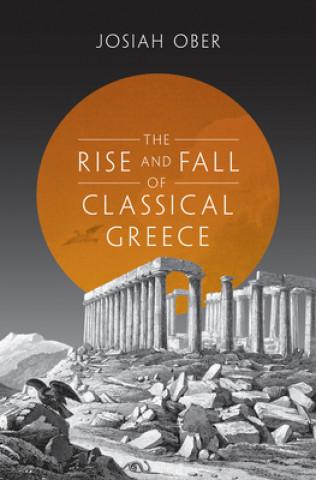
Why did Greece reach such heights in the classical period--and why only then? And how, after "the Greek miracle" had endured for centuries, did the Macedonians defeat the Greeks, seemingly bringing an end to their glory? Drawing on a massive body of newly available data and employing novel approaches to evidence, Josiah Ober offers a major new history of classical Greece and an unprecedented account of its rise and fall. Ober argues that Greece's rise was no miracle but rather the result of political breakthroughs and economic development. The extraordinary emergence of citizen-centered city-states transformed Greece into a society that defeated the mighty Persian Empire. Yet Philip and Alexander of Macedon were able to beat the Greeks in the Battle of Chaeronea in 338 BCE, a victory made possible by the Macedonians' appropriation of Greek innovations. After Alexander's death, battle-hardened warlords fought ruthlessly over the remnants of his empire. But Greek cities remained populous and wealthy, their economy and culture surviving to be passed on to the Romans--and to us.
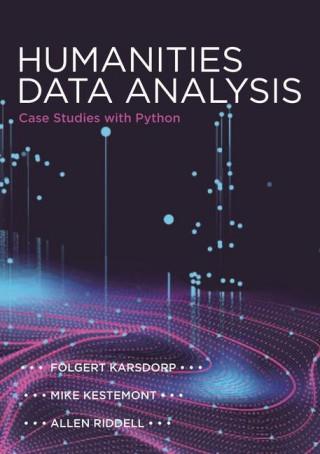
Language: English, Binding: Hardback, Number of pages: 360, Publishers: Princeton University Press, Author: Folgert Karsdorp,Allen Riddell,Mike Kestemont, ISBN-13: 9780691172361, Date of issue: 2021
Here is the essential companion to Welcome to the Universe, a New York Times bestseller that was inspired by the enormously popular introductory astronomy course for non-science majors that Neil deGrasse Tyson, Michael A. Strauss, and J. Richard Gott taught together at Princeton. This problem book features more than one hundred problems and exercises used in the original course - ideal for anyone who wants to deepen their understanding of the original material and to learn to think like an astrophysicist.
At a time when we seek a closer connection with the natural world, this beautiful deck invites us to celebrate the earth and the rhythm of her seasons. Combining the two fundamental spiritualities of Nature Wicca and Druidry Philip and Stephanie Carr-Gomm, together with artist Will Worthington, have created a tarot of extraordinary depth and relevance to help guide and illuminate your life. The powerful images have emerged from a vast store of teachings and story-telling rooted in our ancient past. Use them as gateways to your inner spiritual world, and deepen your knowledge of yourself and of the earth. Let the natural wisdom of DruidCraft bring you insight and inspiration for the life issues that you face today. Autorid: Philip Carr-Gomm, Stephanie Carr-Gomm, Will Worthington
A bilingual volume that reveals an intriguing world of courtly love and satire in medieval Portugal and Spain The rich tradition of troubadour poetry in western Iberia had all but vanished from history until the discovery of several ancient cancioneiros, or songbooks, in the nineteenth century. These compendiums revealed close to 1,700 songs, or cantigas, composed by around 150 troubadours from Galicia, Portugal, and Castile in the thirteenth and early fourteenth centuries. In Cantigas, award-winning translator Richard Zenith presents a delightful selection of 124 of these poems in English versions that preserve the musical quality of the originals, which are featured on facing pages. By turns romantic, spiritual, ironic, misogynist, and feminist, these lyrics paint a vibrant picture of their time and place, surprising us with attitudes and behaviors that are both alien and familiar. The book includes the three major kinds of cantigas. While cantigas de amor (love poems in the voice of men) were largely inspired by the troubadour poetry of southern France, cantigas de amigo (love poems voiced by women) derived from a unique native oral tradition in which the narrator pines after her beloved, sings his praises, or mocks him. In turn, cantigas de escárnio are satiric, and sometimes outrageously obscene, lyrics whose targets include aristocrats, corrupt clergy, promiscuous women, and homosexuals. Complete with an illuminating introduction on the history of the cantigas, their poetic characteristics, and the men who composed and performed them, this engaging volume is filled with exuberant and unexpected poems. Autorid: Richard Zenith
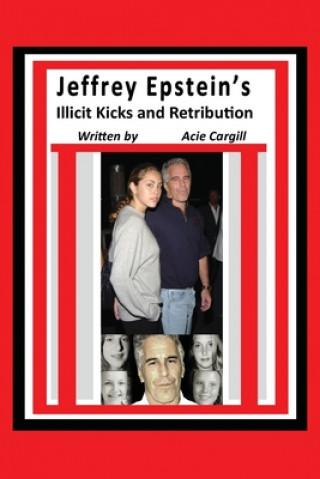
The straight world has a hard time accepting Jeffrey Epstein. He is a self-made billionaire. A college dropout from a hard-working family. He has a gift for gab and a gift for math. He went to work with investment bankers selling deals and he is good at it
Language: English, Binding: Paperback, Number of pages: 304, Publishers: Princeton University Press, Author: Ken Behrens, ISBN-13: 9780691170671, Date of issue: 2025
A lively and engaging look at logic puzzles and their role in mathematics, philosophy, and recreation Logic puzzles were first introduced to the public by Lewis Carroll in the late nineteenth century and have been popular ever since. Games like Sudoku and Mastermind are fun and engrossing recreational activities, but they also share deep foundations in mathematical logic and are worthy of serious intellectual inquiry. Games for Your Mind explores the history and future of logic puzzles while enabling you to test your skill against a variety of puzzles yourself. In this informative and entertaining book, Jason Rosenhouse begins by introducing readers to logic and logic puzzles and goes on to reveal the rich history of these puzzles. He shows how Carroll's puzzles presented Aristotelian logic as a game for children, yet also informed his scholarly work on logic. He reveals how another pioneer of logic puzzles, Raymond Smullyan, drew on classic puzzles about liars and truthtellers to illustrate Kurt Gödel's theorems and illuminate profound questions in mathematical logic. Rosenhouse then presents a new vision for the future of logic puzzles based on nonclassical logic, which is used today in computer science and automated reasoning to manipulate large and sometimes contradictory sets of data. Featuring a wealth of sample puzzles ranging from simple to extremely challenging, this lively and engaging book brings together many of the most ingenious puzzles ever devised, including the "Hardest Logic Puzzle Ever," metapuzzles, paradoxes, and the logic puzzles in detective stories. Autorid: Jason Rosenhouse
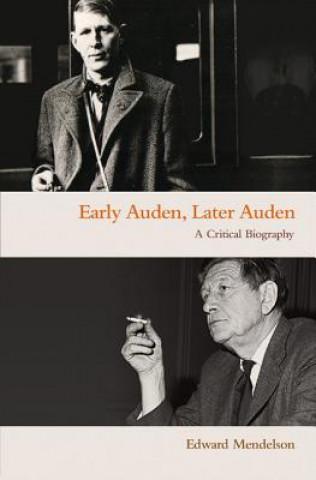
Presented in one volume for the very first time, and updated with new archival discoveries, Early Auden, Later Auden reintroduces Edward Mendelson's acclaimed, two-part biography of W. H. Auden (1907-73), one of the greatest literary figures of the twentieth century. This book offers a detailed history and interpretation of Auden's oeuvre, spanning the duration of his career from juvenilia to his final works in poetry as well as theatre, film, radio, opera, essays, and lectures.
"The sharp polarisation of left and right is commonly dwelt on as the big political handicap of our times. Angry divisions on the right itself get less attention. Conservatism fills that gap. Across Europe and the US, a liberal right is at war with an illiberal right. As the leading force in politics, it is vital to understand the roots of the right's struggle with itself, how it stands and how it is likely to come out. From its early 19th-century origins to now, conservatism never finally settled on howfar to compromise with liberalism, democracy and the capitalist world out of which both grew. By the late 19th century, the mainstream right had come to terms with all three. Its reward was lasting success in the next century and beyond. On the politicalfringes and among ethical-cultural critics, a recalcitrant right, unreconciled to liberal democracy, never died. Resistance to liberal democracy is seen today in the hard right, a strange but potent alliance of hyper-liberal globalists and anti-liberal localists. Conservatism focuses on an exemplary core of France, Britain, Germany and the United States. It describes the parties, politicians and thinkers of the right, bringing out strengths and weaknesses in conservative thought. An appendix includes definitions of leading terms, a brief account of conservatism's philosophical origins and mini-lives of more than 200 conservatives. Historical and topical, neither celebration nor caricature, Conservatism is a unique, panoramic survey of the Western world'sdominant political tradition"-- A fresh and sharp-eyed history of political conservatism from its nineteenth-century origins to todays hard RightFor two hundred years, conservatism has defied its reputation as a backward-looking creed by confronting and adapting to liberal modernity. By doing so, the Right has won long periods of power and effectively become the dominant tradition in politics. Yet, despite their success, conservatives have continued to fight with each other about how far to compromise with liberalism and democracyor which values to defend and how. In Conservatism, Edmund Fawcett provides a gripping account of this conflicted history, clarifies key ideas, and illuminates quarrels within the Right today.Focusing on the United States, Britain, France, and Germany, Fawcetts vivid narrative covers thinkers and politicians. They include the forerunners James Madison, Edmund Burke, and Joseph de Maistre; early friends and foes of capitalism; defenders of religion; and builders of modern parties, such as William McKinley and Lord Salisbury. The book chronicles the cultural critics and radical disruptors of the 1920s and 1930s, recounts how advocates of laissez-faire economics broke the post 1945 consensus, and describes how Donald Trump, Boris Johnson, and their European counterparts are pushing conservatism toward a nation-first, hard Right.An absorbing, original history of the Right, Conservatism portrays a tradition as much at war with itself as with its opponents. Autorid: Edmund Fawcett
"In the typical narrative of modern Sino-European relations, George Macartney's disastrous 1793 mission to China plays a central role. His failure to open China to trade and diplomatic relations with Britain sets the stage for a long and bitter clash of cultures that led to the Opium Wars of the nineteenth century and perhaps even to the mistrust that still pervades relations today. In this book, Tonio Andrade draws on a wealth of neglected archival material to tell a very different story: that of the last European delegation that was ever received in the traditional Chinese court, the Dutch mission of 1794-95"-- From the acclaimed author of The Gunpowder Age, a book that casts new light on the history of China and the West at the turn of the nineteenth centuryGeorge Macartney's disastrous 1793 mission to China plays a central role in the prevailing narrative of modern Sino-European relations. Summarily dismissed by the Qing court, Macartney failed in nearly all of his objectives, perhaps setting the stage for the Opium Wars of the nineteenth century and the mistrust that still marks the relationship today. But not all European encounters with China were disastrous. The Last Embassy tells the story of the Dutch mission of 1795, bringing to light a dramatic but little-known episode that transforms our understanding of the history of China and the West.Drawing on a wealth of archival material, Tonio Andrade paints a panoramic and multifaceted portrait of an age marked by intrigues and war. China was on the brink of rebellion. In Europe, French armies were invading Holland. Enduring a harrowing voyage, the Dutch mission was to be the last European diplomatic delegation ever received in the traditional Chinese court. Andrade shows how, in contrast to the British emissaries, the Dutch were men with deep knowledge of Asia who respected regional diplomatic norms and were committed to understanding China on its own terms.Beautifully illustrated with sketches and paintings by Chinese and European artists, The Last Embassy suggests that the Qing court, often mischaracterized as arrogant and narrow-minded, was in fact open, flexible, curious, and cosmopolitan. Autorid: Tonio Andrade
Among the many constants that appear in mathematics, , e, and i are the most familiar. Following closely behind is ,, or gamma, a constant that arises in many mathematical areas yet maintains a profound sense of mystery. In a tantalizing blend of history and mathematics, Julian Havil takes the reader on a journey through logarithms and the harmonic series, the two defining elements of gamma, toward the first account of gamma's place in mathematics.
In 2009, Harper's Magazine sent war-crimes expert Lawrence Douglas to Munich to cover the last chapter of the lengthiest case ever to arise from the Holocaust: the trial of eighty-nine-year-old John Demjanjuk. Demjanjuks legal odyssey began in 1975, when American investigators received evidence alleging that the Cleveland autoworker and naturalized US citizen had collaborated in Nazi genocide. In the years that followed, Demjanjuk was stripped of his American citizenship and sentenced to death by a Jerusalem court as "Ivan the Terrible" of Treblinkaonly to be cleared in one of the most notorious cases of mistaken identity in legal history. Finally, in 2011, after eighteen months of trial, a court in Munich convicted the native Ukrainian of assisting Hitlers SS in the murder of 28,060 Jews at Sobibor, a death camp in eastern Poland.An award-winning novelist as well as legal scholar, Douglas offers a compulsively readable history of Demjanjuks bizarre case. The Right Wrong Man is both a gripping eyewitness account of the last major Holocaust trial to galvanize world attention and a vital meditation on the laws effort to bring legal closure to the most horrific chapter in modern history. Autorid: Lawrence Douglas
In today's social climate of acknowledged and growing inequality, why are there not greater efforts to tax the rich? In this wide-ranging and provocative book, Kenneth Scheve and David Stasavage ask when and why countries tax their wealthiest citizensand their answers may surprise you.Taxing the Rich draws on unparalleled evidence from twenty countries over the last two centuries to provide the broadest and most in-depth history of progressive taxation available. Scheve and Stasavage explore the intellectual and political debates surrounding the taxation of the wealthy while also providing the most detailed examination to date of when taxes have been levied against the rich and when they haven't. Fairness in debates about taxing the rich has depended on different views of what it means to treat people as equals and whether taxing the rich advances or undermines this norm. Scheve and Stasavage argue that governments don't tax the rich just because inequality is high or risingthey do it when people believe that such taxes compensate for the state unfairly privileging the wealthy. Progressive taxation saw its heyday in the twentieth century, when compensatory arguments for taxing the rich focused on unequal sacrifice in mass warfare. Today, as technology gives rise to wars of more limited mobilization, such arguments are no longer persuasive.Taxing the Rich shows how the future of tax reform will depend on whether political and economic conditions allow for new compensatory arguments to be made. Autorid: Kenneth Scheve, David Stasavage