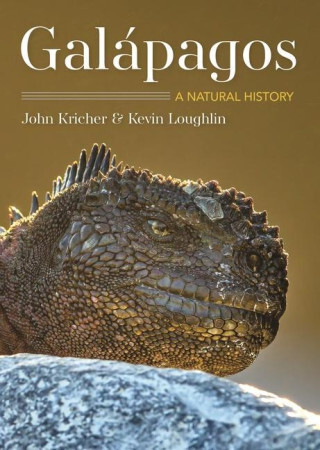
 Princeton University Press Galapagos Language: English, Binding: Paperback, Number of pages: 496, Publishers: Princeton University Press, Author: Kevin Loughlin, ISBN-13: 9780691217246, Date of issue: 2022 | 1 | 46,90 € | Vaata | ||
 Princeton University Press Velvet Ants of North America Language: English, Binding: Paperback, Number of pages: 400, Publishers: Princeton University Press, Author: Kevin A. Williams,Aaron D. Pan,Joseph S. Wilson, ISBN-13: 9780691212043, Date of issue: 2023 | 1 | 37,59 € | Vaata | ||
 Princeton University Press Calculus Reordered Language: English, Binding: Paperback, Number of pages: 248, Publishers: Princeton University Press, Author: David M. Bressoud, ISBN-13: 9780691218786, Date of issue: 2021 | 1 | 28,64 € | Vaata | ||
1 | 88,71 € | Vaata | |||
1 | 8,19 € | Vaata | |||
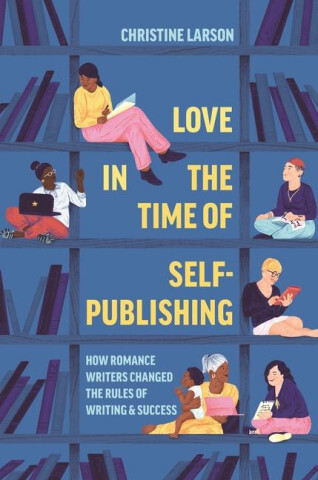 Princeton University Press Love in the Time of Self–Publishing – How Romance Writers Changed the Rules of Writing and Success Language: English, Binding: Hardback, Number of pages: 232, Publishers: Princeton University Press, Author: Christine M. Larson, ISBN-13: 9780691217406, Date of issue: 2024 | 1 | 36,75 € | Vaata | ||
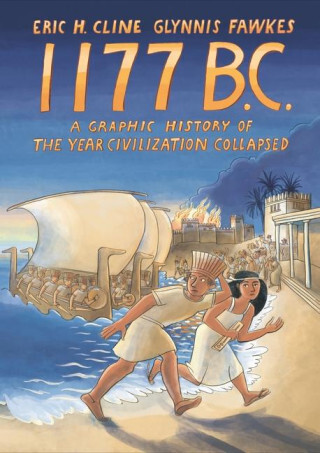 Princeton University Press 1177 B.C. – A Graphic History of the Collapse of Civilization Language: English, Binding: Paperback, Number of pages: 256, Publishers: Princeton University Press, Author: Eric H. Cline,Glynnis Fawkes, ISBN-13: 9780691213026, Date of issue: 2024 | 1 | 19,19 € | Vaata | ||
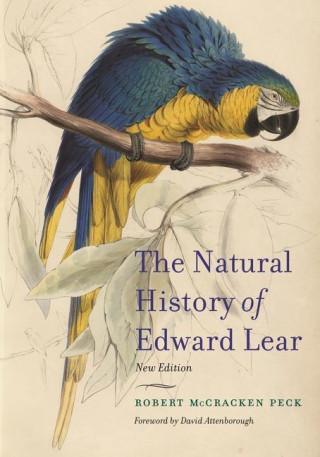 Princeton University Press Natural History of Edward Lear, New Edition Language: English, Binding: Paperback, Number of pages: 240, Publishers: Princeton University Press, Author: Robert McCracken Peck, ISBN-13: 9780691217239, Date of issue: 2021 | 1 | 31,49 € | Vaata | ||
 | |||||
 Princeton University Press Philosophy, Politics, and Economics Language: English, Binding: Paperback, Number of pages: 338, Publishers: Princeton University Press, Author: Gerald Gaus,John Thrasher, ISBN-13: 9780691219790, Date of issue: 2021 | 1 | 40,69 € | Vaata | ||
 Princeton University Press The World the Plague Made – The Black Death and the Rise of Europe Language: English, Binding: Paperback, Number of pages: 640, Publishers: Princeton University Press, Author: James Belich, ISBN-13: 9780691219165, Date of issue: 2024 | 1 | 29,86 € −0,04 € | Vaata | ||
 Hack Mechanic Press Ran When Parked: How I Resurrected a Decade-Dead 1972 BMW 2002tii and Road-Tripped it a Thousand Miles Back Home, and How You Can, Too The author buys a long-dead vintage BMW sight-unseen, travels a thousand miles to where it sits, gets it running, and drives it home. During the twelve-day trip, he finds that what began as a story of man-versus-machine turns into something else entirely-- | 1 | 19,09 € | Vaata | ||
1 | 21,60 € | Vaata | |||
Princeton University Press Dweller in Shadows: A Life of Ivor Gurney GTIN: 9780691212784 Raamatud The first comprehensive biography of an extraordinary English poet and composer whose life was haunted by fighting in the First World War and, later, confinement in a mental asylumIvor Gurney (18901937) wrote some of the most anthologized poems of the First World War and composed some of the greatest works in the English song repertoire, such as Sleep. Yet his life was shadowed by the trauma of the war and mental illness, and he spent his last fifteen years confined to a mental asylum. In Dweller in Shadows, Kate Kennedy presents the first comprehensive biography of this extraordinary and misunderstood artist.A promising student at the Royal College of Music, Gurney enlisted as a private with the Gloucestershire regiment in 1915 and spent two years in the trenches of the Western Front. Wounded in the arm and subsequently gassed during the Battle of Passchendaele, Gurney was recovering in hospital when his first collection of poems, Severn and Somme, was published. Despite episodes of depression, he resumed his music studies after the war until he was committed to an asylum in 1922. At times believing he was Shakespeare and that the machines under the floor were torturing him, he nevertheless continued to write and compose, leaving behind a vast body of unpublished work when he died of tuberculosis. Drawing on extensive archival research and spanning literary criticism, history, psychiatry and musicology, this compelling narrative sets Gurneys life and work against the backdrop of the war and his institutionalisation, probing the links between madness, suffering and creativity.Facing death in the trenches, Gurney hoped that history might not forget me quite. This definitive account of his life and work helps ensure that he will indeed be remembered. Autorid: Kate Kennedy | 1 | 54,30 € | Vaata | ||
 Princeton University Press Guanzi GTIN: 9780691218984 Raamatud Language: English, Binding: Paperback, Number of pages: 592, Publishers: Princeton University Press, Author: W. Allyn Rickett, ISBN-13: 9780691218984, Date of issue: 2021 | 1 | 90,49 € | Vaata | ||
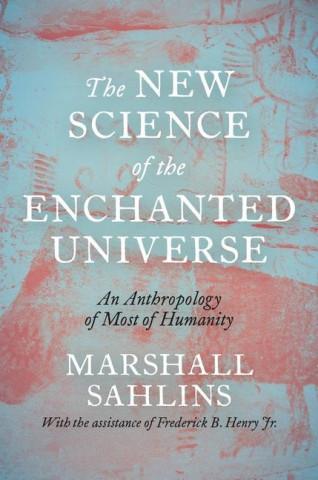 Princeton University Press The New Science of the Enchanted Universe – An Anthropology of Most of Humanity GTIN: 9780691215938 Raamatud Language: English, Binding: Paperback, Number of pages: 208, Publishers: Princeton University Press, Author: Marshall Sahlins, ISBN-13: 9780691215938, Date of issue: 2023 | 1 | 20,99 € | Vaata | ||
 Timber Press African Orchids in the Wild and in Cultivation GTIN: 9781604691214 Raamatud Although Africa has fewer orchid species than the other tropical continents, some of the world's most spectacular, and increasingly popular, terrestrial orchids are found in Africa. This guide, covering sub-Saharan Africa, includes all plants available from nurseries and many that are being grown but are not yet available in the trade. | 1 | 32,79 € | Vaata | ||
 Oxford University Press Read with Oxford: Stage 6: Dragon Doughnuts When a dragon steals the king's doughnuts, it's up to Rose to save the day. This Read with Oxford Stage 6 book is for children who are reading independently. Read with Oxford offers an exciting range of carefully levelled reading books to build your child's reading confidence. | 1 | 7,66 € | Vaata | ||
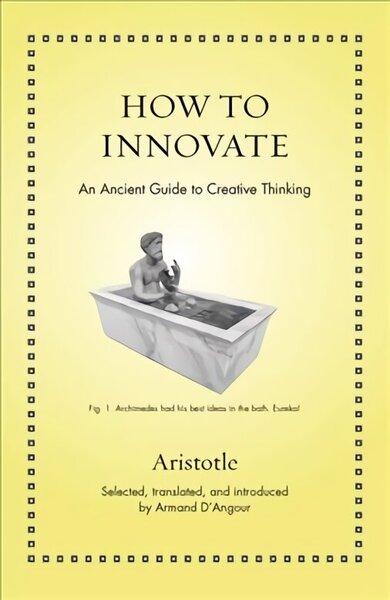 Princeton University Press How to Innovate: An Ancient Guide to Creative Thinking GTIN: 9780691213736 Raamatud "What we can learn about fostering innovation and creative thinking in any field from some of the most inventive people of all times-the ancient Greeks. When it comes to innovation and creative thinking, we are still catching up with the ancient Greeks. Between 800 and 300 BCE, they changed the world with astonishing inventions-democracy, the alphabet, philosophy, logic, rhetoric, mathematical proof, rational medicine, coins, architectural canons, drama, lifelike sculpture, and competitive athletics. None of this happened by accident. Recognizing the power of the new and trying to understand and promote the conditions that make it possible, the Greeks were the first to write about innovation and even the first to record a word for forging something new. In short, the Greeks "invented" innovation itself-and they still have a great deal to teach us about it. How to Innovate is an engaging and entertaining introduction to key ideas about-and examples of-innovation and creativite thinking from ancient Greece. Armand D'Angour provides lively new translations of selections from Aristotle, Diodorus, and Athenaeus, with the original Greek text on facing pages. These writings illuminate and illustrate timeless principles of creating something new-borrowing or adapting existing ideas or things, cross-fertilizing disparate elements, or criticizing and disrupting current conditions. From the true story of Archimedes's famous "Eureka!" moment, to Aristotle's thoughts on physical change and political innovation, to accounts of how disruption and competition drove invention in Greek warfare and the visual arts, How to Innovate is filled with valuable insights about how change happens-and how to bring it about"-- What we can learn about fostering innovation and creative thinking from some of the most inventive people of all timesthe ancient GreeksWhen it comes to innovation and creative thinking, we are still catching up with the ancient Greeks. Between 800 and 300 BCE, they changed the world with astonishing inventionsdemocracy, the alphabet, philosophy, logic, rhetoric, mathematical proof, rational medicine, coins, architectural canons, drama, lifelike sculpture, and competitive athletics. None of this happened by accident. Recognizing the power of the new and trying to understand and promote the conditions that make it possible, the Greeks were the first to write about innovation and even the first to record a word for forging something new. In short, the Greeks invented innovation itselfand they still have a great deal to teach us about it.How to Innovate is an engaging and entertaining introduction to key ideas aboutand examples ofinnovation and creative thinking from ancient Greece. Armand DAngour provides lively new translations of selections from Aristotle, Diodorus, and Athenaeus, with the original Greek text on facing pages. These writings illuminate and illustrate timeless principles of creating something newborrowing or adapting existing ideas or things, cross-fertilizing disparate elements, or criticizing and disrupting current conditions.From the true story of Archimedess famous Eureka! moment, to Aristotles thoughts on physical change and political innovation, to accounts of how disruption and competition drove invention in Greek warfare and the visual arts, How to Innovate is filled with valuable insights about how change happensand how to bring it about. Autorid: Aristotle, Armand D'Angour | 1 | 20,60 € | Vaata | ||
 Princeton University Press Rise and Fall of Imperial China: The Social Origins of State Development GTIN: 9780691215167 Raamatud How social networks shaped the imperial Chinese stateChina was the worlds leading superpower for almost two millennia, falling behind only in the last two centuries and now rising to dominance again. What factors led to imperial Chinas decline? The Rise and Fall of Imperial China offers a systematic look at the Chinese state from the seventh century through to the twentieth. Focusing on how short-lived emperors often ruled a strong state while long-lasting emperors governed a weak one, Yuhua Wang shows why lessons from Chinas history can help us better understand state building.Wang argues that Chinese rulers faced a fundamental trade-off that he calls the sovereigns dilemma: a coherent elite that could collectively strengthen the state could also overthrow the ruler. This dilemma emerged because strengthening state capacity and keeping rulers in power for longer required different social networks in which central elites were embedded. Wang examines how these social networks shaped the Chinese state, and vice versa, and he looks at how the rulers pursuit of power by fragmenting the elites became the final culprit for Chinas fall.Drawing on more than a thousand years of Chinese history, The Rise and Fall of Imperial China highlights the role of elite social relations in influencing the trajectories of state development. Autorid: Yuhua Wang | 1 | 35,99 € | Vaata | ||
1 | 16,57 € −0,04 € | Vaata | |||
1 | 9,20 € | Vaata | |||
1 | 8,38 € | Vaata | |||
1 | 6,64 € | Vaata | |||
1 | 665,31 € | Vaata | |||
1 | 203,75 € | Vaata | |||
 Princeton University Press Tales of Impossibility GTIN: 9780691218724 Raamatud A comprehensive look at four of the most famous problems in mathematics | 1 | 17,69 € | Vaata | ||
Princeton University Press Lives of Houses GTIN: 9780691214870 Raamatud Notable writersincluding UK poet laureate Simon Armitage, Julian Barnes, Margaret MacMillan, and Jenny Uglowcelebrate our fascination with the houses of famous literary figures, artists, composers, and politicians of the pastWhat can a house tell us about the person who lives there? Do we shape the buildings we live in, or are we formed by the places we call home? And why are we especially fascinated by the houses of the famous and often long-dead? In Lives of Houses, notable biographers, historians, critics, and poets explores these questions and more through fascinating essays on the houses of great writers, artists, composers, and politicians of the past.Editors Kate Kennedy and Hermione Lee are joined by wide-ranging contributors, including Simon Armitage, Julian Barnes, David Cannadine, Roy Foster, Alexandra Harris, Daisy Hay, Margaret MacMillan, Alexander Masters, and Jenny Uglow. We encounter W. H. Auden, living in joyful squalor in New York's St. Mark's Place, and W. B. Yeats in his flood-prone tower in the windswept West of Ireland. We meet Benjamin Disraeli, struggling to keep up appearances, and track the lost houses of Virginia Woolf and Elizabeth Bowen. We visit Benjamin Britten in Aldeburgh, England, and Jean Sibelius at Ainola, Finland. But Lives of Houses also considers those who are unhoused, unwilling or unable to establish a homefrom the bewildered poet John Clare wandering the byways of England to the exiled Zimbabwean writer Dambudzo Marechera living on the streets of London.With more than forty illustrations, Lives of Houses illuminates what houses mean to us and how we use them to connect to and think about the past. The result is a fresh and engaging look at house and home.Featuring Alexandra Harris on moving house ? Susan Walker on Morocco's ancient Roman House of Venus ? Hermione Lee on biographical quests for writers houses ? Margaret MacMillan on her mother's Toronto house ? a poem by Maura Dooley, "Visiting Orchard House, Concord, Massachusetts"the house in which Louisa May Alcott wrote and set her novel Little Women ? Felicity James on William and Dorothy Wordsworth's Dove Cottage ? Robert Douglas-Fairhurst at home with Tennyson ? David Cannadine on Winston Churchill's dream house, Chartwell ? Jenny Uglow on Edward Lear at San Remo's Villa Emily ? Lucy Walker on Benjamin Britten at Aldeburgh, England ? Seamus Perry on W. H. Auden at 77 St. Mark's Place, New York City ? Rebecca Bullard on Samuel Johnson's houses ? a poem by Simon Armitage, "The Manor" ? Daisy Hay at home with the Disraelis ? Laura Marcus on H. G. Wells at Uppark ? Alexander Masters on the fear of houses ? Elleke Boehmer on sites associated with Zimbabwean writer Dambudzo Marechera ? Kate Kennedy on the mental asylums where World War I poet Ivor Gurney spent the last years of his life ? a poem by Bernard O'Donoghue, "Safe Houses" ? Roy Foster on W. B. Yeats and Thoor Ballylee ? Sandra Mayer on W. H. Auden's Austrian home ? Gillian Darley on John Soane and the autobiography of houses ? Julian Barnes on Jean Sibelius and Ainola Autorid: Kate Kennedy, Hermione Lee | 1 | 21,65 € | Vaata | ||
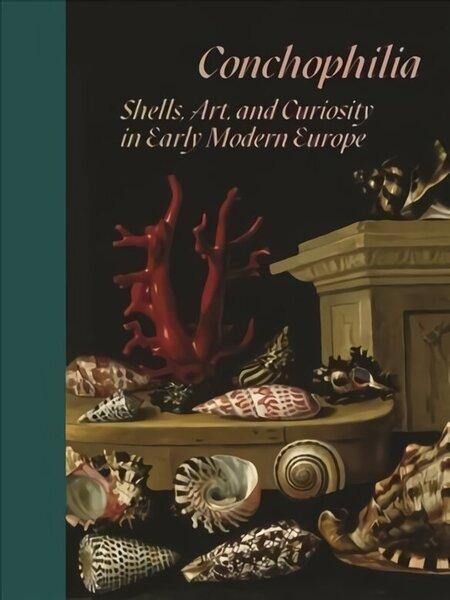 Princeton University Press Conchophilia: Shells, Art, and Curiosity in Early Modern Europe GTIN: 9780691215761 Raamatud A captivating historical look at the cultural and artistic significance of shells in early modern EuropeAmong natures most artful creations, shells have long inspired the curiosity and passion of artisans, artists, collectors, and thinkers. Conchophilia delves into the intimate relationship between shells and people, offering an unprecedented account of the early modern era, when the influx of exotic shells to Europe fueled their study and representation as never before. From elaborate nautilus cups and shell-encrusted grottoes to delicate miniatures, this richly illustrated book reveals how the love of shells intersected not only with the rise of natural history and global trade but also with philosophical inquiry, issues of race and gender, and the ascent of art-historical connoisseurship.Shells circulated at the nexus of commerce and intellectual pursuit, suggesting new ways of thinking about relationships between Europe and the rest of the world. The authors focus on northern Europe, where the interest and trade in shells had its greatest impact on the visual arts. They consider how shells were perceived as exotic objects, the role of shells in courtly collections, their place in still-life tableaus, and the connections between their forms and those of the human body. They examine how artists gilded, carved, etched, and inked shells to evoke the permeable boundary between art and nature. These interactions with shells shaped the ways that early modern individuals perceived their relation to the natural world, and their endeavors in art and the acquisition of knowledge.Spanning painting and print to architecture and the decorative arts, Conchophilia uncovers the fascinating ways that shells were circulated, depicted, collected, and valued during a time of remarkable global change. Autorid: Marisa Anne Bass, Anne Goldgar, Hanneke Grootenboer, Claudia Swan, Stephanie S. Dickey, Anna Grasskamp, Róisín Watson | 1 | 70,50 € | Vaata | ||
 Dr. Cantz'sche Verlagsges Franziska Opel - Distanz als Nähe / Close and Cold Franziska Opel's works woo and irritate the beholder in the play of associations. | 1 | 30,14 € | Vaata | ||
1 | 15,98 € | Vaata | |||
 Princeton University Press Greek Experience of India GTIN: 9780691217475 Raamatud An exploration of how the Greeks reacted to and interacted with India from the third to first centuries BCEWhen the Greeks and Macedonians in Alexander's army reached India in 326 BCE, they entered a new world. The plants were unrecognizable, the customs of the people various and puzzling. Alexander's conquest ended with his death in 323 BCE, b | 1 | 35,99 € | Vaata | ||
 Grey Candle Publishing Chess Endgame for Beginners GTIN: 9783907269121 Raamatud Do you want to master the arguably most important phase of every chess game? Do you want to reap the fruits of playing a sovereign Opening and Middlegame? Do you want to deliver Checkmate and crush your opponents? If so, th | 1 | 10,09 € | Vaata | ||
Princeton University Press What Makes an Apple?: Six Conversations about Writing, Love, Guilt, and Other Pleasures GTIN: 9780691219905 Raamatud "This book consists of six conversations between Amos Oz and Shira Hadad, who worked closely with Oz as the editor of his novel Judas. The interviews, which took place toward the end of Oz's life, about a decade after the publication of his memoir A Taleof Love and Darkness, capture the writer's thoughts and opinions on many of the subjects that occupied him throughout his life and career, including writing and creation, guilt and love, death and the afterlife. In the first interview, "A Heart Pierced by an Arrow," Oz discusses how he became a writer, along with his writing process and its attendant challenges. "Sometimes" explores Oz's reflections on men, women, and relationships across his experience and work. "A Room of Your Own" sketches his development as a writer on the kibbutz and his eventual decision to leave. In "When Someone Beats up Your Child," Oz discusses the critical reception of his work, and in "What No Writer Can Do" he describes his experience teaching literature, including his thoughts on contemporary modes of literary instruction. In the concluding piece, "The Lights Have Been Changing Without Us for a Long Time," he reflects on other writers and on changes he has observed in himself and others over time. The title comes from a passage in the first interview: Oz says, "What makes an apple? Water, earth, sun, an apple tree, and a bit of fertilizer. But it doesn't look like any of those things. It's made of them but it is not like them. That's how a story is: it certainly is made up of the sum of encounters and experiences and listening.""-- Frank and open conversations between the internationally acclaimed Israeli novelist and the editor of his final novel, Judas are presented in English for the first time. opening a window into the life of a towering literary figure and offering unique insights about his artistic and personal evolution. Revelatory talks about art and life with internationally acclaimed Israeli novelist Amos OzIn the last years of his life, the writer Amos Oz talked regularly with Shira Hadad, who worked closely with him as the editor of his final novel, Judas. These candid, uninhibited dialogues show a side of Oz that few ever saw. What Makes an Apple? presents the most revealing of these conversations in English for the first time, painting an illuminating and disarmingly intimate portrait of a towering literary figure.In frank and open exchanges that are by turns buoyant, introspective, and argumentative, Oz explains what impels him to begin a story and shares his routines, habits, and challenges as a writer. He discusses the tectonic changes he experienced in his lifetime in relationships between women and men, and describes how his erotic coming of age shaped him not only as a man but also as an author. Oz reflects on his parents, his formative years on a kibbutz, and how he dealt with and learned from his critics, his students, and his fame. He talks about why there is more humor in his later books and gives his exceptional take on fear of death.Resonating with Ozs clear, honest, and humorous voice, What Makes an Apple? offers unique insights about Ozs artistic and personal evolution, and enables readers to explore his work in new ways. Autorid: Amos Oz | 1 | 23,69 € | Vaata | ||
Princeton University Press Distant Shores: Colonial Encounters on China's Maritime Frontier GTIN: 9780691213484 Raamatud A pioneering history that transforms our understanding of the colonial era and China's place in itChina has conventionally been considered a land empire whose lack of maritime and colonial reach contributed to its economic decline after the mid-eighteenth century. Distant Shores challenges this view, showing that the economic expansion of southeastern Chinese rivaled the colonial ambitions of Europeans overseas.In a story that dawns with the Industrial Revolution and culminates in the Great Depression, Melissa Macauley explains how sojourners from an ungovernable corner of China emerged among the commercial masters of the South China Sea. She focuses on Chaozhou, a region in the great maritime province of Guangdong, whose people shared a repertoire of ritual, cultural, and economic practices. Macauley traces how Chaozhouese at home and abroad reaped many of the benefits of an overseas colonial system without establishing formal governing authority. Their power was sustained instead through a mosaic of familial, fraternal, and commercial relationships spread across the ports of Bangkok, Singapore, Saigon, Hong Kong, Shanghai, and Swatow. The picture that emerges is not one of Chinese divergence from European modernity but rather of a convergence in colonial sites that were critical to modern development and accelerating levels of capital accumulation.A magisterial work of scholarship, Distant Shores reveals how the transoceanic migration of Chaozhouese laborers and merchants across a far-flung maritime world linked the Chinese homeland to an ever-expanding frontier of settlement and economic extraction. Autorid: Melissa Macauley | 1 | 59,70 € | Vaata | ||
1 | 2,33 € | Vaata | |||
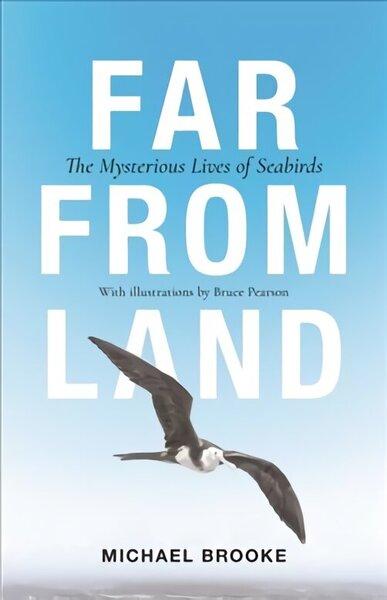 Princeton University Press Far from Land: The Mysterious Lives of Seabirds GTIN: 9780691210322 Raamatud The lives and activities of seabirds as youve never seen them before Seabirds evoke the spirit of the earth's wildest places. They spend large portions of their lives at sea, often far from land, and nest on beautiful and remote islands that humans rarely visit. Thanks to the development of increasingly sophisticated and miniaturized devices that can track their every movement and behavior, it is now possible to observe the mysterious lives of these remarkable creatures as never before. This beautifully illustrated book takes you on a breathtaking journey around the globe to reveal where these birds actually go when they roam the sea, the tactics they employ to traverse vast tracts of ocean, the strategies they use to evade threats, and more. Michael Brooke has visited every corner of the world in his lifelong pursuit of seabirds. Here, he draws on his own experiences and insights as well as the latest cutting-edge science to shed light on the elusive seafaring lives of albatrosses, frigatebirds, cormorants, and other ocean wanderers. Where do puffins go in the winter? How deep do penguins dive? From how far away can an albatross spot a fishing vessel worth following for its next meal? Brooke addresses these and other questions in this delightful book. Along the way, he reveals that seabirds are not the aimless wind-tossed creatures they may appear to be and explains the observational innovations that are driving this exciting area of research. Featuring illustrations by renowned artist Bruce Pearson and packed with intriguing facts, Far from Land provides an extraordinary up-close look at the activities of seabirds. Autorid: Michael Brooke, Bruce Pearson | 1 | 27,29 € | Vaata | ||
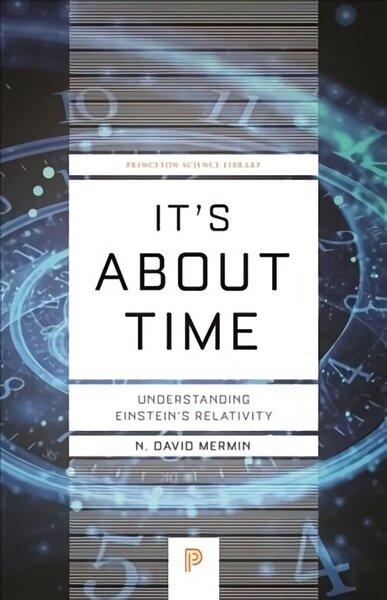 Princeton University Press It's About Time: Understanding Einstein's Relativity GTIN: 9780691218779 Raamatud A readable and entertaining look at how Einsteins special theory of relativity gives us a new understanding of the nature of timeRelativity ought to be an important part of everyone's education. Its subject is time, with which we all think we are familiar. Einstein's special theory of relativity reveals that some of our most intuitive notions about time are shockingly wrong. This clear, lively, and informal exposition of special relativity takes a highly original approach to introduce readers to the true nature of time. It is accessible to anyone who remembers a little high school algebra and elementary geometry. Its About Time offers deep insights to curious readers who have no technical scientific background. Autorid: N. David Mermin | 1 | 20,60 € | Vaata | ||
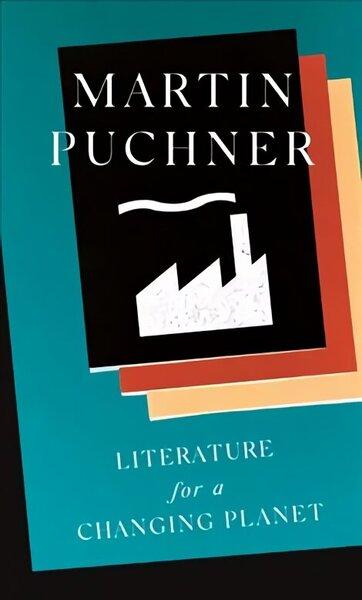 Princeton University Press Literature for a Changing Planet GTIN: 9780691213750 Raamatud Uncovering the ecological thinking behind the idea of world literature since the early 19th century, the author proposes a new way to tell stories in a warming world, showing us how literature can help us recognize our shared humanity, and discusses the possible futures of storytelling. "Reading literature in a time of climate emergency can sometimes feel a bit like fiddling while Rome burns. Yet, at this turning point for the planet, scientists, policymakers, and activists have woken up to the power of stories to fight global warming. In Literature for a Changing Planet, Martin Puchner ranges across four thousand years of world literature to draw vital lessons about how we put ourselves on the path of climate change-and how we might change paths before it's too late. From the Epic of Gilgamesh and the West African Epic of Sunjata to the Communist Manifesto, Puchner reveals world literature in a new light-as an archive of environmental exploitation and a product of a way of life responsible for climate change. Literature depends on millennia of intensive agriculture, urbanization, and resource extraction, from the clay of ancient tablets to the silicon of e-readers. Yet literature also offers powerful ways to change attitudes toward the environment. Puchner uncovers the ecological thinking behind the idea of world literature since the early nineteenth century, proposes a new way of reading in a warming world, shows how literature can help us recognize our shared humanity, and discusses the possible futures of storytelling. If we are to avoid environmental disaster, we must learn to tell the story of humans as a species responsible for global warming. Filled with important insights about the fundamental relationship between storytelling and the environment, Literature for a Changing Planet is a clarion call for readers and writers who care about the fate of life on the planet"-- Why we must learn to tell new stories about our relationship with the earth if we are to avoid climate catastropheReading literature in a time of climate emergency can sometimes feel a bit like fiddling while Rome burns. Yet, at this turning point for the planet, scientists, policymakers, and activists have woken up to the power of stories in the fight against global warming. In Literature for a Changing Planet, Martin Puchner ranges across four thousand years of world literature to draw vital lessons about how we put ourselves on the path of climate changeand how we might change paths before its too late.From the Epic of Gilgamesh and the West African Epic of Sunjata to the Communist Manifesto, Puchner reveals world literature in a new lightas an archive of environmental exploitation and a product of a way of life responsible for climate change. Literature depends on millennia of intensive agriculture, urbanization, and resource extraction, from the clay of ancient tablets to the silicon of e-readers. Yet literature also offers powerful ways to change attitudes toward the environment. Puchner uncovers the ecological thinking behind the idea of world literature since the early nineteenth century, proposes a new way of reading in a warming world, shows how literature can help us recognize our shared humanity, and discusses the possible futures of storytelling.If we are to avoid environmental disaster, we must learn to tell the story of humans as a species responsible for global warming. Filled with important insights about the fundamental relationship between storytelling and the environment, Literature for a Changing Planet is a clarion call for readers and writers who care about the fate of life on the planet. Autorid: Martin Puchner | 1 | 21,43 € | Vaata | ||
 Princeton University Press Spirit of Green: The Economics of Collisions and Contagions in a Crowded World GTIN: 9780691214344 Raamatud "From a Nobel Prize-winning pioneer in environmental economics, an innovative account of how and why "green thinking" could cure many of the world's most serious problems-from global warming to pandemics Solving the world's biggest problems-from climate catastrophe and pandemics to wildfires and corporate malfeasance-requires, more than anything else, coming up with new ways to manage the powerful interactions that surround us. For carbon emissions and other environmental damage, this means ensuring thatthose responsible pay their full costs rather than continuing to pass them along to others, including future generations. In The Spirit of Green, Nobel Prize-winning economist William Nordhaus describes a new way of green thinking that would help us overcome our biggest challenges without sacrificing economic prosperity, in large part by accounting for the spillover costs of economic collisions. In a discussion that ranges from the history of the environmental movement to the Green New Deal, Nordhaus explains how the spirit of green thinking provides a compelling and hopeful new perspective on modern life. At the heart of green thinking is a recognition that the globalized world is shaped not by isolated individuals but rather by innumerable interactionsinside and outside the economy. He shows how rethinking economic efficiency, sustainability, politics, profits, taxes, individual ethics, corporate social responsibility, finance, and more would improve the effectiveness and equity of our society. And heoffers specific solutions-on how to price carbon, how to pursue low-carbon technologies, how to design an efficient tax system, and how to foster international cooperation through climate clubs. The result is a groundbreaking new vision of how we can have our environment and our economy too"-- From a Nobel Prizewinning pioneer in environmental economics, an innovative account of how and why green thinking could cure many of the worlds most serious problemsfrom global warming to pandemicsSolving the worlds biggest problemsfrom climate catastrophe and pandemics to wildfires and corporate malfeasancerequires, more than anything else, coming up with new ways to manage the powerful interactions that surround us. For carbon emissions and other environmental damage, this means ensuring that those responsible pay their full costs rather than continuing to pass them along to others, including future generations. In The Spirit of Green, Nobel Prizewinning economist William Nordhaus describes a new way of green thinking that would help us overcome our biggest challenges without sacrificing economic prosperity, in large part by accounting for the spillover costs of economic collisions.In a discussion that ranges from the history of the environmental movement to the Green New Deal, Nordhaus explains how the spirit of green thinking provides a compelling and hopeful new perspective on modern life. At the heart of green thinking is a recognition that the globalized world is shaped not by isolated individuals but rather by innumerable interactions inside and outside the economy. He shows how rethinking economic efficiency, sustainability, politics, profits, taxes, individual ethics, corporate social responsibility, finance, and more would improve the effectiveness and equity of our society. And he offers specific solutionson how to price carbon, how to pursue low-carbon technologies, how to design an efficient tax system, and how to foster international cooperation through climate clubs.The result is a groundbreaking new vision of how we can have our environment and our economy too. Autorid: William D. Nordhaus | 1 | 36,75 € | Vaata | ||
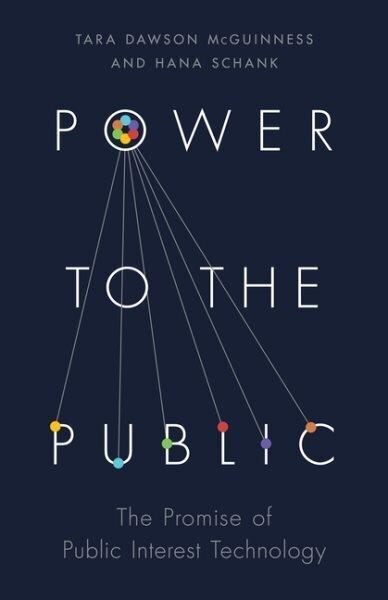 Princeton University Press Power to the Public: The Promise of Public Interest Technology GTIN: 9780691216645 Raamatud Worth a read for anyone who cares about making change happen.Barack ObamaA powerful new blueprint for how governments and nonprofits can harness the power of digital technology to help solve the most serious problems of the twenty-first centuryAs the speed and complexity of the world increases, governments and nonprofit organizations need new ways to effectively tackle the critical challenges of our timefrom pandemics and global warming to social media warfare. In Power to the Public, Tara Dawson McGuinness and Hana Schank describe a revolutionary new approachpublic interest technologythat has the potential to transform the way governments and nonprofits around the world solve problems. Through inspiring stories about successful projects ranging from a texting service for teenagers in crisis to a streamlined foster care system, the authors show how public interest technology can make the delivery of services to the public more effective and efficient.At its heart, public interest technology means putting users at the center of the policymaking process, using data and metrics in a smart way, and running small experiments and pilot programs before scaling up. And while this approach may well involve the innovative use of digital technology, technology alone is no panaceaand some of the best solutions may even be decidedly low-tech.Clear-eyed yet profoundly optimistic, Power to the Public presents a powerful blueprint for how government and nonprofits can help solve societys most serious problems. Autorid: Tara Dawson McGuinness, Hana Schank, Anne-Marie Slaughter, Darren Walker | 1 | 21,89 € | Vaata | ||
Princeton University Press Laissez-Faire Experiment: Why Britain Embraced and Then Abandoned Small Government, 18001914 GTIN: 9780691213415 Raamatud Why Britains attempt at small government proved unable to cope with the challenges of the modern worldIn the nineteenth century, as Britain attained a leading economic and political position in Europe, British policymakers embarked on a bold experiment with small and limited government. By the outbreak of the First World War, however, this laissez-faire philosophy of government had been abandoned and the country had taken its first steps toward becoming a modern welfare state. This book tells the story of Britains laissez-faire experiment, examining why it was done, how it functioned, and why it was ultimately rejected in favor of a more interventionist form of governance.Blending insights from modern economic theory with a wealth of historical evidence, W. Walker Hanlon traces the slow expansion of government intervention across a broad spectrum of government functions in order to understand why and how Britain gave up on laissez-faire. It was not abandoned because Britains leaders lost faith in small government as some have suggested, nor did it collapse under the growing influence of working-class political power. Instead, Britains move away from small government was a pragmatic and piecemeal responseby policymakers who often deeply believed in laissez-faireto the economic forces unleashed by the Industrial Revolution. Autorid: W. Walker Hanlon | 1 | 59,70 € | Vaata | ||
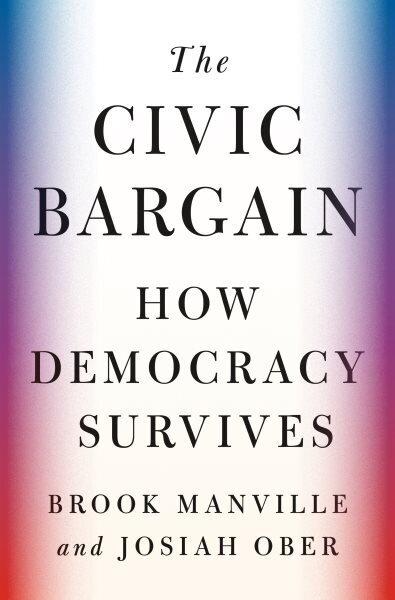 Princeton University Press Civic Bargain: How Democracy Survives GTIN: 9780691218601 Raamatud "A powerful case for democracy and how it can adapt and survive-if we want if toIs democracy in trouble, perhaps even dying? Pundits say so, and polls show that most Americans believe that their country's system of governance is being "tested" or is "under attack." But is the future of democracy necessarily so dire? In The Civic Bargain, Brook Manville and Josiah Ober push back against the prevailing pessimism about the fate of democracy around the world. Instead of an epitaph for democracy, they offer aguide for democratic renewal, calling on citizens to recommit to a "civic bargain" with one another to guarantee civic rights of freedom, equality, and dignity. That bargain also requires them to fulfill the duties of democratic citizenship: governing themselves with no "boss" except one another, embracing compromise, treating each other as civic friends, and investing in civic education for each rising generation.Manville and Ober trace the long progression toward self-government through four key moments in democracy's history: Classical Athens, Republican Rome, Great Britain's constitutional monarchy, and America's founding. Comparing what worked and what failed in each case, they draw out lessons for how modern democracies can survive and thrive. Manville and Ober show that democracy isn't about getting everything we want; it's about agreeing on a shared framework for pursuing our often conflicting aims. Crucially, citizens need to be able to compromise, and must not treat one another as political enemies. And we must accept imperfection; democracy is never finished but evolves and renews itself continually. As long as the civic bargain is maintained-through deliberation, bargaining, and compromise-democracy will live"-- A powerful case for democracy and how it can adapt and surviveif we want it toIs democracy in trouble, perhaps even dying? Pundits say so, and polls show that most Americans believe that their countrys system of governance is being tested or is under attack. But is the future of democracy necessarily so dire? In The Civic Bargain, Brook Manville and Josiah Ober push back against the prevailing pessimism about the fate of democracy around the world. Instead of an epitaph for democracy, they offer a guide for democratic renewal, calling on citizens to recommit to a civic bargain with one another to guarantee civic rights of freedom, equality, and dignity. That bargain also requires them to fulfill the duties of democratic citizenship: governing themselves with no boss except one another, embracing compromise, treating each other as civic friends, and investing in civic education for each rising generation.Manville and Ober trace the long progression toward self-government through four key moments in democracys history: Classical Athens, Republican Rome, Great Britains constitutional monarchy, and Americas founding. Comparing what worked and what failed in each case, they draw out lessons for how modern democracies can survive and thrive. Manville and Ober show that democracy isnt about getting everything we want; its about agreeing on a shared framework for pursuing our often conflicting aims. Crucially, citizens need to be able to compromise, and must not treat one another as political enemies. And we must accept imperfection; democracy is never finished but evolves and renews itself continually. As long as the civic bargain is maintainedthrough deliberation, bargaining, and compromisedemocracy will live. Autorid: Brook Manville, Josiah Ober | 1 | 25,85 € | Vaata | ||
Princeton University Press In Humboldt's Shadow: A Tragic History of German Ethnology GTIN: 9780691216447 Raamatud A compelling history of the German ethnologists who were inspired by Prussian polymath and explorer Alexander von HumboldtThe Berlin Ethnological Museum is one of the world's largest and most important anthropological museums, housing more than a half million objects collected from around the globe. In Humboldt's Shadow tells the story of the German scientists and adventurers who, inspired by Alexander von Humboldt's inclusive vision of the world, traveled the earth in pursuit of a total history of humanity. It also details the fate of their museum, which they hoped would be a scientists' workshop, a place where a unitary history of humanity might emerge.H. Glenn Penny shows how these early German ethnologists assembled vast ethnographic collections to facilitate their study of the multiplicity of humanity, not to confirm emerging racist theories of human difference. He traces how Adolf Bastian filled the Berlin museum in an effort to preserve the records of human diversity, yet how he and his supporters were swept up by the imperialist currents of the day and struck a series of Faustian bargains to ensure the growth of their collections. Penny describes how influential administrators such as Wilhelm von Bode demanded that the museum be transformed into a hall for public displays, and how Humboldt's inspiring ideals were ultimately betrayed by politics and personal ambition.In Humboldt's Shadow calls on museums to embrace anew Bastian's vision while deepening their engagement with indigenous peoples concerning the provenance and stewardship of these collections. Autorid: H. Glenn Penny | 1 | 28,64 € | Vaata | ||
 Princeton University Press Queer Career: Sexuality and Work in Modern America GTIN: 9780691215303 Raamatud A masterful history of the queer workforce in AmericaWorkplaces have traditionally been viewed as straight spaces in which queer people passed. As a result, historians have directed limited attention to the experiences of queer people on the job. Queer Career rectifies this, offering an expansive historical look at sexual minorities in the modern American workforce. Arguing that queer workers were more visible than hidden and, against the backdrop of state aggression, vulnerable to employer exploitation, Margot Canaday positions employment and fear of job loss as central to gay life in postwar America.Rather than finding that many midcentury employers tried to root out gay employees, Canaday sees an early version of dont ask / dont tell: in all kinds of work, as long as queer workers were discreet, they were valued for the lower wages they could be paid, their contingency, their perceived lack of familial ties, and the ease with which they could be pulled in and pushed out of the labor market. Across the socioeconomic spectrum, they were harbingers of post-Fordist employment regimes we now associate with precarity. While progress was not linear, by centurys end some gay workers rejected their former discretion, and some employers eventually offered them protection unattained through law. Pushed by activists at the corporate grass roots, business emerged at the forefront of employment rights for sexual minorities. It did so, at least in part, in response to the way that queer workers aligned with, and even prefigured, the labor system of late capitalism.Queer Career shows how queer history helps us understand the recent history of capitalism and labor and rewrites our understanding of the queer past. Autorid: Margot Canaday | 1 | 21,89 € | Vaata | ||
Princeton University Press To Build a Black Future: The Radical Politics of Joy, Pain, and Care GTIN: 9780691219073 Raamatud An incisive portrait of how the new Black politics can forge a future centered on collective action, community, and careWhen #BlackLivesMatter emerged in 2013, it animated the most consequential Black-led mobilization since the civil rights and Black power era. Today, the hashtag turned rallying cry is but one expression of a radical reorientation toward Black politics, protest, and political thought. To Build a Black Future examines the spirit and significance of this insurgency, offering a revelatory account of a new political cultureresponsive to pain, suffused with joy, and premised on careemerging from the centuries-long arc of Black rebellion, a tradition that traces back to the Black slave.Drawing on his own experiences as an activist and organizer, Christopher Paul Harris takes readers inside the Movement for Black Lives (M4BL) to chart the propulsive trajectory of Black politics and thought from the Middle Passage to the present historical moment. Carefully attending to the social forces that produce Black struggle and the contradictions that arise within it, Harris illustrates how M4BL gives voice to an abolitionist praxis that bridges the past, present, and future, outlining a political project at once directed inward to the Black community while issuing an outward challenge to the world.Essential reading for the age of #BlackLivesMatter, this visionary and provocative book reveals how the radical politics of joy, pain, and care, in sharp contrast to liberal political thought, can build a Black future that transcends ideology and pushes the boundaries of our political imagination. Autorid: Christopher Paul Harris | 1 | 23,75 € | Vaata | ||
Princeton University Press Shield of Achilles GTIN: 9780691218656 Raamatud Back in print for the first time in decades, Audens National Book Awardwinning poetry collection, in a critical edition that introduces it to a new generation of readersThe Shield of Achilles, which won the National Book Award in 1956, may well be W. H. Audens most important, intricately designed, and unified book of poetry. In addition to its famous title poem, which reimagines Achilless shield for the modern age, when war and heroism have changed beyond recognition, the book also includes two sequencesBucolics and Horae Canonicaethat Auden believed to be among his most significant work. Featuring an authoritative text and an introduction and notes by Alan Jacobs, this volume brings Audens collection back into print for the first time in decades and offers the only critical edition of the work.As Jacobs writes in the introduction, Audens collection is the boldest and most intellectually assured work of his career, an achievement that has not been sufficiently acknowledged. Describing the books formal qualities and careful structure, Jacobs shows why The Shield of Achilles should be seen as one of Audens most central poetic statementsa richly imaginative, beautifully envisioned account of what it means to live, as human beings do, simultaneously in nature and in history. Autorid: W. H. Auden, Alan Jacobs | 1 | 20,60 € | Vaata | ||
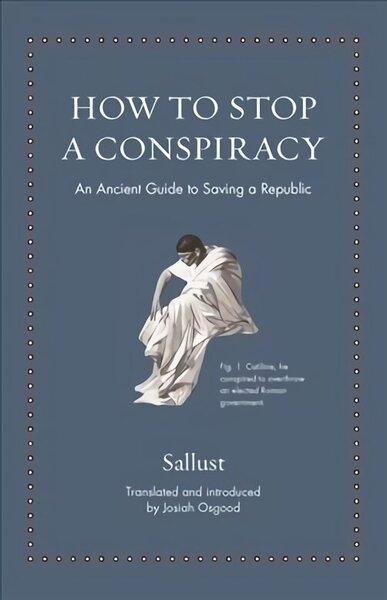 Princeton University Press How to Stop a Conspiracy: An Ancient Guide to Saving a Republic GTIN: 9780691212364 Raamatud "In 63 BC the corrupt aristocrat Lucius Sergius Catilina (Catiline in English) aimed to topple the Roman Republic. Catiline attracted a wide array of supporters: debt-ridden men and women from prominent families, youths looking for adventure, the less well-off tried of a political class that seemed only to look out for its own interests. Frustrated in his efforts to be elected consul, Catiline fled Rome while several of his associates stayed behind with secret plans to torch the city and murder its leading politicians. The story of Catiline and his conspiracy is recounted by the Roman historian Sallust in his short book, The War with Catiline Sallust's account culminates with the unmasking of these urban conspirators at a meeting of the Senate, followed by a stormy debate that led to their execution, and then the ultimate defeat of Catiline and his legions in battle. While Catiline is at the heart of the story, some of the most important figures of Roman history play key roles in the story: Cicero, the ambitious young senator who calculated how best to protect Rome; Julius Caesar, who delivers a memorable speech defending the conspirators against execution; and Cato, an ardent defender of the Republic. Catiline himself is a fascinating figure - a bitter and haunted man, determined to destroy Rome, yet sympathetic to the plight of struggling Romans. This book offers a new translation of Sallust's account of the thwarted conspiracy framed for a contemporary audience. As the translator Josiah Osgood notes in his introduction, Sallust's work is not limited to just recounting the conspiracy but engages with broader questions, still relevant today, about how republics flourish and how they break down. Sallust also poignantly describes how the corruption of Rome's leaders, worried less about the common good and more about their own advancement, spread like a disease through Roman society. Claims of conspiracy, across the political spectrum, have abounded in our time much as they did in Ancient Rome. While Catiline's plot was real and the charges of conspiracy well-founded, Osgood aims to show how Sallust's short work can help us to think about the allure of explaining the world through conspiracies, both real and imagined. This makes it a still useful source ofwisdom for reflecting on a very real problem for contemporary republics"-- An energetic new translation of an ancient Roman masterpiece about a failed coup led by a corrupt and charismatic politicianIn 63 BC, frustrated by his failure to be elected leader of the Roman Republic, the aristocrat Catiline tried to topple its elected government. Backed by corrupt elites and poor, alienated Romans, he fled Rome while his associates plotted to burn the city and murder its leading politicians. The attempted coup culminated with the unmasking of the conspirators in the Senate, a stormy debate that led to their execution, and the defeat of Catiline and his legions in battle. In How to Stop a Conspiracy, Josiah Osgood presents a brisk, modern new translation of the definitive account of these events, Sallusts The War with Catilinea brief, powerful book that has influenced how generations of readers, including Americas founders, have thought about coups and political conspiracies.In a taut, jaw-dropping narrative, Sallust pleasurably combines juicy details about Catiline and his louche associates with highly quotable moral judgments and a wrenching description of the widespread social misery they exploited. Along the way, we get unforgettable portraits of the bitter and haunted Catiline, who was sympathetic to the plight of Romans yet willing to destroy Rome; his archenemy Cicero, who thwarts the conspiracy; and Julius Caesar, who defends the conspirators and is accused of being one of them.Complete with an introduction that discusses how The War with Catiline has shaped and continues to shape our understanding of how republics live and die, and featuring the original Latin on facing pages, this volume makes Sallusts gripping history more accessible than ever before. Autorid: Sallust, Josiah Osgood | 1 | 19,39 € | Vaata | ||
Princeton University Press Artificial You: AI and the Future of Your Mind GTIN: 9780691216744 Raamatud A guide to AIs thorniest implications that asks: How shall we navigate our brave new world?We are at a monumental turning point in human history. AI is taking intelligence in new directions. The strongest human competitors in chess, go, and Jeopardy! have been beaten by AIs, and AI is getting more sophisticated by the day. Further, AI research is going inside the human brain itself, attempting to augment human minds. It may even create greater-than-human-level intelligence, leading to a new generation of artificial mindsMinds 2.0. Susan Schneider, a philosopher, argues that these undertakings must not be attempted without a richer understanding of the nature of the mind. An insufficient grasp of the underlying philosophical issues could undermine the use of AI and brain enhancement technology, bringing about the demise or suffering of conscious beings. Examining the philosophical questions lying beneath the algorithms, Schneider takes on AIs thorniest implications. Autorid: Susan Schneider | 1 | 20,60 € | Vaata | ||
Princeton University Press Fire Is upon Us: James Baldwin, William F. Buckley Jr., and the Debate over Race in America GTIN: 9780691210773 Raamatud How the legendary debate between a civil rights firebrand and the father of modern conservatism illuminates America's racial divideOn February 18, 1965, an overflowing crowd packed the Cambridge Union in Cambridge, England, to witness a historic televised debate between James Baldwin, the leading literary voice of the civil rights movement, and William F. Buckley Jr., a fierce critic of the movement and America's most influential conservative intellectual. The topic was "the American dream is at the expense of the American Negro," and no one who has seen the debate can soon forget it. Nicholas Buccola's The Fire Is upon Us is the first book to tell the full story of the event, the radically different paths that led Baldwin and Buckley to it, and how the debate and the decades-long clash between the men illuminates the racial divide that continues to haunt America today. Autorid: Nicholas Buccola | 1 | 23,75 € | Vaata | ||
 Princeton University Press World the Plague Made: The Black Death and the Rise of Europe GTIN: 9780691215662 Raamatud A groundbreaking history of how the Black Death unleashed revolutionary change across the medieval world and ushered in the modern ageIn 1346, a catastrophic plague beset Europe and its neighbours. The Black Death was a human tragedy that abruptly halved entire populations and caused untold suffering, but it also brought about a cultural and economic renewal on a scale never before witnessed. The World the Plague Made is a panoramic history of how the bubonic plague revolutionized labour, trade, and technology and set the stage for Europes global expansion.James Belich takes readers across centuries and continents to shed new light on one of historys greatest paradoxes. Why did Europes dramatic rise begin in the wake of the Black Death? Belich shows how plague doubled the per capita endowment of everything even as it decimated the population. Many more people had disposable incomes. Demand grew for silks, sugar, spices, furs, gold, and slaves. Europe expanded to satisfy that demandand plague provided the means. Labour scarcity drove more use of waterpower, wind power, and gunpowder. Technologies like water-powered blast furnaces, heavily gunned galleons, and musketry were fast-tracked by plague. A new crew culture of disposable males emerged to man the guns and galleons.Setting the rise of Western Europe in global context, Belich demonstrates how the mighty empires of the Middle East and Russia also flourished after the plague, and how European expansion was deeply entangled with the Chinese and other peoples throughout the world. Autorid: James Belich | 1 | 70,50 € | Vaata | ||

Otsing: 69121
229 toodet
| 1 | 46,90 € | Vaata | ||
1 | 37,59 € | Vaata | |||
| 1 | 28,64 € | Vaata | ||
1 | 88,71 € | Vaata | |||
1 | 8,19 € | Vaata | |||
1 | 36,75 € | Vaata | |||
1 | 19,19 € | Vaata | |||
1 | 31,49 € | Vaata | |||
| |||||
1 | 40,69 € | Vaata | |||
1 | 29,86 € −0,04 € | Vaata | |||
1 | 19,09 € | Vaata | |||
1 | 21,60 € | Vaata | |||
1 | 54,30 € | Vaata | |||
| 1 | 90,49 € | Vaata | ||
1 | 20,99 € | Vaata | |||
| 1 | 32,79 € | Vaata | ||
1 | 7,66 € | Vaata | |||
1 | 20,60 € | Vaata | |||
1 | 35,99 € | Vaata | |||
1 | 16,57 € −0,04 € | Vaata | |||
1 | 9,20 € | Vaata | |||
1 | 8,38 € | Vaata | |||
1 | 6,64 € | Vaata | |||
1 | 665,31 € | Vaata | |||
1 | 203,75 € | Vaata | |||
| 1 | 17,69 € | Vaata | ||
1 | 21,65 € | Vaata | |||
1 | 70,50 € | Vaata | |||
1 | 30,14 € | Vaata | |||
1 | 15,98 € | Vaata | |||
| 1 | 35,99 € | Vaata | ||
| 1 | 10,09 € | Vaata | ||
1 | 23,69 € | Vaata | |||
1 | 59,70 € | Vaata | |||
1 | 2,33 € | Vaata | |||
Princeton University Press Far from Land: The Mysterious Lives of Seabirds GTIN: 9780691210322 Raamatud | 1 | 27,29 € | Vaata | ||
1 | 20,60 € | Vaata | |||
| 1 | 21,43 € | Vaata | ||
1 | 36,75 € | Vaata | |||
1 | 21,89 € | Vaata | |||
1 | 59,70 € | Vaata | |||
| 1 | 25,85 € | Vaata | ||
1 | 28,64 € | Vaata | |||
1 | 21,89 € | Vaata | |||
1 | 23,75 € | Vaata | |||
1 | 20,60 € | Vaata | |||
1 | 19,39 € | Vaata | |||
Princeton University Press Artificial You: AI and the Future of Your Mind GTIN: 9780691216744 Raamatud | 1 | 20,60 € | Vaata | ||
1 | 23,75 € | Vaata | |||
1 | 70,50 € | Vaata | |||