From ancient times to the present day, the story of England has been laced with drama, intrigue, courage and passion - a rich and vibrant narrative of heroes and villains, kings and rebels, artists and highwaymen, bishops and scientists. Now, in Great Tales of English History, Robert Lacey captures one hundred of the most pivotal moments: the stories and extraordinary characters who helped shape a nation. This first volume begins in 7150 BC with the life and death of Cheddar Man and ends in 1381with Wat Tyler and the Peasants' Revolt. We meet the Greek navigator Pytheus, whose description of the Celts as prettanike (the 'painted people') yielded the Latin word Britannici. We witness the Roman victory celebrations of AD 43, where a squadron of elephants were paraded through Colchester. And we visit the New Forest, in 1100, and the mysterious shooting of King William Rufus. Packed with insight, humour and fascinating detail, Robert Lacey brings the stories that made England brilliantly to life. From Ethelred the Unready to Richard the Lionheart, the Venerable Bede to the Black Prince, this is, quite simply, history as history should be told.
Join Us for English is a fun course for young learners aged 7-10 years. • Characters and comic stories balance real and imaginary world. • A clear, systematic structure combined with vivid illustrations which stimulate the senses for better recall. • It adapts to the emotional and intellectual growth of the child and the characters also grow with the child. • Includes action stories based on Total Physical Response (TPR). • A variety of activities which stimulate the different forms of intelligence, especially musical and linguistic.
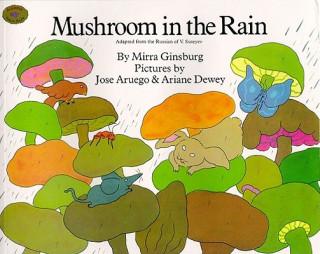
How can an ant, butterfly, mouse, sparrow, and rabbit all take shelter from the rain under the same mushroom when, at first, there was only room for the ant?
This volume is a collection of the illustrative material - charts, diagrams and maps - which the author has used in delivering his teaching sessions. It is intended for use as a supplement to the audio and video recordings of his talks.
Antonia goes to Tuscany to rebuild her life after a failed relationship. The last thing she wants to do is fall in love, least of all with rich, arrogant, aristocratic Lorenzo. Autorid: Kate Zarrelli
Why did Greece reach such heights in the classical period--and why only then? And how, after "the Greek miracle" had endured for centuries, did the Macedonians defeat the Greeks, seemingly bringing an end to their glory? Drawing on a massive body of newly available data and employing novel approaches to evidence, Josiah Ober offers a major new history of classical Greece and an unprecedented account of its rise and fall. Ober argues that Greece's rise was no miracle but rather the result of political breakthroughs and economic development. The extraordinary emergence of citizen-centered city-states transformed Greece into a society that defeated the mighty Persian Empire. Yet Philip and Alexander of Macedon were able to beat the Greeks in the Battle of Chaeronea in 338 BCE, a victory made possible by the Macedonians' appropriation of Greek innovations. After Alexander's death, battle-hardened warlords fought ruthlessly over the remnants of his empire. But Greek cities remained populous and wealthy, their economy and culture surviving to be passed on to the Romans--and to us.