 Princeton University Press Death in a Shallow Pond: A Philosopher, a Drowning Child, and Strangers in Need GTIN: 9780691254029 Raamatud From the bestselling coauthor of Wittgensteins Poker, a fascinating account of Peter Singers controversial drowning child thought experimentand how it changed the way people think about charitable givingImagine this: Youre walking past a shallow pond and spot a toddler thrashing around in the water, in obvious danger of drowning. You look around for her parents, but nobody is there. Youre the only person who can save her and you must act immediately. But as you approach the pond you remember that youre wearing your most expensive shoes. Wading into the water will ruin themand might make you late for a meeting. Should you let the child drown? The philosopher Peter Singer published this thought experiment in 1972, arguing that allowing people in the developing world to die, when we could easily help them by giving money to charity, is as morally reprehensible as saving our shoes instead of the drowning child. Can this possibly be true? In Death in a Shallow Pond, David Edmonds tells the remarkable story of Singer and his controversial idea, tracing how it radically changed the way many think about povertybut also how it has provoked scathing criticisms.Death in a Shallow Pond describes the experiences and world events that led Singer to make his radical case and how it moved some young philosophers to establish the Effective Altruism movement, which tries to optimize philanthropy. The book also explores the reactions of critics who argue that the Shallow Pond and Effective Altruism are unrealistic, misguided, and counterproductive, neglecting the causes ofand therefore perpetuatingpoverty. Ultimately, however, Edmonds argues that the Shallow Pond retains the power to shape how we live in a world in which terrible and unnecessary suffering persists. Autorid: David Edmonds | 1 | 30,00 € | Vaata | ||
Princeton University Press Everything Evolves: Why Evolution Explains More than We Think, from Proteins to Politics GTIN: 9780691253404 Raamatud How the science of evolution explains how everything came to be, from bacteria and blue whales to cell phones, cities, and artificial intelligenceEverything Evolves reveals how evolutionary dynamics shape the world as we know it and how we are harnessing the principles of evolution in pursuit of many goals, such as increasing the global food supply and creating artificial intelligence capable of evolving its own solutions to thorny problems.Taking readers on an astonishing journey, Mark Vellend describes how all observable phenomena in the universe can be understood through two sciences. The first is physics. The second is the science of evolvable systems. Vellend shows how this Second Science unifies biology and culture and how evolution gives rise to everything from viruses and giraffes to nation-states, technology, and us. He discusses how the idea of evolution had precedents in areas such as language and economics long before it was made famous by Darwin, and how only by freeing ourselves of the notion that the study of evolution must start with biology can we appreciate the true breadth of evolutionary processes.A sweeping tour of the natural and social sciences, Everything Evolves is an essential introduction to one of the two key pillars to the scientific enterprise and an indispensable guide to understanding some of the most difficult challenges of the Anthropocene. Autorid: Mark Vellend | 1 | 36,75 € | Vaata | ||
 Phobya 4Pin PWM to 3x 4Pin PWM extension 40cm - black This cable is designed to connect multiple fans to one PWM socket, e.g. on a Mainboard, to allow control and monitoring, Important: To allow precise monitoring and control of the fans, they must be identical respectively from the same series. Different fans can also be used, but the monitored speed values will not be accurate. Please note: Connecting multiple fans to one socket may exceed the power envelope of the socket, damaging the controller unit! Sleeving: This cable is not only practical, it is also optically appealing, The surrounding mesh, also called mesh, which is surrounding the cable itself offers the advantages that every Pro-modder is looking for: A completely unique look, even of the cables in the system! Special attention was paid to the combination of cable connectors, sleeve and heatshrink which were used to ensure great design and a unique as well as elegant look. The idea behind these cables: Phobya's goal is to make the work of professional and hobby modders a bit easier with these cables. Sleeving is a lot of work and requires much time. But with these cables by Phobya the whole system can be redesigned any way you like by simply adding these cables. Technical specifications: Length: 40cm - 20cm, 10cm and 10cm Color: Black sleeve Connectors: 1x 4-Pin PWM male 3x 4-Pin PWM female Extent of delivery: 1x Phobya 4-Pin PWM to 3x4-Pin PWM extension 40cm - black This product has been reviewed for you: Aquainfos Tech-Review Overclockingstation Please note the difference between a 4-Pin power connector (Molex) and a 4-Pin fan connector (PWM) | Laos | 1 | 5,90 € | Vaata | |
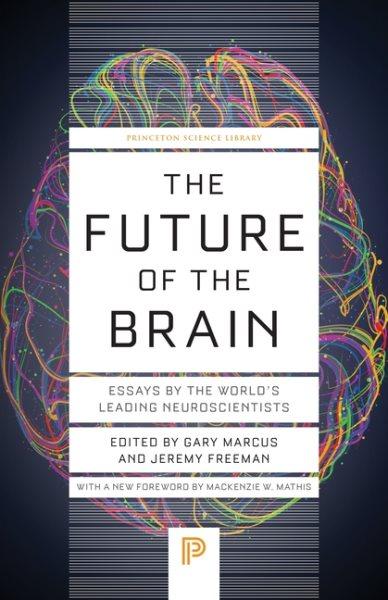 Princeton University Press Future of the Brain: Essays by the World's Leading Neuroscientists GTIN: 9780691258829 Raamatud The world's top experts take readers to the very frontiers of brain scienceIncludes a chapter by 2014 Nobel laureates May-Britt Moser and Edvard MoserAn unprecedented look at the quest to unravel the mysteries of the human brain, The Future of the Brain takes readers to the absolute frontiers of science. Original essays by leading researchers such as Christof Koch, George Church, Olaf Sporns, and May-Britt and Edvard Moser describe the spectacular technological advances that will enable us to map the more than eighty-five billion neurons in the brain, as well as the challenges that lie ahead in understanding the anticipated deluge of data and the prospects for building working simulations of the human brain. A must-read for anyone trying to understand ambitious new research programs such as the Obama administration's BRAIN Initiative and the European Union's Human Brain Project, The Future of the Brain sheds light on the breathtaking implications of brain science for medicine, psychiatry, and even human consciousness itself.Contributors include: Misha Ahrens, Ned Block, Matteo Carandini, George Church, John Donoghue, Chris Eliasmith, Simon Fisher, Mike Hawrylycz, Sean Hill, Christof Koch, Leah Krubitzer, Michel Maharbiz, Kevin Mitchell, Edvard Moser, May-Britt Moser, David Poeppel, Krishna Shenoy, Olaf Sporns, Anthony Zador. Autorid: Gary Marcus, Jeremy Freeman, Mackenzie W. Mathis | 1 | 25,94 € | Vaata | ||
 Princeton University Press Required Reading: The Life of Everyday Texts in the British Empire GTIN: 9780691257709 Raamatud How ordinary forms of writingincluding manuals, petitions, almanacs, and magazinesshaped the way colonial subjects understood their place in empire In Required Reading, Priyasha Mukhopadhyay offers a new and provocative history of reading that centers archives of everyday writing from the British empire. Mukhopadhyay rummages in the drawers of bureaucratic offices and the cupboards of publishers in search of how historical readers in colonial South Asia responded to texts ranging from licenses to manuals, how they made sense of them, and what this can tell us about their experiences living in the shadow of a vast imperial power. Taking these engagements seriously, she argues, is the first step to challenging conventional notions of what it means to read.Mukhopadhyays account is populated by a cast of characters that spans the ranks of colonial society, from bored soldiers to frustrated bureaucrats. These readers formed close, even intimate relationships with everyday texts. She presents four case studies: a soldiers manual, a cache of bureaucratic documents, a collection of astrological almanacs, and a womens literary magazine. Tracking moments in which readers refused to read, were unable to read, and read in part, she uncovers the dizzying array of material, textual, and aural practices these texts elicited. Even selectively read almanacs and impenetrable account books, she finds, were springboards for personal, world-shaping readerly relationships.Untethered from the constraints of conventional literacy, Required Reading reimagines how texts work in the world and how we understand the very idea of reading. Autorid: Priyasha Mukhopadhyay | 1 | 50,25 € | Vaata | ||
 Princeton University Press Statistics by Simulation: A Synthetic Data Approach GTIN: 9780691258775 Raamatud An accessible guide to understanding statistics using simulations, with examples from a range of scientific disciplinesReal-world challenges such as small sample sizes, skewed distributions of data, biased sampling designs, and more predictors than data points are pushing the limits of classical statistical analysis. This textbook provides a new tool for the statistical toolkit: data simulations. It shows that using simulation and data-generating models is an excellent way to validate statistical reasoning and to augment study design and statistical analysis with planning and visualization. Although data simulations are not new to professional statisticians, Statistics by Simulation makes the approach accessible to a broader audience, with examples from many fields. It introduces the reasoning behind data simulation and then shows how to apply it in planning experiments or observational studies, developing analytical workflows, deploying model diagnostics, and developing new indices and statistical methods. Covers all steps of statistical practice, from planning projects to post-hoc analysis and model checking Provides examples from disciplines including sociology, psychology, ecology, economics, physics, and medicine Includes R code for all examples, with data and code freely available online Offers bullet-point outlines and summaries of each chapter Minimizes the use of jargon and requires only basic statistical background and skills Autorid: Carsten F. Dormann, Aaron M. Ellison | 1 | 57,79 € | Vaata | ||
 Karnac Books Jung: An Introduction GTIN: 9781912691258 Raamatud This book is an introduction to the ideas of the Swiss psychologist and psychoanalyst, C. G. Jung. The first chapter describes his early home life whilst subsequent chapters are devoted to his work in various sectors. This started in psychiatry at Burghölzli Hospital in Zürich, where Eugen Bleuler was the Director, a significant figure in Jungs life for many years. The book goes on to describe at some length the professional relationship between Freud and Jung, and the disastrous impact of their subsequent acrimonious split in 1913 on themselves but, more importantly, on the profession of psychoanalysis itself, both at that time and subsequently. Several chapters elaborate Jungs main concepts, including an extensive investigation of his all-important work on psychological alchemy, which includes 10 black and white illustrations from the alchemical text The Rosarium Philosophorum and 10 black and white ox-herding pictures of Kuo-an from the twelfth-century Buddhist tradition. The rest of the book depicts some of the significant women and men who contributed to analytical psychology, which is the term Jung chose to designate his psychoanalytic discipline. This is used interchangeably with the term psychoanalysis as many Jungians designate themselves psychoanalysts, including the author, as a New York State licensed psychoanalyst. This is also an account of some of the scientific, philosophical, and psychological influences on Jungs thinking. The book concludes with an entry on China, where the author has spent the last few years analysing, lecturing, supervising, and teaching analytical psychology to Chinese psychotherapists, counsellors, and students in Beijing and Shanghai. This comprehensive work is essential reading for all those with an interest in C. G. Jung and his work. Autorid: Ann Casement | 1 | 43,49 € | Vaata | ||
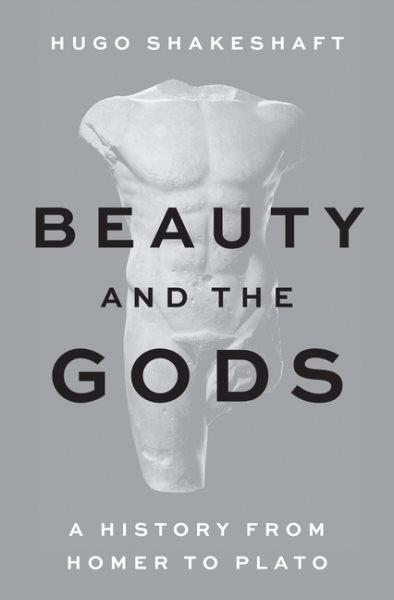 Princeton University Press Beauty and the Gods: A History from Homer to Plato GTIN: 9780691250205 Raamatud "How ideas and experiences of beauty informed human relationships with the divine in ancient GreeceBeginning with the earliest Greek literature, the epics of Homer and Hesiod, beauty was seen as having a special connection with the divine. The gods of ancient Greece were defined by their exceptional beauty; even today, 'to look like a Greek god' is proverbial for human beauty. In Beauty and the Gods, Hugo Shakeshaft explores the relationship between the beautiful and divine in ancient Greece, principallyin the Archaic period (ca. 750-480 BCE). Analysing evidence that ranges from poetry, art, and philosophical texts to architecture and the natural landscape, Shakeshaft shows how ideas and experiences of beauty shaped Greek relations with the divine.With a powerful call for the place of beauty and aesthetics in the writing of history, Shakeshaft uncovers the cultural dialogue between beauty and the gods in a variety of contexts in the Archaic Greek world: in forms of divine worship; in poetry, music, and dance; in attitudes to the natural environment; and in architecture and art. This early chapter of Greek history, he argues, holds an unrecognised key to understanding some long-running threads in the histories of religion, art, and aesthetics, from Plato's aesthetic theories to beauty's status in contemporary discourse. Beauty's deep past and divine connection in ancient Greece can help us see beauty now in sharper focus"-- "A history of the origins of the classical ideal of beauty in archaic Greece. 'To look like a Greek god' is proverbial for beauty today just as it was for Homer nearly three thousand years ago. In this book, Hugo Shakeshaft tells the untold story of beauty's inextricable link with the divine in this formative era of ancient Greek history (c.750-480 BCE). Through in-depth analysis of a wide array of ancient sources, the book offers a panoramic view of the Archaic Greek world in arguing that ideas of beauty were fundamental to how Greeks thought about and worshipped their gods. Surveying everything from Homeric epic, lyric poetry, and votive inscriptions to vase-paintings, sculpture, and the architecture of Greek temples, Shakeshaft reveals how ideas and experiences of beauty structured human relations with the divine in Archaic Greece. Comparisons are made throughout the book with the literature, art, and architecture of the diverse cultures of the ancient Near East to clarify its insights into Archaic Greece. These comparisons highlight that the association of beauty and the divine has been at the heart of many societies throughout human history, despite its oversight in the lively debate about beauty in academia and the art world in the twenty-first century. With a novel contribution to this debate and the history of aesthetics, the book uncovers an aspect of ancient Greek history with an enduring legacy, showing how we still live with the cultural dialogue which originated in this period"-- How ideas and experiences of beauty informed human relationships with the divine in ancient GreeceBeginning with the earliest Greek literature, the epics of Homer and Hesiod, beauty was seen as having a special connection with the divine. The gods of ancient Greece were defined by their exceptional beauty; even today, to look like a Greek god is proverbial for human beauty. In Beauty and the Gods, Hugo Shakeshaft explores the relationship between the beautiful and divine in ancient Greece, principally in the Archaic period (ca. 750480 BCE). Analysing evidence that ranges from poetry, art, and philosophical texts to architecture and the natural landscape, Shakeshaft shows how ideas and experiences of beauty shaped Greek relations with the divine.With a powerful call for the place of beauty and aesthetics in the writing of history, Shakeshaft uncovers the cultural dialogue between beauty and the gods in a variety of contexts in the Archaic Greek world: in forms of divine worship; in poetry, music, and dance; in attitudes to the natural environment; and in architecture and art. This early chapter of Greek history, he argues, holds an unrecognised key to understanding some long-running threads in the histories of religion, art, and aesthetics, from Platos aesthetic theories to beautys status in contemporary discourse. Beautys deep past and divine connection in ancient Greece can help us see beauty now in sharper focus. Autorid: Hugo Shakeshaft | 1 | 59,70 € | Vaata | ||
 | |||||
 Princeton University Press Renormalization Group and Condensed Matter Physics GTIN: 9780691257907 Raamatud A graduate-level entrée to the application of renormalization group theory to condensed matter physics Renormalization group ideas have had a major impact on condensed matter physics for more than a half century. This book develops the theory and illustrates the broad applicability of the renormalization group to major problems in condensed matter physics. Based on course materials developed and class-tested by the authors at Harvard University, the book will be especially useful for students, as well as researchers in condensed matter physics, soft matter physics, biophysics, and statistical physics. After reviewing Ising models, lattice gases, and critical point phenomena, the book covers quantum critical phenomena; the statistical mechanics of linear polymer chains; fluctuating sheet polymers; the dynamics associated with the Navier-Stokes equations and simplified models of randomly stirred fluids; the properties of active matter; and more. Explores the broad applicability of renormalization groups to condensed matter Covers critical phenomena in different dimensions, quantum critical points, polymer physics and flexural phonons in free-standing graphene, nonequilibrium fluid dynamics, and more Provides a modern, physics-centered entrée, suitable for both course use and self-study Features material ideal for graduate-level students as well as researchers Includes exercises throughout Offers a solutions manual for exercises (available only to instructors) Autorid: David R. Nelson, Grace H. Zhang | 1 | 97,50 € | Vaata | ||
 Princeton University Press Budget Justice: On Building Grassroots Politics and Solidarities GTIN: 9780691251318 Raamatud "How meaningfully bottom-up involvement in the creation of city budgets can bring about democratic reform"-- Provided by publisher. "A bold vision that empowers communities to solve our cities' most pressing problemsBudget Justice challenges everything you thought you knew about "dull" and daunting government budgets, and shows how the latter confuse and mislead the public by design,not accident. Arguing that they are moral documents that demand grassroots participation to truly work for everyone, the book reveals how everyday citizens can shape policy to tackle everything from rising housing and food costs to unabated police violence, underfunded schools, and climate change-driven floods and wildfires.Drawing on her years of engagement with democratic governance in New York City and around the globe, Celina Su proposes a new kind of democracy-in which city residents make collectivedecisions about public needs through processes like participatory budgeting, and in which they work across racial divides and segregated spaces as neighbors rather than as members of voting blocs or consumers. Su presents a series of "interludes" that vividly illustrate how budget justice plays out on the ground, including in-depth interviews with activists from Porto Alegre, Brazil, Barcelona, Spain, and Jackson, Mississippi, and shares her own personal reflections on how changing social identities inform one's activism.Essential reading to empower citizens, Budget Justice explains why public budgets reflect a crisis not so much in accounting as in democracy, and enables everyone, especially those from historically marginalized communities, to imagine and enact people's budgets and policies-from universal preschool to affordable housing-that will enable their communities to thrive"-- Provided by publisher. A bold vision that empowers communities to solve our cities most pressing problemsAmid political repression and a deepening affordability crisis, Budget Justice challenges everything you thought you knew about dull and daunting government budgets. It shows how the latter confuse and mislead the public by design, not accident. Arguing that they are moral documents that demand grassroots participation to truly work for everyone, the book reveals how everyday citizens can shape policy to tackle everything from rising housing and food costs to unabated police violence, underfunded schools, and climate changedriven floods and wildfires.Drawing on her years of engagement with democratic governance in New York City and around the globe, Celina Su proposes a new kind of democracyin which city residents make collective decisions about public needs through processes like participatory budgeting, and in which they work across racial divides and segregated spaces as neighbors rather than as consumers or members of voting blocs. Su presents a series of interludes that vividly illustrate how budget justice plays out on the ground, including in-depth interviews with activists from Porto Alegre, Brazil, Barcelona, Spain, and Jackson, Mississippi, and shares her own personal reflections on how changing social identities inform ones activism.Essential reading to empower citizens, Budget Justice explains why public budgets reflect a crisis not so much in accounting as in democracy, and enables everyone, especially those from historically marginalized communities, to imagine and enact peoples budgets and policiesfrom universal preschool to affordable housingthat will enable their communities to thrive. Autorid: Celina Su | 1 | 32,15 € | Vaata | ||
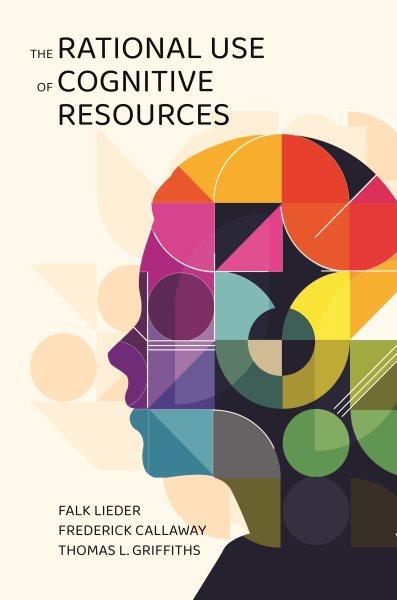 Princeton University Press Rational Use of Cognitive Resources GTIN: 9780691259949 Raamatud A new approach to understanding irrational behavior that provides a framework for deriving new models of human cognitionWhat does it mean to act rationally? Mathematicians, economists, and statisticians have argued that a rational actor chooses actions that maximize their expected utility. And yet people routinely act in ways that violate this prescription. Our limited time and computational resources mean that it is often unrealistic to consider all options in order to choose the one that has the greatest utility. This book suggests a different approach to understanding irrational behavior: resource-rational analysis. By reframing questions of rational action in terms of how we should make the best use of our limited resources, the book offers a new take on fundamental questions at the heart of cognitive psychology, behavioral economics, and the design of artificial intelligence systems.The book presents a formal framework for applying resource-rational analysis to understand and improve human behavior, a set of tools developed by the authors to make this easier, and examples of how they have used this approach to revisit classic questions about human cognition, pose new ones, and enhance human rationality. The book will be a valuable resource for psychologists, economists, and philosophers as well as neuroscientists studying human brains and minds and computer scientists working to reproduce such systems in machines. Autorid: Falk Lieder, Frederick Callaway, Thomas L. Griffiths | 1 | 50,25 € | Vaata | ||
 Princeton University Press Synthetic University: How Higher Education Can Benefit from Shared Solutions and Save Itself GTIN: 9780691253398 Raamatud A bold, collaborative vision for combatting the ever-rising cost of college US colleges and universities have long been the envy of the world. Institutional autonomy has fostered creativity among faculty, students, and staff. But this autonomy means that colleges tend to create their own solutions for every need. As a result, higher education suffers from costly redundancies that drive tuitions ever upward, putting higher education, essential to the fabric of the country, at risk. Instead of wishful thinking about collaboration or miraculous subsidies, The Synthetic University describes intermediary organizations that can provide innovative, cost-effective solutions. Offering answers to challenges jointly faced by thousands of institutions, James Shulman lays out a compelling new vision of how to reduce spending while enabling schools to maintain their particular contributions. He explains why colleges are so resistant to change and presents illuminating case studies of mission-driven and market-supported entrepreneurial organizationssuch as the student tracking infrastructure of the National Student Clearinghouse or the ambitious effort of classics professors to create a shared transinstitutional department. Mixing theory with lessons drawn from his own experience, he demonstrates how to finance and implement the organizations that can synthesize much-needed solutions. A road map for sustained institutional change, The Synthetic University shows how to overcome colleges do-it-yourself impulses, avoid the threat of disruption, and preserve the institutions that we need to conduct basic research, foster innovation, and prepare diverse students to lead meaningful and productive lives. Autorid: James L. Shulman | 1 | 32,70 € | Vaata | ||
 Princeton University Press Savarkar and the Making of Hindutva GTIN: 9780691251493 Raamatud A monumental intellectual history of the pivotal figure of Hindu nationalismVinayak Damodar Savarkar (18831966) was an intellectual, ideologue, and anticolonial nationalist leader in Indias struggle for independence from British colonial rule, one whose anti-Muslim writings exploited Indias tensions in pursuit of Hindu majority rule. Savarkar and the Making of Hindutva is the first comprehensive intellectual history of one of the most contentious political thinkers of the twentieth century.Janaki Bakhle examines the full range of Savarkars voluminous writings in his native language of Marathi, from political and historical works to poetry, essays, and speeches. She reveals the complexities in the various positions he took as a champion of the beleaguered Hindu community, an anticaste progressive, an erudite if polemical historian, a pioneering advocate for womens dignity, and a patriotic poet. This critical examination of Savarkars thought shows that Hindutva is as much about the aesthetic experiences that have been attached to the idea of India itself as it is a militant political program that has targeted the Muslim community in pursuit of power in postcolonial India.By bringing to light the many legends surrounding Savarkar, Bakhle shows how this figure from a provincial locality in colonial India rose to world-historical importance. Savarkar and the Making of Hindutva also uncovers the vast hagiographic literature that has kept alive the myth of Savarkar as a uniquely brave, brilliant, and learned revolutionary leader of the Hindu nation. Autorid: Janaki Bakhle | 1 | 36,75 € | Vaata | ||
 Princeton University Press Faith Communities and the Fight for Racial Justice: What Has Worked, What Hasn't, and Lessons We Can Learn GTIN: 9780691250878 Raamatud The communities, congregations, and faith-based coalitions that have been working for racial justice over the past fifty yearsHave progressive religious organizations been missing in action in recent struggles for racial justice? In Faith Communities and the Fight for Racial Justice, Robert Wuthnow shows that, contrary to activists accusations of complacency, Black and White faith leaders have fought steadily for racial and social justice since the end of the Civil Rights movement of the 1950s and 1960s. Wuthnow introduces us to the communities, congregations, and faith-based coalitions that have worked on fair housing, school desegregation, affirmative action, criminal justice, and other issues over many years. Often overshadowed by the Religious Right, these progressive faith-based racial justice advocates kept up the fight even as media attention shifted elsewhere.Wuthnow tells the stories of the faith-based affordable housing project in St. Louis that sparked controversy in the Nixon White House; a pastors lawsuit in North Carolina that launched the nations first busing program for school desegregation; the faith outreach initiative for Barack Obamas presidential campaign; and church-mobilized protests following the deaths of Trayvon Martin, Freddie Gray, and George Floyd. Drawing on extensive materials from denominations, journalists, and social scientists, Wuthnow offers a detailed and frank discussion of both the achievements and the limitations of faith leaders roles. He focuses on different issues that emerged at different times, tracing the efforts of Black and White faith leaders who sometimes worked cooperatively and more often tackled problems in complementary ways. Taken together, these stories provide lessons in what faith communities have done and how they can better advocate for racial justice in the years ahead. Autorid: Robert Wuthnow | 1 | 32,70 € | Vaata | ||
 Princeton University Press After 1177 B.C. GTIN: 9780691256832 Raamatud In this gripping sequel to his bestselling 1177 B.C., Eric Cline tells the story of what happened after the Bronze Age collapsed-why some civilizations endured, why some gave way to new ones, and why some disappeared forever"A landmark book: lucid, deep, and insightful. . . . You cannot understand human civilization and self-organization without studying what happened on, before, and after 1177 B.C."-Nassim Nicholas Taleb, bestselling author of The Black SwanAt the end of the acclaimed history 1177 B.C., many of the Late Bronze Age civilizations of the Aegean and Eastern Mediterranean lay in ruins, undone by invasion, revolt, natural disasters, famine, and the demise of international trade. An interconnected world that had boasted major empires and societies, relative peace, robust commerce, and monumental architecture was lost and the so-called First Dark Age had begun. Now, in After 1177 B.C., Eric Cline tells the compelling story of what happened next, over four centuries, across the Aegean and Eastern Mediterranean world. It is a story of resilience, transformation, and success, as well as failures, in an age of chaos and reconfiguration.After 1177 B.C. tells how the collapse of powerful Late Bronze Age civilizations created new circumstances to which people and societies had to adapt. Those that failed to adjust disappeared from the world stage, while others transformed themselves, resulting in a new world order that included Phoenicians, Philistines, Israelites, Neo-Hittites, Neo-Assyrians, and Neo-Babylonians. Taking the story up to the resurgence of Greece marked by the first Olympic Games in 776 B.C., the book also describes how world-changing innovations such as the use of iron and the alphabet emerged amid the chaos.Filled with lessons for today's world about why some societies survive massive shocks while others do not, After 1177 B.C. reveals why this period, far from being the First Dark Age, was a new age with new inventions and new opportunities. | 1 | 14,09 € | Vaata | ||
 Princeton University Press Power and Possession in the Russian Revolution GTIN: 9780691255880 Raamatud A history that reframes the Bolsheviks unprecedented attempts to abolish private property after the revolutions of 1917 The revolutions of 1917 swept away not only Russias governing authority but also the property order on which it stood. The upheaval sparked waves of dispossession that rapidly moved beyond the seizure of factories and farms from industrialists and landowners, envisioned by Bolshevik revolutionaries, to penetrate the bedrock of social life: the spaces where people lived. In Power and Possession in the Russian Revolution, Anne ODonnell reimagines the Bolsheviks unprecedented effort to eradicate private property and to create a new political economysocialismto replace it.ODonnells account captures the story of property in reverse, showing how the bonds connecting people to their things were broken and how new ways of knowing things, valuing them, and possessing them coalesced amid the political ferment and economic disarray of the Revolution. ODonnell reminds us that Russias postrevolutionary confiscation of property, like many other episodes of mass dispossession in the twentieth century, largely escaped traditional forms of record keeping. She repairs this omission, drawing on sources that chronicle the lived experience of upheavalpopular petitions, apartment inspections, internal audits of revolutionary institutions, and records of the political policeto reconstruct an archive of dispossession. The result is an unusually intimate history of the Bolsheviks attempts to conquer people and things.The Bolsheviks reimagining of property not only changed peoples lives and destinies, it formed the foundation of a new type of stateone that eschewed the defense of private property rights in favor of an enduring but enigmatic new domain: socialist state property. Autorid: Anne O'Donnell | 1 | 36,75 € | Vaata | ||
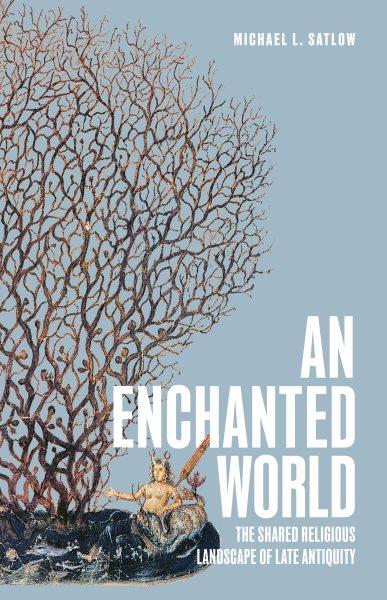 Princeton University Press Enchanted World: The Shared Religious Landscape of Late Antiquity GTIN: 9780691256597 Raamatud Uncovering the vibrant spiritual life of Late AntiquityIn Late Antiquity (ca. 200600 CE), the world was alive with unseen forcesdivine agents who influenced every aspect of daily life. For most ordinary people, religion was not found in temples, synagogues, and churches, but in lived experience as they interacted with the supernatural in a world of uncertainty and danger. In An Enchanted World, Michael Satlow uncovers a shared spiritual landscape that stretched beyond the confines of Judaism, Christianity, and the pantheon of Greek and Roman deities. From healing rituals to protective amulets, spiritual practices were a matter of necessity, transcending religious labels. To get by in the world required being on good terms with the right supernatural beings and being able to ward off the bad ones.Rejecting traditional narratives that focus on institutional religion and theological divisions, Satlow presents a compelling case for viewing the period through the lens of lived religion. This was not a religion of abstractions formulated by rabbis and priests, but an enchanted world populated by divine beings who had as muchif not moreagency as any person. Drawing on archaeological evidence, historical documents, and a rich trove of magical texts, Satlow vividly reconstructs how ordinary people lived in a world that crackled with the energy of the supernatural. His account reimagines the spiritual history of Late Antiquity, centering shared human fears and aspirations and challenging preconceived notions about religious boundaries. With An Enchanted World, Satlow offers a fresh perspective on a transformative periodone that has much to teach us even today about the role that spirituality can play in the secular world. Autorid: Michael L. Satlow | 1 | 43,50 € | Vaata | ||
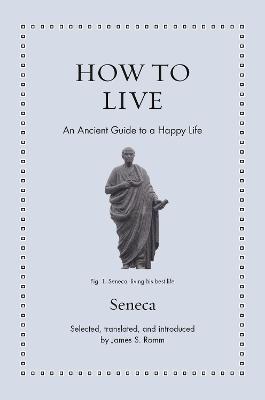 Princeton University Press How to Live: An Ancient Guide to a Happy Life GTIN: 9780691255224 Raamatud A vivid new translation in which the Stoic philosopher argues that virtue is the only path to contentmentWhy are so many people unhappy when happiness can be attained by anyone who simply lives virtuously? That question prompted Seneca, the great Stoic philosopher of the early Roman empire, to write On the Happy Life, and he continued to seek answers in his Moral Epistles. In How to Live, Seneca biographer and translator James Romm presents vivid new versions of passages from both works, distilling Senecas passionate and inspiring argument for a path to perfect contentment, no matter what befalls us.As a Stoic, Seneca believed that only ethical virtue leads to happiness; all other goals, including wealth and success, are neutral in their effectsor, if they torment us with what we havent achieved, sources of unhappiness. For role models, Seneca looks to Socrates, who embodied virtue and reason, and to a hypothetical sage who is always in tune with the divine mind that governs the cosmos. Extolling these paragons with nearly messianic fervor, Seneca urges us to imitate their example.Featuring an inviting introduction and the original Latin on facing pages, How to Live captures the persuasive power of Senecas argument that the universe wants us to be virtuousand happy. Autorid: Seneca, James S. Romm | 1 | 22,70 € | Vaata | ||
 Princeton University Press How to Travel: An Ancient Guide for the Modern Tourist GTIN: 9780691259062 Raamatud A transporting anthology of ancient Greek and Roman travel writings that capture the thrill of exploration and discoveryfrom Europe to the Holy Land and Egypt to IndiaAt long last, a travel guide to the ancient world for the modern touristwritten by the ancients themselves. How to Travel gathers classic texts from Greek and Roman writers to explore what todays readers can learn from ancient encounters with unfamiliar peoples, places, and customs.The Greek historian Herodotus (ca. 484425 BCE) is one of the most famous travelers of antiquity. His Histories, which chronicle his and others encounters with foreign peoples and places, have fascinated readers for millennia, and have much to teach about the secrets of good travel. In How to Travel, Herodotus and Tacitus take us on tours of Central Asia, Egypt, and Germania, while pilgrims like Pausanias and the Christian nun Egeria guide us through Greece and the Holy Land. Readers are whisked away to India to experience the ways of forest-dwelling sages and to the far reaches of Africa. And as if Earth werent enough, the satirist Lucian takes us to the Moon. But this whirlwind tour of antiquity is more than a pleasure cruise. Seneca cautions travelers that, go as far as we may, we can never escape ourselves. Gratitude, Egeria says, is the travelers proper response for the privilege. And Homer reminds us that, ultimately, theres no place like home.Featuring vivid new translations, an inviting introduction, and the original Greek and Latin texts on facing pages, How to Travel captures the thrill of exploration and discoveryand how new experiences, fresh vistas, and foreign cultures can change the traveler. Autorid: Herodotus, M. D. Usher | 1 | 22,70 € | Vaata | ||
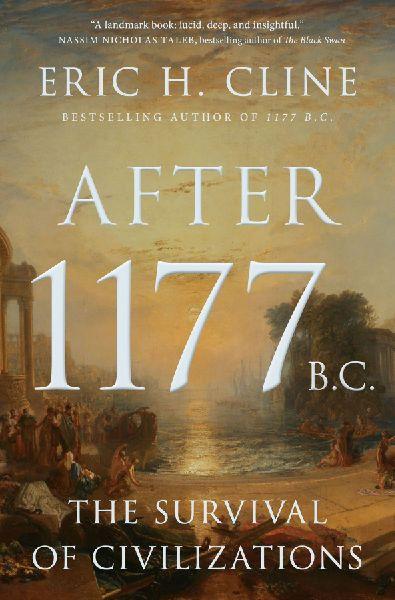 Princeton University Press After 1177 B.C.: The Survival of Civilizations In this gripping sequel to his bestselling 1177 B.C., Eric Cline tells the story of what happened after the Bronze Age collapsed—why some civilizations endured, why some gave way to new ones, and why some disappeared forever“A landmark book: lucid, deep, and insightful. . . . You cannot understand human civilization and self-organization without studying what happened on, before, and after 1177 B.C.”—Nassim Nicholas Taleb, bestselling author of The Black SwanAt the end of the acclaimed history 1177 B.C., many of the Late Bronze Age civilizations of the Aegean and Eastern Mediterranean lay in ruins, undone by invasion, revolt, natural disasters, famine, and the demise of international trade. An interconnected world that had boasted major empires and societies, relative peace, robust commerce, and monumental architecture was lost and the so-called First Dark Age had begun. Now, in After 1177 B.C., Eric Cline tells the compelling story of what happened next, over four centuries, across the Aegean and Eastern Mediterranean world. It is a story of resilience, transformation, and success, as well as failures, in an age of chaos and reconfiguration.After 1177 B.C. tells how the collapse of powerful Late Bronze Age civilizations created new circumstances to which people and societies had to adapt. Those that failed to adjust disappeared from the world stage, while others transformed themselves, resulting in a new world order that included Phoenicians, Philistines, Israelites, Neo-Hittites, Neo-Assyrians, and Neo-Babylonians. Taking the story up to the resurgence of Greece marked by the first Olympic Games in 776 B.C., the book also describes how world-changing innovations such as the use of iron and the alphabet emerged amid the chaos.Filled with lessons for today's world about why some societies survive massive shocks while others do not, After 1177 B.C. reveals why this period, far from being the First Dark Age, was a new age with new inventions and new opportunities. | 1 | 14,92 € −0,01 € | Vaata | ||
 Princeton Univers. Press The Little Book of Trees A charming, richly illustrated, pocket-size exploration of the world’s treesPacked with surprising facts, this delightful and gorgeously designed book will beguile any nature lover. Expertly written and beautifully illustrated throughout with color photographs and original color artwork, The Little Book of Trees is an accessible and enjoyable mini-reference about the world’s trees, with examples drawn from across the globe. It fits an astonishing amount of information in a small package, covering a wide range of topics—from tree anatomy, diversity, and architecture to habitat and conservation. It also includes curious facts and a section on trees in myths, folklore, and modern culture from around the world. The result is an irresistible guide to the amazing lives of trees.A beautifully designed pocket-size book with a foil-stamped cloth cover Features some 140 color illustrations and photos Makes a perfect gift | 1 | 17,77 € | Vaata | ||
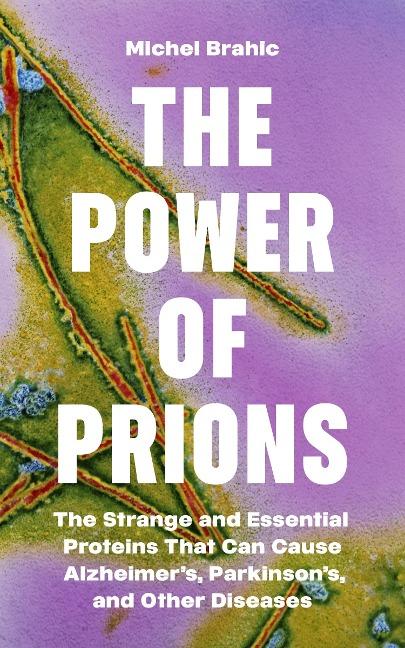 Princeton University Press The Power of Prions: The Strange and Essential Proteins That Can Cause Alzheimers, Parkinsons, and Other Diseases The remarkable family of proteins that can make us very ill—but can also be linked to long-term memory, immunity, and the origin of lifeOver the last decade, scientists have discovered the importance and widespread presence in the body of a remarkable family of proteins known as prion proteins. Research links various types of prion proteins to neurodegenerative diseases such as Parkinson’s and Alzheimer’s—and this has fueled the search for new drugs that could halt the progression of these terrible disorders. Other discoveries have revealed the essential roles prion proteins play in memory and immunity, and—in an extraordinary finding—the part they may have played in the beginnings of life on our planet. In this engaging and accessible book, Michel Brahic tells the story of these amazing and versatile proteins.Brahic, a leading researcher on diseases of the central nervous system, first describes the discovery of prions and their role in infection, beginning with early work on the animal disease scrapie and a mysterious human illness in New Guinea, apparently transmitted by cannibalism. Prions were eventually identified and named by Stanley Prusiner in the 1980s. (Brahic tells us Prusiner’s alternate name for prion was “piaf.”) Prion proteins were then revealed as the cause of other illnesses, from “mad cow” disease and its human counterpart, Creutzfeldt-Jakob disease, to such noninfectious brain disorders as Parkinson’s and Alzheimer’s. While the prion proteins responsible for diseases are definitively “bad,” Brahic also explains that these abnormal prions are rare exceptions. Most of the time, prion proteins actually serve “good” and vital functions—and they may even have been present at the origin of life itself. | 1 | 20,74 € −0,03 € | Vaata | ||
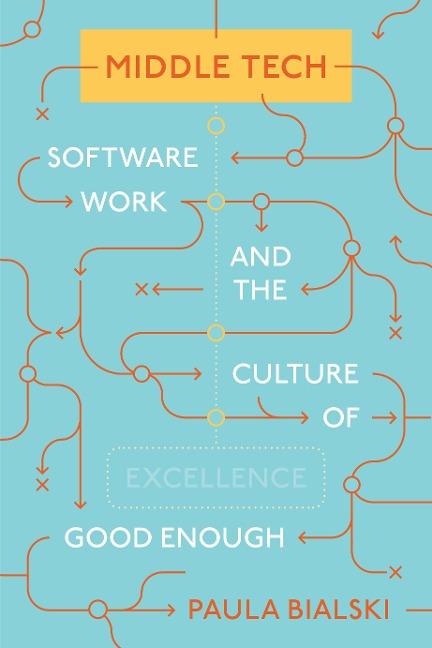 Princeton University Press Middle Tech: Software Work and the Culture of Good Enough "Contrary to much of the popular discourse, not all technology is seamless and awesome; some of it is simply "good enough." In Middle Tech, Paula Bialski offers an ethnographic study of software developers at a non-flashy, non-start-up corporate tech company. Their stories reveal why software isn't perfect and how developers communicate, care, and compromise to make software work--or at least work until the next update. Exploring the culture of good enoughness at a technology firm she calls "MiddleTech," Bialski shows how doing good-enough work is a collectively negotiated resistance to the organizational ideology found in corporate software settings." -- Provided by publisher. | 1 | 41,04 € | Vaata | ||
 Princeton University Press Freedom from Fear: An Incomplete History of Liberalism A provocative new history of liberalism that also provides a road map for today’s liberalsFreedom from Fear offers a striking new account of the dominant political and social theory of our time: liberalism. In a pathbreaking reframing of the historical debate, Alan Kahan charts the development of Western liberalism from the late eighteenth century to the present. Examining key liberal thinkers and issues, Kahan shows how liberalism is both a response to fear and a source of hope: the search for a world in which no one need be afraid.Freedom from Fear reveals how liberal arguments typically rely on three pillars: freedom, markets, and morals. But when liberals ignore one or more of these pillars, their arguments generally fail to persuade. Extending from Adam Smith and Montesquieu to today’s battles between liberals and populists, the book examines the twists and turns of the “incomplete” or unfinished liberal tradition while demonstrating its fundamental continuity. It combines fresh accounts of familiar figures such as Tocqueville and Rawls with discussions of less-famous but pivotal thinkers such as A. V. Dicey and Jane Addams, and explores how liberals have dealt with crucial issues, from debates over male and female suffrage to colonialism and liberal anti-Catholicism.By transforming our understanding of the history of liberal thought and practice, Freedom from Fear provides a new picture of the political creed today: the paths liberals need to follow, the questions they need to answer, and the dead ends they must avoid—if they are to win. | 1 | 44,74 € | Vaata | ||
 Princeton University Press Basic Equality GTIN: 9780691256368 Raamatud An innovative argument that vindicates our normative commitment to basic equality, synthesising philosophy, history, and psychologyWhat makes human beings one anothers equals? That we are "basic equals" has become a bedrock assumption in Western moral and political philosophy. And yet establishing why we ought to believe this claim has proved fiendishly difficult, floundering in the face of the many inequalities that characterise the human condition. In this provocative work, Paul Sagar offers a novel approach to explaining and justifying basic equality. Rather than attempting to find an independent foundation for basic equality, he argues, we should instead come to see our commitment to this idea as the result of the practice of treating others as equals. Moreover, he continues, it is not enough to grapple with the problem through philosophy aloneby just thinking very hard, in our armchairs; we must draw insights from history and psychology as well.Sagar writes that, as things stand, there appear to be no good arguments for believing in the truth of basic equality. Indeed, for much of Western intellectual history and social practice, basic inequality has been the default position. How is it then, Sagar asks, that in Western societies, in a period of less than a century, basic equality emerged as the dominant view? Sagar approaches this not as a mere philosophical puzzle, but as a dramatic historical development. In so doing, he shows us what is at stake when human beings treat one another as equals just because they are human beings. Autorid: Paul Sagar | 1 | 32,70 € | Vaata | ||
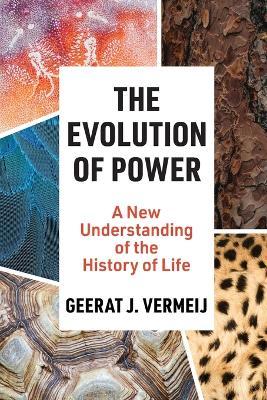 Princeton University Press Evolution of Power: A New Understanding of the History of Life GTIN: 9780691250427 Raamatud A sweeping new account of the role of power in the evolution of all life on EarthPower has many dimensions, from individual attributes such as strength and speed to the collective advantages of groups. The Evolution of Power takes readers on a breathtaking journey across history and the natural world, revealing how the concept of power unifies a vast range of phenomena in the evolution of lifeand how natural selection has placed humanity and the planet itself on a trajectory of ever-increasing power.Drawing on evidence from fossils, living organisms, and contemporary society, Geerat Vermeij documents increases in power at all scales, from body size, locomotor performance, and the use of force in competition to efficiency in production and consumption within ecosystems. He shows how powerwhich he defines as the rate at which organisms acquire and apply energyis tied to the emergence of cooperation, and how the modern economy, which for the first time has established a monopoly over the biosphere by a single species, is a continuation of evolutionary trends stretching back to the dawn of life. Vermeij persuasively argues that we can find solutions to the many problems arising from this extreme concentration of power by broadening our exclusively human-centered perspective.A masterful work by one of todays most innovative and forward-thinking naturalists, The Evolution of Power offers a new understanding of our place in the grand sweep of evolutionary history. Autorid: Geerat Vermeij | 1 | 28,64 € | Vaata | ||
 Princeton University Press Painting as an Art GTIN: 9780691252292 Raamatud One of the twentieth centurys most influential texts on philosophical aestheticsPainting as an Art is acclaimed philosopher Richard Wollheims encompassing vision of how to view art. Transcending the traditional boundaries of art history, Wollheim draws on his three great passionsphilosophy, psychology, and artto present an illuminating theory of the very experience of art. He shows how to unlock the meaning of a painting by retrievingalmost reenactingthe creative activity that produced it. In order to fully appreciate a work of art, Wollheim argues, critics must bring a much richer conception of human psychology than they have in the past. This classic book points the way to discovering what is most profound and subtle about paintings by major artists such as Titian, Bellini, and de Kooning. Autorid: Richard Wollheim | 1 | 63,75 € | Vaata | ||
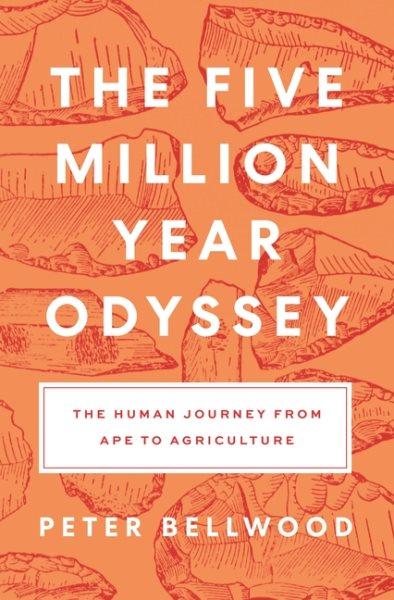 Princeton University Press Five-Million-Year Odyssey: The Human Journey from Ape to Agriculture GTIN: 9780691258812 Raamatud The epic story of human evolution, from our primate beginnings more than five million years ago to the agricultural eraOver the course of five million years, our primate ancestors evolved from a modest population of sub-Saharan apes into the globally dominant species Homo sapiens. Along the way, humans became incredibly diverse in appearance, language, and culture. How did all of this happen? In The Five-Million-Year Odyssey, Peter Bellwood synthesizes research from archaeology, biology, anthropology, and linguistics to immerse us in the saga of human evolution, from the earliest traces of our hominin forebears in Africa, through waves of human expansion across the continents, and to the rise of agriculture and explosive demographic growth around the world.Bellwood presents our modern diversity as a product of both evolution, which led to the emergence of the genus Homo approximately 2.5 million years ago, and migration, which carried humans into new environments. He introduces us to the ancient homininsincluding the australopithecines, Homo erectus, the Neanderthals, and othersbefore turning to the appearance of Homo sapiens circa 300,000 years ago and subsequent human movement into Eurasia, Australia, and the Americas. Bellwood then explores the invention of agriculture, which enabled farmers to disperse to new territories over the last 10,000 years, facilitating the spread of language families and cultural practices. The outcome is now apparent in our vast array of contemporary ethnicities, linguistic systems, and customs.The fascinating origin story of our varied human existence, The Five-Million-Year Odyssey underscores the importance of recognizing our shared genetic heritage to appreciate what makes us so diverse. Autorid: Peter Bellwood | 1 | 28,64 € | Vaata | ||
 Princeton University Press Meir Kahane: The Public Life and Political Thought of an American Jewish Radical GTIN: 9780691254692 Raamatud The life and politics of an American Jewish activist who preached radical and violent means to Jewish survivalMeir Kahane came of age amid the radical politics of the counterculture, becoming a militant voice of protest against Jewish liberalism. Kahane founded the Jewish Defense League in 1968, declaring that Jews must protect themselves by any means necessary. He immigrated to Israel in 1971, where he founded KACH, an ultranationalist and racist political party. He would die by assassination in 1990. Shaul Magid provides an in-depth look at this controversial figure, showing how the postwar American experience shaped his life and political thought.Magid sheds new light on Kahanes radical political views, his critique of liberalism, and his use of the grammar of race as a tool to promote Jewish pride. He discusses Kahanes theory of violence as a mechanism to assure Jewish safety, and traces how his Zionism evolved from a fervent support of Israel to a belief that the Zionist project had failed. Magid examines how tradition and classical Jewish texts profoundly influenced Kahanes thought later in life, and argues that Kahanes enduring legacy lies not in his Israeli career but in the challenge he posed to the liberalism and assimilatory project of the postwar American Jewish establishment.This incisive book shows how Kahane was a quintessentially American figure, one who adopted the radicalism of the militant Left as a tenet of Jewish survival. Autorid: Shaul Magid | 1 | 32,70 € | Vaata | ||
 Princeton University Press Neshat–isms GTIN: 9780691254630 Raamatud A vivid and compelling collection of quotations from the influential contemporary artist and filmmaker Shirin NeshatNeshat-isms is an exciting collection of quotations from award-winning Iranian-American visual artist and filmmaker Shirin Neshat. Her experiences of loss and grief as an Iranian woman living in exile are central themes of her work in photography, video, and film. She is known for her outspoken advocacy for Iranian women and human rights, and for poetic and politically charged images and narratives that raise questions about power, religion, race, and gender. Gathered from interviews, talks, and writings, these powerful and thought-provoking quotations showcase the voice of one of the most important artists of our time. "Through my work I have continued to defy and resist the Western clichéd image of Iranian women as passive victims. While acknowledging the repressive situation in Iran, I have continued to represent Iranian women as empowered, courageous, defiant, and rebellious.”"Every Iranian artist, in one form or another, is political. Politics has defined our lives.”"I’ve done a lot of work about women in a state of madness, where ultimately they find a kind of freedom.”"You can’t demystify a myth.” | 1 | 12,99 € | Vaata | ||
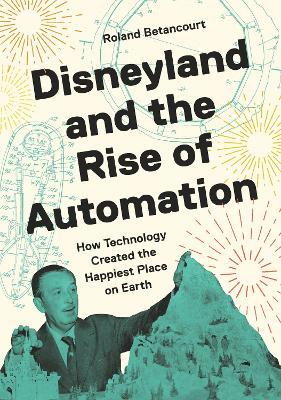 Princeton University Press Disneyland and the Rise of Automation: How Technology Created the Happiest Place on Earth GTIN: 9780691255873 Raamatud A history of the engineering marvels behind one of Americas most innovative and beloved entertainment experiencesWhen Disneyland opened to the public in 1955, it demystified the hidden world of factory automation through its extraordinary new attractions. In this fascinating book, Roland Betancourt tells the story of how the visionary engineers and designers at Disney transformed the technologies of the postwar assembly line into an entertainment experience unlike anything the world had ever seen.Disneyland and the Rise of Automation traces the origins and evolution of these technical innovations during the theme parks first three decades in operation, exploring how engineers reimagined the systems and machines of industrial manufacturing and the military. The magnetic tape used to test ballistic missiles was repurposed to animate the talking macaws in the Enchanted Tiki Room. Programmable Logic Controllers, widely used on automotive assembly lines, brought to life the spectacular rides of the Matterhorn Bobsleds and Space Mountain. Betancourt shows how these and other attractions helped to allay fears about automation and job displacement in 1950s America. Along the way, he situates Disneylands remarkable creations within a broader history of the technologies that increasingly order and construct the world around us, from the Fordist factory to artificial intelligence.Essential reading for anyone interested in engineering, corporate histories, or popular culture, Disneyland and the Rise of Automation invites us to consider how technology and the logic of automation become integrated into our lives through entertainment. Autorid: Roland Betancourt | 1 | 39,55 € | Vaata | ||
 Connor Court Publishing Pty Ltd Migration: Multiculturalism & its Metaphors Theodore Dalrymple pulls no punches when it comes to political correctness and culture... and why should he? These selected essays will stir and educate us on cultural relativism... Take for example the following quotes from the book: On Germaine Greer: "...Gosh, the Aborigines were able to subdue Greer's sense of self! There must be something to them after all..." On academics: "Humor, fearlessness, seriousness, and honesty: the qualities that are hated with an equal hatred by all the smelly little orthodoxies that are contending for tenure in the humanities departments of our universities." On political apologies: "...nothing is easier - or more gratifying - than to apologise for what your ancestors, enemies or political opponents have done or omitted to do. We get the kudos for having apologised, they get the blame for what we apologise for." On bleeding heart warriors: "Compassionate fellow-feeling, however, can soon become self-indulgent and lead to spiritual pride. It imparts an inner glow, like a shot of whiskey on a cold day, but like whisky it can prevent the clear-headedness which we need at least as much as we need warmth of heart." | 1 | 17,71 € −0,11 € | Vaata | ||

Otsing: 69125
232 toodet
1 | 30,00 € | Vaata | |||
1 | 36,75 € | Vaata | |||
1 | 5,90 € | Vaata | |||
1 | 25,94 € | Vaata | |||
1 | 50,25 € | Vaata | |||
1 | 57,79 € | Vaata | |||
| 1 | 43,49 € | Vaata | ||
1 | 59,70 € | Vaata | |||
| |||||
1 | 97,50 € | Vaata | |||
1 | 32,15 € | Vaata | |||
| 1 | 50,25 € | Vaata | ||
1 | 32,70 € | Vaata | |||
| 1 | 36,75 € | Vaata | ||
1 | 32,70 € | Vaata | |||
| 1 | 14,09 € | Vaata | ||
Princeton University Press Power and Possession in the Russian Revolution GTIN: 9780691255880 Raamatud | 1 | 36,75 € | Vaata | ||
1 | 43,50 € | Vaata | |||
Princeton University Press How to Live: An Ancient Guide to a Happy Life GTIN: 9780691255224 Raamatud | 1 | 22,70 € | Vaata | ||
1 | 22,70 € | Vaata | |||
1 | 14,92 € −0,01 € | Vaata | |||
| 1 | 17,77 € | Vaata | ||
1 | 20,74 € −0,03 € | Vaata | |||
1 | 41,04 € | Vaata | |||
1 | 44,74 € | Vaata | |||
| 1 | 32,70 € | Vaata | ||
1 | 28,64 € | Vaata | |||
| 1 | 63,75 € | Vaata | ||
1 | 28,64 € | Vaata | |||
1 | 32,70 € | Vaata | |||
| 1 | 12,99 € | Vaata | ||
1 | 39,55 € | Vaata | |||
1 | 17,71 € −0,11 € | Vaata | |||