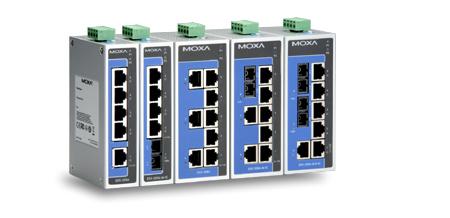
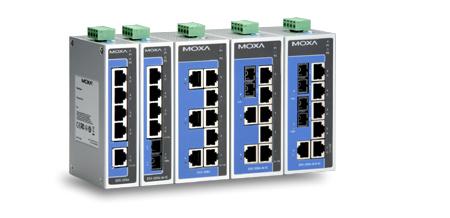
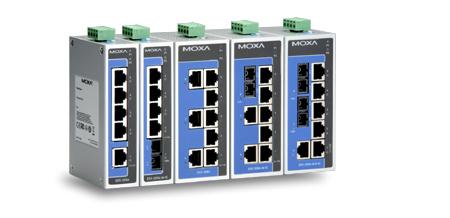
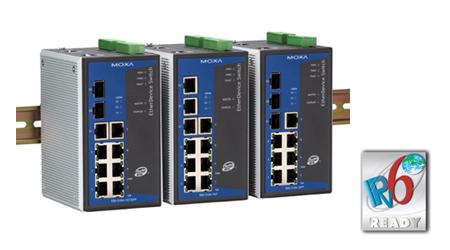
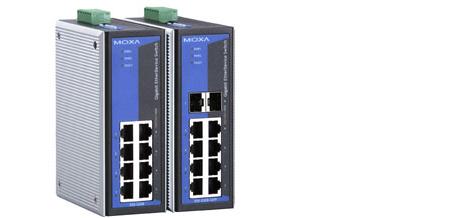
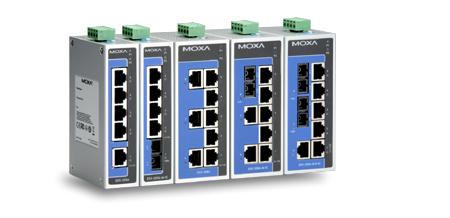
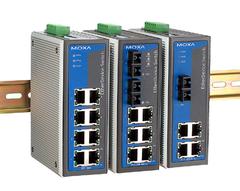
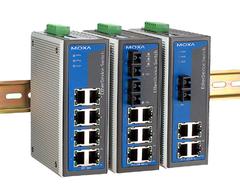
Features and Benefits10/100BaseT(X) (RJ45 connector), 100BaseFX (multi/single-mode, SC or ST connector) Redundant dual 12/24/48 VDC, 18 to 30 VAC power inputsIP30 aluminum housingRugged hardware design well suited for hazardous locations (Class I Div. 2 /ATEX) and maritime environments (DNV/GL)-40 to 75°C operating temperature range (T models)IntroductionThe EDS-205A/208A series are 5 and 8-port industrial Ethernet switches that support IEEE 802.3 and IEEE 802.3u/x with 10/100M full/half-duplex, MDI/MDI-X auto-sensing. The EDS-205A/208A switches provide 12/24/48 VDC (9.6 to 60 VDC), 18 to 30 VAC redundant power inputs that can be connected simultaneously to live AC/DC power sources. These switches have been designed for harsh industrial environments, such as in maritime (DNV/GL) or hazardous locations (Class I Div. 2, ATEX Zone 2) that comply with FCC, TUV, UL, and CE standards.The EDS-205A/208A switches are available with a standard operating temperature range from -10 to 60°C, or with a wide operating temperature range from -40 to 75°C. All models are subjected to a 100% burn-in test to ensure that they fulfill the special needs of industrial automation control applications. In addition, the EDS-205A/208A switches have DIP switches for enabling or disabling broadcast storm protection, providing another level of flexibility for industrial applications.
The EDS-305 Ethernet switches provide an economical solution for your industrial Ethernet connections. These 5-port switches come with a built-in relay warning function that alerts network engineers when power failures or port breaks occur. In addition, the switches are designed for harsh industrial environments, such as the hazardous locations defined by the Class 1 Div. 2 and ATEX Zone 2 standards. The switches comply with FCC, UL, and CE standards and support either a standard operating temperature range of 0 to 60°C or a wide operating temperature range of -40 to 75°C. All switches in the series undergo a 100% burn-in test to ensure that they fulfill the special needs of industrial automation control applications. The EDS-305 switches can be installed easily on a DIN rail or in a distribution box.
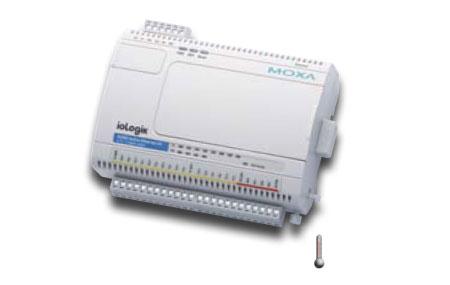
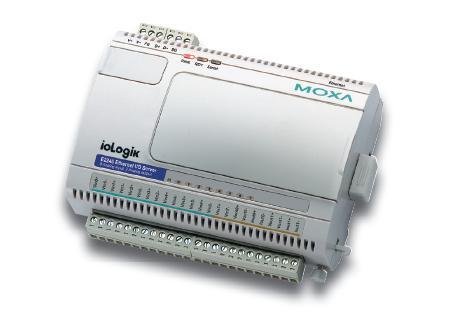
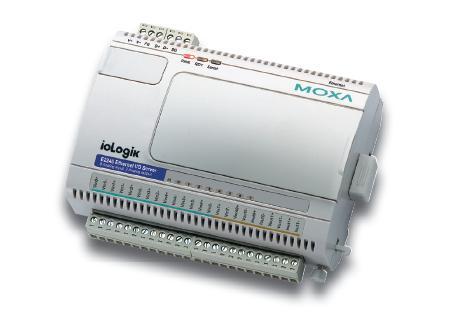
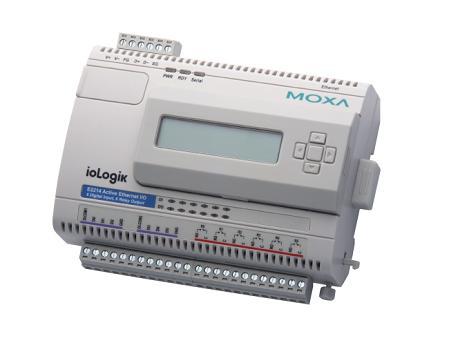
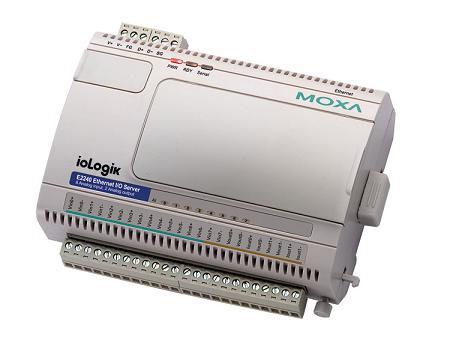
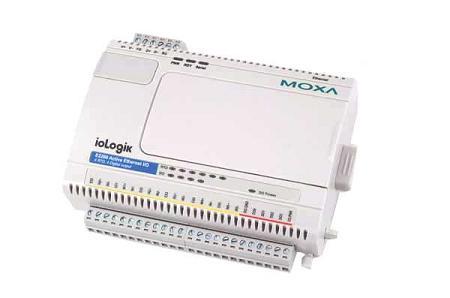
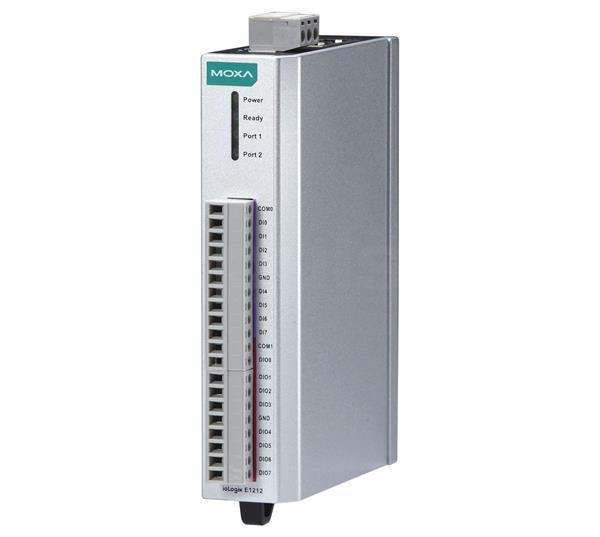
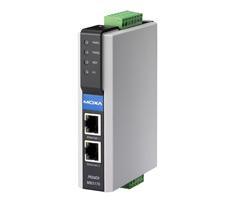
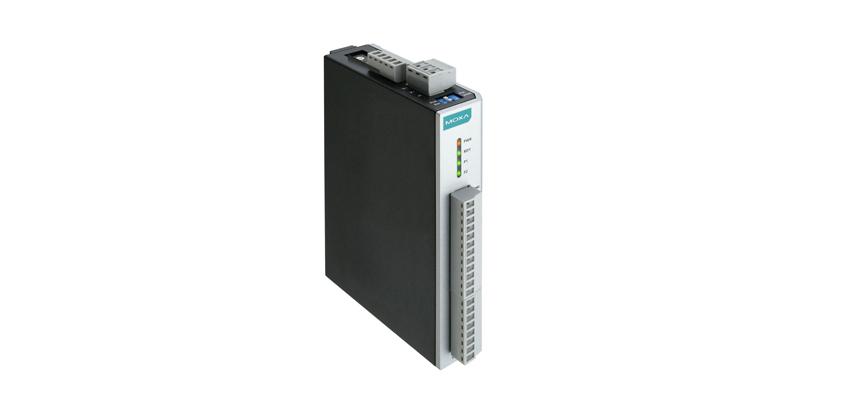
User-definable Modbus TCP Slave addressing Supports RESTful API for IIoT applications Supports EtherNet/IP Adapter 2-port Ethernet switch for daisy-chain topologies Saves time and wiring costs with peer-to-peer communications Active communication with MX-AOPC UA Server Supports SNMP v1/v2c Easy mass deployment and configuration with ioSearch utility Friendly configuration via web browser Simplifies I/O management with MXIO library for Windows or Linux Class I Division 2, ATEX Zone 2 certification Wide operating temperature models available for -40 to 75°C (-40 to 167°F) environments Introduction The ioLogik E1200 Series supports the most often-used protocols for retrieving I/O data, making it capable of handling a wide variety of applications. Most IT engineers use SNMP or RESTful API protocols, but OT engineers are more familiar with OT-based protocols, such as Modbus and EtherNet/IP. Moxa's Smart I/O makes it possible for both IT and OT engineers to conveniently retrieve data from the same I/O device. The ioLogik E1200 Series speaks six different protocols, including Modbus TCP, EtherNet/IP, and Moxa AOPC for OT engineers, as well as SNMP, RESTful API, and Moxa MXIO library for IT engineers. The ioLogik E1200 retrieves I/O data and converts the data to any of these protocols at the same time, allowing you to get your applications connected easily and effortlessly. Daisy-Chained Ethernet I/O Connection This industrial Ethernet remote I/O comes with two switched Ethernet ports to allow for the free flow of information downstream to another local Ethernet device, or upstream to a control server via expandable daisy-chained Ethernet I/O arrays. Applications such as factory automation, security and surveillance systems, and tunneled connections can make use of daisy-chained Ethernet for building multidrop I/O networks over standard Ethernet cables. Many industrial automation users are familiar with multidrop as the configuration most typically used in fieldbus solutions. The daisy-chain capabilities supported by ioLogik Ethernet remote I/O units not only increase the expandability and installation possibilities for your remote I/O applications, but also lower overall costs by reducing the need for separate Ethernet switches. Daisy-chaining devices in this way will also reduce overall labor and cabling expenses. Save Time and Wiring Costs with Peer-to-Peer Communications In remote automation applications, the control room and sensors are often far removed, making wiring over long distances a constant challenge. With peer-to-peer networking, users may now map a pair of ioLogik Series modules so that input values will be directly transferred to output channels, greatly simplifying the wiring process and reducing wiring costs. User-Definable Modbus TCP Addressing for Painless Upgrading of Existing Systems For Modbus devices that are controlled and detected by fixed addresses, users need to spend a vast amount of time researching and verifying initial configurations. Users need to locate each device’s networking details, such as I/O channels or vendor-defined addresses, to enable the initial or start address of a SCADA system or PLC. Devices that support user-definable Modbus TCP addressing offer greater flexibility and easier setup. Instead of worrying about individual devices, users simply configure the function and address map to fit their needs. Push Technology for Events When used with MX-AOPC UA Server, devices can use active push communications when communicating changes in state and/or events to a SCADA system. Unlike a polling system, when using a push architecture for communications with a SCADA system, messages will only be delivered when changes in state or configured events occur, resulting in higher accuracy and lower amounts of data that need to be transferred.
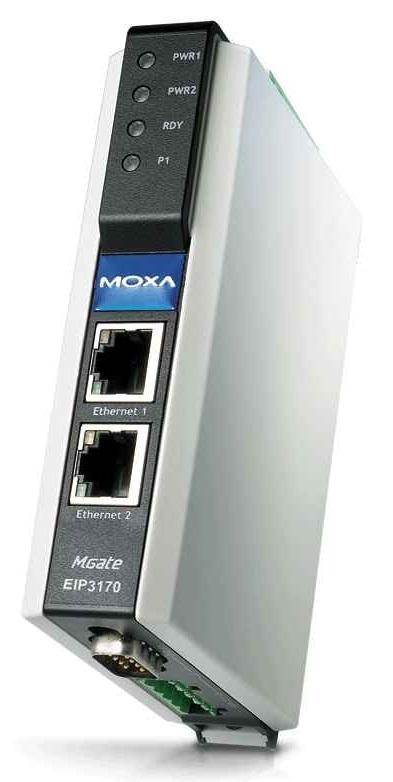
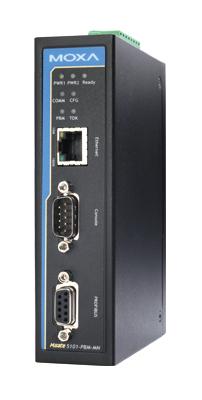
Features and Benefits Protocol conversion between PROFIBUS and Modbus TCP Supports PROFIBUS DP V1 master Supports Modbus TCP client/server Automatic scan of PROFIBUS devices and easy configuration Web-based GUI for I/O data visualization Embedded traffic monitoring/diagnostic information for easy troubleshooting Status monitoring and fault protection for easy maintenance Supports redundant dual DC power inputs and 1 relay output -40 to 75°C wide operating temperature models available Serial port with 2 kV isolation protection Security features based on IEC 62443 Introduction The MGate 5101-PBM-MN gateway provides a communication portal between PROFIBUS devices (e.g. PROFIBUS drives or instruments) and Modbus TCP hosts. All models are protected with a rugged metallic casing, DIN-rail mountable, and offer optional built-in optical isolation. The PROFIBUS and Ethernet status LED indicators are provided for easy maintenance. The rugged design is suitable for industrial applications such as oil/gas, power, process automation, and factory automation. Windows Utility for Easy Configuration and Traffic Monitoring The MGate Manager utility provides a user-friendly interface to make configuration and operation as easy as possible. Moxa’s innovative AutoScan function can automatically detect all connected PROFIBUS slave devices and their available I/O modules to quickly complete gateway configuration, after which an easy-to-read data mapping table is created to assist in the configuration of Modbus TCP master (e.g., SCADA, PLC) settings. In addition, users can configure import/export maintenance functions, and use embedded monitoring tools to maintain logs of Modbus communication packets, which can be used for troubleshooting. A Variety of Maintenance Functions The MGate 5101-PBM-MN provides a Web console and Telnet console for remote maintenance, with both consoles supporting encryption commutation functions such as HTTPS and SSH for preventing unauthorized access. The log functions are provided in firmware such as connection event of Modbus or PROFIBUS for maintenance. Users can monitor each I/O data and review the log through the web console remotely. A relay output alarm is provided for the power input status. It gives maintenance engineers an additional tool for troubleshooting and maintenance. Redundant Power Inputs The MGate 5101-PBM-MN has dual power inputs for greater reliability. The power inputs allow simultaneous connection to 2 live DC power sources to provide uninterrupted operation even if one power source fails. The higher level of reliability makes these advanced PROFIBUS-master-to-Modbus-TCP gateways ideal for demanding industrial applications.
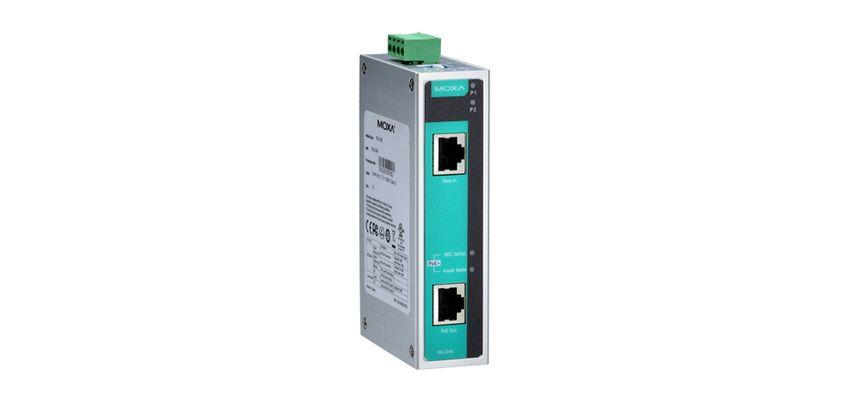
Introduction The INJ-24A is a Gigabit High Power PoE+ Injectors that combines power and data and delivers them to a powered device over one Ethernetcable. Designed for power-hungry devices, the INJ-24 injector provides up to 60 watts, twice as much as conventional PoE+ injectors. It features DIP switch configurator and LED indicator for PoE management, and also supports 24/48 VDC power inputs for power redundancy and operational flexibility. The -40 to 75oC wide temperature range design makes the INJ-24 perfect for operating in critical industrial environments. Features and Benefits High power mode provides up to 60 W DIP switch configurator and LED indicator for PoE management 3kV surge resistance for harsh environments Mode A and Mode B selectable for flexible installation Built-in 24/48 VDC booster for redundant dual power inputs -40 to 75°C operating temperature range (T model)
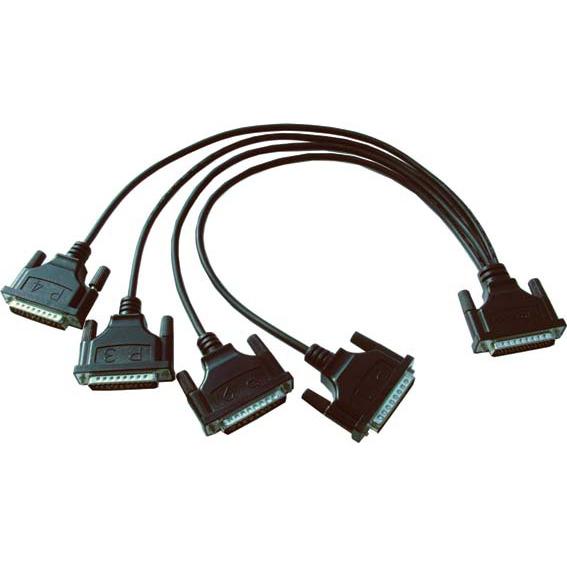
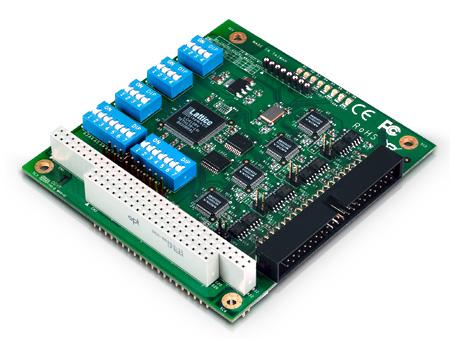
Features and Benefits 921.6 kbps maximum baudrate for super fast data transmission On-chip H/W and S/W flow control Built-in 15 kV ESD protection IRQ settings, I/O settings, and serial interface are jumper and DIP switch selectable Onboard Tx and Rx LED indicators for each port Windows CE 5.0/6.0 and Windows XP embedded operating systems supported Wide temperature model available for -40 to 85°C environments Overview The CA-114 PC/104 modules are reliable, high performance, multiport serial communication solutions that have 4 RS-232/422/485 ports, and can be used with PC/104 CPU boards that accept the PC/104 expansion interface. Optional DB9 and DB25 connection cables are available for connecting to serial devices, and the CA-114s’ versatile driver support makes the modules suitable for a wide range of applications.
Features and Benefits High power mode provides up to 60 W DIP switch configurator and LED indicator for PoE management 3kV surge resistance for harsh environments Mode A and Mode B selectable for flexible installation Built-in 24/48 VDC booster for redundant dual power inputs -40 to 75°C operating temperature range (T model) Introduction The INJ-24A is a Gigabit High Power PoE+ Injectors that combines power and data and delivers them to a powered device over one Ethernetcable. Designed for power-hungry devices, the INJ-24 injector provides up to 60 watts, twice as much as conventional PoE+ injectors. It features DIP switch configurator and LED indicator for PoE management, and also supports 24/48 VDC power inputs for power redundancy and operational flexibility. The -40 to 75oC wide temperature range design makes the INJ-24 perfect for operating in critical industrial environments. Patent Marking
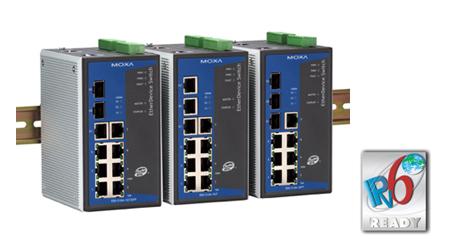
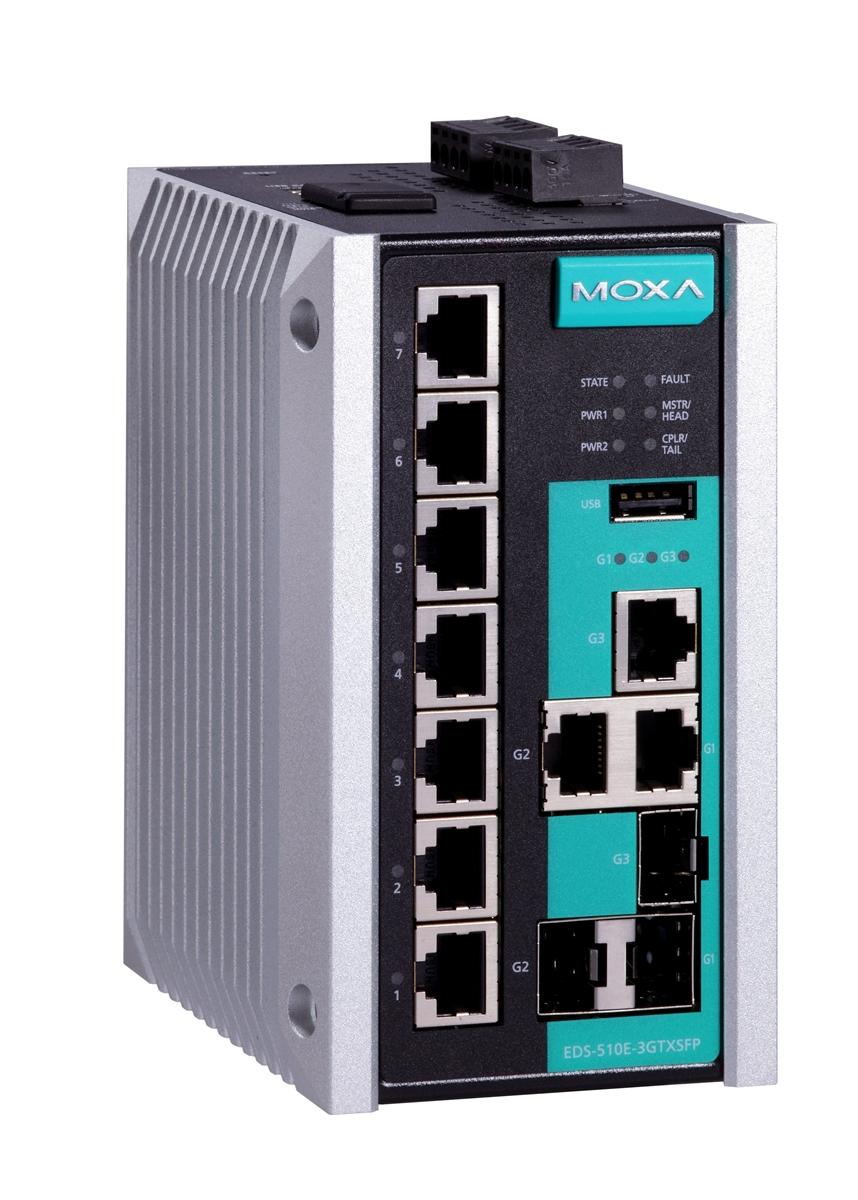
3 Gigabit Ethernet ports for redundant ring or uplink solutions Turbo Ring and Turbo Chain (recovery time < 20 ms @ 250 switches), RSTP/STP, and MSTP for network redundancy RADIUS, TACACS+, SNMPv3, IEEE 802.1x, HTTPS, SSH, and sticky MAC address to enhance network security Security features based on IEC 62443 EtherNet/IP, PROFINET, and Modbus TCP protocols supported for device management and monitoring Supports MXstudio for easy, visualized industrial network management V-ON™ ensures millisecond-level multicast data and video network recovery Introduction The EDS-510E Gigabit managed Ethernet switches are designed to meet rigorous mission-critical applications, such as factory automation, ITS, and process control. The 3 Gigabit Ethernet ports allow great flexibility to build up a Gigabit redundant Turbo Ring and a Gigabit uplink. The switches have USB interfaces for switch configuration, system file backup, and firmware upgrade, making them easier to manage. Additional Features and Benefits Command line interface (CLI) for quickly configuring major managed functions DHCP Option 82 for IP address assignment with different policies Supports EtherNet/IP, PROFINET, and Modbus TCP protocols for device management and monitoring IGMP snooping and GMRP for filtering multicast traffic Port-based VLAN, IEEE 802.1Q VLAN, and GVRP to ease network planning Configurable by web browser, Telnet/USB console, CLI, MXconfig, and ABC-02-USB automatic backup configurator QoS (IEEE 802.1p/1Q and TOS/DiffServ) to increase determinism Port Trunking for optimum bandwidth utilization SNMPv1/v2c/v3 for different levels of network management RMON for proactive and efficient network monitoring Bandwidth management to prevent unpredictable network status Lock port function for blocking unauthorized access based on MAC address Automatic warning by exception through email and relay output
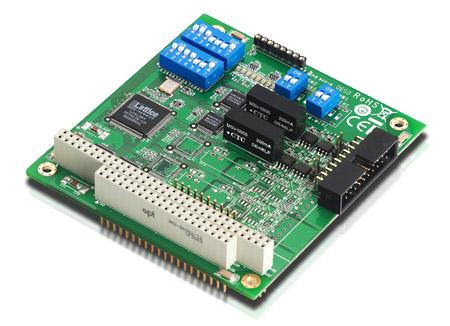
Features and Benefits 921.6 kbps maximum baudrate for super fast data transmission On-chip software flow control Built-in 15 kV ESD protection IRQ, I/O, and serial interface jumper and DIP switch selectable Onboard Tx and Rx LED indicators for each port Supports RS-485 ADDC® (Automatic Data Direction Control) Windows CE 5.0/6.0 and Windows XP embedded operating systems supported Wide temperature models available for -40 to 85°C environments Overview The CA-132/132I PC/104 modules are reliable, high performance, multiport serial communication solutions that have 2 RS-422/485 ports, and can be used with PC/104 CPU boards that accept the PC/104 expansion interface. Optional DB9 and DB25 connection cables are available for connecting to serial devices, and the CA-132/132Is’ versatile driver support makes the modules suitable for a wide range of applications.