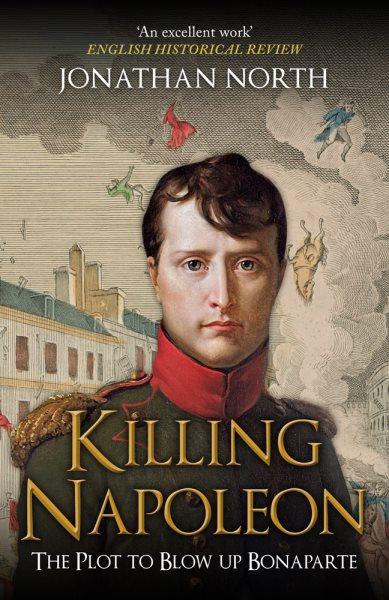
It was Christmas Eve 1800. The streets of Paris were crowded with citizens. Some were shopping, some were eating and drinking. But others were plotting to murder the most famous and powerful man in France. They wheeled their improvised bomb into town earlier that day, and waited. Then, amongst the milling crowd, they saw the target. Despite knowing that the bomb would kill indiscriminately, the fuse was lit, and the enormous explosion wreaked havoc.The target for this early act of terrorism was Napoleon Bonaparte, who had seized power the year before and found himself the enemy of republicans and royalists alike. The terrorists belonged to the royal faction and although they failed to kill Napoleon, their atrocity hurled political violence in a new and terrifying direction; towards a now familiar place where civilian casualties would be collateral damage and where bombs in packed streets and squares would be the new conduit of terror.This book sets the scene with Napoleons coup and follows the cell of extremists as they prepare their plans and devise a weapon that became known as the Infernal Machine. After their attack, we follow the security services as they hunt down the perpetrators, baffled by the novelty of terrorism, as Napoleon uses public anger to launch a war on his opponents. Using first-hand accounts, trial transcripts and archival material - and with all the drama of a detective story - Killing Napoleon recounts one of the great crimes of its era, a story still largely unknown in the English-speaking world; and a precursor to the terrorist threats we know today. New paperback edition - An amazing story that is still largely unknown in the English-speaking world - the plot to blow up Napoleon, an early terrorist attack on Europe's most powerful man, with striking parallels to today.
Holidays with Hitler tells the story of German leisure time and state-sponsored fun under the Nazi regime. Nathan Morley looks at consumerism, entertainment and travel in German society, and offers a vivid portrait of what it was like to visit as a foreign tourist seeking fun in a totalitarian state. An important part of Nazi policy was the vast Strength through Joy programme, headed by Dr Robert Ley a brash and fanatical party member. Although Strength through Joy is best remembered for introducing the Volkswagen Beetle, it also allowed fourteen million people to enjoy annual vacations at bargain basement prices while improving the health of the population by encouraging running, hiking, swimming, and active family holidays. With millions of working people paying monthly dues, the organization amassed a hefty fortune. On the island of Rügen in the Baltic Sea, a vast resort capable of accommodating 22,000 holidaymakers began construction in 1937 the same year the Wilhelm Gustloff, the first Strength Through Joy vessel, was launched in Hamburg. With the arrival of the Second World War, the organisation adapted, the goal being the cultural caretaking of the bomb-battered population and our soldiers. Employing meticulous research, Nathan Morley tells the story not only of the Strength through Joy programme but also the efforts to organise the Olympics and disguise anti-Jewish sentiments from the thousands of visitors; the way millions of Germans spent their free time; and what it was like to be a foreign tourist as the thin veneer of a disintegrating Reich peeled away to reveal an ugly and evil interior.
Tag, Skyla, and Blaze are headed to the Crystal Caverns in search of the next piece of the magical Ember Stone. But Thorn and his dark magic, The Shadow, are quickly spreading across Perodia. Thorn wants the powerful stone--and he wants the last firehawk, too! The friends will have to battle Thorn's spies to reach the stone. Will they find it in time?
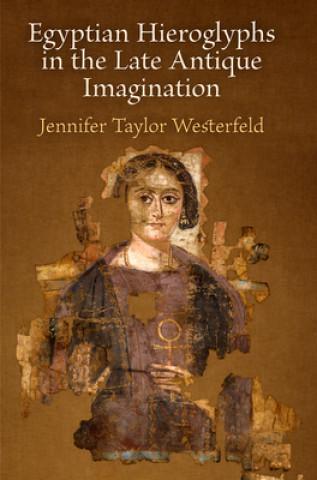
Throughout the pharaonic period, hieroglyphs served both practical and aesthetic purposes. Carved on stelae, statues, and temple walls, hieroglyphic inscriptions were one of the most prominent and distinctive features of ancient Egyptian visual culture.
The Georgia Syndrome, as I imagined it and described it, was a conglomeration of imperial and mindless actions by the Georgian president, inspired and incited by the American leadership and a few European countries. The revelations on WikiLeaks merely served to confirm my view in this regard. As you can see from these reports, the Georgian leadership was well aware that it had unleashed a real act of aggression towards South Ossetia. More than three years have passed. Slowly but surely ¿the Georgia syndrome¿ is regenerating.
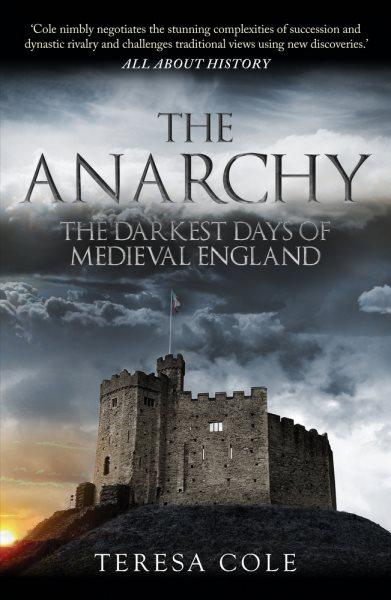
New paperback edition - The bitter civil war for the English throne, which drew in Scotland and Normandy, when a princess's rightful throne was seized by her male cousin, and plunged England into 'the Anarchy'. When the mighty Henry I died in December 1135, leaving no legitimate son, who was to replace him on the throne of England? Would it be Stephen, nephew to the king and showered with favours that maybe gave him ideas above his station? Or could it be a woman, Henrys own choice, his daughter Matilda, who had been sent away when eight years old to marry the Holy Roman Emperor, widowed, then forced into a hated second marriage for political reasons? Stephen was the first to act, seizing the throne that had been promised to Matilda, but he would find taking a crown far easier than keeping it. The resulting struggle became known as the Anarchy, a time when fortune changed sides as frequently and dramatically as in any page-turning thriller, and with a cast of characters to match - some passionately supporting Stephen or Matilda, others simply out to grab what they could from the chaos. These supporting players are not overlooked here: Henry of Blois, brother of Stephen, Bishop of Winchester, and largely orchestrator of the churchs response to the conflict; Robert of Gloucester, illegitimate son of Henry I and chief supporter of his half-sister; and Geoffrey of Anjou, husband of Matilda, determined to secure Normandy (traditional enemy of Anjou) for himself. Covering all the twists and turns of this war between cousins, as first one side then the other seemed within touching distance of total victory, The Anarchy blends contemporary, sometimes eyewitness accounts with modern analysis to describe a period of Englands history so dark and lawless that those who lived through it declared that Christ and his saints slept.' Autorid: Teresa Cole
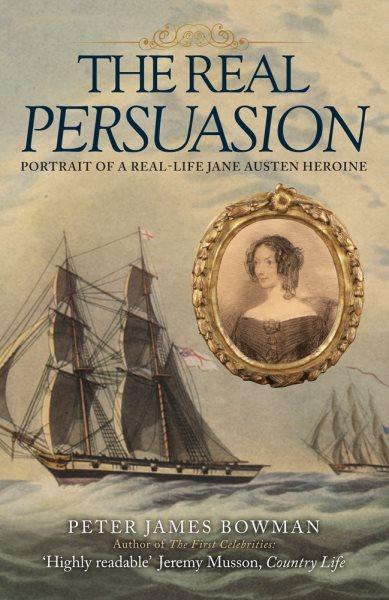
Her father is a vain, foolish baronet, obsessed with his lineage but so careless with money that he is obliged to quit his ancestral seat. Her sister is a fretful invalid with a good-natured husband and two disobedient sons. She herself falls in love with a handsome naval officer, and he with her, but her proud family consider his status and prospects inadequate. Heartbroken, the lovers part: he goes to sea while she leads a forlorn life at home. Years later he returns with a fortune in prize money, and after further misunderstandings he claims her as his bride.This is the story of Anne Elliot in Jane Austens Persuasion. It is also the story true this time of Katherine Bisshopp, the clever, beautiful daughter of an old Sussex family.Drawing on Katherines letters and journals and other family papers, this book relates the joys and anxieties of her youth, her harrowing eleven-year courtship with George Pechell, and their happy and prosperous union, which produced two daughters and a son. Splinter chapters draw parallels with Jane Austens portrait of society and reveal the extraordinary coincidences of character and circumstance between Katherine Bisshopp and Anne Elliot, while the real womans experiences after her marriage are seen as a possible future for the fictional heroine. The reality of history and the deeper truth of literature together yield a detailed picture of the age. New paperback edition - Explore the true story of a real-life Jane Austen heroine in this intimate portrait of a Regency family. Autorid: Peter James Bowman
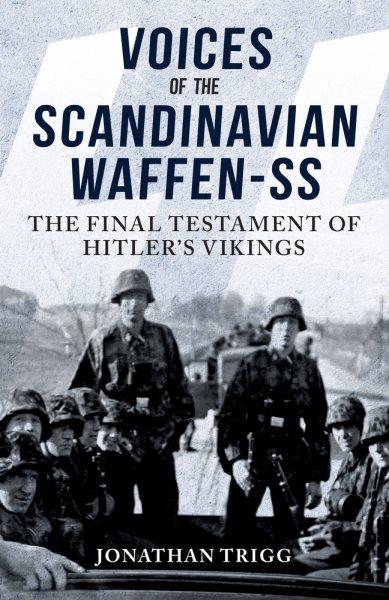
At the beginning of the Second World War Nazi Germany invaded and occupied Denmark and Norway, but left neutral Sweden alone. Less than a year later citizens from all three of those Scandinavian nations volunteered to join the Nazi Waffen-SS and go and fight on the newly formed Eastern Front against Stalins Soviet Union. By the end of the war in 1945 the number of Scandinavians who had fought in the Waffen-SS had reached the thousands. Casualties were high, but there were survivors and they returned home, often to face retribution and condemnation. As time marches on the veterans are passing away. This book is about the war they fought in their own words their last testament before they are all gone.The motivation of these men was complex: many volunteered through a deep hatred of communism, particularly in light of Moscows invasion of Finland in the Winter War. Some, of course, simply believed in Hitlers vision of a new world order, while others were just young men with a craving for adventure.The Scandinavian Waffen-SS, in various configurations, saw action on The Eastern Front from 1941 onwards at the siege of Leningrad, in the cauldron of the Demyansk Pocket, in the Caucasus, and famously at Narva in Estonia and back into Germany itself with the remnants fighting to virtual extinction in the ruins of Berlin as the war came to a bloody close. For these men who had chosen the wrong side, the war was certainly not over. Some fled to Germany, some returned home to recrimination and prison. The author has interviewed some of the last survivors who tell their story with absolute truthfulness: after so many years, they have nothing to lose. The interviews and images gathered by Jonathan Trigg are vital historical documents. New paperback edition - The interviews and images gathered by Jonathan Trigg are vital historical documents. Autorid: Jonathan Trigg
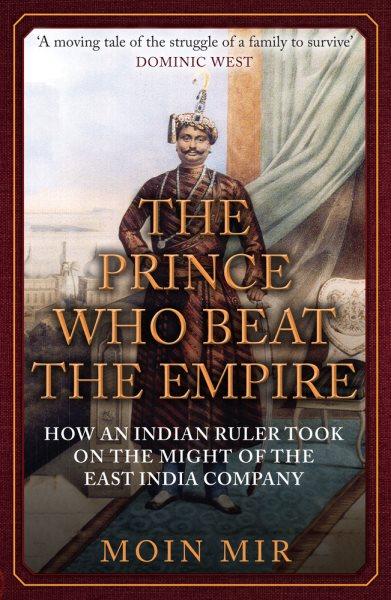
New paperback edition - An acclaimed story of empire and resistance. The rebel prince who beat the world's most powerful corporation. 'A wonderful book' Dominic West. An acclaimed history of empire and resistance: this is the moving story of the rebel prince who beat the worlds most powerful corporation.The ships of the East India Company first docked at India's shores in Surat in the early 17th century. In time, through astute politics and military power, the Company became masters of this great port. But the Company came not with the intention of building Indian maritime trade, but with the single-minded goal of destroying its trading prowess. By 1800 the port was completely annexed, through a Treaty that gave protection to future generations of the local Nawab rulers.But, as elsewhere in India, the Company violated its promises. It stopped the familys income, usurping its palaces, estates, jewellery and possessions. This left the infant granddaughters of the last Nawab on the brink of destitution. But in an unprecedented counter-attack, the father of the two girls stood to defy the Empire and expose its corruption overseas to the British at home. Travelling to London, he would shatter the Company's reputation. His campaign for justice would call for the end of British rule in Hindustan. Not only did the prince win back the family's possessions for his daughters but found true love in Victorian England. Autorid: Moin Mir
Richard M. Freeland reviews how Northeastern University in Boston, historically an access-oriented, private urban university serving commuter students from modest backgrounds and characterized by limited academic ambitions and local reach, transformed itself into a selective, national, and residential research university. In Transforming the Urban University, Richard M. Freeland reviews how Northeastern University in Boston, historically an access-oriented, private urban university serving commuter students from modest backgrounds and characterized by limited academic ambitions and local reach, transformed itself into a selective, national, and residential research university. Having served as president during a critical decade in this transition, Freeland recounts the school's efforts to retain key features from Northeastern's urban history—an emphasis on undergraduate teaching and learning, a curriculum focused on preparing students for the workplace, its signature program of cooperative education, and its broad involvement in the life of the city—while at the same time raising admission standards, recruiting students on a regional and national basis, improving graduation rates, expanding opportunities for research and graduate education and dramatically improving its U.S. News ranking.Freeland situates the Northeastern story within the evolving context of urban higher education as well as broader trends among American universities during the second half of the twentieth century. He documents the way Northeastern maintained its historic values while making innovative use of modern marketing techniques to meet the competitive conditions of the academic marketplace. He shows how Northeastern rejected the standard model of the modern research university and instead reinvented itself as a new kind of urban university: making excellence in the undergraduate experience its top priority; stressing practice-oriented education and research; and emphasizing the academic benefits of its urban setting as well as the importance of contributing to the well-being of its host city. In chronicling Northeastern's recovery from what the school's trustees called a "near-death" experience, Freeland challenges the conventional narrative of what a university must do to achieve top-tier national status. Autorid: Richard M. Freeland
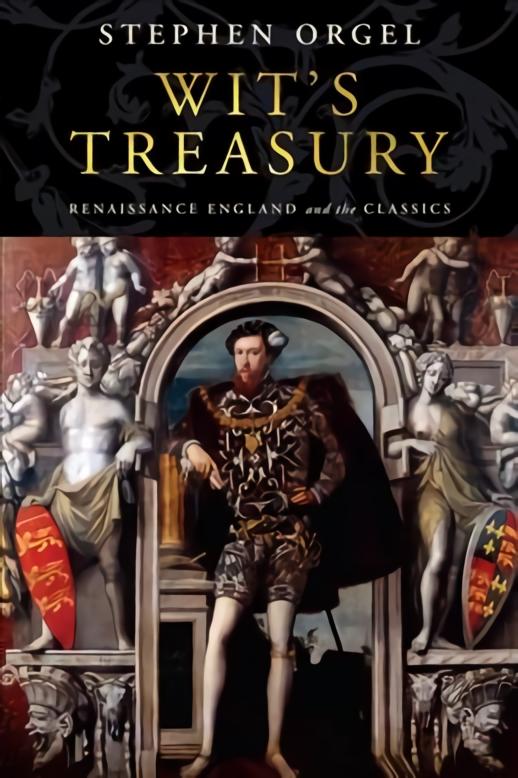
In Wit's Treasury, Stephen Orgel, one of our foremost interpreters of Renaissance literature and culture, charts how the conflict between Christian principles and classical manners and morals yielded the rich creative tension out of which emerged an unprecedented flowering of English drama, lyric, and the arts. As England entered the Renaissance and as humanism, with its focus on classical literature and philosophy, informed the educational system, English intellectuals engaged in a concerted effort to remake the culture, language, manners&;indeed, the whole national style&;through adapting the classics. But how could English literature, art, and culture, become "classical," not only in imitating the ancients, but in the sense subsequently applied to music: "classical" as opposed to popular, as formal, serious, and therefore as good?For several decades in the sixteenth and early seventeenth centuries, Stephen Orgel writes, the return to the classics held out the promise of refinement and civility. Poetry was to be modeled on Greek and Roman examples rather than on the great English medieval works, which though admirable, lacked "correctness." More than poetry was at stake, however, and the transition would not be easy. Classical rules seemed the wave of the future, rescuing England from what was seen as the crudeness and the sheer popularity of its native traditions, but advocacy was tempered with a good deal of ambivalence: classical manners and morals were often at variance with Christian principles, and the classicism of the age would need to be deeply revisionist. "Christian humanism" was never untroubled, Orgel writes, always an unstable or even paradoxical amalgam.In Wit's Treasury, one of our foremost interpreters of Renaissance literature and culture charts how this ambivalence yielded the rich creative tension out of which emerged an unprecedented flowering of drama, lyric, and the arts. Orgel has here written a book that will appeal to anyone interested in English Renaissance art and literature, and particularly in the cultural ferment that produced Shakespeare, Marlowe, Spenser, Jonson, and Milton. Autorid: Stephen Orgel
Täisväärtuslik Super Premium märgtoit pardilihaga ja köögiviljadega, rikastatud D3 ja E vitamiinidega. Sobib täiskasvanud koertele ja kutsikatele alates 2 elukuust. Toetab seedimist ja immuunsust.
Vastupidav termoplastilisest kummist pall vilega, mis soodustab koera aktiivsust ja aitab säilitada hammaste hügieeni. Ideaalne interaktiivne mänguasi närimiseks ja mängimiseks.
Note from the Author:This is a 1.5 Novella in The Forgotten Goddess Series. It is highly recommended you read The Forgotten Goddess, book 1 first for a richer experience and to avoid spoiling the ending of book 1. And with that.... please enjoy. "We should have seen this coming. I should have seen this coming."Calypso, a resilient Wind Siren, combats with the aftermath of a devastating battle that thrusts her best friend, Rhea, into the clutches of their greatest enemy, Ares, the God of War.Reliving the darkest moments of her immortal life, Calypso's harrowing past resurfaces as she recalls the torment of her captivity at the hands of the Fire-wielding Princes of Troy, a period that stripped her of power, her voice, and hope for the future.As she navigates the uncertain winds of newfound freedom, Calypso's revelation about her Fated Mates, who share the elemental power of her captors, forces her to confront a harrowing choice between embracing the path ordained by destiny or rejecting her mates and the haunting echoes of her painful captivity.Embark on an enthralling journey alongside Calypso as she sets out to confront her captors, reclaim her voice and power, and ultimately seek the vengeance she has long yearned for.
The Library of Alexandria has been lost. The truth of history has been hidden from us. The God of War rules the earth, and we desperately need a savior.Rhea has always known she was different but never imagined that her secrets would lead her down a path of danger and adventure. After a tragic accident that killed her family as a child, Rhea has kept her powers over the elements hidden, but when Ares, the God of War, begins hunting her, she realizes that her past is not quite as it seems.As she navigates a world filled with danger and betrayal, Rhea discovers that the Greek gods are not just myths but real and powerful beings. With her life in danger and the fate of the world at stake, Rhea must decide whether to run away or stay and fight.With the help of ancient mythology's most famous gods and goddesses, Rhea embarks on a journey to confront the God of War and protect those she loves. As she delves deeper into her powers and the truth about her past, Rhea must come to terms with her true nature and embrace her destiny.Will she be able to harness her powers to save the world from destruction, or will her powers consume her? Find out in this thrilling tale of magic and mythology.
Everyone loves a wedding... Nothing lifts our hearts like the joyous peal of wedding bells. Or the sight of a happy couple being showered with confetti and good wishes. Now the most exciting new names in romantic fiction and the bestselling author who started it all -escort you down the aisle to a place of honor at four glorious celebrations of everlasting love: KATHLEEN E. WOODIWISS reintroduces us to the beloved characters from THE FLAME AND THE FLOWER including Jeff Birmingham, who seals an impetuous proposal with one brief, precious and passionate kiss. CATHERINE ANDERSON calls us to meet a tempestuous pair of wild western hearts, in a tale of a frontier revenge that backfires. LORETTA CHASE melts our hearts with a story of an unconventional young woman's offer of marriage to a "mad" and presumed dying earl. LISA KLEYPAS shows us how true love will always win in a romance about one stubborn lady -and the persistent suitor who opens her heart. So come join the celebration and experience THREE WEDDINGS AND A KISS Love for now...and always.Everyone loves a wedding...Nothing lifts our hearts like the joyous peal of wedding bells. Or the sight of a happy couple being showered with confetti and good wishes. Now the most exciting new names in romantic fiction and the bestselling author who started it all -escort you down the aisle to a place of honor at four glorious celebrations of everlasting love: KATHLEEN E. WOODIWISSreintroduces us to the beloved characters fromTHE FLAME AND THE FLOWER including Jeff Birmingham, who seals an impetuous proposal with one brief, precious and passionate kiss.CATHERINE ANDERSONcalls us to meet a tempestuous pair of wildwestern hearts, in a tale of a frontier revenge that backfires.LORETTA CHASEmelts our hearts with a story of an unconventional young woman's offer of marriage to a "mad" and presumed dying earl.LISA KLEYPASshows us how true love will always win in a romance about one stubbo