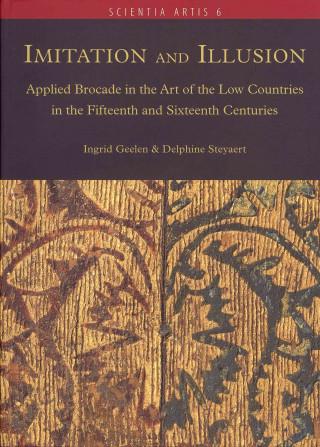
Language: English, Binding: Hardback, Number of pages: 660, Publishers: BREPOLS PUBL, Author: I. Geelen,D. Steyaert,Ingrid Geelen, ISBN-13: 9782930054117, Date of issue: 2011
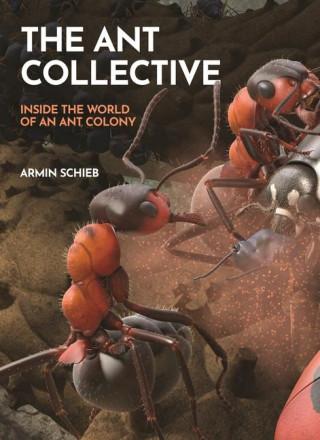
Language: English, Binding: Hardback, Number of pages: 128, Publishers: Princeton University Press, Author: Armin Schieb, ISBN-13: 9780691255927, Date of issue: 2024
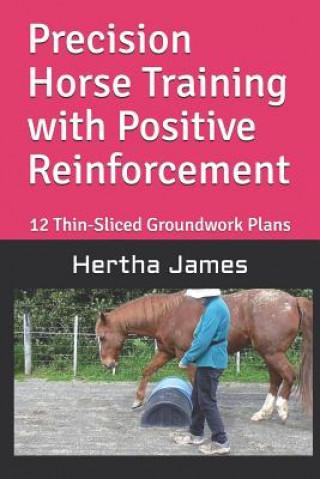
This ninth book in the Life Skills for Horses series looks at ways we can learn to be more precise with our body language. When we strive to cut the static or 'noise' out of our body language, the horse will begin to notice that our body orientation, our b
Eigengrau / (ay-gen-gr-ow ] - noun. intrinsic light; the colour seen by the eye in perfect darkness Rose believes in true love and leprechauns. Her flatmate Cassie is engaged in a fervent struggle against patriarchal oppression. Across London, Mark believes in the power of marketing. His flatmate Tim Muffin is engaged in a fervent struggle against his own waistline. In a city where Gumtree can feel like your closest friend, looking for the right person can lead you all the wrong places. Penelope Skinner's Eigengrau premiered at the Bush Theatre, London, in March 2010 in a Strawberry Vale production.
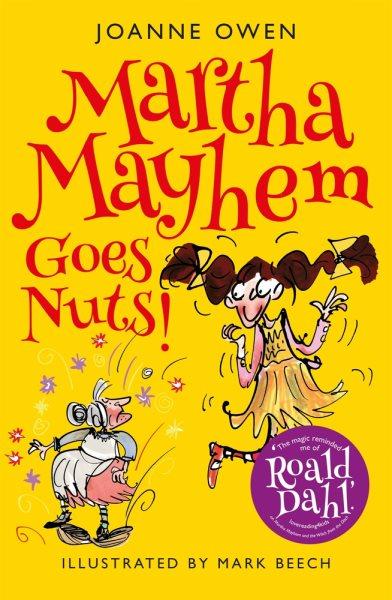
The second in a fantastic funny younger series from Carnegie and Branford Boase long-listed author, Joanne Owen. Martha is still causing accidental mayhem in this second book in the series. She accidentally drops a nutmeg into a "grow and move" potion concocted by grumpy witch, Griselda Gritch . . . and mayhem unfolds, including an even-grumpier-than-Griselda-Gritch magical nutmeg lady, the village hall being accidentally knocked down by a herd of cows, and a VERY eventful and catastrophic village fete and football match. Everybody blames Martha - again! Autorid: Joanne Owen
Cognitive psychology made easy An accessible and entertaining introduction to the field, Cognitive Psychology For Dummies tracks to a typical college course, making it the perfect supplement for students in need of a clear-and most importantly, enjoyable-overview of this fascinating topic. Having found most textbooks too dense and jargon-laden, the authors demystify the core concepts of cognitive psychology and provide you with the tools you need to succeed. Although written for psychology students, it's also a handy resource for anyone looking to understand the underlying concepts of Cognitive Behavioral Therapy (CBT), a popular treatment for people suffering from anxiety and other psychological disorders. Makes complicated subject matter accessible and enjoyable Serves as a suitable supplement to classroom learning Explains core concepts in plain English Cognitive Psychology For Dummies is the easy-to-read book that finally makes sense of cognitive psychology.
Learn to speak, read, write and understand German! Love, Travel, Study, Work, Friendshipwhatever your reason for wanting to learn, Beginners German will help you to: Communicate naturally in everyday situations. Build your confidence with easy-to-follow explanations and plenty of practice activities. Understand and pronounce German easily with online audio. Remember what you learn with our effective Discovery Method. Focus your learning and track your progress with practical tools and planners. Access the audio for this course for free by downloading it to the Teach Yourself Library app or streaming it on library.teachyourself.com.? Is this course for me? Beginners' German is for absolute beginners and those whove had some previous experience with the language and want to refresh their knowledge. Clear and simple explanations make the course appropriate and accessible to anyone learning German. There are extensive illustrations and tools to help you plan your studies and track your progress, all designed to support learning on your own. This course is also ideal to use with one-to-one tutoring and as a classroom course, and its the perfect resource to pair with a language-learning app. Where do I go next? Continue learning with?Teach Yourself Complete German?and?Enjoy German. ? Have some fun with our?Short Stories in German for Beginners?by Olly Richards' or?50 German Coffee Breaks. Rely on Teach Yourself, trusted by language learners for over 85 years. Autorid: Rosi McNab
Aliya loves taking photos. She talks with a stammer, but who needs words when you can have pictures? Aliya mainly hangs out at the art block, where she gets to meet Ben - but he never speaks to her. Then when Aliya looks at her latest series of pictures, she sees a murky figure in the background of many of them. Is she being stalked? Autorid: Cotterill Jo
Introduced and edited by broadcaster Stephen Johnson, a curated selection of chilling ghost stories from world literature.Why do people love ghost stories, even if they don’t believe (or say they don’t believe) in ghosts? Is it simply the adrenaline rush that comes from being mesmerized and terrified by a great storyteller, or do these tales yield deeper meanings—telling us things about our own inner shadows? Stephen Johnson brings together some of the most memorable encounters with ghosts in world literature, from Europe, Russia, the United States, and China. Recurring themes and imagery are noted, interpretations suggested—but only suggested, since ambiguity and resistance to rational interpretation are key elements in the best ghost stories. As the writer Robert Aickman observed, often the decisive moment comes when someone, somehow, makes a “wrong turning”—literally, perhaps, but at the same time psychologically, even morally—and some mysterious nemesis takes over.Old favorites by M. R. James, Ambrose Bierce, and Charlotte Perkins Gilman are interlaced with extracts from longer works by Emily Brontë, Henry James, and Alexander Pushkin,, along with slightly left-field apparitions from Tove Jansson and Flann O’Brien. With such expert guides, who knows what we will be led to encounter in the haunted chambers of our minds? Autorid: Stephen Johnson, Stephen Johnson
A radical new take on one of humanity's most misunderstood periods of transition: the midlife crisis.Only two species of mammal have a post-reproductive life that lasts longer than their reproductive life: killer whales, whose elders are able to sniff out food supplies over vast oceanic distances to keep their pods fed, and Homo sapiens. While the evolutionary purpose of the killer whale’s extensive life seems clear, what is the point of ours This was a question that intrigued the psychoanalyst Carl Jung, who observed that if a culture is to maintain its deepest, profoundest roots while moving forward to embrace the challenges of historical and technological change, it needs to find an equilibrium between the energy, vigor, and creativity of those in the ego-driven first half of life and the experience, dignity, and wisdom of those in the second. But to make it to that second half of life, we need to traverse the dreaded middle years, when so many of us find ourselves discontented with our jobs, unhappy in our relationships, and lamenting our fetishized youths.In this highly readable and groundbreaking new book, the psychoanalyst Andrew Jamieson examines the Jungian concept of the midlife crisis to show how it is an essential evolutionary and social rite of passage that we all must proceed through—a set of challenges that we either take advantage of or ignore, depending on whether our complex or neurosis blocks this developmental impulse.Drawing on history, psychology, science, and literature, Jamieson shows just how ubiquitous, and crucial, the “midlife crisis” is, and the devastating consequences for society at large if we continue to regard it as something we can, and should, avoid. Autorid: Andrew Jamieson
A cinematic memoir and critical exploration of nine classics of old Hollywood by a contemporary comic novelist.North by Northwest isnt about what happens to Cary Grant, its about what happens to his suit. The suit has the adventures, a gorgeous New York suit threading its way through America. The suit, Cary inside it, strides with confidence into the Plaza Hotel. Nothing bad happens to it until one of the greasy henchmen grasps Cary by the shoulder. Were already in love with this suit and it feels like a real violation.Todd McEwen grew up in Southern California, so his head was hopelessly messed with by the movies. As the son of relatively normal people, Todd had no in with Hollywood, a mere thirteen miles away, yearn and try as he might.This is a kid who loved the movies so much, he got up at 4:30 in the morning to watch Laurel and Hardy. A kid who insisted on his birthday that his father project 8mm cartoons onto the familys dining room curtains so they could be slowly parted, just like at a real cinema.This is a kid who liked to leave the movie and trudge up hundreds of dangerous iron steps to visit the lugubrious and always surprised projectionist. This is a kid who, years later, watched Chinatown over 60 times.A love letter to old Hollywood, this is a book for anyone interested in film. Movies discussed include Blotto, The Wizard of Oz, The Three Stooges, To Catch a Thief, North by Northwest, The 39 Steps, The Trouble with Harry, and many, many more. Autorid: Todd McEwen
An eclectic showcase of the most influential writing about children from the past four hundred years.Children are a wonder, a blessing, a miracle, and everyone has an opinion on how we should raise them. From novelists to pediatricians and from modern parenting experts to child psychologists, Tiny Feet is the first anthology of its kind, showcasing a range of the most influential writing about children over the past four hundred years. Published chronologically, the extracts featured in this delightful compendium show the extent to which some of our attitudes have changed while others remain absolute, and remind us of the joy that children have always brought to our lives.Contributors include: Erik H. Erikson on shame and guilt; Marvin J. Gersh on how to raise children in your spare time; Naomi Stadlen on how parenting books undermine parenting by reducing it to a number of essential tasks; and Donald Winnicott on the good-enough mother.Plus: memoir, fiction, and further opinion from Daniel Burgess, Jean-Jacques Rousseau, Johann Heinrich Pestalozzi, Isabella Beeton, Charles Darwin, Robert Louis Stevenson, James Sully, Maria Montessori, Bertrand Russell, Margaret Mead, Jean Piaget, Harry F. Harlow, Benjamin Spock, Marvin J. Gersh, Toni Morrison, Lydia Davis, Alison Gopnik, Giuseppina Persico, Cleon C. Mason, Bernardine Evaristo, Ella Cara Deloria, John B. Watson, and Rosalie Rayner. Autorid: Lauren Child
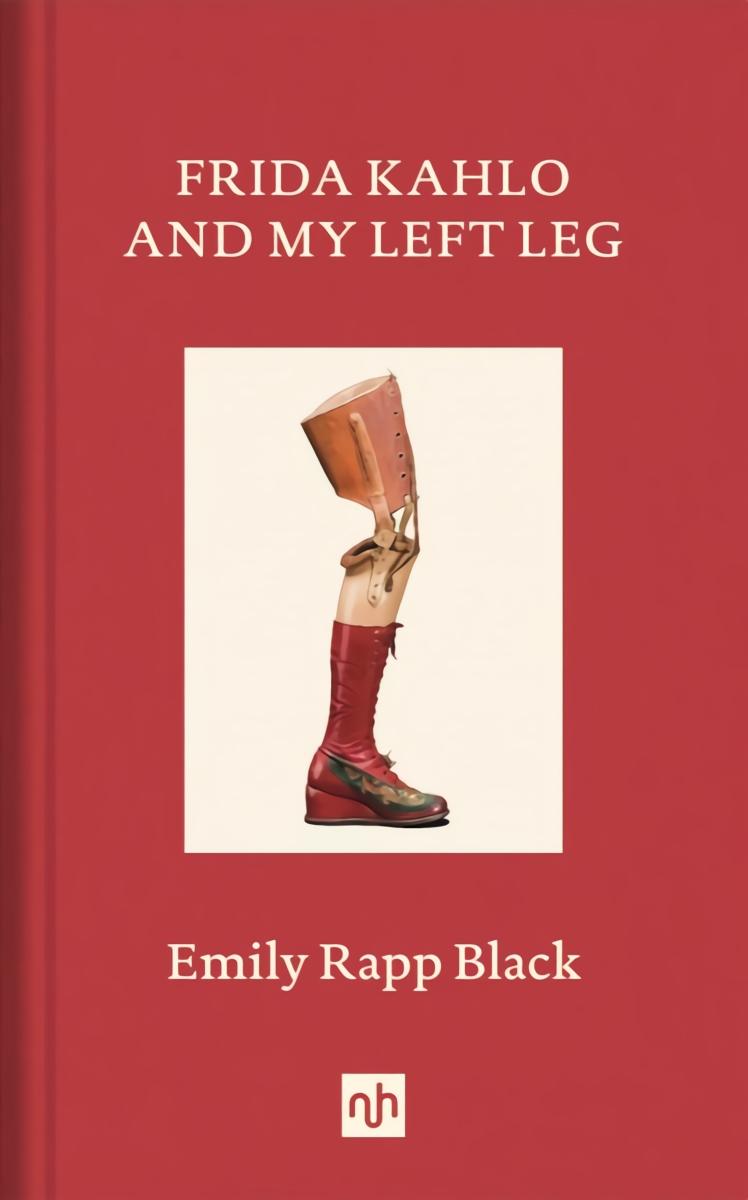
A New York Times-bestselling author's personal examination of how the experiences, art, and disabilities of Frida Kahlo shaped her life as an amputee.Frida Kahlo was an amputee in the last part of her life, and long before that her right leg was forever compromised by a childhood bout with polio. Since adolescence, Emily Rapp, herself an amputee since the age of four, felt that there were many things she had in common with Frida Kahlo. From the first sight of Kahlo's painting of the devastating bus crash that almost killed her, Rapp felt a sense of kinship with the artist. They both endured numerous operations; both alternately hid and revealed their altered bodies; and both found a way to live and create despite physical and emotional pain. In this riveting read, Rapp gets to the essence of Frida Kahlo through her art, her letters and her diaries. She tells her own story of losing a child to Tay-Sachs; finding love, and becoming pregnant with her daughter; and of how Kahlo's life and work helped her to find a way forward when all seemed lost. Containing several full colour images of Kahlo's art and clothing, Rapp offers a unique perspective on the artist and the challenges she faced. "I want to know and remember what it was like to walk as Frida once walked: before polio at six years old shrunk her right leg; before the infamous bus crash on September 17, 1925 when the pole pierced her pelvis; then the casts, the saws, the stitches woven into the skin and then carefully twisted out, the scars gone white and silent and sealed. I am one-legged, like Frida, but I am also unlike her, and there in our essential difference is where my fascination lies, and there lies also my devotion, my despair, my revulsion, my resentment, my desire." --Emily Rapp Autorid: Emily Rapp Black
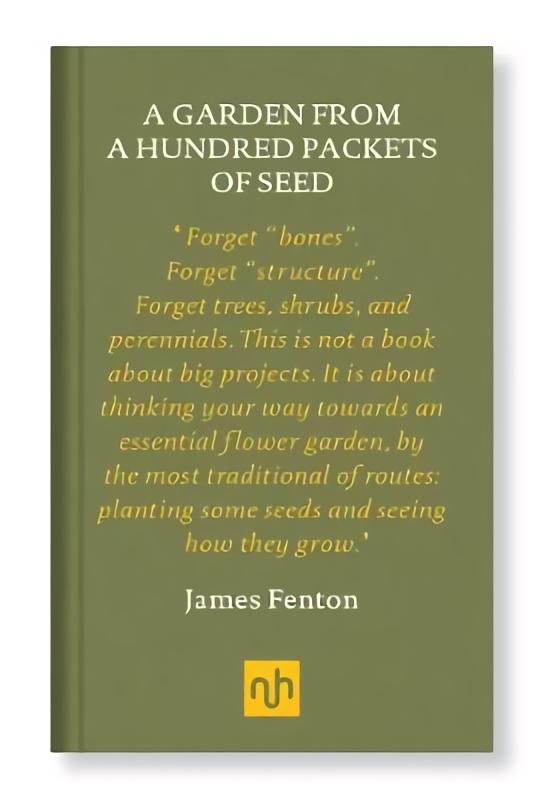
In this light-hearted book, poet and gardener James Fenton describes a hundred plants he would choose to grow from seed. It seemed a simple and interesting idea: what plants would you choose if starting a garden from scratch? Includes chapters on flowers for colour, size, or exotic interest; herbs and meadow flowers; climbing vines and tropical species; the micro-meadow; raising plants from seed; and a wealth of personal tips and advice. As Fenton writes, the emphasis is on childish simplicity of approach, and economy of outlay. Here is a happy, stylish, thought-provoking exercise in good principles, which exudes that rare thing: common-or-garden sense about gardens. Autorid: James Fenton
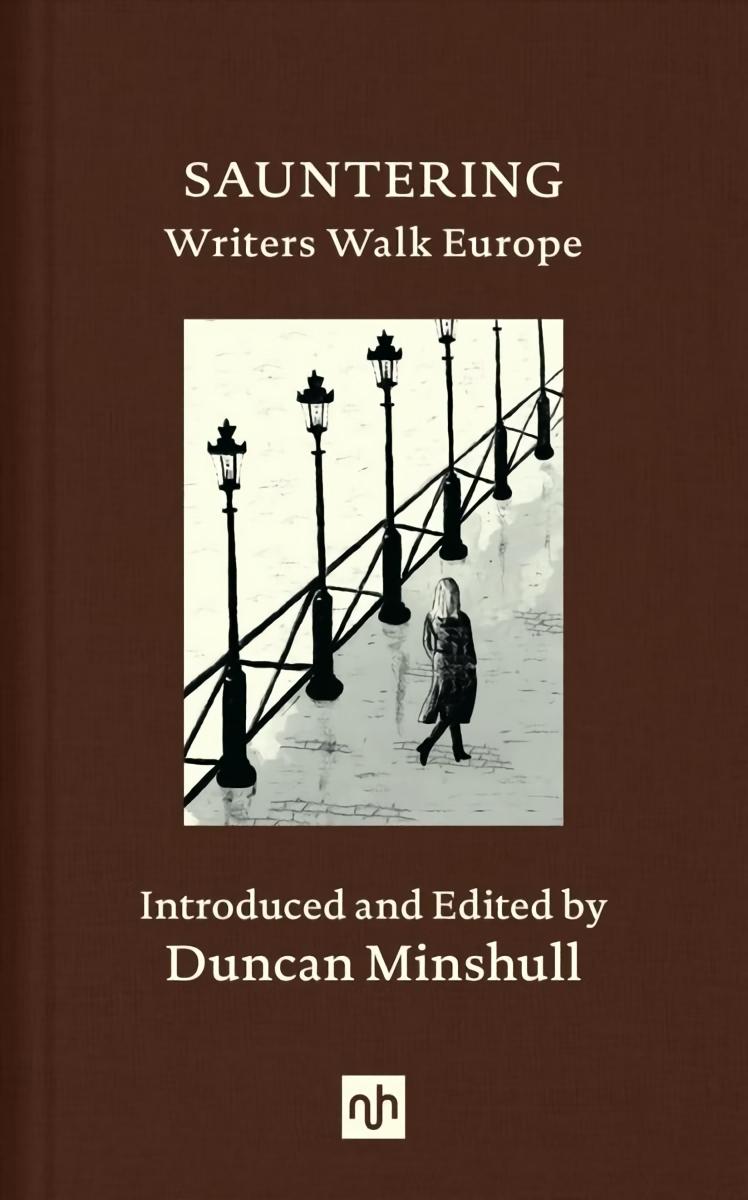
This latest collection of walking literature from Notting Hill Editions celebrates the lure and allure of the European continent and its sights, sounds and aromas--brought into even sharper relief when traveling it by foot.On foot we are close to things. Closer to the European continent's alpine ranges, arterial rivers, expansive coastlines; to ancient and magisterial cities with their buildings and gardens and mysterious thoroughfares; in the company of memorable strollers out basking on the piazzas and boulevards.Sauntering features over fifty writers--classic and current, native and visitor--who laud, lament, and explore all things European. Twenty-two countries are covered on foot. Writers include Henriette D'Angeville, the second woman to climb Mont Blanc; Joanna Kavenna roaming the glacial wastes of Iceland; Norman Lewis observing the paseo in provincial Spain; and Robert Macfarlane dropping deep into underground Paris. And what readers will take from these vivid accounts of place and people is another thing: a picture of the type of walker making his or her way across Europe. Be it mountaineer or pilgrim, explorer or flâneur, war reporter or psycho-geographer. They and others cross the pages with style and drama and always with insight. Enjoy following them en route. . . . Autorid: Duncan Minshull
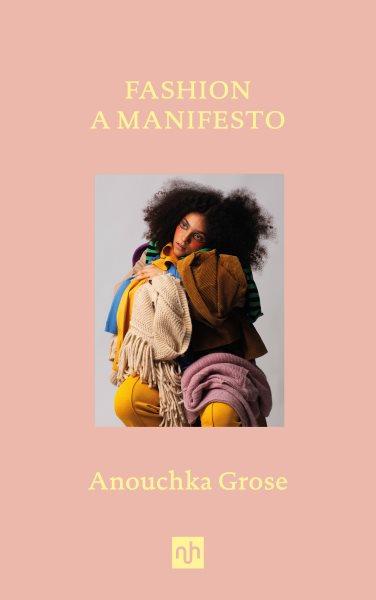
With a critical eye trained on the capitalistic allure and environmental impact of the fashion industry, this timely and stirringly argued book puts forward a radical new approach to the way we represent ourselves through our clothes.Fashion: A Manifesto takes a look at the psychology of fashion in order to unpick the hold it has on so many of us. On the one hand clothes can supposedly help you out with embodied life by concealing the bits you feel ashamed of and accentuating the bits youre proud of. However, fashion isnt really about clothes in any practical sense, but rather the endless replacement of clothes by other clothes, and especially the vilification of certain styles and the extreme elevation of others.Like gambling, fashion is a system that keeps us captivated by treating us badly, trapping us in a cycle of promises and dashed hopes by suggesting that new clothes will help us to like ourselves more. And while its easy to dismiss fashion as elitist and wasteful, isnt fashion also fascinating, exciting and perhaps sometimes even radicalnot to mention surprisingly egalitarian?Rather than insisting we give up on the pleasures that clothes have to offer, this brilliant new book by psychoanalyst and writer Anouchka Grose puts forward a post-fashion logic that rejects the parade of manufactured novelties in favor of more idiosyncratic forms of sartorial imitation.Taking us on a journey from the court of Louis XIV to TikToks avant apocalypse, Fashion: A Manifesto scrutinizes fashion from a number of angles: historically, psychologically, politically, environmentally, even linguistically, to open up questions about the ways in which it works both for and against us and looks forward to a future where our clothes treat usnot to mention the planeta great deal more kindly. Autorid: Anouchka Grose
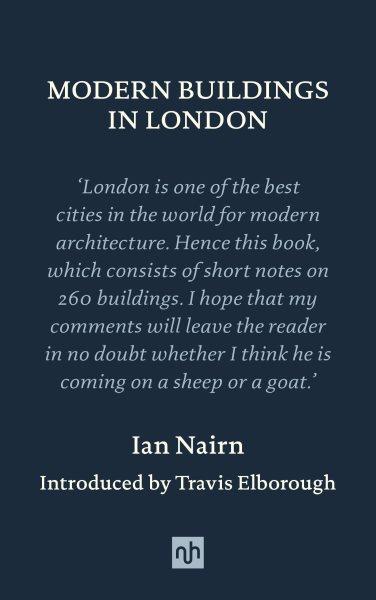
'Without any doubt, London is one of the best cities in the world for modern architecture. But it is also one of the biggest cities in the world, and it does not make a display of its best things. A visitor looking for new buildings in the City and the West End might well be justified in turning away with a shudder. Yet delightful things may be waiting for him in Lewisham or St. Albans.' Ian Nairn, from the 'Foreword' to Modern Buildings in London. As one of the few architectural critics to eschew purely aesthetic modes of analysis, Ian Nairn's timeless books on modern urban cities have been hailed as some of the most significant writing about contemporary Britain, while also being praised as alternative 'guidebooks' for curious travellers. First published in 1964, Modern Buildings in London celebrates the character of buildings that were immediately recognisable as 'modern' in 1964, many of which were not the part of the well-known landscape of London but instead were gems that Nairn stumbled across. Written 'by a layman for laymen', Nairn's take on modern design includes classic buildings such as the Barbican, the former BBC Television Centre and the Penguin Pool at Regent's Park Zoo as well as schools, old timber yards, ambulance stations, car parks and even care homes. Autorid: Ian Nairn, Travis Elborough
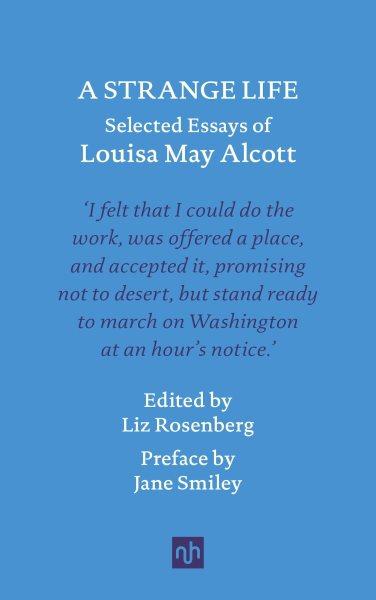
Collected together for the very first time, witty and wide-ranging essays from the celebrated author of Little Women.Louisa May Alcott (18321888) is, of course, best known as the author of Little Women (1868). But she was also a noted essayist who wrote on a wide range of subjects, including her fathers failed utopian commune, the benefits of an unmarried life, and her experience as a young woman sent to work in service to alleviate her familys poverty. Her first literary success was a contemporary close-up account of the American Civil War, brilliantly depicted in Hospital Sketches, which was drawn from her own experience of serving as an army nurse near the nations capital. As with her famous novel, Alcott writes these essays with clear observation, unforgettable scenes, and one of the sharpest wits in American literature.Blending gentle satire with reportage and emotive autobiography, Alcotts exquisite essays are as exceptional as the novels she is known for. Published together for the first time, this delightful selection shows us another side to one of our most celebrated writers. Autorid: Louisa May Alcott, Liz Rosenberg, Jane Smiley
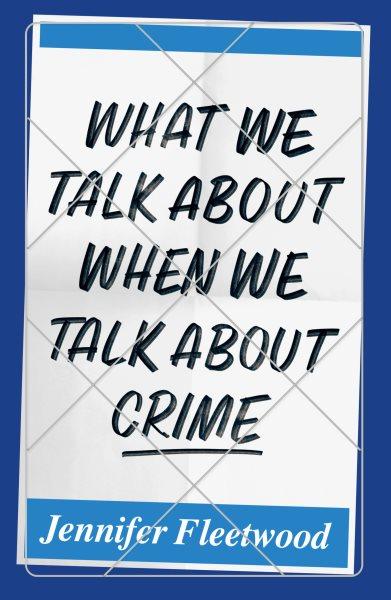
An examination of the increasingly public nature of crime and confessionfrom live-streamed offenses to Prince Andrews Newsnight interviewby a noted writer & lecturer in criminology. Over the past few decades, there has been a remarkable rise in the number of people who speak publicly about their experience of crime. These personal accounts used to be confined to private or professional settingsthe police station, the courtroom, a helpline or in a counselors officebut today bookshops heave with autobiographies by prisoners, criminals, police, and lawyers; streaming platforms like Netflix and YouTube host hours of interviews with serial killers, death row residents, vigilantes, and gang members; true-crime podcasts like Criminal often feature episodes focusing entirely on one persons narrative; and some offenders even live-stream their crimes. In this fascinating new book, British criminologist Jennifer Fleetwood compellingly examines seven high-profile crimes which are known to us via a public, first-person account to try to make sense of the social, political, and cultural consequences that this confessional impulse has on our lives. From Howard Markss autobiography Mr. Nice to Shamima Begums 2019 Times interview; from the documentary The Real Mo Farah to Prince Andrews disastrous Newsnight interview; from Chanel Millers victim impact statement to episodes of Criminal and Myra Hindleys prison letters, Fleetwood invites us to think differently about the abundance of personal stories about crime that circulate in public life. Autorid: Jennifer Fleetwood
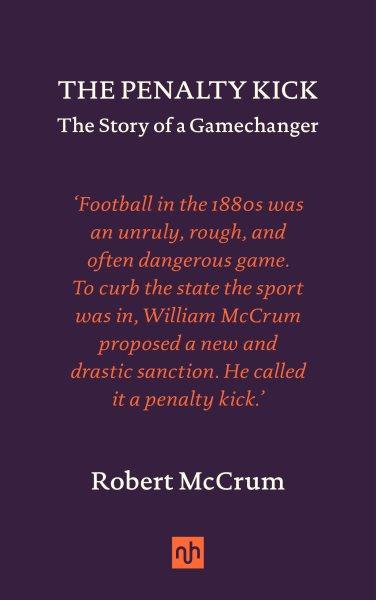
A rousing history of the penalty kick and its introduction in English football by a famed British writer & editor.Football, in the 1880s, was a rough and dangerous game. To address the abhorrent state of the sport, William McCrum, an amateur Irish goalkeeper and the author's great-grandfather, proposed the penalty kick, a new and drastic sanction introduced to the game in 1891. For over a hundred years, this extraordinary phenomenon has not only regulated the conduct of football (also known as soccer) but has also inspired game theories and infiltrated classics of contemporary literature.An enthralling portrait of a lost age, The Penalty Kick: The Story of a Gamechanger is a family history, a social history, and a history of the world's most popular sport. It considers an extraordinary phenomenon as it examines the penalty kicks psychologicaleven philosophicalgrip on our imaginations, with its distillation of risk and chance into the penalty shoot-out, an all-or-nothing moment. Autorid: Robert McCrum
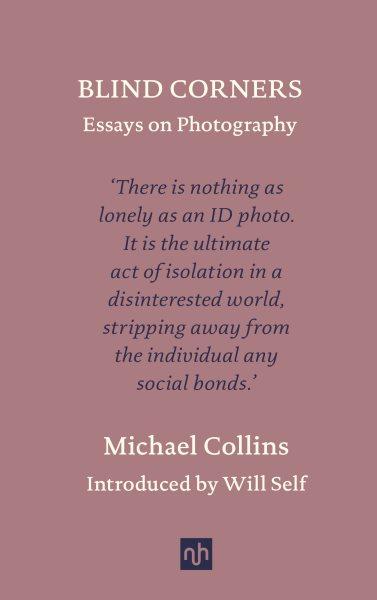
The debut collection of essays from one of Britain's most celebrated photographers. For many years, photographer Michael Collins had wondered what exactly it was that he found so mysterious and compelling about photography. In this series of linked pieces, Collins offers a reappraisal of photographic genres including the humble and ubiquitous that he believes are worthy of greater understanding. From restoring abandoned photos, whose subjects are lost to time, to a quotidian history of the studio portrait; from tracing the origins of the photographic survey within the wider field of the history of art to an experiment in portraiture using gorillas, Collins reveals what it is about photography that is so enduringly fascinating. Autorid: Michael Collins, Will Self
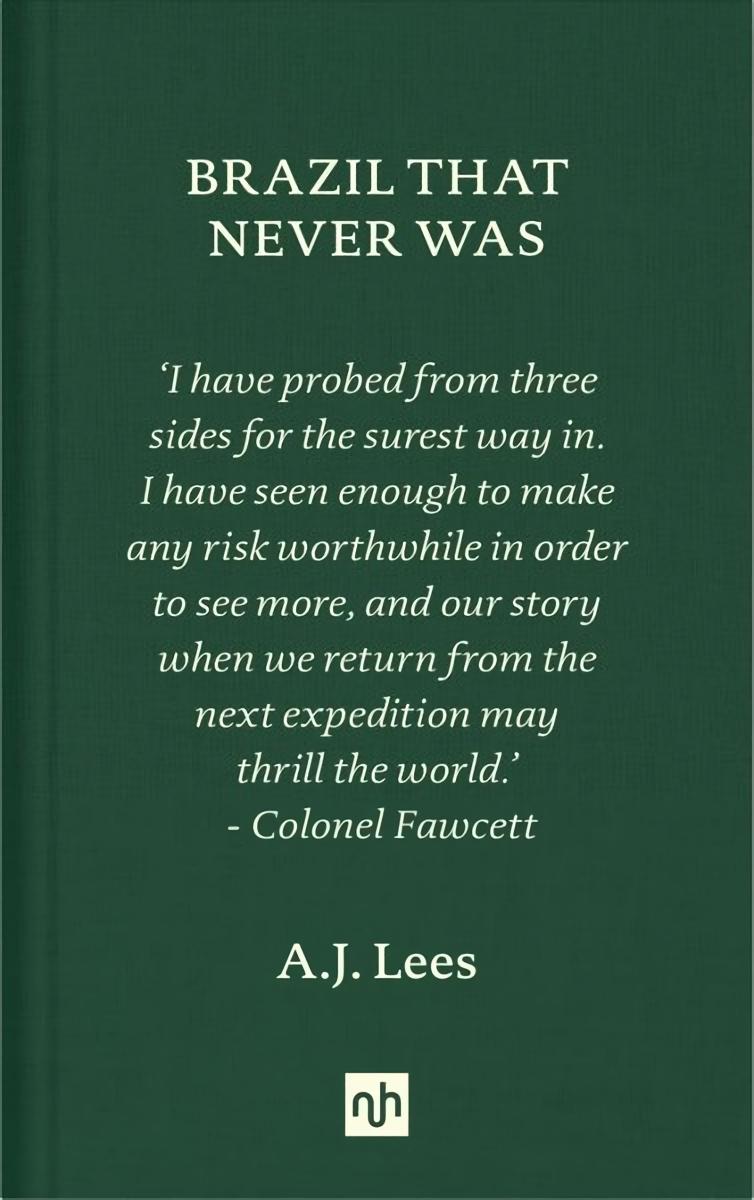
A famed British neurologist embarks on an expedition in Brazil to follow the trail of Percy Fawcett, an occult-obsessed explorer who went missing in the Amazon rainforest and was the subject of the 2016 film The Lost City of Z.As a boy growing up near Liverpool in the 1950s, Andrew Lees would visit the docks with his father to watch the ships from Brazil unload their exotic cargo of coffee, cotton bales, molasses, and cocoa. One day, his father gave him a dog-eared book called Exploration Fawcett. The book told the true story of Lieutenant Colonel Percy Fawcett, a British explorer who in 1925 had gone in search of a lost city in the Amazon and never returned. The riveting story of Fawcett's encounters with deadly animals and hostile tribes, his mission to discover an Atlantean civilization, and the many who lost their own lives when they went in search of him inspired the young Lees to believe that there were still earthly places where one could "fall off the edge."Years later, after becoming a successful neurologist, Lees set off in search of the mysterious figure of Fawcett. What he found exceeded his wildest imaginings. With access to the cache of "Secret Papers," Lees discovered that Fawcett's quest was far stranger than searching for a lost city. There was a "greater mission," one that involved the occult and a belief in a community of evolved beings living in a hidden parallel plane in the Mato Grosso.Lees traveled to Manaus in Fawcett's footsteps. After a time-bending psychedelic experience in the forest, he understood that his yearning for the imaginary Brazil of his boyhood, like Fawcett's search for an earthly paradise, was a nostalgia for what never was. Part travelogue, part memoir, Lees paints a portrait of an elusive Brazil, and of a flawed explorer whose doomed mission ruined lives. Autorid: A.J. Lees
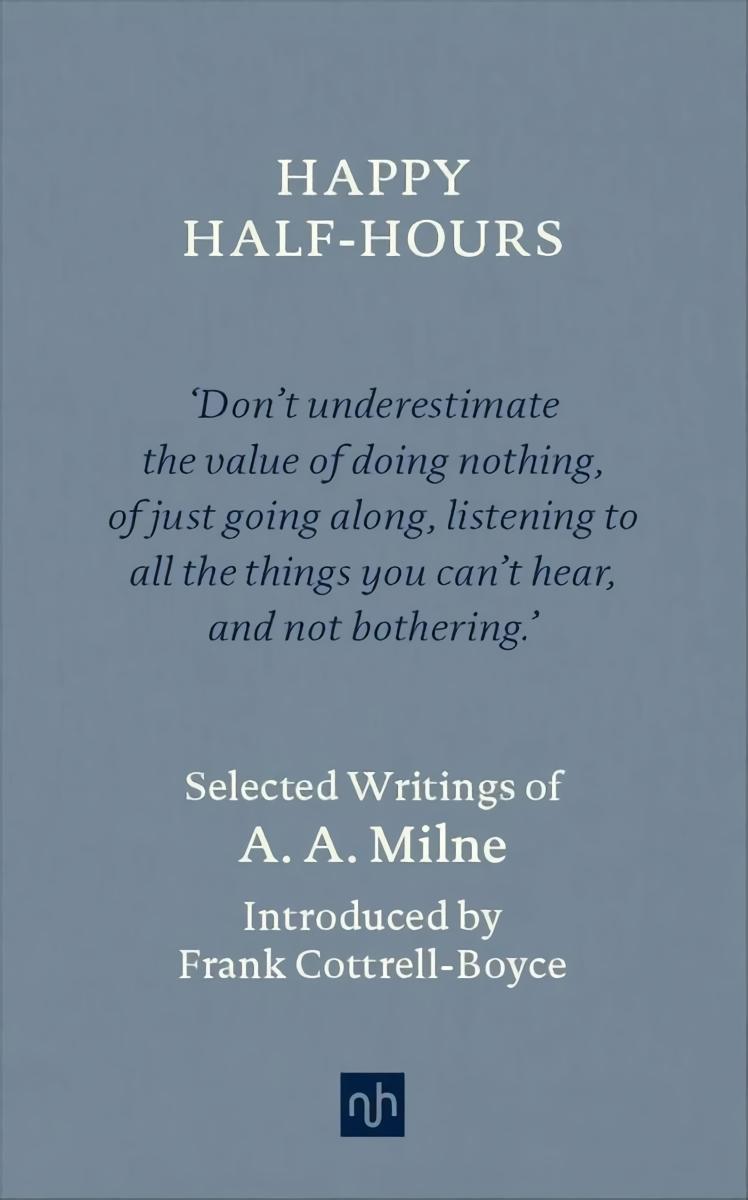
A delightful selection of articles by the ever-popular A.A. Milne, many of which haven't been in print for decades. Introduced by the prize-winning children's author Frank Cottrell Boyce. A treasure of a book. A delightful selection of articles by the ever-popular A.A. Milne, many of which haven't been in print for decades. Introduced by the prize-winning children's author Frank Cottrell Boyce, this volume brings Milne's brilliant non-fiction back to the spotlight.A.A. Milne, best known as the author of the classic Winnie-the-Pooh stories, was a successful writer long before his children's stories launched him to overnight success. Milne himself disliked being relegated as a children's author. At the age of twenty-three, he was appointed the assistant editor of Punch. He claimed, "I know no work manual or mental to equal the appalling heart-breaking anguish of fetching an idea from nowhere." Yet Milne had a talent for regularly turning out a thousand whimsical words on lost hats and umbrellas, tennis, dogs, faulty geysers, dotty maids, women loading film in a camera, the English obsession with rank and titles, cheap cigars, and any amount of life's other little difficulties. He was praised for being able to produce "with apparently effortless ease and the utmost gaiety" articles notable for their "enchanting ingenuity."But there was another, more serious side to Milne. After serving in World War I, where he survived the Somme, Milne was invalided home with trench fever in 1916. His experiences made him a committed and vocal pacifist. War was nothing but "mental and moral degradation." His fiercely argued pacifism was ahead of his time, and forms some of his most powerful work. This selection of Milne's articles, spanning over four decades of his life from 1910 to 1952, are collected for the first time in this volume, including his passionately argued writings on pacifism. The writings demonstrate his trademark wit, varied genius, little-known political views, and nostalgia for a lost era. A treasure of a book. Autorid: A.A. Milne, Frank Cottrell-Boyce
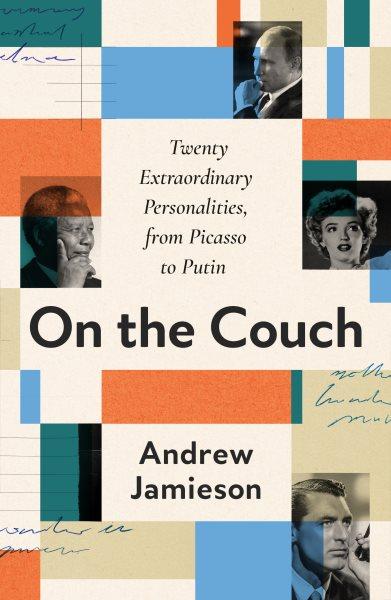
Psychotherapist Andrew Jamieson considers ten key principles of psychoanalysis and illuminates them through psychobiographies of twenty extraordinary people, including Ernest Hemingway, Josephine Baker, Cary Grant, and Marilyn Monroe.In the late 1800s, Sigmund Freud began to develop radical theories about sexuality, dreams, and childhood experiences. Not only were his ideas revolutionary, but they also initiated a new discipline with various often competing schools of thought.In this groundbreaking book, Andrew Jamieson unpacks ten of psychotherapy's most profound principles and illuminates them through the biographies of twenty remarkable people. From Pablo Picasso's chaotic life, which illustrated Freud's concept of the unconscious, to the origins of Nelson Mandela's compassion, which exemplify Carl Jung's notion of individuation; from John Bowlby's attachment theory, as seen through the lives of Virginia Woolf and Franz Kafka, to Melanie Klein's views on the relationship between love and hate, as revealed through the experiences of Cary Grant, On the Couch throws new light on the motivations and desires of some of our most memorable personalities.Other lives examined include Josephine Baker, Nicolaus Copernicus, Charles Darwin, Viktor Frankl, Ernest Hemingway, Burt Hellinger, Emma Jung, Angela Merkel, Marilyn Monroe, Vladimir Putin, Ludwig Wittgenstein, and W.B. Yeats. Autorid: Andrew Jamieson
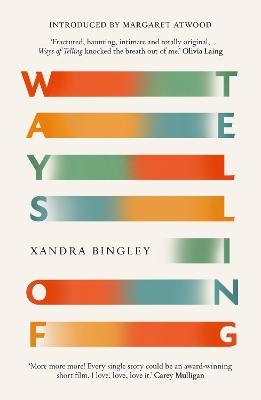
Ways of Telling isn't like any other book. Is it social reportage, the eye at the keyhole, the ear at the door? It is its own thing. Margaret Atwood I couldnt love it more. After the very first story I had a huge wide grin on my face. More more more! Every single story could be an award-winning short film. I love, love, love it. Carey Mulligan An extraordinary book. Xandra Bingley's darting, curious eyes miss nothing and we follow them with her at a headlong speed. I wish I could write like that. Harriet Walter Fractured, haunting, intimate and totally original, Ways of Telling knocked the breath out of me. Its dangerously exact, wilfully ambitious, wild in its scope and perfect in its precision. Olivia Laing The pieces in this book are just the right size to blow ones mind in a train or on a tram: they have a most unusual delicacy, wit and freshness, and their physical world is powerfully seductive. Helen Garner From the bestselling author of Bertie, May & Mrs Fish comes a remarkable collection of stories. As a bystander at Princess Dianas funeral, a fan at a James Brown concert, a passenger on a Welsh bus and a patient in a hectic hospital, Xandra Bingleys vivid portraits of everyday experience remind us of the fleeting and mysterious transience of life. Autorid: Xandra Bingley, Margaret Atwood
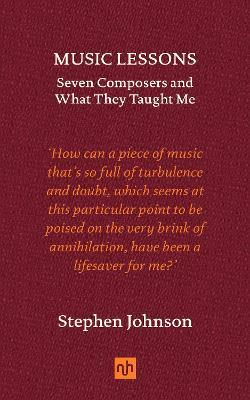
From the bestselling author of the award-winning How Shostakovich Changed My Mind comes a new book about the cathartic power of music. For critic and composer Stephen Johnson, there have been moments when music has confronted him with life-changing insights. Some of these have been hard to accept, but once accepted they have opened up new possibilities of thinking, feeling and living. Through an exploration of seven pieces by Anton Bruckner, Sergei Rachmaninoff, Johann Sebastian Bach, Lili Boulanger, Richard Wagner, Jean Sibelius and Ludwig van Beethoven Johnson considers the lives and the intentions of the composers who created them, and how they have affected him personally. Autorid: Stephen Johnson