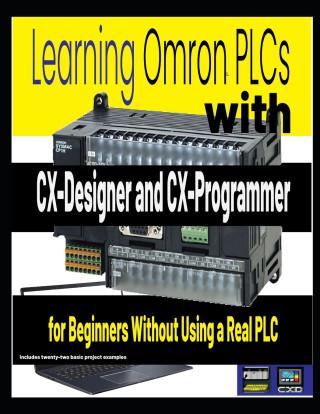
"Learning Omron PLCs with CX-Designer and CX-Programmer for Beginners Without Using a Real PLC" is a valuable and methodical manual for anyone wishing to understand the fundamentals of automatic control systems with Omron's PLCs. This book, which was written with beginners in mind, covers the theoretical underpinnings and real-world applications of PLCs in the contemporary industrial world.Readers will learn how PLCs operate, how to write simple logic programs, and how to integrate them with Human Machine Interface (HMI) systems using CX-Designer and CX-Programmer. These two official Omron software applications are frequently used in the industrial sector through a straightforward, step-by-step, project-based approach.Basic HMI concepts and user interface functionsDesigning HMI screens (buttons, indicator lights, numeric displays, etc.)HMI conversion with Omron PLCSimple project simulation and testingBook Objectives and Benefits:This book aims to enable readers to:Understand the basic concepts of PLCs and industrial automation systems.Be able to use CX-Programmer to create and test programs.Be able to design simple HMIs using CX-Designer.Be ready to undertake small-scale automation projects independently.Be equipped to progress to advanced levels.Reader Recommendations:This book is ideal for:Students and undergraduates majoring in electrical engineering, mechatronics, and automation.Teachers and lecturers who need practical PLC learning resourcesFactory technicians and operators who want to improve their automation skillsBeginners who are new to PLCs and want to learn from scratchBook Strengths:Written based on practical experience in the industrial fieldUses easy-to-understand language suitable for beginnersComplete with images, diagrams, and real-life examples.Contains exercises and practical projects to reinforce understandingSuitable for self-study or as open-source material in schools and universitiesIn addition to being a technical manual, "Learning Omron PLCs with CX-Designer and CX-Programmer for Beginners" serves as a springboard for a thorough comprehension of the field of contemporary automation. Readers will be able to design basic automatic control systems that can be used in industry and laboratories by reading and putting the book's contents into practice.