Ciel, Sebastian, and Lau investigate a case where British citizens returning from India are attacked, stripped and hung upside-down outside Indian pubs in London. Attached to each victim is a letter insulting the English. The group is attacked by poor Indian men during their investigation but are helped by the Indian Prince Soma and his butler Agni, who are searching for Soma's servant Meena, who was taken away by a British man. Although Agni is human as a fighter he's on a par with Sebastian but he rejects such compliments however, saying that he once had power and wealth, which he abused until he was to be hanged. He was saved by Soma, who gave him a new life and name and who Agni now views as a god. Agni leaves the manor at night and the group including Soma, follow him to Lord West's home. When he hears Meena mentioned, Soma quickly reveals the group's presence. Agni refuses to obey Soma's orders but begins to act on West's order to beat Soma. A disguised Sebastian saves Soma and the group escapes to the manor.
Yotsuba is a strange little girl with a big personality! Even in the most trivial, unremarkable encounters, Yotsuba's curiosity and enthusiasm quickly turn the everyday into the extraordinary!
Eric Evans has written a fantastic book on how you can make the design of your software match your mental model of the problem domain you are addressing. His book is very compatible with XP. It is not about drawing pictures of a domain; it is about how you think of it, the language you use to talk about it, and how you organize your software to reflect your improving understanding of it. Eric thinks that learning about your problem domain is as likely to happen at the end of your project as at the beginning, and so refactoring is a big part of his technique."The book is a fun read. Eric has lots of interesting stories, and he has a way with words. I see this book as essential reading for software developers-it is a future classic." -Ralph Johnson, author of Design PatternsIf you don't think you are getting value from your investment in object-oriented programming, this book will tell you what you've forgotten to do."Eric Evans convincingly argues for the importance of domain modeling as the central focus of development and provides a solid framework and set of techniques for accomplishing it. This is timeless wisdom, and will hold up long after the methodologies du jour have gone out of fashion." -Dave Collins, author of Designing Object-Oriented User Interfaces"Eric weaves real-world experience modeling-and building-business applications into a practical, useful book. Written from the perspective of a trusted practitioner, Eric's descriptions of ubiquitous language, the benefits of sharing models with users, object life-cycle management, logical and physical application structuring, and the process and results of deep refactoring are major contributions to our field." -Luke Hohmann, author of Beyond Software Architecture"This book belongs on the shelf of every thoughtful software developer." -Kent Beck "What Eric has managed to capture is a part of the design process that experienced object designers have always used, but that we have been singularly unsuccessful as a group in conveying to the rest of the industry. We've given away bits and pieces of this knowledge...but we've never organized and systematized the principles of building domain logic. This book is important." -Kyle Brown, author of Enterprise Java(TM) Programming with IBM(R) WebSphere(R)The software development community widely acknowledges that domain modeling is central to software design. Through domain models, software developers are able to express rich functionality and translate it into a software implementation that truly serves the needs of its users. But despite its obvious importance, there are few practical resources that explain how to incorporate effective domain modeling into the software development process. Domain-Driven Design fills that need. This is not a book about specific technologies. It offers readers a systematic approach to domain-driven design, presenting an extensive set of design best practices, experience-based techniques, and fundamental principles that facilitate the development of software projects facing complex domains. Intertwining design and development practice, this book incorporates numerous examples based on actual projects to illustrate the application of domain-driven design to real-world software development. Readers learn how to use a domain model to make a complex development effort more focused and dynamic. A core of best practices and standard patterns provides a common language for the development team. A shift in emphasis-refactoring not just the code but the model underlying the code-in combination with the frequent iterations of Agile development leads to deeper insight into domains and enhanced communication between domain expert and programmer. Domain-Driven Design then builds on this foundation, and addresses modeling and design for complex systems and larger organizations.Specific topics covered include: * Getting all team members to speak the same language* Connecting model and implementation more deeply* Sharpening key distinctions in a model* Managing the lifecycle of a domain object* Writing domain code that is safe to combine in elaborate ways* Making complex code obvious and predictable* Formulating a domain vision statement* Distilling the core of a complex domain* Digging out implicit concepts needed in the model* Applying analysis patterns* Relating design patterns to the model* Maintaining model integrity in a large system* Dealing with coexisting models on the same project* Organizing systems with large-scale structures* Recognizing and responding to modeling breakthroughsWith this book in hand, object-oriented developers, system analysts, and designers will have the guidance they need to organize and focus their work, create rich and useful domain models, and leverage those models into quality, long-lasting software implementations.
This book, written in collaboration with Dennis Longwell, follows an acting class of eight men and eight women for fifteen months, beginning with the most rudimentary exercises and ending with affecting and polished scenes from contemporary American plays. Throughout these pages Meisner is delight - always empathizing with his students and urging them onward, provoking emotion, laughter, and growing technical mastery from his charges.With an introduction by Sydney Pollack, director of "Out of Africa" and "Tootsie," who worked with Meisner for five years."This book should be read by anyone who wants to act or even appreciate what acting involves. Like Meisner's way of teaching, it is the straight goods." - Arthur Miller "If there is a key to good acting, this one is it, above all others. Actors, young and not so young, will find inspiration and excitement in this book." - Gregory Peck
Would you like to use a consistent visual notation for drawing integration solutions? Look inside the front cover.Do you want to harness the power of asynchronous systems without getting caught in the pitfalls? See Thinking Asynchronously in the Introduction.Do you want to know which style of application integration is best for your purposes? See Chapter 2, Integration Styles.Do you want to learn techniques for processing messages concurrently? See Chapter 10, Competing Consumers and Message Dispatcher.Do you want to learn how you can track asynchronous messages as they flow across distributed systems? See Chapter 11, Message History and Message Store.Do you want to understand how a system designed using integration patterns can be implemented using Java Web services, .NET message queuing, and a TIBCO-based publish-subscribe architecture? See Chapter 9, Interlude: Composed Messaging.Utilizing years of practical experience, seasoned experts Gregor Hohpe and Bobby Woolf show how asynchronous messaging has proven to be the best strategy for enterprise integration success. However, building and deploying messaging solutions presents a number of problems for developers. Enterprise Integration Patterns provides an invaluable catalog of sixty-five patterns, with real-world solutions that demonstrate the formidable of messaging and help you to design effective messaging solutions for your enterprise.The authors also include examples covering a variety of different integration technologies, such as JMS, MSMQ, TIBCO ActiveEnterprise, Microsoft BizTalk, SOAP, and XSL. A case study describing a bond trading system illustrates the patterns in practice, and the book offers a look at emerging standards, as well as insights into what the future of enterprise integration might hold.This book provides a consistent vocabulary and visual notation framework to describe large-scale integration solutions across many technologies. It also explores in detail the advantages and limitations of asynchronous messaging architectures. The authors present practical advice on designing code that connects an application to a messaging system, and provide extensive information to help you determine when to send a message, how to route it to the proper destination, and how to monitor the health of a messaging system. If you want to know how to manage, monitor, and maintain a messaging system once it is in use, get this book.
Only once did David Foster Wallace give a public talk on his views on life, during a commencement address given in 2005 at Kenyon College. The speech is reprinted for the first time in book form in This is Water. How does one keep from going through their comfortable, prosperous adult life unconsciously? How do we get ourselves out of the foreground of our thoughts and achieve compassion? The speech captures Wallace's electric intellect as well as his grace in attention to others. After his death, it became a treasured piece of writing reprinted in The Wall Street Journal and the London Times, commented on endlessly in blogs, and emailed from friend to friend. Writing with his one-of-a-kind blend of causal humor, exacting intellect, and practical philosophy, David Foster Wallace probes the challenges of daily living and offers advice that renews us with every reading.Only once did David Foster Wallace give a public talk on his views on life, during a commencement address given in 2005 at Kenyon College. The speech is reprinted for the first time in book form in THIS IS WATER. How does one keep from going through their comfortable, prosperous adult life unconsciously? How do we get ourselves out of the foreground of our thoughts and achieve compassion? The speech captures Wallace's electric intellect as well as his grace in attention to others. After his death, it became a treasured piece of writing reprinted in The Wall Street Journal and the London Times , commented on endlessly in blogs, and emailed from friend to friend.§Writing with his one-of-a-kind blend of causal humor, exacting intellect, and practical philosophy, David Foster Wallace probes the challenges of daily living and offers advice that renews us with every reading.
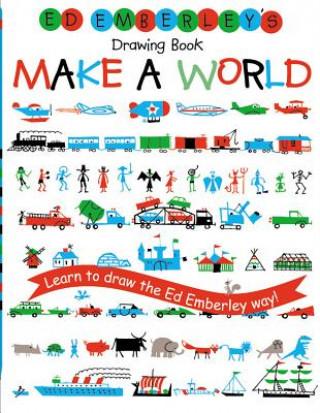
Using simple shapes, Ed Emberley shows would-be artists how to draw over 400 things, such as an airplane, anteater, submarine, train, kangaroo, gondola, and much much more! This classic book is packed with cool things that kids - and adults too - really want to draw. Easy and fun, the book provides hours of art-full entertainment.
A rich and thriving culture where literature, science and religious tolerance flourished for 700 years is the subject of this enthralling history of medieval Spain. Living side by side in the Andalusian kingdoms, the 'peoples of the book' produced statesmen, poets and philosophers who influenced the rest of Europe in dramatic ways, giving it the first translations of Plato and Aristotle, love songs and secular poetry plus remarkable feats of architecture and technology. This evocative account explores the lost history whose legacy and lessons have a powerful resonance in today's world.
A showcase of 400 essential photos taken by Ansel Adams, documenting his growth as an artist from 1916 to 1968. A must have gift and reference for anyone who appreciates photography and the allure of the natural world.
It's okay to need some help.It's okay to be a different color.It's okay to talk about your feelings.From the bestselling author Todd Parr comes a reassuring book about being who you are.
Miles: The Autobiography, like the man himself, holds nothing back. He talks about his battles against drugs and racism, and discusses the many women in his life. But above all, Miles talks about music and musicians, including the legends he has played with over the years: Bird, Dizzy, Monk, Trane, Mingus and many others. The man who has given us the most exciting music of recent times has now given us a fascinating and compelling insight into his extraordinary life. 'An engrossing read ...gives fascinating insights into the cult phenomenon' Miles Copeland, Weekend Telegraph 'Magnificently truthful, action packed, raw and bleeding' Miles Kington, Independent 'Passionate, opinionated, unfettered ...What gives this book, and the man, their final weight and strength is that Davis's driving, almost possessed pursuit of his art. The passion to create is all, and let the world go hang itself' Herbert Kretzmer, Daily Mail
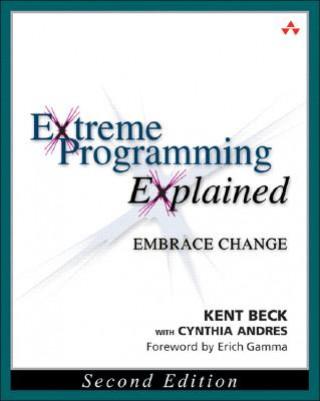
Nearly five years after the first edition of this book exploded on to the market, noted software engineering guru and the father of Extreme Programming (XP) Kent Beck provides a fresh look at this controversial topic. XP remains the most popular agile methodology in software development, and many believe it is ideal for small to mid-size development organizations. However, XP is not without its detractors. The goal of the book remains to help programmers and teams decide if XP is the right path to pursue. The book offers advice, but does not provide a prescriptive, how to style format. This Fifth Anniversary Edition enhances the full knowledge of XP and gives both the advocate and skeptic of XP full detail to move forward with an informed opinion.
Winner of the 2011 Jolt Excellence Award! Getting software released to users is often a painful, risky, and time-consuming process. This groundbreaking new book sets out the principles and technical practices that enable rapid, incremental delivery of high quality, valuable new functionality to users. Through automation of the build, deployment, and testing process, and improved collaboration between developers, testers, and operations, delivery teams can get changes released in a matter of hours- sometimes even minutes-no matter what the size of a project or the complexity of its code base. Jez Humble and David Farley begin by presenting the foundations of a rapid, reliable, low-risk delivery process. Next, they introduce the "deployment pipeline," an automated process for managing all changes, from check-in to release. Finally, they discuss the "ecosystem" needed to support continuous delivery, from infrastructure, data and configuration management to governance. The authors introduce state-of-the-art techniques, including automated infrastructure management and data migration, and the use of virtualization.For each, they review key issues, identify best practices, and demonstrate how to mitigate risks. Coverage includes * Automating all facets of building, integrating, testing, and deploying software * Implementing deployment pipelines at team and organizational levels * Improving collaboration between developers, testers, and operations * Developing features incrementally on large and distributed teams * Implementing an effective configuration management strategy * Automating acceptance testing, from analysis to implementation * Testing capacity and other non-functional requirements * Implementing continuous deployment and zero-downtime releases * Managing infrastructure, data, components and dependencies * Navigating risk management, compliance, and auditing Whether you're a developer, systems administrator, tester, or manager, this book will help your organization move from idea to release faster than ever-so you can deliver value to your business rapidly and reliably.