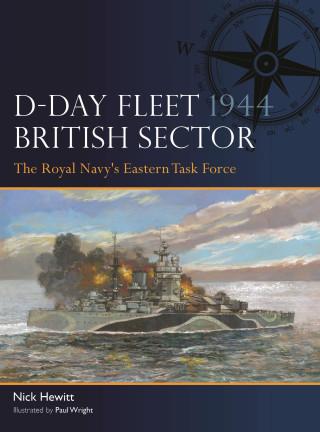
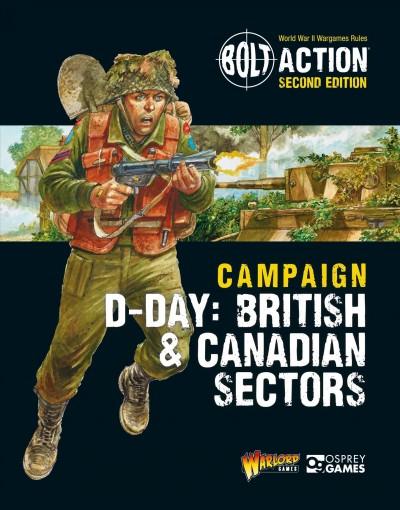
New scenarios and rules for Bolt Action covering the British and Canadian sectors of Operation Overlord.Covering the fiercely contested British and Canadian sectors of D-Day, including the beaches of Gold, Juno, and Sword. This new Campaign Book for Bolt Action allows players to refight the Anglo-Canadian beach landings, beach head breakouts, and Airborne assaults. New, linked scenarios, rules, troop types, and Theatre Selectors provide plenty of options for both novice and veteran players alike. New scenarios and rules for Bolt Action covering the British and Canadian sectors of Operation Overlord. Autorid: Warlord Games, Peter Dennis
Taking a populist approach to a serious subject, Myke Cole combines a novelist's flair for drama with an ancient historian's eye for detail to create a unique book that delves into one of the most popular areas of the Ancient World.From the time of Ancient Sumeria, the heavy infantry phalanx dominated the battlefield. Armed with spears or pikes, standing shoulder to shoulder with shields interlocking, the men of the phalanx presented an impenetrable wall of wood and metal to the enemy. Until, that is, the Roman legion emerged to challenge them as masters of infantry battle.Covering the period in which the legion and phalanx clashed (280168 BC), Myke Cole delves into their tactics, arms and equipment, organization and deployment. Drawing on original primary sources to examine six battles in which the legion fought the phalanx--Heraclea (280 BC), Asculum (279 BC), Beneventum (275 BC), Cynoscephalae (197 BC), Magnesia (190 BC), and Pydna (168 BC)--he shows how and why the Roman legion, with its flexible organization, versatile tactics and iron discipline, came to eclipse the hitherto untouchable Hellenistic phalanx and dominate the ancient battlefield. Taking a populist approach to a serious subject, Myke Cole combines a novelist's flair for drama with an ancient historian's eye for detail to create a unique book that delves into one of the most popular areas of the Ancient World. Autorid: Myke Cole
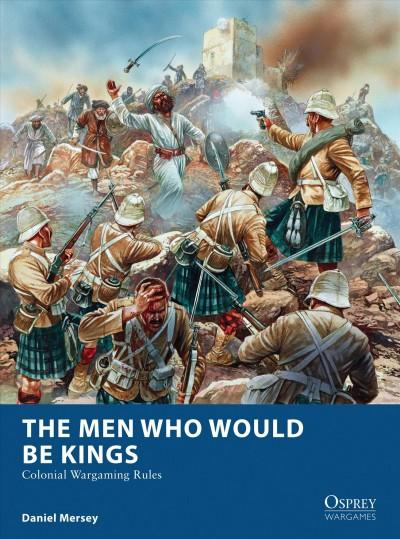
The Men Who Would Be Kings is a set of rules designed for fighting historical or Hollywood colonial battles in the mid- to late-Nineteenth Century, from the Indian Mutiny to the Boxer Rebellion. Large scale colonial clashes tended to be one-sided affairs, but there are countless reports of brief, frantic skirmishes in every colonial war--where either side could be victorious--and these are the battles thatThe Men Who Would Be Kings seeks to recreate. Although focusing on the British colonial wars against the Zulus, Maoris, and others, these rules will also permit players to explore the empires of France, Germany, and other nations, as well as allowing for battles between rival native factions. Gameplay is very simple, and is driven by the quality of the officers leading your units, in the true spirit of Victorian derring-do and adventure, where larger than life characters such as the (real) Fred Burnaby and the (fictional) Harry Flashman led their troops to glory and medals, or to a horrible end at the point of a spear tip. A set of wargaming rules for colonial conflicts, combining history with a hint of Kipling and Hollywood. Autorid: Daniel Mersey, Peter Dennis
The forgotten story of the major naval operations conducted in the Philippines by the US and Japanese navies after Leyte Gulf up to the US invasion of Luzon in January 1945. The events that took place in the aftermath of the Battle of Leyte Gulf in October 1944 are often overlooked by military historians. An impressive array of naval operations continued in the Philippines up to January 1945, which included (on the Japanese side) the largest convoys to a contested island during the war, the first kamikaze campaign, and the second largest Imperial Japanese Navy surface operation during the last nine months of the conflict. On the American side, US forces were involved in efforts to cut off Leyte from enemy reinforcement, a massive amphibious invasion off Luzon, and large-scale operations by the Fast Carrier Task Force (TF 38).Expert naval historian Mark Stille throws new light on this often forgotten phase of the Pacific naval war. Among the actions covered are the battles for Ormoc Bay, the invasion of Mindoro, Japanese kamikaze attacks, and US Third Fleet's rampage through the South China Sea between January 10 and 20, 1945. Superb battlescene artworks bring the war at sea and in the air vividly to life, and maps and diagrams guide readers through a range of actions in clear, step-by-step detail. The forgotten story of the major naval operations conducted in the Philippines by the US and Japanese navies after Leyte Gulf up to the US invasion of Luzon in January 1945. Autorid: Mark Stille, Adam Tooby
Hunt the Bismarck tells the story of Operation Rheinübung, the Atlantic sortie of Nazi Germany's largest battleship, Bismarck, in May 1941 and her subsequent pursuit by the Royal Navy. Bismarck entered naval service in the summer of 1940. She was well-armed, with eight 15in guns as well as a powerful array of lighter weapons, while her armoured protection earned her the reputation of being unsinkable. This claim was put to the test in May 1941 when she sortied into the Atlantic and fought the legendary battle of the Denmark Strait, destroying HMS Hood, the pride of the Royal Navy. Bismarck was now loose in the North Atlantic. However, damage sustained in the battle limited her ability to roam at will, and the Royal Navy deployed the Home Fleet to avenge the sinking of the Hood. The stage was set for the greatest chase story in the history of naval warfare. Drawing on a wealth of first-hand accounts and intertwining extensive research into a fast-paced narrative, this is the most readable and accurate account of Bismarcks epic pursuit ever produced. Autorid: Angus Konstam
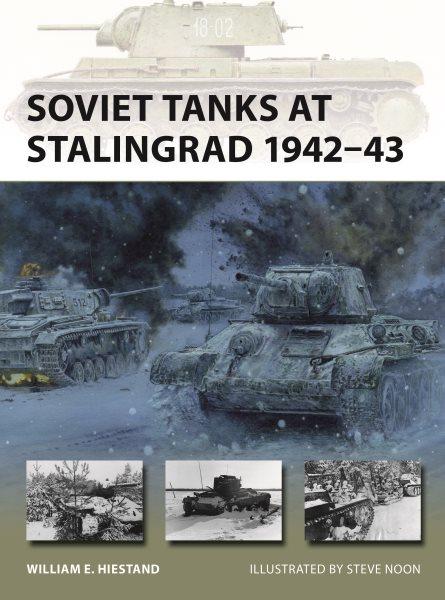
Examines and analyses how the Soviet tank forces that fought at Stalingrad were rejuvenated in the months leading up to the battle, and the role they played in this iconic campaign. The Stalingrad campaign was a major turning point of World War II. The German Sixth Army's 22 divisions and 250,000 troops were encircled and destroyed, while the Soviet 62nd Army's desperate defense of the city and the suffering of the starving German troops receives much justifiable attention. Here, Soviet armor expert William E. Hiestand draws attention to the less-covered element of the battle: the reborn Soviet tank and mechanized corps that delivered the death blow to Hitler's hopes. He explains how in summer 1942, the Soviet tank forces were failing to reach their potential; despite being equipped with superb T-34 and heavily armored KV-1 tanks, the Red Army's newly formed tank corps were unable to integrate their armored thrusts with supporting infantry and artillery, and their disjoined attacks were repeatedly shattered. By November 19, however, Soviet organization, command and control, training, and tactics had matured, allowing the Fifth Tank Army to launch the decisive penetration through the Romanian Third Army.Packed with rare archive photos and superb profiles of the tanks involved, this book shows that it was at Stalingrad that the Red Army's armored spearhead evolved into a force that could dominate the Eastern Front. Examines and analyses how the Soviet tank forces that fought at Stalingradwere rejuvenated in the months leading up to the battle, and the role they played in this iconic campaign. Autorid: William E. Hiestand, Steve Noon
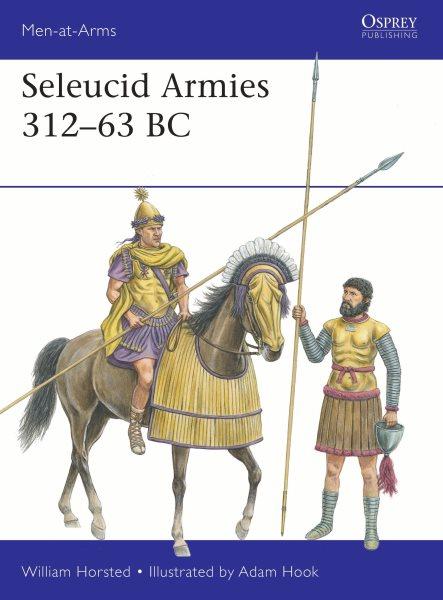
This colourful study describes and illustrates the troops of the Seleucid Empire in West Asia throughout its turbulent 250-year existence. This colourful study describes and illustrates the troops of the Seleucid Empire in West Asia throughout its turbulent 250-year existence.Founded by the Macedonian general Seleucus I Nicator in 312 BC in the wake of the death of Alexander the Great 11 years previously, the Seleucid Empire came to control much of the territory conquered by Alexander in western Asia, and at its height reached from the Mediterranean to Afghanistan. The colourful armies fielded by Seleucus I and his successors are described and illustrated in this absorbing study of a major power at war in the ancient world.As the fortunes of their realm ebbed and flowed, Seleucid kings deployed vast armies recruited from diverse peoples that drew upon an array of military traditions, including the mighty phalanx, war elephants, scythed chariots and camel-mounted archers. Illustrated throughout with photographs and drawings as well as eight pages of specially commissioned artwork, this fascinating study draws upon a range of literary, archaeological and artistic sources to explore the organization, tactics, weapons and equipment of the varied units of Seleucid armies over two-and-a-half turbulent centuries in the ancient world. Autorid: William Horsted, Adam Hook
A highly illustrated history of the Cold War operations of the submarines of the Royal Navy from 1948 to 1990. A highly illustrated history of the Cold War operations of the submarines of the Royal Navy from 1948 to 1990.The Cold War was a period of intense activity for submarines of the Royal Navy, with many hair-raising incidents involving Soviet vessels. They were engaged in frequent hazardous surveillance patrols investigating Soviet submarines and surface warships and their operational tactics, and trailing Soviet strategic submarines (SSBNs), as well as conducting British deterrent SSBN patrols and protecting those patrols using attack submarines (SSNs). There were also dangerous patrols which trialled submarine operation under the Arctic ice-cap. In addition to these activities there were operations in other conflicts and war theaters including the Falklands War, the Suez campaign, the Northern Ireland Troubles, and the Indonesian confrontation.Naval history expert Dr Paul Brown presents the full history of this pivotal era in a fully illustrated volume, containing stunning black-and-white and color images, technical drawings and maps. He has interviewed Cold War-era submarine commanders and engineers, submitted Freedom of Information requests, and trawled the National Archives, the archives of the Royal Navy Submarine Museum and Imperial War Museums, as well as been though personal accounts of the senior officers and many secondary sources, to bring to light new information that is published here for the first time. Autorid: Paul Brown
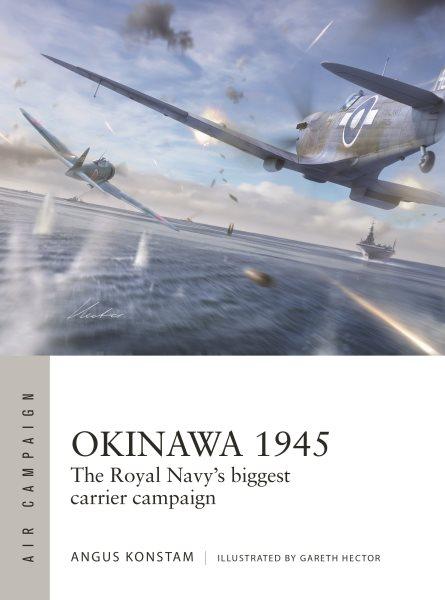
This fully illustrated study explains the British Pacific Fleet's campaign against the Japanese in the Sakishima Islands, its overlooked role in the battle for Okinawa. This fully illustrated study explains the British Pacific Fleet's campaign against the Japanese in the Sakishima Islands, its overlooked role in the battle for Okinawa.The invasion of Okinawa was, famously, the culmination of the United States' island-hopping campaign. Less well known is the fact that it was also the greatest campaign of the British Pacific Fleet's war against Japan, fought by five fleet carriers over two months, with a distinct task. The Fleet Air Arm's job at Okinawa was to suppress and destroy the Japanese airfields on the Sakashima Islands, which were used as bases for kamikazes as well as to route aircraft from Japan to Okinawa. In this book, naval expert Angus Konstam offers a newly researched account of the Fleet Air Arm's air campaign in the Sakashimas. By 1945, the carriers and their aircrews were well worked up, and ready to tackle challenging and important targets. He explains the capabilities of the late-war Fleet Air Arm at Okinawa, and analyses their effectiveness against Japan's still-dangerous airpower. Famously, at Okinawa the Royal Navy's armoured carriers proved much more resilient to kamikaze strikes than the wooden-topped carriers of the Americans.Packed with spectacular original artwork, photographs, diagrams and maps, this book is a superbly illustrated history of the Royal Navy's most extensive carrier campaign. Autorid: Angus Konstam, Gareth Hector
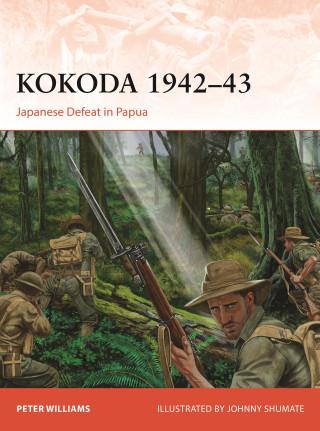
Language: English, Binding: Paperback, Number of pages: 96, Publishers: Bloomsbury USA, Author: Johnny Shumate, ISBN-13: 9781472869821, Date of issue: 2026
Language: English, Binding: Paperback, Number of pages: 80, Publishers: Bloomsbury USA, Author: Gareth Hector,Jim Laurier, ISBN-13: 9781472866011, Date of issue: 2025
Language: English, Binding: Paperback, Number of pages: 80, Publishers: Bloomsbury USA, Author: HUNT AUSTIN, ISBN-13: 9781472867285, Date of issue: 2025
Language: English, Binding: Hardback, Number of pages: 352, Publishers: Bloomsbury USA, Author: Robert Forsyth, ISBN-13: 9781472862952, Date of issue: 2026
Language: English, Binding: Paperback, Number of pages: 80, Publishers: Bloomsbury USA, Author: Richard Chasemore, ISBN-13: 9781472873620, Date of issue: 2026
Language: English, Binding: Paperback, Number of pages: 48, Publishers: Bloomsbury USA, Author: Edouard A Groult, ISBN-13: 9781472872555, Date of issue: 2026
Language: English, Binding: Paperback, Number of pages: 96, Publishers: Bloomsbury USA, Author: Graham Turner, ISBN-13: 9781472870476, Date of issue: 2026
Language: English, Binding: Paperback, Number of pages: 80, Publishers: Bloomsbury USA, Author: Paul Wright, ISBN-13: 9781472861306, Date of issue: 2025
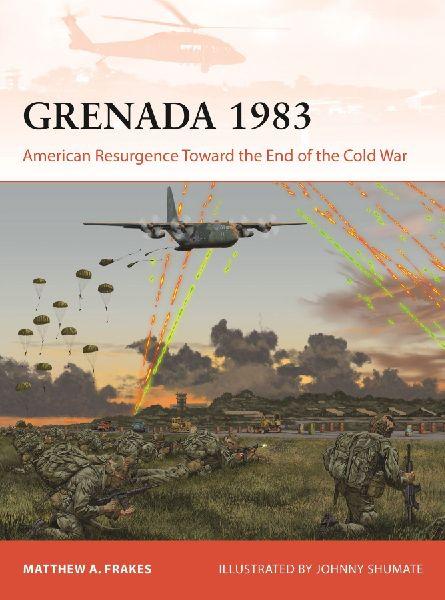
A detailed look at the 1983 American invasion of Grenada, the largest and most significant US military operation since the end of the Vietnam War.Following independence from the UK in 1974 and internal power struggles, Grenada was under communist rule in the early 1980s. When a hardline Marxist faction overthrew the existing regime and executed the prime minister in October 1983, the US was asked to intervene by several Caribbean states. With many American students on the island, President Reagan and US military leaders were forced to plan the operation with minimal warning and poor intelligence. The US invaded Grenada on October 25, as Operation Urgent Fury. Despite international criticism and UN disapproval, the US maintained that the American citizens trapped in Grenada were reason enough to engage. The main combat of the invasion lasted three days, with the evacuation of the US medical students a priority, as well as capturing the airports. This was the first major deployment of the post-Vietnam all-volunteer force and involved the Army, Navy, Air Force, Marines and Special Forces. This book examines the tricky political situation Reagan faced, the battle against Grenadian and Cuban forces, and how this operation led to reforms that shaped the US military for future conflicts. With detailed maps, diagrams, and stunning artwork, this book explores the legacy of this small but crucial military campaign in US history.
The 2026 edition of Warship, the celebrated annual featuring original research on the history, development and service of the world's warships.For nearly 50 years, Warship has been providing scholars and enthusiasts with new information on the history of the world's combat ships. Featuring a broad range of articles from a select panel of distinguished international contributors, Warship combines original research, new book reviews, warship notes, an image gallery and much more, maintaining the impressive standards of scholarship and research with which the annual has become synonymous. Detailed and accurate information is the hallmark of all the articles, which are fully supported by plans, data tables, and photographs, many previously unpublished.This year's annual includes feature articles on the French 450-tonne destroyers of the early 20th century, the Soviet Novik-class destroyers, the Italian carrier Falco/Sparviero; a chronological account and assessment of Royal Navy carrier battle damage during World War II; a comparison of the US, British and Canadian escort naval construction programmes in the summer of 1942; and the next part of Warship's ground-breaking coverage of early German destroyers.
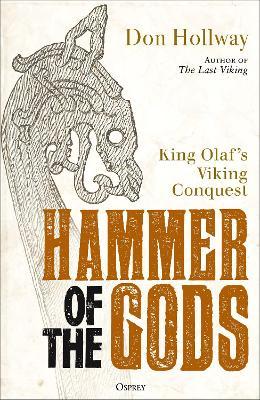
Weaving together Norse sagas and Anglo-Saxon chronicles to vividly depict the violence and spectacle of the Viking age, Don Hollway brings the legendary Olaf Tryggvason to life. Weaving together Norse sagas and Anglo-Saxon chronicles to vividly depict the violence and spectacle of the Viking age, Don Hollway brings the legendary Olaf Tryggvason to life.Hammer of the Gods tells the extraordinary saga of Olaf Tryggvason warlord, wanderer, king, and crusader whose life rivals the most legendary figures of Viking lore. Born in exile and hunted from birth, Olaf survived slavery, betrayal, and shipwreck to become a fearsome warrior across the Viking world from the icy fjords of Norway to the courts of Kyiv, the slave markets of the Baltics, and the battlefields of England and Ireland. His rise would shake the foundations of Norse society, forge new kingdoms, and ignite a holy war against the old gods themselves.In an age of axe and flame, when the Viking world stood at the crossroads of pagan traditions and the spread of Christianity, Olaf emerged as the fiercest adherent to the new faith a sword in one hand and a cross in the other. Drawing on a vast array of early medieval sources from Icelandic sagas and skaldic verse to Byzantine and Anglo-Saxon chronicles, Don Hollway brings the world of Olaf Tryggvason vividly to life cutting through the legend to reveal the man behind the myth. For readers of Bernard Cornwell and lovers of Viking history, Hammer of the Gods is the epic history of a great Norse king whose story shaped the fate of a civilization. Autorid: Don Hollway
This engrossing history explores the creation, development and actions of the Special Duties squadrons, which carried spies, political figures and documents in and out of Occupied Europe.In 1940, Winston Churchill famously set in motion the Special Operations Executive. However, the creation of secret agent networks required a clandestine transport infrastructure to support nascent resistance movements in Occupied Europe. With only the moon to guide their way, the daring pilots of 161 Squadron constantly faced danger: their locations could be discovered, German night-fighters and flak had to be contended with and, of course, they dealt with the worst of European weather. Despite these extra risks, these Special Duties pilots were remarkably successful.Packed with first-hand accounts and expert research, this book dives into the history of the men who flew these dangerous missions and the main aircraft they used unarmed Lysanders. Author Paul Smiddy, an RAF-trained pilot, explores the origins of the Lysander, the dangers it posed to its pilots and how operational techniques were developed. Facing political interference and limited resources from the RAF, these brave and under-recognised pilots provided a critical role in the war bringing back agents with important information to help Britain and the Allies defeat the Germans. This engrossing history explores the creation, development and actions of the Special Duties squadrons, which carried spies, political figures, and documents in and out of Occupied Europe. Autorid: Paul Smiddy, Keith Burns
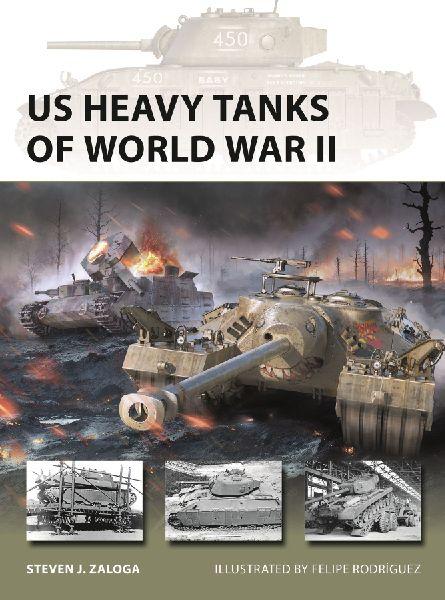
Through World War II the US Army worked on projects for new heavy tanks, which are charted in this illustrated study of the M6 and the never-built T14, T28, and Pershing-derived designs.In this book, world-renowned armour expert Steven J. Zaloga examines the US Army's efforts to field a heavy tank in World War II. The first design was the M6, which never saw combat use despite being type classified. The heavy T14 assault tank, earmarked for the British under Lend-Lease, was also developed, while the M4A3E2 assault tank went into production as a stopgap for the 1944 campaign in France. The most outrageous US tank project of the war was the T28/T95 superheavy tank, which was so large that it required four sets of suspension bogies instead of the usual two. The M26 Pershing medium tank program also spawned a number of heavy tank projects, such as the T29, T30 and T34, which are also examined. Although production of these was envisioned in 1945-46, the end of the war put an end to any possibility of serial manufacture. Nevertheless, these tanks were heavily influenced by World War II lessons and their development and technical features are examined. Illustrated with rarely seen archive photos and meticulously illustrated new profiles of the key designs, this book traces the US Army's efforts to develop heavy tanks comparable to the German Tigers, and the reasons why such monstrous machines were never required.
Explore the mysteries of Venice and the forgotten art of alchemy with this supplement for The Silver Bayonet, featuring solo and competitive campaigns, new soldiers, and new enemies.Though the years of Austrian occupation and repression have ended and Venice is back in French hands, fear still hangs heavy over the City of Masks. Rumours abound, telling of strange figures leaping across rooftops, of monsters out in the lagoon, of bodies bearing mysterious wounds pulled from the canals. The people whisper of the brutal Venetian Civic Guard, of the raids on bookshops and libraries, of the arrests of scientists and physicians, and wonder what they could possibly be seeking with such fervour. and whose agenda they serve.This is the Venice into which you are sent, charged with navigating the occult underworld of the city to acquire grimoires and relics amassed by Venetian collectors over the centuries. Two campaigns, one solo and one competitive, will test your resolve - for despite the new recruits at your disposal and the alchemical arsenal that can be fielded, you must face the muskets of rival factions, the menace of terrifying creatures, and the machinations of a hidden power.
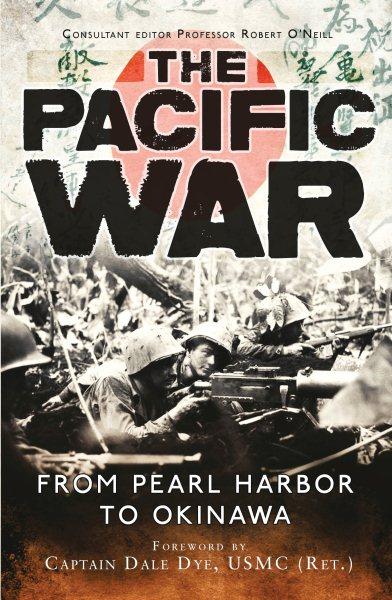
On December 7, 1941, Japanese fighter planes appeared from the clouds above Pearl Harbor and fundamentally changed the course of history; with this one surprise attack, the previously isolationist America was irrevocably thrown into the fray and World War II had begun in earnest.This definitive history reveals each of the major battles that America would fight in the ensuing struggle against Imperial Japan, from the naval clashes at Midway and Coral Sea to the desperate, bloody fighting on Iwo Jima and Okinawa. Each chapter reveals both the horrors of the battle and the Allies' grim yet heroic determination to wrest victory from what often seemed to be certain defeat, offering a valuable guide to the long road to victory in the Pacific. It is the definitive guide to a unique conflict in history, documenting the rise of naval aviation, spectacular amphibious operations, co-ordinated suicide tactics, and the birth of the atomic age. Autorid: Dale Dye, Robert O'Neill, Carl Smith, Mark Stille, Joseph Mueller, Derrick Wright, Jim Moran, Gordon L. Rottman, Bernard Ireland
A comprehensive evaluation of generalship on the most important front in World War II.The war on the Eastern Front from 1941 to 1945 was the largest sustained air-ground conflict in military history and played the decisive role in the defeat of the Third Reich. This new study seeks to analyse the command and generalship of the combatants.The scale of the conflict was immense. Lasting over 46 months it involved over 10 million combatants at its peak, and resulted in roughly 15 million military deaths, as well as about 20 million civilian deaths. More than 50 percent of all German military fatalities in 194145 occurred there, and by the time the Western Allies invaded France in June 1944, the Wehrmacht was already decimated.Who were the generals who led these campaigns on the Eastern Front? The standard historiography of World War II tends to focus on a few prominent leaders while ignoring the mass of commanders and operational-level military staffs who actually fought most of the war and this new study by renowned Eastern Front historian Robert Forczyk seeks to redress the balance.Generalship on the Eastern Front offers an objective analytic framework for assessing the senior German and Soviet commanders on the Eastern Front through the lens of generalship and battle command, examining a total of 54 German and 140 Soviet officers. A comprehensive evaluation of generalship on the most important front in World War II. Autorid: Robert Forczyk
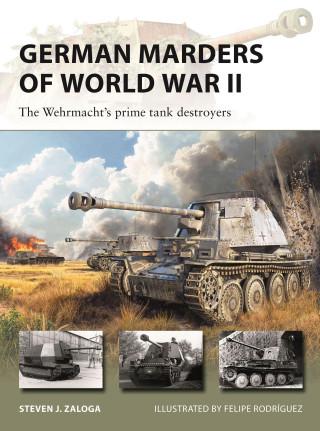
Built for mobile antitank firepower, the Marder family combined the superb 7.5cm antitank gun with existing light tank chassis. Fully illustrated, this studies their design and use.
Fully illustrated, this study examines World War II's most dramatic single-ship action, in which Stephen Hopkins fought a heavily armed German auxiliary cruiser, Stier. Fully illustrated, this study examines World War II's most dramatic single-ship action, in which Stephen Hopkins fought a heavily armed German auxiliary cruiser, Stier. When the United States entered World War II, the Battle of the Atlantic was already raging. The so-called 'Liberty Ships', built at breakneck speed and in huge numbers during 194145, were crucial to the Allied war effort. While the greatest successes of Germany's auxiliary cruisers occurred in 193941, this book describes how one of these ingenious warships, Stier, confronted the Liberty Ship Stephen Hopkins in an epic single-ship duel on September 27, 1942. Stephen Hopkins carried one 4in gun, two 37mm cannon and six machine guns, all primarily intended for antisubmarine and antiaircraft purposes. Stier had six 150mm, one 75mm, one twin 37mm, four single 20mm and four 533mm torpedo tubes. At the end of this grossly uneven fight, Stier had sunk Stephen Hopkins, but was so badly damaged it had to be scuttled. While this battle has garnered much attention, Mark Lardas explores other clashes between the German surface raiders and their Liberty Ship quarry during 1942. Featuring specially commissioned artwork and mapping alongside archive photographs, this lively study investigates the important role both ship types played as the Battle of the Atlantic reached its climax. Autorid: Mark Lardas, Edouard A. Groult
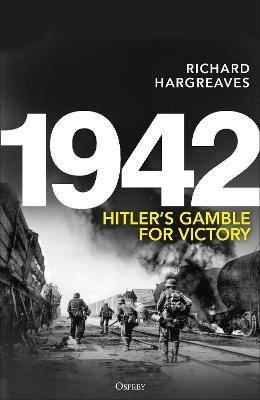
A unique history of the Axis powers attempt to win the Second World War in 1942, told through the eyes of those who were there. A unique history of the Axis powers attempt to win the Second World War in 1942, told through the eyes of those who were there.Drawing upon sources in German, Russian, Italian, Hungarian, Romanian and English, 1942: Hitler's Gamble describes the spring and summer campaigns in the Soviet Union and Africa which crowned the Axis forces with fresh laurels. Impressive victories were won at Kharkov, Sevastopol and Tobruk. Axis powers were then on the cusp of victory in Egypt, the Caucasus and Stalingrad until the seemingly unstoppable juggernaut was brought to a halt in the autumn of 1942.Based upon 15 years of research in archives, museums and libraries across Europe, this is a unique account of this critical year in World War II. No other history has looked at the Eastern and North African theatres in conjunction, masterfully illustrating how the crushing gains on both fronts would be lost by the end of the year. Richard Hargreaves shines a light on the little studied areas of the war such as the aftermath of Tobruk and challenges traditional German-centric accounts of the Caucasus campaign. Strategy and the hubris of Hitler and his generals is brilliantly illustrated but so too are the lives and deaths of ordinary soldiers caught up in these extraordinary events. Autorid: Richard Hargreaves
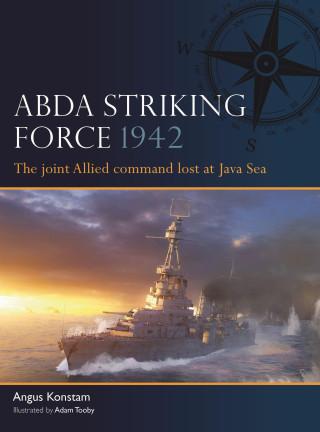
As Japan attacked in 1942, the reeling Allies formed a joint command, the first of the war, which fought until defeat at Java Sea. Fully illustrated, this explores this pioneering fleet.
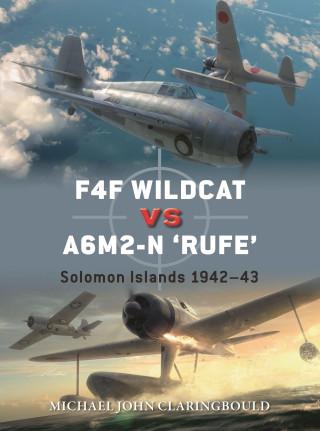
An illustrated study of the oft-overlooked engagements between the iconic F4F Wildcat and Imperial Japanese Naval Air Force's 6M2-N 'Rufe’ floatplane during the Solomon Islands campaign.
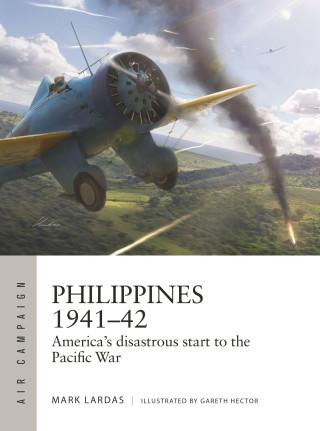
The weeks after Pearl Harbor saw Japan destroy the well-prepared US air forces in the Philippines. Fully illustrated, this studies the Pacific War’s little-known first major air campaign.
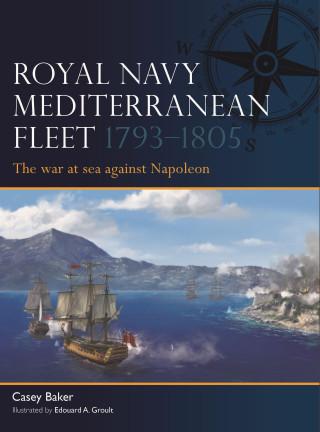
A fresh, all-encompassing study of the most active British fleet of the French Revolutionary and Napoleonic wars: the Mediterranean Fleet, in which Horatio Nelson made his legendary name.
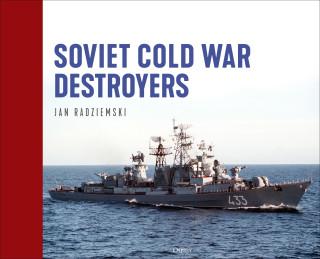
Lavishly illustrated with hundreds of previously unseen photos, this is the first history of the destroyers of the Cold War Soviet Navy, the heart of its surface fleet.
A detailed guide to the Commonwealth forces in Bolt Action: Third Edition. A detailed guide to the Commonwealth forces in Bolt Action: Third Edition.This new and revised supplement for Bolt Action: Third Edition provides players with all of the information they need to command the varied forces of the British Commonwealth including those from Australia, Canada, India, New Zealand, and South Africa, along with many others. From early campaigns in Europe to the deserts of North Africa and the jungles of the Far East, Commonwealth forces faced the Axis threat. Autorid: Warlord Games
- Cascadable multi-switch for distribution of four satellite levels and terrestrial signals across multiple receivers- Only one downlink per receiver needed (two for twin receivers)- Independent selection of horizontal/vertical, low/high, for each receiver- Switchable via the coaxial cable with 14/18 V and 0/22 kHz signal frequency- Integral amplifi er for low attenuation in satellite signal band- Integral pre-emphasis to equalise cable attenuation- Terrestrial signals also receivable even when sat receiver switched off- Terrestrial band: 5-862 MHz, passive- High degree of insulation between outputs- Can be remote fed via the horizontal low inputs. All other inputs are voltage-free (enabling operation with UAS 485/585)- For indoor installationToetatud videoformaadidEi ole toetatudToote värvHallIsehäälestuvJahSagedusvahemik47 - 862 MHzVõimsustarve20 mAKaal650 gKasutamistemperatuur (T-T)-20 - 55 °CMõõdud (l x s x k)215 x 148 x 43 mmToitenõuded198 - 253V ACI/O-pordid1 x terr., 4 x Sat-ZF, 8 x Sub.RF-pistmikFVideoväljund - analoogJah
Suunalise mustriga disain ja keskmisest ribist alguse saavad küljesooned parandavad vee äravoolu märjal teel sõitmise ajal, liigutades vett keskelt külgedel läbi rehvi just nende soonte kaudu. Rehvil on ka parem hõõrdumine jäisel/lumisel teel, hoides jääd ja lund soontes ning hõlbustades jää/lume eemaldamist. Külgsoonte ebakorrapärase pikkusega soonemuster (kitsast laiaks) vähendab müra teket. Laineline muster laiemate soonte põhjas tõhustab vee äravoolu ja annab ruumi jää/lume jaoks. Omavahel põimuvad pikad sooned pakuvad parema vee äravoolu märjal teel. Soonte põhjas olev laineline muster lisab jää/lume haarduvust ja pinnahõõrdumist. Pikkade soonte siseküljes olev kolmnurkne blokk parandab vee äravoolu ja hõõrdumist märjal teel. Hambulise kujuga külgmised sooned rehvi eenduval osal ei lisa mitte üksnes hõõrdumist, vaid aitavad ka paremini kurvide võtmisel haarduda pinnaga. Rehvi eenduval osal olevad sooned tõhustavad vee äravoolu ja rehvi hõõrdumist lumel. Sarnaselt maastikurehvidele on ka nendel suured mustrilised sooned, mis annavad lisakontaktpinda jää/lume jaoks ja tõhustavad sõidumugavust ning hõõrdumist lumisel teel. 3D SIPE disain pakub sügavaid, keskmiseid ja madalamaid soone erinevates mustribloki paikades. Sügavaimate soontega keskmine osa parandab jää/lume hõõrdumist ning madalamate soontega külgmine sein tagab jäikuse ja parema jõudluse kurvide võtmisel.
A second edition of The King is Dead, a 2-4 player game of loyalty and politics in Medieval Britain.The King is dead. The kingdom is divided. Three factions – the Scottish, the Welsh, and the English – vie for control and, across the sea, foreign invaders prepare to take advantage of the chaos. Players must marshal their limited resources to influence this power struggle, while ensuring that the faction that rises to dominate the realm favors them above all other claimants to the throne.The King is Dead: Second Edition refreshes the accessible yet strikingly deep game with updated graphic design, gorgeous new artwork, and a brand-new asymmetric game mode for advanced play.