 Walker Books Ltd Edinburgh: Panorama Pops This is a beautifully illustrated cut-paper souvenir, featuring Edinburgh's most important sites. This unique souvenir contains exquisite illustrations and short descriptions of twelve of the most famous sites in the Scottish capital: Arthur's Seat, the Palace of Holyroodhouse, the Scottish Parliament, the Royal Yacht Britannia, Calton Hill, the Royal Mile, Greyfriars Bobby, the National Museum of Scotland, the Scottish National Gallery, Princes Street, Edinburgh Castle and the Scottish Gallery of Modern Art. Presented in a beautiful slipcase and unfolding to a length of 1.5 metres, this is the perfect way to remember Edinburgh. This unfolding three-dimensional city skyline features illustrations of twelve of the city's most famous sites and would appeal to anyone wishing to remember Edinburgh. Presented in a stylish slipcase, it would make a great gift or alternative to a postcard. It can be sold in gift, novelty or travel sections. Great for counter displays, as it makes the perfect impulse purchase. This title is part of a series of city skylines, which bring to life cities all around the world. | 2 | 8,89 € | Vaata | ||
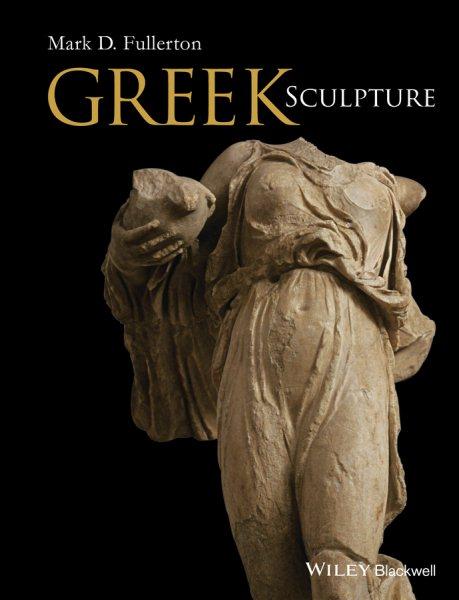 John Wiley and Sons Ltd Greek Sculpture GTIN: 9781444339796 Raamatud Greek Sculpture presents a chronological overview of the plastic and glyptic art forms in the ancient Greek world from the emergence of life-sized marble statuary at the end of the seventh century BC to the appropriation of Greek sculptural traditions by Rome in the first two centuries AD. Compares the evolution of Greek sculpture over the centuries to works of contemporaneous Mediterranean civilizations Emphasizes looking closely at the stylistic features of Greek sculpture, illustrating these observations where possible with original works rather than copies Places the remarkable progress of stylistic changes that took place in Greek sculpture within a broader social and historical context Facilitates an understanding of why Greek monuments look the way they do and what ideas they were capable of expressing Focuses on the most recent interpretations of Greek sculptural works while considering the fragile and fragmentary evidence uncovered Greek Sculpture presents a chronological overview of the plastic and glyptic art forms in the ancient Greek world from the emergence of life-sized marble statuary at the end of the seventh century BC to the appropriation of Greek sculptural traditions by Rome in the first two centuries AD.Compares the evolution of Greek sculpture over the centuries to works of contemporaneous Mediterranean civilizationsEmphasizes looking closely at the stylistic features of Greek sculpture, illustrating these observations where possible with original works rather than copiesPlaces the remarkable progress of stylistic changes that took place in Greek sculpture within a broader social and historical contextFacilitates an understanding of why Greek monuments look the way they do and what ideas they were capable of expressingFocuses on the most recent interpretations of Greek sculptural works while considering the fragile and fragmentary evidence uncovered Autorid: Mark D. Fullerton | 2 | 48,49 € | Vaata | ||
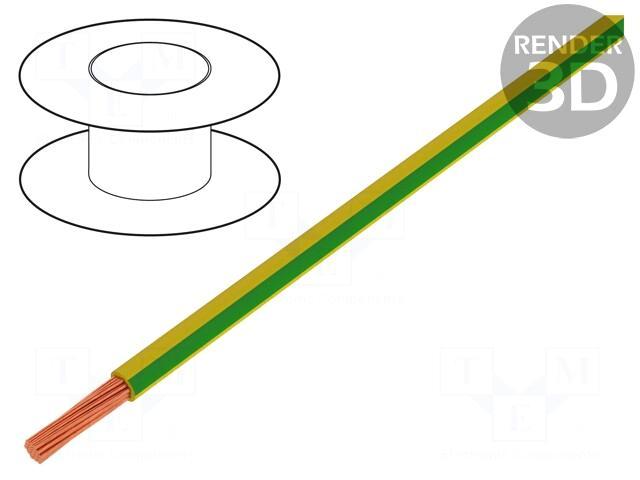
A.B.S. Sisemine rooliots, roolivarras 240351 GTIN: 8717109339796 Varuosad | 1 | 12,92 € | Vaata | ||
1-3 tp | 1 | 0,32 € | Vaata | ||
 Sterling Publishing Co Inc Infused Cocktail Handbook Pump up the flavors of spirits and mixers with this essential guide to homemade blends and infusions. Pump up the flavors of spirits and mixers with The Infused Cocktail Handbook, the essential guide to homemade blends and infusions. The illustr | 1 | 15,59 € | Vaata | ||
 Bloomsbury UK The Suspicions of Mr. Whicher: or the Haunting at Hill House _______________ A beautiful new limited edition paperback of The Suspicions of Mr. Whicher, published as part of the Bloomsbury Modern Classics list _______________ WINNER OF THE SAMUEL JOHNSON PRIZE FOR NON-FICTION THE NUMBER ONE BESTSELLER A RICHARD AND JUDY BOOK CLUB PICK _______________ 'A remarkable achievement' - Sunday Times 'A classic, to my mind, of the finest documentary writing' - John le Carré 'Absolutely riveting' - Sarah Waters, Guardian _______________ On a summer's morning in 1860, the Kent family awakes in their elegant Wiltshire home to a terrible discovery; their youngest son has been brutally murdered. When celebrated detective Jack Whicher is summoned from Scotland Yard he faces the unenviable task of identifying the killer - when the grieving family are the suspects. The original Victorian whodunnit, the murder and its investigation provoked national hysteria at the thought of what might be festering behind the locked doors of respectable homes - scheming servants, rebellious children, insanity, jealousy, loneliness and loathing. _______________ 'Nothing less than a masterpiece' - Craig Brown, Mail on Sunday 'Terrific' - Ian Rankin 'A triumph' - Observer 'Gripping, unputdownable' - Sunday Telegraph 'A terrific read in the Wilkie Collins tradition' - Susan Hill 'The best whodunnit of the year - and it's all true ... Agatha Christie, eat your heart out' - Sebastian Shakespeare, Tatler | 1 | 8,12 € | Vaata | ||
 IWA Publishing Silver Biotic Ligand Model (BLM): Refinement of an Acute BLM for Silver, Phase 2 GTIN: 9781843397960 Raamatud The biotic ligand model (BLM) is a computational tool that may be used to predict toxic effect levels of metals, including Ag. The BLM considers the effect of site-specific water quality characteristics on Ag speciation and bioavailability. This provides a basis for extrapolating from laboratory waters, used for most Ag toxicity tests, to natural waters, where the bioavailability and toxicity of Ag may differ. The original version of the BLM for the acute toxicity of Ag was reviewed by the USEPA Science Advisory Board (SAB) in 1999 and they recommended the completion of additional Ag chemistry and toxicity studies to provide data to test and refine the model. This project was completed to satisfy these recommendations. A chemistry component was completed to improve the representation of Ag speciation in natural waters and to characterize the important effect of sulfide on Ag bioavailability. These investigations added to the information that was available to characterize Ag chemistry and provided a basis for updating the earlier version of the Ag BLM. The BLM was also calibrated to laboratory toxicity data that were generated for a Ag-sensitive invertebrate, Ceriodaphnia dubia, a cladoceran that had previously been tested to only a limited degree. The studies were carried out in laboratory waters in which the chemistry was systematically varied to provide a basis for calibration of the BLM to the toxicity data for C. dubia. Toxicity tests were also performed with both Pimephales promelas and C. dubia in natural water samples that were well characterized chemically, with the data then used to test the model. While the C. dubia BLM results were relatively successful at simulating the observed effect levels the P. promelas results highlighted the need for further testing and refinement of the Ag BLM as it was applied to this fish species. Physiological tests were performed to explore the apparent increase in sensitivity of P. promelas in some of the test waters that were relatively low in ionic strength. It was determined that acclimation to such low ionic strength waters, in the absence of Ag, did not significantly reduce their sensitivity to Ag. Rather, it appeared that any benefit that may have been realized by acclimation, such as an enhanced ability to upregulate ion uptake rates in low ionic strength waters, was apparently offset by a concomitant increase in the rate at which Ag was accumulated. The Ag BLM was modified to account for the effect of low ionic strength water on the sensitivity to Ag of > 4-day old P. promelas. This led to an improved ability of the BLM to predict P. promelas effect levels in the natural waters. Physiological tests were also performed to investigate the apparent species-specific protection against Ag toxicity that is provided by chloride. Investigations with P. promelas suggested that the differences in degree of protection may be related to differences in how Ag affects the ionoregulation of Na+ and Cl- by different fish species. Although questions remain with regard to chloride, it appears that the BLM is able to predict this response reasonably well, particularly for the relatively sensitive P. promelas. In summary, the WERF program yielded an improved chemistry and toxicity database, including data over an extended range of water quality characteristics and for an additional Ag-sensitive invertebrate, thereby providing a basis for refining the acute Ag BLM and improving its overall predictive ability. The biotic ligand model (BLM) is a computational tool that may be used to predict toxic effect levels of metals, including Ag. The BLM considers the effect of site-specific water quality characteristics on Ag speciation and bioavailability. This provides a basis for extrapolating from laboratory waters, used for most Ag toxicity tests, to natural waters, where the bioavailability and toxicity of Ag may differ. The original version of the BLM for the acute toxicity of Ag was reviewed by the USEPA Science Advisory Board (SAB) in 1999 and they recommended the completion of additional Ag chemistry and toxicity studies to provide data to test and refine the model. This project was completed to satisfy these recommendations. A chemistry component was completed to improve the representation of Ag speciation in natural waters and to characterize the important effect of sulfide on Ag bioavailability. These investigations added to the information that was available to characterize Ag chemistry and provided a basis for updating the earlier version of the Ag BLM. The BLM was also calibrated to laboratory toxicity data that were generated for a Ag-sensitive invertebrate, Ceriodaphnia dubia, a cladoceran that had previously been tested to only a limited degree. The studies were carried out in laboratory waters in which the chemistry was systematically varied to provide a basis for calibration of the BLM to the toxicity data for C. dubia. Toxicity tests were also performed with both Pimephales promelas and C. dubia in natural water samples that were well characterized chemically, with the data then used to test the model. While the C. dubia BLM results were relatively successful at simulating the observed effect levels the P. promelas results highlighted the need for further testing and refinement of the Ag BLM as it was applied to this fish species. Physiological tests were performed to explore the apparent increase in sensitivity of P. promelas in some of the test waters that were relatively low in ionic strength. It was determined that acclimation to such low ionic strength waters, in the absence of Ag, did not significantly reduce their sensitivity to Ag. Rather, it appeared that any benefit that may have been realized by acclimation, such as an enhanced ability to upregulate ion uptake rates in low ionic strength waters, was apparently offset by a concomitant increase in the rate at which Ag was accumulated. The Ag BLM was modified to account for the effect of low ionic strength water on the sensitivity to Ag of > 4-day old P. promelas. This led to an improved ability of the BLM to predict P. promelas effect levels in the natural waters. Physiological tests were also performed to investigate the apparent species-specific protection against Ag toxicity that is provided by chloride. Investigations with P. promelas suggested that the differences in degree of protection may be related to differences in how Ag affects the ionoregulation of Na+ and Cl- by different fish species. Although questions remain with regard to chloride, it appears that the BLM is able to predict this response reasonably well, particularly for the relatively sensitive P. promelas. In summary, the WERF program yielded an improved chemistry and toxicity database, including data over an extended range of water quality characteristics and for an additional Ag-sensitive invertebrate, thereby providing a basis for refining the acute Ag BLM and improving its overall predictive ability. Autorid: Dominic M. di Toro, Paul R. Paquin | 1 | 154,20 € | Vaata |


Otsing: 339796
7 toodet
| 2 | 8,89 € | Vaata | ||
| 2 | 48,49 € | Vaata | ||
A.B.S. Sisemine rooliots, roolivarras 240351 GTIN: 8717109339796 Varuosad | 1 | 12,92 € | Vaata | ||
1 | 0,32 € | Vaata | |||
1 | 15,59 € | Vaata | |||
1 | 8,12 € | Vaata | |||
1 | 154,20 € | Vaata |
Tulemused 1
– 7 / 7
- Eelmine
- Järgmine
50