Brilliant, prolific, uniquely American, Pulitzer prizewinning playwright Sam Separd is a major voice in contemporary theatre. And here are seven of his very best.§§"One of the most original, prolific and gifted dramatists at work today." - The New Yorker§§"The greatest American playwright of his generation...the most inventive in language and revolutionary in craft, [he] is the writer whose work most accurately maps the interior and exterior landscapes of his society." - New York Magazine§§"If plays were put in time capsules, future generations would get a sharp-toothed profile of life in the U.S. in the past decade and a half from the works of Sam Shepard." - Time§§"Sam Shepard is the most exciting presence in the movie world and one of the most gifted writers ever to work on the American stage." - Marsha Norman, Pulitzer prizewinning author of 'Night, Mother.§§"One of our best and most challenging playwrights...his plays are a form of exorcism: magical, sometimes surreal rituals that grapple with the demonic forces in the American landscape." - Newsweek§§"His plays are stunning in thier originality, defiant and inscrutable." - Esquire§§"Sam Shepard is phenomenal..the best practicing American playwright." - The New Republic
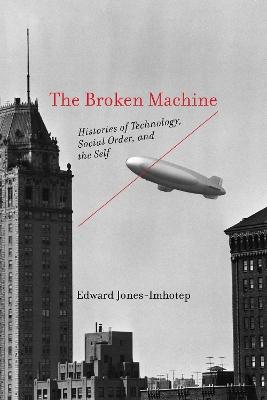
A cultural history of technological breakdown, social order, and the self in the modern Atlantic World.The Broken Machine explores the intertwined histories of breaking machines, social order, and the self in the modern Atlantic world. Edward Jones-Imhotep reveals how breakdowns are not the kinds of objects we imagine. More than just material failures or social disruptions, since the eighteenth-century, breakdowns served as moments for defining a modern technological self and the core values of social order in Western democracies: what kinds of people belonged to it, what virtues they should possess, and who stood outside it.Tracing this politics of breakdown and belonging across two centuries and two continents, the book rewrites five well-known episodes in the history of technologyinfluential histories that we thought we knew: the politics of the guillotine during the French Revolution; the causes of railway accidents and the rise of systems as a tool of self-responsibility and self-governance in Victorian Britain; the surprising antebellum history of breakdown in American slave cultures; the Gantt Charts origins as a Progressive-Era tool for linking failure as a condition of industrial machinery to failure as a kind of person in the United States; and, finally, the electronic malfunctions during the Cold War, which helped define the rational selves underpinning Western democracy. Autorid: Edward Jones-Imhotep