Sandwich Maker Sencor SSM8700WH. 8 kolmnurkse võileiva grillimiseks Automaatne temperatuuriseadistus Kergesti puhastatavad külgevõtmatu pinnaga küpsetusplaadid Kuumusisoleeritud käepide ja korpus Punane ja roheline märgutuli Mittelibisevad jalad Ülekuumenemiskaitse Voolujuhe 75 cm Võimsus 1100 W Mõõtmed (L x S x K): 268 x 319 x 106 mm Kaal: 1.96 kg Toide: 220-240 V, 50/60 Hz
Abiline latte, cappuccino, frappe ja muude jookide valmistamisel, kui on vaja kuuma või vahustatud piima.Kolm täisautomaatset töörežiimi: piimavahustamine soojendamisega (max. maht 100 ml, ligikaudu 2 minutit), piimavahustamine ilma soojendamiseta (max. maht 100 ml, ligikaudu 1.5 minutit), piima soojendamine ilma vahustamiseta (max. maht 200 ml, ligikaudu 3 minutit) .Termostaadiga seadistatav temperatuur garanteerib optimaalse piimatemperatuuri ja hoiab ära ülekuumenemise.Külgevõtmatu pind ei lase piimal kõrbema minna ja teeb puhastamise lihtsamaks.Magnetiga kontaktivaba lisatarvikute liitmine kannu teljele tagab pikaajalise kasutusea.Seade on sobiv vaegkuuljatele (märgutuled). Maht 200 ml Värv Valge Võimsus 450 W Täisautomaatseid tööreziime 3
The DIGITUS Category 6A Class EA patch cords are manufactured and tested to the ISO/IEC 11801 and DIN EN 50173 Category 6 A specifications. They will guarantee the installed cabling system is compliant with the ISO & EN channel specification requirements and will provide optimum performance levels of DIGITUS Category 6A cabling. The performance is tested up to 500 MHz inclusive performance characteristics such as near end cross talk ("NEXT"). DIGITUS patch cords are designed and produced to fulfill the highest requirements of various application areas in full volume. Each cable is fitted with a molded boot which comes with kink protection and strain relief. Furthermore the boot is equipped with a latch protection that prevents the latching lever against breaking. You can easily identify the Category 6A, because of the transparent yellow colored connector.
Digindikuga FM raadioFM laineala: 88MHz - 108MHzFM teleskoopantennUSB portMicroSD pesa ( kuni 8 GB)Esitab MP3Kvaklappide pistikAudiosisend 3,5 mmLaadimispistik mini USBVmsus: 2W(RMS)Ettemgimisaeg u 10 hToide 230 V / 50 Hz v liitiumakugaVv: mustMtmed: 72 x 110 x 29 mmKaal: 250 g
Digindikuga FM raadioFM laineala: 88MHz - 108MHzFM teleskoopantennUSB portMicroSD pesa ( kuni 8 GB)Esitab MP3Kvaklappide pistikAudiosisend 3,5 mmLaadimispistik mini USBVmsus: 2W(RMS)Ettemgimisaeg u 10 hToide 230 V / 50 Hz v liitiumakugaVv: valgeMtmed: 72 x 110 x 29 mmKaal: 250 g
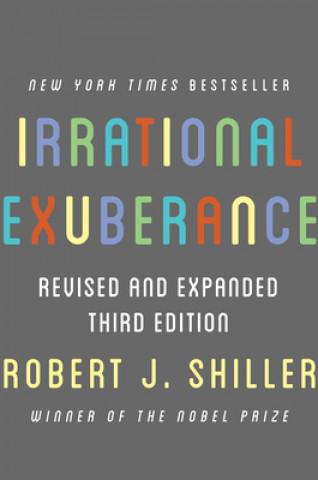
In this revised, updated, and expanded edition of his New York Times bestseller, Nobel Prize-winning economist Robert Shiller, who warned of both the tech and housing bubbles, cautions that signs of irrational exuberance among investors have only increased since the 2008-9 financial crisis. With high stock and bond prices and the rising cost of housing, the post-subprime boom may well turn out to be another illustration of Shiller's influential argument that psychologically driven volatility is an inherent characteristic of all asset markets. In other words, Irrational Exuberance is as relevant as ever. Previous editions covered the stock and housing markets--and famously predicted their crashes. This edition expands its coverage to include the bond market, so that the book now addresses all of the major investment markets. It also includes updated data throughout, as well as Shiller's 2013 Nobel Prize lecture, which places the book in broader context. In addition to diagnosing the causes of asset bubbles, Irrational Exuberance recommends urgent policy changes to lessen their likelihood and severity--and suggests ways that individuals can decrease their risk before the next bubble bursts. No one whose future depends on a retirement account, a house, or other investments can afford not to read this book.
The most complete and user-friendly photographic field guide to the world's canidsThis stunningly illustrated and easy-to-use field guide covers every species of the world's canids, from the Gray Wolf of North America to the dholes of Asia
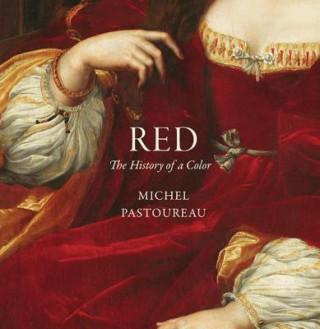
The color red has represented many things, from the life force and the divine to love, lust, and anger. Up through the Middle Ages, red held a place of privilege in the Western world. For many cultures, red was not just one color of many but rather the only color worthy enough to be used for social purposes. In some languages, the word for red was the same as the word for color. The first color developed for painting and dying, red became associated in antiquity with war, wealth, and power. In the medieval period, red held both religious significance, as the color of the blood of Christ and the fires of Hell, and secular meaning, as a symbol of love, glory, and beauty. Yet during the Protestant Reformation, red began to decline in status. Viewed as indecent and immoral and linked to luxury and the excesses of the Catholic Church, red fell out of favor. After the French Revolution, red gained new respect as the color of progressive movements and radical left-wing politics.
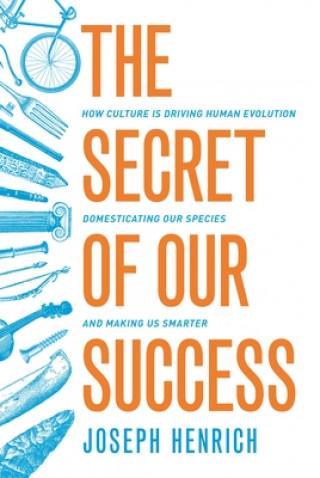
This book shows that the secret of our success lies not in our innate intelligence, but in our collective brains - on the ability of human groups to socially interconnect and learn from one another over generations. Tracking clues from our ancient past to the present, The Secret of Our Success explores how the evolution of both our cultural and social natures produce a collective intelligence that explains both our species' immense success and the origins of human uniqueness.
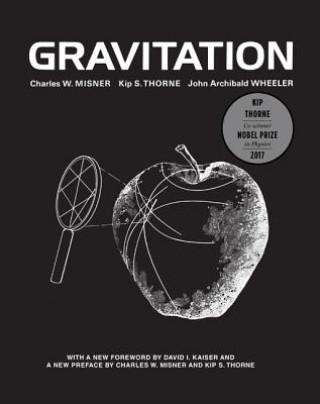
First published in 1973, Gravitation is a landmark graduate-level textbook that presents Einstein's general theory of relativity and offers a rigorous, full-year course on the physics of gravitation. Upon publication, Science called it "a pedagogic masterpiece." With an emphasis on geometric interpretation, this masterful and comprehensive book introduces the theory of relativity; describes physical applications, from stars to black holes and gravitational waves; and portrays the field's frontiers. The book also offers a unique, alternating, two-track pathway through the subject.
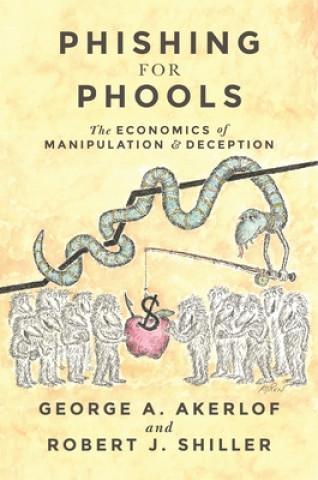
Ever since Adam Smith, the central teaching of economics has been that free markets provide us with material well-being, as if by an invisible hand. In Phishing for Phools, Nobel Prize-winning economists George Akerlof and Robert Shiller deliver a fundamental challenge to this insight, arguing that markets harm as well as help us. As long as there is profit to be made, sellers will systematically exploit our psychological weaknesses and our ignorance through manipulation and deception. Rather than being essentially benign and always creating the greater good, markets are inherently filled with tricks and traps and will "phish" us as "phools." Phishing for Phools explores the central role of manipulation and deception in fascinating detail in each of these areas and many more. It thereby explains a paradox: why, at a time when we are better off than ever before in history, all too many of us are leading lives of quiet desperation. At the same time, the book tells stories of individuals who have stood against economic trickery--and how it can be reduced through greater knowledge, reform, and regulation.
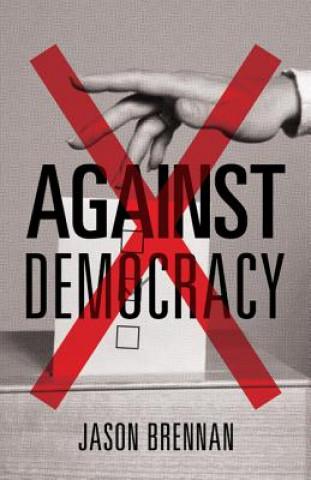
Most people believe democracy is a uniquely just form of government. They believe people have the right to an equal share of political power. And they believe that political participation is good for us - it empowers us, helps us get what we want, and tends to make us smarter, more virtuous, and more caring for one another. These are some of our most cherished ideas about democracy. But Jason Brennan says they are all wrong. In this trenchant book, Brennan argues that democracy should be judged by its results - and the results are not good enough. Featuring a new preface that situates the book within the current political climate and discusses other alternatives beyond epistocracy, Against Democracy is a challenging critique of democracy and the first sustained defense of the rule of the knowledgeable.
A state-of-the-art photographic field guide to the world's oceanic birdsOceanic birds are among the most remarkable but least known of all birds, living at sea, far from the sight of most people. They offer unusual identification challenge
In April 1956, a refitted oil tanker carried fifty-eight shipping containers from Newark to Houston. From that modest beginning, container shipping developed into a huge industry that made the boom in global trade possible. The Box tells the dramatic story of the container's creation, the decade of struggle before it was widely adopted, and the sweeping economic consequences of the sharp fall in transportation costs that containerization brought about. Drawing on previously neglected sources, economist Marc Levinson shows how the container transformed economic geography, devastating traditional ports such as New York and London and fueling the growth of previously obscure ones, such as Oakland. By making shipping so cheap that industry could locate factories far from its customers, the container paved the way for Asia to become the world's workshop and brought consumers a previously unimaginable variety of low-cost products from around the globe.
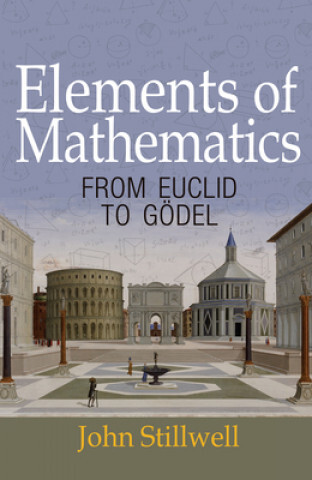
Elements of Mathematics takes readers on a fascinating tour that begins in elementary mathematics - but, as John Stillwell shows, this subject is not as elementary or straightforward as one might think. Not all topics that are part of today's elementary mathematics were always considered as such, and great mathematical advances and discoveries had to occur in order for certain subjects to become "elementary." Stillwell examines elementary mathematics from a distinctive twenty-first-century viewpoint and describes not only the beauty and scope of the discipline, but also its limits.
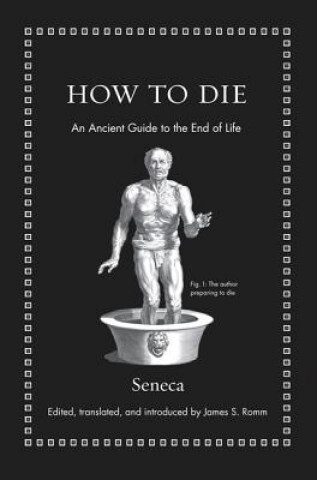
"It takes an entire lifetime to learn how to die," wrote the Roman Stoic philosopher Seneca (c. 4 BC-65 AD). He counseled readers to "study death always," and took his own advice, returning to the subject again and again in all his writings, yet he never treated it in a complete work. How to Die gathers in one volume, for the first time, Seneca's remarkable meditations on death and dying. Edited and translated by James S. Romm, How to Die reveals a provocative thinker and dazzling writer who speaks with a startling frankness about the need to accept death or even, under certain conditions, to seek it out. Featuring beautifully rendered new translations, How to Die also includes an enlightening introduction, notes, the original Latin texts, and an epilogue presenting Tacitus's description of Seneca's grim suicide.
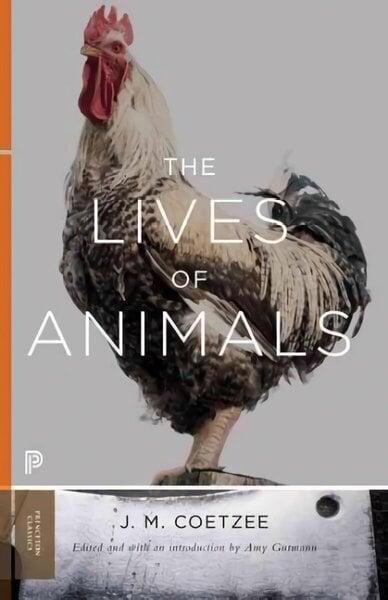
The idea of human cruelty to animals so consumes novelist Elizabeth Costello in her later years that she can no longer look another person in the eye: humans, especially meat-eating ones, seem to her to be conspirators in a crime of stupefying magnitude taking place on farms and in slaughterhouses, factories, and laboratories across the world. Costello's son, a physics professor, admires her literary achievements, but dreads his mother's lecturing on animal rights at the college where he teaches. His colleagues resist her argument that human reason is overrated and that the inability to reason does not diminish the value of life; his wife denounces his mother's vegetarianism as a form of moral superiority. At the dinner that follows her first lecture, the guests confront Costello with a range of sympathetic and skeptical reactions to issues of animal rights, touching on broad philosophical, anthropological, and religious perspectives. Painfully for her son, Elizabeth Costello seems offensive and flaky, but--dare he admit it?--strangely on target. In this landmark book, Nobel Prize-winning writer J. M. Coetzee uses fiction to present a powerfully moving discussion of animal rights in all their complexity. He draws us into Elizabeth Costello's own sense of mortality, her compassion for animals, and her alienation from humans, even from her own family. In his fable, presented as a Tanner Lecture sponsored by the University Center for Human Values at Princeton University, Coetzee immerses us in a drama reflecting the real-life situation at hand: a writer delivering a lecture on an emotionally charged issue at a prestigious university. Literature, philosophy, performance, and deep human conviction--Coetzee brings all these elements into play. As in the story of Elizabeth Costello, the Tanner Lecture is followed by responses treating the reader to a variety of perspectives, delivered by leading thinkers in different fields. Coetzee's text is accompanied by an introduction by political philosopher Amy Gutmann and responsive essays by religion scholar Wendy Doniger, primatologist Barbara Smuts, literary theorist Marjorie Garber, and moral philosopher Peter Singer, author of Animal Liberation. Together the lecture-fable and the essays explore the palpable social consequences of uncompromising moral conflict and confrontation. Autorid: J. M. Coetzee, Amy Gutmann, Amy Gutmann
A richly illustrated, state-of-the-art field guide for identifying European passerines in flight--the first of its kindOpening up new frontiers in birdwatching, this is the first field guide for identifying European passerines in flight, f
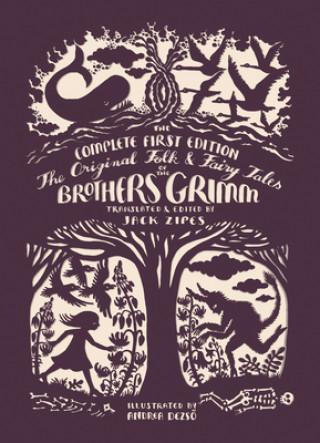
When Jacob and Wilhelm Grimm published their Children's and Household Tales in 1812, followed by a second volume in 1815, they had no idea that such stories as "Rapunzel," "Hansel and Gretel," and "Cinderella" would become the most celebrated in the world. Yet few people today are familiar with the majority of tales from the two early volumes, since in the next four decades the Grimms would publish six other editions, each extensively revised in content and style.For the very first time, The Original Folk and Fairy Tales of the Brothers Grimm makes available in English all 156 stories from the 1812 and 1815 editions.These narrative gems, newly translated and brought together in one beautiful book, are accompanied by sumptuous new illustrations from award-winning artist Andrea Dezsö.
The most comprehensive single-volume photographic guide to Europe’s birds ever produced―from the authors of the acclaimed Britain’s BirdsCovering more than 900 species, and illustrated with 4,700 photographs, Europe’s Birds is the most comprehensive, authoritative and ambitious single-volume photographic guide to Europe’s birds ever produced. Easy-to-use, practical and accessible, this guide provides the information necessary for birdwatchers of all abilities to name any bird they see. Detailed descriptions cover the birds in all their plumages―male, female, breeding, non-breeding, adult and immatures, as well as distinctive subspecies. The clear text covers all aspects of identification, including moult and vocalizations, and provides details on range, status and habitat. An unrivalled selection of photographs, chosen to be as informative as possible, makes this a beautiful book to enjoy, as well as an up-to-date and essential source of identification knowledge.Europe’s Birds is produced by the same team that created Britain’s Birds, which has been described as "without doubt the best photo guide on the market” (Andy Stoddart, Rare Bird Alert). The authors include top-class wildlife photographers, writers and editors, and an imaginative, highly skilled designer. All are experienced birdwatchers themselves, who know what is needed in an identification guide for birdwatchers living or travelling in Europe.Illustrates all 928 species recorded in Europe, including established introductionsFeatures 4,700 stunning photographs showing the birds as you really see themFocuses on identification, covering all plumages and subspeciesProvides detailed comparison of similar and difficult speciesIncludes details of moult, vocalizations, status and favoured habitatsContains 540 maps, prepared in association with BirdLife International
Language: English, Binding: Hardback, Number of pages: 1104, Publishers: Princeton University Press, Author: Barbara Stollberg–rilin, ISBN-13: 9780691179063, Date of issue: 2022
In the aftermath of recent financial crises, it's easy to see finance as a wrecking ball: something that destroys fortunes and jobs, and undermines governments and banks. In Money Changes Everything, leading financial historian William Goetzmann argues the exact opposite - that the development of finance has made the growth of civilizations possible. Goetzmann explains that finance is a time machine, a technology that allows us to move value forward and backward through time; and that this innovation has changed the very way we think about and plan for the future. He shows how finance was present at key moments in history: driving the invention of writing in ancient Mesopotamia, spurring the classical civilizations of Greece and Rome to become great empires, determining the rise and fall of dynasties in imperial China, and underwriting the trade expeditions that led Europeans to the New World. He also demonstrates how the apparatus we associate with a modern economy - stock markets, lines of credit, complex financial products, and international trade - were repeatedly developed, forgotten, and reinvented over the course of human history.
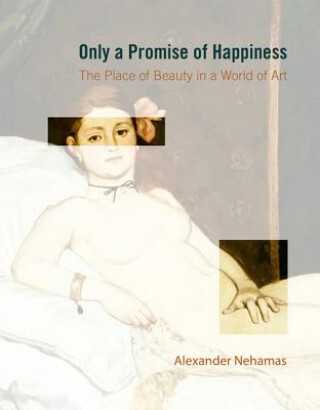
Neither art nor philosophy was kind to beauty during the twentieth century. Much modern art disdains beauty, and many philosophers deeply suspect that beauty merely paints over or distracts us from horrors. Intellectuals consigned the passions of beauty
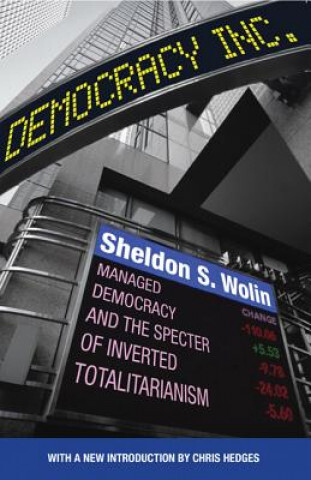
Democracy is struggling in America--by now this statement is almost cliché. But what if the country is no longer a democracy at all? In Democracy Incorporated, Sheldon Wolin considers the unthinkable: has America unwittingly morphed into a new and strange kind of political hybrid, one where economic and state powers are conjoined and virtually unbridled? Can the nation check its descent into what the author terms "inverted totalitarianism"? Democracy Incorporated is one of the most worrying diagnoses of America's political ills to emerge in decades. It is sure to be a lightning rod for political debate for years to come. Now with a new introduction by Pulitzer Prize - winning journalist Chris Hedges, Democracy Incorporated remains an essential work for understanding the state of democracy in America.
Language: English, Binding: Hardback, Number of pages: 392, Publishers: Princeton University Press, Author: A. Zee, ISBN-13: 9780691174297, Date of issue: 2023
Since its original publication, Expert Political Judgment by New York Times bestselling author Philip Tetlock has established itself as a contemporary classic in the literature on evaluating expert opinion. Now with a new preface in which Tetlock discusses the latest research in the field, the book explores what constitutes good judgment in predicting future events and looks at why experts are often wrong in their forecasts.
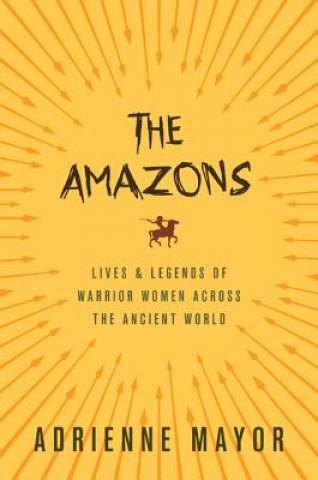
Amazons - fierce warrior women dwelling on the fringes of the known world - were the mythic archenemies of the ancient Greeks. Heracles and Achilles displayed their valor in duels with Amazon queens, and the Athenians reveled in their victory over a powerful Amazon army. In historical times, Cyrus of Persia, Alexander the Great, and the Roman general Pompey tangled with Amazons. But just who were these bold barbarian archers on horseback who gloried in fighting, hunting, and sexual freedom? Were Amazons real? In this deeply researched, wide-ranging, and lavishly illustrated book, National Book Award finalist Adrienne Mayor presents the Amazons as they have never been seen before. This is the first comprehensive account of warrior women in myth and history across the ancient world, from the Mediterranean Sea to the Great Wall of China. Driven by a detectives curiosity, Mayor unearths long-buried evidence and sifts fact from fiction to show how flesh-and-blood women of the Eurasian steppes were mythologized as Amazons, the equals of men. The result is likely to become a classic.
A radically new way of thinking about form and context in literature, politics, and beyondForms offers a powerful new answer to one of the most pressing problems facing literary, critical, and cultural studies todayhow to connect form to political, social, and historical context. Caroline Levine argues that forms organize not only works of art but also political lifeand our attempts to know both art and politics. Inescapable and frequently troubling, forms shape every aspect of our experience. Yet, forms don't impose their order in any simple way. Multiple shapes, patterns, and arrangements, overlapping and colliding, generate complex and unpredictable social landscapes that challenge and unsettle conventional analytic models in literary and cultural studies.Borrowing the concept of "affordances" from design theory, this book investigates the specific ways that four major formswholes, rhythms, hierarchies, and networkshave structured culture, politics, and scholarly knowledge across periods, and it proposes exciting new ways of linking formalism to historicism and literature to politics. Levine rereads both formalist and antiformalist theorists, including Cleanth Brooks, Michel Foucault, Jacques Rancière, Mary Poovey, and Judith Butler, and she offers engaging accounts of a wide range of objects, from medieval convents and modern theme parks to Sophocles's Antigone and the television series The Wire.The result is a radically new way of thinking about form for the next generation and essential reading for scholars and students across the humanities who must wrestle with the problem of form and context. Autorid: Caroline Levine
When it first appeared in 1979, Philosophy and the Mirror of Nature hit the philosophical world like a bombshell. In it, Richard Rorty argued that, beginning in the seventeenth century, philosophers developed an unhealthy obsession with the notion of representation: comparing the mind to a mirror that reflects reality. Rorty's book is a powerful critique of this imagery and the tradition of thought that it spawned. Today, the book remains a must-read and stands as a classic of twentieth-century philosophy. Its influence on the academy, both within philosophy and across a wide array of disciplines, continues unabated. This edition includes new essays by philosopher Michael Williams and literary scholar David Bromwich, as well as Rorty's previously unpublished essay "The Philosopher as Expert." Autorid: Richard Rorty, Michael Williams, David Bromwich
Why the living world may be the next great frontier of physicsThe frontiers of physics can seem impossibly remotelocated in the invisible quantum realm or the farthest reaches of the cosmos. But one of physics' most exciting frontiers lies much closer than we realize: within our own bodies and other living organisms, which display astonishingly intricate structural patterns and dynamic processes that we don't yet understand. In Living Matter, leading biophysicist Alex Levine explains why unraveling the mysteries of life may ultimately demand a new physicsone that takes full account of the fundamental differences between living and nonliving matter.Life is distinct not only because of its evolutionary history and function, Levine explains, but because it exhibits unique complexities of structure and organizational behavior. In addition, life thrives in states that are not always predictable by means of the same physical principles used to explain nonliving systems. From single proteins to entire collections of cells, and from DNA to the eyes, ears, and brain, Levine tours the most promising areas of life where a new physics might be found. Along the way, he considers many fascinating issues, such as the electrical nature of thought and the emergence of life from the inanimate.Revealing what the study of the biological world can contribute to physics, Living Matter unveils the potential scientific revolution that exists in the uncharted territory lying at, and in, our very fingertips. Autorid: Alex J. Levine
Leviathan and the Air-Pump examines the conflicts over the value and propriety of experimental methods between two major seventeenth-century thinkers: Thomas Hobbes, author of the political treatise Leviathan and vehement critic of systematic experimentation in natural philosophy, and Robert Boyle, mechanical philosopher and owner of the newly invented air-pump. The issues at stake in their disputes ranged from the physical integrity of the air-pump to the intellectual integrity of the knowledge it might yield. Both Boyle and Hobbes were looking for ways of establishing knowledge that did not decay into ad hominem attacks and political division. Boyle proposed the experiment as cure. He argued that facts should be manufactured by machines like the air-pump so that gentlemen could witness the experiments and produce knowledge that everyone agreed on. Hobbes, by contrast, looked for natural law and viewed experiments as the artificial, unreliable products of an exclusive guild. The new approaches taken in Leviathan and the Air-Pump have been enormously influential on historical studies of science. Shapin and Schaffer found a moment of scientific revolution and showed how key scientific givens--facts, interpretations, experiment, truth--were fundamental to a new political order. Shapin and Schaffer were also innovative in their ethnographic approach. Attempting to understand the work habits, rituals, and social structures of a remote, unfamiliar group, they argued that politics were tied up in what scientists did, rather than what they said. Steven Shapin and Simon Schaffer use the confrontation between Hobbes and Boyle as a way of understanding what was at stake in the early history of scientific experimentation. They describe the protagonists' divergent views of natural knowledge, and situate the Hobbes-Boyle disputes within contemporary debates over the role of intellectuals in public life and the problems of social order and assent in Restoration England. In a new introduction, the authors describe how science and its social context were understood when this book was first published, and how the study of the history of science has changed since then. Autorid: Steven Shapin, Simon Schaffer