Kohviubade, pähklite või vürtside jahvatamiseks. Pealispindroostevabast terasest. Suur taustavalgustusega ohutuslüliti. Maht 50 g Värv Roostevaba teras Võimsus 150 W
Kompositsiooni aluseks on värske heaolutunne. Jean Marie Farina teeb ettepaneku pöörduda tagasi alguse, põhilise juurde, et olla üks iseendaga. On midagi ajatut, igavest, põnevat. Destilleeritud taimede kasulikkus toob t
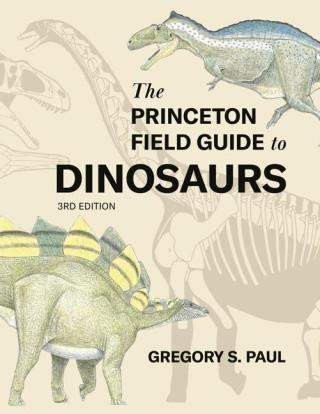
Language: English, Binding: Hardback, Number of pages: 384, Publishers: Princeton University Press, Author: Gregory S. Paul, ISBN-13: 9780691231570, Date of issue: 2024
Naoki Urasawa’s unforgettable thriller follows a brilliant doctor’s journey into the darkest depths of the human soul.Johan is a cold and calculating killer with a mysterious past, and brilliant Dr. Kenzo Tenma is the only one who can stop him! Conspiracy and serial murder open the door to a compelling, intricately woven plot in this masterwork of suspense.Although Eva bears an unfathomable hatred for Tenma, she is the only person who can testify as a witness to prove his innocence. She stubbornly refuses to do so until a discussion with Dr. Reichwein brings back old memories of her time with Tenma.With those thoughts come memories of three gunshots, and that it was Johan who Eva saw that night! Meanwhile, the evil hand of Roberto inches steadily closer to Eva with the intent to kill…Tenma, Nina and Johan all find themselves heading for the one place that holds the key to the mystery—the "Red Rose Mansion.” What really happened there and why? Who is Franz Bonaparta? Will the secret of the birth of the Monster ever be revealed?
Language: English, Binding: Paperback, Number of pages: 488, Publishers: Princeton University Press, Author: Matt Rohal,Peter Singer, ISBN-13: 9780691237862, Date of issue: 2023
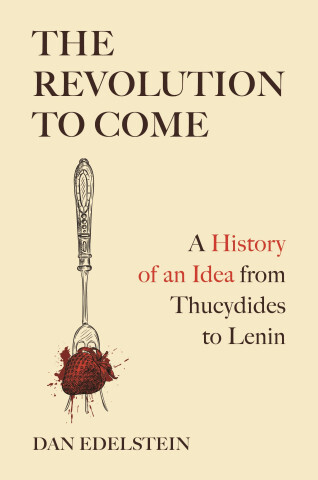
Language: English, Binding: Hardback, Number of pages: 376, Publishers: Princeton University Press, Author: Dan Edelstein, ISBN-13: 9780691231853, Date of issue: 2025
A landmark work of political theory on the central importance of group identity and cultural pluralism in political lifeJustice and the Politics of Difference challenges the prevailing reduction of social justice to distributive justice, critically analyzing basic concepts underlying most theories of justice such as impartiality, formal equality, and the unitary moral subjectivity. Drawing on the experiences and concerns of social movements created by marginalized and excluded groups, Iris Marion Young shows how democratic theorists fail to consider institutional arrangements for including people not culturally identified with white European male norms of reason and respectability. Basing her vision of the good society on the differentiated, culturally plural network of contemporary urban life, she argues for a principle of group representation in democratic publics and for group-differentiated policies. Danielle Allens incisive foreword contextualizes Youngs work and explains how debates surrounding social justice have changed sinceand been transformed bythe original publication of the book. Autorid: Iris Marion Young, Danielle S. Allen
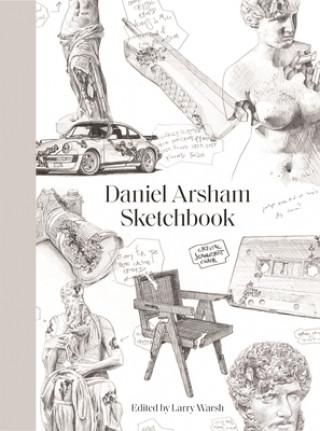
Language: English, Binding: Hardback, Number of pages: 300, Publishers: Princeton University Press, Author: Daniel Arsham,Larry Warsh, ISBN-13: 9780691234267, Date of issue: 2022
Language: English, Binding: Hardback, Number of pages: 848, Publishers: Princeton University Press, Author: Michael Cook, ISBN-13: 9780691236575, Date of issue: 2024
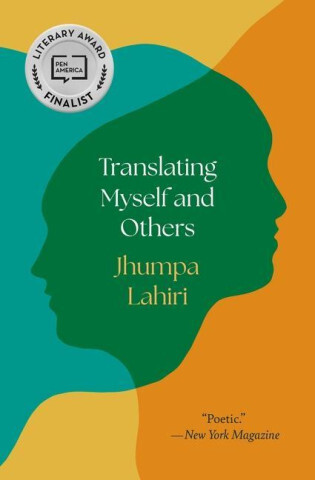
Language: English, Binding: Paperback, Number of pages: 208, Publishers: Princeton University Press, Author: Jhumpa Lahiri, ISBN-13: 9780691238616, Date of issue: 2023
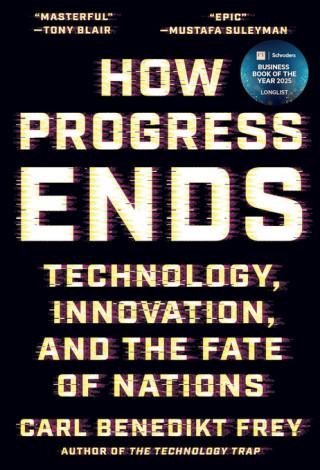
Longlisted for the Financial Times and Schroders Business Book of the Year AwardHow 1,000 years of global history show why technological and economic progress is often followed by stagnation and even collapseIn How Progress Ends, Carl Benedikt Frey challenges the conventional belief that economic and technological progress is inevitable. For most of human history, stagnation was the norm, and even today progress and prosperity in the world’s largest, most advanced economies—the United States and China—have fallen short of expectations. To appreciate why we cannot depend on any AI-fueled great leap forward, Frey offers a remarkable and fascinating journey across the globe, spanning the past 1,000 years, to explain why some societies flourish and others fail in the wake of rapid technological change.By examining key historical moments—from the rise of the steam engine to the dawn of AI—Frey shows why technological shifts have shaped, and sometimes destabilized, entire civilizations. He explores why some leading technological powers of the past—such as Song China, the Dutch Republic, and Victorian Britain—ultimately lost their innovative edge, why some modern nations such as Japan had periods of rapid growth followed by stagnation, and why planned economies like the Soviet Union collapsed after brief surges of progress. Frey uncovers a recurring tension in history: while decentralization fosters the exploration of new technologies, bureaucracy is crucial for scaling them.When institutions fail to adapt to technological change, stagnation inevitably follows. Only by carefully balancing decentralization and bureaucracy can nations innovate and grow over the long term—findings that have worrying implications for the United States, Europe, China, and other economies today. Through a rich narrative that weaves together history, economics, and technology, How Progress Ends reveals that managing the future requires us to draw the right lessons from the past.
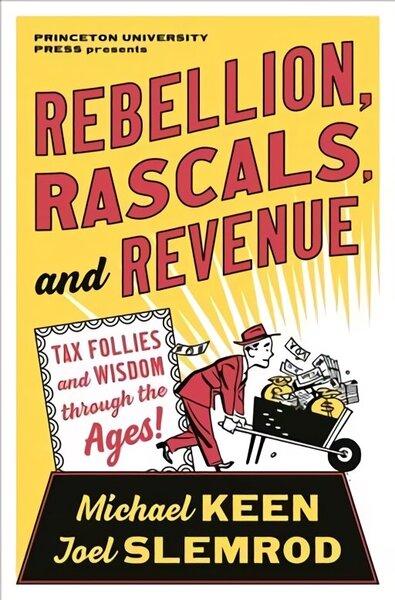
An engaging and enlightening account of taxation told through lively, dramatic, and sometimes ludicrous stories drawn from around the world and across the agesGovernments have always struggled to tax in ways that are effective and tolerably fair. Sometimes they fail grotesquely, as when, in 1898, the British ignited a rebellion in Sierra Leone by imposing a tax on hutsand, in repressing it, ended up burning the very huts they intended to tax. Sometimes they succeed astonishingly, as when, in eighteenth-century Britain, a cut in the tax on tea massively increased revenue. In this entertaining book, two leading authorities on taxation, Michael Keen and Joel Slemrod, provide a fascinating and informative tour through these and many other episodes in tax history, both preposterous and dramaticfrom the plundering described by Herodotus and an Incan tax payable in lice to the (misremembered) Boston Tea Party and the scandals of the Panama Papers. Along the way, readers meet a colorful cast of tax rascals, and even a few tax heroes.While it is hard to fathom the inspiration behind such taxes as one on ships that tended to make them sink, Keen and Slemrod show that yesterdays tax systems have more in common with ours than we may think. Georgian Englands window tax now seems quaint, but was an ingenious way of judging wealth unobtrusively. And Tsar Peter the Greats tax on beards aimed to induce the nobility to shave, much like todays carbon taxes aim to slow global warming.Rebellion, Rascals, and Revenue is a surprising and one-of-a-kind account of how history illuminates the perennial challenges and timeless principles of taxationand how the past holds clues to solving the tax problems of today. Autorid: Michael Keen, Joel Slemrod
An essential exploration of the engineering aesthetics of celebrated structures from long-span bridges to high-rise buildingsWhat do structures such as the Eiffel Tower, the Brooklyn Bridge, and the concrete roofs of Pier Luigi Nervi have in common? According to The Tower and the Bridge, all are striking examples of structural art, an exciting area distinct from either architecture or machine design. Aided by stunning photographs, David Billington discusses the technical concerns and artistic principles underpinning the well-known projects of leading structural engineer-artists, including Othmar Ammann, Félix Candela, Gustave Eiffel, Fazlur Khan, Robert Maillart, John Roebling, and many others. A classic work, The Tower and the Bridge introduces readers to the fundamental aesthetics of engineering. Autorid: David P. Billington
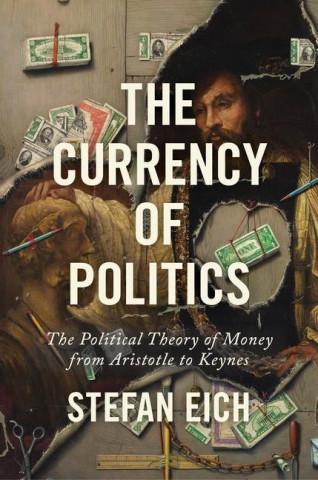
Money in the history of political thought, from ancient Greece to the Great Inflation of the 1970sIn the wake of the 2008 financial crisis, critical attention has shifted from the economy to the most fundamental feature of all market economiesmoney. Yet despite the centrality of political struggles over money, it remains difficult to articulate its democratic possibilities and limits. The Currency of Politics takes readers from ancient Greece to today to provide an intellectual history of money, drawing on the insights of key political philosophers to show how money is not just a medium of exchange but also a central institution of political rule.Money appears to be beyond the reach of democratic politics, but this appearancelike so much about moneyis deceptive. Even when the politics of money is impossible to ignore, its proper democratic role can be difficult to discern. Stefan Eich examines six crucial episodes of monetary crisis, recovering the neglected political theories of money in the thought of such figures as Aristotle, John Locke, Johann Gottlieb Fichte, Karl Marx, and John Maynard Keynes. He shows how these layers of crisis have come to define the way we look at money, and argues that informed public debate about money requires a better appreciation of the diverse political struggles over its meaning.Recovering foundational ideas at the intersection of monetary rule and democratic politics, The Currency of Politics explains why only through greater awareness of the historical limits of monetary politics can we begin to articulate more democratic conceptions of money. Autorid: Stefan Eich
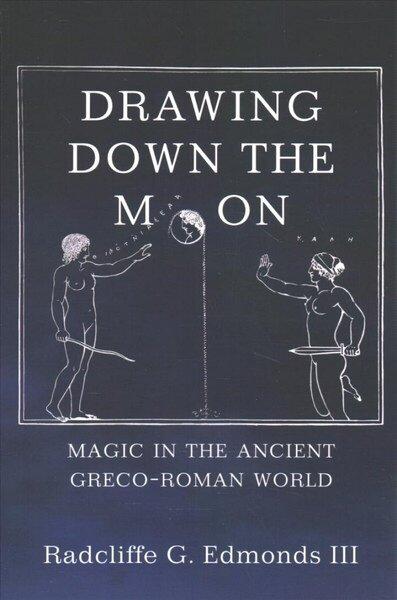
An unparalleled exploration of magic in the Greco-Roman worldWhat did magic mean to the people of ancient Greece and Rome? How did Greeks and Romans not only imagine what magic could do, but also use it to try to influence the world around them? In Drawing Down the Moon, Radcliffe Edmonds, one of the foremost experts on magic, religion, and the occult in the ancient world, provides the most comprehensive account of the varieties of phenomena labeled as magic in classical antiquity. Exploring why certain practices, images, and ideas were labeled as magic and set apart from normal kinds of practices, Edmonds gives insight into the shifting ideas of religion and the divine in the ancient past and later Western tradition.Using fresh approaches to the history of religions and the social contexts in which magic was exercised, Edmonds delves into the archaeological record and classical literary traditions to examine images of witches, ghosts, and demons as well as the fantastic powers of metamorphosis, erotic attraction, and reversals of nature, such as the famous trick of drawing down the moon. From prayer and divination to astrology and alchemy, Edmonds journeys through all manner of ancient magical rituals and paraphernaliaancient tablets, spell books, bindings and curses, love charms and healing potions, and amulets and talismans. He considers the ways in which the Greco-Roman discourse of magic was formed amid the cultures of the ancient Mediterranean, including Egypt and the Near East.An investigation of the mystical and marvelous, Drawing Down the Moon offers an unparalleled record of the origins, nature, and functions of ancient magic. Autorid: Radcliffe G. Edmonds, III
A biologists firsthand account of the hunt for life beneath earths surfaceand how new discoveries are challenging our most basic assumptions about the nature of life on EarthLife thrives in the deepest, darkest recesses of Earths crustfrom methane seeps in the ocean floor to the highest reaches of Arctic permafrostand it is unlike anything seen on the surface. Intraterrestrials shares what scientists are learning about these strange types of microbial lifeand how research expeditions to some of the most extreme locales on the planet are broadening our understanding of what life is and how its earliest forms may have evolved.Drawing on her experiences and those of her fellow scientists working in challenging and often dangerous conditions, Karen Lloyd takes readers on an adventure from the bottom of the ocean through the jungles of Central America to the high-altitude volcanoes of the Andes. Only discovered in recent decades, intraterrestrialssubsurface beings that are truly alienare demonstrating how life can exist in boiling water, pure acid, and bleach. They enable us to peer back to the very dawn of life on Earth, disclosing deep branches on the tree of life that push the limits of what we thought possible. Some can breathe rocks or even electrons. Others may live for hundreds of thousands of years or longer. All of them are living in ways that are totally foreign to us surface dwellers.Blending captivating storytelling with the latest science, Intraterrestrials reveals what microbes in Earths deep subsurface biosphere can tell us about the prospects for finding life on other planetsand the future of life on our own. Autorid: Karen G. Lloyd
"Thomas Seeley has spent his career unraveling the mysteries of honey bee behavior. His goal has been to understand how the 30,000 or so bees in a colony work together as a unit to accomplish such things as finding and occupying a snug nest cavity, furnishing it with beeswax combs, filling these combs with brood and food, and keeping themselves well nourished, comfortably warm, and safe from intruders. In this book, Seeley's goal is to illuminate these and other mysteries about the workings of honey bee colonies and explore how those mysteries were solved. Seeley's aim, as he says, is to review how and what he and his colleagues have learned about honey bees and to share some things that are not in the scientific papers: the personal experiences that drew him to these studies, the little observations that led to important insights, and the feelings of delight that came with solving each mystery. The book's thirty chapters are roughly chronological, offering a meta-history of the field alongside explication of various studies. Each chapter is structured approximately the same way: first, Seeley describes how he and his colleagues discovered a specific mystery about how a colony works, then how they solved it, and finally each closes with an explanation ofthe implications of the mystery and the way it fits into the wider field of honey bee research. Intimate and informative, PIPING HOT BEES AND BOISTEROUS BUZZ-RUNNERS will weave together personal narrative with the results of over 50 years of research into honey bees and honey bee colonies. It will offer context for more current research and introduce readers to the deep workings of honey bee behavior"-- A biologists up-close account of how he and fellow biologists cracked long-standing puzzles about honey bee behaviorPiping Hot Bees and Boisterous Buzz-Runners takes readers inside a world seldom seen even by beekeepers, shedding light on twenty of the most compelling mysteries of honey bee behavior.Thomas Seeley has devoted a lifetime to the study of honey bees and their colonies, unraveling the secrets of these wondrous insects in a career spanning six decades. In this book, he weaves illuminating personal stories with the latest science, explaining such mysteries as how worker bees function as scouts to choose a home site for their colony, furnish their home with beeswax combs, and stock it with brood and food while keeping tens of thousands of colony inhabitants warm and defended from intruders. Along the way, he shares the experiences that drew him to these studies, the small observations that led to big breakthroughs, and the sense of excitement that came with probing each mystery.Richly illustrated, Piping Hot Bees and Boisterous Buzz-Runners provides a rare look at how a singularly passionate scientist and his colleagues deciphered the pipings, shakings, and puzzling tremble dances of honey bees, and how this journey of scientific discovery continues to shape our understanding of these remarkably intelligent and vitally important insects. Autorid: Thomas D. Seeley
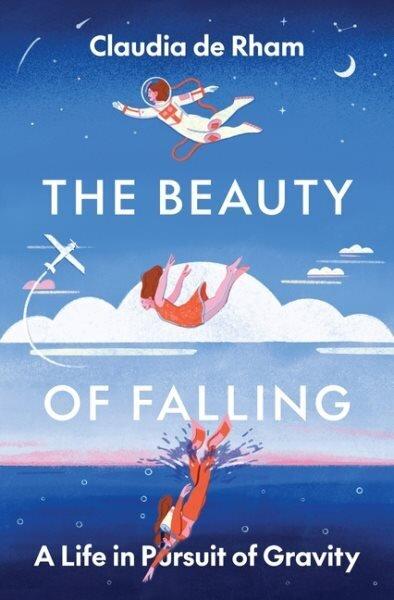
A world-renowned physicist seeks gravitys true nature and finds wisdom in embracing its force in her lifeClaudia de Rham has been playing with gravity her entire life. As a diver, experimenting with her bodys buoyancy in the Indian Ocean. As a pilot, soaring over Canadian waterfalls on dark mornings before beginning her daily scientific research. As an astronaut candidate, dreaming of the experience of flying free from Earths pull. And as a physicist, discovering new sides to gravitys irresistible personality by exploring the limits of Einsteins general theory of relativity. In The Beauty of Falling, de Rham shares captivating stories about her quest to gain intimacy with gravity, to understand both its feeling and fundamental nature. Her lifes pursuit led her from a twist of fate that snatched away her dream of becoming an astronaut to an exhilarating breakthrough at the very frontiers of gravitational physics.While many of us presume to know gravity quite well, the brightest scientists in history have yet to fully answer the simple question: what exactly is gravity? De Rham reveals how great mindsfrom Newton and Einstein to Stephen Hawking, Andrea Ghez, and Roger Penroseled her to the edge of knowledge about this fundamental force. She found hints of a hidden side to gravity at the particle level where Einsteins theory breaks down, leading her to develop a new theory of massive gravity. De Rham shares how her lifes path turned from a precipitous fall to an exquisite flight toward the discovery of something entirely new about our surprising, gravity-driven universe. Autorid: Claudia de Rham
A captivating history of diplomacyand an urgent reminder of why we need to revive its lost arts to survive in a dangerous era of great power competitionFrom the beginning of time, human societies have found themselves confronted by enemies too numerous or ferocious to defeat solely by force of arms. In these dramatic moments, wise leaders have turned to diplomacy to rearrange the gameboard in their favor and stymie seemingly unstoppable foes. In Great Power Diplomacy, American historian and diplomat A. Wess Mitchell recounts the forgotten story of how historys most legendary empires have used diplomacy as a tool of grand strategy to outwit, outmaneuver, and outlast militarily superior opponents.Through fifteen centuries of history, Great Power Diplomacy recreates the perilous junctures, colorful personalities, and intricate statecraft that led to some of historys most stunning diplomatic achievementsand greatest disasters. The protagonists include giants like Richelieu, Metternich, Bismarck, and Kissinger, but also a lesser-known cast of scoundrels, eunuchs, drunkards, and fools. At every turn, fortune favored those great powers with the foresight and dexterity to build winning alliances, splinter enemy coalitions, and, when necessary, make peace with their bitterest foes.Diplomacy of this kind has become a lost art in recent years as Western elites embraced the illusion that globalization and the spread of democracy would create a borderless world where nations would live in harmony and war would be abolished from the human story. But, as Great Power Diplomacy reveals, we will need to rediscover the secrets of skillful statecraft as the world enters an unstable new era in which continent-sized great powers compete for territory, resources, and prestige. By recalling diplomacys rich past, we can equip ourselves for a more dangerous future. Autorid: A. Wess Mitchell
A sweeping account of male nurturing, explaining how and why men are biologically transformed when they care for babies It has long seemed self-evident that women care for babies and men do other things. Hasnt it always been so? When evolutionary science came along, it rubber-stamped this venerable division of labor: mammalian males evolved to compete for status and mates, while females were purpose-built to gestate, suckle, and otherwise nurture the victors offspring. But come the twenty-first century, increasing numbers of men are tending babies, sometimes right from birth. How can this be happening? Puzzled and dazzled by the tender expertise of new fathers around the worldseveral in her own familycelebrated evolutionary anthropologist and primatologist Sarah Blaffer Hrdy set out to trace the deep history of male nurturing and explain a surprising departure from everything she had assumed to be normal.In Father Time, Hrdy draws on a wealth of research to argue that this ongoing transformation in men is not only cultural, but profoundly biological. Men in prolonged intimate contact with babies exhibit responses nearly identical to those in the bodies and brains of mothers. They develop caring potential few realized men possessed. In her quest to explain how men came to nurture babies, Hrdy travels back through millions of years of human, primate, and mammalian evolution, then back further still to the earliest vertebratesall while taking into account recent economic and social trends and technological innovations and incorporating new findings from neuroscience, genetics, endocrinology, and more. The result is a masterful synthesis of evolutionary and historical perspectives that expands our understanding of what it means to be a manand what the implications might be for society and our species. Autorid: Sarah Blaffer Hrdy
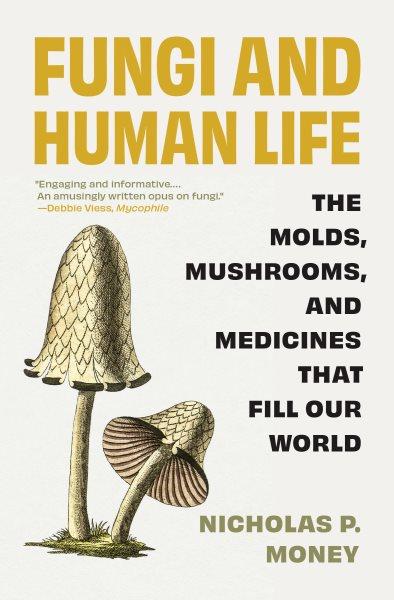
The incredible, hidden role of fungi in our livesFrom beneficial yeasts that aid digestion to toxic molds that cause disease, we are constantly navigating a world filled with fungi. Fungi and Human Life explores the amazing ways fungi interact with our bodies, showing how our health and well-being depend on an immense ecosystem of yeasts and molds inside and all around us.Nicholas Money takes readers on a guided tour of a marvelous unseen realm, describing how our immune systems are engaged in continuous conversation with the teeming mycobiome inside the body, and how we can fall prey to serious and even life-threatening infections when this peaceful coexistence is disturbed. He also sheds light on our complicated relationship with fungi outside the body, from wild mushrooms and cultivated molds that have been staples of the human diet for millennia to the controversial experimentation with magic mushrooms in the treatment of depression.Drawing on the latest advances in mycology, Fungi and Human Life reveals what scientists are learning about the importance of fungi to our lives, from their vital role in supporting the ecosystems on which we depend to their emerging uses in lifesaving medicine. Autorid: Nicholas P. Money