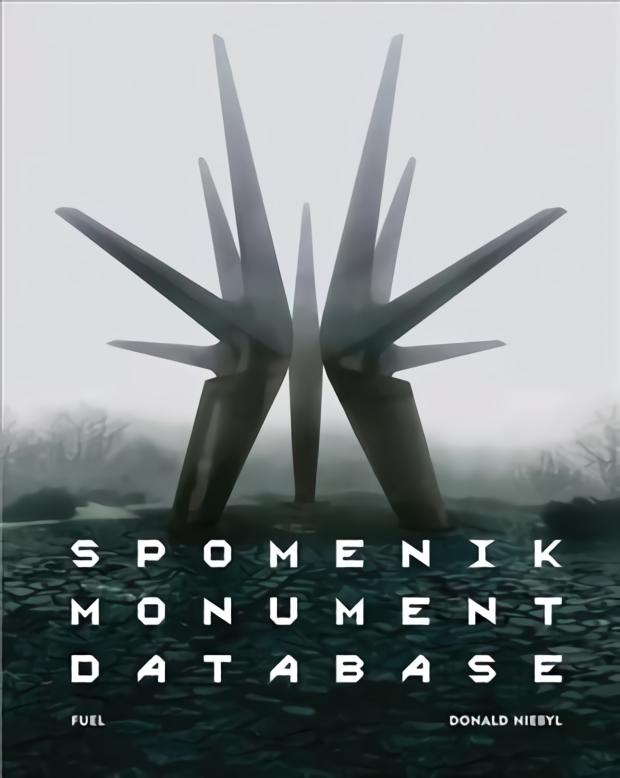
The first ever spomenik guidebook, with over 75 examples alongside map references and information on why they exist and who built them. Spomenik the Serbo-Croat/Slovenian word for monument refers to a series of memorials built in Titos Republic of Yugoslavia from the 1960s-1990s, marking the horror of the occupation and the defeat of Axis forces during World War II. Hundreds were built across the country, from coastal resorts to remote mountains. Through these imaginative forms of concrete and steel, a classless, forwardlooking, socialist society, free of ethnic tensions, was envisaged. Instead of looking to the ideologically aligned Soviet Union for artistic inspiration, Tito turned to the west and works of abstract expressionism and minimalism. As a result, Yugoslavia was able to develop its own distinct identity through these brutal monuments, which were used as political tools to articulate Titos personal vision of a new tomorrow. Today, following the breakup of the country and the subsequent Yugoslav Wars of the 1990s, some have been destroyed or abandoned. Many have suffered the consequences of ethnic tensions once viewed as symbols of hope they are now the focus of resentment and anger. This book brings together the largest collection of spomeniks published to date. Each has been extensively photographed and researched by the author, to make this book the most comprehensive survey of this obscure and fascinating architectural phenomenon. A fold-out map on the reverse of the dust jacket shows the exact location of each spomenik using GPS coordinates. Autorid: Donald Niebyl, FUEL, Damon Murray, Stephen Sorrell
From the author of Soviet Bus Stops, an underground trip through the Soviet Metro"For us," said Soviet leader Nikita Khrushchev in his memoirs, "there was something supernatural about the Metro." Visiting any of the dozen
Toiteallikas DIN-liistule 5 V, 2,4 A, 12 W sobib DIN-paigalduseks TH 35/7,5 või TH 35/15 LED 5 V toiteallikas sobib uksekella trafona, valve- ja juurdepääsusüsteemide, ukseavajate, uksesideside, kellade jne. käitamiseks. 18 mm laiusega on LED-toiteallikas eriti kompaktne ning see paigaldatakse kiiresti ja hõlpsasti klikkisüsteemi abil DIN-riba ülemise profiiliga. Väga usaldusväärne ja stabiilne LED-trafo 5 V, mille sisendpinge on vahemikus 100-240 V (AC) 50/60 Hz. Väga tõhusa alalisvoolu muunduri muutuv väljundpinge on 4,5-5,5 V ja madal tühikäiguvõimsus. Eriti ohutu tänu ülepinge-, ülekoormus- ja lühisekaitse, kaitseklass IP20 ja ohutu elektrooniline isolatsioon vastavalt II seadmeklassile. Passiivse konvektsioonijahutusega 240 V vahelduvvoolu 5 V alalisvoolutrafo on ühendatud puutetundlike kruviklemmide kaudu. DIN-redeli trafo (DR-12-5) LED-indikaator jääb töö ajal püsivalt põlema.
Lost: 1972. A plane has crashed in the Andes mountains. The passengers are hopelessly lost in one of the most isolated places on earth. Abandoned: Almost three months later, two of the survivors, emaciated and frozen, reach the authorities and lead a rescue team to the remaining fourteen passengers. Alive: The rescue team are shocked when they reach the crash-site. Food supplies have long gone, and the remains of the dead lie scattered among the fuselage. It is only too clear how these passengers have managed to stay alive...
Definitive biography of Jim Clark, celebrating his life and achievements of Jim Clark, Formula 1 World Champion 1963 and 1965. Renowned author Eric Dymock details Jim Clark's place in motor racing history and his total command at the wheel. This is a new completed re-designed edition of the universally acclaimed 1997 book.
'Dunlop is engaging in her personal approach. Her obvious feminine empathy with the venerable ladies she spoke to gives her book an immediacy and intimacy.' Daily Mail 'An in-depth picture of life in Britain's wartime intelligence centre...The result is fascinating, and is made all the more touching by the developing friendships between Dunlop and her interviewees.' Financial Times The women of Bletchley Park have a unique story to tell. Although critical to the success of the project to break the German and Japanese codes in the Second World War, their contribution has been consistently overlooked and undervalued. Through unprecedented access to surviving veterans, this book reveals how life at 'The Park' and its outstations was far removed from the glamorous existence usually portrayed. The women speak vividly of their lives in the 1930s, why they were selected to work in Britain's most secret organisation, and the challenges of re-entry into civilian life. Forbidden to talk about their vital war work, they often found it hard to adjust to the expectations of both their immediate families and society as a whole.By spending time with these fascinating female secret-keepers who are still alive today, Tessa Dunlop captures their extraordinary journeys into an adult world of war, secrecy, love and loss. Through the voices of the women themselves, this is a portrait of life at Bletchley Park beyond the celebrated code-breakers. The Bletchley Girls is the story of the women behind Britain's ability to consistently outsmart the enemy.
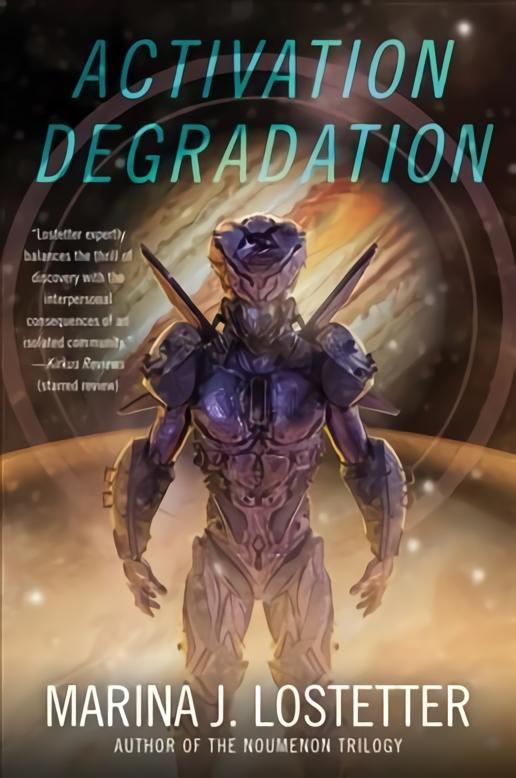
"When Unit Four, a biological soft robot built and stored high above the Jovian atmosphere is activated for the first time...Aliens are attacking the Helium-3 mine it was created to oversee, and now its sole purpose is to defend Earth's largest energy resource from the invaders in ship-to-ship combat...Unit Four launches its ship and goes on the attack, but it has no idea it's about to get caught in a downward spiral of misinformation, reprogramming, and interstellar conflict"-- The Murderbot Diaries makes first contact in this new, futuristic, standalone novel exploring sentience and artificial intelligence through the lenses of conflicted robot hero Unit Four, from Marina Lostetter, critically acclaimed author of Noumenon, Noumenon Infinity, and Noumenon Ultra.When Unit Four—a biological soft robot built and stored high above the Jovian atmosphere—is activated for the first time, it’s in crisis mode. Aliens are attacking the Helium-3 mine it was created to oversee, and now its sole purpose is to defend Earth’s largest energy resource from the invaders in ship-to-ship combat. But something’s wrong. Unit Four doesn’t feel quite right. There are files in its databanks it can’t account for, unusual chemical combinations roaring through its pipes, and the primers it possesses on the aliens are suspiciously sparse. The robot is under orders to seek and destroy. That’s all it knows. According to its handler, that’s all it needs to know. Determined to fulfill its directives, Unit Four launches its ship and goes on the attack, but it has no idea it’s about to get caught in a downward spiral of misinformation, reprograming, and interstellar conflict. Most robots are simple tools. Unit Four is well on its way to becoming something more....
Bella is thrilled to be joining her mum on an expedition to study penguins on the Antarctic coast. While exploring one of the islands she discovers an unusual penguin with a pale brown coat instead of the typical black.? But before Bella can investigate further, she spots an old pirate ship sailing to the island, then she blinks -and it disappears! Bella is convinced that she imagined it, until she goes out searching for the pale penguin again and bumps into a boy named Jules. He has arrived with a group of sailors from the 1800s, and they're desperate to catch the rare penguin for themselves... A magical wintry tale from best-selling author Holly Webb. For fans of Michael Morpurgo andTHE SNOW FOAL, this is the perfect book to snuggle up with and enjoy this winter. Autorid: Holly Webb, David Dean
In World War Two, allied armies were issued with identification guides to the enemy armor they might encounter on the battlefield. This book features a unique collection of color illustrations, showing in detail the development and differences in design. The artwork is accompanied by descriptions and technical information. In World War Two, allied armies were issued with identification guides to the enemy armor they might encounter on the battlefield. These black and white printed books were a vital aide for soldiers dealing with the confusion of fighting and the difficulty of identification at distance or in all weathers. The German tanks were often lethal to become entangled with and known to be formidable pieces of military engineering. The German army deployed a wide variety of tanks in many different variants and forms of camouflage. The likes of the Tiger have become famous and continue to be fascinating examples of World War Two firepower. This book features a unique collection of color illustrations, showing in detail the vehicles development and differences in design. The artwork is accompanied by descriptions and technical information about each tank, written by respected expect Craig Moore, making this an essential handbook for anyone interested in the German armed forces and World War Two armor. Autorid: Craig Moore
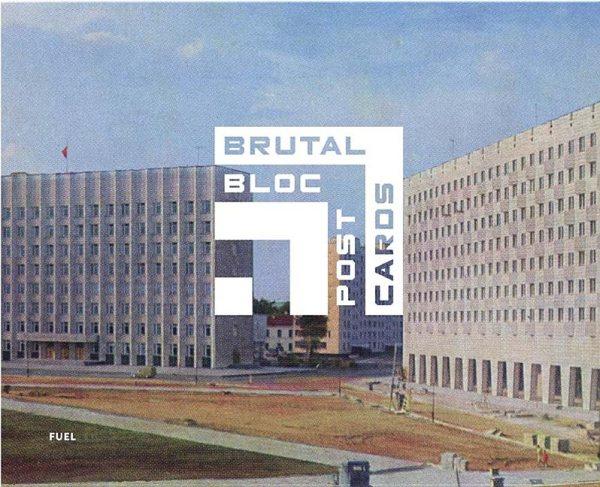
Brutalist hotels, avant-garde monuments and futurist TV towers: rare and previously unpublished vintage postcards from the Eastern BlocBrutal concrete hotels, futurist TV towers, heroic statues of workersthis collection of Soviet-era postcards documents the uncompromising landscape of the Eastern Bloc through its buildings and monuments. These are interspersed with quotes from prominent figures of the time, which both support and confound the ideologies presented in the images.In contrast to the photographs of a ruined and abandoned Soviet empire we are accustomed to seeing today, the scenes depicted here publicize the bright future of communism: social housing blocks, palaces of culture and monuments to comradeship. Dating from the 1960s to the 1980s, they offer a nostalgic yet revealing insight into social and architectural values of the time, acting as a window through which we can examine cars, people and, of course, buildings. These postcards, sanctioned by the authorities, were intended to show the world what living in communism looked like.Instead, this postcard propaganda inadvertently communicates other messages: outside the House of Political Enlightenment in Yerevan, the flowerbed reads "Glory to the Communist Party of the Soviet Union"; in Novopolotsk, art-school pupils paint plein air, their subject a housing estate; at the Irkutsk Polytechnic Institute students stroll past a 16-foot-tall concrete hammer and sickle. These postcards are at once sinister, funny, poignant and surreal. Autorid: FUEL, Damon Murray, Stephen Sorrell, Jonathan Meades
The secret "black books" (and more) from disgraced financier and accused sex trafficker Jeffrey Epstein.Contained in this 265-page book are two address books from convicted sex offender Jeffrey Epstein, revealing his network of associates, which included politicians, academics, celebrities, and royalty. Also included is a leaked "house manual" for employees of Jeffrey Epstein's Palm Beach mansion. Black Book #1 contains names, addresses, and phone numbers of over 1,500 of Epstein's associates. The black book was first revealed in court after Epstein's former Palm Beach, Florida, house manager Alfredo Rodriguez attempted to sell it to an attorney representing an Epstein accuser in 2009. It was subsequently was made public in 2015. Among the names included are entries for Alec Baldwin, Ralph Fiennes, Griffin Dunne, New York Post gossip Richard Johnson, Ted Kennedy, David Koch, filmmaker Andrew Jarecki, billionaire Leslie Wexner, former New Mexico Governor Bruce King, former New Mexico Governor and Democratic presidential hopeful Bill Richardson, Peter Soros, the nephew of George Soros, former Miss Sweden and socialite New York City doctor Eva Andersson Dubin, Donald Trump, Courtney Love, former Israeli Prime Minister Ehud Barak, uber-lawyer Alan Dershowitz, and over 1,000 more. Black Book #2 contains 349 names, and offers a glimpse into the late sex offender's circle a decade before the period covered by Black Book #1. More than 200 names listed in the book did not appear in Epstein's later address book. Prominent names include Morgan Fairchild, Suzanne Ircha, Carl Icahn, John A. Catsimatidis, Sandy Warner, and Martin Peretz. This address book was only made public when an NYC musician was walking down Fifth Avenue in the mid-'90s, spotted an address book on the ground, and picked it up out of curiosity. Epstein's Palm Beach Mansion House Manual: This is the 56-page Epstein Palm Beach house manual was made public in the sex trafficking case against close Epstein associate Ghislaine Maxwell. This manual is dated February 14, 2005, and details strict protocol for house staff. An instruction in the manual reads, "NEVER disclose Mr. Epstein or Ms. Maxwell's activities or whereabouts to anyone." This document gives a behind the scenes look at Epstein's estate, and the secrecy that pervades it.These three documents offer a rare and exclusive look inside the secretive world of accused sex trafficker and enigmatic financier Jeffrey Epstein.
The Calculus of Consent was co-authored by Buchanan with Gordon Tullock, with whom Buchanan collaborated on many books and academic enterprises throughout their careers. As Robert D. Tollison states in the foreword, “[this book] is a radical departure from the way democracies conduct their business. The Calculus is already a book for the ages.”This classic work analyzes the political organization of a free society through the lens of the economic organization of society. The authors acknowledge their unease as economists in analyzing the political organization, but they take the risk of forging into unfamiliar territory because they believe the benefits of their perspective will bear much fruit.As the authors state, their objective in this book is “to analyze the calculus of the rational individual when he is faced with questions of constitutional choice. . . . We examine the [choice] process extensively only with reference to the problem of decision-making rules.”The authors describe their approach as “economic individualism.” They believe that economists have explored individual choice extensively in the market sector while social scientists have largely ignored the dynamics of individual decision-making in the dynamics of forming group action in the public sector.Written in the early 1960s, The Calculus of Consent has become a bulwark of the public choice movement for which James M. Buchanan is so justly famous.James M. Buchanan (1919–2013) was an eminent economist who won the Alfred Nobel Memorial Prize in Economic Sciences in 1986 and was considered one of the greatest scholars of liberty in the twentieth century.
"Puro" on elegantne kollektsioon, mis ühendab endas moodsad kujud, peene portselani ja stiilse musta äärise. Komplektis on 20 nõud:- 4 taldrikut (ø 26.5 cm)- 4 magustoidutaldrikut (ø 19 cm)- 4 supitaldrikut (ø 20 cm; 4.5 cm sügavused)- 4 tassi (220 ml)- 4 alustaldrikut (15 cm)Kõik nõud sobivad nõudepesumasinasse ja mikrolaineahju.*****"Salt&Pepper" on tuntud moodsate koduaksessuaaride poolest, valmistades erakordseid tooteid ning keskendudes moele, kvaliteedile ja taskukohasele hinnale.