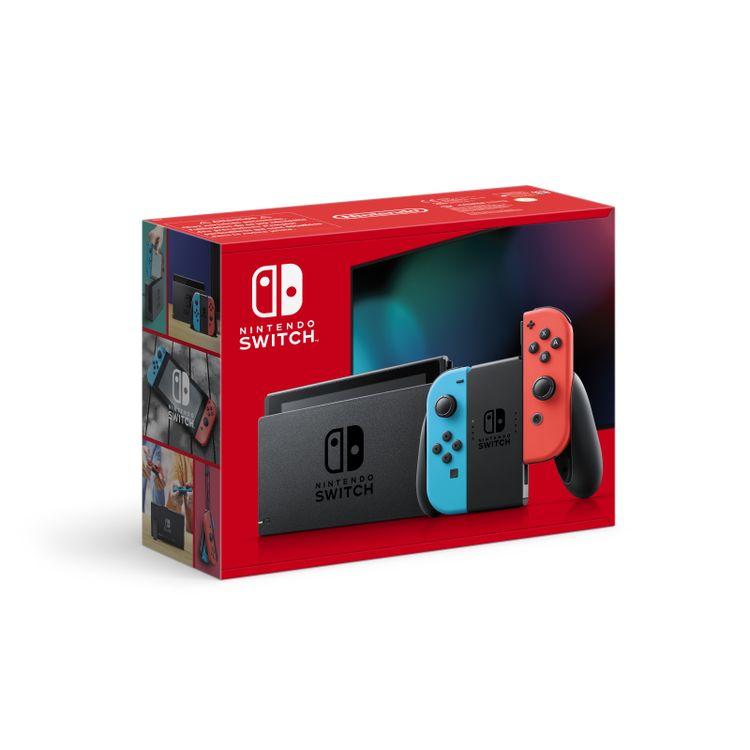
Nintendo Switch verbindet die Mobilität eines tragbaren Systems mit der Leistungsstärke einer TV-Konsole und eröffnet damit nie dagewesene Spielerlebnisse. Im heimischen Wohnzimmer steht die neue Konsole in der Nintendo Switch-Station, die das Gerät mit dem Fernseher verbindet – perfekt für das gemütliche Spiel mit Familie und Freunden vom Sofa aus. Nimmt man die Nintendo Switch aus der Station heraus, wechselt die Konsole sofort in den Handheld-Modus. So können Nintendo-Fans den selben Spielspaß auch unterwegs genießen. Der in die Konsole integrierte, helle HD-Bildschirm sorgt dabei für eine optimale Spielerfahrung wie am Fernseher – somit auch im Park, im Zug, im Auto oder bei einem anderen Nintendo-Freund zu Hause. Und weil geteilter Spielspaß doppelter Spielspaß ist, lassen sich die Joy-Con-Controller, die an beiden Seiten der Konsole angebracht sind, von Nintendo Switch lösen. Das ermöglicht die unterschiedlichsten Spielkombinationen: ein Spieler mit je einem Joy-Con-Controller in jeder Hand, zwei Spieler mit je einem oder viele Spieler mit mehreren Joy-Con-Controllern. So leicht sie sich abnehmen lassen, so leicht kann man die Controller auch wieder anbringen, ob an der Konsole oder an der Joy-Con-Halterung, die einem traditionellen Controller ähnelt. Wer mag, kann neben den Joy-Con-Controllern auch den optionalen Nintendo Switch Pro Controller verwenden. Damit nicht genug, können die Spieler mehrere Nintendo Switch-Konsolen lokal miteinander verbinden. Auch das steigert die fesselnde Mehrspieler-Action. Nintendo Switch bietet auch verschiedene eingebaute Funktionen, die das Spielen interaktiver machen. So besitzt der linke Joy-Con einen Aufnahmeknopf, mit dem Spieler Bildschirmfotos machen und diese in den sozialen Netzwerken teilen können. Der rechte Joy-Con besitzt wiederum einen NFC-Kontaktpunkt, um amiibo zu nutzen, sowie eine Infrarot-Bewegungskamera, die in speziell entwickelten Spielen Entfernung, Gestalt und Bewegung von Objekten in der Nähe erkennen kann.
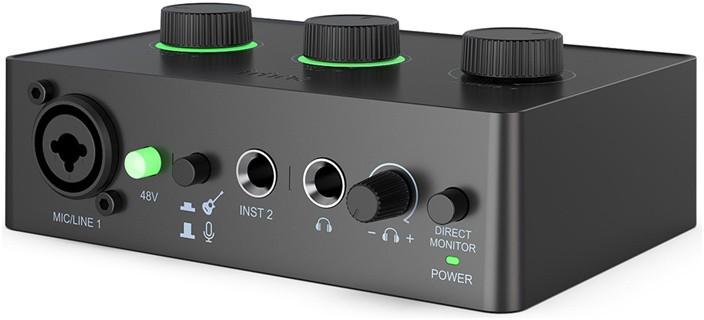
Fifine Ampli 1 audio interfaceThe Fifine Ampli 1 is a compact audio interface that works well in a home recording studio, as well as for creating podcasts, live broadcasts, or working with instruments. Ampli 1 works with Windows computers, macOS, and Android mobile devices. Connection is via a plug-and-play USB-C port - there is no need to install additional drivers. On the rear panel, you will find stereo (L/R) outputs for connecting studio monitors and a USB port for power and data transfer. It is ideal for those looking for a functional and easy-to-use tool for high-quality audio recording.Fifine audio interface on a desk next to a laptop and monitorsFull support for studio microphonesThe Ampli 1 features an XLR/TRS combo input with the option to enable 48V phantom power, which means full compatibility with professional condenser microphones. The built-in 50 dB amplifier lets you get a strong, clean signal even from quieter sources. Whether you are recording vocals or a podcast, the sound will be dynamic and clear.Studio microphones and audio interface on a bright deskSupport for microphones and instruments at the same timeIn addition to a microphone input, the Ampli 1 also offers two jack connectors (INST) that allow you to record instruments - such as a guitar or MIDI keyboard - simultaneously. A source selector switch lets you easily control which input you use, greatly simplifying your work with different audio sources.Audio interface on a desk next to headphones, monitor, and microphoneMonitoring without delay - full control over your recordingThe interface is equipped with a direct monitoring function, so you can listen to the sound without any delay. A dedicated knob allows you to adjust the monitoring volume in real time - especially important when recording vocals or live instruments.A man wearing headphones uses an audio interfaceLED indicators - easy level managementEach of the three main knobs (microphone, instrument, output) has a built-in LED indicator that shows the current volume level. A green light indicates a safe level, yellow indicates approaching overload, and red indicates an overloaded signal. This allows you to react quickly and avoid unwanted distortion in your recording.Close-up of an audio interface lying on a desk with LED indicatorsIncluded audio interface USB cable user manual
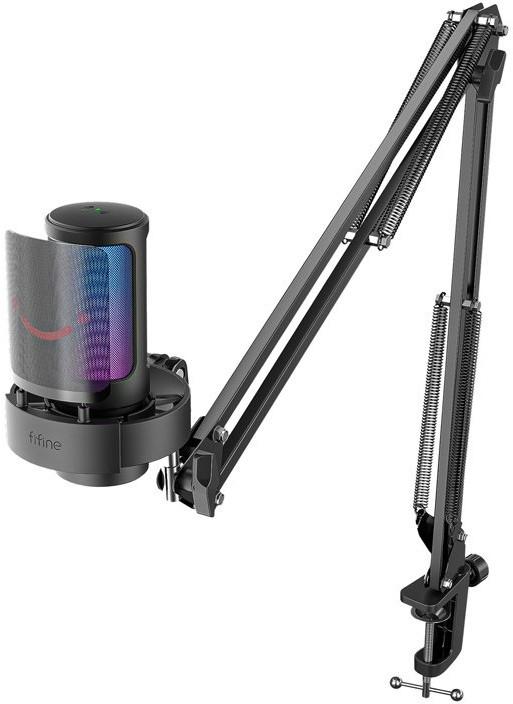
Fifine A8T condenser microphone with handle (black)The FIFINE AmpliGame A8T is a cardioid condenser microphone designed for gamers, streamers and creators who want to combine great sound with modern aesthetics. The model offers multi-color RGB backlighting with a dedicated button, so you can effortlessly match the colors to your gaming or streaming station. The lighting makes the A8T a distinctive part of the setup and emphasizes the nature of the broadcast - especially when ambience and visual consistency are important.Professional recording qualityThe FIFINE AmpliGame A8T microphone delivers clear and dynamic sound with its -40 dB sensitivity, 48 kHz sample rate and wide 50 Hz-20 kHz frequency response. The cardioid characteristic accurately captures voice while reducing unwanted ambient sounds. A multi-layered noise cancellation system - including a pop filter and anti-shake assembly - eliminates crackling and explosive voices, so recordings remain clear regardless of speaking style. It's ideal for streaming, gaming, podcasting and everyday communication.Full recording controlThe FIFINE AmpliGame A8T provides convenient real-time audio control. A touch-sensitive mute button with light indication (green - active, red - muted) allows you to react quickly during recording or conversations. A gain knob allows infinite adjustment of the microphone's sensitivity, and a 3.5mm jack provides lag-free listening to keep you in complete control of the sound. The RGB button makes it easy to switch color modes in one motion.Stable and adjustable armIncluded with the FIFINE AmpliGame A8T, you get an all-metal, heavy-duty C-clamp microphone arm that guarantees stability even during heavy use. The sag-resistant and slip-resistant design provides secure support, and the arm's flexibility allows you to set the perfect position with 360° rotation, 180°/135° tilt and two segments of 13 inches each. The 2.1 × 2.1 × 3.4-inch clamp supports most desktop surfaces, even those as thin as a credit card.Versatile compatibilityThe FIFINE AmpliGame A8T microphone works in plug-and-play mode, so it doesn't need additional drivers - just connect it via USB-C or USB-A. It is compatible with PCs and laptops, PS4/PS5 consoles, as well as smartphones. It supports popular platforms and applications, including Windows, macOS, YouTube, TikTok, Discord, OBS, Streamlabs and Twitch. The only limitation is the lack of compatibility with Xbox consoles. This wide range of interoperability makes the A8T suitable for almost any creative environment.Built for streamingThe A8T is a microphone designed with creators in mind - it is used by more than 100,000 streamers and 300 professional e-sports players, and FIFINE boasts numerous international awards and the support of millions of fans around the world. The product is available in more than 150 countries, confirming the global trust of users. In addition, it is distinguished by sustainability certifications - including the use of 50% recycled materials and manufacturing in accordance with chemical safety and worker protection.Reliable support and convenienceAlong with the FIFINE AmpliGame A8T microphone, you get easy access to detailed instructions, free technical support and fast delivery through Amazon. The manufacturer provides stable performance, high reliability and expert product advice - making the use of the microphone convenient for both beginners and experienced developers.IncludedFIFINE AmpliGame A8T condenser microphoneUSB-A to USB-A/C cable (8.2 ft)Microphone arm with metal construction and C-clampPop filterUser manual ManufacturerFIFINEModelA8TTypeCardioid condenser microphonePower sourceWired (electric)MaterialABS, metalSignal-to-noise ratio70 dBHardware platformLaptop, PC, PS4/PS5Response frequency20 kHzConnectivityUSB (USB-C/A)Connector typeUSBWeight2.46 lb (~1.1 kg)
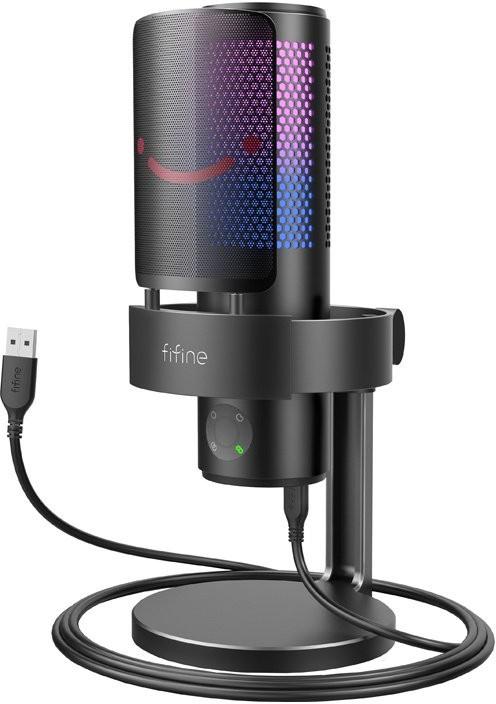
Fifine A9 studio microphone with stand (black)The FIFINE A9 is a studio condenser microphone designed for creatives who want complete control over their sound and want to record in a variety of scenarios without having to change equipment. Its sensitive diaphragm accurately processes sound waves, capturing even the subtle nuances of voice and instruments. This makes the FIFINE A9 microphone perfect for professional recording, podcasting, streaming or music production, ensuring clear, natural and detailed sound.Full Directionality ControlThe FIFINE A9 features up to four switchable directional characteristics, so you can adjust the way you record to suit your specific situation. Cardioid ideally isolates the recording voice, suppressing unwanted sounds from behind the microphone - great for vocals, podcasts and streaming. Omni-directional characteristics will work well for group recordings and ambient sounds. The figure-eight layout allows for natural capture of face-to-face conversations, and the stereo mode allows you to create spacious, realistic recordings that capture the ambience of a room or instrument.Precision and Sound StabilityThe FIFINE A9 provides high quality recording with parameters optimized for studio work. Sensitivity of -45±3 dB and a frequency range of 50-20 kHz allow capturing both warm lows and clear highs. A signal-to-noise ratio of >70 dB minimizes unwanted noise, and a maximum sound pressure of 115 dB allows recording louder sources without overdrive. As a result, the FIFINE A9 offers stable, clean and professional sound for all applications.Universal Studio EquipmentThe FIFINE A9 microphone is an ideal choice for creators looking for a single, versatile tool for audio work. It will work well for recording vocals, instruments, interviews, ASMR, podcasts or social media content. Its wide dynamic range, as well as 44.1-48 kHz sampling and 16-bit depth, allow you to create studio-quality recordings without the need for additional equipment. It's a robust, multi-tasking solution for those who want full control over the sound in any project.IncludedFIFINE A9 USB microphoneDesk standUSB - Type-C cablePop filter with handleUser manual ManufacturerFifineModelA9TypeCondenser microphoneTypeCapacitorFrequency range50-20 kHzSensitivity-45 ± 3 dBSignal-to-noise ratio>70 dBMax SPL115 dBSampling frequency44.1-48 kHzBit depth16 bitDirectional characteristicsCardioid, omnidirectional, octal, stereo
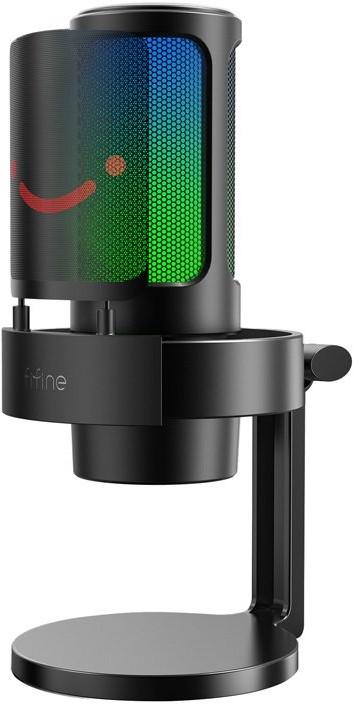
Fifine A8 condenser microphone with stand (black)The Fifine A8 is a USB condenser microphone designed for gamers, streamers, podcasters and anyone who wants to sound clear without complicated equipment. It offers clear, clean sound and a modern design with colorful RGB backlighting. It features a sturdy metal stand, a pop filter, an anti-shake handle and a volume control knob and headphone output. The microphone works on a plug & play basis - just connect it via USB-C, with no need to install additional drivers. It fits PCs, Macs, as well as PS4 and PS5 consoles.Clear sound and effective noise cancellationThe cardioid directional characteristic used in the microphone makes the device focus on your voice, ignoring sounds from the side and behind. The built-in pop filter reduces noise from such voices as "p" and "b", making your voice sound natural and distortion-free. This is a practical solution, especially during dynamic conversations, live broadcasts or recording footage.Vibration suppression and stable designThe microphone is mounted in an anti-shock mount with silicone elements that reduce vibrations that arise, for example, when tapping on a desk or keyboard. The whole thing rests on a heavy metal stand, which keeps the microphone stable in one place. In addition, a rubber finish underneath prevents the device from sliding and protects the tabletop from scratches.Colorful backlightingThe Fifine A8 is equipped with RGB backlighting with a smooth color transition effect. It's an aesthetically pleasing addition that fits in well with a gaming workstation. However, the light can be turned off at any time using a dedicated button - independent of the microphone operation.Easy control and convenient connectionThere is a microphone volume control knob on the chassis, so you can quickly set the appropriate recording level. A 3.5mm headphone jack is placed next to it, allowing you to monitor your voice in real time. The microphone connects via a USB-C cable, which provides a stable connection and works with most devices - from computers to laptops to PlayStation consoles.IncludedMicrophone (including base, anti-vibration mount and pop filter)Pivot mount with adapterUSB-C to USB cable (2m)user manual ManufacturerFifineModelA8ColorblackMicrophone typecondenser, cardioidVoltage5VCurrent200 mAOutputUSBSensitivity-40 ± 3 dBFrequency response50 Hz - 20 kHz
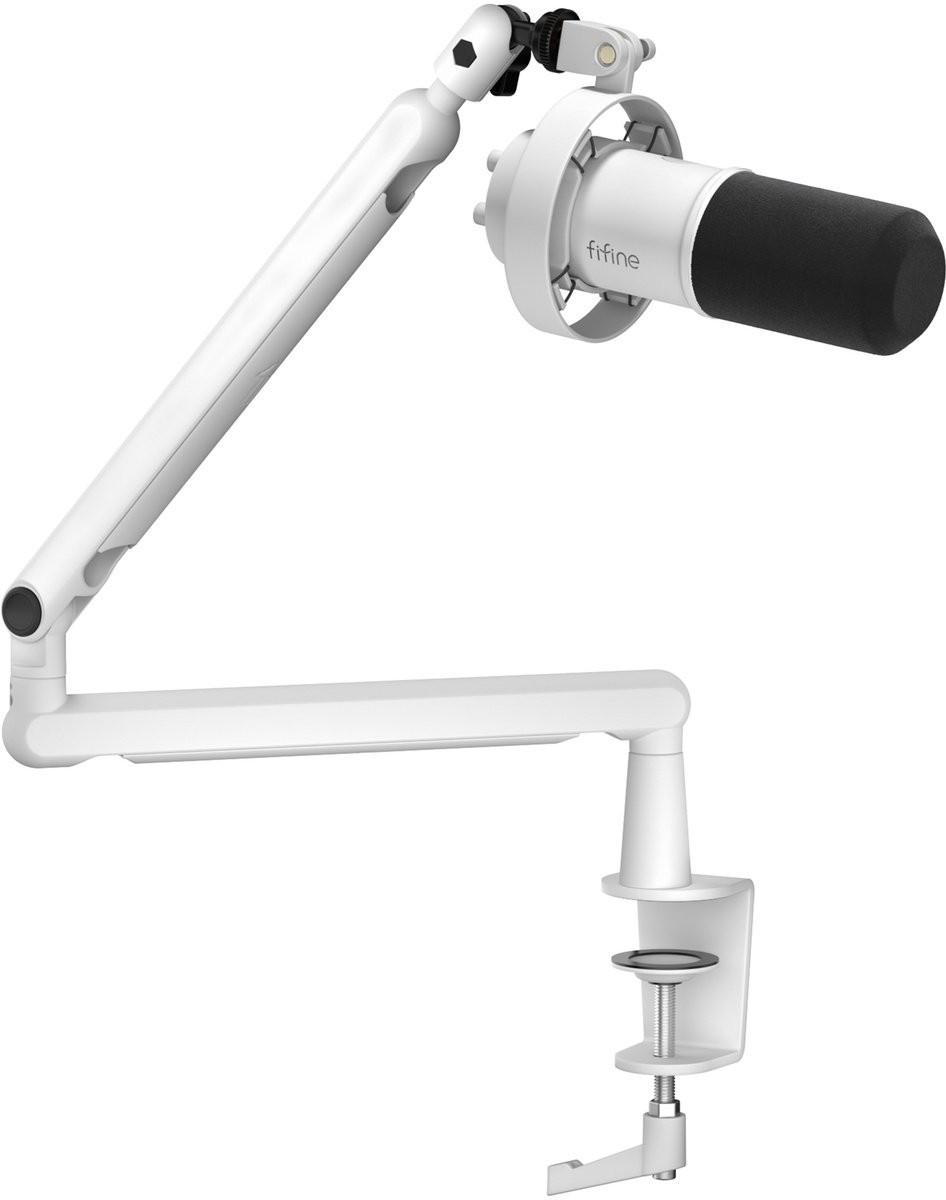
Fifine T688W dynamic microphone (white)The Fifine K688W is a dynamic cardioid microphone that offers clear and clean sound. With dual USB-C and XLR connectivity, you can use it with both a computer and professional audio equipment. You'll also find a low-profile microphone arm included, which makes it easy to properly position your equipment while working and helps keep your workstation tidy.Stable sound thanks to dynamic designThe dynamic transducer is immune to interference and allows for clear sound. In addition, the cardioid directional characteristic focuses on the sound source in front, reducing the influence of unwanted background noises. All this makes the K688W perfect for video conferencing, streaming or recording podcasts!Dual USB-C and XLR outputDual connectivity makes the K688W fit for every stage of creative work. USB-C allows a quick connection to a computer or console, while XLR opens the way to use the microphone together with a mixer or other professional audio equipment. One device - two different ways of working!Full controlOn the bottom of the T688W you'll find a gain control knob, a monitoring volume knob and a 3.5mm headphone output for audio monitoring. All of these are easily accessible and help you fine-tune your settings. What's more,additional button allows you to instantly mute the microphone with a single touch. This is a convenient solution during live recordings, meetings or streams.Anti-shock mount and microphone armThe microphone has a factory-installed anti-shake mount, which helps reduce the transmission of vibrations and oscillations. This ensures that sound always remains clear and stable. In addition, the included arm allows the unit to be positioned at any angle. The 360° adjustment allows you to adjust the position of the microphone for recording, streaming or conversations, and the integrated cable management system helps keep your desk tidy.IncludedMicrophone with anti-shock mountUSB cableMicrophone armDesk mountSwivel ball head1/4" to 3/8" adapter3/8" to 5/8" adapterAllen wrenchUser manual ManufacturerFifineModelK688WTypeDynamicDirectional characteristicCardioidPortsUSB-C, XLRPower supply5 V ±0.25 VSignal-to-noise ratio> 75 dBSensitivity-58 dB ±3 dBVolume controlYes, with a knobLive monitoringYes, via 3.5 mm jack portMonitoring volume controlYes, via rotary knobArm modelBM88Arm materialMetalMax load on the arm≤ 1.5 kgArm length when extended740 mmColorWhite
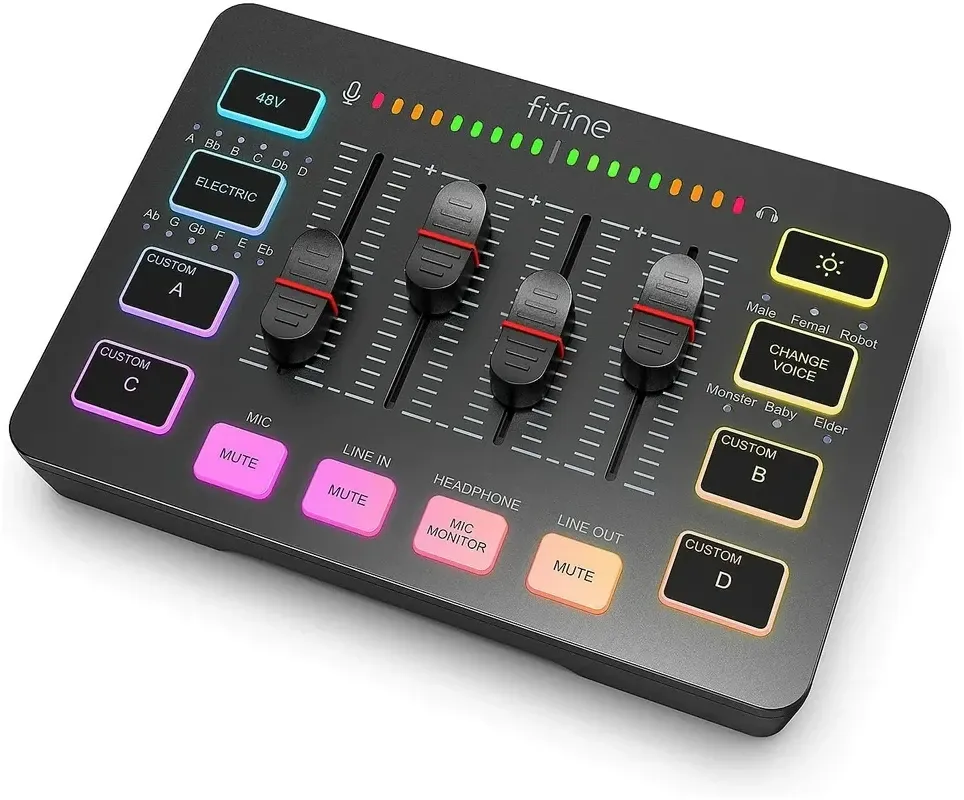
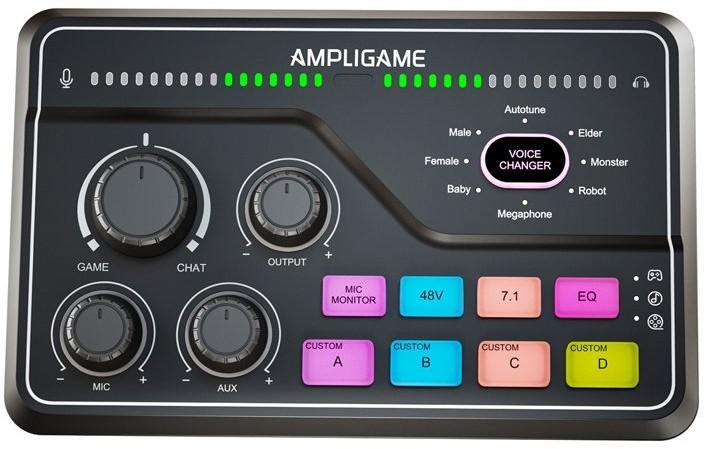
Fifine SC8 RGB gaming mixer (black)The Fifine SC8 RGB is a gaming audio mixer designed for streamers, gamers and creators who need full control over their sound in real time. The unit offers separate knobs for microphone, chat, game, output and AUX control, so you can easily adjust volume levels for any situation - from dynamic gameplay to professional calls and live broadcasts. The mixer works seamlessly with both PC and PlayStation, allowing you to handle multiple audio sources without having to change settings on your system.Advanced recording featuresThe Fifine SC8 RGB offers full support for XLR microphones and 3.5mm headsets. 50 dB of gain and 48-volt phantom power enable you to record a clear, crisp voice, even when using a more demanding condenser microphone. Three EQ modes further enhance the sound, and the built-in 8 voice modulation effects allow you to change the timbre in real time - from male and female voice, to baby effect, to robot or megaphone. It's a tool that will easily bring your recordings to the next level of creative control.Dedicated gaming featuresThe Fifine SC8 RGB is equipped with an Optical In connector, guaranteeing clear, stable sound from PlayStation 4 and PlayStation 5 consoles. With the Game/Chat Mix function, you gain full control over the balance of communication and game sounds - perfectly adjust the ratio to keep your team fully audible without losing the immersive sound of gameplay. The mixer also allows you to improve the quality of older headsets, taking their sound to a higher quality through headphone processing and amplification.Extensive customization optionsThe SC8 RGB version offers four programmable buttons that you can assign to your own sound samples or functions. With dedicated software, you gain access to EQ editing, channel mixing and detailed RGB configuration. The interface allows you to edit colors, animations and backlight intensity, creating a unique atmosphere for your workstation. The mixer combines the functionality of a professional audio device with modern gaming style.Studio-level sound qualityThe Fifine SC8 RGB supports 24-bit recording with sampling rates up to 48 kHz, providing high detail and clarity. The integrated DAC offers 38 mW output power at 32 ohms, ensuring clear, dynamic listening even on more demanding headphones. In turn, low noise and a high signal-to-noise ratio translate into clear, professional sound - both during recording and listening.IncludedFifine SC8 RGB audio mixer3.5mm → 3.5mm audio cableUSB cableUser manual ManufacturerFifineModelSC8Microphone input3-pin XLR / 3.5 mm headsetFrequency response (mic)25-20 kHzSNR (mic)75 dB A+Gain50 dBHeadphone output3.5 mmFrequency response (headphone)20-20 kHzOutput power38 mW @ 32 ohmsSNR (headphone)93 dB A+Line/AUX Input3.5 mm / Optical InFrequency response (Line/AUX)20-20 kHzSNR (Line/AUX)90 dB A+Computer PortsUSB Type-C → USB Type-A 2.0 & Type-CPower supply5 V ± 0.25 V; 500 mABit depth / sampling frequency16-bit / 24-bit; 44.1-48 kHzShipping weight1.0 kg