See artikkel on tervikliku toote (mootorsõiduk) komponent ja see on asendusosa, mis lasub Euroopa liidu disaini või tööstusdisaini režiimi kaitse all. Klient garanteerib ja veendub, et ei tema ega tema edasised kliendid ega alltöövõtjad ei kasuta eelmises lauses viidatud osi muul eesmärgil, kui ainult komplekse toote parandamiseks selle algse kuju (algse välimuse) taastamiseks.
See artikkel on tervikliku toote (mootorsõiduk) komponent ja see on asendusosa, mis lasub Euroopa liidu disaini või tööstusdisaini režiimi kaitse all. Klient garanteerib ja veendub, et ei tema ega tema edasised kliendid ega alltöövõtjad ei kasuta eelmises lauses viidatud osi muul eesmärgil, kui ainult komplekse toote parandamiseks selle algse kuju (algse välimuse) taastamiseks.
See artikkel on tervikliku toote (mootorsõiduk) komponent ja see on asendusosa, mis lasub Euroopa liidu disaini või tööstusdisaini režiimi kaitse all. Klient garanteerib ja veendub, et ei tema ega tema edasised kliendid ega alltöövõtjad ei kasuta eelmises lauses viidatud osi muul eesmärgil, kui ainult komplekse toote parandamiseks selle algse kuju (algse välimuse) taastamiseks.
See artikkel on tervikliku toote (mootorsõiduk) komponent ja see on asendusosa, mis lasub Euroopa liidu disaini või tööstusdisaini režiimi kaitse all. Klient garanteerib ja veendub, et ei tema ega tema edasised kliendid ega alltöövõtjad ei kasuta eelmises lauses viidatud osi muul eesmärgil, kui ainult komplekse toote parandamiseks selle algse kuju (algse välimuse) taastamiseks.
See artikkel on tervikliku toote (mootorsõiduk) komponent ja see on asendusosa, mis lasub Euroopa liidu disaini või tööstusdisaini režiimi kaitse all. Klient garanteerib ja veendub, et ei tema ega tema edasised kliendid ega alltöövõtjad ei kasuta eelmises lauses viidatud osi muul eesmärgil, kui ainult komplekse toote parandamiseks selle algse kuju (algse välimuse) taastamiseks.
See artikkel on tervikliku toote (mootorsõiduk) komponent ja see on asendusosa, mis lasub Euroopa liidu disaini või tööstusdisaini režiimi kaitse all. Klient garanteerib ja veendub, et ei tema ega tema edasised kliendid ega alltöövõtjad ei kasuta eelmises lauses viidatud osi muul eesmärgil, kui ainult komplekse toote parandamiseks selle algse kuju (algse välimuse) taastamiseks.
See artikkel on tervikliku toote (mootorsõiduk) komponent ja see on asendusosa, mis lasub Euroopa liidu disaini või tööstusdisaini režiimi kaitse all. Klient garanteerib ja veendub, et ei tema ega tema edasised kliendid ega alltöövõtjad ei kasuta eelmises lauses viidatud osi muul eesmärgil, kui ainult komplekse toote parandamiseks selle algse kuju (algse välimuse) taastamiseks.
See artikkel on tervikliku toote (mootorsõiduk) komponent ja see on asendusosa, mis lasub Euroopa liidu disaini või tööstusdisaini režiimi kaitse all. Klient garanteerib ja veendub, et ei tema ega tema edasised kliendid ega alltöövõtjad ei kasuta eelmises lauses viidatud osi muul eesmärgil, kui ainult komplekse toote parandamiseks selle algse kuju (algse välimuse) taastamiseks.
See artikkel on tervikliku toote (mootorsõiduk) komponent ja see on asendusosa, mis lasub Euroopa liidu disaini või tööstusdisaini režiimi kaitse all. Klient garanteerib ja veendub, et ei tema ega tema edasised kliendid ega alltöövõtjad ei kasuta eelmises lauses viidatud osi muul eesmärgil, kui ainult komplekse toote parandamiseks selle algse kuju (algse välimuse) taastamiseks.
See artikkel on tervikliku toote (mootorsõiduk) komponent ja see on asendusosa, mis lasub Euroopa liidu disaini või tööstusdisaini režiimi kaitse all. Klient garanteerib ja veendub, et ei tema ega tema edasised kliendid ega alltöövõtjad ei kasuta eelmises lauses viidatud osi muul eesmärgil, kui ainult komplekse toote parandamiseks selle algse kuju (algse välimuse) taastamiseks.
See artikkel on tervikliku toote (mootorsõiduk) komponent ja see on asendusosa, mis lasub Euroopa liidu disaini või tööstusdisaini režiimi kaitse all. Klient garanteerib ja veendub, et ei tema ega tema edasised kliendid ega alltöövõtjad ei kasuta eelmises lauses viidatud osi muul eesmärgil, kui ainult komplekse toote parandamiseks selle algse kuju (algse välimuse) taastamiseks.
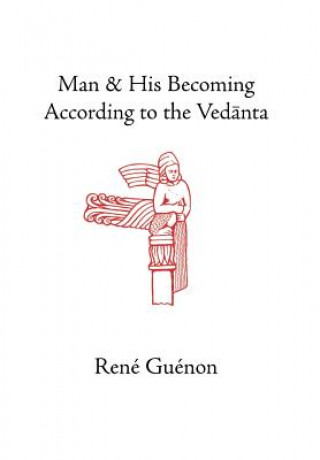
Guénon published his fundamental doctrinal work, Man and His Becoming according to the Vedanta, in 1925. After asserting that the Vedanta represents the purest metaphysics in Hindu doctrine, he acknowledges the impossibility of ever expounding it exhaustively and states that the specific object of his study will be the nature and constitution of the human being. Nonetheless, taking the human being as point of departure, he goes on to outline the fundamental principles of all traditional metaphysics. He leads the reader gradually to the doctrine of the Supreme Identity and its logical corollary-the possibility that the being in the human state might in this very life attain liberation, the unconditioned state where all separateness and risk of reversion to manifested existence ceases. Although Guénon chose the doctrine of the Advaita school (and in particular that of Shankara) as his basis, Man and His Becoming should not be considered exclusively an exposition of this school and of this master. It is, rather, a synthetic account drawing not only upon other orthodox branches of Hinduism, but not infrequently also upon the teachings of other traditional forms. Neither is it a work of erudition in the sense of the orientalists and historians of religion who study doctrines from the 'outside', but represents knowledge of the traditionally transmitted and effective 'sacred science'. Guénon treats other aspects of Hinduism in his Introduction to the Study of the Hindu Doctrines and Studies in Hinduism.
Paying for a peerage - an illegal practice - feels like a very modern form of corruption, one that both the Labour and Conservative parties have been happy to indulge in at times during the early twenty-first century. Except, of course, it was happening almost a century ago. Meet Maundy Gregory, actor, journalist, publishing proprietor, conman, embezzler, MI5 spy - and the man you went to see if you had the money to pay for a peerage in the post-First World War years. Cutting a dash across high society of the 1920s - he was in attendance at the wedding of the future George VI - the immaculately oiled and overdressed Gregory would happily pockets thousands for playing Mr. Fixit for wannabe knights and lords and swell the coffers of Lloyd George's Liberal Party to millions of pounds. Business was brisk, and business was brazen. Visitors to his lavish office on Parliament Street, with a direct line to 'Number 10', would be wined and dined and, after paying up, leave satisfied that they would be next on the list for a knighthood or barony. Nothing could be guaranteed, of course, and it was a strictly no refunds business. But Gregory was also suspected of being something else, to add to his impressive list of accomplishments: a murderer. As the political winds changed, the debts mounted up and the walls closed in around him, he somehow managed to inherit his mistress's not inconsiderable savings when she scribbled a new will on the back of a menu and was suddenly taken ill ... In The Man Who Sold Honours, Stephen Bates lifts the lid on the truth about this long-forgotten character who remains the only person ever to be successfully prosecuted under the sale of honors act of 1925. A powerful preview of the scandals to come in Britain in recent years, this is the story of the original honors tout - a riches-to-rags tale of greed, corruption and murder in the interwar years. <br><br> Autorid: Stephen Bates <br>
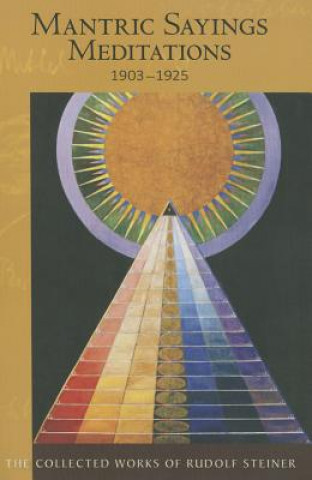
Soul exercises, 1903-1925 (CW 268)"Transform yourself for the sake of the world. Learn to practice thinking, feeling, sensing, and willing without egoism. Let your work be the shadow that your I casts when
"An illustrated book about the life and career of Italian photographer Mario Giacomelli (1925-2000)"-- A new look at the work of Mario Giacomelli, one of Italy&;s foremost photographers of the twentieth century. A new look at the work of Mario Giacomelli, one of Italy&;s foremost photographers of the twentieth century. Mario Giacomelli (1925&;2000) was born into poverty and lived his entire life in Senigallia, a seaside town along the Adriatic coast in Italy&;s Marche region. He purchased his first camera in 1953 and quickly gained recognition for the raw expressiveness of his images. His preference for grainy, high-contrast film and paper produced bold, geometric compositions with glowing whites and deep blacks. Giacomelli most frequently focused his camera on the people, landscapes, and seascapes of the Marche, and he often spent several years expanding and reinterpreting a single body of work or repurposing an image made for one series for inclusion in another. By applying titles derived from poetry and literature to his photographs, he transformed ordinary subjects into meditations on time, memory, and existence. Spanning the photographer&;s earliest pictures to those made in the final years of his life, this publication celebrates the J. Paul Getty Museum&;s extensive Giacomelli holdings, formed in large part through a significant gift from Daniel Greenberg and Susan Steinhauser. <br><br> Autorid: Virginia Heckert <br>
Winner of the USGA Herbert Warren Wind Book Award 'Finally a book that truly captures the inspiring and uniquely gifted women from a largely forgotten golfing age. A wonderful read from start to finish' Iona Stephen, Sky Sports presenter, commentator and host From the moment women began hosting championships of their own in 1893, one of golf's burning questions became whether any woman would ever approach the mythical ideal of playing perfect golf. It took three decades of striving at a time when Suffragettes were stubbornly fighting for womens rights before Joyce Wethered and Glenna Collett delivered an unequivocal answer to that question. From their first meeting at Troon in 1925, through a decade highlighted by their breathtaking match at St Andrews, the Englishwoman and the American brought out in one another golf so sublime that rare was the player, man or woman, who could perform as brilliantly. The rivalry between Wethered and Collett generated such widespread interest and respect that it paved the way for the birth of a womens professional tour. Matchless tells the story of these two incomparable golfers women who personified the ambitions of their age. <br><br> Autorid: Stephen Proctor <br>
' Mein Kampf , écrit par Adolf Hitler, est un manifeste politique et une autobiographie qui expose l'idéologie, les convictions et les projets d'Hitler pour l'avenir de l'Allemagne. Publié pour la première fois en 1925, le livre retrace sa jeunesse, ses influences et l'évolution de ses idées sur la race, le nationalisme et l'antisémitisme. Il met l'accent sur le concept de supériorité raciale aryenne, le nationalisme allemand fort et la nécessité d'une expansion territoriale. Le livre détaille également les stratégies politiques et les visions d'Hitler pour le parti nazi. Mein Kampf est devenu un outil de propagande essentiel et permet de comprendre la mentalité qui a conduit aux atrocités du régime nazi.
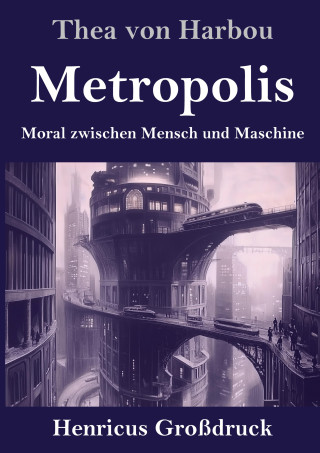
Thea von Harbou: Metropolis. Moral zwischen Mensch und Maschine Lesefreundlicher Großdruck in 16-pt-Schrift Großformat, 210 x 297 mm Berliner Ausgabe, 2026 Durchgesehener Neusatz bearbeitet und eingerichtet von Theodor Borken Erstdruck: Berlin, Verlag August Scherl, 1925. Der Text dieser Ausgabe wurde behutsam an die neue deutsche Rechtschreibung angepasst. Umschlaggestaltung von Thomas Schultz-Overhage. Gesetzt aus der Minion Pro, 16 pt. Henricus - Edition Deutsche Klassik GmbH Thea von Harbous visionärer Roman, der zur Vorlage des berühmten Films von Fritz Lang wurde, ist ein düsteres Zukunftsepos - moralisch, mythisch und erschreckend aktuell: In einer gewaltigen Zukunftsstadt lebt die Gesellschaft in zwei Welten: Oben, im Licht, residieren die Reichen und Mächtigen; unten schuften die namenlosen Massen in endlosen Maschinensälen. Freder, Sohn des Stadtoberhaupts Joh Fredersen, entdeckt durch Zufall das Schicksal der Arbeiter - und verliebt sich in Maria, die Stimme der Hoffnung aus der Tiefe. Während technischer Wahn, politisches Kalkül und ein künstlich erschaffenes Ebenbild Marias die Stadt ins Chaos treiben, wird ein Ausgleich nur durch das Herz möglich: das mitfühlende Bindeglied zwischen Hirn und Hand.
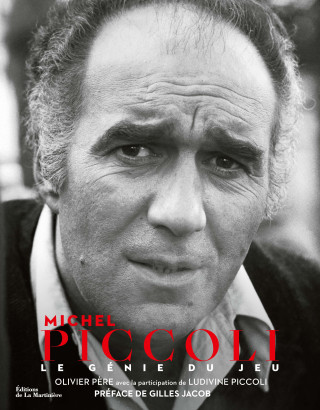
Michel Piccoli (1925-2020), acteur génial, acteur total, a traversé pendant six décennies le meilleur du cinéma européen. Sa filmographie est riche en chefs-d’oeuvre et rencontres décisives. Qui d’autre peut s’enorgueillir d’avoir tourné à la fois avec Jean Renoir et Leos Carax, Mario Bava et Jean-Luc Godard, Luis Buñuel et Agnès Varda, Alfred Hitchcock et Jacques Demy, Marco Ferreri et Claude Sautet, Manoel de Oliveira et Claude Chabrol ? D’avoir donné la réplique à Brigitte Bardot, Jane Fonda, Catherine Deneuve, Romy Schneider et Marcello Mastroianni ?Infatigable interprète, ami fidèle et esprit curieux, Michel Piccoli a navigué avec souplesse entre les grands maîtres et les auteurs de la Nouvelle Vague, les ténors du cinéma d’auteur populaire et les jeunes cinéastes audacieux. Sa vie artistique raconte à elle seule toutes les aventures et les mutations du cinéma moderne, les heures glorieuses de la télévision et du théâtre, sa première passion. Son amour du jeu se conjugue au pluriel. Acteur transformiste, il brille autant dans l’intériorité que dans l’exubérance.On croise tout au long de ce livre écrit par Olivier Père, réalisé avec la complicité de sa femme Ludivine Piccoli, et préfacé par Gilles Jacob, les témoignages de celles et ceux qui l’ont aimé et côtoyé : Emmanuelle Béart, Marco Bellocchio, Juliette Binoche, Dominique Blanc, Costa-Gavras, Claire Denis, Claude Lelouch, Bulle Ogier ou Melvil Poupaud. Olivier Père a été responsable de programmation à la Cinémathèque française, délégué général de la Quinzaine des réalisateurs à Cannes, directeur artistique du Festival de Locarno. Il est depuis 2012 directeur général d’ARTE France Cinéma et directeur de l’Unité Cinéma d’ARTE France. Il est le coauteur de Jacques Demy (Éditions de La Martinière, 2010) et écrit régulièrement sur le cinéma dans différents supports. Pendant ses études à l’école du Louvre et en faculté de lettres, Ludivine Piccoli fait la rencontre de Michel Piccoli au Festival de Deauville. Elle l’accompagne dans l’aventure de Films 66, maison de production qu’il vient de fonder. Elle collabore à l’écriture de différents scénarii dont ceux qu’il réalisera : La Plage noire ; Ce n’est pas tout à fait la vie dont j’avais rêvé ; Alors voilà , ou Ma femme va avoir une voiture (jamais réalisé).
Tootekood: A39170141GTIN: 842819109549Ühiskond ja sotsiaalteadused
Johann Pachelbel (1653-1706): Fuga C-Dur - Johann Kaspar Ferdinand Fischer (ca. 1656-1746): Praeludium harpeggiato - Henry Purcell (1659-1695): Hornpipe e-Moll, ZT 685 - François Couperin (1668-1733): Les coucous bénévoles / Die gutmütigen Kuckucke - Georg Philipp Telemann (1681-1767): Gigue à l'Angloise G-Dur - Johann Sebastian Bach (1685-1750): Praeludium F-Dur, BWV 927 - Praeludium C-Dur, BWV 846 - Georg Friedrich Händel (1685-1759): Air B-Dur, HWV 471 - Carl Philipp Emanuel Bach (1714-1788): Marche D-Dur, BWV Anhang 122 - Joseph Haydn (1732-1809): Deutscher Tanz C-Dur, Hob. IX:12/4 - Daniel Gottlob Türk (1750-1813): Spinnerlied - Muzio Clementi (1752-1832): Sonatine C-Dur, Op. 36/1: Allegro, Andante, Vivace - Wolfgang Amadeus Mozart (1756-1791): Menuett G-Dur, KV 1e + f (Trio), Menuett F-Dur, KV 5 - Ludwig van Beethoven (1770-1827): Deutscher Tanz Es-Dur, WoO 13/9, Bagatelle a-Moll, Op. 119/9 - Lustig - Traurig, WoO 54 - Franz Schubert (1797-1828): Walzer h-Moll, D 145/6, Ecossaise G-Dur, D 145/4, Ländler B-Dur, D 378/4 - Michail Iwanowitsch Glinka (1804-1857): Polka d-Moll - Friedrich Burgmüller (1806-1874): Arabeske, Op. 100/2, Leise Klage, Op. 100/16, Ballade, Op. 100/15 - Robert Schumann (1810-1856): Wilder Reiter, Op. 68/8, Erster Verlust, Op. 68/16 - Frédéric Chopin (1810-1849): Mazurka F-Dur, Op. 68/3 - Louis Köhler (1820-1886): Chromatische Polka, Op. 300/160 - Peter Iljitsch Tschaikowsky (1840-1893): Die neue Puppe, Op. 39/9, Altfranzösisches Lied, Op. 39/16 - Edvard Grieg (1843-1907): Halling Norwegischer Tanz, Op. 47/4 - Alexander Gretchaninoff (1864-1956): Der kleine Gernegroß, Op. 98/15, Ein altes Gedicht, Op. 119/2 - Erik Satie (1866-1925): Gymnopédie No. 1 - Béla Bartók (1881-1945): Studie für die linke Hand, Kindertanz, Brâul - Carl Orff (1895-1982): Klavier-Übung No. 35 - George Nevada (1939-2014): Kleine Atlantik Rhapsodie - Jürgen Moser (*1949): New Orleans Blues - Tim Richards (*1952): Tritone Blues - Hans-Günter Heumann (*1955): Modern Waltz, Rock Hurricane, Prelude arpeggiated, Salsa, Cool Drinks, Chopinette 1 Mazurka, Chopinette 2 Walzer - Drei vierhändige Bonusstücke - Anton Diabelli (1781-1858): Hongroise, Op. 149/20 - Robert Schumann (1810-1856): Fröhlicher Landmann - Eduard Pütz (1911-2000): In a Funny Mood
GTIN: 9780824883089Literature: history & criticism
Half a century after his shocking samurai-style suicide, Yukio Mishima (1925-1970) remains a deeply controversial figure. Though his writings and life-story continue to fascinate readers around the world, Mishima has often been scorned by scholars, who
Half a century after his shocking samurai-style suicide, Yukio Mishima (1925-1970) remains a deeply controversial figure. Rankin sets out to demonstrate the intelligence and seriousness of Mishima's work and thought.
Monet (1840-1925) kehrte der Tradition den Rücken, als er 1867 vom Balkon des Louvre aus das pulsierende Leben von Paris in den Blick nahm. Ihn faszinierte die Gegenwart der wachsenden französischen Hauptstadt mehr als die Alten Meister. In einer Serie von drei Gemälden schuf er ein neues Bildthema. Die Hauptwerke aus Berlin, Den Haag und Oberlin treffen in Ausstellung wie reich bebildertem Buch aufeinander.Monets Ansichten von Saint Germain l'Auxerrois, dem Jardin de l'Infante und dem Quai du Louvre gelten als früheste impressionistische Stadtansichten überhaupt. Er wirft damit einen völlig neuen künstlerischen Blick auf die moderne Großstadt im Umbau unter Haussmann, die Künstler wie Caillebotte und Pissarro zu eigenen Stadtansichten inspirierte. Ein neues Sujet war geboren, das der Band am Beispiel von Monets Hauptwerken sowie Bildern namhafter Künstler des Impressionismus und Postimpressionismus in aller Schönheit vor Augen führt. KÜNSTLER CLAUDE MONET SOWIE GUSTAVE CAILLEBOTTE, JOHAN BARTHOLD JONGKIND, MAXIMILIEN LUCE, HENRI MATISSE, CAMILLE PISSARRO
Tootekood: A26787431GTIN: 9781784870867Ilukirjandus ja sellega seotud esemed
Virginia Woolf was born in London in 1882. After her father's death in 1904 Virginia and her sister, the painter Vanessa Bell, moved to Bloomsbury and became the centre of ¿The Bloomsbury Group¿. This informal collective of artists and writers exerted a powerful influence over early twentieth-century British culture. In 1912 Virginia married Leonard Woolf, a writer and social reformer. Three years later, her first novel The Voyage Out was published, followed by Night and Day (1919) and Jacob's Room (1922). Between 1925 and 1931 Virginia Woolf produced what are now regarded as her finest masterpieces, from Mrs Dalloway (1925) to The Waves (1931). She also maintained an astonishing output of literary criticism, short fiction, journalism and biography. On 28 March 1941, a few months before the publication of her final novel, Between the Acts, Virginia Woolf committed suicide.
This new edition of one of Virginia Woolf’s most celebrated novels features an introduction by Michael Cunningham, acclaimed bestselling author of The Hours.Mrs. Dalloway chronicles a June day in the life of Clarissa Dalloway–a day that is taken up with running minor errands in preparation for a party and that is punctuated, toward the end, by the death of a young man she has never met. In giving an apparently ordinary day such immense resonance and significance–infusing it with the elemental conflict between death and life–Virginia Woolf triumphantly discovers her distinctive style as a novelist. Originally published in 1925, Mrs. Dalloway is Woolf’s first complete rendering of what she described as the "luminous envelope” of consciousness: a dazzling display of the mind’s inside as it plays over the brilliant surface and darker depths of reality.This edition uses the text of the original British publication of Mrs. Dalloway, which includes changes Woolf made that never appeared in the first or subsequent American editions.
"This Norton Critical Edition of Virginia Woolf's Mrs. Dalloway is based on the first American edition from 1925. The novel follows a day in the life of Clarissa Dalloway, a married, high society woman in London as she prepares to host a party. Set in the aftermath of World War I, the novel explores the world's social and psychological consequences, juxtaposing Dalloway's ordinary day against that of Septimus Warren Smith, a shell-shocked war veteran. The "Contexts" in this Critical Edition provide readers with a varied selection of Woolf's writings related to the novel's composition, as well as literary and historical materials by other writers that influenced Woolf. "Criticism" includes contemporaneous reviews from the 1920s, as well as more recent critical essays on themes including ethics, feminism, and modernism. A chronology and selected bibliography are also included"-- This Norton Critical Edition includes:The 1925 first American edition text, introduced and annotated by Anne Fernald.A map of Mrs. Dalloways London.An unusually rich selection of contextual materials, including diary entries and letters related to the composition of the novel, essays, short stories, and biographical excerpts, and the only introduction that Virginia Woolf wrote to any of her novels. The voices of other writers are also included, allowing readers to consider the literary passages that influenced Woolfs art and historical moment.Eight reviews of Mrs. Dalloway, from publication to the present day.A chronology and a selected bibliography.About the SeriesRead by more than 12 million students over fifty-five years, Norton Critical Editions set the standard for apparatus that is right for undergraduate readers. The three-part formatannotated text, contexts, and criticismhelps students to better understand, analyze, and appreciate the literature, while opening a wide range of teaching possibilities for instructors. Whether in print or in digital format, Norton Critical Editions provide all the resources students need. <br><br> Autorid: Virginia Woolf, Anne Fernald <br>
In 1925, widow Elizabeth Fairchild lives a quiet life with her parents in genteel Oak Park village, Illinois, until she investigates the murder of her friend, an antiques store owner, drawing unwanted attention in this town that is no longer the safe haven it once was. June, 1925. Elizabeth Fairchild lives a quiet life at the home of her wealthy parents in genteel Oak Park village, Illinois, but tragedy strikes when her friend Mr Anthony is found stabbed to death in the alley behind his antiques shop. When one of her father's oldest friends is accused of the crime, Elizabeth determines to expose the real killer. Introducing spirited female sleuth Elizabeth Fairchild in the first of the brilliant new Oak Park village mystery series, set in 1920s Illinois. June, 1925. Having been widowed in the Great War, Elizabeth Fairchild lives a quiet life at the home of her wealthy parents in genteel Oak Park village, Illinois. Although she does her best to avoid emotional entanglements, determined never to be hurt again, Elizabeth forms a close friendship with gentle Mr Anthony, who owns the local antiques store.But tragedy strikes when Mr Anthony is found stabbed to death in the alley behind his shop. Why would anyone murder a mild-mannered antiques dealer who simply loved beautiful things? A robbery gone wrong? A gangland execution? Or could it have something to do with the mysterious customer who bought a gold pocket watch from Mr Anthony on the day he died? When one of her father's oldest friends is accused of the crime, Elizabeth determines to expose the real killer. But her investigations soon attract unwelcome attention. With gangsters moving into the neighbourhood from nearby Chicago, Oak Park is no longer the safe haven it once was. Could Elizabeth be seriously out of her depth? <br><br> Autorid: Jeanne M. Dams <br>
Wrapping presents and singing at midnight mass on a frosty night... Lady Swift is determined to enjoy Christmas at home this year, until another body turns up!Winter 1925. Eleanor and Hugh are decking the halls for their first married Christmas together when butler Clifford arrives with a mysterious telegram. A lucrative case awaits their new detective agency... but in the most remote county in England. The note insists they must be there by midnight to accept the job.After a snowy journey, they arrive at the tiny hamlet of Yorelow to find their client, Osmund Unwin, dead in the churchyard as midnight mass ends. They realise they are now in the absurd situation of having to solve the murder of their client - who they never met - to solve a case they know nothing about and officially never accepted!There is very little festive goodwill to go around, as it seems half the village had a grudge against the rich man. Was it one of the Frisham sisters, owners of the tavern and rumoured to be in a love triangle with Unwin? Or perhaps his maid, who never had a nice thing to say about him?When another body is found in the ruins of the castle overlooking the town, Eleanor is baffled. Clearly there's more to this nightmare before Christmas than the gang first thought...A totally unputdownable historical murder mystery set in an English village at Christmas, perfect for fans of Agatha Christie, T.E. Kinsey and Catherine Coles!Readers love Verity Bright:'MY FAVOURITE BOOK... Had me hooked... I absolutely devoured this brilliant read in one sitting as I just could not put it down... I was gutted when I came to the end... Amazing!!!' bookwormwhitlock86, ⭐⭐⭐⭐⭐'I absolutely LOVED this!... Had me hooked from the beginning and I kept flipping through the pages because I could not put it down!' @bookishbri_, ⭐⭐⭐⭐⭐'Unputdownable... Had me hooked immediately... Filled with suspense, mystery, laughter... Absolutely perfect... I devoured it in one sitting as I just could not put it down and gave up on lying to myself saying just one more chapter as that never happened!!' Bookworm86, ⭐⭐⭐⭐⭐'LOVE... I finished this book in one day!' DianeLikesToRead, ⭐⭐⭐⭐⭐'Fabulous... Charming... A nail-biting page-turner... Fabulous... I gobbled it up in a single sitting.' Bookish Jottings, ⭐⭐⭐⭐⭐'The most fun I have had reading a historical mystery! I loved... had me laughing out loud before the tenth page!... I can't recommend this book enough!' Too Fond of Books, ⭐⭐⭐⭐⭐'Fabulous!... I absolutely adored this!... If you are a fan of Poirot, Miss Marple and Downton Abbey then this book is definitely for you... Kept me guessing right up to the very end.' my_reading_narnia, ⭐⭐⭐⭐⭐