Written in 1925, On Resistance to Evil by Force is one of the most important tracts composed by white migr philosopher Ivan Alexandrovich Ilyin. Responding to the pacifist pretentions of Count Leo Tolstoy, Ilyin mounts a tenacious defence of the Orthodox
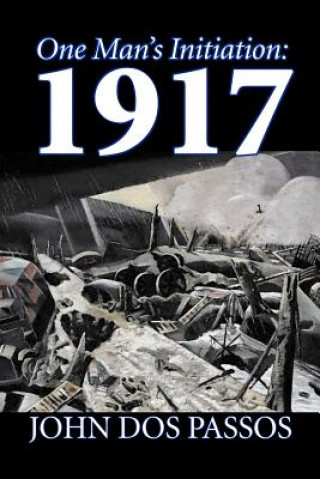
Often reprinted with Dos Passos' other two early novels written between 1920 and 1925, "One Man's Initiation: 1917" is a scathing indictment of the horror of war. As the "Great War" inspired much great poetry, including that of Siegfried Sassoon and Robert Graves, so did it inspire compelling prose. John Dos Passos volunteered to drive an ambulance in France during the First World War. The brutality of his experiences turned him against not only war, but capitalism, and inspired him to write "One Man's Initiation: 1917."
Tootekood: A12358907GTIN: 9780241951439Biograafia, Kirjandus ja kirjandusuuringud
Karen Blixen was born in Rungsted, Denmark, in 1885. After studying art at Copenhagen, Paris and Rome, she married her cousin, Baron Bror Blixen-Finecke, in 1914. Together they managed a coffee plantation in Kenya until they divorced in 1925. She continued on the farm until a collapse in the coffee market forced her back to Rungsted in 1931. Although she had written occasional contributions to Danish periodicals since 1905 (under the nom de plume of Osceola), her real debut took place in 1934 with the publication of Seven Gothic Tales, written in English under the pen name, Isak Dinesen. Out of Africa (1937) is an autobiographical account of the years she spent in Kenya. All of her subsequent books were published in both English and Danish, including Winter's Tales (1942) and The Angelic Avengers (1936). Among her other collections of stories are Last Tales (1957), Anecdotes of Destiny (1958), Shadows on the Grass (1960) and posthumously Ehrengard (1963). In the 1950s she was mentioned several times as a candidate to receive the Noble Prize in Literature.Baroness Blixen died in Rungsted in 1962. In 1991 her house was opened as The Karen Blixen Museum.
Tootekood: A43841624GTIN: 9783991391661Ajalugu ja arheoloogia
Jeder, der einen Paperweight in Händen hält, beginnt sofort ihn zu streicheln, denn das kühle, glatte, kugelige Glas in dem sich die Umgebung spiegelt, hat einen ganz besonderen Reiz! Die wunderschönen gläsernen Objekte mit ihrem faszinierenden, durch das Glas vergrößerten Innenleben zieht jeden magisch an und lässt uns staunen, mit wie viel Phantasie und handwerk-lichem Können diese kleinen Kunstwerke erschaffen wurden. Paperweights werden seit der Mitte des 19.Jahrhunderts produziert; ab 1925, als das Auktionshaus Sothebys eine erste Paperweight-Auktion abhielt, sind sie als eine eigene Form der angewandten Kunst anerkannt und wer ein "richtiger Sammler" werden will, der möchte bald mehr über die Objekte seiner Begierde wissen: Woher stammen sie? Wer hat sie gemacht? Wann wurden sie hergestellt? Die größte Frage lautet dann aber meist: woher bekomme ich seriöse Informationen? Im Internet werden Unmengen an Paperweights als antik, klassisch, wertvoll angepriesen, obwohl sie es gar nicht sind und wie soll man da als unbedarfter Laie die Spreu vom Weizen trennen? Paperweights zu sammeln ist aber nicht nur eine Frage des Geldbeutels, denn so mancher Flohmarktfund hat sich - mit dem nötigen Fachwissen - schon als wahres Schätzchen entpuppt! Dieses Buch ist nun als übersichtliche Einstiegshilfe gedacht, in dem die Grundlagen des Sammelns mit Hilfe vieler erklärender Bilder und verständlicher Texte in Kurzform zusammengefasst sind. Mögen die vielen Tipps und Hinweise zum Sammeln der wundervollen Paperweights anregen und der weltweiten Sammlergemeinde das eine oder andere neue Mitglied bescheren... Verschenkt, vielleicht gemeinsam mit einem hübschen Paperweight, will dieses Buch Jung und Alt zum liebevollen, aber auch fundierten Sammeln dieser schönen Objekte der angewandten Kunst anregen....
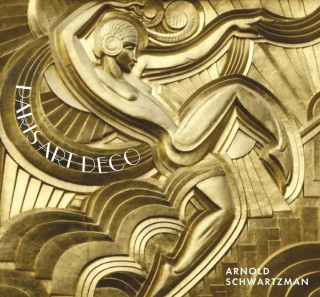
Avec l'Exposition internationale des arts décoratifs et industriels modernes de 1925, la ville de Paris a inauguré la nouvelle ère. Paris était le berceau de l'Art déco, un style apparu dans les années 1920 en réaction aux tentacules sinueuses de l'Art nouveau du début des années 1900, et une alternative à l'imagerie de l'âge de la machine qui émergeait de l'Allemagne et de l'Union soviétique. L'Exposition des Arts Décoratifs et Industriels avait pour but de relancer les commerces de luxe français et a popularisé un style de décoration jazzy qui puisait dans de nombreuses sources et exprimait l'esprit de l'époque. L'Exposition a ensuite donné son nom à l'Art déco, qui a connu à Paris certaines de ses manifestations les plus raffinées et les plus exubérantes, tout en se répandant rapidement dans le monde entier, de Londres à Los Angeles.Arnold Schwartzman est un cinéaste oscarisé, un graphiste réputé et l'auteur de nombreux ouvrages, dont London Art Deco (2013), Art Deco City (2018) et Arts & Crafts (2021). Il a commencé sa carrière de designer à la télévision britannique avant de s'installer à Hollywood en 1978. Il a été directeur du design pour les Jeux olympiques de Los Angeles en 1984 et, depuis plusieurs années, il conçoit de nombreux éléments graphiques clés pour la cérémonie annuelle des Oscars. En 2010, il a créé les deux peintures murales du Grand Lobby du "Queen Elizabeth" de la Cunard. En 2001, il a été décoré de l'Ordre de l'Empire britannique (OBE) et en 2006, il a été nommé "Royal Designer" par la RSA. Il vit à Los Angeles.
'Gave New Yorker readers a witty guide to the minutiae of life abroad' JAMES CAMPBELL, GUARDIAN 'Cafe Society described from the best table in the place, by a writer with rare and vivid gifts' ROBERT LACEY 'Lively and witty . . . fascinating escapist entertainment' LEEDS GUIDE In 1925, Janet Flanner began writing a fortnightly 'Letter from Paris' for the nascent New Yorker. Her brief: to tell New Yorkers, under her pen name of 'Genet', what the French thought was going on in France, not what she thought. Paris Was Yesterday is a collection of those letters written in the 1920s and 1930s, surely one of the most fascinating periods in the city's history and it reads like an Arts Who's Who. Flanner saw it all and knew everyone (or at least all about them), and there are tidbits galore about the likes of James Joyce, Ernest Hemingway, Isadora Duncan, Diaghilev, Gertrude Stein, Scott and Zelda Fitzgerald, Picasso and Marlena Dietrich. Witty, catty, literary and unashamedly gossipy, it's a lively portrait of the thriving cultural life in Paris between the wars. In the brilliantly entertaining style she made her own, Flanner mixed high and low culture to devastating effect. <br><br> Autorid: Janet Flanner <br>
By now, Yukio Mishimas (1925-1970) dramatic demise through an act of seppuku after an inflammatory public speech has become the stuff of literary legend. With Patriotism, Mishima was able to give his heartwrenching patriotic idealism an immortal vessel. A lieutenant in the Japanese army comes home to his wife and informs her that his closest friends have become mutineers. He and his beautiful loyal wife decide to end their lives together. In unwavering detail Mishima describes Shinji and Reiko making love for the last time and the couples seppuku that follows. One of the most powerful short stories ever written: Yukio Mishimas masterpiece about the erotics of patriotism and honor, love and suicide. By now, Yukio Mishimas (1925-1970) dramatic demise through an act of seppuku after an inflammatory public speech has become the stuff of literary legend. With Patriotism, Mishima was able to give his heartwrenching patriotic idealism an immortal vessel. A lieutenant in the Japanese army comes home to his wife and informs her that his closest friends have become mutineers. He and his beautiful loyal wife decide to end their lives together. In unwavering detail Mishima describes Shinji and Reiko making love for the last time and the couples seppuku that follows. <br><br> Autorid: Yukio Mishima, Geoffrey W. Sargent <br>
Paul Klee widmet sich im zweiten Band der Bauhausbücher der theoretischen Auseinandersetzung rund um das Skizzieren mithilfe geometrischer Formen und Linien. Ihm gelingt es, den Leitgedanken der Bauhausmeister von einer Umdeutung der künstlerischen Gestaltung zurück zum Handwerk pädagogisch zu veranschaulichen. Klees eigene Form- und Farbenlehre - das Erfassen der Beziehungen zwischen Linie, Form, Fläche und Farbe im Bildraum - wird mithilfe dieses Bandes begreifbar.Diese Neuausgabe kombiniert Sibyl Moholy-Nagys englische Übersetzung aus dem Jahr 1953 mit der Gestaltung und Materialität der deutschen Erstausgabe von 1925.Der Band ermöglicht einen Blick über den Tellerrand der deutschen Architekturgeschichte, indem er die Errungenschaften des Bauhauses in einen internationalen Kontext setzt und seinen Reformgedanken illustrativ dokumentiert und festhält.Diese englische Übersetzung erscheint in der Gestaltung der deutschen Erstausgabe von 1925 und mit separatem Kommentar.Sie äussern sich zu den aktuellen Ereignissen in und um das Bauhaus, zu den Methoden und Schwerpunkten der eigenen Lehre und zu aktuellen Projekten von Schülern und Meistern. Damals in erster Linie an die Mitglieder des «kreis der freunde des bauhauses» gerichtet, wird in der von Gropius und Moholy-Nagy herausgegebenen Zeitschrift die authentische Stimme dieses Sprachrohrs der Avantgarde lesbar. Mit dem originalgetreuen Nachdruck soll der internationalen Diskussion und Forschung zum Bauhaus und seinen Theorien und Entwürfen neuer Schub verliehen werden. Die Faksimile-Einzelhefte werden von einem Kommentarband mit einem übersichtlichen Inhaltsverzeichnis, einer englischen Übersetzung aller Texte sowie einem wissenschaftlichen Essay begleitet, der die Zeitschrift in ihren historischen Kontext einordnet.Der reich bebilderte Band stellt die Arbeitsmethoden und Philosophie von ELEMENTAL vor undzeigt seine wichtigsten Projekte. <br><br> Autorid: Paul Klee, Walter Gropius <br>
GTIN: 9782711632534Modern philosophy: since c 1800
L’un des sujets encore trop peu explorés dans l’exégèse phénoménologique est à l’heure qu’il est le champ des émotions. Ce que, à la suite du psychologue viennois Franz Brentano, on a nommé « la troisième classe » des actes psychiques, à savoir les actes affectifs : émotions, désirs, volitions. Loin de n’être qu’une coloration contingente de l’activité rationnelle ou éthique, l’émotion est chevillée au coeur de mon intelligence et de mon action. Elle est l’emblème de mon être. La publication des manuscrits inédits de Husserl sur l’affectivité ( Gemüt , Gefühle ) manifeste combien les émotions ont en réalité constitué un des thèmes qui a préoccupé Husserl tout au long de sa vie. Le corpus traduit dans le présent volume se situe dans le volume 2 des Studien zur Struktur des Bewusstseins intitulé « Sentiment et valeur » ( Gefühl und Wert ) (1896-1925). Ce corpus met en scène une double dynamique croisée entre émotions et valeurs, où chacun revêt une fonction pour l’autre : la valeur de l’objet est le lieu d’impulsion de l’émotion, par exemple de la joie; l’émotion, par exemple le plaisir, porte et suscite l’attribution de valeur. Husserl, donc, entre la valeur et l’émotion, ne choisit pas, et c’est heureux. Il pense les deux ensemble. Ces textes font apparaître une topologie cardiale quadruple des types d’émotions, état, acte, rythmique et humeur, dans leur ancrage corporel, dans leur intrication avec la dynamique attentionnelle, et dans leur lien avec les actes esthétiques et éthiques. Ainsi, les émotions s’avèrent être chez Husserl au centre d’une constellation multidimensionnelle de vécus intentionnels qui sont portés et unifiés par le régime du cœur ( Gemüt ) en tant que foyer à la fois organique et affectif de la subjectivité émotionnelle.
The extraordinary story of costume designer Phyllis Dalton, filled with insights, recollections, and revelations from a life spent on the great film locations of the twentieth century In conversation with film historian Alexander Ballinger, Phyllis Dalton (19252025) reveals how she created some of the silver screens most unforgettable and iconic costumes, working with such legendary directors as Alfred Hitchcock and David Lean, a woman in a mans world. The book spans Daltons extraordinary fifty-year career in the film industry, from sewing in Soho workrooms on Laurence Oliviers Henry V via intelligence work at Bletchley Park; apprenticeship at Gainsborough Studios to designing costumes on The Man Who Knew Too Much; the epic undertakings of costuming Lawrence of Arabia, Doctor Zhivago (Oscar, Best Costume Design), and Oliver!; through to cult classics A Private Function and The Princess Bride to her successful late collaboration with a young Kenneth Branagh on Henry V (Oscar, Best Costume Design), Dead Again, and Much Ado About Nothing. Many of the books illustrations, sourced from Daltons personal archive, showcase unique ephemera, fabric swatches, production stills, large format pencil-and-watercolour sketches, and production notebooks from six decades of filmmaking. Many of these stunning images, including Daltons personal on-location photographs from the Lawrence of Arabia shoot, have never been published before. Distributed for Clapperboard Books The extraordinary story of costume designer Phyllis Dalton (1925-2025), filled with insights, recollections, and revelations from a life spent on the great film locations of the twentieth century <br><br> Autorid: Alexander Ballinger <br>