During World War One, London was vulnerable to air attacks by Zeppelins and later German bombers. To defend the capital, the London Air Defence Area was created to coordinate the efforts to protect it. However, after 1918, the system was quickly abandoned.In the early 1920s, the Committee for Imperial Defence began to reconsider the problem. In 1924, the first experiment was conducted to monitor and report the movement of aircraft overland by using small groups of aircraft observers reporting to a central point. This successful experiment led to the creation of the Observer Corps in 1925 under the control of Police Chief Constables.Originally intended to cover just the South East of England to protect London, as the threat from resurgent Nazi Germany grew, the Corps was gradually expanded to cover nearly the whole of Gt Britain by the start of the War. Now transferred to the control of the Air Ministry, Observer Corps Groups became a key part of Fighter Commands integrated air defence system, unique in that it was the only means to track the movement of aircraft once they crossed the coast and headed inland.Using a combination of new research and access to official files, Volume One of Skywatch charts the development of the Observer Corps from its origins, the very beginnings, formation and growth through the 1920s. It critically examines how, in the rush to prepare for War in the late 1930s, the Observer Corps began to ready itself for War and its unique role, monitoring the skies of Britain. Volume One of Skywatch traces the history of the Observer Corps, from its origins in World War One, through the first experiment in 1924 and formation in 1925. Later chapters cover the Corps expansion under the control of Police Chief Constables, with the help of official files from the UK National Archive. In the run up to World War Two, chapters <br><br> Autorid: Kevin Wright <br>
Between 1925 and 1936 Josef Stalin wrote frequently to his trusted friend and political colleague Viachestav Molotov. More than 85 letters in this text provide a historical record of Stalin's thinking - both personal and political - and throw light on the way he controlled the government.
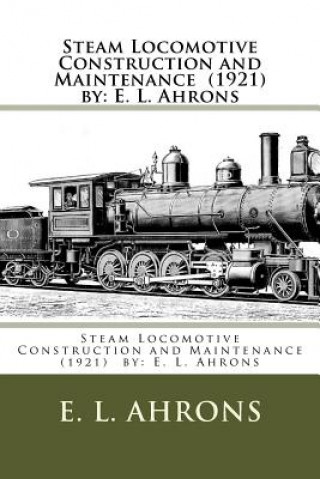
Ernest Leopold Ahrons (12 February 1866 - 30 March 1926) was a British engineer and author. He is most noted for his magnum opus, The British Steam Railway Locomotive 1825-1925, published posthumously in book form, and for a series originally published in
A compelling account, told in easy-to-read format, of a sled dog who led his team over 53 miles of Alaska wilderness to deliver medicine during an outbreak of diphtheria in 1925.
"Art Pepper (1925-1982) was called the greatest alto saxophonist of the post-Charlie Parker generation. But his autobiography, Straight Life, is much more than a jazz book--it is one of the most explosi"
The Original 1925 Edition of Streams in the Desert, first authored using the name of Mrs. Chas. E. Cowman, is Lettie Cowman's resonating selections from a lifetime of reading and living the Christian life around the world. Not modernized! Kept in its authentic form and power! Through her daily selections, this daily devotional challenges and inspires readers today. Bestselling for decades, devoured by countless, it has helped people grow closer to God for almost 100 years. Lettie said of the book, "I do not find material. Materials come to me, fly to me, from all over the world-in an unlikely tract, an old faded booklet, crumpled church bulletin, a tattered songbook." This is a great gift for Mother's Day, graduates or yourself. All students of prayer should get this historic book. This 1925 edition is provided in a slim volume with full text at an affordable price.
Tootekood: A43460911GTIN: 9781640323544Filosoofia ja religioon
The Original 1925 Edition of Streams in the Desert, first authored using the name of Mrs. Chas. E. Cowman, is Lettie Cowman's resonating selections from a lifetime of reading and living the Christian life around the world. Not modernized! Kept in its authentic form and power! Through her daily selections, this daily devotional challenges and inspires readers today. Bestselling for decades, devoured by countless, it has helped people grow closer to God for almost 100 years. Lettie said of the book, "I do not find material. Materials come to me, fly to me, from all over the world-in an unlikely tract, an old faded booklet, crumpled church bulletin, a tattered songbook." This is a great gift for Mother's Day, graduates or yourself. All students of prayer should get this historic book. This 1925 edition is provided in a slim volume with full text at an affordable price.
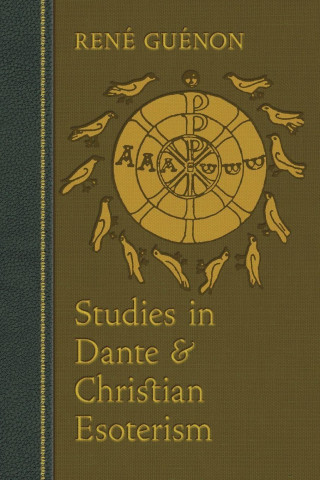
René Guénon (1886-1951) was one of the great luminaries of the twentieth century. His extensive writings, now finally available in English, are a providential treasure-trove for the modern seeker: while pointing ceaselessly to the perennial wisdom found in past cultures ranging from the Shamanistic to the Indian and Chinese, the Hellenic and Judaic, the Christian and Islamic, and including also Alchemy, Hermeticism, and other esoteric currents, they direct the reader also to the deepest level of religious praxis, emphasizing the need for affiliation with a revealed tradition even while acknowledging the final identity of all spiritual paths as they approach the summit of spiritual realization. One of René Guénon's lifelong quests was to discover, or revive, the esoteric, initiatory dimension of the Christian tradition.Especially since the Renaissance, some in Western Christendom have suspected that the deeper dimension of their tradition has somehow been lost, and have therefore sought to discover, or create, an "esoteric" or "initiatic" Christianity. In the middle of the nineteenth century two scholars, Gabriele Rossetti and Eugène Aroux, pointed to certain esoteric meanings in the work of Dante Alighieri, notably The Divine Comedy. Partly based on their scholarship, Guénon in 1925 published The Esoterism of Dante. From the theses of Rosetti and Aroux, Guénon retains only those that prove the existence of such hidden meanings; but he also makes clear that esoterism is not "heresy" and that a doctrine reserved for an elite can be superimposed on the teaching given the faithful without standing in opposition to it. A collection of related articles was published posthumously in 1954 under the title Insights into Christian Esoterism. In these articles Guénon undertakes to establish that the three parts of The Divine Comedy represent the stages of initiatic realization, exploring the parallels between the symbolism of the Commedia and that of Freemasonry, Rosicrucianism, and Christian Hermeticism, and further illustrating Dante's knowledge of traditional sciences unknown to the moderns: the sciences of numbers, cosmic cycles, and sacred astrology. Guénon also touches here on the all-important question of Medieval esoterism and discusses the role of sacred languages and the principle of initiation in the Christian tradition, as well as such esoteric Christian themes and organizations as the Holy Grail, the Guardians of the Holy Land, the Sacred Heart, the Fedeli d'Amore and the 'Courts of Love', and the Secret Language of Dante. The present volume brings both works cited above together with a separate study on Saint Bernard. "It was Guénon who taught me to seek and love the truth above all else, and to be unsatisfied with anything else." -Fr Seraphim Rose "Encountering Guénon's work is akin to being struck by lightning: a dazzling initiation into a hitherto unknown way of seeing reality that reclaims the original integrity of the human condition." -Samuel Bendeck Sotillos
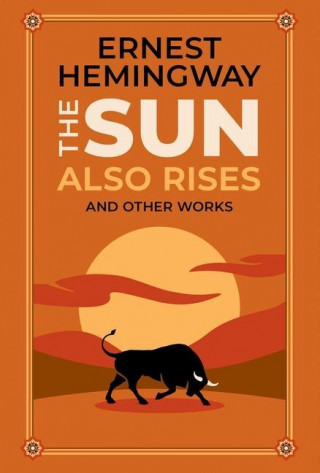
This leather-bound edition features Ernest Hemingway's works from the early 1920s, including one of his most famous novels, The Sun Also Rises, as well as short stories and poems. Ernest Hemingway's first novel, The Sun Also Rises, is also his most widely acclaimed. Set against the backdrop of Paris café society and the running of the bulls in Pamplona, Spain, the novel focuses on the lives of American expatriates in the 1920s. Although the Lost Generation is often considered to have been damaged and dissolute in the aftermath of World War I, Hemingway portrays them as strong characters who are imbued with independence. This edition also includes Hemingway's novella The Torrents of Spring, the short story collection In Our Time (1925), and various other short stories, poems, and newspaper and magazine articles from the early 1920s. A scholarly introduction also examines Hemingway's life and writing career, providing readers with a deeper understanding of his works, and the gilded edges and raises hubs of this leather-bound edition make it a must-have for any home library.
The Supermarine Southampton was the first in a series of successful flying boats designed by Supermarines R.J. Mitchell and was the first one to be designed for the RAF after the First World War. Produced between 1924 and 1934 it entered into RAF service in 1925 and became the second longest serving (behind the Short Sunderland) and one of the most successful of the inter-war flying boats.In an unusual move for the times, the Air Ministry ordered six Southamptons straight from the drawing board as the design had been based on the success of the experimental Supermarine Swan amphibious aircraft. So successful was the aircraft that a further twelve were ordered in July 1925.The Southampton was a hugely successful aircraft for the RAF, the aircrafts main sponsor, and was used for reconnaissance duties and as a patrol aircraft. It became best known for a series of publicly lauded long-distance flights, the intention of which was partly flag waving and partly for gaining valuable experience of flying boats in remote waters. The 1927 Far East Flight became known for the Southamptons display of its prodigious range and reliability.The Southampton was a very successful series of flying boats with sales also being made to Argentina, Turkey and Japan almost doubling Supermarines business in just a few years. A total of eighty-three of all types were built, all of which are revealed in this unrivaled collection of archive images, the majority of which, having been drawn from private collections, have not been published before. A highly-illustrated image-based history of the Supermarine Southampton with a superb range of rare and previously unseen photographs from a variety of sources. <br><br> Autorid: Jo Hillman, Colin Higgs <br>
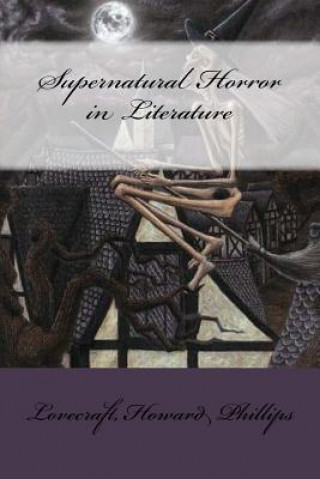
"Supernatural Horror in Literature" is a long essay by the horror writer H. P. Lovecraft surveying the topic of horror fiction. It was written between November 1925 and May 1927 and revised during 1933