Simulating the Cosmos is a behind-the-scenes look into one of the hottest and fastest-moving areas of astrophysics today: simulations of cosmology and galaxy formation, which illustrate how everything we see in the universe arose out of the primordial soup of the Big Bang. Leading cosmologist Romeel Davé guides you through the trials and tribulations of what it takes to put the universe into a computer, the amazing new insights revealed by cosmological simulations, and the many mysteries yet to be solved. This rollicking and extraordinary journey is a rare glimpse into science in action, showing how cosmologists are using the laws of physics and supercomputers to uncover the secrets of why the universe looks the way it does. <br><br> Autorid: Romeel Davé <br>
The relationship between the human soul and the stars has been central to the spiritual and esoteric traditions of Western thought, and many other cultures, for thousands of years. Medieval Christians thought that heaven was located above the earth, beyond the stars. Our modern society, however, has largely severed the relationship between the human spirit and the sky. This book explores ideas, beliefs and practices which meet at the boundary of psychology and cosmology, the universe and human imagination. This book addresses this special relationship from a variety of challenging and inspiring approaches. The contributors include James Hillman, the founder of archetypal psychology and Jungian analyst; astrologer Liz Greene; Professor Neville Brown of Mansfield College, Oxford; Nicholas Pearson of the Temenos Academy; Professor Jarita Holbrook of the University of Arizona; Dr Angela Vos of the University of Kent; Bernadette Brady; Jules Cashford; Noel Cobb, the former editor of Sphinx; Cherry Gilchrist; Robert Hand; and Professor Richard Tarnas of the California Institute of Integral Studies. <br><br> Autorid: Nicholas Campion, Patrick Curry <br>
Age range 9 to 12 Blues guitarist Blind Willie Johnson led a hardscrabble life, but in 1977, NASA's Voyager spacecrafts were launched, each carrying a golden record to introduce planet Earth to the cosmos, and his song 'Dark Was the Night, Cold Was the Ground' became the defining anthem. Weaving together elements of Johnson's biography with an account of how a team of astrophysicists, writers, and artists created the golden record for the Voyager mission, Jan Lower and Gary Kelley craft a tale that is itself A Song for the Cosmos. <br><br> Autorid: Jan Lower, Gary Kelley <br>
Long unavailable and highly sought after, Ringbom's classic 1970 volume launched the study of esotericism's influence on abstract artFor many years, relatively few people knew of spiritualisms impact on the birth of abstract art. But when the Finnish art historian Sixten Ringboms book The Sounding Cosmos was published in 1970, the writing of history changed forever. Through his research on Wassily Kandinsky, one of the pivotal figures in modern art, Ringbom showed how Theosophy and esoteric teachings were absolutely essential to the development of nonfigurative painting.This discovery generated great debate at the time, and the book was both celebrated and controversial. Although the original publication is extremely rare and sought after, to this day The Sounding Cosmos is a classic of art history that continues to be discussedespecially in recent years, as the presence of esotericism in modernist art from Hilma af Klint to Mondrian and beyond has been revisited.The Sounding Cosmos is now being reissued for the first time in this elegant new edition. The richly illustrated original text has been supplemented with a new foreword by Daniel Birnbaum and Julia Voss.Sixten Ringbom (193592) was an influential Finnish art historian. In 1965 he completed a PhD under the great art historian Ernst Gombrich. Ringbom succeeded his father as professor of art history at Åbo Akademi University in 1970, and became the first art historian to explore in depth the connections between early abstract art and occultism. He published prolifically until his death in 1992. <br><br> Autorid: Sixten Ringbom, Daniel Birnbaum, Julia Voss <br>
A beautifully illustrated history of the Soviet Unions leading role in the space race. In this deeply researched chronology, Colin Burgess describes the then Soviet Unions extraordinary success in the pioneering years of space exploration. Within a decade, the Soviets not only launched the worlds first satellite, Sputnik, in 1957, but they also were the first to send an animal and a human being into Earth orbit. In the years that followed, their groundbreaking missions sent a woman into space, launched a three-man spacecraft, and included the first person to walk in space. Six decades on from the historic spaceflight of cosmonaut Yuri Gagarin, Burgess guides us through the amazing achievements of Russias spaceflight program through to the present day, introducing the men and women who have flown the missions that drive us to delve ever deeper into the wonders and complexities of the cosmos. <br><br> Autorid: Colin Burgess <br>
This textbook combines the mathematical foundations of the theory of special and general relativity with numerous applications in physics and astronomy. Besides the discussion of classical experiments that impressively confirm the predictions of the theory of relativity, a special focus is on cosmology, as an important application of general relativity. The discussion of the physics of compact stellar objects, i.e. white dwarfs, neutron stars, and black holes, and a short section on the formation and evolution of stars complement the presentation. The authors put special emphasis on relativistic visualization. Two chapters give an overview of various visualization techniques in special and general relativity. Examples of relativistic visualization make the predictions of relativity, which so blatantly seem to contradict everyday experience, more tangible and intelligible. The resulting figures and accompanying videos support the understanding of the topics covered in the text. The videos are accessible also via the Springer Nature More Media App. This edition is the translation and extension of a textbook of the authors written in German. It also includes more recent developments in astrophysics and cosmology, such as the detection and observation of gravitational waves, or the Hubble controversy. The book is intended for students of physics and related study courses who would like to get an overview of both the theory of relativity and its areas of application. However, the interested layperson, too, will gain a new and deeper insight into relativity and astrophysics. <br><br> Autorid: Sebastian Boblest, Thomas Müller, Günter Wunner <br>
A masterly overview of the development of cosmological thinking from the Greeks, via Newton and Einstein, to the present day. It is science's last and greatest challenge: fathoming the depths of the night sky. The objective: to crack the cosmic code, to unravel the blueprint for nature's grandest conception, a machine constructed on an unimaginably vast scale - the Universe itself. Today's model of an expanding Universe - the big bang cosmology - is actually built on principles derived from a few simple mathematical equations. Gravity-warped space time, quantum mechanics, the physics of the subatomic, these crucial insights, stemming from Einstein's revolutionary theories of relativity, have led to a simple and elegant framework within which the whole of the Universe, over billions of years, has been described. But recent evidence has begun to make wrinkles in the neat fabric of the big bang cosmology. There is now overwhelming evidence that there is far more stuff in the Universe than we can see. What, and where, is this 'dark matter'? And it now appears that the expansion of the Universe is accelerating: something out there - some exotic 'dark energy' - is acting against gravity to push space and time apart. While offering a critical view of how all the pieces in our current model fit together, Pedro Ferreira argues that Einstein's Universe may be just another stepping stone towards a new, more profound and effective cosmology in the future. <br><br> Autorid: Pedro Ferreira <br>
Aimed at undergraduate and graduate students in physical sciences and engineering, this book provides a broad introduction to the physics of synchrotron light. The book is multi-disciplinary, covering topics from electrodynamics to particle physics through to astrophysics. This textbook provides the first comprehensive overview of synchrotron physics at an introductory level, covering the fundamental underpinning physics, and combining rigorous treatment of the main concepts with a fresh outlook, rich in images and graphics.Aimed at students and practitioners alike, this book describes all topics in a way that requires only undergraduate knowledge in physics and mathematics, and, with only a few exceptions, all results are derived from first principles. The book also emphasizes the relevance of the synchrotron-light concept throughout the broader fabric of physics, covering areas such as special relativity, classical electrodynamics, quantum theory, astrophysics, optical physics, classical mechanics, and computational physics.As well as basic concepts related to the generation of synchrotron light by charged particles in accelerators and their special relativity and classical electrodynamics underpinning, this textbook also covers quantum mechanical and quantum optics descriptions of synchrotron light emission, the key role played by synchrotron light emission in the cosmos, and the generalisation of the concept of synchrotron emission to interactions other than the electromagnetic interaction.Taking the reader on a journey across the landscape of physics, this book aims to unite a number of often-disconnected communities of learners and practitioners through the connecting thread of synchrotron light. <br><br> Autorid: Daniele Pelliccia, David M. Paganin <br>
Explores the interplay between ancient wisdom and modern cosmology Connects the philosophy of the I Ching with key recent advances in cosmology, such as the Big Bang theory, Roger Penrose's cyclic conformal cosmology, and his and Stuart Hameroff's cosmic quantum brain dynamics Explains the Taoist cosmology of Heaven-Humanity Oneness in the context of Teilhard de Chardins evolutionism, Thomas Berrys cosmogenetic trinity, and Brian Swimmes 12 cosmological powers Examines the holographic unity of Heaven, Earth, and Humankind at microcosmic, mesocosmic, and macrocosmic scalesIs the universe inert and empty, or is it in some way responsive to consciousness? Breathing new life into a question that has perplexed philosophers since ancient times and scientists for the last century, physicist Zhen G. Ma, Ph.D., offers a quantitative theory of everything that beautifully integrates ancient I Ching philosophy, Eastern Taoism, modern cosmology, and the quantum brain dynamics of consciousness. Sharing insights from his years of research on space physics and black-hole spacetimecomplemented by studies in quantum brain dynamics and cosmological powers with Brian Swimme at the California Institute of Integral StudiesMa explains how his integrated theory draws primarily on two key paradigms in the philosophy of cosmology and consciousness: Swimmes cosmic creation story of the universe as a green dragon and Roger Penrose and Stuart Hameroffs cosmic consciousness.Extending these theories further, Ma shows how they harmonize not only with the ancient Eastern philosophy of the oneness of heaven and humanity, but also with a holographic cosmic principle that connects the quantum-plasma brain with the universe and earth with heaven. He then looks at this holographic unity in the cyclic process of birth, growth, decay, and death and shows how it resonates with Einstein-Friedmanns cosmological dynamics and Hawking-Penroses quantum gravity model.Demonstrating a quantitative paradigm of everything, Ma shows how humanity is inextricably and holistically blended into the cosmic fabric of the universe. <br><br> Autorid: Zhen G. Ma <br>
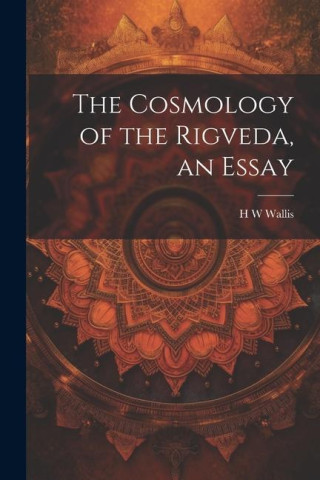
This book explores the cosmological concepts presented in the Rigveda, a collection of ancient Indian hymns. Wallis discusses the Vedic gods and their roles in the creation and maintenance of the universe, as well as the beliefs surrounding reincarnation and karma. He also examines the connections between Vedic cosmology and other ancient mythological traditions, such as those of Greece and Egypt.This work has been selected by scholars as being culturally important, and is part of the knowledge base of civilization as we know it.This work is in the "public domain in the United States of America, and possibly other nations. Within the United States, you may freely copy and distribute this work, as no entity (individual or corporate) has a copyright on the body of the work.Scholars believe, and we concur, that this work is important enough to be preserved, reproduced, and made generally available to the public. We appreciate your support of the preservation process, and thank you for being an important part of keeping this knowledge alive and relevant.
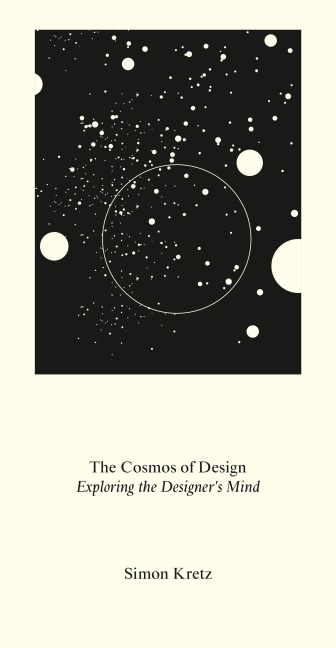
The Cosmos of Design is a journey through the characteristic features of design thought processes that usu-ally occur unconsciously. With the help of simple examples, designing is explored step by step: Creative experimentation and speculative thinking are highlighted in addition to cognition-oriented tests, iterative loops and abductive conclusions. The result of this study is a coherent pattern of thought, an enlightening philosophy of design. As a resource for students and practitioners, The Cosmos of Design is intended to broad-en the understanding of design and to provide theoretical foundation and practical inspiration.
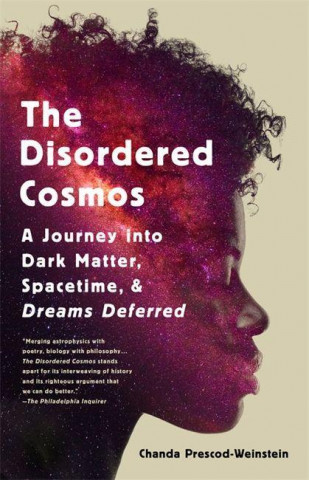
"Dr. Chanda Prescod-Weinstein is one of the leading physicists of her generation, at work on the origins of spacetime at the intersection of particle physics and astrophysics. She is also one of the fewer than one hundred Black women to earn a PhD in physics. In The Disordered Cosmos, Prescod-Weinstein shares with readers her love for physics, from the Standard Model of Particle Physics and what lies beyond it, to the physics of melanin in skin, to the latest theories of dark matter - all with a new spinand rhythm informed by pop culture, hip hop, politics, and Star Trek. Prescod-Weinstein's vision of the cosmos is vibrant, inclusive and buoyantly non-traditional. As she makes clear, what we know about the universe won't be complete until we learn to think beyond the limitations of white-dominated science. Science, like most fields, is set up for men to succeed, and is rife with racism, sexism, and shortsightedness as a result. But as Prescod-Weinstein makes brilliantly clear, we all have a right to know the night sky. By welcoming the insights of those who have been left out for too long, we expand our understanding of the universe and our place in it. The Disordered Cosmos is a vision for a world without prejudice that allows everyone to view the wonders of the universe through the same starry eyes"-- From a star theoretical physicist, a journey into the world of particle physics and the cosmos -- and a call for a more just practice of science. In The Disordered Cosmos, Dr. Chanda Prescod-Weinstein shares her love for physics, from the Standard Model of Particle Physics and what lies beyond it, to the physics of melanin in skin, to the latest theories of dark matter -- all with a new spin informed by history, politics, and the wisdom of Star Trek. One of the leading physicists of her generation, Dr. Chanda Prescod-Weinstein is also one of fewer than one hundred Black American women to earn a PhD from a department of physics. Her vision of the cosmos is vibrant, buoyantly non-traditional, and grounded in Black feminist traditions. Prescod-Weinstein urges us to recognize how science, like most fields, is rife with racism, sexism, and other dehumanizing systems. She lays out a bold new approach to science and society that begins with the belief that we all have a fundamental right to know and love the night sky. The Disordered Cosmos dreams into existence a world that allows everyone to experience and understand the wonders of the universe. <br><br> Autorid: Chanda Prescod-Weinstein <br>