Die Novelle ist im Wien zu Beginn des 20. Jahrhunderts angesiedelt. Schnitzler beschreibt die nach außen hin harmonische Ehe des Arztes Fridolin und seiner Frau Albertine. Doch beide haben ungestillte erotische Begierden und Träume, von denen der Partner nichts weiß. Diese unausgesprochenen Bedürfnisse haben zu einer Entfremdung der Ehepartner geführt, die sich zu einer Ehekrise auswächst. Albertine träumt nachts, dass sie sich einem Fremden hingibt. Fridolin seinerseits nimmt an einer geheimnisvollen Orgie teil, die sich wiederum in einer traum-ähnlichen Atmosphäre abspielt. Die stark erotisch aufgeladenen Erfahrungen dieser Nacht drohen die Ehe zu zerstören, dienen beiden Partnern schließlich jedoch auch als Medium zur Erkenntnis ihrer wahren Bedürfnisse. §Erstmals veröffentlicht wurde die Traumnovelle in der Zeitschrift Die Dame 1925. Schnitzlers Text wurde mehrmals verfilmt, zuletzt 1999 von Stanley Kubrick als Eyes Wide Shut mit Nicole Kidman und Tom Cruise in den Hauptrollen.
Including letters, postcards, statements and speeches, this magnificently annotated and illustrated edition makes available the complete journal Einstein kept on his extensive three-month lecture tour of Argentina, Uruguay and Brazil. Illustrations. A marvelously annotated and illustrated edition of Einsteins South America travel diaryIn the spring of 1925, Albert Einstein embarked on an extensive lecture tour of Argentina before continuing on to Uruguay and Brazil. In his travel diary, the preeminent scientist and humanitarian icon recorded his immediate impressions and broader reflections on the people he encountered and the locations he visited. Some of the most confounding passages reveal his uncensored views on his host nations. This edition makes available the complete journal Einstein kept on his three-month journey.In these remarkable pages, Einstein enthuses about the stunning vistas of lush vegetation in Rio de Janeiro. His flight in the skies over Buenos Aires thrills him, and he enjoys the cozy atmosphere of Montevideo. He expresses genuine admiration for the Uruguayans, harsh condescension toward the Argentinians, and ambivalent affection for the Brazilians. The illustrious visitor seeks calm refuge on the long ocean voyages, far from the madding crowds of Europe, but the grueling lecture schedule and the adoration of the local masses exhaust him.This edition features stunning facsimiles of the diarys pages accompanied by an English translation, an extensive historical introduction, numerous illustrations, and editorial annotations. Supplementary materials include letters, postcards, statements, and speeches as well as a chronology, a bibliography, and an index. <br><br> Autorid: Albert Einstein, Zeev Rosenkranz <br>
Tootekood: A2533082GTIN: 9781590480113Elustiil, hobid ja vaba aeg
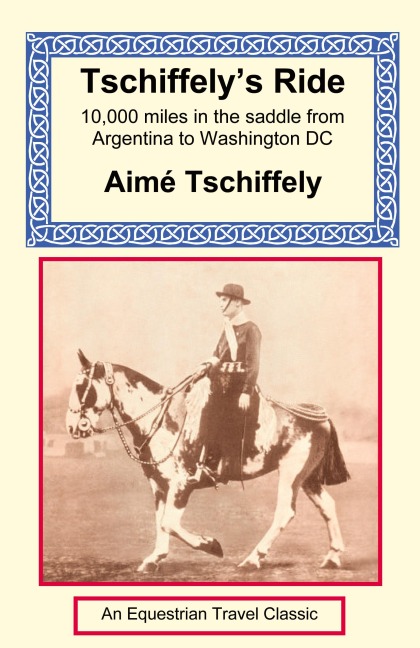
No one knew they were looking at a hero and his two horses. Instead the local press derided him as "a lunatic proposing to ride overland to New York." The time was 1925. The place, Buenos Aires, Argentina. Standing on the threshold of equestrian travel history was a young Swiss Long Rider named Aimé Tschiffely. Next to him were his two faithful Criollo horses, Mancha and Gato. Their collective goal was to ride more than ten thousand miles from Buenos Aires to New York. No one had ever attempted such a journey. Everyone thought Tschiffely was mad. Looking back on what would become the most famous equestrian journey of the modern age, it is difficult to believe that anyone doubted the abilities of the legendary Long Rider and his hardy horses. Yet the school teacher who became an equestrian explorer had been told he was too inexperienced, his horses too old, and the journey too difficult. What Aimé Tschiffely was told was wrong. This is the story of the greatest equestrian epic of the twentieth century, a journey that came about because a man and his horses refused to quit - ever! During the course of their travels Tschiffely, Mancha and Gato crossed deadly deserts, passed through jungles, traversed sky-high mountain passes - and rode on. They were assailed by vampire bats, mistaken for gods and navigated the Panama Canal - but rode on. Nothing stopped them. No one since has rivalled their accomplishments. Often imitated but never outdone, this timeless book remains the most beloved equestrian travel classic of all time. So saddle up for the ride of a lifetime. But beware: the story of Tschiffely's Ride has inspired five generations to take to the saddle in search of mounted adventure.
Please note that the content of this book primarily consists of articles available from Wikipedia or other free sources online. Tubal Claude Ryan (January 3, 1898 - September 11, 1982) was an Irish-American aviator born in Parsons, Kansas. Ryan was best known for founding some airlines and four airplane factories.His first employee was William Hawley Bowlus, who had been the mechanic at the first flying school Ryan attended. One of his students was a wealthy young stock broker and real-estate developer named Benjamin Franklin Mahoney. Ryan sold half of the Ryan Flying Company to B. F. Mahoney on April 25, 1925. With Mahoney's funding, they bought Donald Douglas's first complete airplane, "The Cloudster," which Douglas had build to attempt the first non-stop transcontinental flight. A broken engine part grounded that flight in El Paso, Texas and by the time they had made the necessary repairs, a pair of military pilots accomplished the feat in a Fokker.
The "irresistible" (Susan Orlean) untold story of a trailblazing Paris correspondent for The New Yorker, who sounded the alarm about the rise of fascism in Europe while becoming enmeshed in the sensational case of a German serial killer stalking the streets of the French capital on the eve of WWII. In 1925, the Indianapolis-born Janet Flanner took an assignment to write a regular ‘Letter from Paris’ for a lighthearted humor magazine called The New Yorker. She’d come to Paris to with dreams of writing about “Beauty with a Capital B.” Her employer, self-consciously apolitical, sought only breezy reports on French art and culture. But as she woke to the frightening signs of rising extremism, economic turmoil, and widespread discontent in Europe, Flanner ignored her editor’s directives, reinventing herself, her assignment, and The New Yorker in the process. While working tirelessly to alert American readers to the dangers of the Third Reich, Flanner became gripped by the disturbing crimes of a man who embodied all of the darkness she was being forced to confront. Eugen Weidmann, a German con-man and murderer, and the last man to be publicly executed in France—mere weeks before the outbreak of WWII. Flanner covered his crimes, capture, and highly politicized trial, seeing the case as a metaphor for understanding the tumultuous years through which she’d just passed and to prepare herself for the dangers to come.The Typewriter and The Guillotine offers the personal and professional coming-of-age story of an indomitable journalist set against a glamorous, high-stakes backdrop—a tightly-coiled drama full of romance and intrigue.
USS Saratoga  and her sister ship USS  Lexington  were the two largest aircraft carriers in the world until 1944. The keel of the battle cruiser USS Saratoga (CC-3) was laid by New York Shipbuilding in Camden, New Jersey, on September 25, 1920. Work on the fast, formidably armed battle cruiser was suspended in February 1922, when the Washington Naval Conference negotiated limits on warship sizes and numbers.  Once the accord was signed, the decision was made to covert the 28 percent complete Saratoga into an aircraft carrier (the same fate befell her sister ship, Lexington). Launched as an aircraft carrier on April 7, 1925, she became the largest ship of that type afloat. Saratoga’s revolutionary turboelectric drive and hull design allowed her to operate at 33 knots (either forward or backward), a trait believed to be useful in the event of combat damage to either end of her flight deck. And damaged she was. Though in port at San Diego, California, when the Japanese attacked Pearl Harbor, during the ensuing war the ship was damaged repeatedly, and sometimes severely. Despite this, she fought throughout the war, earning eight battle stars. Following the war, in view of her age, past damage, and the limitations of her design, Saratoga was deemed surplus and was expended as a target during the Bikini Atoll nuclear tests. She survived the first "Able” bomb test but was sunk by the "Baker” test on July 25, 1946. This 144-page volume, an expansion of the author’s earlier work, immerses the reader in the construction and operation of the ship at peace and war, as well as detailing the many refits and repairs she underwent, through over 350 photos and illustrations.
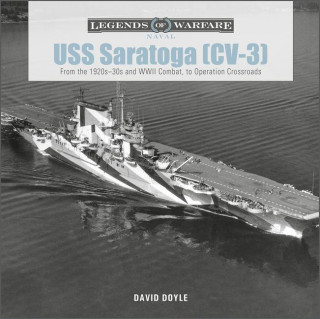
USS Saratoga and her sister ship USS Lexington were the two largest aircraft carriers in the world until 1944. The keel of the battle cruiser USS Saratoga (CC-3) was laid by New York Shipbuilding in Camden, New Jersey, on September 25, 1920. Work on the fast, formidably armed battle cruiser was suspended in February 1922, when the Washington Naval Conference negotiated limits on warship sizes and numbers. Once the accord was signed, the decision was made to covert the 28 percent complete Saratoga into anaircraft carrier (the same fate befell her sister ship, Lexington). Launched as an aircraft carrier on April 7, 1925, she became the largest ship of that type afloat. Saratoga's revolutionary turboelectric drive and hull design allowed her to operate at 33 knots (either forward or backward), a trait believed to be useful in the event of combat damage to either end of her flight deck. And damaged she was. Though in port at San Diego, California, when the Japanese attacked Pearl Harbor, during the ensuing war the ship was damaged repeatedly, and sometimes severely. Despite this, she fought throughout the war, earning eight battle stars. Following the war, in view of her age, past damage, and the limitations of her design, Saratoga was deemed surplus and was expended as a target during the Bikini Atoll nuclear tests. She survived the first "Able" bomb test but was sunk by the "Baker" test on July 25, 1946. This 144-page volume, an expansion of the author's earlier work, immerses the reader in the construction and operation of the ship at peace and war, as well as detailing the many refits and repairs she underwent, through over 350 photos and illustrations. An illustrated history of one of the US Navy's earliest aircraft carriers USS Saratoga and her sister ship USS Lexington were the two largest aircraft carriers in the world until 1944. The keel of the battle cruiser USS Saratoga (CC-3) was laid by New York Shipbuilding in Camden, New Jersey, on September 25, 1920. Work on the fast, formidably armed battle cruiser was suspended in February 1922, when the Washington Naval Conference negotiated limits on warship sizes and numbers. Once the accord was signed, the decision was made to covert the 28 percent complete Saratoga into an aircraft carrier (the same fate befell her sister ship, Lexington). Launched as an aircraft carrier on April 7, 1925, she became the largest ship of that type afloat. Saratogas revolutionary turboelectric drive and hull design allowed her to operate at 33 knots (either forward or backward), a trait believed to be useful in the event of combat damage to either end of her flight deck. And damaged she was. Though in port at San Diego, California, when the Japanese attacked Pearl Harbor, during the ensuing war the ship was damaged repeatedly, and sometimes severely. Despite this, she fought throughout the war, earning eight battle stars. Following the war, in view of her age, past damage, and the limitations of her design, Saratoga was deemed surplus and was expended as a target during the Bikini Atoll nuclear tests. She survived the first Able bomb test but was sunk by the Baker test on July 25, 1946. This 144-page volume, an expansion of the authors earlier work, immerses the reader in the construction and operation of the ship at peace and war, as well as detailing the many refits and repairs she underwent, through over 350 photos and illustrations. <br><br> Autorid: David Doyle <br>