This book explores the cosmological concepts presented in the Rigveda, a collection of ancient Indian hymns. Wallis discusses the Vedic gods and their roles in the creation and maintenance of the universe, as well as the beliefs surrounding reincarnation and karma. He also examines the connections between Vedic cosmology and other ancient mythological traditions, such as those of Greece and Egypt.This work has been selected by scholars as being culturally important, and is part of the knowledge base of civilization as we know it.This work is in the "public domain in the United States of America, and possibly other nations. Within the United States, you may freely copy and distribute this work, as no entity (individual or corporate) has a copyright on the body of the work.Scholars believe, and we concur, that this work is important enough to be preserved, reproduced, and made generally available to the public. We appreciate your support of the preservation process, and thank you for being an important part of keeping this knowledge alive and relevant.
The Cosmos of Design is a journey through the characteristic features of design thought processes that usu-ally occur unconsciously. With the help of simple examples, designing is explored step by step: Creative experimentation and speculative thinking are highlighted in addition to cognition-oriented tests, iterative loops and abductive conclusions. The result of this study is a coherent pattern of thought, an enlightening philosophy of design. As a resource for students and practitioners, The Cosmos of Design is intended to broad-en the understanding of design and to provide theoretical foundation and practical inspiration.
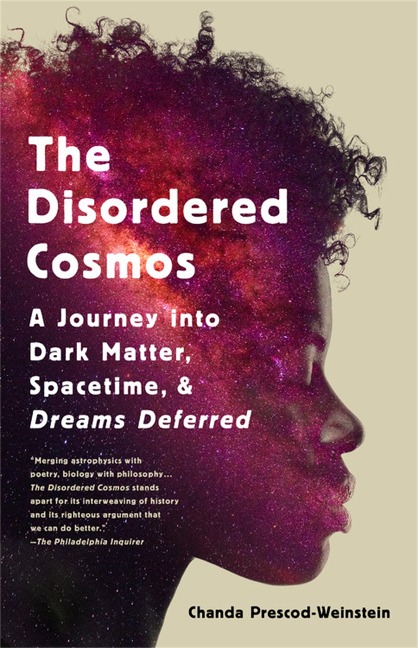
"Dr. Chanda Prescod-Weinstein is one of the leading physicists of her generation, at work on the origins of spacetime at the intersection of particle physics and astrophysics. She is also one of the fewer than one hundred Black women to earn a PhD in physics. In The Disordered Cosmos, Prescod-Weinstein shares with readers her love for physics, from the Standard Model of Particle Physics and what lies beyond it, to the physics of melanin in skin, to the latest theories of dark matter - all with a new spinand rhythm informed by pop culture, hip hop, politics, and Star Trek. Prescod-Weinstein's vision of the cosmos is vibrant, inclusive and buoyantly non-traditional. As she makes clear, what we know about the universe won't be complete until we learn to think beyond the limitations of white-dominated science. Science, like most fields, is set up for men to succeed, and is rife with racism, sexism, and shortsightedness as a result. But as Prescod-Weinstein makes brilliantly clear, we all have a right to know the night sky. By welcoming the insights of those who have been left out for too long, we expand our understanding of the universe and our place in it. The Disordered Cosmos is a vision for a world without prejudice that allows everyone to view the wonders of the universe through the same starry eyes"-- From a star theoretical physicist, a journey into the world of particle physics and the cosmos -- and a call for a more just practice of science. In The Disordered Cosmos, Dr. Chanda Prescod-Weinstein shares her love for physics, from the Standard Model of Particle Physics and what lies beyond it, to the physics of melanin in skin, to the latest theories of dark matter -- all with a new spin informed by history, politics, and the wisdom of Star Trek. One of the leading physicists of her generation, Dr. Chanda Prescod-Weinstein is also one of fewer than one hundred Black American women to earn a PhD from a department of physics. Her vision of the cosmos is vibrant, buoyantly non-traditional, and grounded in Black feminist traditions. Prescod-Weinstein urges us to recognize how science, like most fields, is rife with racism, sexism, and other dehumanizing systems. She lays out a bold new approach to science and society that begins with the belief that we all have a fundamental right to know and love the night sky. The Disordered Cosmos dreams into existence a world that allows everyone to experience and understand the wonders of the universe. <br><br> Autorid: Chanda Prescod-Weinstein <br>
Tootekood: A3394940GTIN: 9780375727207Matemaatika ja teadus
From Brian Greene, one of the world's leading physicists and author of the Pulitzer Prize finalist The Elegant Universe, comes a grand tour of the universe that makes us look at reality in a completely different way.Space and time form the very fabric of the cosmos. Yet they remain among the most mysterious of concepts. Is space an entity? Why does time have a direction? Could the universe exist without space and time? Can we travel to the past? Greene has set himself a daunting task: to explain non-intuitive, mathematical concepts like String Theory, the Heisenberg Uncertainty Principle, and Inflationary Cosmology with analogies drawn from common experience. From Newton's unchanging realm in which space and time are absolute, to Einstein's fluid conception of spacetime, to quantum mechanics' entangled arena where vastly distant objects can instantaneously coordinate their behavior, Greene takes us all, regardless of our scientific backgrounds, on an irresistible and revelatory journey to the new layers of reality that modern physics has discovered lying just beneath the surface of our everyday world.
Tootekood: A14264973GTIN: 9780307278128Matemaatika ja teadus
The bestselling author of The Elegant Universe and The Fabric of the Cosmos tackles perhaps the most mind-bending question in modern physics and cosmology: Is our universe the only universe?There was a time when "universe" meant all there is. Everything. Yet, a number of theories are converging on the possibility that our universe may be but one among many parallel universes populating a vast multiverse. Here, Briane Greene, one of our foremost physicists and science writers, takes us on a breathtaking journey to a multiverse comprising an endless series of big bangs, a multiverse with duplicates of every one of us, a multiverse populated by vast sheets of spacetime, a multiverse in which all we consider real are holographic illusions, and even a multiverse made purely of math--and reveals the reality hidden within each.Using his trademark wit and precision, Greene presents a thrilling survey of cutting-edge physics and confronts the inevitable question: How can fundamental science progress if great swaths of reality lie beyond our reach? The Hidden Reality is a remarkable adventure through a world more vast and strange than anything we could have imagined.
The Individual and the Cosmos in Renaissance Philosophy
Tootekood: A39454888GTIN: 9781621385189Filosoofia ja religioon
The Individual and the Cosmos has long been regarded as a classic in its field. Ernst Cassirer here examines the interdependence of philosophy, language, art, and science, along with the great thinkers of the period-from Leonardo and Galileo to Pico della Mirandola and Giordano Bruno.
Tootekood: A26857078GTIN: 9780062297389Ilukirjandus ja sellega seotud esemed
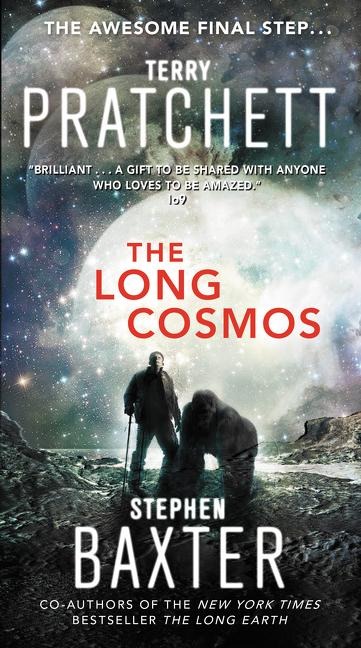
2070-71. Nearly six decades after Step Day, a new society continues to evolve in the Long Earth. Now, a message has been received: ?Join us.?The Next?the hyper-intelligent post-humans?realize that the missive contains instructions for kick-starting the development of an immense artificial intelligence known as The Machine. But to build this computer, the size of an Earth continent, they must obtain help from the more populous and still industrious worlds of mankind.Meanwhile, on a trek in the High Meggers, Joshua Valienté, now nearing seventy, is saved from death when a troll band discovers him. Living among the trolls as he recovers, Joshua develops a deeper understanding of this collective-intelligence species and its society. He discovers that some older trolls, with capacious memories, act as communal libraries and live on a very strange Long Earth world, in caverns under the root systems of trees as tall as mountains. He also learns something much more profound about life and its purpose in the Long Earth: We cultivate the cosmos to maximize the opportunities for life and joy in this universe, and to prepare for new universes to come.
Tootekood: A1323989GTIN: 9781879181304Tervis, suhted ja isiklik areng
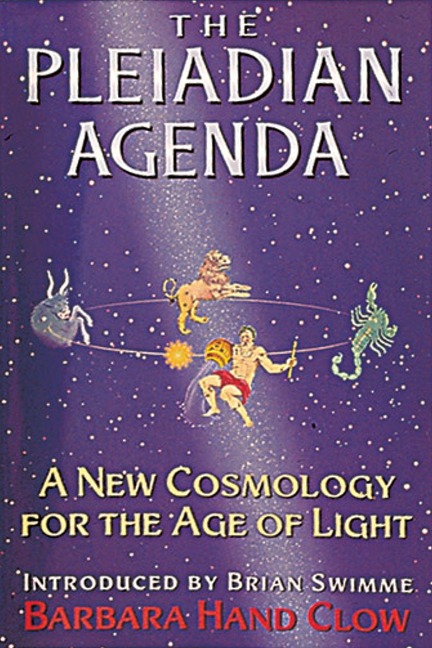
NEW CONSCIOUSNESS / PERSONAL GROWTH 225 Million Years of Evolution from the Pleiadians! In The Pleiadian Agenda, renowned astrologer and spiritual teacher Barbara Hand Clow describes a huge cosmic drama that is functioning simultaneously in nine dimensions, with Earth as the chosen theater. Speaking primarily through Satya, a Pleiadian goddess, she reveals the timing of the critical leap in evolution at the end of the Mayan Calendar. This coming Age of Light is the entry of our solar system into the Photon Band and the Age of Aquarius. "An uplifting message from a multidimensional mind. . . a document that will be talked about for hundreds of years." --John Major Jenkins, author of Tzolkin: Visionary Perspectives and Calendar Studies "An intriguing kaleidoscope of galactic interdimensional cosmology that offers an intimate overview of the star histories as they play themselves out in our current planetary judgment day. Fun and orgasm, photon belt initiations, whole scale nine-dimensional scripts--these and much more are on the menu channeled by Barbara Hand Clow in this, her encyclopedic magnum opus, The Pleiadian Agenda." --Jose and Lloydine Arguelles, initiators of Harmonic Convergence, cocreators of Dreamspell: The Journey of Timeship Earth 2013, and world coordinators of the Thirteen Moon Calendar Change Peace Plan BARBARA HAND CLOW is the author of Heart of the Christos, Liquid Light of Sex, and Chiron: Rainbow Bridge Between the Inner and Outer Planets. She is an astrological counselor, an editor of books on New Consciousness, and a ceremonial teacher at sacred sites. She lives in rural Canada.
An award-winning astrophysicist looks at how the understanding of uncertainty and randomness has led to breakthroughs in our knowledge of the cosmos All of us understand the world around us by constructing models, comparing them to observations, and drawing conclusions. Scientists create, test, and replace these models by applying the twinned concepts of probability and randomness. Exploring how this process has refined our knowledge of quantum mechanics and the birth of the universe, Andrew H. Jaffe offers a unique synthesis of the philosophy of epistemology, the mathematics of probability, and the science of cosmology. As Jaffe puts Enlightenment thinkers like David Hume in conversation with contemporary philosophers such as Karl Popper and Imre Lakatos and engages with scientists ranging from Isaac Newton and Galileo to Albert Einstein and Arthur Eddington, he uses Thomas Bayes’s seminal studies of statistics and probability to make sense of conflicting currents of thought. This is a deep look into how we have learned to account for uncertainty in our search for knowledge—and a reminder that science is not about facts and data as such but about creating models that correctly account for the facts and data.
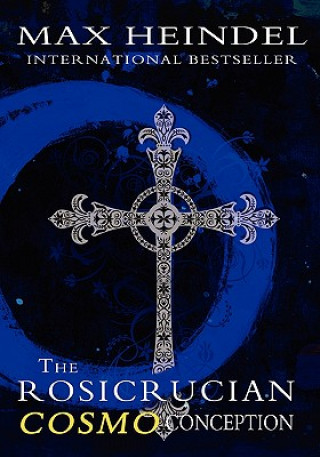
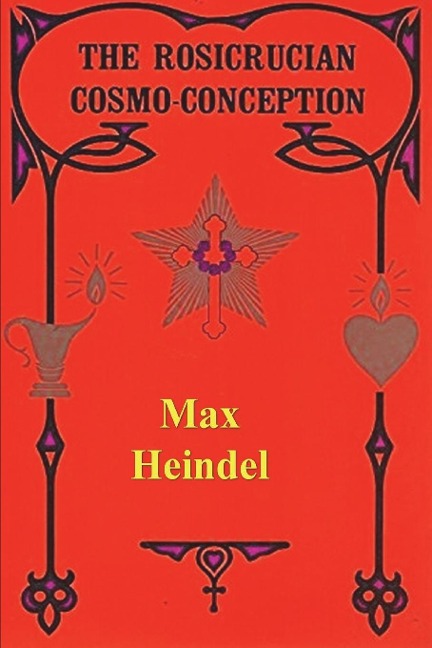
The evolution of man and the universe in correlation to science and Christian mysticism is presented here in Max Heindel's magnum opus. A reference work in mysticism practice and occult study, Cosmo Conception provides the fundamentals of Esoteric Christianity from a Rosicrucian perspective.
Tootekood: A46551959GTIN: 9781773239590Ühiskond ja sotsiaalteadused
The evolution of man and the universe in correlation to science and Christian mysticism is presented here in Max Heindel's magnum opus. A reference work in mysticism practice and occult study, Cosmo Conception provides the fundamentals of Esoteric Christianity from a Rosicrucian perspective.
Tootekood: A47712854GTIN: 9781684228348Matemaatika ja teadus
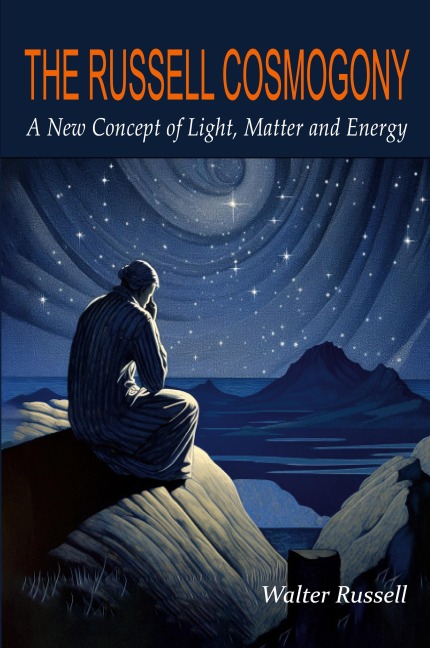
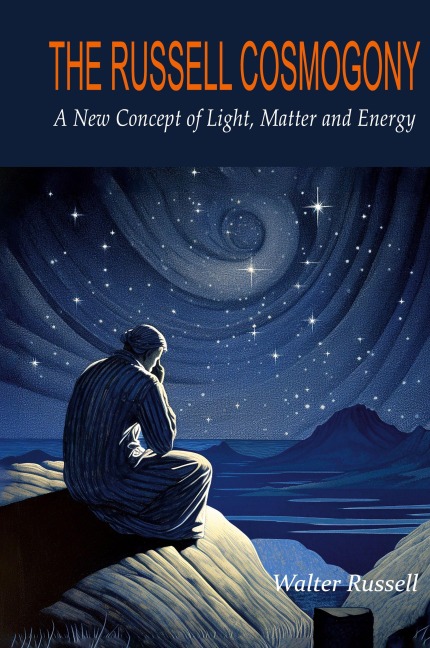
2023 Reprint of the 1953 Edition. Full facsimile of the original edition and not reproduced with Optical Recognition Software. "The Russell Cosmogony with its new concepts of light, matter, energy, electricity and magnetism is a simple yet complete, consistent and workable cosmogony/cosmology which will enable future scientists to visualize the Universe as a Unified Whole, and will open the door to the New Age of Transmutation." -Walter Russell's (An Open Letter to the World of Science) Some of the concepts touched upon: A New Concept of the Universe; The Undivided Light; The Divided Light; This Electric Universe of Simulated Idea; Coulomb Law; The Electric Universe of Simulated Energy; The Duality of Electric Effect; Thought-Wave Universe; Polarity Periodicity; Magnetic Lines of Force; Law of Conservation of Energy; Thermodynamic Misconception; Inadequacy of Newton's Three Laws; Fallacy of Newton's Mathematics; Two Unknown Facts of Nature; Inadequacy of Kepler's First Law; The Quantum Theory; Singly Charged Particles; Science Must Revolutionize Concept of Matter; The New Concept of Matter; Mystery of Magnetic Poles; Illusion of Three Dimensions; The Earth is Not a Magnet; Cathodes and Anodes; No Separate Particles; Curvature is Also Polarized; Conditions of Matter; Vibrating Matter; Growth & Decay; Octave Wave Cycle; Gyroscope Wheel; Expanding Systems; Oblating Spheres; Unbalanced Systems Wobble; Gravitation & Radiation; Nine-Octave Periodic Table of the Elements; Industry's Creating Processes; Secret of Man's Power; New Power for Science; Age of Transmutation.
Tootekood: A63153468GTIN: 9781684229949Matemaatika ja teadus
In this visionary work, artist-philosopher-scientist Walter Russell offers a bold and revolutionary framework for understanding the nature of the universe. Challenging the assumptions of conventional science, The Russell Cosmogony presents a dynamic, holistic vision in which light is the fundamental substance of creation, and energy, matter, and motion are unified through universal principles of rhythm and balance. Drawing from both scientific inquiry and intuitive insight, Russell redefines cosmology as an interplay of consciousness and physics, bridging the gap between the material and the metaphysical. He outlines a universe not of chaos, but of order, design, and purposeful intelligence, in which the seen and unseen are governed by spiritual law. Profoundly original and deeply provocative, The Russell Cosmogony invites readers to reconsider their understanding of life, light, and the cosmic plan. It is essential reading for seekers, scientists, and thinkers drawn to the edge where science meets spirit.
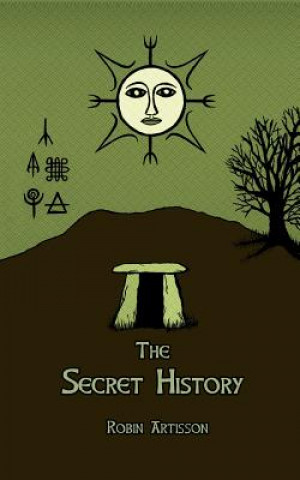
"The Secret History" concerns the deepest matters of all: cosmology and the story of life's emergence and meaning, told from the perspective of a primordial way of seeing and comprehending nature that existed long before civilization began. Robin Artisson
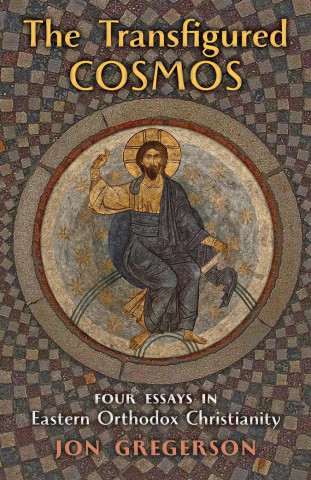
The Transfigured Cosmos offers a succinct introduction to Christian Orthodoxy, both unparalleled in its incisive brevity and cut trimly to the measure of Western Christians in such a way as to depict in genial high relief perspectives offering constructive and profound openings for truly universal spiritual insight. These words from the Orthodox theologian Nicholas Zernov (1898-1980), summarized from the introduction, capture perfectly the spirit of the book: In the West body and spirit are clearly distinguished, and there is a tendency to set them in opposition to each other; in the Christian East they are treated as interdependent parts of the same creation. In the West the individual occupies the center of attention; in the East he is seen as a member of a community. In the West mankind is the main object of redemption; in the East the whole cosmos is brought within its scope. The Western mind is analytic; it likes to scrutinize, dissect, classify; in its dealings with religion it tends to be logical and even legalistic. Eastern Christians on the contrary are more interested in synthesis. They look upon the world as one great organism; they approach the diverse manifestations of life as an expression of the same ultimate reality. The East does not think about salvation in terms of the individual soul returning to its Maker; it is visualized rather as a gradual process of transfiguration of the whole cosmos, culminating in theosis. Man is saved, not from the world but with the world.
Explores the profound influence of multilingual dictionaries, dialogues, and grammars on English Renaissance playwrights In Theaters of Translation, Andrew S. Keener offers a fascinating account of the ways that plays by Thomas Kyd, Mary Sidney Herbert, Ben Jonson, and their fellow English contemporaries were shaped by and part of a multilingual Europe where dictionaries, grammars, and language-learning materials circulated widely. He proposes a fresh, multilingual approach to English Renaissance drama that challenges the histories of early modern European languages as sites of national and linguistic cohesion. Covering the period between 1570 and 1640, when Englands drama and the English language itself were evolving, Keener uses the term cosmopolitan vernaculars to examine how nonclassical European languages modeled transnational forms of belonging for playgoers, readers, and authors in Renaissance England. Combining recent contributions to cosmopolitan theory and transnational studies of early modern literature and culture, Keener highlights both the ways in which cosmopolitanism manifests through Europes vernacular languagesin print and performanceand the ways languages themselves can exhibit cosmopolitanism for those who encounter them on the page or on the stage. Theaters of Translation opens up new transnational interpretations of English Renaissance plays and casts fresh light on historical anecdotes, such as Jonson inscribing a copy of Pietro Aretinos scandalous Italian dialogues or Shakespeares First Folio being advertised for sale in Germany before its London publication. It offers much of interest to readers and scholars of Renaissance Europe, early modern drama, and the development of national European languages. Explores the profound influence of multilingual dictionaries, dialogues, and grammars on English Renaissance playwrights <br><br> Autorid: Andrew S. Keener <br>
Tootekood: A5354676GTIN: 9780792359456Matemaatika ja teadus
A complete account of the fundamental techniques of general relativity and their application to cosmology. The book includes reviews of the different cosmological models and their classification, including such topics as causality and horizons, the cosmological parameters, observational tests and constraints of cosmology, symmetries and the large scale topology of space and space-time, and the use of supernovas as cosmological indicators. The perturbations to the cosmological models are discussed throughout the volume. The cosmic microwave background is presented, with an emphasis in secondary distortions in relation to cosmological models and large scale structures. Recent results on dark matter are summarised. A general review of primordial nucleosynthesis is given. Gravitational lensing is discussed in great detail. Most contributions show a balance between theory and observation. Readership: A solid background for students and researchers intending to work in the field of theoretical and observational cosmology.
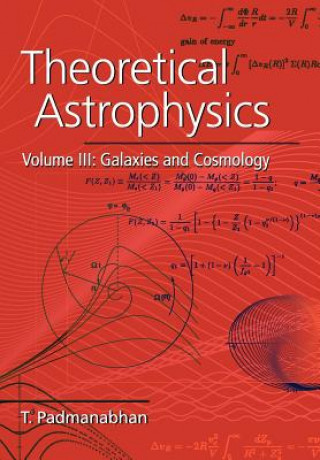
This timely volume provides comprehensive coverage of all aspects of cosmology and extragalactic astronomy at an advanced level. Beginning with an overview of the key observational results and necessary terminology, it goes on to cover important topics including the theory of galactic structure and galactic dynamics, structure formation, cosmic microwave background radiation, formation of luminous galaxies in the universe, intergalactic medium and active galactic nuclei. Topics are developed in a contemporary fashion, with emphasis on currently active research areas. This self-contained text has a modular structure, and contains over one hundred worked exercises. It can be used alone, or in conjunction with the previous two accompanying volumes (Volume I: Astrophysical Processes, and Volume II: Stars and Stellar Systems). The textbook develops all aspects of extragalactic astronomy and cosmology in a detailed and pedagogical way, and will be invaluable to researchers and graduate students of extragalactic astronomy, astrophysics and theoretical physics.
Demonstrating the unity of Tolkien's created world across Middle-earth's Ages An in-depth examination of the role of divine beings in Tolkien's work, Tolkien's Cosmology: Divine Beings and Middle-earth brings together Tolkien's many references to such beings and analyzes their involvement within his created world. Unlike many other commentators, Sam McBride asserts that a careful reading of the whole of the author's corpus shows a coherent, if sometimes contradictory, divine presence in the world. In The Silmarillion, an epic history of the First Age of Middle-earth, Tolkien describes the Ainur, angelic beings under the direction of Eru Ilúvatar, the legendarium's god, as creators of physical reality. Some of these divine beings, the Valar and the Maiar, enter physical reality to oversee its development and prepare for the appearance of sentient life forms in Middle-earth: Elves and Humans, Dwarves, and eventually Hobbits. In the early stages of this history, the Valar and Maiar interact directly with Elves and Humans, opposing the work of evil beings led by Melkor. Yet Tolkien appears, at first glance, to have ignored this pantheon in The Hobbit and The Lord of the Rings, set in the Third Age of Middle-earth. Tolkien's letters, however, suggest the cosmological structure continues. And representatives of the Valar and Maiar can be seen at work, such as Gandalf and Saruman. Tolkien also introduces hints that his divine beings continue to influence events invisibly, as with the prominence of luck in The Hobbit and fortuitous weather conditions in The Lord of the Rings. In the end, McBride argues, Tolkien's cosmology allows room for everything from poor decision-making to evil, suffering, and death, all part of a belief system that will make the final victory of Good much more powerful. <br><br> Autorid: Sam McBride <br>