A celebration of the Bedgebury Florilegium exhibition at Kew for the centenary of Bedgebury National Pinetum. Founded in 1925, Bedgebury National Pinetum was established through a pioneering partnership with the Forestry Commission and the Royal Botanic Gardens, Kew. In celebration of its centenary, this book features twenty stunning botanical paintings by the Bedgebury National Pinetum Florilegium Society, showcasing the beauty and scope of the trees in the collection. Following the First World War, Kew conifer expert William Dallimore noticed that years of increasing industrial pollution in London were adversely impacting the growth of the trees and went in search of a better environment to house Kews conifer collection. With varied topography and a mixture of soil types, Bedgebury proved to be ideal, and the first planting of trees grown at Kew took place there in 1925. Today, Bedgebury is home to nearly 12,000 tree specimens and is a center for conifer science and conservation. At the heart of this book are the botanical paintings by the Bedgebury National Pinetum Florilegium Society. Founded in 2008, this group of botanical artists is dedicated to documenting the Pinetums remarkable plant collection through scientifically accurate and artistically stunning illustrations. Complete with a foreword by Simon Toomer, Kews Curator of Living Collections, and an introduction by Bedgebury Collections Manager Dan Luscombe that provides an overview of the Pinetum today, Christina Harrisons text offers a charming history of Dallimore and Bedgebury. <br><br> Autorid: Christina Harrison, Dan Luscombe <br>
The diaries of A. C. Benson, poet and educationalist, illuminate a career at the heart of the Edwardian establishment, and a tortured private life. Introduction, footnotes, chronology.A. C. Benson (1862-1925), novelist, poet (he wrote Land of Hope and Glory), educationalist and Master of Magdalene College, Cambridge, kept a voluminous diary for most of his life. Considered too controversial at the time, it was sealed up after his death. Only now, with the publication of this extensive selection, can his witty and acute judgements on people, institutions and issues including Henry James, Thomas Hardy, Queen Victoria, Dean Inge, Balfour, Asquith, Eton and Cambridge be fully appreciated. He paints an endlessly fascinating and often very funny picture of a public life at the heart of the Edwardian literary, educational, church and political establishments; but also of a private life riven by the pressures of unconsummated romantic attachments to young men, and by attacks of appalling depression, an illness then barely understood. Historians Eamon Duffy and Ronald Hyam made this 300,000-word selection, adding a substantial introduction, footnotes, chronology, index and photographs. It is presented as two hardbacks in a slipcase. <br><br> Autorid: A.C. Benson, Eamon Duffy, Ronald Hyam <br>
On the evening of 18th March 1925, a devastating fire ripped through the Marylebone premises of Madame Tussauds. By the time the fire was extinguished the following morning, little was left of the world-famous waxworks beyond a few grotesquely distorted models and a pile of scrap iron, which was the remnants of one of Napoléons carriages. Those who now visit the waxworks probably assume that what was lost in 1925 was no very different to the present displays. However, the catalogues pre-dating the fire tell a very different story, for there was so much more to Madame Tussaud & Sons Exhibition than wax representations of the famous and the notorious. The fact is that the French model maker, and the three generations of her family who managed the business after her, were avid collectors of works of art, memorabilia and trivia relating to their displays: Madame Tussauds was, in fact, more of a cabinet of historical curiosities than a wax works. This is evidenced by the lost collection, which ranged from the bloodstained shirt of King Henri IV, worn when he was assassinated in 1610, to the blade of the original guillotine, via a large collection of 18th and 19th century pictures and sculptures by many of the leading artists of their day, furniture, clothing, and a priceless collection of Napoléonica from the Emperors tooth to three of his own carriages. Using contemporary accounts, the pre-fire catalogues, insurance inventories, and with unique access to the Madame Tussauds archives, Christopher Jolls and Penny Cobhams new illustrated book describes in chronological order the extraordinary items that were lost in 1925, set in the context of Madame Tussauds own story and the historical events surrounding the items in the lost collection and, along the way, uncovers many fakes and forgeries, as well as a wealth of irreplaceable and priceless historical treasures. <br><br> Autorid: Christopher Joll, Penny Cobham, Sir Nick Varney <br>
Tootekood: A5538828GTIN: 9780099518471Ilukirjandus ja sellega seotud esemed
Aldous Huxley was born on 26 July 1894 near Godalming, Surrey. He began writing poetry and short stories in his early 20s, but it was his first novel, Crome Yellow (1921), which established his literary reputation. This was swiftly followed by Antic Hay (1923), Those Barren Leaves (1925) and Point Counter Point (1928) ¿ bright, brilliant satires in which Huxley wittily but ruthlessly passed judgement on the shortcomings of contemporary society. For most of the 1920s Huxley lived in Italy and an account of his experiences there can be found in Along the Road (1925). The great novels of ideas, including his most famous work Brave New World (published in 1932 this warned against the dehumanising aspects of scientific and material 'progress') and the pacifist novel Eyeless in Gaza (1936) were accompanied by a series of wise and brilliant essays, collected in volume form under titles such as Music at Night (1931) and Ends and Means (1937). In 1937, at the height of his fame, Huxley left Europe to live in California, working for a time as a screenwriter in Hollywood. As the West braced itself for war, Huxley came increasingly to believe that the key to solving the world's problems lay in changing the individual through mystical enlightenment. The exploration of the inner life through mysticism and hallucinogenic drugs was to dominate his work for the rest of his life. His beliefs found expression in both fiction (Time Must Have a Stop,1944, and Island, 1962) and non-fiction (The Perennial Philosophy, 1945; Grey Eminence, 1941; and the account of his first mescalin experience, The Doors of Perception, 1954. Huxley died in California on 22 November 1963.
Tootekood: A22831201GTIN: 9781784870140Ilukirjandus ja sellega seotud esemed
Aldous Huxley was born on 26 July 1894 near Godalming, Surrey. He began writing poetry and short stories in his early 20s, but it was his first novel, Crome Yellow (1921), which established his literary reputation. This was swiftly followed by Antic Hay (1923), Those Barren Leaves (1925) and Point Counter Point (1928) ¿ bright, brilliant satires in which Huxley wittily but ruthlessly passed judgement on the shortcomings of contemporary society. For most of the 1920s Huxley lived in Italy and an account of his experiences there can be found in Along the Road (1925). The great novels of ideas, including his most famous work Brave New World (published in 1932 this warned against the dehumanising aspects of scientific and material 'progress') and the pacifist novel Eyeless in Gaza (1936) were accompanied by a series of wise and brilliant essays, collected in volume form under titles such as Music at Night (1931) and Ends and Means (1937). In 1937, at the height of his fame, Huxley left Europe to live in California, working for a time as a screenwriter in Hollywood. As the West braced itself for war, Huxley came increasingly to believe that the key to solving the world's problems lay in changing the individual through mystical enlightenment. The exploration of the inner life through mysticism and hallucinogenic drugs was to dominate his work for the rest of his life. His beliefs found expression in both fiction (Time Must Have a Stop,1944, and Island, 1962) and non-fiction (The Perennial Philosophy, 1945; Grey Eminence, 1941; and the account of his first mescalin experience, The Doors of Perception, 1954. Huxley died in California on 22 November 1963.
Tootekood: A3436323GTIN: 9780099458234Ühiskond ja sotsiaalteadused
Aldous Huxley was born on 26 July 1894 near Godalming, Surrey. He began writing poetry and short stories in his early 20s, but it was his first novel, Crome Yellow (1921), which established his literary reputation. This was swiftly followed by Antic Hay (1923), Those Barren Leaves (1925) and Point Counter Point (1928) ¿ bright, brilliant satires in which Huxley wittily but ruthlessly passed judgement on the shortcomings of contemporary society. For most of the 1920s Huxley lived in Italy and an account of his experiences there can be found in Along the Road (1925). The great novels of ideas, including his most famous work Brave New World (published in 1932 this warned against the dehumanising aspects of scientific and material 'progress') and the pacifist novel Eyeless in Gaza (1936) were accompanied by a series of wise and brilliant essays, collected in volume form under titles such as Music at Night (1931) and Ends and Means (1937). In 1937, at the height of his fame, Huxley left Europe to live in California, working for a time as a screenwriter in Hollywood. As the West braced itself for war, Huxley came increasingly to believe that the key to solving the world's problems lay in changing the individual through mystical enlightenment. The exploration of the inner life through mysticism and hallucinogenic drugs was to dominate his work for the rest of his life. His beliefs found expression in both fiction (Time Must Have a Stop,1944, and Island, 1962) and non-fiction (The Perennial Philosophy, 1945; Grey Eminence, 1941; and the account of his first mescalin experience, The Doors of Perception, 1954. Huxley died in California on 22 November 1963.
Tootekood: A42859053GTIN: 9783777439396Ühiskond ja sotsiaalteadused
Charlotte Berend-Corinth (1880-1967) brillierte unabhängig von ihrer Position als Ehefrau und Modell von Lovis Corinth (1858-1925) als Künstlerin und gehörte neben Käthe Kollwitz zu den wenigen weiblichen Mitgliedern der Berliner Secession. Die bibliophile Monografie widmet sich dieser hochbegabten, erfolgreichen und zu Unrecht lange in Vergessenheit geratenen Künstlerin mit einer beeindruckenden Zusammenschau.Berend-Corinth verfolgte mit hochmodernen, radikalen Themen im Berlin der 1910er- und 20er-Jahre eine bemerkenswerte Karriere, bevor ihre jüdische Abstammung sie dazu zwang, Deutschland zu verlassen und in die USA zu emigrieren. Dabei steht das Frühwerk, in dem sie die libertinäre Stimmung der Berliner Kunst- und Theaterszene der 1910er- und 20er-Jahre eingefangen hat, ebenso im Fokus wie die späteren Porträts berühmter Persönlichkeiten ihrer Zeit sowie einige ihrer bemerkenswerten Selbstdarstellungen, Stillleben und Landschaftsbilder.
Tootekood: 4060602-1925GTIN: 8005125355914Pusled lastele
<p>Avasta puslede võlu Clementoni 500-tükilise puslega nii lastele kui ka täiskasvanutele! See kvaliteetne pusle pakub mitte ainult tundideks nauditavat väljakutset, vaid saab kokkupanduna ka stiilseks sisustuselemendiks. Ideaalne valik puslehuvilistele ja neile, kes otsivad vaikset ja loomingulist aega iseendale.</p><p><span style="font-weight:bold;">Omadused:</span></p><ul><li>Clementoni paistab silma oma kvaliteetsete puslede poolest, millel on erksad ja detailsed illustratsioonid.</li><li>Pusle on valmistatud taaskasutatud materjalidest, ilma saastavate komponentideta. </li><li>Abi, kui tükke on puudu - kasuta Clementoni ametlikul veebisaidil olevat "kadunud tükid" teenust.</li><li>500 tükki - piisavalt lihtne, et olla pisikestele huvitav, sobib lõõgastumiseks.</li><li>Pusle suurus: Kokkupandud pusle on 49 x 36 cm - ideaalne formaat raamimiseks või eksponeerimiseks.</li><li>Valmistatud Itaalias.</li></ul>
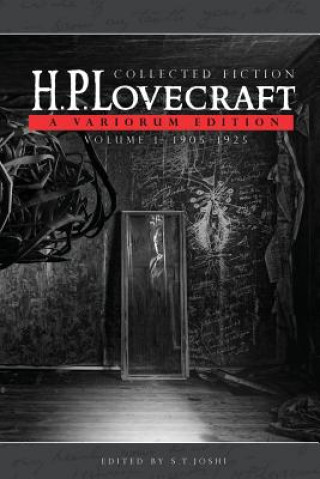
In the thirty years since S. T. Joshi prepared revised editions of H. P. Lovecraft's stories for Arkham House, Joshi has continued to do research on the textual accuracy of Lovecraft's stories, and this comprehensive new edition is the result. For the
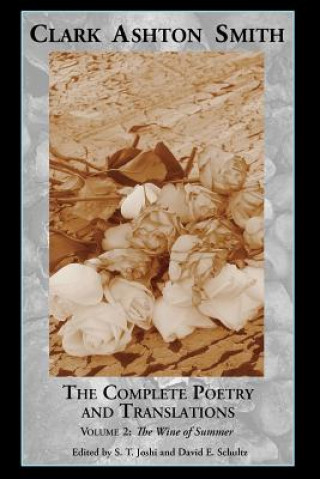
This second volume of Clark Ashton Smith's complete original poetry contains the poems he wrote in the decades following the death in 1926 of his early mentor, George Sterling. Although much affected by Sterling's passing, Smith carried on in his poetic work, seeking new modes of expression and expanding his range beyond the cosmic and lyrical verse that had dominated his early career. Having taught himself French in the mid-1920's Smith began composing original poems in French. After focusing primarily on the writing of fantastic fiction from 1925-35, he resumed his poetic output with such masterworks as The Hill of Dionysus. In the late 1940's he experimented with haiku, and in the 1950's having taught himself Spanish, he wrote numerous original poems in Spanish. Also among his later output are a number of witty satires on thevagaries of modern poetry.In its entirety, Clark Ashton Smith's work stands as one of the great literary contributions to twentieth-century poetry. All poems have been textually corrected by consultation with manuscripts and early appearances, and have been extensively annotated by editors S. T. Joshi and David E. Schultz. This volume also contains an exhaustive commentary on all the poems and a complete title and first line index.
GTIN: 9788491040255Children’s / Teenage general interest: Places & peoples
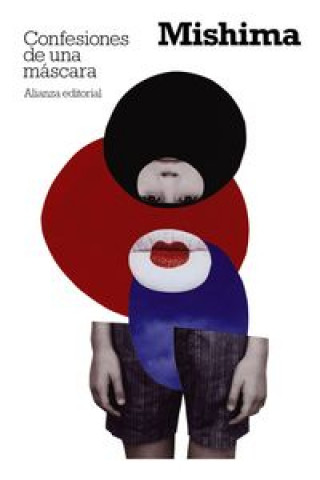
Koo-chan, el joven narrador de "Confesiones de una máscara" -novelapublicada en 1949 que fue el primer gran éxito literario de YukioMishima (1925-1970) y que lo catapultó a la fama-, es un almaatormentada por una sensibilidad turbadora que va creciendo con elestigma de saberse diferente a los demás. De aspecto débil yenfermizo, solitario y taciturno, de extracción menos favorecida quesus compa?eros, irá descubriendo sus inclinaciones homosexuales cuando se siente atraído por Omi, un chico de fuerte constitución. Noobstante, en el Japón de los a?os 1930 y 1940 el protagonista debeocultarse tras una máscara de corrección y convertir su vida en unescenario, en una representación en la que confluyen la realidad y las apariencias. Traducción de Carlos Rubio y Rumi Sato
Offers a collection of author's short tales. The six stories in Consider Her Ways: And Others, the second collecton of John Wyndham's short tales, continue his exploration of the science fiction staple - what if? In the title story we are introduced to a world where all the men have been killed by a virus and women continue to survive in a strict caste system - bottom of the heap are the mothers. In others we meet the man who accidentally summons a devil and then has to find a way of getting rid of him without losing his immortal soul, as well as the woman who, thanks to an experiment in time, discovers why her lover abandoned her. 'Wyndham writes strongly and has a gift for bizarre plots' Guardian 'One of the few authors whose compulsive readability is a compliment to the intelligence' Spectator John Wyndham Parkes Lucas Benyon Harris was born in 1903, the son of a barrister. He tried a number of careers including farming, law, commercial art and advertising, and started writing short stories, intended for sale, in 1925. From 1930 to 1939 he wrote short stories of various kinds under different names, almost exclusively for American publications, while also writing detective novels. During the war he was in the Civil Service and then the Army. In 1946 he went back to writing stories for publication in the USA and decided to try a modified form of science fiction, a form he called 'logical fantasy'. As John Wyndham he wrote The Day of the Triffids, The Kraken Wakes, The Chrysalids, The Midwich Cuckoos (filmed as Village of the Damned), The Seeds of Time, Trouble with Lichen, The Outward Urge, Consider Her Ways and Others, Web and Chocky. John Wyndham died in March 1969. The six stories in Consider Her Ways: And Others, the second collecton of John Wyndham's short tales, continue his exploration of the science fiction staple - what if? In the title story we are introduced to a world where all the men have been killed by a virus and women continue to survive in a strict caste system - bottom of the heap are the mothers. In others we meet the man who accidentally summons a devil and then has to find a way of getting rid of him without losing his immortal soul, as well as the woman who, thanks to an experiment in time, discovers why her lover abandoned her. 'Wyndham writes strongly and has a gift for bizarre plots' Guardian 'One of the few authors whose compulsive readability is a compliment to the intelligence' Spectator John Wyndham Parkes Lucas Benyon Harris was born in 1903, the son of a barrister. He tried a number of careers including farming, law, commercial art and advertising, and started writing short stories, intended for sale, in 1925. From 1930 to 1939 he wrote short stories of various kinds under different names, almost exclusively for American publications, while also writing detective novels. During the war he was in the Civil Service and then the Army. In 1946 he went back to writing stories for publication in the USA and decided to try a modified form of science fiction, a form he called 'logical fantasy'. As John Wyndham he wrote The Day of the Triffids, The Kraken Wakes, The Chrysalids, The Midwich Cuckoos (filmed as Village of the Damned), The Seeds of Time, Trouble with Lichen, The Outward Urge, Consider Her Ways and Others, Web and Chocky. John Wyndham died in March 1969. <br><br> Autorid: John Wyndham <br>
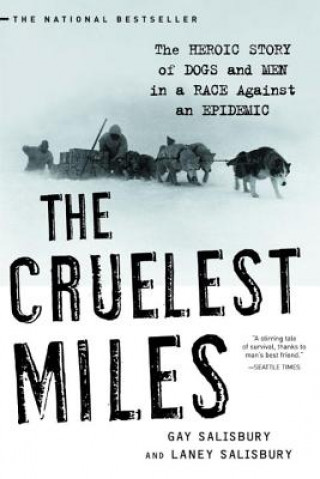
When a deadly diphtheria epidemic swept through Nome, Alaska, in 1925, the local doctor knew that without a fresh batch of antitoxin, his patients would die. The lifesaving serum was a thousand miles away, the port was icebound, and planes couldn't fly in blizzard conditions only the dogs could make it. The heroic dash of dog teams across the Alaskan wilderness to Nome inspired the annual Iditarod Trail Sled Dog Race and immortalized Balto, the lead dog of the last team whose bronze statue still stands in New York City's Central Park.This is the greatest dog story, never fully told until now."
Tootekood: A1916925GTIN: 9780099766810Ilukirjandus ja sellega seotud esemed
Alan Paton was born on January 11, 1903 in Pietermaritzburg, South Africa. Paton became a science teacher in 1925, the start of a varied career, which ran parallel to his writing. He died in 1988.
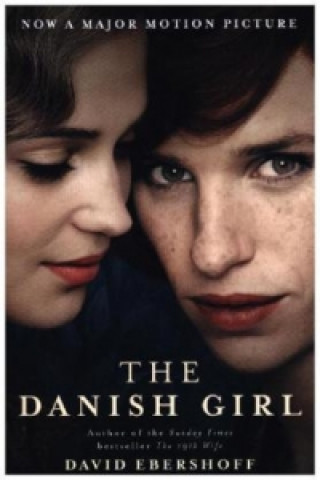
Copenhagen, 1925, the studio of American painter Greta Waud, anxious to put the finishing touches to her latest portrait. But her diva subject has cancelled yet another sitting - how is Greta ever going to get it done? A sudden glint in her eye, and she calls to her husband Elinar. And so, late on an April afternoon, in a hush of breath and a whisper of white silk, beautiful but tremulous, the Danish girl is born. With her comes a terrible confusion of tortured feelings, of guilty longings and searing fears - and the most ecstatic passion, the most tender love either has ever known.
Ganz unterschiedliche Lebenswege warten auf die Schwestern vom Dorfladen - doch ihre Heimat wird ihre Herzen für immer verbinden ...Dingelbach, am Fuße des Taunus, 1925. Der kleine Dorfladen der Familie Haller ist nach wie vor der Dreh- und Angelpunkt, das Herzstück, des ganzen Ortes. Aber Einiges hat sich doch verändert. Frieda besucht weiterhin die Schauspielschule in Frankfurt und steht kurz vor ihrem Abschluss. So ganz loslassen kann sie ihre Heimat allerdings nicht, hängt sie doch sehr vor allem an ihrer kleinen Schwester Ida. Diese ist der schlaue Kopf der Familie und besucht inzwischen ein Gymnasium in Frankfurt. Die älteste und vernünftigste der Schwestern, Herta, ist immer noch die größte Stütze ihrer Mutter im Dorfladen. Aber auch in ihrem Leben wird es einen großen Umbruch geben ... Werden die Schwestern den Weg, den das Leben verspricht gut meistern und ihr Glück finden?Lesen Sie auch weitere dramatisch-emotionale Bestseller von Anne Jacobs:Die »Die Tuchvilla«-Saga »Der Dorfladen - Wo der Weg beginnt«
GTIN: 9780500296875Industrial / commercial art & design
A revised edition of this popular history of design, updated to reflect innovations since the book's first publication in 2016. Design: The Whole Story takes a close look at the key developments, movements and practitioners of design around the world, from the beginnings of industrial manufacturing to the present day. Organized chronologically, it locates design within its technological, cultural, economic, aesthetic and theoretical contexts.From the high-minded moralists of the 19th century to the radical thinkers of modernism - and from the emergence of showmen such as Raymond Loewy in the 1930s to today's superstars such as Philippe Starck - the book provides in-depth coverage of a subject that touches all our lives. Iconic works that mark significant steps forward or that characterize a particular era or approach - such as Marcel Breuer's Wassily chair of 1925, Eliot Noyes' corporate identity work for IBM in the 1950s and Matthew Carter's Verdana typeface, designed to be read on screen - are analysed in detail, while the text sets out the framework of ideas, intent and technology within which differing approaches to design have evolved. From the cars we drive and the products we buy to the graphics that surround us, we are all consumers of design.Design: The Whole Story provides all the information needed to decode the material world.