Tootekood: WT1210WWF.ABWQQMRGTIN: 8806096136287Pesumasina ja kuivati komplektid
LG WashTower WT1210WWF on kahe seadme nutikas kombinatsioon, mis toob pesemise ja kuivatamise ühte kompaktsesse lahendusse. See sobib hästi neile, kes tahavad säästa ruumi, kuid mitte teha järeleandmisi mugavuses või tulemustes. Tänu kesksele juhtpaneelile ja nutikale tehnoloogiale muutub kogu pesuprotsess lihtsamaks, loogilisemaks ja kiiremaks. • Ruumisäästlik, uuenduslik ja stiilne LG WashTower toob pesuruumi mugavust • Nutikas sidumine: kuivati seadistus valitakse automaatselt valitud pesutsükli põhjal • TurboWash™360 tehnoloogia aitab pesta 5 kg pesu vaid 39 minutiga • Kahekordne invertersoojuspump töötab kiiremini ja tõhusamalt • Allergy Care programmid pesumasinas ja kuivatis aitavad vähendada allergeene kuni 99,99% • LG automaatne kondensaatori puhastussüsteem puhastab kondensaatorit iga tsükli järel https://eprel.ec.europa.eu/qr/1941503 https://eprel.ec.europa.eu/qr/2194814
How do political parties integrate propaganda into ordinary citizens' lives? After coming into power in 1948, the communist Hungarian Workers' Party (MDP) drew on tried-and-true Soviet methods of political outreach, mobilizing a network of agitators to circulate communist ideology and report their observations back to party leadership. These agitators produced maps, searched homes, and taught "petty bourgeois" self-criticism and "party-conform" love and hate. Making the Hungarian Communist studies communist propaganda through the everyday actions of these rank-and-file agitators, offering a nuanced portrait of mass mobilization. Through extensive archival research and personal interviews, Heléna Huhák traces the formation of the agitators' network, the training they received, and the often-gendered language they used to connect communist ideology to people's lived experiences. As the dialogue between the state and ordinary citizens developed through these interactions, the boundaries between political issues and private family life began to blur for both citizens and agitators: far from the state's initial vision of one-way political influence, homes also became a space for advocacy, complaint, and bargaining. Communist Hungary was thus shaped not only by propaganda, but also by the experiences and interests of agitators and even "agitated people." By focusing on the negotiations between local party functionaries and ordinary people, Making the Hungarian Communist reveals how the practices of agitation and propaganda mutually shaped Hungarian society and politics. <br><br> Autorid: Heléna Huhák, David Robert Evans <br>
Andrew Grant Forsyths photographs show the changing locomotive scene throughout Scotland after the nationalisation of the railways in 1948. Forsyth visited Scotland almost every year, and between 1948 and 1966 he was fortunate to be able to photograph the graceful-looking ex-Great North of Scotland 4-4-0s, the ex-North British Railway Glen and Scott 4-4-0s, the Caledonian 4-4-0s and numerous 0-6-0 and tank locomotive classes remaining from both those companies. Also reproduced are many examples of the London and North Eastern Railway express locomotive fleet, together with locomotives of former London Midland and Scottish Railway and examples of the post-nationalisation Standard locomotives of British Railways. Scottish Steam 19481966 is a stunning collection of Andrew Grant Forsyths photographs, providing a unique insight into a shifting time. <br><br> Autorid: Brian J. Dickson, Andrew Grant Forsyth <br>
The original American surrealist returns in a new edition of the 1967 classic. "I am eager to do a book of yours," Lawrence Ferlinghetti wrote to Philip Lamantia in Nerja, Spain in 1966. "What about SELECTED POEMS OF PHILIP LAMANTIA?" The missive came at the right time, as Lamantia had recently reembraced the surrealism of his youth and sought to publish his current work alongside his key poems of the 1940s, when the then-15-year-old poet was published by war-exiled leader of the Surrealist Movement, André Breton. For Breton, the young poet was a new Rimbaud, but Lamantia also became known as a poet of the Beat Generation, participating in the 1955 Six Gallery Reading where Allen Ginsberg debuted "Howl." A pioneer of San Francisco's psychedelic culture, Lamantia reemerged through City Lights at the crest of the Summer of Love. Selected Poems of Philip Lamantia reflects each facet of the poet's development up to the point of its publication. "Revelations of a Surreal Youth (19431945)" includes the incendiary poems from his teenage years which brought him early avant-garde fame, including his signature "Touch of the Marvelous." "Trance Ports (19481961)" covers the Beat years, evincing increasing involvement with mysticism, esoterism, and religion. Finally, "Secret Freedom (19631966)" heralds his return to surrealism, cementing his countercultural bona fides with the LSD-fueled "Blue Grace," the zig-zagging Kundalini-inspired "What Is Not Strange?" and the Aquarian Age ode "Astro-Mancy," which prefigures his later engagement with Native American culture. This new edition includes an afterword by poet and editor Garrett Caples, recounting the book's genesis through correspondence between Lamantia and Ferlinghetti and including archival images. A much-needed restoration to the Pocket Poets Series of today, Selected Poems of Philip Lamantia glows like a red-hot coal still burning with the revolutionary fervor of its time. <br><br> Autorid: Philip Lamantia, Garrett Caples <br>
As Anthony Tucker-Jones shows in this highly illustrated, wide-ranging history, for most of the Cold War the tank retained its pre-eminence on the battlefield. The Arab-Israeli wars witnessed some of the biggest tank battles of all time, and tanks played key roles in conflicts in Korea, Vietnam and Afghanistan as well as in the Iran-Iraq War and the wars fought between India and Pakistan. But then in the mid-1960s anti-tank weapons became ever deadlier and the Mechanised Infantry Fighting Vehicle (MIFV), which was designed to support infantry and fight tanks, emerged and the heyday of the tank was over. Chapters cover each major phase in the evolution of the tank and of tank warfare during the period, from the battles fought in the late 1940s and 1950s with Second World War armoured vehicles like the T-34 and the Sherman, through to the designs common in the 1960s and 1970s like the T-55, Centurion, Challenger and M60 Patton, to the confrontation between the M1 Abrams and the T-72 during the Gulf War in 1991. Technical and design developments are important elements throughout the story, but so are dramatic changes in tactics and armaments which mean the tank has an increasingly uncertain role in modern warfare. <br><br> Autorid: Anthony Tucker-Jones <br>
Tootekood: A64919481GTIN: 9781764631945Tervis, suhted ja isiklik areng
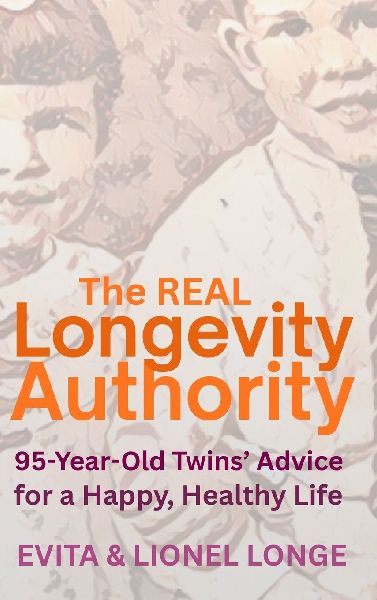
In a world full of self-proclaimed longevity experts who haven't even reached retirement age, here come two voices that have lived - and are living - the long journey.Every ache, every joy, every lesson.Now in their mid-nineties, with a combined 190 years between them, twins Evita and Lionel Longe have outlasted diets, fitness crazes, and health fads - not through miracle supplements or bio-hacks, but through common sense, curiosity, and a generous dose of humour.Through wars, technological revolutions, and personal challenges, they've discovered that longevity isn't just about surviving - it's aboutengaging fully with life at every age.Born in 1930, Evita entered the world first - strong and wailing - while Lionel, frail and silent, was set aside at birth, not expected to live. Yet he did. And for more than nine decades since, he has defied every expectation with quiet resilience, good humour, and a stubborn zest for life that matches his sister's, stride for stride.Their secret is no secret at all: laughter, curiosity, gratitude, and small daily rituals that keep body and spirit alive. Evita still tends her roses each morning; Lionel still walks to his local café, rain or shine, to swap stories and share a smile."Longevity isn't about stretching time," Evita says. "It's about filling it with life."In The Real Longevity Authority, they share their life stories, their habits, mindsets, and quiet disciplines that help them live independently and happily into their tenth decade.Part memoir, part manual, this is not a book about defying age - it's about inhabiting it fully.Grounded, candid, and uplifting, it's proof that the best longevity advice comes from those who have truly walked the distance.
Tootekood: A63194811GTIN: 9781509570904Filosoofia ja religioon
Ubuntu, a Bantu word which became the first term from an Indigenous language to enter a political constitution, is host to many meanings: 'humanity', 'fraternity', 'compassion' or even 'forming a community'. According to Souleymane Bachir Diagne, all of these conceptions come together in the art of making the community better; in the understanding of humanity as a task to be fulfilled. Ubuntu dissolves tribalism, leaving in its stead an embrace of the plural within universality. In this book, Diagne recounts how Ubuntu become a dynamic philosophical concept whose humanist potential would rise to the urgent challenge of dismantling apartheid and healing its ravages. It is also the opportunity for Diagne to retrace his own intellectual trajectory and venerable career from his childhood in Saint Louis to his present life in New York. He ranges over diverse topics such as postcolonialism, the defence of humanism, the rejection of identity politics, existentialism and African philosophies. An intellectual autobiography in the form of an engrossing conversation with the historian Françoise Blum, this slim volume is a fascinating portrait of one of our foremost contemporary philosophers and distinguished thinkers in Black and Africana Studies.