'Inspirational' Buzz Aldrin When exactly did life begin? What really happened during the big bang - and before it? Is the universe expanding? Is dark matter real? Do we live in one of many worlds? What's more, how can we prove any of this? This book is all about how we - any of us - can gain an understanding of the Universe in all its awe-inspiring glory. Brian Cox and Jeff Forshaw take us on an epic journey of scientific exploration, revealing how the biggest questions - from the size of the earth to the distance to the stars - are answerable from our own back gardens. You don't need a Large Hadron Collider or a Hubble Space Telescope to explore the cosmos. You just need this book. <br><br> Autorid: Brian Cox, Jeff Forshaw <br>
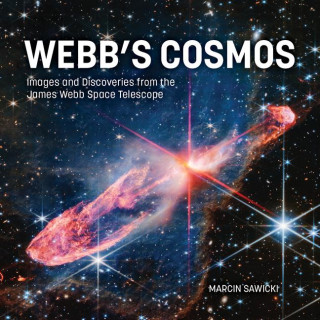
The James Webb Space Telescope took three decades from conception to launch but the wait has been worth it. The results of the most anticipated telescope of the 21st century have been nothing short of spectacular. The idea for the James Webb Space Telescope (JWST) was first raised in 1989, well before the enormously successful Hubble Space Telescope was launched. The infrared telescope with a mirror larger than four meters was launched on Christmas Day 2021. In the summer of 2022, NASA released the first scientific images from Webb to the amazement of more than 300,000 viewers who watched the event live, and hundreds of millions around the world who have viewed Webb"s images since then.Webb"s Cosmos is written in the spirit of Terry Dickinson"s enormously popular book Hubble"s Universe, which has sold over 100,000 copies. This book contains both the classic Webb images that have already become famous and the latest images from the frontiers of science taken by Webb, some of which appear here for the first time.Author Marcin Sawicki is a professional astronomer who is an active user of Webb"s images and data and is the co-author of 20 research papers based on data taken with Webb. He brings a wealth of knowledge and personal experience to the book and explains the science behind the images in accurate but accessible and engaging language.Webb"s Cosmos first provides the needed historical and scientific background to understand how the telescope works and what it can do. The book then presents a curated selection of some 200 photographs with descriptive captions that narrate these images of the distant universe. Chapters include:Stars and gas cloudsGalaxies both near and farPlanets and our solar systemExoplanets.
The James Webb Space Telescope took three decades from conception to launch but the wait has been worth it. The results of the most anticipated telescope of the 21st century have been nothing short of spectacular. The idea for the James Webb Space Telescope (JWST) was first raised in 1989, well before the enormously successful Hubble Space Telescope was launched. The infrared telescope with a mirror larger than four meters was launched on Christmas Day 2021. In the summer of 2022, NASA released the first scientific images from Webb to the amazement of more than 300,000 viewers who watched the event live, and hundreds of millions around the world who have viewed Webb's images since then. Webb's Cosmos is written in the spirit of Terry Dickinson's enormously popular book Hubble's Universe, which has sold over 100,000 copies. This book contains both the classic Webb images that have already become famous and the latest images from the frontiers of science taken by Webb, some of which appear here for the first time. Author Marcin Sawicki is a professional astronomer who is an active user of Webb's images and data. He brings a wealth of knowledge and personal experience to the book and explains the science behind the images in accurate but accessible and engaging language. Webb's Cosmos first provides the needed historical and scientific background to understand how the telescope works and what it can do. The book then presents a curated selection of some 200 photographs with descriptive captions that narrate these images of the distant universe. Chapters include: Stars and gas clouds Galaxies both near and far Planets and our solar system Exoplanets.
The James Webb Space Telescope took three decades from conception to launch but the wait has been worth it. The results of the most anticipated telescope of the 21st century have been nothing short of spectacular. The idea for the James Webb Space Telescope (JWST) was first raised in 1989, well before the enormously successful Hubble Space Telescope was launched. The infrared telescope with a mirror larger than four meters was launched on Christmas Day 2021. In the summer of 2022, NASA released the first scientific images from Webb to the amazement of more than 300,000 viewers who watched the event live, and hundreds of millions around the world who have viewed Webb's images since then. Webb's Cosmos is written in the spirit of Terry Dickinson's enormously popular book Hubble's Universe, which has sold over 100,000 copies. This book contains both the classic Webb images that have already become famous and the latest images from the frontiers of science taken by Webb, some of which appear here for the first time. Author Marcin Sawicki is a professional astronomer who is an active user of Webb's images and data and is the co-author of 20 research papers based on data taken with Webb. He brings a wealth of knowledge and personal experience to the book and explains the science behind the images in accurate but accessible and engaging language. Webb's Cosmos first provides the needed historical and scientific background to understand how the telescope works and what it can do. The book then presents a curated selection of some 200 photographs with descriptive captions that narrate these images of the distant universe. Chapters include: Stars and gas clouds Galaxies both near and far Planets and our solar system Exoplanets. <br><br> Autorid: Marcin Sawicki <br>
How did it all begin? Where is it all going?A little over a century ago, a young Albert Einstein presented his general theory of relativity to the world and utterly transformed our understanding of the universe. His theory changed the way we think about space and time, revealed how our universe has been expanding from a hot dense state called the big bang and predicted black holes. WHERE THE UNIVERSE CAME FROM is a 13.8-billiion-year journey through the cosmos. Discover how Einstein's work explains why the cosmos is the way it is, why 95% of the universe is missing, how physicists go to extraordinary lengths to unlock gravity's secrets and how black holes could hold the key to a theory of everything.ABOUT THE SERIESNew Scientist Instant Expert books are definitive and accessible entry points to the most important subjects in science; subjects that challenge, attract debate, invite controversy and engage the most enquiring minds. Designed for curious readers who want to know how things work and why, the Instant Expert series explores the topics that really matter and their impact on individuals, society, and the planet, translating the scientific complexities around us into language that's open to everyone, and putting new ideas and discoveries into perspective and context. <br><br> Autorid: New Scientist <br>
From the Nobel Prizewinning physicist, a personal meditation on the quest for objective reality in natural scienceA century ago, thoughtful people questioned how reality could agree with physical theories that kept changing, from a mechanical model of the ether to electric and magnetic fields, and from homogeneous matter to electrons and atoms. Today, concepts like dark matter and dark energy further complicate and enrich the search for objective reality. The Whole Truth is a personal reflection on this ongoing quest by one of the worlds most esteemed cosmologists.What lies at the heart of physical science? What are the foundational ideas that inform and guide the enterprise? Is the concept of objective reality meaningful? If so, do our established physical theories usefully approximate it? P. J. E. Peebles takes on these and other big questions about the nature of science, drawing on a lifetime of experience as a leading physicist and using cosmology as an example. He traces the history of thought about the nature of physical science since Einstein, and succinctly lays out the fundamental working assumptions. Through a careful examination of the general theory of relativity, Einsteins cosmological principle, and the theory of an expanding universe, Peebles shows the evidence that we are discovering the nature of reality in successive approximations through increasingly rigorous scrutiny.A landmark work, The Whole Truth is essential reading for anyone interested in the practice of science. <br><br> Autorid: P. James E. Peebles <br>
Like al-Qazwini himself, Travis Zadeh has written a deliciously baggy tome, full of delights and diversions in its tour of the cosmic horizons. This is a book to get lost in, whether one wants to or not. Nile Green, Los Angeles Review of Books? As Zadeh concludes, reformers and modernists have closed the rich and varied archive revealed in Wonders and Rarities In this beautifully written and engaging text, Zadeh takes his readers back to the world of surprise and enchantment that preceded this closure.Malise Ruthven, Financial Times? This book about a book, like the book it describes, is a rare and marvelous thing. Justin Marozzi, The Spectator? During the thirteenth century, the Persian naturalist and judge Zakariyya? Qazwini authored what became one of the most influential works of natural history in the world: Wonders and Rarities. Exploring the dazzling movements of the stars above, the strange minutiae of the minerals beneath the earth, and everything in between, Qazwini offered a captivating account of the cosmos. Wonders and Rarities inspired generations as it traveled through madrasas and courts, unveiling the magical powers of nature. But Qazwinis compendium eventually came to stand as a strange, if beautiful, emblem of medieval ignorance.? Restoring Qazwini to his place as a herald of the rare and astonishing, Travis Zadeh dramatically revises the place of wonder in the history of Islamic philosophy, science, and literature. Wonder provided an enduring way to conceive of the worldat once constituting an affective reaction, an aesthetic stance, a performance of piety, and a cognitive state. Yet through the course of colonial modernity, Qazwinis universe of marvels helped advance the notion that Muslims lived in a timeless world of superstition and enchantment, unaware of the western hemisphere or the earths rotation around the sun.? Recovering Qazwinis ideas and his reception, Zadeh invites us into a forgotten world of thought, where wonder mastered the senses through the power of reason and the pleasure of contemplation. Travis Zadeh revives the work of the thirteenth-century Persian scholar Qazwini, whose Wonders and Rarities was for centuries one of the most influential natural histories in the world. Inviting us to embrace anew Qazwinis rationalized study of nature and magic, Zadeh dramatically revises the place of wonder in the history of Islamic thought. <br><br> Autorid: Travis Zadeh <br>
How does cinema imagine our place in the world? Worldly Desires: Cosmopolitanism and Cinema in Hong Kong and Taiwan looks at the studios, films and policies that charted the transnational vision of Hong Kong and Taiwan, two places with an uneasy relationship to the idea of nationhood. Examining the cultural, political and industrial overlaps between these cinemas, as well as the areas where they uniquely parallel each other, this book brings together perspectives from cinema studies, Chinese studies and Asian American studies to show how culture is produced in the spaces between empires. With case studies of popular stars like Linda Lin Dai and Edison Chen, and spectacular genres like the Shaolin Temple cycle of martial arts films, the book explores what it meant to be both cosmopolitan and Chinese in the second half of the 20th century. This book explores what it meant to be both cosmopolitan and Chinese in the second half of the 20th century. <br><br> Autorid: Brian Hu <br>
Let Crystal Frequencies Map it for You... Working with the best gems and minerals can create an energetic template for deepening your ability to give and receive love . The perfect pairing of stones can support you in connecting with yourself, others, and the Earth more deeply than ever. The partnership between you, the right crystal allies, and the cosmos can create miracles. Whether for yourself or clients and loved ones, aligning your quantum energy field with the optimal crystal vibrations can illuminate the truths, paths, and actions needed. Once this sacred wisdom is revealed you can be confident in your expanded ability to give and receive on many levels. You can effortlessly allow a balanced energetic flow for giving and receiving. Also, you can help facilitate this skill in others. Working with Crystals will help you: - Receive nurturing non-judgement from yourself and others. - Cultivate your intuition. - Discover the ancient wisdom of the Earth and Cosmos. - Shift your relationship to money. - Learn how to truly relax and feel comfort. - Access a deeper empathy towards yourself and the environment. - Work with Crystal Grids to empower every aspect of your life. Equalizing giving and receiving can be life changing. In this book, Your Crystal Allies: The 12 Best Gems and Minerals for Giving Love, Receiving Comfort, and Connecting with the Cosmos your crystal allies share with you vitally important areas of life where being an open-vessel for soulful exchanges of energy can bring about a state of pure joy. <br><br> Autorid: Tracee Dunblazier, Melanie Marquis, Stephen Miller, Cornelia Murariu, Kevin Break <br>