Tootekood: 119256GTIN: 4015867233832Audio ja video > Kaablid
• DisplayPort Male to Male • Supports video resolutions up to 8K/60Hz, 4K/120Hz • Gold Plated Connectors for high signal quality • Downwards compatible to DisplayPort 1.1, 1.2 and 1.3 • Transmission of audio and video signals • Compliant with VESA certified • DisplayPort DP 8K certified cable • Bandwidth up to 32.4Gbps • Supports HDCP 1.4 and 2.2 • Supports HDR (High Dynamic Range) • Supports DSC (Display Stream Compression) • Supports MST (Multi Stream Transport)
Satie's music and ideas are inextricably linked with the City of Light. This book situates Satie's work within the context and sonic environment of contemporary Paris. Sunday Times Classical Music Book of the Year Erik Satie's (1866-1925) music appeals to wide audiences and has influenced both experimental artists and pop musicians. Little about Satie was conventional, and he resists classification under easy headings such as "classical music". Instead of pursuing the path of a professional composer, Satie initially earned a living as a café pianist and moved in bohemian circles which prized satire, popular culture and experiment. Small wonder that his music is fundamentally new in conception. It is music which is not always designed to be listened to attentively: music which can be machine-like but is to be played by humans. For Satie, music was part of a wider concept of artistic creation, as evidenced by his collaborations with leading avant-garde artists and in works which cross traditional genre boundaries such as his texted piano pieces. His music was created in some of the most exciting and creatively stimulating environments of the late nineteenth and early twentieth century: Montmartre and Montparnasse. Paris was the artistic centre of Europe, and Satie was a notorious figure whose music and ideas are inextricably linked with the City of Light. This book situates Satie's work within the context and sonic environment of contemporary Paris. It shows that the influence of street music, musicians and poets interested in new technology, contemporary innovations and radical politics are all crucial to an understanding of Satie. Music from the ever-popular Gymnopédies to newly discovered works are discussed, and an online supplement features rare pieces recorded especially for the book. <br><br> Autorid: Caroline Potter <br>
Satie's music and ideas are inextricably linked with the City of Light. This book situates Satie's work within the context and sonic environment of contemporary Paris. Sunday Times Classical Music Book of the Year Erik Satie's (1866-1925) music appeals to wide audiences and has influenced both experimental artists and pop musicians. Little about Satie was conventional, and he resists classification under easy headings such as "classical music". Instead of pursuing the path of a professional composer, Satie initially earned a living as a café pianist and moved in bohemian circles which prized satire, popular culture and experiment. Small wonder that his music is fundamentally new in conception. It is music which is not always designed to be listened to attentively: music which can be machine-like but is to be played by humans. For Satie, music was part of a wider concept of artistic creation, as evidenced by his collaborations with leading avant-garde artists and in works which cross traditional genre boundaries such as his texted piano pieces. His music was created in some of the most exciting and creatively stimulating environments of the late nineteenth and early twentieth century: Montmartre and Montparnasse. Paris was the artistic centre of Europe, and Satie was a notorious figure whose music and ideas are inextricably linked with the City of Light. This book situates Satie's work within the context and sonic environment of contemporary Paris. It shows that the influence of street music, musicians and poets interested in new technology, contemporary innovations and radical politics are all crucial to an understanding of Satie. Music from the ever-popular Gymnopédies to newly discovered works are discussed, and an online supplement features rare pieces recorded especially for the book. <br><br> Autorid: Caroline Potter <br>
Tootekood: A39115627GTIN: 9781598536676Ühiskond ja sotsiaalteadused
Library of America launches its long-awaited Hemingway edition with a landmark collection of writings from his breakthrough years, in newly edited, authoritative texts.With a letter of introduction from Sherwood Anderson, Ernest Hemingway and his first wife, Hadley, travelled to Paris in 1921. There, the young Hemingway came into contact with Gertrude Stein, F. Scott Fitzgerald, Pablo Picasso, James Joyce, and other expatriate writers and artists integral to his rapid development as a writer. This volume brings together work from the extraordinary period of 1918 to 1926, in which Hemingway's famous prose style became fully formed. It includes his work for the Toronto Star and Hearst's International News Service, the indelible stories of In Our Time (1925), The Torrents of Spring (1925), and his masterpiece, The Sun Also Rises (1926).Edited by Hemingway scholar Robert W. Trogdon, this volume features newly edited, corrected texts of In Our Time, The Torrents of Spring and The Sun Also Rises, fixing errors and restoring Hemingway's original punctuation. It presents the 1924 edition of in our time issued by Three Mountains Press as a modernist masterpiece in its own right, apart from the subsequent versions of In Our Time published by Boni & Liveright and Scribners. It includes the story "Up in Michigan," one of only a few stories dating from the period before 1923 that was not lost in Hemingway's suitcase in the Gare de Lyon and that was originally intended as the opening story of In Our Time, and the hard-to-find, previously uncollected story "A Divine Gesture." Also here are a selection of Hemingway's letters from the period, which cast light on his extraordinary emergence as an artist. Taken together, the writings in this volume offer an unparalleled look at Hemingway's breakthrough years, and at the extraordinary international modernist moment of which he was a crucial part.
See artikkel on tervikliku toote (mootorsõiduk) komponent ja see on asendusosa, mis lasub Euroopa liidu disaini või tööstusdisaini režiimi kaitse all. Klient garanteerib ja veendub, et ei tema ega tema edasised kliendid ega alltöövõtjad ei kasuta eelmises lauses viidatud osi muul eesmärgil, kui ainult komplekse toote parandamiseks selle algse kuju (algse välimuse) taastamiseks.
See artikkel on tervikliku toote (mootorsõiduk) komponent ja see on asendusosa, mis lasub Euroopa liidu disaini või tööstusdisaini režiimi kaitse all. Klient garanteerib ja veendub, et ei tema ega tema edasised kliendid ega alltöövõtjad ei kasuta eelmises lauses viidatud osi muul eesmärgil, kui ainult komplekse toote parandamiseks selle algse kuju (algse välimuse) taastamiseks.
See artikkel on tervikliku toote (mootorsõiduk) komponent ja see on asendusosa, mis lasub Euroopa liidu disaini või tööstusdisaini režiimi kaitse all. Klient garanteerib ja veendub, et ei tema ega tema edasised kliendid ega alltöövõtjad ei kasuta eelmises lauses viidatud osi muul eesmärgil, kui ainult komplekse toote parandamiseks selle algse kuju (algse välimuse) taastamiseks.
Following the death of the Austrian philosopher and spiritual scientist Rudolf Steiner in 1925, Ita Wegman - one of his closest esoteric pupils - began to publish regular letters to the members of the Anthroposophical Society. In Steiner's tradition, these letters were appended with 'leading thoughts' (or guiding principles). Esoteric Studies collects many of these 'letters to friends', together with various articles, reports and addresses by Ita Wegman on subjects such as the Christmas Foundation Conference, the Goetheanum building and the festival of Michaelmas. Featuring an informative foreword by Crispian Villeneuve and a commemorative study by George Adams, this book provides a fine introduction to the work of Ita Wegman, as well as a rousing call for courage and wakefulness in the spirit of the Archangel Michael! <br><br> Autorid: Ita Wegman, Crispian Villeneuve, Crispian Villeneuve <br>
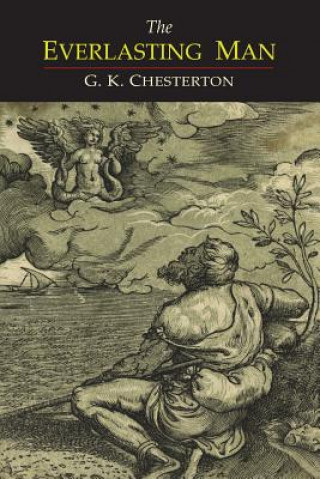
2014 Reprint of Original 1925 edition. Not reproduced with Optical Recognition Software. "The Everlasting Man" is a work of Christian apologetics first published in 1925. Chesterton intended it to some extent as a deliberate rebuttal to H. G. Wells' "The Outline of History", disputing Wells' portrayals of human life and civilization as a seamless development from animal life and of Jesus Christ as merely another charismatic figure. Whereas Orthodoxy detailed Chesterton's own spiritual journey, in this book he tries to illustrate the spiritual journey of humanity, or at least of Western civilization. C. S. Lewis credited "The Everlasting Man" with "baptizing" his intellect, much as George MacDonald's writings had baptized his imagination, so as to make him more than half-converted well before he could bring himself to embrace Christianity. In a 1950 letter to Sheldon Vanauken, Lewis calls the book "the best popular apologetic I know," and in 1947 he wrote to Rhonda Bodle: "the [very] best popular defense of the full Christian position I know is G. K. Chesterton's "The Everlasting Man." The book was also cited by The Christian Century in a list of 10 books that "most shaped [Lewis'] vocational attitude and philosophy of life".
Here is an enlarged, revised edition of the Paul Carus lectures which Dewey delivered in 1925. It covers Dewey's basic formulation of the problems of knowledge, with both a full discussion of theories and resolutions propounded by other systems, and a detailing of Dewey's own concepts upon the relationship of the external world, the mind, and knowledge. Here is an enlarged, revised edition of the lectures which Dewey delivered in 1925. It covers Dewey's basic formulation of the problems of knowledge, with both a full discussion of theories and resolutions propounded by other systems, and more. <br><br> Autorid: John Dewey <br>
A lost city called 'Z'; lethal jungles; death-filled rivers: The last trip of a legendary explorer who was the inspiration for Indianna Jones. The life of Colonel Fawcett is now the subject of the major motion picture The Lost City of Z.The disappearance of Colonel Fawcett in the Matto Grosso remains one of the great unsolved mysteries. In 1925, Fawcett was convinced that he had discovered the location of a lost city; he had set out with two companions, one of whom was his eldest son, to destination 'Z', never to be heard of again. His younger son, Brian Fawcett, has compiled this book from letters and records left by his father, whose last written words to his wife were: 'You need have no fear of any failure . . .' This is the thrilling and mysterious account of Fawcett's ten years of travels in deadly jungles and forests in search of a secret city. <br><br> Autorid: Percy Fawcett <br>
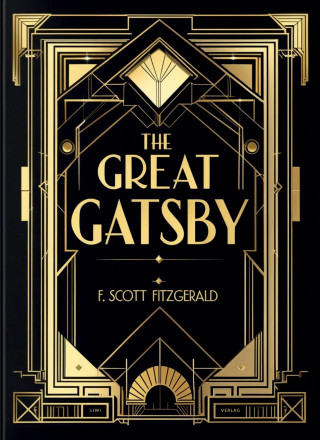
The Great Gatsby - F. Scott Fitzgerald's world-famous novel from 1925 is regarded as the masterpiece of American modernism. Set against the dazzling backdrop of the "Roaring Twenties," it tells the story of Jay Gatsby, whose longing for Daisy Buchanan collapses between glamour and illusion. A timeless classic about love, illusion, and the dream of happiness.This is the English-language paperback edition of "The Great Gatsby".F. Scott Fitzgerald.The Great Gatsby.First published: Charles Scribner's Sons, New York City, 1925.Vollständige Neuausgabe,1. Auflage, LIWI Literatur- und Wissenschaftsverlag, Göttingen 2025.
Tootekood: A63627045GTIN: 9783753801384Ilukirjandus ja sellega seotud esemed
The Great Gatsby - F. Scott Fitzgerald's world-famous novel from 1925 is regarded as the masterpiece of American modernism. Set against the dazzling backdrop of the "Roaring Twenties," it tells the story of Jay Gatsby, whose longing for Daisy Buchanan collapses between glamour and illusion. A timeless classic about love, illusion, and the dream of happiness. This is the English-language paperback edition of "The Great Gatsby". F. Scott Fitzgerald. The Great Gatsby. First published: Charles Scribner's Sons, New York City, 1925. Vollständige Neuausgabe,1. Auflage, LIWI Literatur- und Wissenschaftsverlag, Göttingen 2025.
Philosopher, psychoanalyst, politician, propagandist, prophet...although difficult to categorize, Frantz Fanon (1925-1961) is one of the most important thinkers of the 20th century and one of our most powerful writers on race and revolution.The book opens with a biography, following Fanon from his birthplace of Martinique through combat in World War II and education in France, to his heroic involvement in the fights for Algerian independence and African decolonization. After a brief discussion of Fanon's political and cultural influences, the main section of the book covers the three principal stages of Fanon's thought:the search for black identity, as presented in Black Skin, White Masks, Fanon's stunning diagnosis of racismthe struggle against colonialism, as explained in "A Dying Colonialism" and "Toward the African Revolution," essays centering on Algeria's war of independencethe process of decolonization, as analyzed in The Wretched of the Earth, the book that extended insights gained in Algeria to Africa and the Third WorldFanon For Beginners concludes by examining Fanon's influence on political practice, such as the Black Power movement in the United States, on literary theory, and on political studies showing how his works and words continue to have a profound impact on contemporary cultural debate. <br><br> Autorid: Deborah Wyrick <br>
Ireland 1925. Nine-year-old Philip Kinsella lives with his parents, eccentric uncles, terrifying grandmother and an alcoholic butler in the imposing castle of Lissanore. The Kinsellas are one of the oldest noble families in Ireland, descended from Gaelic kings and 'Wild Geese' Jacobite exiles who served in the Austrian army. An unexpected visitor arrives from Spain with her daughter Constanza. Philip, whose romantic imagination is governed by stories of derring-do, pledges himself to be her knight, a promise that will dominate his life. Philips youthful existence is enlivened by the powerful presence of another visitor, his cousin, Nicholas Kinsella, a dashing cavalry officer from the Austrian branch of the family who becomes a major influence in his life. The story moves from Lissanore to boarding school in England, where Philip acquires a group of lifelong friends and from which he emerges as an idealistic young man eager for adventure. A Fateful Promise is the first part in a major literary undertaking, covering eighty dramatic years of European history. It is a vivid evocation of a distant world that Gerald Warner brings alive in all its brilliance and compelling detail. Gripping, humorous and richly entertaining, this novel is a remarkable work of imagination. There is more to come. Book Two in the Kinsella Chronicles, The Cross of Burgundy, takes Philip to the Spanish Civil War, when savage conflict engulfs Constanzas homeland. <br><br> Autorid: Gerald Warner <br>
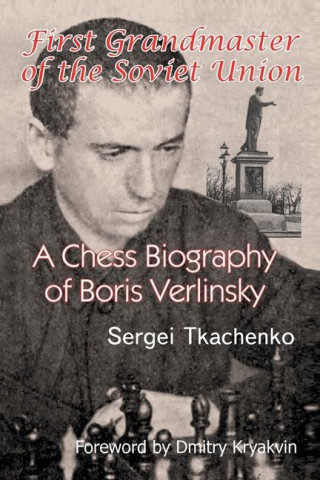
Born in Bakhmut, Ukraine, and brought up in Odessa, Boris Verlinsky (1888-1950) was the first holder of the grandmaster title in the Soviet Union, and he was consistently one of the top Soviet players in the 1920s.He earned the master's title at the 1924 Soviet Championship and won fourth prize at the 1925 Championship, defeating the tournament winner Bogoljubov along the way. Verlinsky then crushed Capablanca at the 1925 Moscow International Tournament, where he finished twelfth equal with Rubinstein and Spielmann, both of whom he also beat. He won the Soviet Championship in 1929, for which he was awarded the grandmaster title, and came third in 1931 despite poor health. Verlinsky played in five Soviet Championship finals in total. He also won a number of other major Tsarist and Soviet-era tournaments, including the Southern Russia Championship, Odessa Championship, Ukrainian Championship, Moscow Championship and others. Moreover, he achieved all this despite being profoundly deaf.According to the Chessmetrics website, Verlinsky's highest world ranking was #15 in 1926, and that year he achieved his highest rating of 2627.Verlinsky possessed a sharp attacking style. As Grandmaster Dmitry Kryakvin highlights in his foreword, "I think that this great attacking player was way ahead of his time, and in his best years he played spectacular, beautiful, dynamic and modern chess more characteristic of the famous players of the second half of the twentieth century. As you study Verlinsky's brilliant victories, you think of the masterpieces of Mikhail Tal, Leonid Stein, Viktor Kupreichik, Alexei Shirov, and other modern successors of the 'Fire-On-Board' dynasty."Ukrainian historian and former world champion at composing chess studies Sergei Tkachenko presents a comprehensive biography of this unique player. This book analyzes 130 games and fragments, in which opponents include Capablanca, Alekhine, Botvinnik, Bronstein, Bogoljubov, Spielmann and other stars. The games are frequently annotated by Verlinsky or his opponents and contemporaries, and they have all been reviewed using modern engines by grandmasters or international masters especially for this work.Check out the Elk and Ruby website for special offers on this and other books!