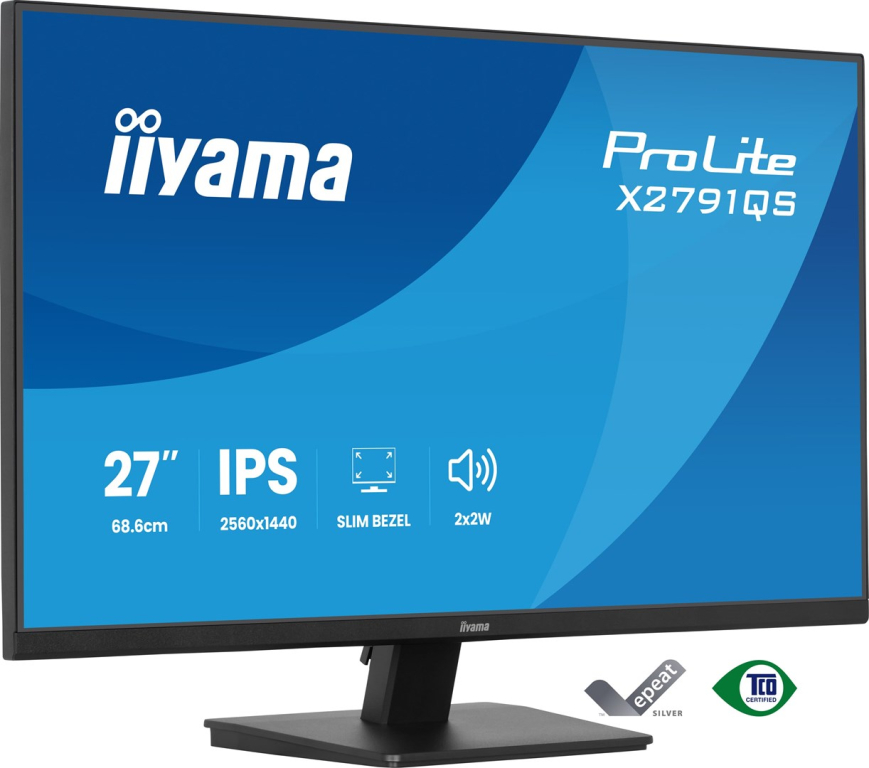
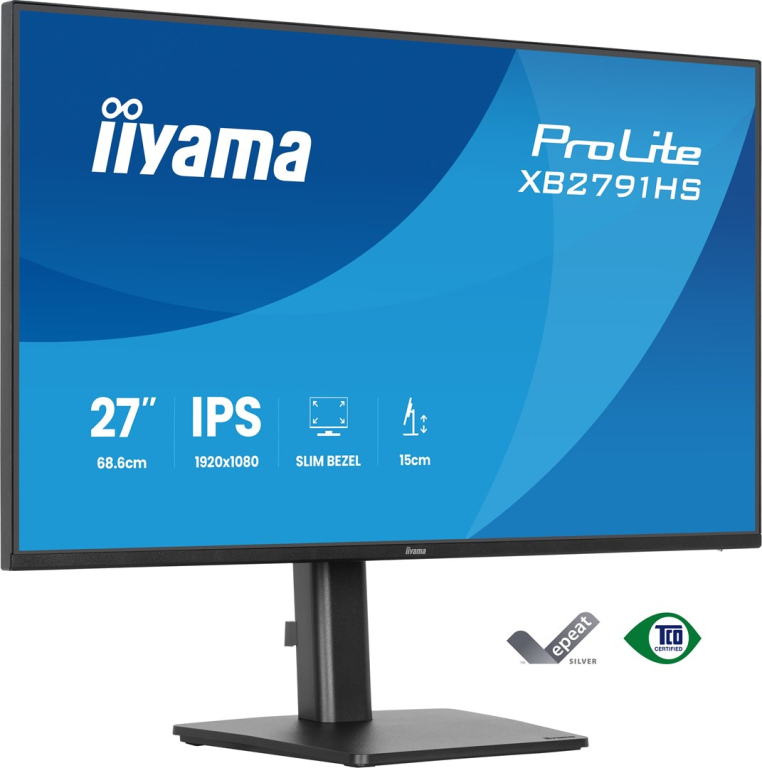
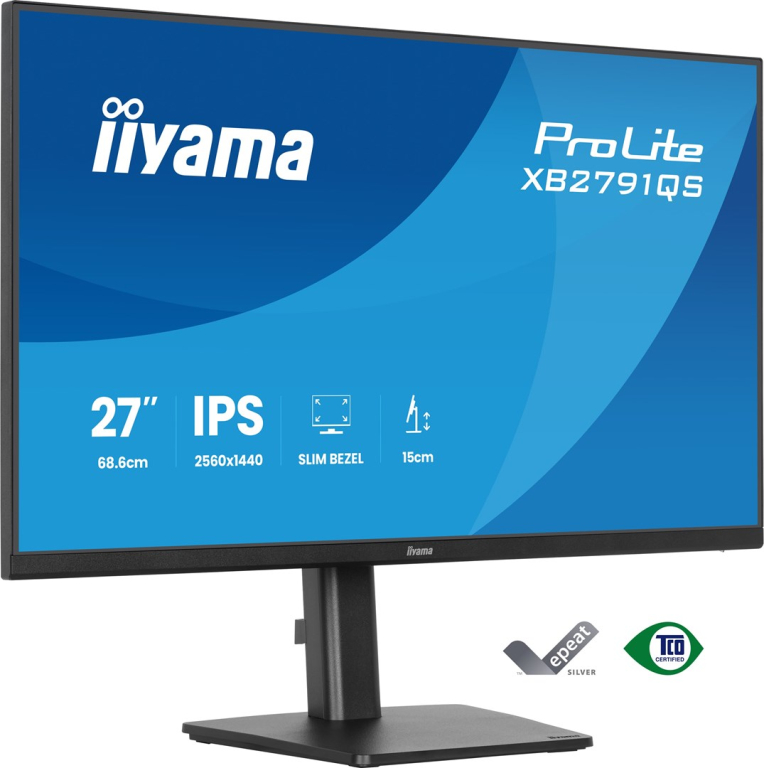
Der ProLite XB2791QS-B1 von iiyama überzeugt als leistungsstarker 27-Zoll-QHD-Monitor mit einer gestochen scharfen Auflösung von 2560 x 1440 Pixeln und bietet damit deutlich mehr Arbeitsfläche sowie feinste Details für Office, kreative Anwendungen und Entertainment. Das hochwertige IPS-Panel sorgt für brillante, natürliche Farben und stabile Kontraste bei weiten Betrachtungswinkeln von 178°, sodass Inhalte aus nahezu jeder Perspektive klar und konsistent dargestellt werden. Das elegante, nahezu rahmenlose Design fügt sich modern in jeden Arbeitsplatz ein und eignet sich ideal für Multi-Monitor-Setups. Dank eines höhenverstellbaren Standfußes, Flicker-Free-Technologie und Blaulichtreduzierung werden die Augen auch bei langen Arbeitstagen oder ausgedehnten Gaming-Sessions spürbar entlastet. Adaptive Sync unterstützt eine flüssige, ruckelfreie Darstellung bei bewegten Inhalten, während integrierte Lautsprecher für praktischen Sound ohne zusätzliche Geräte sorgen. Mit HDMI- und DisplayPort-Anschlüssen bietet der Monitor flexible Verbindungsmöglichkeiten für PC, Laptop oder Konsole und kombiniert starke Performance mit Energieeffizienz – die perfekte Lösung für produktives Arbeiten, anspruchsvolle Bildbearbeitung und entspanntes Multimedia-Erlebnis.
This book is supposed to serve as a comprehensive and instructive guide through the new world of digital communication. On the physical layer optical and electrical cabling technology are described as well as wireless communication technologies. On the data link layer local area networks (LANs) are introduced together with the most popular LAN technologies such as Ethernet, Token Ring, FDDI, and ATM as well as wireless LAN technologies including IEEE 802.x, Bluetooth, or ZigBee. A wide range of WAN technologies are covered including contemporary high speed technologies like PDH and SDH up to high speed wireless WANs (WiMAX) and 4th generation wireless telephone networks LTE. Routing technologies conclude the treatment of the data link layer. Next, there is the Internet layer with the Internet protocol IP that establishes a virtual uniform network out of the net of heterogeneous networks. In detail, both versions, IPv4 as well as the successor IPv6 are covered in detail as well as ICMP, NDP, and Mobile IP. In the subsequent transport layer protocol functions are provided to offer a connection-oriented and reliable transport service on the basis of the simple and unreliable IP. The basic protocols TCP and UDP are introduced as well as NAT, the network address translation. Beside transport layer security protocols like SSL and TLS are presented. On the upmost application layer popular Internet application protocols are described like DNS, SMTP, PGP, (S)FTP, NFS, SSH, DHCP, SNMP, RTP, RTCP, RTSP, and World Wide Web.