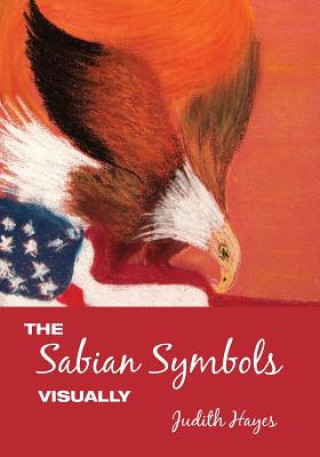
The Sabian Symbols were obtained through channelling sessions by the astrologer Dr Marc Edmund Jones and Elsie Wheeler, a clairvoyant, in San Diego in 1925. One symbol for each degree of the zodiac cycle. These beautiful, 360 hand drawn images of the Sabia
GTIN: 9780486430812Early 20th century c 1900 to c 1950
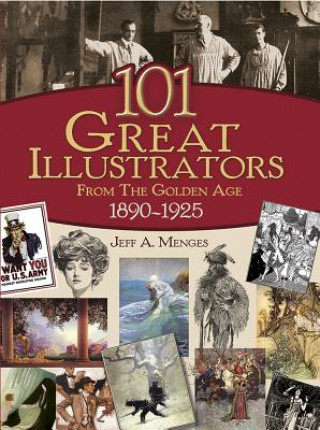
The most comprehensive compilation of its kind in print, this gorgeous edition presents more than 500 full-color works by famous and lesser-known artists from the heyday of book and magazine illustration. Featured artists include Walter Crane, Edmund Dulac, Maxfield Parrish, Howard Pyle, Arthur Rackham, N. C. Wyeth, and many others. Biographical comments and career notes accompany five or six examples of each artist's finest illustrations.
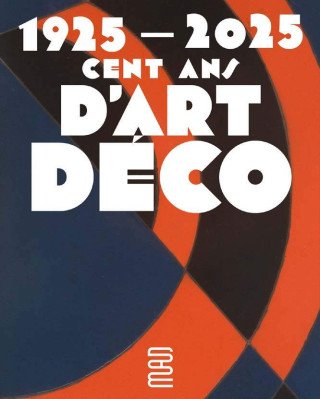
À l’occasion du centenaire de l’Exposition des arts décoratifs et industriels modernes qui marqua l’apogée de l’Art déco, ce catalogue célèbre un style majeur et son succès. Lors de cet événement qui consacra l’Art déco, nombre de décorateurs, fabricants, magazines, grands magasins, artistes, et même des nations étrangères se livrèrent une concurrence acharnée pour prendre possession des bâtiments parisiens, tandis que d’autres érigeaient des structures temporaires pour présenter leurs dernières créations. Tendance esthétique et artistique née avant la Première Guerre mondiale, l’Art déco prend son essor dans les années 1920, alors qu’émerge un nouveau mode de vie en rupture avec les décennies précédentes : vitesse, mouvement et liberté sont désormais les maîtres mots de la société. Protéiforme et insaisissable, ce courant regroupe un ensemble de formes, motifs, matériaux et techniques modernes utilisés par des créateurs comme Jean Puiforcat, Maurice Marinot, Suzanne et René Lalique, Pierre Chareau, Jacques-Émile Ruhlmann, André Groult… À travers huit essais, douze focus et portfolios d’images, ce catalogue couvre les multiples incarnations de l’Art déco, de ses débuts, dans les années 1910, à ses réinterprétations contemporaines, en passant par son âge d’or lors de l’Exposition de1925. Il s’appuie sur une riche iconographie qui offre à voir les chefs-d’œuvre du style Art déco issus des collections du musée des Arts décoratifs, et d’autres encore, à travers de magnifiques reproductions en pleine page et des détails inédits.
2 pcs. 3" wheels without brakes, for Expo Gothic bike parking (excluding 2 x bushings, art.1925)
Märgid ja ekraanilahendused
Täienda oma Expo Gotik jalgrattaparklat selle komplektiga, mis sisaldab kahte 3-tollist hõbedast ratast ilma piduriteta. Loo stiilne ja praktiline lahendus oma jalgratta parkimiseks nende kergete ratastega, mis kaaluvad 102 grammi igaüks. Pane tähele, et see komplekt ei sisalda puksi. Anna oma jalgrattaparklale uus ja ainulaadne välimus nende kõrgekvaliteediliste ratastega.
Tootekood: A49090209GTIN: 9780593801918Biograafia, Kirjandus ja kirjandusuuringud
Edited by The New Yorker's fiction editor, Deborah Treisman, a celebratory selection from 100 years of short stories in the magazine which has been the most influential and important showcase for the form and has launched dozens of stellar careers in fictionAdichie, Borges, Carver, Cheever . . . Danticat, DeLillo, Diaz, Erdrich, Gaitskill . . . Lahiri, Moore, Munro, Murakami . . . Nabokov, O'Hara, Paley, Rushdie, Saunders, Sontag . . . Trevor, Updike, Welty, Wolff...There is simply no A-Z like the alphabet of fiction writers who have appeared in the pages of The New Yorker in the last hundred years. The book boasts inarguable classics like Salinger's "A Perfect Day for Bananafish," Annie Proulx's "Brokeback Mountain," and Shirley Jackson's "The Lottery" alongside stunners to be rediscovered. Some stories defined a moment or a now lost world (Isaac Bashevis Singer's "The Cafeteria"); others showed us a whole new way fiction could sound and feel ("The Red Girl," by Jamaica Kincaid).With this vivid selection, Treisman showcases how our fiction has changed over time, and reminds us that past literary fashions continue to ripple outward in the fiction we love today. What does a Donald Barthelme mean to the craft of short fiction now? What will a Yiyun Li mean to the next generation of readers and writers? This exquisite tour of the form as practiced at its highest level will leap directly into the hearts of readers of all ages, all stripes, and is a beautiful tribute to the magazine's influence on our literary culture over the last century.
Tootekood: A49090212GTIN: 9780593801932Biograafia, Kirjandus ja kirjandusuuringud
Edited by the magazine’s poetry editor, Kevin Young, a celebratory selection from one hundred years of influential, entertaining, and taste-making verse in The New YorkerSeamus Heaney, Dorothy Parker, Louise Bogan, Louise Glück, Randall Jarrell, Langston Hughes, Derek Walcott, Sylvia Plath, W. S. Merwin, Czesław Miłosz, Tracy K. Smith, Mark Strand, E. E. Cummings, Sharon Olds, Franz Wright, John Ashbery, Sandra Cisneros, Amanda Gorman, Maggie Smith, Kaveh Akbar: these stellar names make up just a fraction of the wonderfulness that is present in this essential anthology.The book is organized into sections honoring times of day (“Morning Bell,” “Lunch Break,” “After-Work Drinks,” “Night Shift”), allowing poets from different eras to talk back to one another in the same space, intertwined with chronological groupings from the decades as they march by: the frothy 1920s and 1930s (“despite the depression,” Young notes), the more serious ’40s and ’50s (introducing us to the early greats of our contemporary poetry, like Elizabeth Bishop, W. S. Merwin, and Adrienne Rich), the political ’60s and ’70s, the lyrical ’80s and ’90s, and then the 2000s’ with their explosion of greater diversity in the magazine, greater depth and breadth. Inevitably, we see the high points when poems spoke directly into, about, or against the crises of their times—the war poetry of W. H. Auden and Karl Shapiro; the remarkable outpouring of verse after 9/11 (who can forget Adam Zagajewski’s “Try to Praise the Mutilated World”?); and more recently, stunning poems in response to the cataclysmic events of COVID and the murder of George Floyd.The magazine’s poetic influence resides not just in this historical and cultural relevance but in sheer human connection, exemplified by the passing verses that became what Young calls “refrigerator poems”: the ones you tear out and affix to the fridge to read again and again over months and years. Our love for that singular Billy Collins or Ada Limón poem—or lines by a new writer you’ve never heard of but will hear much more from in the future—is what has made The New Yorker a great organ for poetry, a mouthpiece for our changing culture and way of life, even a mirror of our collective soul.
Tootekood: A734781GTIN: 9780099475118Ilukirjandus ja sellega seotud esemed
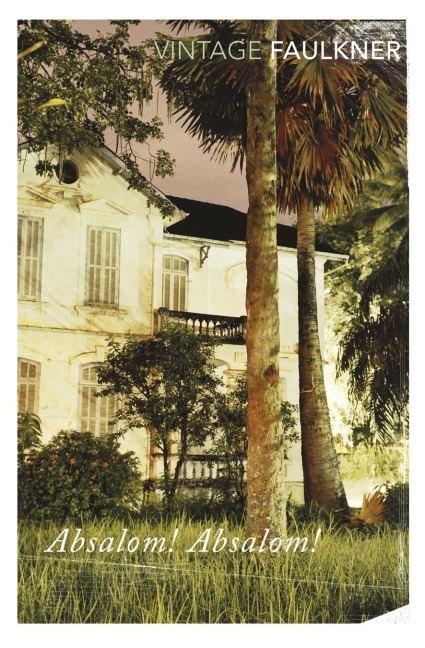
Born in 1897 in New Albany, Mississippi, William Faulkner was the son of a family proud of their prominent role in the history of the south. He grew up in Oxford, Mississippi, and left high school at fifteen to work in his grandfather's bank. Rejected by the US military in 1915, he joined the Canadian flyers with the RAF, but was still in training when the war ended. Returning home he studied at the University of Mississippi and visited Europe briefly in 1925. His first poem was published in The New Republic in 1919. His first book of verse and early novels followed, but his major work began with the publication of The Sound and the Fury in 1929. As I Lay Dying (1930), Sanctuary (1931), Light in August (1932), Absalom, Absalom! (1936) and The Wild Palms (1939) are the key works of his great creative period leading up to Intruder in the Dust (1948). During the 1930s, he worked in Hollywood on film scripts, notably The Blue Lamp, co-written with Raymond Chandler. William Faulkner was awarded the Nobel Prize for Literature in 1949 and the Pulitzer Prize for The Reivers just before his death in July 1962.
Anarchism is Not Enough is a manifesto against systematic thinking, a difficult book by a famously difficult writer. For the scope of its critical imagination, it is the most radical work of Laura Riding's early period. This period extends from the end of 1925, when she left America for Europe and Robert Graves, to 1939, the year she returned to America, renounced any further writing of poetry, and soon after married Schuyler Jackson. Published in 1928, when Riding was twenty-seven, Anarchism is a kind of early autobiographia literaria. Long out of print and now available for the first time in paperback, this is one of the most imaginative and daring works of literary theory ever written by a modernist figure. Lisa Samuels's edition sets the work in its historical context and elucidates its central intellectual difficulties. Her introduction and notes are a valuable aid to an understanding of Riding's work.
This groundbreaking critical biography of Andrei Siniavskii (1925-1997) as a writer in and of his time shows how this subtle and complex author found his way in a society polarised into heroes and villains, patriots and traitors, how he progressed from identification with the value system and ideology of his time to reaction against it, and his dissidence expressed in literary terms. Based on a close reading of his work, Andrei Siniavskii: A Hero of his Time? explores the way in which Siniavskii's art does not simply reflect the circumstances of his life and times but is actively shaped by an intricate commerce between the two. This groundbreaking critical biography of Andrei Siniavskii (1925-1997) as a writer in and of his time shows how this subtle and complex author found his way in a society polarized into heroes and villains, patriots and traitors, how he progressed from identification with the value system and ideology of his time to reaction against it, and his dissidence expressed in literary terms. Based on a close reading of his work, Andrei Siniavskii: A Hero of his Time? explores the way in which Siniavskiis art does not simply reflect the circumstances of his life and times but is actively shaped by an intricate commerce between the two. <br><br> Autorid: Eugenie Markesinis <br>
"Virginia Woolf's groundbreaking novel, in a lushly illustrated hardcover edition with illuminating commentary from a brilliant young Oxford scholar and critic. "Mrs. Dalloway said she would buy the flowers herself." So begins Virginia Woolf's much-beloved fourth novel. First published in 1925, Mrs. Dalloway has long been considered Woolf's masterpiece. A pivotal work of literary modernism, its simple plot-centered on an upper-class Londoner preparing to give a party-is complicated by Woolf's satire of the English social system. For decades, Woolf's rapturous style and vision of individual consciousness have challenged and inspired readers, novelists, and scholars alike. In this annotated volume based on the original British edition, acclaimed essayist and Oxford don Merve Emre mines Woolf's diaries and notes on writing to take us into the making of Mrs. Dalloway, revealing the novel's artistry and astonishing originality. Alongside her generous commentary, Emre offers hundreds of illustrations and little-known photographs from Woolf's life. The result is not only an essential volume for students and Woolf devotees, but an incomparable gift to all lovers of literature"-- Virginia Woolfs groundbreaking novel, in a lushly illustrated hardcover edition with illuminating commentary from a brilliant young Oxford scholar and critic. Mrs. Dalloway said she would buy the flowers herself. So begins Virginia Woolfs much-beloved fourth novel. First published in 1925, Mrs. Dalloway has long been viewed not only as Woolfs masterpiece, but as a pivotal work of literary modernism and one of the most significant and influential novels of the twentieth century. In this visually powerful annotated edition, acclaimed Oxford don and literary critic Merve Emre gives us an authoritative version of this landmark novel, supporting it with generous commentary that reveals Woolfs aesthetic and political ambitionsin Mrs. Dalloway and beyondas never before.Mrs. Dalloway famously takes place over the course of a single day in late June, its plot centering on the upper-class Londoner Clarissa Dalloway, who is preparing to throw a party that evening for the nations elite. But the novel is complicated by Woolfs satire of the English social system, and by her groundbreaking representation of consciousness. The events of the novel flow through the minds and thoughts of Clarissa and her former lover Peter Walsh and others in their circle, but also through shopkeepers and servants, among others. Together Woolfs characterseach a jumble of memories and perceptionscreate a broad portrait of a city and society transformed by the Great War in ways subtle but profound ways. No figure has been more directly shaped by the conflict than the disturbed veteran Septimus Smith, who is plagued by hallucinations of a friend who died in battle, and who becomes the unexpected second hinge of the novel, alongside Clarissa, even thoughin one of Woolfs many radical decisionsthe two never meet.Emres extensive introduction and annotations follow the evolution of Clarissa Dallowaybased on an apparently conventional but actually quite complex acquaintance of Woolfsand Septimus Smith from earlier short stories and drafts of Mrs. Dalloway to their emergence into the distinctive forms devoted readers of the novel know so well. For Clarissa, Septimus, and her other creations, Woolf relied on the skill of character reading, her technique for bridging the gap between life and fiction, reality and representation. As Emre writes, Woolfs approach to representing character involved burrowing deep into the processes of consciousness, and, so submerged, illuminating the infinite variety of sensation and perception concealed therein. From these depths, she extracted an unlimited capacity for life. It is in Woolfs characters, fundamentally unknowable but fundamentally alive, that the enduring achievement of her art is most apparent.The Annotated Mrs. Dalloway <br><br> Autorid: Merve Emre, Virginia Woolf <br>
GTIN: 9781631496769Biography, Literature & Literary studies
"Mrs. Dalloway said she would buy the flowers herself." So begins Virginia Woolf's beloved fourth novel. First published in 1925, Mrs.Dalloway has long been considered Woolf's masterpiece. A pivotal work of literary modernism, its simple plot-centred on an upper-class Londoner preparing to give a party-is complicated by Woolf's satire of the English social system. For decades, Woolf's rapturous style and vision of individual consciousness have challenged and inspired readers, novelists and scholars alike.In this annotated volume based on the original British edition, acclaimed essayist and Oxford don Merve Emre mines Woolf's diaries and notes on writing to take us into the making of Mrs. Dalloway, revealing the novel's artistry and astonishing originality. Alongside her generous commentary, Emre offers hundreds of illustrations and little-seen photographs from Woolf's life.The result is not only an essential volume for students and Woolf devotees but an incomparable gift to all lovers of literature.
GTIN: 9781602062474Children’s / Teenage: general interest
The biblical Book of Revelation is not a cryptic history or prophecy, as is generally believed, but is, in fact, a manual of spiritual development. So explains theosophist James M. Pryse in this 1919 work, which seeks to uncover the hidden significance of the most misunderstood section of the Bible and reinterpret it from a modern theosophical perspective, uncovering its esoteric relationship to other ancient texts, including the Upanishads. Pryse offers a new translation of the Apocalypse based upon undisputed meanings of the original Greek text and comments on it on a verse-by-verse basis to bring to light startling new meaning in a work that many readers will have believed fully explored. Students of comparative mythology, ancient religion, and the Bible will find this an intriguing read.American journalist JAMES MORGAN PRYSE JR. (1859-1942) helped found the Gnostic Society in Los Angeles in 1925. He is also the author of Sermon on the Mount and Other Extracts from the New Testament (1899) and Reincarnation in the New Testament (1900), among other works.
Tootekood: AR20-01925AGTIN: 8809961110535Mobiilseadmed ja tarvikud > Mobiilitarvikud > Kotid ja kaaned
Flexield on Araree kõrgekvaliteedilise TPU ümbriste seeria, mis kaitseb seadet elastse materjali abil löökide neelamisel. Testitud kukkumiste suhtes 1,2 meetri kõrguselt. Värvimuutuse viivitusega. Löökide neeldumine. Elastne materjal. Suurepärane vastupidavus. Paelalõige. Lööke neelav konstruktsioon neljal nurgal kaitseb teie seadet ja aitab säästa remondikulusid. Usaldusväärne kvaliteet, mis on loodud spetsiaalselt Galaxy seadmete jaoks. Toode on läbinud range kvaliteedi- ja usaldusväärsustesti Samsung Mobile Accessory (SMAPP) partnerprogrammi raames. Araree tagab selle toote erakordse ühtsuse ja suurepärase kvaliteedi.
2012 Reprint of 1925 Edition. Exact facsimile of the original edition, not reproduced with Optical Recognition Software. Although mastery of the art of rigging is no longer required on board ships today, serious model builders need to learn this art in miniature. The book is widely considered the best manual every produced on rigging the sail ship. This edition is based on the 1925 revision of the original work first published in 1848. Biddlecombe, a Master in the Royal Navy and former merchant seaman, was the author of the first edition. Biddlecombe divides his work into five parts:(1) Alphabetical Explanation of the Terms and Phrases used in Rigging.(2) Directions for the Performing of Operations Incidental to Rigging, and for Preparing It on Shore.(3) Progressive Method of Rigging Ships.(4) Description of Reeving the Running Rigging and Bending the Sails.(5) Tables of the Quantities and Dimensions of the Standing and Running Rigging of Ships, Brigs, Fore-and-Aft Schooners, and Cutters, etc.
GTIN: 9782358731881Modern philosophy: since c 1800
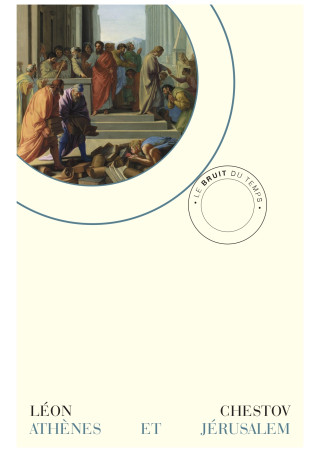
Tome X de ses œuvres complètes telles qu’il les avait lui-même conçues, achevé en avril 1937, un an avant sa mort, Athènes et Jérusalem est le dernier grand livre publié de Chestov, et donc l’aboutissement de sa réflexion sur l’opposition entre la sagesse philosophique (Athènes) et la révélation religieuse ( Jérusalem).Chestov résume lui-même dans sa préface la visée du livre : « mettre à l’épreuve les prétentions à la possession de la vérité qu’émet la phi- losophie spéculative ». La connaissance ne justifie pas l’être, c’est le contraire qui est vrai : « L’arbre de science n’étouffe plus l’arbre de vie. » La première partie, écrite en 1929, montre qu’en poursuivant le savoir, les philosophes ont perdu la liberté : Parménide est enchaîné. La deu- xième partie, « Le Taureau de Phalaris », achevée en 1931 et composée de chapitres consacrés à Nietzsche, Socrate et Kierkegaard, fait appa- raître le lien indestructible entre le savoir tel que le comprend la philo- sophie et les horreurs de l’existence humaine. La troisième montre les efforts infructueux de la philosophie médiévale pour concilier la vérité biblique, révélée, avec la vérité « prouvée ». La quatrième partie, intitu- lée « La seconde dimension de la pensée » et composée d’aphorismes notés sur des carnets de travail des années 1925-1929, montre que les vérités de la raison nous contraignent peut-être, mais qu’elles sont loin de nous persuader toujours. Un même effort soulève les quatre parties du livre : rejeter loin de soi les vérités inanimées et indifférentes à tout, qui sont les fruits de l’arbre de la science. Chestov leur oppose une « philosophie religieuse » qui prend sa source dans l’acceptation absurdement paradoxale que pour Dieu, rien n’est impossible.« "Athènes et Jérusalem”, "la Philosophie Religieuse”..., ces expressions coïncident presque, elles ont presque le même sens et elles sont aussi énigmatiques l’une que l’autre et irritent au même degré la pensée contemporaine par la contradiction qu’elles recèlent. Ne vaudrait-il pas mieux poser le dilemme : ou bien Athènes, ou bien Jérusalem ? Ou bien la religion, ou bien la philosophie ? »Léon Chestov, « Sagesse et Révélation », préface à Athènes et Jérusalem, 1937.
Tootekood: 725-1925GTIN: 8594048031925Närilistele, Teistele, Toit, maiused ja toidulisandid
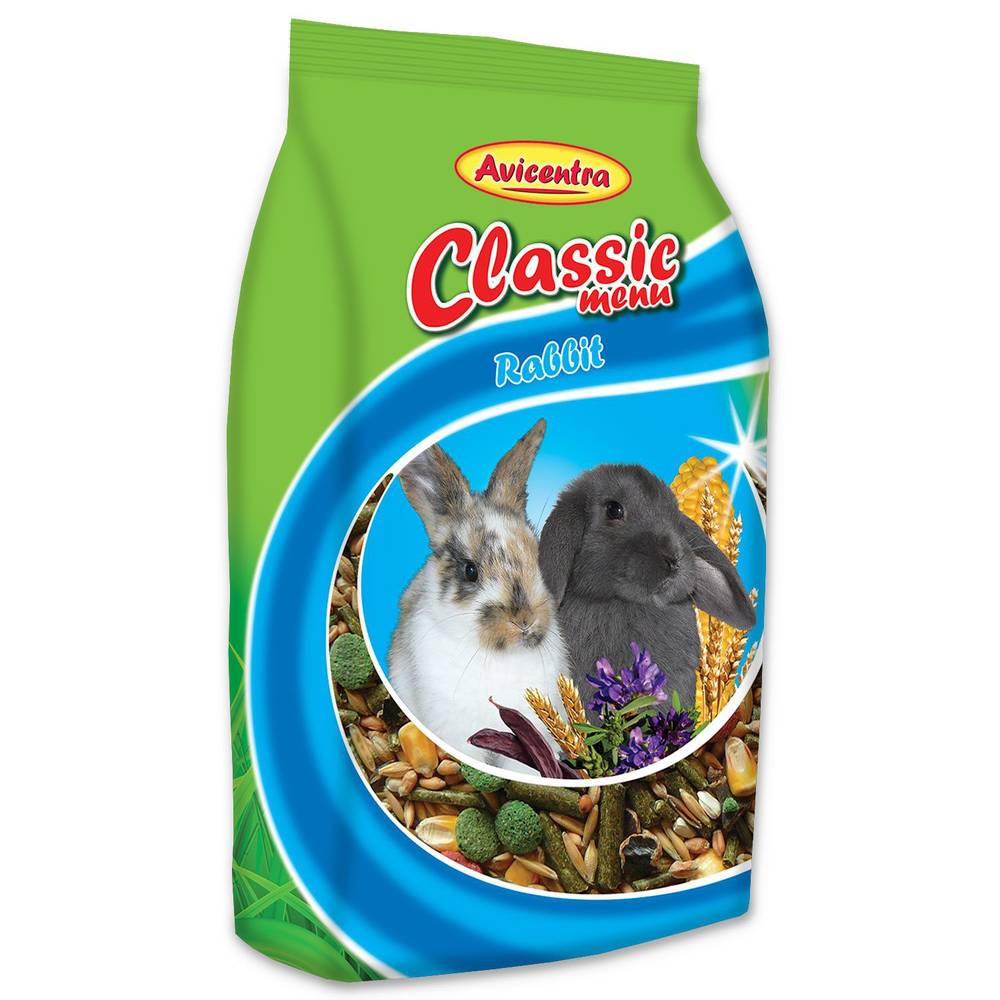
Tasakaalustatud Avicentra standard sööt pakub küülikutele vajalikke toitaineid ja vitamiine, soodustades optimaalset seedimist ja üldist tervist. Rikastatud looduslike koostisosadega.
GTIN: 9781338681420Children’s / Teenage general interest: History & the past
The legendary story of Balto comes to life in this heavily illustrated nonfiction chapter book series, perfect for fans of Ranger in Time! In 1925, disaster struck the small town of Nome, Alaska. When a deadly epidemic begins affecting the children of Nome, their only hope is to relay life-saving medicine over 650 miles of snow-covered trails using teams of sled dogs. Across the long journey, one dog overcame nearly impossible odds to become a hero.This action-packed series explores the stories of real-life animal heroes who saved the day! With black-and-white art throughout and dramatic storytelling, readers are taken on an exciting journey they won"t soon forget.Fans of Ranger in Time will devour these true tales of incredible animal heroes!