Tootekood: A45807773GTIN: 9781316513590Matemaatika ja teadus
This new graduate textbook adopts a pedagogical approach to contemporary cosmology that enables readers to build an intuitive understanding of theory and data, and of how they interact, which is where the greatest advances in the field are currently being made. Using analogies, intuitive explanations of complex topics, worked examples and computational problems, the book begins with the physics of the early universe, and goes on to cover key concepts such as inflation, dark matter and dark energy, large‑scale structure, and cosmic microwave background. Computational and data analysis techniques, and statistics, are integrated throughout the text, particularly in the chapters on late-universe cosmology, while another chapter is entirely devoted to the basics of statistical methods. A solutions manual for end-of-chapter problems is available to instructors, and suggested syllabi, based on different course lengths and emphasis, can be found in the Preface. Online computer code and datasets enhance the student learning experience.
From Stonehenge to beyond the Big Bang, an exhilarating scientific exploration of how we make time Time is the grandest conception of the universe that we humans have been able to imagine and its most intimate, the very frame of human life. In About Time, astrophysicist and award-winning writer Adam Frank tells the scientific story of this wonderful and tyrannical invention. A Palaeolithic farmer moved through the sun-fuelled day and star-steered night in a radically different way than the Elizabethan merchants who set their pace to the clocks newly installed in their town squares. Since then, science has swept time into increasingly minute and standardized units the industrial efficiency of ironworks punch clocks; the space-age precision of atomic fountains and GPS satellites; the fifteen-minute increments of Outlooks digital revolution. And in the past decade, string-theory branes, multiverses, and clockless physics have begun to overturn our ideas about how the universe began the Big Bang in ways that will completely rewrite time and our experience of it. Weaving cosmology with day-to-day chronicles and a down-to-earth style, About Time is both dazzling and riveting as it confronts what comes next. <br><br> Autorid: Adam Frank <br>
Lisa Kaltenegger offers first-hand access to her expertise on the search for planets in the universe, and the life they may contain. Along the way, Lisa's breezy narrative style invites you to experience with her the challenges and joys of being a scientist on the frontier of discovery Neil deGrasse Tyson, Astrophysicist For thousands of years, humans have wondered whether we're alone in the cosmos. Now, for the first time, we have the technology to investigate. The question should have an obvious answer: yes or no. But once you try to find life elsewhere, you realize it is not so simple. How do you find it over cosmic distances? What actually is life? Astronomer Lisa Kaltenegger works from Carl Sagans former office at Cornell University, where she built a team of tenacious scientists from many disciplines to find life on faraway worlds, using Earths diverse biosphere and its history as a Rosetta Stone. With infectious enthusiasm, she provides an eye-opening insiders guide to the most unusual exoplanets that have shaken our worldview planets covered in oceans of lava, lonely wanderers lost in space, and others with more than one sun in their sky as well as the best contenders for Alien Earths. She also shows how close imagined scifi worlds come to reality. We live in an incredible new epoch of exploration. As our witty and knowledgeable tour guide, Professor Kaltenegger shows how we discover not merely new continents, like the explorers of old, but whole new worlds circling other stars and how we could spot life there. Worlds from where aliens may even be gazing back at us. What if we're not alone? <br><br> Autorid: Lisa Kaltenegger <br>
'Often-complex ideas are explained with clarity and precision, but this is clearly a passion project for the author, and the book soars where he deploys more poetic language, as when musing on the deeper themes that arise from his central question. ... If you've ever looked up at the sky and pondered on the big questions of life in the Universe, this is essential reading.' BBC Sky at Night magazineAstronomer and science writer David Whitehouse takes us on a journey through the evolving cosmos as he considers humankind's place in the universe - and how our survival depends on otherworldly perspectives.From the Earth to the depths of outer space, this inspiring book shows how human evolution has been intertwined with the workings of the cosmos from the very beginning, and what the far-distant future may hold, both for the universe and for ourselves.Given enough time, Whitehouse contends, we must communicate with intelligent aliens whose divergent perspective will transform our understanding of the universe. First contact may even come sooner than we think. We have already transmitted signals towards promising exoplanets. If, say, Gliese 581d harbours life, the return signal could reach us in 2051.Drawing the thread of human consciousness from the cave to the cosmos, the acclaimed author of Apollo 11: The Inside Story charts our future journey to the end of space and time and considers whether something of humanity could remain at the end of it all. <br><br> Autorid: David Whitehouse <br>
Updated edition of a popular introduction to cosmology, now with new observational data, supporting web material, and problems with solutions An Introduction to Modern Cosmology is an accessible account of modern cosmological ideas that enables readers to understand cosmology without resorting to the mathematical apparatus of general relativity. This fully revised Fourth Edition of the bestseller takes an approach which is grounded in physics with a logical flow of chapters, leading the reader from basic ideas of the expansion described by the Friedman equations to some of the more advanced ideas about the early universe. The Advanced Topic sections present subjects with more detailed mathematical approaches to give greater depth to discussions. Student problems with hints for solving them and numerical answers are embedded in the chapters to facilitate the readers' understanding and learning. The new edition contains updated observational data, more detailed explanations and examples of the central-to-cosmology Friedman equations, and references to extensive online supporting material. It also incorporates up-to-date results from the Planck mission, which imaged the anisotropies of cosmic microwave background radiation over the whole sky. Sample topics explored in An Introduction to Modern Cosmology include: The geometry of the universe, covering flat, spherical, and hyperbolic geometry, infinite and observable universes, and the three values of k Simple cosmological models, covering Hubble's law, expansion and redshift, particle number densities, and evolution including curvature The density of the universe and dark matter, covering galaxy cluster composition and brightness of the supernovae The origin of light elements in the universe, covering hydrogen and helium, problems with the Hot Big Bang, and flatness and horizon problems Written in a clear, concise format with short, accessible chapters, An Introduction to Modern Cosmology is an essential textbook resource on the subject for advanced undergraduate and graduate students of astronomy, astrophysics, and physics.
<p>Anex Avionaut Cosmo turvahäll – turvalisus ja mugavus juba esimestest reisidest alates.</p><p><span style="font-weight:bold;">Omadused</span>:</p><ul><li>Turvahäll tagab kõrgeima ohutuse ja ergonoomika taseme.</li><li>Mugav, pehme ja sobib pikemateks reisideks imiku või väikelapsega.</li><li>Lihtne autosse paigaldada ja sobib kasutamiseks alates sünnist kuni umbes 18 kg kaaluni.</li><li>Stiilne must värv sobib iga auto salongiga.</li><li>Valmistatud vastupidavatest ja kvaliteetsetest materjalidest.</li><li>Kompaktne disain, mahub kergesti autosse.</li><li>Kaalu kategooria: kuni 18 kg</li><li>Pikkuse kategooriga: 40-85 cm</li></ul>
<p>Anex Avionaut Cosmo turvahäll – turvalisus ja mugavus juba esimestest reisidest alates.</p><p><span style="font-weight:bold;">Omadused</span>:</p><ul><li>Turvahäll tagab kõrgeima ohutuse ja ergonoomika taseme.</li><li>Mugav, pehme ja sobib pikemateks reisideks imiku või väikelapsega.</li><li>Lihtne autosse paigaldada ja sobib kasutamiseks alates sünnist kuni umbes 18 kg kaaluni.</li><li>Stiilne must värv sobib iga auto salongiga.</li><li>Valmistatud vastupidavatest ja kvaliteetsetest materjalidest.</li><li>Kompaktne disain, mahub kergesti autosse.</li><li>Kaalu kategooria: kuni 18 kg</li><li>Pikkuse kategooriga: 40-85 cm</li></ul>
Explores the concepts and many implications of the theory that the structure and operation of the universe is determined by the existence of intelligent observers Ever since Copernicus, scientists have continually adjusted their view of human nature, moving it further and further from its ancient position at the center of Creation. But in recent years, a startling new concept has evolved that places it more firmly than ever in a special position. Known as the Anthropic Cosmological Principle, this collection of ideas holds that the existence of intelligent observers determines the fundamental structure of the Universe. In its most radical version, the Anthropic Principle asserts that "intelligent information-processing must come into existence in the Universe, and once it comes into existence, it will never die out." This wide-ranging and detailed book explores the many ramifications of the Anthropic Cosmological Principle, covering the whole spectrum of human inquiry from Aristotle to Z bosons. Bringing a unique combination of skills and knowledge to the subject, John D. Barrow and Frank J. Tipler--two of the world's leading cosmologists--cover the definition and nature of life, the search for extraterrestrial intelligence, and the interpretation of the quantum theory in relation to the existence of observers. The book will be of vital interest to philosophers, theologians, mathematicians, scientists, and historians, as well as to anyone concerned with the connection between the vastness of the universe of stars and galaxies and the existence of life within it on a small planet out in the suburbs of the Milky Way. <br><br> Autorid: John D. Barrow, Frank J. Tipler, John A. Wheeler <br>
Tootekood: A4790236GTIN: 9780866900867Tervis, suhted ja isiklik areng
This basic cosmobiology textbook was first printed in Germany (1949) under the title The 90° Dial in Practice. It has since had additions and improvements. Written by the acknowledged master, cosmobiology takes the fundamentals of the basic horoscope one step further by condensing the wheel to 90° by placing the planets into their groups of cardinal, fixed and mutable. The analysis then becomes very simplified, yet with details that are astounding. Explained are the methods, interpretations, use of solar arc directions, graphic ephemeris and more. See for yourself how using cosmobiology makes astrology become a quicker and more useful tool.
In light of current discourses on AI and robotics, what do the various experiences of art contribute to the rethinking of technology today?Art and Cosmotechnics addresses the challenge of technology to the existence of art and traditional thought, especially in light of current discourses on artificial intelligence and robotics. It carries out an attempt on the cosmotechnics of Chinese landscape painting in order to address this question, and further asks: What is the significance of shanshui (mountain and water) in face of the new challenges brought about by the current technological transformation? Thinking art and cosmotechnics together is an attempt to look into the varieties of experiences of art and to ask what these experiences might contribute to the rethinking of technology today. <br><br> Autorid: Yuk Hui <br>
This book is a gallery of human accomplishment that celebrates the scientists and engineers who push civilizationincluding the ways that we produce and experience artbeyond the physical limits of our planet. The photographs, selected by Dr. Jim Bell, represent some of the finest examples of the art of deep space exploration, most of them involving high-tech robotic emissaries. The images are loosely organized by distance from the Earth, so that readers will slowly travel on a journey farther and farther away from home, ultimately voyaging out to vistas of the farthest-known places in the universe. Hundreds of deep space missions since the 1960s have captured stunning photographs of the cosmos. Many of these scientific images can also be classified as art. This book highlights more than 100 examples, revealing the splendor of our universe. This book is a gallery of human accomplishment that celebrates the scientists and engineers who push civilizationincluding the ways that we produce and experience artbeyond the physical limits of our planet. The photographs, selected by Dr. Jim Bell, represent some of the finest examples of the art of deep space exploration, most of them involving high-tech robotic emissaries. The images are loosely organized by distance from the Earth, so that readers will slowly travel on a journey farther and farther away from home, ultimately voyaging out to vistas of the farthest-known places in the universe. <br><br> Autorid: Jim Bell <br>
Presents overviews of the astrologies of the world's religions, discussing how various cultures have used celestial observations and beliefs about the heavens to engage with the divine and understand their lives on Earth. st1\:*{behavior:url(#ieooui) } When you think of astrology, you may think of the horoscope section in your local paper, or of Nancy Reagan's consultations with an astrologer in the White House in the 1980s. Yet almost every religion uses some form of astrology: some way of thinking about the sun, moon, stars, and planets and how they hold significance for human lives on earth. Astrology and Cosmology in the Worlds Religions offers an accessible overview of the astrologies of the world's religions, placing them into context within theories of how the wider universe came into being and operates. Campion traces beliefs about the heavens among peoples ranging from ancient Egypt and China, to Australia and Polynesia, and India and the Islamic world. Addressing each religion in a separate chapter, Campion outlines how, by observing the celestial bodies, people have engaged with the divine, managed the future, and attempted to understand events here on earth. This fascinating text offers a unique way to delve into comparative religions and will also appeal to those intrigued by New Age topics. <br><br> Autorid: Nicholas Campion <br>
In the Middle Ages, Astronomia - one of the Seven Liberal Arts - was as much about astrology as astronomy. In fact the two disciplines only parted company in the seventeenth century, as the materialistic world-view gained greater prominence. Where once human destiny was connected to stars and planets, and spiritual or soul qualities were associated with the natural world, now the cosmos was seen as consisting of gases, fire and dead rock. Rudolf Steiner brings a new spiritual perspective to our study of the heavens. Humanity, he says, is intimately connected to cosmic beings, who in turn are related to planets and stars. There is meaning in the cosmos. Although Steiner rejects the simplistic notion of the planets determining our lives and behaviour, he makes a clear connection between the heavenly bodies and human beings. Whilst criticizing the superficial nature of much astrology, Steiner shows that as individuals, and with the guidance of spiritual beings, we choose an appropriate time of birth to match the destiny we are to live. This enlightening anthology, expertly collated by Margaret Jonas, features excerpts of Steiner's work on the spiritual individualities of the planets, the determination of human characteristics by the constellation at birth, the cultural epochs and the passage of the equinox, cosmic influences on the individual and humanity, life in the planetary spheres between death and rebirth, solar and lunar eclipses, comets, and much more. <br><br> Autorid: Rudolf Steiner, C. Von Arnim <br>
Astrophysics and Cosmology for Non-mathematicians is a combination of the international bestseller book Astrophysics for Non-mathematicians and the award-winning book Cosmology for a Newbie.
GTIN: 9781611807424Literature: history & criticism
A deep and radically original exploration of Taoist and Ch'an (Zen) Buddhist wisdom through the lens of the life and work of Tu Fu, widely considered China's greatest classical poet. What is consciousness but the Cosmos awakened to its
"Although it tells the tale of an individual's life, this book is no ordinary biography. Awakened Cosmos presents the life and poetry of Tu Fu through the lens of the idea that animated all of his work that a person is a location in which the cosmos can awaken to itself. Each of the nineteen chapters begins with one of Tu Fu's poems, rendered first in literal character-by-character translation, then in translator David Hinton's signature style. Hinton captures the texture and density of the originals while rendering the poems in vivid, accessible English. He then offers a philosophically rich interpretation of each poem, at once delving into the depths of the Daoist and Ch'an influences, context, and subtext of the poems and guiding the reader through TuFu's dramatic life--which included everything from serving in the Emperor's court and achieving national prestige as a poet to experiencing warfare, deprivation, and years of refugee wandering. The result is nothing short of remarkable--a biography of the wild Cosmos awakened to itself in one particular human manifestation: the poet Tu Fu"-- A deep and radically original exploration of Taoist and Ch'an (Zen) Buddhist wisdom through the lens of the life and work of Tu Fu, widely considered China's greatest classical poet.What is consciousness but the Cosmos awakened to itself? This question is fundamental to the Taoist and Ch'an (Zen) Buddhist worldview that shapes classical Chinese poetry. A uniquely conceived biography, Awakened Cosmos illuminates that worldview through the life and work of Tu Fu (712-770 C.E.), China's greatest classical poet. Tu Fu's writing traces his life from periods of relative normalcy to years spent as an impoverished refugee amid the devastation of civil war. Exploring key poems to guide the reader through Tu Fu's dramatic life, Awakened Cosmos reveals Taoist/Ch'an insight deeply lived across the full range of human experience.Each chapter presents a poem in three stages: first, the original Chinese; then, an English translation in Hinton's masterful style; and finally, a lyrical essay that discusses the untranslatable philosophical dimensions of the poem. The result is nothing short of remarkable: a biography of the Cosmos awakened to itself in the form of a magisterial poet alive in T'ang Dynasty China.Thirty years ago, David Hinton published America's first full-length translation of Tu Fu's work. Awakened Cosmos is published simultaneously with a newly translated and substantially expanded version of that landmark translation: The Selected Poems of Tu Fu: Expanded and Newly Translated (New Directions). <br><br> Autorid: David Hinton <br>
Now everyone can learn to take great pictures of the cosmos!The night sky is filled with immense beauty and mystery, and its no wonder so many photographers want to learn how to take great photographs of all it contains: the moon, stars, planets, galaxies, and beyond. But for photographers just getting started photographing the cosmos, some books veer into advanced territory way too quickly, filled with difficult theory and long, expensive lists of must-have gear.If youre just starting your adventure in astrophotography, The Beginners Guide to Astrophotography is the book for you! Photographer Mike Shaw teaches you everything you need to know to capture great images of the night skywithout breaking the bank or needing an advanced physics degree.In this book, youll quickly gain an understanding of the night sky, then dive into gear and settings. Regardless of the camera you own (smartphone, DSLR, or mirrorless), youll be able to capture shots you love. Youll learn all about the gear you absolutely need (and what you dont) as well as the accessories that will make your astrophotography life easier. Then youll dive into camera technique: exposure settings, focusing tricks, and composition techniques to get the shot. Youll also learn about the best apps for astronomy, weather, planning, and navigation. Mike walks you through how to plan a shoot, set up for it, and capture your images. Finally, youll learn the post-processing techniques that will have your images looking their best.Youll learn how to photograph: The moon (full, crescent, lunar eclipse, solar eclipse) The Milky Way (the core, the central band) Constellations (Orion, Perseus, Scorpius, etc.) Asterisms (Big Dipper, Summer Triangle, Orions Belt, etc.) Star trails Planets (Venus, Jupiter, Saturn, Mars) Aurora Borealis Meteors Satellites (such as the Internaional Space Station) Nebulae Star Clusters Galaxies Comets And more!Table of ContentsChapter 1: What Is Astrophotography, Exactly?Chapter 2: Understanding the Night Sky for AstrophotographersChapter 3: Astrophotography Equipment, Setup, and TechniqueChapter 4: Landscape Astrophotography SubjectsChapter 5: Deep Sky Astrophotography SubjectsChapter 6: Choosing Where and When to ShootChapter 7: Synthesis: Your First Astrophotography SessionChapter 8: Making Your Astrophotography Images Look AmazingChapter 9: Advanced Astrophotography <br><br> Autorid: Mike Shaw <br>
Avasta looduse detaile binokliga Celestron COSMOS Tree of Life 10x42. Sel binoklil on faaskattega BaK-4 prismad ja täielikult kaetud mitmekordse kattega optika, mis pakuvad eredaid, teravaid kujutisi. Tänu veekindlale konstruktsioonile ja vastupidavale kummist ümbrisele sobib see suurepäraselt väliseiklusteks. Ideaalne metsloomade ja maastike vaatlemiseks.
Tootekood: A48657439GTIN: 9798986074719Matemaatika ja teadus
The author's Black Hole Cosmology is an unprecedented, original, and authentic scientific theory that has a set of the simplest formulas for everyone to do actual numerical calculations which describes the laws of our universe. In this book, the concepts, theories, formulas, and conclusions of every article are unprecedented innovations.In Part I, the author finds and derives the six most basic Black Hole formulas as the cornerstones to establish a perfect New Black Hole Theory (NBHT). These formulas prove that all Black Holes are convertors that can convert all its matter Mb into energy (Hawking radiation) mss one after one. Moreover, these six formulas have no singularities since they are coordinated and restricted.In Part II, according to the measured data of the current universe, the author uses BH formulas to establish the new and realistic Black Hole Cosmology. These formulas will prove that our universe is a real cosmos black hole from birth to death, and its changing laws conform to all BH formulas.Each article in Part III is a special topic research to solve some important issues of Black Holes and the universe.This book is a professional scientific work and it is written as an easy-to-understand science book, which can be studied by high school and university science students and teachers alike. Also by those interested in Black Holes and cosmology.This book exposes and proves the profound theories in the simple ways. It is full of originality, new knowledges, authenticity, scientificity, philosophical rationality and no blind worship.
Buddhist Myths is an accessible, engaging, and highly informative exploration of the fascinating mythology underlying one of the world's oldest and most influential religions. Practiced today by more than 500 million adherents, Buddhism emerged from India between the sixth and fourth centuries BCE. Based around the original teachings of the Buddha, key texts emerged to promote a true understanding of Buddhist ethics and spiritual practices. The Buddhist traditions created a vast body of mythological literature, much of it focused on the life of the Buddha. For example, the 550 Jataka tales tell of Buddha's early life and renunciation, as well as his previous human and animal incarnations. Buddhist Myths discusses these tales as well as cosmology, the life of the Buddha, various teachings (such as the Pali Canon), divine and extraordinary beings, and kings, heroes, and saints. Practiced today by more than 500 million adherents, Buddhism emerged from India between the sixth and fourth centuries BCE. Based around the original teachings of the Buddha, key texts emerged to promote a true understanding of Buddhist ethics and spiritual practices. The Buddhist traditions created a vast body of mythological literature, much of it focused on the life of the Buddha. Buddhist Myths discusses these tales as well as cosmology, the life of the Buddha, various teachings (such as the Pali Canon), divine and extraordinary beings, and kings, heroes, and saints. <br><br> Autorid: Martin J Dougherty <br>
Ian Stewart's up-to-the-minute guide to the cosmos moves from the formation of the Earth and its Moon to the planets and asteroids of the solar system and from there out into the galaxy and the universe. He describes the architecture of space and time, dark matter and dark energy, how galaxies form, why stars implode, how everything began, and how it will end. He considers parallel universes, what forms extra-terrestrial life might take, and the likelihood of Earth being hit by an asteroid. Mathematics, Professor Stewart shows, has been the driving force in astronomy and cosmology since the ancient Babylonians. He describes how Kepler's work on planetary orbits led Newton to formulate his theory of gravity, and how two centuries later irregularities in the motion of Mars inspired Einstein's theory of general relativity. In crystal-clear terms he explains the fundamentals of gravity, spacetime, relativity and quantum theory, and shows how they all relate to each other. Eighty years ago the discovery that the universe is expanding led to the Big Bang theory of its origins. This in turn led cosmologists to posit features such as dark matter and dark energy. But does dark matter exist? Could another scientific revolution be on the way to challenge current scientific orthodoxy? These are among the questions Ian Stewart raises in his quest through the realms of astronomy and cosmology. <br><br> Autorid: Ian Stewart <br>
"Canyon and Cosmos takes readers on a journey through the Grand Canyon's deep time, geological forces, and biological evolution, making them very real, personal, and meaningful. Ranging through world mythologies and Native American spirituality, Don Lagoexplores how humans have sought to understand the universe. He confronts existential questions of whether humans can find enough meaning in the scientific cosmos. Through poetic prose, symbolism, and philosophical insight, he shows how existence itself is our deepest source of life and meaning"-- Throughout history, humans have sought creation stories to define our identity and affirm our connections with the universe, diverse life forms, and one another. Over the last two centuries, science has delivered a bold new creation story full of immense time and space, extraordinary objects, and powerful natural forces. Science ideas can seem mere abstractions, but at the Grand Canyon, better than anywhere else on Earth, our new creation story is manifested physically and powerfully. A major work of literary nature writing, Canyon and Cosmos takes readers on a journey through the Grand Canyon's deep time, geological forces, and biological evolution, making them very real, personal, and meaningful. Through decades of hiking and kayaking, author Don Lago has gotten to know the canyon intimately. Ranging through world mythologies and Native American spirituality, he explores how humans have sought to understand the universe. He confronts existential questions of whether humans can find enough meaning in the scientific cosmos. Through poetic prose, symbolism, and philosophical insight, he shows how existence itself is our deepest source of life and meaning. <br><br> Autorid: Don Lago <br>
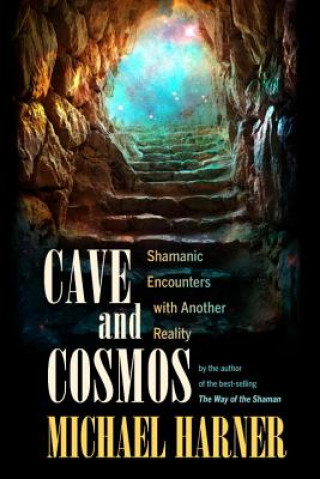
In 1980, Michael Harner blazed the trail for the worldwide revival of shamanism with his seminal classic The Way of the Shaman. In this long-awaited sequel, he provides new evidence of the reality of heavens.Drawing from a lifetime of personal shamanic experiences and more than 2,500 reports of Westerners' experiences during shamanic ascension, Harner highlights the striking similarities between their discoveries, indicating that the heavens and spirits they've encountered do indeed exist. He also provides instructions on his innovative core-shamanism techniques, so that readers too can ascend to heavenly realms, seek spirit teachers, and return later at will for additional healing and advice.Written by the leading authority on shamanism, Cave and Cosmos is a must-read not only for those interested in shamanism, but also for those interested in spirituality, comparative religion, near-death experiences, healing, consciousness, anthropology, and the nature of reality.Praise for Michael Harner and The Way of the Shaman "What Yogananda did for Hinduism and D. T. Suzuki did for Zen, Michael Harner has done for shamanism-namely, bring the tradition and its richness to Western awareness."-from Higher Wisdom, by Roger Walsh and Charles S. Grob"Wonderful, fascinating.... Harner really knows what he's talking about."-Carlos Castaneda, best-selling author of The Teachings of Don Juan and The Active Side of Infinity"An intimate and practical guide to the art of shamanic healing and the technology of the sacred. Michael Harner is not just an anthropologist who has studied shamanism; he is an authentic white shaman."-Stanislav Grof, author of The Adventure of Self-Discovery"Harner has impeccable credentials, both as an academic and as a practicing shaman. Without doubt (since the recent death of Mircea Eliade) the world's leading authority on shamanism."-Nevill Drury, author of The Elements of Shamanism"Michael Harner is a great shaman. He also proves that a person can be both a scientist and a shaman."-Bo Bair Rinchinov, Siberian Buryat shaman