The indispensable guide to the night sky--now in a newly updated and expanded editionIn this newly updated and expanded edition of their classic work, Ian Ridpath and Wil Tirion illuminate the night sky as never before, providing novice st
Adair Turner became chairman of Britain's Financial Services Authority just as the global financial crisis struck in 2008, and he played a leading role in redesigning global financial regulation. In this eye-opening book, he sets the record straight about what really caused the crisis. It didn't happen because banks are too big to fail--our addiction to private debt is to blame. Between Debt and the Devil challenges the belief that we need credit growth to fuel economic growth, and that rising debt is okay as long as inflation remains low. In fact, most credit is not needed for economic growth--but it drives real estate booms and busts and leads to financial crisis and depression. Turner explains why public policy needs to manage the growth and allocation of credit creation, and why debt needs to be taxed as a form of economic pollution. Banks need far more capital, real estate lending must be restricted, and we need to tackle inequality and mitigate the relentless rise of real estate prices. Turner also debunks the big myth about fiat money--the erroneous notion that printing money will lead to harmful inflation. To escape the mess created by past policy errors, we sometimes need to monetize government debt and finance fiscal deficits with central-bank money.
A superb new edition of Epictetus's famed handbook on Stoicism--translated by one of the world's leading authorities on Stoic philosophyBorn a slave, the Roman Stoic philosopher Epictetus (c. 55-135 AD) taught that mental freedom is suprem
This is a fully up-to-date and comprehensive photographic field guide to the snakes of Europe, North Africa and the Middle East. Lavishly illustrated with 387 color photographs, it includes coverage of all 122 snake species found in these regions. The first dedicated field guide on snakes to appear in many years, Snakes of Europe, North Africaand the Middle East will be indispensable for anyone interested in learning more about these unique reptiles.
Penny und ihre Freundinnen dürfen mit ihren Hunden an der Show Fit Dog teilnehmen. Doch manipuliert hier jemand die Show? Zum Glück sind Penny und Co. nicht nur super Hundetrainerinnen, sondern auch hervorragende Detektivinnen.
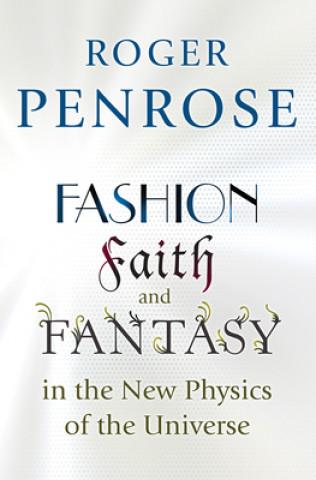
What can fashionable ideas, blind faith, or pure fantasy possibly have to do with the scientific quest to understand the universe? Surely, theoretical physicists are immune to mere trends, dogmatic beliefs, or flights of fancy? In fact, acclaimed physicist and bestselling author Roger Penrose argues that researchers working at the extreme frontiers of physics are just as susceptible to these forces as anyone else. In this provocative book, he argues that fashion, faith, and fantasy, while sometimes productive and even essential in physics, may be leading today's researchers astray in three of the field's most important areas - string theory, quantum mechanics, and cosmology. Arguing that string theory has veered away from physical reality by positing six extra hidden dimensions, Penrose cautions that the fashionable nature of a theory can cloud our judgment of its plausibility. In the case of quantum mechanics, its stunning success in explaining the atomic universe has led to an uncritical faith that it must also apply to reasonably massive objects, and Penrose responds by suggesting possible changes in quantum theory. Turning to cosmology, he argues that most of the current fantastical ideas about the origins of the universe cannot be true, but that an even wilder reality may lie behind them. Finally, Penrose describes how fashion, faith, and fantasy have ironically also shaped his own work, from twistor theory, a possible alternative to string theory that is beginning to acquire a fashionable status, to "conformal cyclic cosmology," an idea so fantastic that it could be called "conformal crazy cosmology."
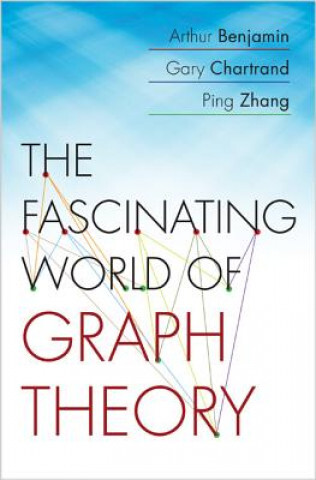
Graph theory goes back several centuries and revolves around the study of graphs--mathematical structures showing relations between objects. With applications in biology, computer science, transportation science, and other areas, graph theory encompasses some of the most beautiful formulas in mathematics--and some of its most famous problems. The Fascinating World of Graph Theory explores the questions and puzzles that have been studied, and often solved, through graph theory. This book looks at graph theory's development and the vibrant individuals responsible for the field's growth. Introducing fundamental concepts, the authors explore a diverse plethora of classic problems such as the Lights Out Puzzle, and each chapter contains math exercises for readers to savor. An eye-opening journey into the world of graphs, The Fascinating World of Graph Theory offers exciting problem-solving possibilities for mathematics and beyond.
Elements of Mathematics takes readers on a fascinating tour that begins in elementary mathematics - but, as John Stillwell shows, this subject is not as elementary or straightforward as one might think. Not all topics that are part of today's elementary mathematics were always considered as such, and great mathematical advances and discoveries had to occur in order for certain subjects to become "elementary." Stillwell examines elementary mathematics from a distinctive twenty-first-century viewpoint and describes not only the beauty and scope of the discipline, but also its limits. Elements of Mathematics gives readers, from high school students to professional mathematicians, the highlights of elementary mathematics and glimpses of the parts of math beyond its boundaries.
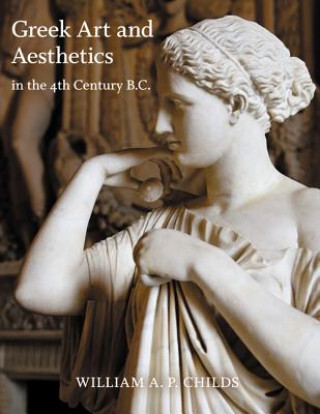
Greek Art and Aesthetics in the Fourth Century B.C. analyzes the broad character of art produced during this period, providing in-depth analysis of and commentary on many of its most notable examples of sculpture and painting. Taking into consideration developments in style and subject matter, and elucidating political, religious, and intellectual context, William A. P. Childs argues that Greek art in this era was a natural outgrowth of the high classical period and focused on developing the rudiments of individual expression that became the hallmark of the classical in the fifth century. As Childs shows, in many respects the art of this period corresponds with the philosophical inquiry by Plato and his contemporaries into the nature of art and speaks to the contemporaneous sense of insecurity and renewed religious devotion. Delving into formal and iconographic developments in sculpture and painting, Childs examines how the sensitive, expressive quality of these works seamlessly links the classical and Hellenistic periods, with no appreciable rupture in the continuous exploration of the human condition.
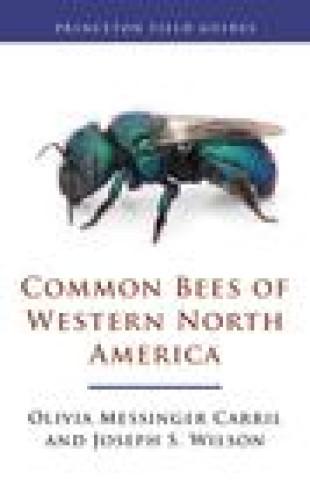
Language: English, Binding: Paperback, Number of pages: 416, Publishers: Princeton University Press, Author: Olivia Messinge Carril,Joseph S. Wilson, ISBN-13: 9780691175508, Date of issue: 2023
How America's vulnerable frontier allies--and American power--are being targeted by rival nationsFrom the Baltic to the South China Sea, newly assertive authoritarian states sense an opportunity to resurrect old empires or build new ones a
An accessible, streamlined, and user-friendly approach to calculusCalculus is a beautiful subject that most of us learn from professors, textbooks, or supplementary texts. Each of these resources has strengths but also weaknesses. In Ca
Between 1492 and 1914, Europeans conquered 84 percent of the globe. But why did Europe establish global dominance, when for centuries the Chinese, Japanese, Ottomans, and South Asians were far more advanced? In Why Did Europe Conquer the World?, Philip Hoffman demonstrates that conventional explanations--such as geography, epidemic disease, and the Industrial Revolution--fail to provide answers. Arguing instead for the pivotal role of economic and political history, Hoffman shows that if certain variables had been different, Europe would have been eclipsed, and another power could have become master of the world. Hoffman sheds light on the two millennia of economic, political, and historical changes that set European states on a distinctive path of development, military rivalry, and war. This resulted in astonishingly rapid growth in Europe's military sector, and produced an insurmountable lead in gunpowder technology. The consequences determined which states established colonial empires or ran the slave trade, and even which economies were the first to industrialize. Debunking traditional arguments,
The Princeton Guide to Evolution is a comprehensive, concise, and authoritative reference to the major subjects and key concepts in evolutionary biology, from genes to mass extinctions. Edited by a distinguished team of evolutionary biologists, with contributions from leading researchers, the guide contains some 100 clear, accurate, and up-to-date articles on the most important topics in seven major areas: phylogenetics and the history of life; selection and adaptation; evolutionary processes; genes, genomes, and phenotypes; speciation and macroevolution; evolution of behavior, society, and humans; and evolution and modern society. Complete with more than 100 illustrations (including eight pages in color), glossaries of key terms, suggestions for further reading on each topic, and an index, this is an essential volume for undergraduate and graduate students, scientists in related fields, and anyone else with a serious interest in evolution.
A leading neuroscientist explains why your personal traits are more innate than you thinkWhat makes you the way you areand what makes each of us different from everyone else? In Innate, leading neuroscientist and popular science blogger Kevin Mitchell traces human diversity and individual differences to their deepest level: in the wiring of our brains. Deftly guiding us through important new research, including his own groundbreaking work, he explains how variations in the way our brains develop before birth strongly influence our psychology and behavior throughout our lives, shaping our personality, intelligence, sexuality, and even the way we perceive the world.We all share a genetic program for making a human brain, and the program for making a brain like yours is specifically encoded in your DNA. But, as Mitchell explains, the way that program plays out is affected by random processes of development that manifest uniquely in each person, even identical twins. The key insight of Innate is that the combination of these developmental and genetic variations creates innate differences in how our brains are wireddifferences that impact all aspects of our psychologyand this insight promises to transform the way we see the interplay of nature and nurture.Innate also explores the genetic and neural underpinnings of disorders such as autism, schizophrenia, and epilepsy, and how our understanding of these conditions is being revolutionized. In addition, the book examines the social and ethical implications of these ideas and of new technologies that may soon offer the means to predict or manipulate human traits.Compelling and original, Innate will change the way you think about why and how we are who we are. Autorid: Kevin Mitchell
A bold reevaluation of Spinoza that reveals his powerful, inclusive vision of religion for the modern ageSpinoza is widely regarded as either a God-forsaking atheist or a God-intoxicated pantheist, but Clare Carlisle says that he was neither. In Spinozas Religion, she sets out a bold interpretation of Spinoza through a lucid new reading of his masterpiece, the Ethics. Putting the question of religion centre-stage but refusing to convert Spinozism to Christianity, Carlisle reveals that being in God unites Spinozas metaphysics and ethics. Spinozas Religion unfolds a powerful, inclusive philosophical vision for the modern ageone that is grounded in a profound questioning of how to live a joyful, fully human life.Like Spinoza himself, the Ethics doesnt fit into any ready-made religious category. But Carlisle shows how it wrestles with the question of religion in strikingly original ways, responding both critically and constructively to the diverse, broadly Christian context in which Spinoza lived and worked. Philosophy itself, as Spinoza practiced it, became a spiritual endeavor that expressed his devotion to a truthful, virtuous way of life. Offering startling new insights into Spinozas famously enigmatic ideas about eternal life and the intellectual love of God, Carlisle uncovers a Spinozist religion that integrates self-knowledge, desire, practice, and embodied ethical life to reach toward our highest happinessto rest in God.Seen through Carlisles eyes, the Ethics prompts us to rethink not only Spinoza but also religion itself. Autorid: Clare Carlisle
The Chinese invented gunpowder and began exploring its military uses as early as the 900s, four centuries before the technology passed to the West. But by the early 1800s, China had fallen so far behind the West in gunpowder warfare that it was easily defeated by Britain in the Opium War of 1839 - 42. What happened? In The Gunpowder Age, Tonio Andrade offers a compelling new answer, opening a fresh perspective on a key question of world history: why did the countries of western Europe surge to global importance starting in the 1500s while China slipped behind?
An ambitious history of how medieval writers came to terms with paganismFrom the turn of the fifth century to the beginning of the eighteenth, Christian writers were fascinated and troubled by the "Problem of Paganism," which this book ide
A graduate-level textbook on the astrophysics of binary star systems and their evolutionPhysics of Binary Star Evolution is an up-to-date textbook on the astrophysics and evolution of binary star systems. Theoretical astrophysicists Thomas Tauris and Edward van den Heuvel cover a wide range of phenomena and processes, including mass transfer and ejection, common envelopes, novae and supernovae, X-ray binaries, millisecond radio pulsars, and gravitational wave (GW) sources, and their links to stellar evolution.The authors walk through the observed properties and evolution of different types of binaries, with special emphasis on those containing compact objects (neutron stars, black holes, and white dwarfs). Attention is given to the formation mechanisms of GW sourcesmerging double neutron stars and black holes as well as ultra-compact GW binaries hosting white dwarfsand to the progenitors of these sources and how they are observed with radio telescopes, X-ray satellites, and GW detectors (LIGO, Virgo, KAGRA, Einstein Telescope, Cosmic Explorer, and LISA). Supported by illustrations, equations, and exercises, Physics of Binary Star Evolution combines theory and observations to guide readers through the wonders of a field that will play a central role in modern astrophysics for decades to come.465 equations, 47 tables, and 350+ figuresMore than 80 exercises (analytical, numerical, and computational)Over 2,500 extensive, up-to-date references Autorid: Thomas M. Tauris, Edward P.J. van den Heuvel
Aristotle was the first philosopher in the Western tradition to address politics systematically and empirically, and he remains a central figure in political theory. This essential volume presents Aristotle's complete political writings--including his Politics, Economics, and Constitution of Athens--in their most authoritative translations, taken from the complete works that is universally recognized as the standard English edition. Edited by Jonathan Barnes, one of the world's leading scholars of ancient philosophy, and with an illuminating introduction by Melissa Lane, a recognized authority on ancient political philosophy, this compact but comprehensive volume will be invaluable for all students of politics, philosophy, classics, or Western thought. Autorid: Aristotle, Jonathan Barnes, Melissa Lane
A collection of political talesfirst published in British workers magazinesselected and introduced by acclaimed critic and author Michael RosenIn the late nineteenth and early twentieth centuries, unique tales inspired by traditional literary forms appeared frequently in socialist-leaning British periodicals, such as the Clarion, Labour Leader, and Social Democrat. Based on familiar genresthe fairy tale, fable, allegory, parable, and moral taleand penned by a range of lesser-known and celebrated authors, including Schalom Asch, Charles Allen Clarke, Frederick James Gould, and William Morris, these stories were meant to entertain readers of all agesand some challenged the conventional values promoted in childrens literature for the middle class. In Workers Tales, acclaimed critic and author Michael Rosen brings together more than forty of the best and most enduring examples of these stories in one beautiful volume.Throughout, the tales in this collection exemplify themes and ideas related to work and the class system, sometimes in wish-fulfilling ways. In Tom Hickathrift, a little, poor person gets the better of a gigantic, wealthy one. In The Man Without a Heart, a man learns about the value of basic labor after testing out more privileged lives. And in The Political Economist and the Flowers, two contrasting gardeners highlight the cold heart of Darwinian competition. Rosens informative introduction describes how such tales advocated for contemporary progressive causes and countered the dominant celebration of Britains imperial values. The book includes archival illustrations, biographical notes about the writers, and details about the periodicals where the tales first appeared.Provocative and enlightening, Workers Tales presents voices of resistance that are more relevant than ever before. Autorid: Michael Rosen
Many of Cy Twombly's paintings and drawings include handwritten words and phrases--naming or quoting poets ranging from Sappho, Homer, and Virgil to Mallarme, Rilke, and Cavafy. Enigmatic and sometimes hard to decipher, these inscriptions are a distinctive feature of his work. Reading Cy Twombly poses both literary and art historical questions. How does poetic reference in largely abstract works affect their interpretation? Reading Cy Twombly is the first book to focus specifically on the artist's use of poetry. Twombly's library formed an extension of his studio and he sometimes painted with a book open in front of him. Drawing on original research in an archive that includes his paint-stained and annotated books, Mary Jacobus's account--richly illustrated with more than 125 color and black-and-white images--unlocks an important aspect of Twombly's practice. Jacobus shows that poetry was an indispensable source of reference throughout Twombly's career; as he said, he "never really separated painting and literature." Among much else, she explores the influence of Ezra Pound and Charles Olson; Twombly's fondness for Greek pastoral poetry and Virgil's Eclogues; the inspiration of the Iliad and Ovid's Metamorphoses; and Twombly's love of Keats and his collaboration with Octavio Paz. Twombly's art reveals both his distinctive relationship to poetry and his use of quotation to solve formal problems. A modern painter, he belongs in a critical tradition that goes back, by way of Roland Barthes, to Baudelaire. Reading Cy Twombly opens up fascinating new readings of some of the most important paintings and drawings of the twentieth century. Autorid: Mary Jacobus
The first book to tell the story of the Advanced Placement program, the gold standard for academic rigor in American high schoolsThe Advanced Placement program stands as the foremost source of college-level academics for millions of high school students in the United States and beyond. More than 22,000 schools now participate in it, across nearly forty subjects, from Latin and art to calculus and computer science. Yet remarkably little has been known about how this nongovernmental program became one of the greatest success stories in K12 educationuntil now. In Learning in the Fast Lane, Chester Finn and Andrew Scanlan, two of the country's most respected education analysts, offer a groundbreaking account of one of the most important educational initiatives of our time.Learning in the Fast Lane traces the story of AP from its mid-twentieth-century origins as a niche benefit for privileged students to its emergence as a springboard to college for high schoolers nationwide, including hundreds of thousands of disadvantaged youth. Today, AP not only opens new intellectual horizons for smart teenagers, but also strengthens school ratings, attracts topflight teachers, and draws support from philanthropists, reformers, and policymakers. At the same time, it faces numerous challenges, including rival programs, curriculum wars, charges of elitism, the misgivings of influential universities, and the difficulty of infusing rigor into schools that lack it. In today's polarized climate, can AP maintain its lofty standards and surmount the problems that have sunk so many other bold education ventures?Richly documented and thoroughly accessible, Learning in the Fast Lane is a must-read for anyone with a stake in the American school system. Autorid: Chester E. Finn, Andrew E. Scanlan
A look at the extraordinary ways the brain turns thoughts into actionsand how this shapes our everyday livesWhy is it hard to text and drive at the same time? How do you resist eating that extra piece of cake? Why does staring at a tax form feel mentally exhausting? Why can your child expertly fix the computer and yet still forget to put on a coat? From making a cup of coffee to buying a house to changing the world around them, humans are uniquely able to execute necessary actions. How do we do it? Or in other words, how do our brains get things done? In On Task, cognitive neuroscientist David Badre presents the first authoritative introduction to the neuroscience of cognitive controlthe remarkable ways that our brains devise sophisticated actions to achieve our goals. We barely notice this routine part of our lives. Yet, cognitive control, also known as executive function, is an astonishing phenomenon that has a profound impact on our well-being.Drawing on cutting-edge research, vivid clinical case studies, and examples from daily life, Badre sheds light on the evolution and inner workings of cognitive control. He examines issues from multitasking and willpower to habitual errors and bad decision making, as well as what happens as our brains develop in childhood and change as we ageand what happens when cognitive control breaks down. Ultimately, Badre shows that cognitive control affects just about everything we do.A revelatory look at how billions of neurons collectively translate abstract ideas into concrete plans, On Task offers an eye-opening investigation into the brains critical role in human behavior. Autorid: David Badre
Much of the work on nuclear proliferation has focused on why states pursue nuclear weapons. The question of how states pursue nuclear weapons has received little attention. Seeking the Bomb is the first book to analyze this topic by examining which strategies of nuclear proliferation are available to aspirants, why aspirants select one strategy over another, and how this matters to international politics. Looking at a wide range of nations, from India and Japan to the Soviet Union and North Korea to Iraqand Iran, Vipin Narang develops an original typology of proliferation strategies-hedging, sprinting, sheltered pursuit, and hiding. Each strategy of proliferation provides different opportunities for the development of nuclear weapons, while at the same time presenting distinct vulnerabilities that can be exploited to prevent states from doing so. Narang delves into the crucial implications these strategies have for nuclear proliferation and international security. Hiders, for example, are especially disruptive since either they successfully attain nuclear weapons, irrevocably altering the global power structure, or they are discovered, potentially triggering serious crises or war, as external powers try to halt or reverse a previously clandestine nuclear weapons program. As the international community confronts the next generation of potential nuclear proliferators, Seeking the Bomb explores how global conflict and stability are shaped by the ruthlessly pragmatic ways states choose strategies of proliferation. The first systematic look at the different strategies that states employ in their pursuit of nuclear weaponsMuch of the work on nuclear proliferation has focused on why states pursue nuclear weapons. The question of how states pursue nuclear weapons has received little attention. Seeking the Bomb is the first book to analyze this topic by examining which strategies of nuclear proliferation are available to aspirants, why aspirants select one strategy over another, and how this matters to international politics.Looking at a wide range of nations, from India and Japan to the Soviet Union and North Korea to Iraq and Iran, Vipin Narang develops an original typology of proliferation strategieshedging, sprinting, sheltered pursuit, and hiding. Each strategy of proliferation provides different opportunities for the development of nuclear weapons, while at the same time presenting distinct vulnerabilities that can be exploited to prevent states from doing so. Narang delves into the crucial implications these strategies have for nuclear proliferation and international security. Hiders, for example, are especially disruptive since either they successfully attain nuclear weapons, irrevocably altering the global power structure, or they are discovered, potentially triggering serious crises or war, as external powers try to halt or reverse a previously clandestine nuclear weapons program.As the international community confronts the next generation of potential nuclear proliferators, Seeking the Bomb explores how global conflict and stability are shaped by the ruthlessly pragmatic ways states choose strategies of proliferation. Autorid: Vipin Narang
Boolean algebra, also called Boolean logic, is at the heart of the electronic circuitry in everything we use--from our computers and cars, to home appliances. How did a system of mathematics established in the Victorian era become the basis for such incredible technological achievements a century later? In The Logician and the Engineer, Paul Nahin combines engaging problems and a colorful historical narrative to tell the remarkable story of how two men in different eras--mathematician and philosopher George Boole and electrical engineer and pioneering information theorist Claude Shannon--advanced Boolean logic and became founding fathers of the electronic communications age. Nahin takes readers from fundamental concepts to a deeper and more sophisticated understanding of modern digital machines, in order to explore computing and its possible limitations in the twenty-first century and beyond.