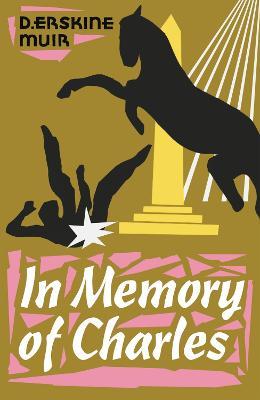
Charles was in a vile temper and Anne was catching the full benefit of it. Charles Courtley is a difficult man. Prone to violent outbursts and a bully to his wife and daughters, he has uprooted the family from London to an old manor house in remote East Anglia. Spoilt by his growing wealth and increasingly intolerant of any dissent, Charles enjoys controlling everyone around him. His family, his employees and even the locals - banned from using the traditional footpaths on his forested estate - have multiple reasons to bear a grudge. When Charles is shot dead in a woodland clearing, evidence from an unreliable witness points to Courtleys secretary, but he has a cast iron alibi and the resulting trial ends in an acquital. A year later, a seemingly innocent death and an odd cenotaph leads Chief Inspector Simon Sturt to reconsider the case. Dorothy Erskine Muir (18891977) was one of seventeen children of John Sheepshanks, Bishop of Norwich. She attended Oxford, worked as an academic tutor, and began writing professionally to supplement the family income after the unexpected death of her husband in 1932. Muir published historical biographies and local histories, as well as three accomplished detective novels: In Muffled Night (1933), Five to Five (1934) and In Memory of Charles (1941). Autorid: D Erskine Muir, Curtis Evans
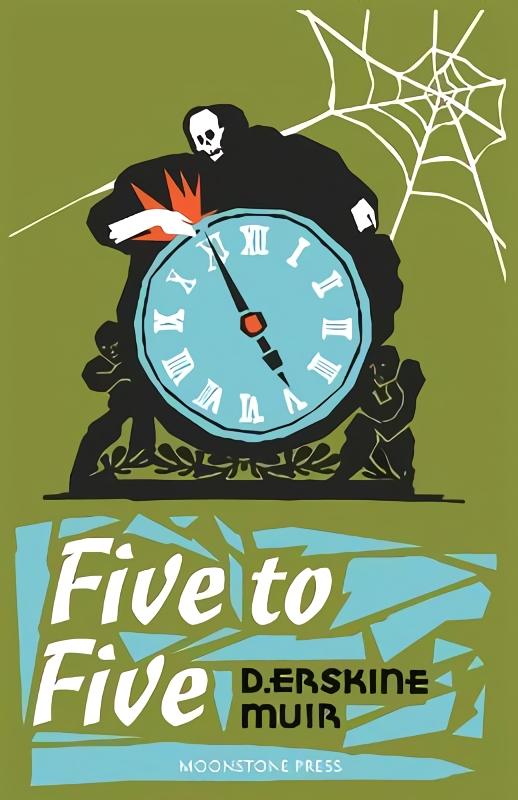
When wealthy elderly Simon Ewing is found murdered in his flat, it appears to be a robbery gone wrong. Two rings were taken from the dead man's hands, but his hidden jewelery strongbox remained untouched, except for one missing diamond solitaire. An unknown man was spotted exiting the building; there is evidence that he had searched the upper floors before attacking Ewing when the old man was briefly left unattended. But how could an outsider have known when to strike? And why take only one ring from a treasure trove? Superintendent Woods is called in, and through patient careful detection begins slowly to disentangle the clues, as suspicion shifts from one character to the next. This classic detective novel from the 1930s is now republished for the first time. Autorid: D. Erskine Muir, Curtis Evans
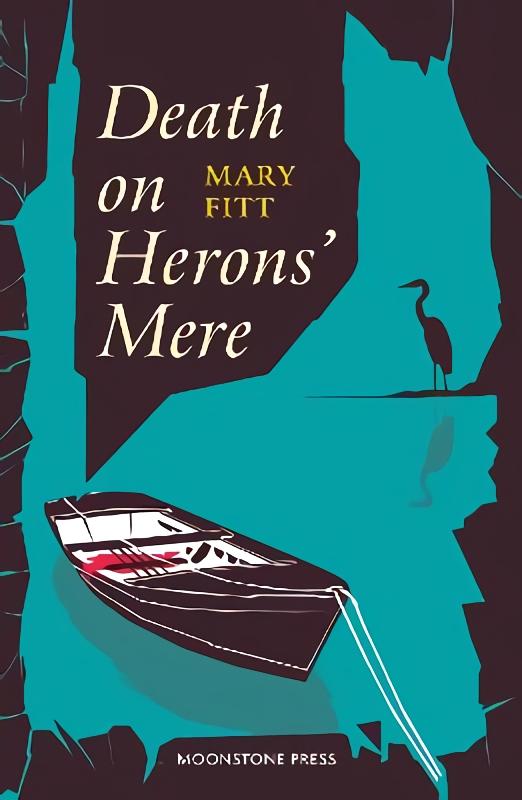
'Mr Gabb, your son did not commit suicide. He was murdered.' Simon Gabb has everything - or so it seems: a beautiful house, a big estate, a flourishing business and two sons, both endowed with evident capacity for carrying on the family firm. The moody Giles is brilliant and inventive; the married Basil is dependable and efficient. And yet something is manifestly wrong. A secret invention, on which his business was engaged for the government, becomes known to those who had no right to know it. But how and where did the leak occur? It is a conundrum which creates suspicion and dissension within the family and engulfs everyone who dine with them one Saturday night. Giles has become friendly with young Arden and Billy Laforte, who were the previous owners of Herons' Hall until their father's death left them penniless, and who now rent one of the lodges on the property. When Giles brings the Lafortes to the Hall for the first visit to their old home in three years, the Gabbs hardly know what to expect. Yet the Lafortes seem completely at ease, so when a fierce storm develops, Mrs Gabb insistes they stay the night. The next morning, Gabb's elder son, Giles, is found dead in a motorboat on the lake, his body propped up by a shotgun. But it is soon apparent that the gun was not the cause of death, nor did he die in the boat; a skilled marksman shot him from a distance. Superintendent Mallett is assigned the case and must deal with the smouldering emotions the flare up between everyone present that evening. Autorid: Mary Fitt, Curtis Evans
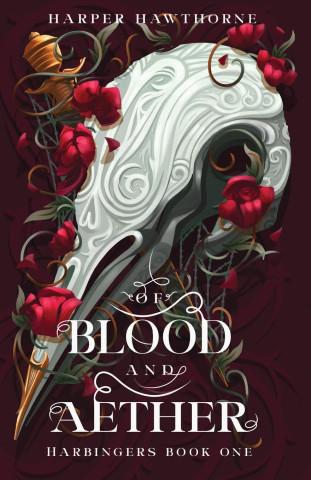
A rare conduit of Light, drawn to the Shadows. A spymaster who can't seem to stay away. For as long as she can remember, Arken Asher has been searching for answers-driven by an insatiable hunger, a need to understand the meaning behind her dangerous arcane secrets. She's finally taken that leap into the unknown, leaving her simple life behind to attend the Arcane Studium: a prestigious college of magickal arts & sciences nestled in the heart of Sophrosyne: the City of the Gods.As the Scouting & Reconnaissance Captain of the Elder Guard, Kieran Vistarii deals in Shadows, blood and subterfuge. Scarred by his past but dedicated to safeguarding Sophrosyne's future, Kieran's self-imposed isolation is easily masked by charm and cocksure energy. Strange disappearances have kept his cadre busy as of late, and yet the captain finds himself sidetracked, distracted by the inexplicable allure of a certain golden-eyed Conduit and her curious mind.They both know better than to get involved, but the Fates have other plans. The dark threads of prophecy were woven long ago, and the ties that bind just might be what it takes to mend these broken, star-crossed souls... or what forges a deadly bond that could damn them all.Of Blood & Aether is the first book in the Harbingers series, a captivating and character-driven dark romantasy saga. Rife with sizzling tension, gut-wrenching angst, addictive banter and ever-growing stakes, the Harbingers series is perfect for fans of A Court of Thorns & Roses, Fourth Wing and From Blood & Ash.
Frantz Fanon was born in Martinique, a French colony, in 1925. As a young man, he volunteered to fight in De Gaulle's army for the liberation of France, and trained to become a doctor and psychiatrist. His experiences as a black man under French colonial rule had a profound effect on him. In 1952, he wrote Black Skin, White Masks, a powerful analysis of the effects of racism on the human psyche. He was later reassigned to a hospital in French Algeria. It was here that he became involved in the rebellion of the National Liberation Front (FLN), who fought to break free from colonial power, and the draconian response of the French authorities, which included widespread mass killings and the systematic use of torture. Fanon's work for the FLN as a propagandist and psychiatrist became highly contentious. His final work, The Wretched of the Earth, was published in 1961 just before Fanon died at the age of 36. It has proved to be one of the most controversial and influential books of its time. The Rebel's Clinic is a searing biography of the short and harrowing life of Frantz Fanon, a man whose legacy is nuanced, disputed, powerful, and in a time where the topics of empire and race have become increasingly pressing, still very much felt today.