Kvaliteetses voodipesukomplektis on 1 tekikott ja 1 padjapüür ning see on pehme, mugav ja vastupidav. 100% puuvillast valmistatud voodipesukomplekt on hingav, absorbeeriv ja niiskustimav, mis aitab reguleerida teie kehatemperatuuri ja hoida suvel jaheda ning talvel soojana. Tänu lukule jäävad teie tekikott ja padjapüür alati kohale. See on erinevates kaasaegsetes värvides, seega saate alati seda oma interjööriga ideaalselt sobitada.• Tarne 5–7 päeva kõikjale Eestis • Turvalised maksemeetodid: Paypal, pangaülekanne, deebet- ja krediitkaardid, Trustly • Uhiuus toode. 2-aastane garantii • Tasuta tagastamine 30 päeva jooksul
Estée Lauderi enimmüüdud meik hoiab sinuga sammu, ükskõik kui kiireks su päev ka ei muutuks. Pikaajaline, õlivaba koostis, mis kannab 24 tundi, hoiab sind terve päeva värskena ja matina. Estée Lauder Double Wear Stay-in-Place Makeup ühtlustab ebaühtlast nahatooni ja varjab ebatäiused keskmise kuni täieliku katvusega, mida saab kihiliselt peale kanda, ilma et see koormaks nahka. Selle toon püsib loomulik ja muutumatu 24 tundi. Ainult üks pealekandmine, ei nõua parandusi.
- Prantslaste poolt valmistatud ja loodud ohutuks anaalmänguks - Eriti suur edasijõudnud anaalseks mänguks - Ümardatud disain maksimaalseks stimuleerimiseks - Ainult kogenud kasutajatele - Lai põhi turvaliseks kasutamiseks SPLASH anaaldildo on XL-suuruses seksilelu HardToys brändilt. See koosneb ümaratest “mullidest” või “ogadest”, mis pakuvad veelgi intensiivsemaid aistinguid.Kitsenev ots lihtsamaks ja mugavamaks sisestamiseksAinult kogenud kasutajateleVeekindel ja lihtsalt puhastatavVarustatud nupsudega maksimaalse stimulatsiooni tagamiseksKogupikkus 28 cmLäbimõõt 8 cm
In 1999, less than one year after both countries tested nuclear weapons, India and Pakistan found themselves locked in another armed conflict.In spite of a ray of hope for peace in February 1999, when the Indian Prime Minister, A.B. Vajpayee, vis
Officially established on 22 April 1931, around a core of 5 pilots and 32 aircraft mechanics, the Royal Iraqi Air Force was the first military flying service in any Arab country.Coming into being with the task of supporting the Iraqi armed forces
In 1947, India and Pakistan were partitioned by their former colonial ruler, Great Britain. A job that should have taken ten-years was done in a few months. Britain, drained by two world wars in 40-years, no longer had the will or the money to guide the su
Equipped with well-balanced air wings, huge aircraft carriers have formed the backbone of the United States Navy's doctrine and strategy since the Second World War. Packing an enormous punch, their purpose is to exercise control over enormous portions of a
This book provides an indispensable, single-point-source-of-reference for enthusiasts and professionals alike. Autorid: Antonio Luis Sapienza, José Luis Martínez Peláez
Love Heart Lane where friends are there for you no matter what A letter, a goodbye, and a baby girl whose name will begin with L When Heartcross resident clairvoyant tells Molly McKendrick to expect a whole lot of scandal and upset to blow in with the approaching winter storm, Molly doesnt know what to think. With a baby on the way any week now, and Christmas not far off, the last thing Molly needs is drama, but when she crosses paths with Bree, a sixteen-year-old homeless girl, and takes her in from the cold, secrets from the past flood the present and Molly, her partner Cam, and their son George, are soon experiencing a holiday season filled with unexpected festive surprises Readers cant get enough of the Loveheart Lane series: Christie Barlow has fast become one of my favourite authors! Her books are a ray of sunshine when you read them, even if sad things happen Sinead A lovely romantic story that will make you smile and god knows we need it Tara I absolutely adored this bookgave a warm feeling as you read each page Suzanne There's pretty much nothing I want more now than to escape to a small Scottish town and live in a cottage sweet and cozy and a nice escape from the wild reality we are all currently living in Nicole A cosy and heartwarming read, exactly what I needed now Anna Maria Christie Barlow has rapidly become one of my favorite cozy romance writers Mackey I loved Clover CottageThis series is quickly becoming one of my favorites! Kristin
A military history of the armies and campaigns of the Norfolk and Western rebellions of 1549 In 1549 two major rebellions and several minor uprising occurred spontaneously throughout England. In East Anglia Robert Kett, aggrieved at the abuses of enclosure, laid siege to Norwich until defeated by Royal forces at the bloody battle of Dussindale. At the same time, thousands of commoners of Devon and Cornwall rose up against the introduction of the English-language Book of Common Prayer and the systematic destruction of their traditional faith. Like Norwich, Exeter was besieged throughout the long summer until, in a brutal campaign by government forces and hired foreign mercenaries, the rebellion was finally suppressed.Previous histories of the rebellions of 1549 have explored their causes in great depth, but little attention has been given to the military history of the campaigns. Yet the mid-Tudor period rests on the cusp between a medieval form of warfare and the new emerging ideas that defined warfare in the early-modern period, making the battles of 1549 of crucial importance in understanding the transition between the two. In this book Dr E.T. Fox explores how the medieval rebels of the Devon and Cornwall militias fared against the German pikemen and Italian arquebusiers the government sent against them. Autorid: E.T. Fox
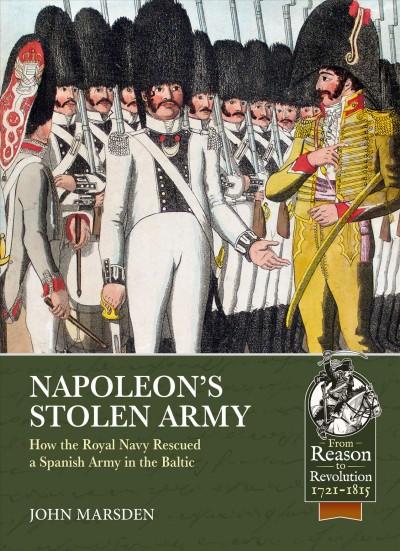
This is the story of how, in 1808, the Royal Navy used its dominance in the Baltic to rescue the Spanish Army of the Marqués de La Romana. This is the story of a Spanish army, commanded by the Marqués de La Romana, which was sent to Denmark by Napoleon in 1807, while France and Spain were allies bound by the Treaty of San Ildefonso, signed in 1796. When relations between the two countries broke down in May 1808 they were soon at war with each other, and La Romana´s host became, in effect, a captive army in the hands of the French. When Spain looked to forge an alliance with Britain against her erstwhile ally, they found the British government only too eager to help. The Royal Navys dominant presence in the Baltic provided a ready opportunity to seal the new alliance and, once the political groundwork had been laid, plans for a daring rescue of the entrapped Spaniards by Vice Admiral Keats squadron were drawn up. However, while efforts were being made by the British to accumulate and prepare a sufficient amount of shipping to carry out the operation, difficulties soon arose in making contact with La Romana in order to convey to him the intentions of the Spanish and British high commands. This almost led to disaster, and the whole operation was saved only by some remarkable strokes of fortune, and the magnificent leadership provided by Keats and La Romana.Until now this remarkable and little-known story has had little coverage in the various histories written about the Peninsular War, and what has been said about it in the Anglosphere has been confined to a description of events taken almost solely from a British perspective. Now, with access to a comprehensive collection of documents in the Spanish archives, it is possible to tell the story of the Spanish contribution to the successful operation in the Baltic, when the greater part of La Romanas army was evacuated from Danish Baltic territory during the summer of 1808.Due to circumstance and bad fortune, a significant part of the Spanish army was left behind during the Royal Navys action, and there is an interesting story told about what became of these men, related via the personal accounts left by two of the soldiers who did not return to Spain with La Romana. Autorid: John Marsden
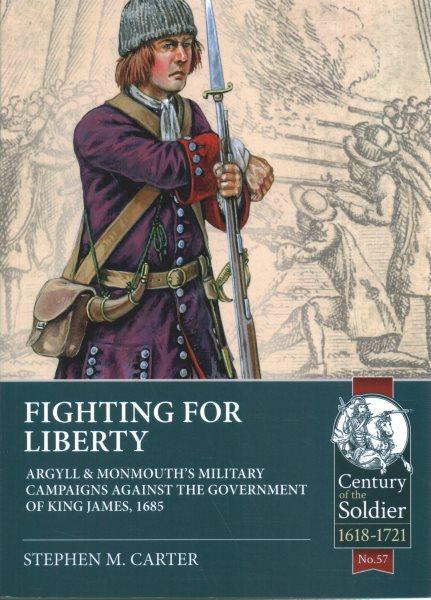
Fighting for Liberty uses original sources to give a blow by blow account of the campaign of 1685. A conflict that started in Orkney and ended on the battlefield of Sedgemoor. Today, there is a myth that the rebels where a misguided peasant rabble, easily put down by lines of red-coated soldiers, but this is not reflected in original letters, marching orders, and documents. These tell a quite different history. So, why is our understanding of the campaign unlike the eye-witness accounts? Answering this question has been the focus of over 20 years of research and the result, Fighting for Liberty, offers a fresh perspective on the events called the Monmouth Rebellion.After the political purges of 1683, rebel Whigs have been planning an invasion of Britain. Their aim is to restore the liberty of Parliament and stop the divine rule by Kings. They have vast stockpiles of the latest weapons, including bayonets, grenades, and firelock muskets. On the death of Charles II in February 1685, and the succession of his brother James, they load ships with soldiers, arms, and ammunition. Led by the Earl of Argyll and the Duke of Monmouth, they have an audacious plan to attack in three strategy locations, supported by an uprising in London. With enough drums, colours, and officers to raise three well led and paid armies, the fight for liberty can begin. To counter this threat the Government of King James locks down the country, closing borders and arresting dissenters across the Country. As the Militia struggle to contain the invasions, and the Whig armies growing day by day, James rushes regular forces to the landing sites. But even with a network of spies, and the nation's military resources in play, James still struggles to gain the initiative against the Whig invaders.For centuries, historians have ignored the planning and logistical aspects of the conflict, instead the focus has been on the personalities of Monmouth, Marlborough, and James II. However, the military campaign reveals the true scale of the conflict, it shows us forgotten skirmishes and naval actions. By returning to the original sources to understand Whig strategy, the events in England and Scotland merge into a single operation against the Government of James. Fighting for Liberty describes the whole campaign, from the initial planning by the Whigs, to the military reaction by the Government. Each army movement is placed in the historic landscape, and the detail of every battle covered; from the weapons, uniforms, and drill, to the Regiments deployed. For the first time, the campaign of 1685 is shown as a Whig invasion, that placed the Government and its unprepared forces on the back foot. It is not a forgone conclusion, instead it is a fight between two professional armies, with commanders struggling to gain the initiative, both facing different operational challenges. Fighting for Liberty offers a fresh and vibrant account of the Monmouth Rebellion, the Battle of Sedgemoor and warfare in the late 17th Century. Fighting for Liberty offers a fresh and vibrant account of the military campaign of Argyll and Monmouth that concludes at Sedgemoor in July 1685. Autorid: Stephen M. Carter
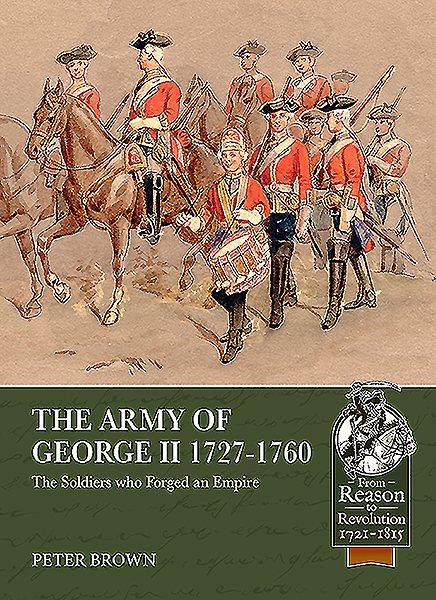
This book provides details of the recruitment, organisation, equipment, logistics, and command of the Army of King George II from 1727 to 1760. The Army of George II is often forgotten, as 18th century British military history is bookended by the victories of the Duke of Marlborough during the War of the Spanish Succession and the final defeat of Napoleon by the Duke of Wellington. Yet it was in this period that Britain rose to prominence, not only as a European, but also as a world power, defeating the French in India, North America, and the Caribbean and fighting them in two major wars in Europe. Great leaders emerged, such as Robert Clive and James Wolfe, whilst the private soldiers proved themselves to be adaptable, stoic, and, above all, brave in the face of extreme hardship. This was the army that crushed French colonial ambitions and in so doing laid the groundwork for the British Empire.In this book you will find details of how the army was recruited, funded, and how it functioned day-to-day. Details are also provided of the uniforms worn by infantry, artillery, and cavalry; how they were organised, paid, and punished. There are also new insights into the logistics of 18th century warfare, how the soldiers performed in battle, both in Europe and in the colonies, and what medical treatment they could expect when the battles were over. This book provides a unique insight into what it was like to serve in the Army of King George II. Autorid: Peter Brown