Tundke end täielikult täidetuna! Nii selle anaaltapi unikaalne torpeedokuju kui ka sisemine raskus tugevdavad aistinguid anuses, võimaldades teil nautida imelist täidetud tunnet. Õrn ümara kujuga ja ühenduskohtadeta silikoon võimaldab tapil peaaegu iseenesest sisse libiseda ja seejärel imelist stimulatsiooni pakkuda! Keha reageerib paremini survele ja liikumisele anaalkanalis. Snug Plugi ainulaadselt täpne disain ja raskus pakub mööda anuse siseseina edasi libisedes kahte tüüpi erootilist stimulatsiooni. Tõeliselt uskumatu elamus! Tapil on pikk, peenike, paindlik kael, mugav sile käepide ja sametpehme pind. Seda võib kanda seksi ajal või diskreetselt pikema aja jooksul. Sisaldab hoiukotti ja b-Vibe'i anaalmängude juhendit. Anaaltapp on saadaval erinevates värvides ja suurustes, et leiaksite just oma ihadele vastava:#1 Kogupikkus: 9.4 cm, sisestussügavus: Ø 8.6 –2 cm, kaal: 55 g#2 Kogupikkus: 11.4 cm, sisestussügavus: Ø 10,6 –3 cm, kaal: 114 g
Raskustega silikoontarvik teie Le Wand‘i elamuse täiustamiseks. Silikoonkinnituste hulka kuuluvad silikooni sees olevad rasked kuulid, mis pakuvad täidetumat tunnet, edastavad paremini vibratsiooni ja jahtuvad ning soojenevad külmas või soojas vees. Meie raskustega silikoontarvikud pakuvad intensiivset suunatud stimulatsiooni ja hämmastavalt täidetud tunnet. Pakume kahte stiili: kumerat ja lainelist. - Kumer on g-punkti stimulatsiooniks täiusliku kujuga. Sellel on kaarjas kuju, mille ümaras otsas on täpsed raskused, mis vibraatori pringiks ja äärmiselt rahulduspakkuvaks muudavad. Kliitori stimuleerimiseks on olemas ka väline kontakt. - Laineline pind on loodud kombineeritud orgasmi (klitoraalne ja vaginaalne orgasm) jaoks, pakkudes tugevat naudingut sisse- ja väljaliikumise ajal ning välist kontakti kliitori stimulatsiooni jaoks. See tarvik on sisestatavas osas laineline, et pakkuda intensiivseid aistinguid ja täidetud tunnet tänu raskustele. Le Wand Rechargeable Vibrating Massager‘i saab kasutada koos valikuliste tarvikute ja tekstuurikatetega, et tuua intiimsust uuele tasemele. Erinevad stiilid erinevate nauditavate palettide jaoks.
Snug Plug on ülimugav, kaalutud anaalpistik, mis on loodud pakkuma sensuaalset täitumistunnet. Seda saab kanda partneriga seksimise ajal või nautida diskreetselt pikemaajaliseks stimulatsiooniks. Snug Plugid on valmistatud kehasõbralikust, õmblusteta silikoonist ning neil on õhuke, paindlik kael ja sile käepide.Detailid:- Õmblusteta silikoonpistik- Ümar serv lihtsaks sisestamiseks- Täpselt kujundatud erootilisteks aistinguteks- Kaalutud kuulid pakuvad sensuaalset täitumistunnet- Õhuke, 1,1 cm paindlik kael- Mugav, sile käepide- Sisaldab reisikotti/hoiukotti ja juhendit anaalseks mänguks- 257 g kaalutud pistik- Suurus: 4,3 x 14 cmLoodetavasti on see tekst nüüd sujuvam, lihtsasti loetav ja esteetiliselt meeldiv.
This advanced study of steel reveals forging secrets that for centuries have been protected by guilds. Never-before-seen instructions, diagrams and photos explain the tricks behind using Japanese mokume gane, differential heat treating, power hammers, a
Biglo Cobe Donut Gray is a soft and fluffy dog bed in an elegant gray color. Made from a pleasant-to-touch material with an original texture featuring wide stripes. Ensure your pet's comfort and healthy sleep with Biglo beds! Every dog should have its own place at home where it feels safe and comfortable. Biglo Cobe will provide your friend with the perfect conditions for rest, relaxation, and play. This cloud-like bed will become your pet's favorite spot. The plush Minky Stripe material and the appropriate amount of hypoallergenic filling allow for perfect relaxation during rest. The Biglo Cobe Donut is designed for dogs that do not feel comfortable in standard beds. The biggest advantage of this bed is the ability to remove the filling and wash the cover in the washing machine. Unlike cheaper beds, Biglo guarantees you hygienic conditions in your pet's environment. Additionally, this bed significantly improves sleep quality and retains warmth, which is extremely important during the autumn-winter season. The raised edges provide comfort and successfully serve as a pillow. The artificial fur mimics your pet's mother's fur, creating a sense of security and reducing feelings of anxiety/stress, allowing for complete relaxation. You will particularly notice this in stressful situations such as storms, fireworks, visits to the groomer or veterinarian, etc. The bottom part is made of waterproof, strong, and thick material that is easy to keep clean. The sewn-in zipper allows for quick removal of the filling from the bottom of the bed. It is produced from densely woven polyester fibers, cut into decorative stripes. It is resistant to mold and moisture and provides very good thermal insulation. The bed is designed and manufactured in Poland from the highest quality materials. By purchasing Biglo beds, you can be sure you are receiving a 100% real product as shown in the photo. We do not offer Chinese goods or cheaper substitutes.. Advantages of the Biglo Plush Donut bed: soft and pleasant-to-touch material, original texture with wide stripes, hygienic due to the ability to detach and wash the top material (hand wash/gentle 30°), resistant to mold and moisture, provides very good thermal insulation, hypoallergenic silicone filling, significantly improves your pet's sleep quality, reduces feelings of threat and anxiety, relaxes and soothes.. Bed dimensions: size L: 67x67x18cm, size XL: 72x72x18cm.
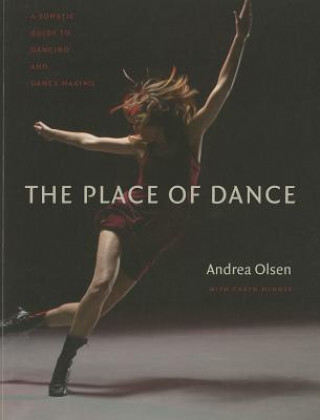
The Place of Dance is written for the general reader as well as for dancers. It reminds us that dancing is our nature, available to all as well as refined for the stage. Andrea Olsen is an internationally known choreographer and educator who combines the science of body with creative practice. This workbook integrates experiential anatomy with the process of moving and dancing, with a particular focus on the creative journey involved in choreographing, improvising, and performing for the stage. Each of the chapters, or "days," introduces a particular theme and features a dance photograph, information on the topic, movement and writing investigations, personal anecdotes, and studio notes from professional artists and educators for further insight. The third in a trilogy of works about the body, including Bodystories: A Guide to Experiential Anatomy and Body and Earth: An Experiential Guide, The Place of Dance will help each reader understand his/her dancing body through somatic work, create a dance, and have a full journal clarifying aesthetic views on his or her practice. It is well suited for anyone interested in engaging embodied intelligence and living more consciously.
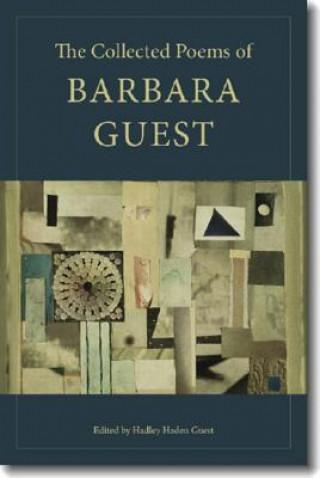
Winner of the SFSU Poetry Center Book Award (2010) One of the most notable members of the New York School--and its best-known woman--Barbara Guest began writing poetry in the 1950s in company that included John Ashbery, Kenneth Koch, Frank O'Har
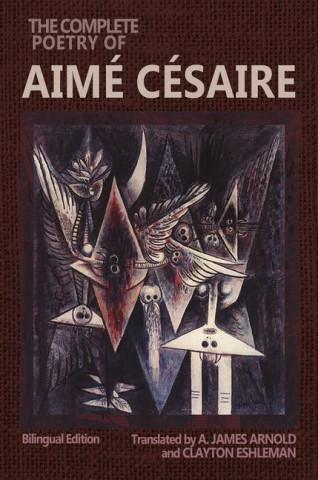
Language: English, Binding: Paperback, Number of pages: 994, Publishers: WESLEYAN UNIV PR, Author: Clayton Eshleman,A. James Arnold, ISBN-13: 9780819501233, Date of issue: 2024
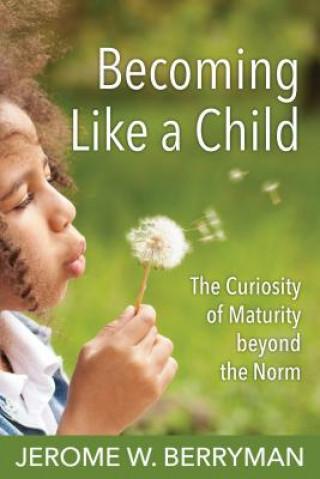
Berryman invites the reader into a creative process that explores what it means to be spiritually mature, starting with Jesus' injunction to "become like a child." What does this mean at the literal level? the figurative level? the mystical level? the e
In his first collection of critical essays, Joris maps the success and limitations of contemporary avant-garde poetics. This investigation leads him to envision a "nomadic poetics" as a strategy for new poetic work, for translation and, fundamentally, for an ethics of early 21st century life.
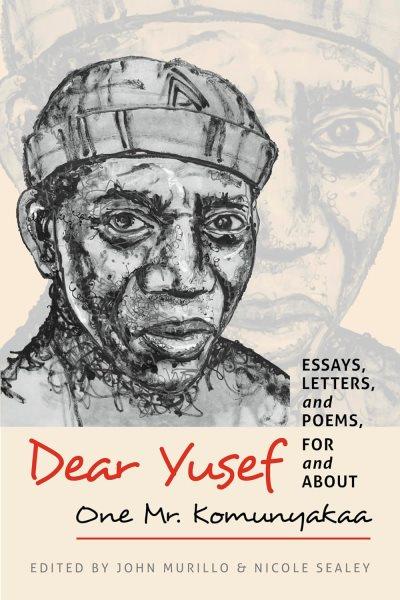
Anthology of new work honoring the legacy of a celebrated African American poet /> />This carefully and generously curated mosaic of essays, letters, and poems reveals the profound impact that poet Yusef Komunyakaa has had on poets, educators, and readers worldwide. The anthology brings together creative and critical offerings from fellow poets, former students, literary entities, and other admirers. There are emerging and established voicesfrom previously unpublished writers to Pulitzer Prize winning poets. Together these pieces honor one of the most influential writers of the last half century, one, it turns out, who is as beloved for his teaching as he is celebrated for his creative work. Contributors include Terrance Hayes, Sharon Olds, Carolyn Forché, Toi Derricotte, and Martín Espada, among others. Dear Yusef affirms Komunyakaa's transformative influence, showcasing how his mentoring has ignited creativity, nurtured passion, and fostered a sense of belonging among countless individuals. Through the artistry of these testimonials, we witness the transformative power of poetry and the enduring legacy of a true literary icon. /> />Sample Poem: /> />from "Reading Yusef," by Major Jackson /> />Over powdered beignets, />over a demitasse of chicory />near Royal, I came to grips I am the lonely sort />for I am ever seeking potions, />my head sideways, a book winged />in my hand, its words from the chitlin circuit, />fried dough going cold and congealing, />passing tourists drowned out, />a sullen look on my face. It is when I most />want to make love. /> />Dostoevsky was a way out of my confusion, />as was Baraka whom I gave my reverence freely. /> />Nothing I believed stayed, and thus, my melancholy />deepened though banjos and clarinets played />the streets through late afternoon rain, maybe />Black Bottom Stomp, eucalyptus and live oaks />aging against arpeggio-runs. /> />from "The Forty-Fourth Poem," by Jennifer Grotz />The first student in my correspondence course who completed the final lesson on Dien Cai Dau was, like many students in that course, incarcerated in the Indiana State Penitentiary. In his essay, he wrote that Dien Cai Dau was the first book of poems he'd ever read. He'd been so taken with the experience that he'd proceeded to read poems from it aloud to his fellow inmates, after which they'd exchanged stories about being in the military, about Vietnam. He wrote about what it was like to witness violence. About what it was like to be numb, or to want to be numbHe also wrote about appreciating beauty, especially natural beauty, and of an awareness of gratitude for some grace that had nonetheless kept him alive, about how the poems still gave him hope. Dien Cai Dau had had a profound effect on him. /> />from "Dear Yusef," by Emily Jungmin Yoon />The framework of your class was always care. Because you cared for us, we cared for one another. From then on, my poetry was always about love, even when it spoke through ugly histories, because I wanted to love the people in those narratives. Autorid: John Murillo
New work from one of the most compelling and transformative writers of the contemporary prose poem What is it to feel nostalgia, to be skeptical of it yet cleave intently to the complex truths of feeling and thought? In a series of 64 gorgeous, ramifying, unsettling prose poems addressing late-twentieth- and twenty-first century experience and its discontents, The Ruins of Nostalgia offers a strikingly original exploration of the misunderstood phenomenon of nostalgia as both feeling-state and historical phenomenon. Each poem, also titled The Ruins of Nostalgia, is a kind of lyrical mini-essay, playful, passionate, analytic. Some poems take a location, memory, conceit, or object as their theme. Throughout the series, the poems recognize and celebrate the nostalgias they ironize, which are in turn celebrated and then ironized again. Written often in the fictional persona of the first-person plural, The Ruins of Nostalgia explores the rich territory where individual response meets a collective phenomenon. (sample poem] The Ruins of Nostalgia 13 Where once there had been a low-end stationery store minded by an elderly beauty queen, there was now a store for high-end espresso machines minded by nobody. Where once there had been an illegal beer garden in a weedy lot, there was now a complex of luxury lofts with Parisian-style ivory façades. Where once there had been a bookstore and a bike shop and a bakery, there was now a wax museum for tourists. Where once there had been an empty lot there was now a building. Where once there had been an empty lot there was now a building. Where once there had been an empty lot there was now a building. Where once there had been an empty lot there was now a building. Where once there had been farms there were now subdivisions. Where once there had been subdivisions there were now sub-subdivisions. We lived in a sub-subdivision of a subdivision. We ourselves had become subdividedwhere once we had merely been of two minds. * Where once there had been a river there was now a road. A vocal local group had started a movement to break up the road and "daylight" the river, which still flowed, in the dark, underneath the road. * Could we daylight the farms, the empty lots, the stationery store, the elderly beauty queen, the city we moved to? Was it still flowing somewhere, under the luxury lofts, deliquescing in the dark, inhabited by our luxury selves, not yet subdivided, because not yet whole? * Could we daylight the ruins of nostalgia? Autorid: Donna Stonecipher
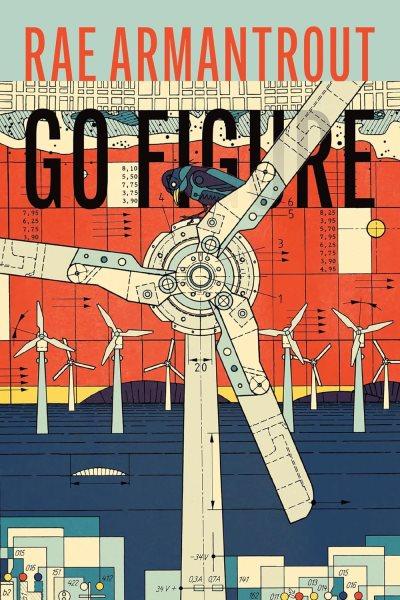
Keen, pithy meditations on a world that continues to surprise usThe poems in Pulitzer Prize-winner Rae Armantrout's new book are concerned with "this ongoing attempt/ to catalog the world" in a time of escalating disasters. From the bird who "check-marks morning/once more//like someone who gets up/to make sure// the door is locked" to bat-faced orchids, raising petals like light sails as if about to take flight, these poems make keen visual and psychological observations. The title Go Figure speaks to the book's focus on the unexpected, the strange, and the seemingly incredible so that: "We name things/ to know where we are." Moving with the deliberate precision that is a hallmark of Armantrout's work, they limn and refract, questioning how we make sense of the world, and ultimately showing how our experience of reality is exquisitely enfolded in words. "It's true things fall apart." Armantrout writes. 'Still, by thinking/we heat ourselves up."Sample TextHYPER-VIGILANCEHilarious,the way a crab's slendereye-stalksstand straight upfrom its scuttlingcarapacethe way vigilancetakes many forms? *That bird check-marks morningonce morelike someone who gets upto make surethe door is locked. *I soundlike I knowwhat I'm talking about.I sound like a comedian. Autorid: Rae Armantrout
The role of performing art in one of the world's most diverse and complex societiesThis book is the first comprehensive overview of Javanese performing arts from their origins to their dynamic present. Renowned scholar and musician Sumarsam draws from a lifetime of immersion in both wayang and gamelan to guide readers through the concept of the "in-between," revealing how the interplay of dualismsmyth and history, sacred and secular, personal and culturalforms the bedrock of Javanese performance. Rigorously researched historical case studies reveal the intricate relationship between histories and mythologies in Java. Wayang, accompanied by gamelan, is a multimedia performance imbued with rich historical, aesthetic, religious, and emotional associations. Sumarsam delves into this intricate, profound, and ever-evolving art form, exploring its diverse manifestations and venues, from courtly village entertainment-cum-ritual to palace-based aesthetic expressions of cultural proficiency; from coastal mercantile entrepots to the verdant wet rice terraces of Java; from colonial plantation and textile factory cultures to communities centered around contemporary industrial estates and creative economy initiatives. An essential resource for scholars, musicians, and enthusiasts of wayang and gamelan, The In-Between in Javanese Performing Arts offers an unparalleled immersion into the heart of traditional Javanese performing arts, revealing their profound impact on Javanese culture, identity, and artistic expression. Autorid: Sumarsam
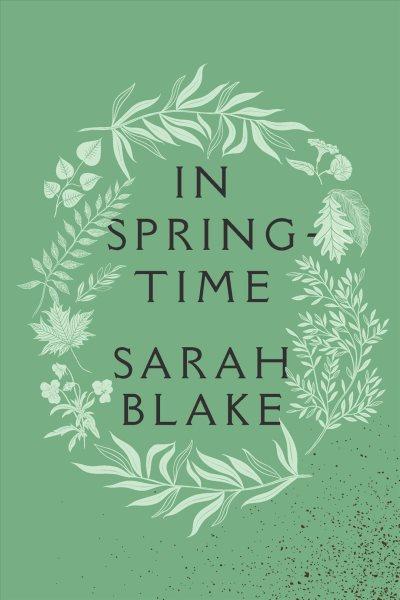
"An epic poem of a survival examines what makes us human when removed from the human world, what identity means where it is a useless thing, and how loss shapes us"-- Lost in the woods with a horse, a mouse, and the ghost of a dead bird, you will discover if you're meant to liveIn Sarah Blake's epic poem of survival, we follow a nameless main character lost in the woods. There, they discover the world anew, negotiating their place among the trees and the rain and the animals. Something brought them to the woods that nearly killed them, and they're not sure they want to live through this experience either. But the world surprises them again and again with beauty and intrigue. They come to meet a pregnant horse, a curious mouse, and a dead bird, who is set on haunting them all. Blake examines what makes us human when removed from the human world, what identity means where it is a useless thing, and how loss shapes us. In a stunning setting and with ominous dreams, In Springtime will take you into a magical world without using any magic at alljust the strangeness of the woods. Includes a stunning art feature by Nicky Arscott.7.If only the night held one dream instead of many.In the next dream you dig up the bird.In the next dream you dig in the same place and find a gun. You've shot someone. You weren't supposed to return to this place where you hid the gun.You're an idiot in your dream.In the next dream the horse returns. The horse startles you awake. But you are still asleep. Dreams are some wicked things.In the next dream you are in a desert. That's different.You forget what grass is. What it smells like. What the shadows of trees look like across your legs.You laugh your head off at the sight of a cactus.In the next dream you can see the spirit of the bird that will haunt you for weeks. Her tongue makes you think all of her words will come out garbled.Then you remember all she does is sing. Autorid: Sarah Blake
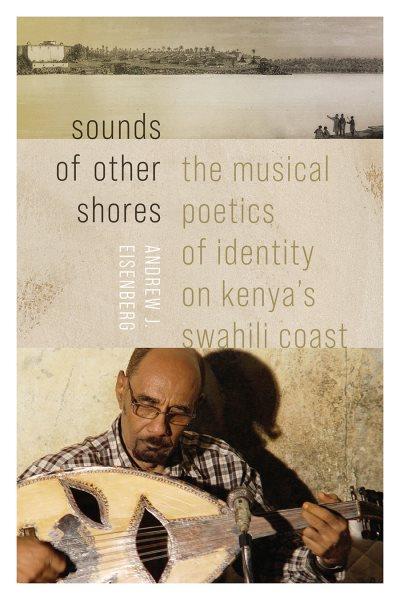
A study of transoceanic musical appropriation and Swahili ethnic subjectivity on the Kenyan coastSounds of Other Shores takes an ethnographic ear to the history of transoceanic stylistic appropriation in the Swahili taarab music of the Kenyan coast. Swahili taarab, a form of sung poetry that emerged as East Africa's first mass-mediated popular music in the 1930s, is a famously cosmopolitan form, rich in audible influences from across the Indian Ocean. But the variants of the genre that emerged in the Kenyan coastal city of Mombasa during the twentieth century feature particularly dramatic, even flamboyant, appropriations of Indian and Arab sonic gestures and styles. Combining oral history, interpretive ethnography, and musical analysis, Sounds of Other Shores explores how Swahili-speaking Muslims in twentieth-century Mombasa derived pleasure and meaning from acts of transoceanic musical appropriation, arguing that these acts served as ways of reflecting on and mediating the complexities and contradictions associated with being "Swahili" in colonial and postcolonial Kenya. The result is a musical anthropology of Kenyan Swahili subjectivity that reframes longstanding questions about Swahili identity while contributing to broader discussions about identity and citizenship in Africa and the Indian Ocean world. Autorid: Andrew J Eisenberg
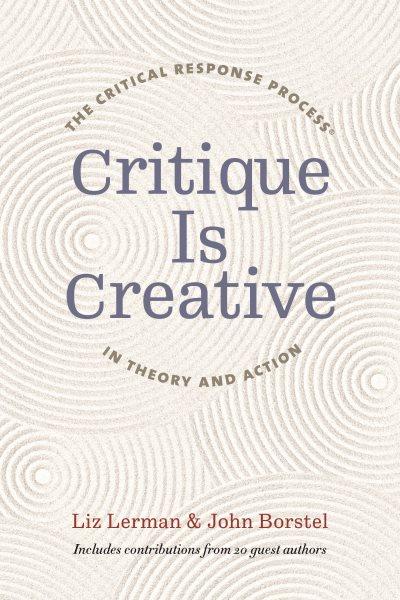
A thorough introduction and lively exploration of a widely recognized method for giving and getting useful feedbackDevised by choreographer Liz Lerman in 1990, Critical Response Process® (CRP) is an internationally recognized method for giving and getting feedback on creative works in progress. In this first in-depth study of CRP, Lerman and her long-term collaborator John Borstel describe in detail the four-step process, its origins and principles. The book also includes essays on CRP from a wide range of contributors. With insight, ingenuity, and the occasional challenge, these practitioners shed light on the applications and variations of CRP in the contexts of art, education, and community life. Critique Is Creative examines the challenges we face in an era of reckoning and how CRP can aid in change-making of various kinds.With contributions from:Bimbola Akinbola, Mark Callahan, Lawrence Edelson, Isaac Gómez, Rachel Miller Jacobs, Lekelia Jenkins, Elizabeth Johnson Levine, Carlos Lopez-Real, Cristóbal Martínez, Gesel Mason, Cassie Meador, Kevin Ormsby, CJay Philip, Kathryn Prince, Sean Riley, Charles C. Smith, Shula Strassfeld, Phil Stoesz, Gerda van Zelm, Jill Waterhouse, Rebekah West Autorid: Liz Lerman, John Borstel
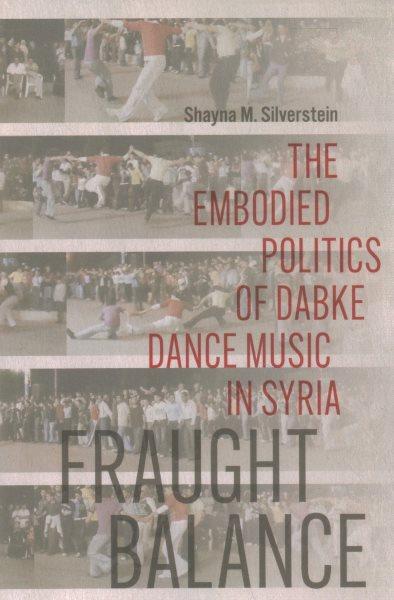
A vivid and intricate study of dance music traditions that reveals the many contradictions of Syrian identity in the 21st century Dabke, one of Syria's most beloved dance music traditions, is at the center of the country's war and the social tensions that preceded conflict. Drawing on almost two decades of ethnographic, archival, and digital research, Shayna M. Silverstein shows how dabke dance music embodies the fraught dynamics of gender, class, ethnicity, and nationhood in an authoritarian state. The book situates dabke politically, economically, and historically in a broader account of expressive culture in Syria's recent (and ongoing) turmoil. Silverstein shows how people imagine the Syrian nation through dabke, how the state has coopted it, how performances of masculinity revealand play withthe tensions and complexities of the broader social imaginary, how forces opposed to the state have used it resistively, and how migrants and refugees have reimagined it in their new homes in Europe and the United States. She offers deeply thoughtful reflections on the ethnographer's ethical and political dilemmas on fieldwork in an authoritarian state. Silverstein's study ultimately questions the limits of authoritarian power, considering the pleasure and play intrinsic to dabke circles as evidence for how performance cultures sustain social life and solidify group bonds while reproducing the societal divides endemic to Syrian authoritarianism. Autorid: Shayna M Silverstein
Indispensable volume of previously unavailable poetry by an American master Be Brave to Things shows legendary San Francisco Renaissance poet Jack Spicer at the top of his form, with his blistering intelligence, painful double-edged wit, and devastating will to truth everywhere on display. Much of the poetry here has never before been published, but the volume also includes much out-of-print or hard to find work, as well as Spicer's three major plays, which have never been collected. Here one finds major unfinished projects, early and alternate versions of well-known Spicer poems, shimmering stand-alone lyrics, and intricate extended "books" and serial poems. This new cache of Spicer material will be indispensable for any student of 20th century American poetry, proffering a trove of primary material for Spicer's growing readership to savor and enjoy. "When your body brushed against me. . ." When your body brushed against me I remembered How we used to catch butterflies in our hands Down in the garden. We were such patient children Following them from flower to flower Waiting and hoping. With our cupped hands we used to catch them And they answered us with a soft tickle For they never stopped flying. In bed I remembered them and cried for The touch of their fast wings, the impatience Of their bright colors I am too old for such games But even tonight, now your body has reminded me of butterflies I lie here awake, pretending. Autorid: Jack Spicer, Daniel Katz
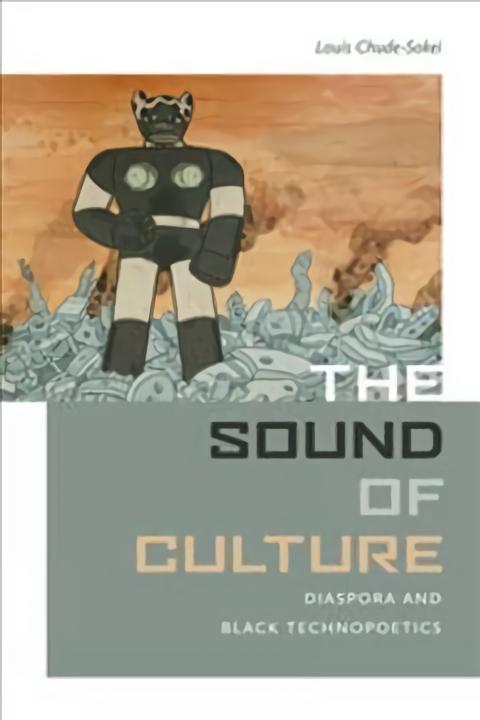
The Sound of Culture explores the histories of race and technology in a world made by slavery, colonialism, and industrialization. Beginning in the late nineteenth century and moving through to the twenty-first, the book argues for the dependent nature of those histories. Looking at American, British, and Caribbean literature, it distills a diverse range of subject matter: minstrelsy, Victorian science fiction, cybertheory, and artificial intelligence. All of these facets, according to Louis Chude-Sokei, are part of a history in which music has been central to the equation that links blacks and machines. As Chude-Sokei shows, science fiction itself has roots in racial anxieties and he traces those anxieties across two centuries and a range of writers and thinkers - from Samuel Butler, Herman Melville, and Edgar Rice Burroughs to Sigmund Freud, William Gibson, and Donna Haraway, to Norbert Weiner, Sylvia Wynter, and Samuel R. Delany. The book includes a specially curated playlist, featuring songs mentioned in the book, to help contextualize its arguments. Autorid: Louis Chude-Sokei
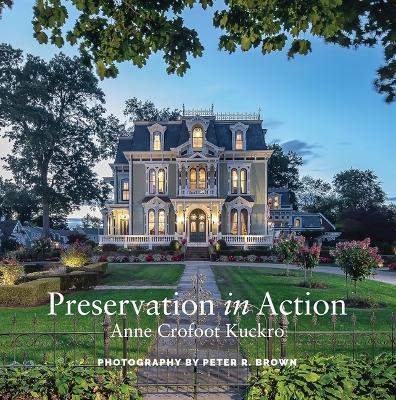
A one-of-a-kind tour through exquisitely preserved, chronicled and illustrated historic buildingsPreservation in Action is the first publication that tells the compelling story of Old Wethersfield, Connecticut's largest and oldest historic district in its oldest town. Based on original research, with stunning photography and handsome design, through ten examples of restoration, rehabilitation, renovation, adaptation, and reuse, it demonstrates the community's efforts over more than a century to preserve the architectural legacy of its historic village, through individual and institutional commitments, civic planning decisions, historic preservation, and design review. The examples range from the oldest house in town, with a 17th century addition added thirty years ago, to a 19th century commercial building whose greenhouse was repurposed as a cafe in 2022 and includes the town's old high school whose redevelopment, in a bold partnership between the Town and the Historical Society, together with the Society's redevelopment of another town owned building, has spurred the economic revival of the old village. Autorid: Anne Crofoot Kuckro, Peter R Brown
Porträt des beliebten einheimischen Wildtiers - so leben Igel, so verhalten sie sich.Mit einem Ratgeber zum Igelschutz in der Praxis.Neueste Erkenntnisse aus der Igelforschung in Deutschland, Österreich und der Schweiz.Igel erfreuen sich großer Beliebtheit; sie lassen sich vielerorts leicht in den Abendstunden beobachten. Doch was wissen wir eigentlich über diesen stacheligen Nachbarn? Dass er ein ausgesprochen gutes Ortsgedächtnis hat und sich damit leicht im Siedlungsraum zurechtfindet? Oder dass die Igelpopulationen in vielen europäischen Ländern aktuell rückläufig sind?Dieses Buch gibt einen Einblick in die Biologie und Ökologie des Igels und entführt uns in das nächtliche Treiben in unseren Gärten. Zahlreiche Tipps und Erkenntnisse aus der Igelforschung in Deutschland, Österreich und der Schweiz zeigen auf, wie wir unsere Umgebung igelfreundlicher gestalten und Gefahren für diesen kleinen Fußgänger abwenden können.
30 Jahre erfolgreiche Bartgeier-Auswilderung: die große Monografie zum Jubiläum.Das Porträt eines der faszinierendsten Greifvögel Mitteleuropas.Vogelfotografie in atemberaubender Qualität: Bilder des Naturfotografen Hansruedi Weyrich.Als «Lämmergeier» verhasst, hatte es der Bartgeier in den vergangenen Jahrhunderten nicht leicht: Er wurde mit allen Mitteln gejagt und schlussendlich ausgerottet. Heute wissen wir, dass sich der Bartgeier nicht von Lämmern ernährt, sondern fast ausschließlich von Knochen. In den 1970er-Jahren begannen enthusiastische Bartgeierfreunde, die Wiederansiedlung zu organisieren; 1991 wurde die erste Auswilderung in der Schweiz unternommen. Heute, 30 Jahre später, steht fest, dass die Auswilderung von Bartgeiern eines der erfolgreichsten Auswilderungsprojekte im Alpenraum ist.Ein Grund zum Feiern und für eine aktuelle Monografie über den größten Vogel des Alpenraums.Mit atemberaubenden Bildern des Naturfotografen Hansruedi Weyrich.
Do you dream of -Crossing the galaxies? Living in the far future?Entertaining millions with your imagination?This book can help make those dreams come true!Writing Science Fiction and Fantasy brings you expert advice on how to craft and market tales of the fantastic. Award-winning writers such as John Barnes, James Patrick Kelly, Norman Spinrad, Connie Willis, and Jane Yolen reveal some of their secrets of crafting believable stories, while Grand Masters Isaac Asimov and Robert A. Heinlein provide timeless advice for beginners and veterans alike. The editors also provide valuable insights into the process by which stories get published and they offer helpful hints on getting your story out of the slush pile and into print.
Native puppeteers from the White Earth Reservation search for the meaning of lifeTheatre of Chance is the final novel in the series that started with Blue Ravens and continued with Native Tributes, Satie on the Seine, and Waiting for Wovoka. A group of native puppeteers from the White Earth Reservation in Minnesota resume their adventures, traveling from White Earth to an existential colony: the urban reservation in Minneapolis. Basile, the native elder, has become an editorial writer, and the stowaways continue their creative puppet parleys in the context of the historical moment, including the election of Richard Nixon as president. Dummy Trout and the other stowaways secure a houseboat and, with the loyal mongrels, return to French Portage Narrows in Lake of the Woods, the birthplace of Dummy. There, for the first time in more than seventy years, she whispers a few words, ending the shamanic silence of her marvelous encounters on the White Earth Reservation and in the native existential colony of Minneapolis. Autorid: Gerald Vizenor
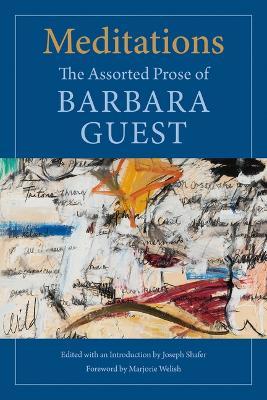
"A collection of Barbara Guest's essays, lectures, reviews, and profiles of poets and artists, as well as forms of fiction, biography, poetic prose, drama, comics, and other mixed-genre pieces"-- Six decades of writing on literature and art by one of the most significant poets of our timeMeditations gathers together in one volume for the first time an extensive collection of the prose work of Barbara Guest (19202006), one of the major voices of twentieth century American literature. Known primarily as a poet, Guest worked in many styles, all represented herein: essays, lectures, art criticism, literary and art reviews, as well as forms of fiction, biography, poetic prose, drama, comics, and other mixed-genre pieces. This collection of the poet's prose illuminates Guest's singular genius, highlighting her structural awareness of language and placing her within the vanguard of American poetry. Much of her writing initially appeared in special editions, often through collaborations with visual artists. Lyrical and intellectually soaring, this collection is a treasure of insights into the relationship between language, image, and imagination. Joseph Shafer's introduction provides a meaningful context for sixty years' worth of critical and creative prose by one of America's finest poets. Autorid: Barbara Guest, Joseph Shafer, Marjorie Welish
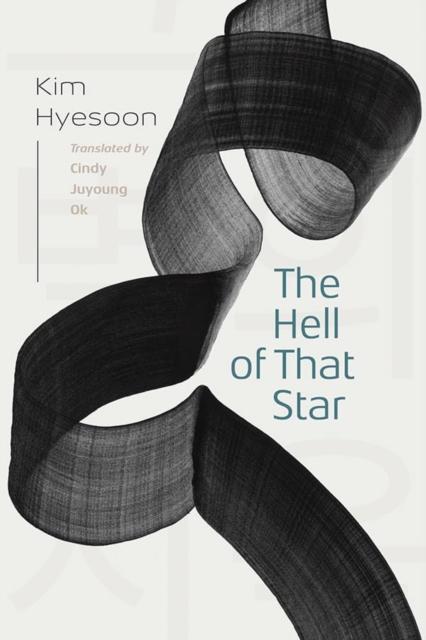
Singular poetry made through censorship, elusion, and language renewal_x000D_ _x000D_ The astonishing poetry collection The Hell of That Star enlivens the horror of Korean life under U.S.-backed authoritarianism. Poems of blows and vomit, births and coffins alternate blithe confidence and trembling terror. When slapped seven times by a government censor, Kim responded with defiant poems. The death of language becomes a death of the writer; within death, Kim finds new life in fragmentation and reorientation. This singular volume provides a wild and rigorous study of the words of the nation-state and the self, as well as the deprivations, detainments, and surprises in between. In evading censorship, Kim's poems question, twist, and transmute; language is a site where the personal and political meet to escape containment, emptiness, and domestication. The book includes an essay by the author, with an introduction and notes by the translator._x000D_ _x000D_ (sample poem]_x000D_ _x000D_ The tough after all_x000D_ we still remain_x000D_ and just in gathering it is lovingly_x000D_ even while building each other's tombs_x000D_ while patting each other's backs_x000D_ _x000D_ But when each bird turns around_x000D_ their arms flung! open_x000D_ embracing tightly what_x000D_ they do not even recognize as their grave_x000D_ and they hug and hold harder and harder_x000D_ stretching four limbs out over the laid sleeping mat and blanket_x000D_ saying I love you I love you even in their sleep_x000D_ In this world from which crying birds have disappeared_x000D_ only I am left Autorid: Hyesoon Kim, Cindy Juyoung Ok
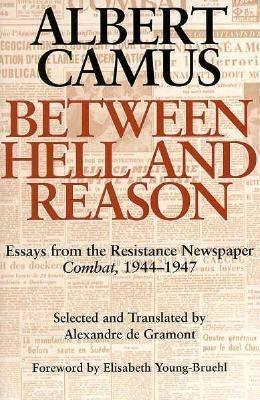
From 1943 to 1947, Albert Camus was editor-in-chief of the famous underground and post-Liberation French newspaper Combat. Among his journalist writings during this period were eloquent essays that grappled with questions of revolution, violence, freedom, justice, ethics, and the emerging social order. The 41 pieces collected here--most never before published in English--tell the story of a sensitive man's odyssey from "hell to reason" at a time of tremendous upheaval while also providing a missing link between Camus's pre-war and post-war works. Almost lyrical in their intensity of thought and language, these newspaper pieces show a Camus new to most American readers and are a unique testimony to an extraordinary period in history with parallels to current changes in Eastern Europe. At the time of Liberation in 1944, Camus called for a revolution in French society, including a violent purge of those who had sided with the Nazis. When this turned into a near civil war of personal vendettas and summary executions, he gradually became disillusioned with his hopes for a new society. His later pieces in Combat show him arriving at a more moderate theory of revolt later echoed in such books as The Plague and The Rebel: the individual mattered above all, human life was greater than social goals. "I have come to the conclusion", he wrote, "that men who want to change the world today must choose one of the following: the charnel house, the impossible dream of stopping history, or the acceptance of a relative Utopia that still leaves man the choice to act freely".