Creality CR-PLA Wood (White Pine) Filament.Creality's CR-Wood PLA filament is ideal for creating figurines and more. It stands out for its beautiful wood color, high strength and resistance to distortion. It allows smooth and fast printing - without clogging the nozzle. What's more, it's made of durable and environmentally friendly materials. At the same time, it is compatible with most FDM printers on the market.Top quality manufacturingEnvironmentally friendly, biodegradable materials were used to make the filament, which is characterized by very high durability. Its undoubted advantage is also its elegant wood color - you will successfully use it, for example, for printing decorations.Smooth printingThe filament allows you to print 3D models smoothly and quickly - at speeds of up to 90 mm/s. It is distinguished by excellent adhesion and low shrinkage. It is also resistant to distortion and minimizes the risk of clogging the printer nozzle. All this will allow you to print your chosen parts with ease and save time! ManufacturerCrealityNameCR-Wood FilamentModel3301130001ColorWhite pinePrinting temperatureFrom 190°C to 230°CPrinting speed40-90 mm/secFilament diameter1.75 mmWeight1 kg
Rohelusse mattunud Jeju saarelt pärineva 98% naturaalse aaloe sisaldus annab Su nahale tõelise värskuselaengu ja vajaliku niisutuse. - rahustab ja värskendab välisteguritest ärritunud nahka - sobib ka tundlikule nahale, kuna ei sisalda 18 kahjuliku ainete nimekirja kantud koostisosa - veepõhine tootevalem värskendab koheselt kurnatud nahka, jätmata nahale kleepuvat kihti! - niisutav koostis katab naha hooldava kaitsekihiga - kõik-ühes geel-sprei sobib nii näole kui kehale kandmiseks!
Päiksevarjuki peamine eesmärk on hoida objektiivi esiläätsest eemal pildikvaliteeti vähendav külgvalgus. Samuti kaitseb varjuk esiläätse mingil määral ka kahjustuste eest (näiteks kukkumisel või löögi korral)., Sobivus: Canon EF 70-200mm F2.8L USM.
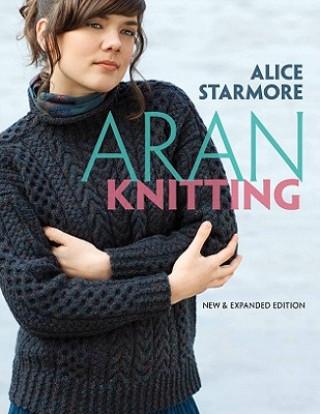
An acclaimed textile designer, author, artist, and photographer, Alice Starmore is a native of Scotland's Isle of Lewis. Starmore has taught and lectured extensively throughout Britain, Europe, and the United States. She has written 16 books and countless magazine articles, and her classic Book of Fair Isle Knitting is the work that introduced Americans to the popular traditional technique. 4 Questions with Alice Starmore: An Exclusive Dover Interview Alice Starmore has a fascinating tale to tell. We spoke to the author of the #1 crafts bestseller Alice Starmore's Book of Fair Isle Knitting about her knitting background, professional start, and more. Clearly, knitting is a deeply ingrained facet of the culture of Scotland's Outer Hebrides. Did your mother teach you to knit? My mother taught me to knit when I was very young. She was a dressmaker as well as a knitter and our house was a place of constant creativity. I was also born at a time when most women knitted as a matter of course, and I had three aunts who had been fisher girls in their youth and were experts at making traditional fishermen's gansies. I understand that your first language is Gaelic — do you still speak it?Yes I still speak Gaelic. The Isle of Lewis, where I live, is in the Outer Hebrides — the heartland of Gaelic and the only place where you will hear the language in everyday use.How did you get your start professionally?I designed a small collection of knitwear in 1975 and successfully sold it in London boutiques. It was featured in a national newspaper and from that small beginning my knitting career evolved in ways that were quite unimaginable to me when I began. Your books are known and loved around the world, and you've adapted design elements from the textile arts of many countries into your repertoire. Are you still discovering "new" aspects of knitting and fabric arts from other cultures?I am interested in everything. I find inspiration in all aspects of the world around me. There is enough inspiration in the natural world on my doorstep to last many lifetimes. I am also inspired by art, culture, history, science and music. My own culture features widely in my design work but I have always been interested in other cultures and in other places. My main problem is that I cannot possibly live long enough to produce work from the amount of ideas that come into my head.
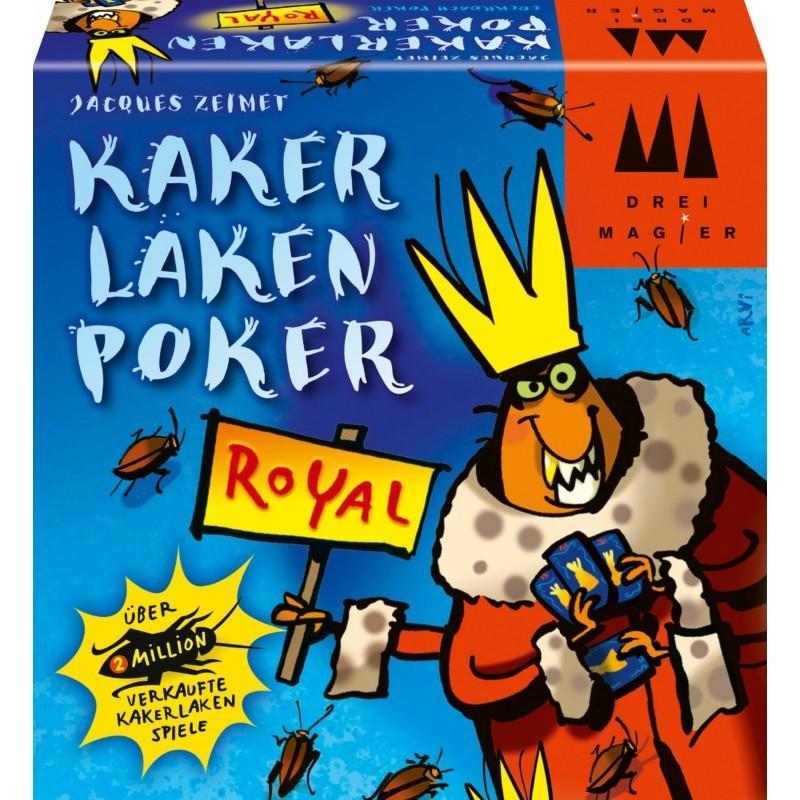
As in its parent game Kakerlakenpoker, Kakerlakenpoker Royal has nothing to do with poker except that the game is all about bluffing, but with cards showing cockroaches, rats and stink bugs instead of queens, 10s and aces. To set up the game, shuffle the deck and deal the cards out to players. On a turn, a player takes one card from his hand, lays it face down on the table, slides it to a player of his choice, and declares a type of critter, e.g., "Stink bug". The player receiving the card either: Accepts the card, says either "true" or "false", then reveals the card. If this player is wrong in her claim, she keeps the card on the table in front of her face up; if she is right, the player who gave her the card places it face up before him. Passes the card to another player, peeking at it first, then keeping it face-down and either saying the original type of critter or saying a new type. This new player again has the choice of accepting the card or passing it, unless the card has already been seen by all other players in which case the player must accept it and make a true/false claim. The game ends when a player has no cards to pass on his turn or when a player has four cards of the same critter on the table in front of him. In either case, this player loses and everyone else wins. To this, Kakerlakenpoker Royal adds new rules and new nasty "royal" critters to create more options for players during the game.
Värvi ja kaunista lemmiktegelastega! Värvi oma lemmiktegelased ja kaunista lehed lõbusate lugudega. Reisisõbralik Crayola tegevusraamat on lihtne ja mugav kaasa haarata nii reisidele, kui ka lõbus koduseks ajaviiteks. Komplektis on 32 lehekülge värvimist ja lõbusaid tegevusi, nagu labürindid, peidetud pildid ja sobitamismängud. Kaasas on 7 mahapestavat Pip-Squeak markerit ning hoiukarp markerite jaoks.
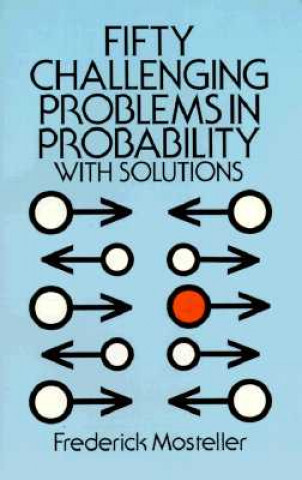
Charles Frederick Mosteller ( 1916–2006) was one of the eminent statisticians of the 20th century. He was the founding chairman of Harvard's Statistics department. Dr. Mosteller wrote more than 50 books and more than 350 papers, with over 200 coauthors. Frederick Mosteller: Harvard Man Frederick Mosteller (1916–2006) founded Harvard University's Department of Statistics and served as its first chairman from 1957 until 1969 and again for several years in the 1970s. He was the author or co-author of more than 350 scholarly papers and more than 50 books, including one of the most popular books in his field, first published in 1965 and reprinted by Dover in 1987, Fifty Challenging Problems in Probability with Solutions. Mosteller's work was wide-ranging: He used statistical analysis of written works to prove that James Madison was the author of several of the Federalist papers whose authorship was in dispute. With then–Harvard professor and later Senator Daniel P. Moynihan, he studied what would be the most effective way of helping students from impoverished families do better in school — their answer: to improve income levels rather than to simply spend on schools. Later, his analysis of the importance to learning of smaller class sizes buttressed the Clinton Administration's initiative to hire 100,000 teachers. And, as far back as the 1940s, Mosteller composed an early statistical analysis of baseball: After his team, the Boston Red Sox, lost the 1946 World Series, he demonstrated that luck plays an enhanced role in a short series, even for a strong team. In the Author's Own Words:"Though we often hear that data can speak for themselves, their voices can be soft and sly." — Frederick Mosteller
Preface to Revised edition Preface1. Mathematical Review 1.1 Linear Algebra 1.1.1 Three-dimensional vector algebra 1.1.2 Matrices 1.1.3 Determinants 1.1.4 N-Dimensional Complex Vector spaces 1.1.5 Change of Basis 1.1.6 The Eigenvalue Problem 1.1.7 Functions of Matrices 1.2 Orthogonal functions, Eigenfunctions, and Operators 1.3 The Variation Method 1.3.1 The Variation principle 1.3.2 The Linear Variational Problem Notes, Further Reading2. Many Electron Wave functions and operators 2.1 The Electronic Problem 2.1.1 Atomic Units 2.1.2 The Born-Oppenheimer Approximation 2.1.3 The Antisymmetry or Pauli Exclusion Principle 2.2 Orbitals, Slater Determinants, and Basis functions 2.2.1 Spin Orbitals and Spatial Orbitals 2.2.2 Hartree Products 2.2.3 Slater Determinants 2.2.4 The Hartree-Fock Approximation 2.2.5 The Minimal Basis H subscript 2 Model 2.2.6 Excited Determinants 2.2.7 Form of the Exact Wave function and Configuration Interaction 2.3 Operators and Matrix Elements 2.3.1 Minimal Basis H subscript 2 matrix Elements 2.3.2 Notations for One- and Two-Electron Integrals 2.3.3 General Rules for Matrix Elements 2.3.4 Derivation of the Rules for Matrix Elements 2.3.5 Transition from Spin Orbitals to Spatial Orbitals 2.3.6 Coulomb and Exchange Integrals 2.3.7 Pseudo-Classical interpretation of Determinantal Energies 2.4 Second Quantization 2.4.1 Creation and annihilation Operators and Their Anticommutation Relations 2.4.2 Second-Quantized Operators and Their Matrix Elements 2.5 Spin-Adapted Configurations 2.5.1 Spin Operators 2.5.2 Restricted Determinants and Spin-Adapted Configurations 2.5.3 Unrestricted Determinants Notes, Further Reading3. The Hartree-Fock Approximation 3.1 The Hartree-Fock Equations 3.1.1 The Coulomb and Exchange Operators 3.1.2 The Fock Operator 3.2 Derivation of the Hartree-Fock Equations 3.2.1 Functional Variation 3.2.2 Minimization of the Energy of a Single Determinant 3.2.3 The Canonical Hartree-Fock Equations 3.3 Interpretation of Solutions to the Hartree-Fock Equations 3.3.1 Orbital energies and Koopmans' Theorem 3.3.2 Brillouin's Theorem 3.3.3 The Hartree-Fock Hamiltonian 3.4 Restricted Closed-Shell hartree-Fock: The Roothaan Equations 3.4.1 Closed-Shell Hartree-Fock: Restricted Spin Orbitals 3.4.2 Introduction of a Basis: The Roothaan Equations 3.4.3 The Charge Density 3.4.4 Expression for the Fock Matrix 3.4.5 Orthogonalization of the Basis 3.4.6 The SCF Procedure 3.4.7 Expectation Values and Population Analysis 3.5 Model Calculations on H subscript 2 and HeH superscript + 3.5.1 The 1s Minimal STO-3G Basis Set 3.5.2 STO-3G H subscript 2 3.5.3 An SCF Calculation on STO-3G HeH superscript + 3.6 Polyatomic Basis Sets 3.6.1 Contracted Gaussian functions 3.6.2 Minimal Basis Sets: STO-3G 3.6.3 Double Zeta Basis Sets: 4-31G 3.6.4 Polarized Basis Sets: 6-31G and 6-31G 3.7 Some Illustrative Closed-Shell Calculations 3.7.1 Total Energies 3.7.2 Ionization Potentials 3.7.3 Equilibrium Geometries 3.7.4 Population Analysis and Dipole Moments 3.8 Unrestricted Open-Shell Hartree-Fock: The Pople-Nesbet Equations 3.8.1 Open-Shell Hartree-Fock: Unrestricted Spin Orbitals 3.8.2 Introduction of a Basis: The Pople-Nesbet Equations 3.8.3 Unrestricted Density Matrices 3.8.4 Expression for the Fock Matrices 3.8.5 Solution of the Unrestricted SCF Equations 3.8.6 Illustrative Unrestricted Calculations 3.8.7 The Dissociation Problem and its Unrestricted Solution Notes, Further Reading4. Configuration Interaction 4.1 Multiconfigurational Wave Functions and the Structure of the Full CI Matrix 4.1.1 Intermediate Normalization and an Expression for the Correlation Energy 4.2 Doubly Excited CI 4.3 Some Illustrative Calculations 4.4 Natural Orbitals and the One-Particle Reduced Density Matrix 4.5 The Multiconfiguration Self-Consistent Field (MCSCF) and Generalized Valence Bond (GVB) Methods 4.6 Truncated CI and the Size-Consistency Problem Notes, Further Reading5. Pair and Coupled-Pair Theories 5.1 The Independent Electron Pair Approximation (IEPA) 5.1.1 Invariance under Unitary Transformations: an example 5.1.2 Some Illustrative Calculations 5.2 Coupled-Pair Theories 5.2.1 The Coupled Cluster Approximation (CCA) 5.2.2 The Cluster Expansion of the Wave Function 5.2.3 Linear CCA and the Coupled Electron Pair Approximation (CEPA) 5.2.4 Some Illustrative Calculations 5.3 Many-Electron Theories with Single Particle Hamiltonians 5.3.1 The Relaxation Energy via CI, IEPA, CCA, and CEPA 5.3.2 The Resonance Energy of Polyenes in Hückel Theory Notes, Further Reading6. Many-Body Perturbation Theory 6.1 Rayleigh-Schrödinger (RS) Perturbation Theory 6.2 Diagrammatic Representation of RS Perturbation Theory 6.2.1 Diagrammatic Perturbation Theory for 2 States 6.2.2 Diagrammatic Perturbation Theory for N States 6.2.3 Summation of Diagrams 6.3 Orbital Perturbation Theory: One-Particle Perturbations 6.4 Diagrammatic Representation of Orbital Perturbation Theory 6.5 Perturbation Expansion of the Correlation Energy 6.6 The N-Dependence of the RS Perturbation Expansion 6.7 Diagrammatic Representation of the Perturbation Expansion of the Correlation Energy 6.7.1 Hugenholtz Diagrams 6.7.2 Goldstone Diagrams 6.7.3 Summation of Diagrams 6.7.4 What Is the Linked Cluster Theorem? 6.8 Some Illustrative Calculations Notes, Further Reading7. The One-particle Many-Body Green's Function 7.1 Green's Functions in single Particle Systems 7.2 The One-Particle Many-Body Green's Function 7.2.1 The Self-Energy 7.2.2 The solution of the Dyson Equation 7.3 Application of the formalism to H subscript 2 and HeH superscript + 7.4 Perturbation Theory and the Green's Function Method 7.5 Some Illustrative Calculations Notes, Further ReadingAppendix A. Integral Evaluation with 1s Primitive GaussiansAppendix B. Two-Electron Self-Consistent-Field ProgramAppendix C. Analytic Derivative methods and Geometry OptimizationAppendix D. Molecular Integrals for H subscript 2 as a Function of Bond Length Index
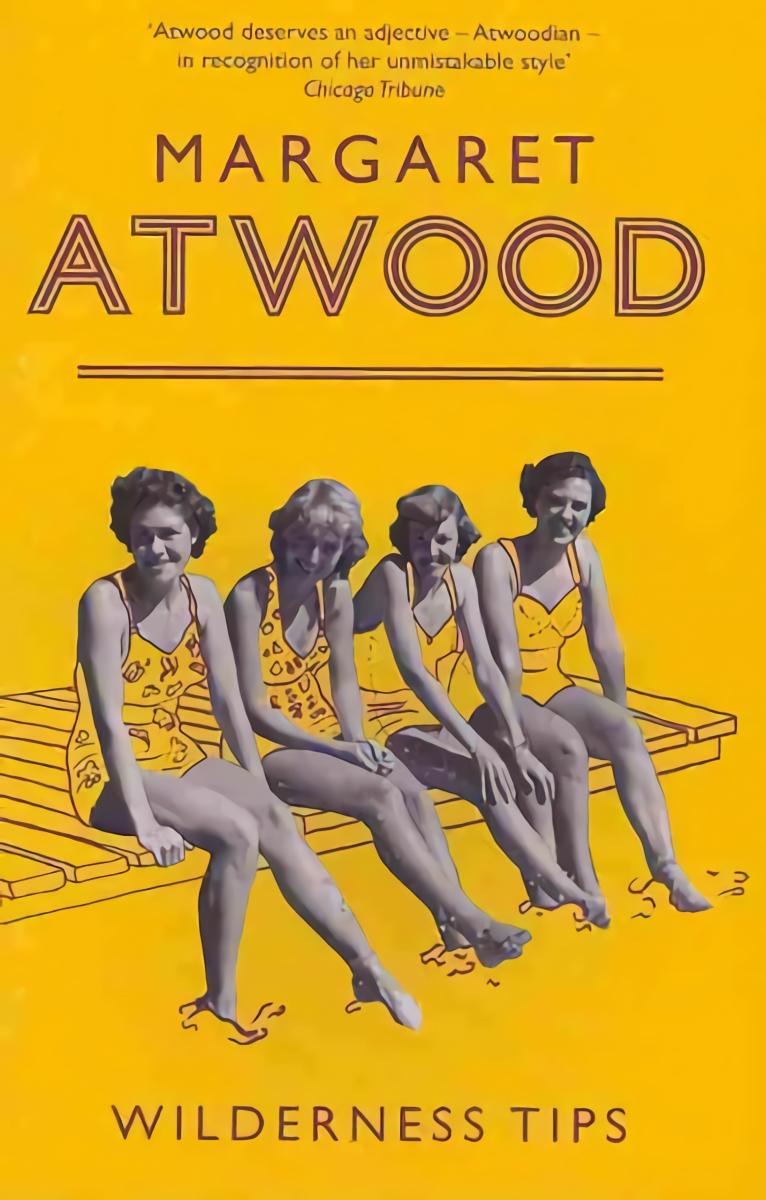
By the author of The Handmaid's Tale and The Testaments A leathery bog-man transforms an old love affair; a sweet, gruesome gift is sent by the wife of an ex-lover; landscape paintings are haunted by the ghost of a young girl. This dazzling collection of ten short stories takes us into familiar Atwood territory to reveal the logic of irrational behaviour and the many textures lying beneath ordinary life. 'Atwood is a writer of importance, with a deep understanding of human behaviour, a beautiful understated style and, rarest of all, a broad scope' Marilyn French 'Funny, sharp and always incisive' Time Out 'Everything Atwood forms in words has substance and weight' Daily Telegraph 'Margaret Atwood deserves an adjective - Atwoodian - in recognition of her virtuoso wit and unmistakable style' Chicago Tribune
Kõrgetasemeline reageerimisvõime Ülireageeriv turvisemustri disain kohandub pidevalt teega, tagades maanteega optimaalse kokkupuuteala. Suurepärane juhitavus „Dynamic Response“ tehnoloogia: aramiidi ja nailoni hübriidvöö tagab juhtimisotsuste optimaalse edastamise maanteele. Erakordne haarduvus kuival ja parem pidurdamine märjal teel „Bi-Compound“ tehnoloogia: turvises on kasutatud 2 erinevat elastomeeri -välimine pool: uudne hübriidelastomeer, mis tagab haarduvuse KUIVAL teel -sisemine pool: uudne ühendisegu, mille erilised „funktsionaalsed elastomeerid“ ja räni tagavad suurepärase haarduvuse ja pidurdamisel MÄRJAL teel.