Winner of the 2015 James Beard Award for Best Beverage Book and the 2015 IACP Jane Grigson Award.A revolutionary approach to making better-looking, better-tasting drinks.In Dave Arnold’s world, the shape of an ice cube, the sugars and acids in an apple, and the bubbles in a bottle of champagne are all ingredients to be measured, tested, and tweaked.With Liquid Intelligence, the creative force at work in Booker & Dax, New York City’s high-tech bar, brings readers behind the counter and into the lab. There, Arnold and his collaborators investigate temperature, carbonation, sugar concentration, and acidity in search of ways to enhance classic cocktails and invent new ones that revolutionize your expectations about what a drink can look and taste like.Years of rigorous experimentation and study―botched attempts and inspired solutions―have yielded the recipes and techniques found in these pages. Featuring more than 120 recipes and nearly 450 color photographs, Liquid Intelligence begins with the simple―how ice forms and how to make crystal-clear cubes in your own freezer―and then progresses into advanced techniques like clarifying cloudy lime juice with enzymes, nitro-muddling fresh basil to prevent browning, and infusing vodka with coffee, orange, or peppercorns.Practical tips for preparing drinks by the pitcher, making homemade sodas, and building a specialized bar in your own home are exactly what drink enthusiasts need to know. For devotees seeking the cutting edge, chapters on liquid nitrogen, chitosan/gellan washing, and the applications of a centrifuge expand the boundaries of traditional cocktail craft.Arnold’s book is the beginning of a new method of making drinks, a problem-solving approach grounded in attentive observation and creative techniques. Readers will learn how to extract the sweet flavor of peppers without the spice, why bottling certain drinks beforehand beats shaking them at the bar, and why quinine powder and succinic acid lead to the perfect gin and tonic.Liquid Intelligence is about satisfying your curiosity and refining your technique, from red-hot pokers to the elegance of an old-fashioned. Whether you’re in search of astounding drinks or a one-of-a-kind journey into the next generation of cocktail making, Liquid Intelligence is the ultimate standard―one that no bartender or drink enthusiast should be without.450 color photographs
The Red Book, published to wide acclaim in 2009, contains the nucleus of C.G. Jung's later works. It was here that he developed his theories that would transform psychotherapy from treatment of the sick into a means for the higher development of the personality. As Sara Corbett wrote in The New York Times, "The creation of one of modern history's true visionaries, The Red Book is a singular work, outside of categorization...it transcends the history of psychoanalysis and underscores Jung's place among revolutionary thinkers like Marx, Orwell and, of course, Freud." The Red Book: A Reader's Edition features Sonu Shamdasani's introductory essay and the full translation of Jung's vital work in one volume.
The first English translation by a woman, Wilson's enticingly readable Odyssey breathes new life into its complicated characters and familiar storylines.
In this revised edition, Paul Ekman, a renowned expert in emotions research and nonverbal communication, adds a new chapter to present his latest research on his groundbreaking inquiry into lying and the methods for uncovering lies. Ekman has figured out the most important behavioral clues to deceit; he has developed a one-hour self-instructional program that trains people to observe and understand "micro expressions"; and he has done research that identifies the facial expressions that show whether someone is likely to become violent. ?Telling Lies?describes how lies vary in form and how they can differ from other types of misinformation that can reveal untruths. It discusses how a person's body language, voice, and facial expressions can give away a lie but still fool professional lie hunters even judges, police officers, drug enforcement agents, and Secret Service agents."
A New York Times BestsellerWinner of the James Beard Award for General Cooking and the IACP Cookbook of the Year Award"The one book you must have, no matter what you’re planning to cook or where your skill level falls."―New York Times Book ReviewEver wondered how to pan-fry a steak with a charred crust and an interior that's perfectly medium-rare from edge to edge when you cut into it? How to make homemade mac 'n' cheese that is as satisfyingly gooey and velvety-smooth as the blue box stuff, but far tastier? How to roast a succulent, moist turkey (forget about brining!) - and use a foolproof method that works every time?As Serious Eats's culinary nerd-in-residence, J. Kenji López-Alt has pondered all these questions and more. In The Food Lab, Kenji focuses on the science behind beloved American dishes, delving into the interactions between heat, energy, and molecules that create great food. Kenji shows that often, conventional methods don’t work that well, and home cooks can achieve far better results using new - but simple - techniques. In hundreds of easy-to-make recipes with over 1,000 full-color images, you will find out how to make foolproof Hollandaise sauce in just two minutes, how to transform one simple tomato sauce into a half dozen dishes, how to make the crispiest, creamiest potato casserole ever conceived, and much more.Over 1000 color photographs
#1 New York Times Bestseller • #1 Washington Post Bestseller • One of Time's 10 Most Anticipated Cookbooks of 2022From J. Kenji López-Alt, the author of the best-selling cookbook The Food Lab: the definitive guide to the science and technique of cooking in a wok.J. Kenji López-Alt’s debut cookbook, The Food Lab, revolutionized home cooking, selling more than half a million copies with its science-based approach to everyday foods. And for fast, fresh cooking for his family, there’s one pan López-Alt reaches for more than any other: the wok.Whether stir-frying, deep frying, steaming, simmering, or braising, the wok is the most versatile pan in the kitchen. Once you master the basics―the mechanics of a stir-fry, and how to get smoky wok hei at home―you’re ready to cook home-style and restaurant-style dishes from across Asia and the United States, including Kung Pao Chicken, Pad Thai, and San Francisco–Style Garlic Noodles. López-Alt also breaks down the science behind beloved Beef Chow Fun, fried rice, dumplings, tempura vegetables or seafood, and dashi-simmered dishes.Featuring more than 200 recipes―including simple no-cook sides―explanations of knife skills and how to stock a pantry, and more than 1,000 color photographs, The Wok provides endless ideas for brightening up dinner.Full color photographs throughout
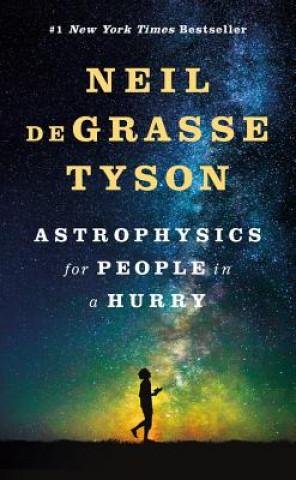
What is the nature of space and time? How do we fit within the universe? How does the universe fit within us? There’s no better guide through these mind-expanding questions than acclaimed astrophysicist and best-selling author Neil deGrasse Tyson. But today, few of us have time to contemplate the cosmos. So Tyson brings the universe down to Earth succinctly and clearly, with sparkling wit, in tasty chapters consumable anytime and anywhere in your busy day.While you wait for your morning coffee to brew, for the bus, the train, or a plane to arrive, Astrophysics for People in a Hurry will reveal just what you need to be fluent and ready for the next cosmic headlines: from the Big Bang to black holes, from quarks to quantum mechanics, and from the search for planets to the search for life in the universe.
In this visual manifesto for the tiny house lifestyle, discover over 250 awe-inspiring images of the world's most creative small homes, alongside the stories, ideas and advice of those living in them.
Norton presents here two classic drawing textbooks, revised and enhanced for a new generation. Based on Will Eisner's legendary course at New York's School of Visual Arts, these guides have inspired generations of artists, students, teachers and fans. In "Comics and Sequential Art", Eisner reveals the basic building blocks and principles of comics, including imagery, the frame, and the application of time, space and visual forms. "Graphic Storytelling and Visual Narrative" teaches how to control a story effectively using a broad array of techniques. With examples from Eisner's own catalogue and such masters as R. Crumb, Art Spiegelman, Milton Caniff, H. Foster, Al Capp and George Herriman, these books distill the art of graphic storytelling into principles that every comic artist, writer and filmmaker should know.
The Dream of a Common Language explores the contours of a woman s heart and mind in language for everybody language whose plainness, laughter, questions and nobility everyone can respond to. . . . No one is writing better or more needed verse than this. Boston Evening Globe"
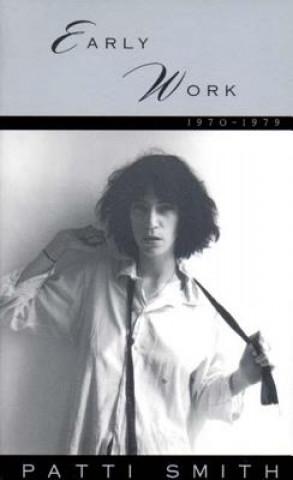
Patti Smith - poet, songwriter, performer. Collected here are selections from Smith's writings over the decade in which she made a lasting impact on America's underground scene. Smith's work evokes the experimentation, the longing, and the desire to break boundaries of those pre-punk days. Early Work: 1970-1979 contains poems and prose from her chap-books Seventh Heaven, Ha! Ha! Houdini! (complete), and Witt, as well as selections from her landmark work Babel. Over one-quarter of the works are previously unpublished, chosen from transcriptions of performance pieces, notebook entries, and the author's personal papers. In an introduction, Smith places her writing in the context of the seventies, a time when the consequences of leading a life on the edge were less profound. From obscure publications to well-known anthems, Early Work will bring together all the sides of Patti Smith from the meditative to the explosive. With published and unpublished photos by Robert Mapplethorpe, Judy Linn, and others, this raucous volume will remind people of why Patti Smith became a legend.
An eminent therapist explains what makes couples compatible and how to sustain a happy marriage. John M. Gottman is one of the world's leading researchers of why marriages do or don't work, and he is internationally known for his work with couples. Here he presents his latest groundbreaking findings on how to recognise and nurture the key predictors of a successful marriage: awareness, tolerance, understanding, nondefensive listening, and empathy.
Reality and entertainment crowd our fields of vision with brutal imagery. The pervasiveness of images of torture, horror and war has all but demolished the twentieth-century hope that such imagery might shock us into a less alienated state or aid in the creation of a just social order. Maggie Nelson brilliantly navigates the contemporary predicament, with an eye to the question of whether or not focusing on representations of cruelty makes us cruel. In a journey through high and low culture (Kafka to reality TV), the visual to the verbal (Paul McCarthy to Brian Evenson), and the apolitical to the political (Francis Bacon to Kara Walker), Nelson offers a model of how one might balance strong ethical convictions with an equally strong appreciation for work that tests the limits of taste, taboo and permissibility.
To John J. Mearsheimer the anarchy of the international system requires states to seek dominance at one another's expense, dooming even peaceful nations to a relentless power struggle. The best survival strategy is to become a regional hegemon and to make sure that no other hegemon emerges elsewhere. He predicts that China will attempt to dominate Asia while the US will be determined to remain the world's sole regional hegemon.The tragedy of great power politics is inescapable.
Brilliantly demonstrated in "Thinking Strategically" [ISBN 978 0 393 31035 1], game theory is bursting with lessons for us all ("The Observer"). Here the authors provide the long-awaited sequel. Game theory means rigorous strategic thinking. It's the art of anticipating your opponent's next moves; knowing that your rival is trying to do the same thing to you. Though parts of game theory involve common sense, much is counterintuitive and it can only be mastered by developing a new way of seeing the world. Using case studies, the authors show how nearly every business and personal interaction has a game theory component to it. The authors look at questions such as whether the winners of reality-TV contests are instinctive game theorists or if big-time investors see things that most people miss and what great poker players know that the average person doesn't. Mastering game theory will make the reader more successful in business and life: this lively book is the key to that mastery.
Love at first sight . . . hooking up . . . jealousy . . . adultery. . . . Helen Fisher explains it all in this thought-provoking anthropological view of human sexual and romantic behavior. Examining marriage and divorce in fifty-eight societies, infidelity in forty-two cultures, and new national studies of singles in America, she argues that we are returning to patterns of sex, romance, love, and attachment that echo our ancient past. This classic book has been updated throughout to include her revolutionary work on the brain in love, love addictions, and why we are biologically drawn to specific partners, and includes a new chapter on future sex.
In recent years, Google s autonomous cars have logged thousands of miles on American highways and IBM s Watson trounced the best human Jeopardy! players. Digital technologies with hardware, software, and networks at their core will in the near future diagnose diseases more accurately than doctors can, apply enormous data sets to transform retailing, and accomplish many tasks once considered uniquely human. In The Second Machine Age MIT s Erik Brynjolfsson and Andrew McAfee two thinkers at the forefront of their field reveal the forces driving the reinvention of our lives and our economy. As the full impact of digital technologies is felt, we will realize immense bounty in the form of dazzling personal technology, advanced infrastructure, and near-boundless access to the cultural items that enrich our lives. Amid this bounty will also be wrenching change. Professions of all kinds from lawyers to truck drivers will be forever upended. Companies will be forced to transform or die. Recent economic indicators reflect this shift: fewer people are working, and wages are falling even as productivity and profits soar. Drawing on years of research and up-to-the-minute trends, Brynjolfsson and McAfee identify the best strategies for survival and offer a new path to prosperity. These include revamping education so that it prepares people for the next economy instead of the last one, designing new collaborations that pair brute processing power with human ingenuity, and embracing policies that make sense in a radically transformed landscape. A fundamentally optimistic book, The Second Machine Age alters how we think about issues of technological, societal, and economic progress."