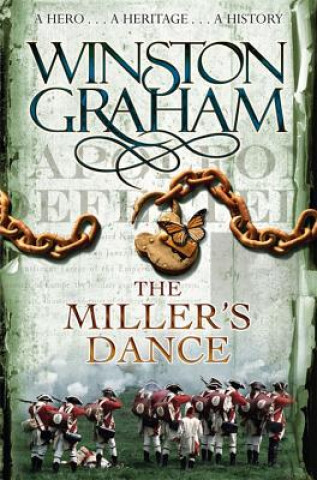
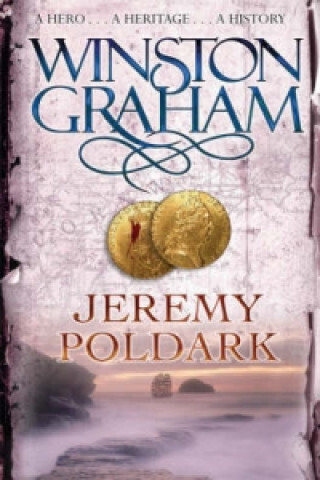
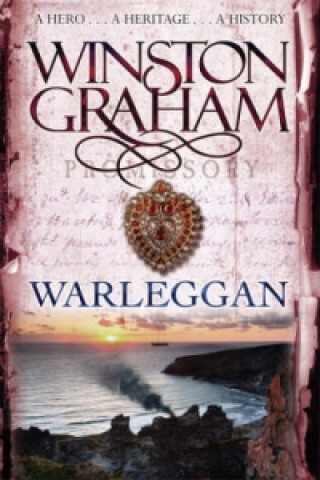
Cornwall 1812. At Nampara, the Poldark family finds the new year brings involvement in more than one unexpected venture. For Ross and Demelza there is some surprising - and worrying - news. And Clowance, newly returned from her London triumphs, finds that her entanglement with Stephen Carrington brings not only happiness but heartache. As the armies battle in Spain, and the political situation at home becomes daily more obscure, the Poldark and Warleggan families find themselves thrust into a turbulent new era as complex and changing as the patterns of The Miller's Dance. 'From the incomparable Winston Graham...who has everything that anyone else has, then a whole lot more' - "Guardian".
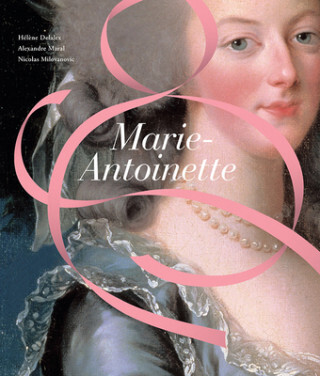
Marie-Antoinette (1755-1793) continues to fascinate historians, writers, and filmmakers more than two centuries after her death. She became a symbol of the excesses of France's aristocracy in the eighteenth century that helped pave the way to dissolution of the country's monarchy.
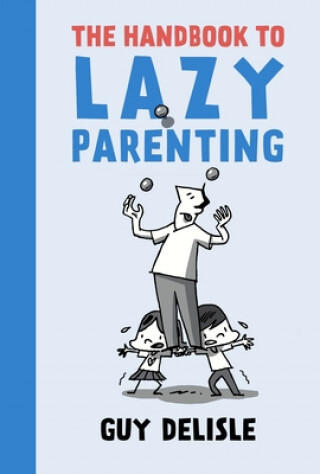
And the award for worst dad ever still goes to . . .The Handbook to Lazy Parenting is the bestselling cartoonist Guy Delisle's final tribute to the frequently hilarious and absurd situations that any parent wil
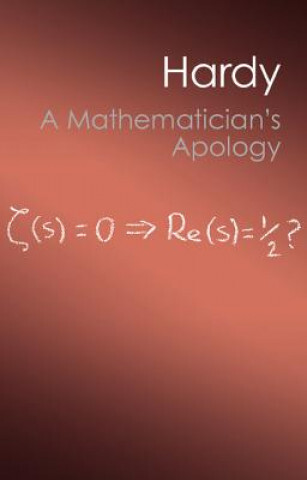
G. H. Hardy was one of this century's finest mathematical thinkers, renowned among his contemporaries as a 'real mathematician … the purest of the pure'. He was also, as C. P. Snow recounts in his Foreword, 'unorthodox, eccentric, radical, ready to talk about anything'. This 'apology', written in 1940, offers a brilliant and engaging account of mathematics as very much more than a science; when it was first published, Graham Greene hailed it alongside Henry James's notebooks as 'the best account of what it was like to be a creative artist'. C. P. Snow's Foreword gives sympathetic and witty insights into Hardy's life, with its rich store of anecdotes concerning his collaboration with the brilliant Indian mathematician Ramanujan, his idiosyncrasies and his passion for cricket. This is a unique account of the fascination of mathematics and of one of its most compelling exponents in modern times.
Language: English, Binding: Paperback, Number of pages: 272, Publishers: John Hunt Publishing, Author: Philip Freeman, ISBN-13: 9781789046328, Date of issue: 2022
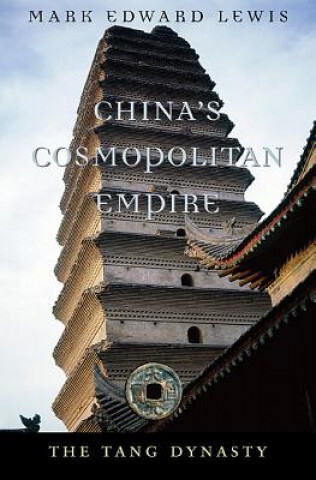
The Tang dynasty is often called China's "golden age", a period of commercial, religious, and cultural connections from Korea and Japan to the Persian Gulf, and a time of unsurpassed literary creativity. Mark Lewis captures a dynamic era in which the empire reached its greatest geographical extent under Chinese rule, painting and ceramic arts flourished, women played a major role both as rulers and in the economy, and China produced its finest lyric poets in Wang Wei, Li Bo, and Du Fu. The Chinese engaged in extensive trade on sea and land. Merchants from Inner Asia settled in the capital, while Chinese entrepreneurs set off for the wider world, the beginning of a global diaspora. The emergence of an economically and culturally dominant south that was controlled from a northern capital set a pattern for the rest of Chinese imperial history. Poems celebrated the glories of the capital, meditated on individual loneliness in its midst, and described heroic young men and beautiful women who filled city streets and bars. Despite the romantic aura attached to the Tang, it was not a time of unending peace.In 756, General An Lushan led a revolt that shook the country to its core, weakening the government to such a degree that by the early tenth century, regional warlordism gripped many areas, heralding the decline of the Great Tang.
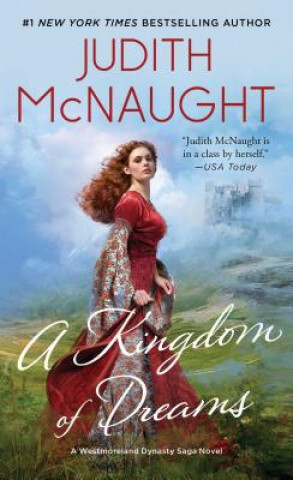
Judith McNaught has written her most tender, most tempestuous romance yet...the story of Jennifer Merrick, a feisty Scottish beauty, and the fierce English warrior she defies - and desires. Abducted from her convent school, headstrong Jennifer does not easily surrender to Royce Westmoreland, Duke of Claymore. Known as "The Wolf, " his very name strikes terror in the hearts of his enemies. But proud Jennifer will have nothing to do with this man who holds her captive, this handsome rogue who taunts her with his blazing arrogance. Bodly she challenges his will...until the night he takes her in his powerful embrace, awakening in her an irresistible hunger. And suddenly Jennifer finds herself ensnared in bewildering web...a seductive, dangerous trap of pride, passion, loyalty...and overwhelming love.
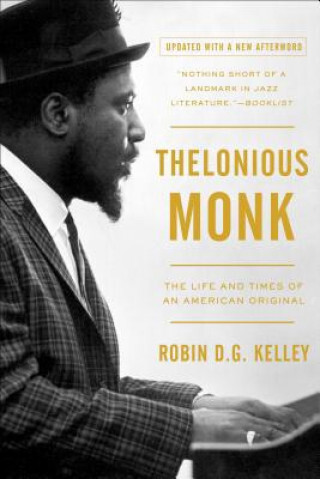
The first full biography of Thelonious Monk, written by a brilliant historian, with full access to the family's archives and with dozens of interviews.
Cornwall 1790. Ross Poldark faces the darkest hour of his life. Accused of wrecking two ships, he is to stand trial at the Bodmin Assizes. Despite their stormy married life, Demelza has tried to rally support for her husband. But there are enemies in plenty who would be happy to see Ross convicted, not least George Warleggan, the powerful banker, whose personal rivalry with Ross grows ever more intense. 'From the incomparable Winston Graham. who has everything that anyone else has, then a whole lot more' - "Guardian".
Cornwall 1792. Ross plunges into a highly speculative mining venture which threatens not only his family's financial security but also his turbulent marriage to Demelza. When Ross and Elizabeth's old attraction rekindles itself, Demelza retaliates by becoming dangerously involved with a handsome Scottish cavalry officer. With bankruptcy an increasingly real possibility, the Poldarks seem to be facing disaster on all fronts. 'From the incomparable Winston Graham...who has everything that everyone else has, then a whole lot more' - "Guardian".
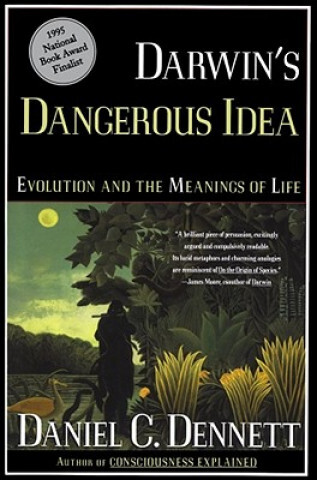
In this groundbreaking and very accessible book, Daniel C. Dennett, the acclaimed author of Consciousness Explained, demonstrates the power of the theory of natural selection and shows how Darwin's great idea transforms and illuminates our traditional view of our place in the universe. Following Darwinian thinking to its logical conclusions is a risky business, with pitfalls for everybody. Creationists and others who reject evolution are not the only ones to fall into the traps. Many who accept the validity of Darwin's conclusions hesitate before their implications and distort his theory, fearful that it is politically incorrect or antireligious, or that it robs life of all spirituality. Dennett explains the scientific theory of natural selection in vivid terms, and shows how it extends far beyond biology.
Publisher's Note: Products purchased from Third Party sellers are not guaranteed by the publisher for quality, authenticity, or access to any online entitlements included with the product.The fun and easy way to quickly e
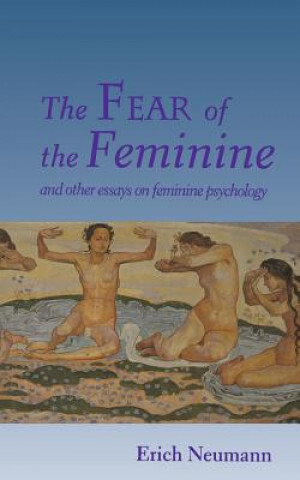
These essays by the famous analytical psychologist and student of creativity, Erich Neumann belong in the context of the depth psychology of culture and reveal a prescient concern about the one-sidedness of patriarchal Western civilization. Neumann recommended a "cultural therapy" that he thought would redress a "fundamental ignorance" about feminine and masculine psychology, and he looked for societal healing to a "matriarchal consciousness" that forms the bridge between the feminine and the creative. Brought together here for the first time, the essays in the book discuss the psychological stages of woman's development, the moon and matriarchal consciousness, Mozart's Magic Flute, the meaning of the earth archetype for modern times, and the fear of the feminine. In Mozart's fantastic world, Neumann saw a true Auseinandersetzung - the conflict and coming-to-terms with each other of the matriarchal and the patriarchal worlds. Developing such a synthesis of the feminine and the masculine in the psychic reality of the individual and of the collective was, he argued, one of the fundamental, future-oriented tasks of both the society and the individual.
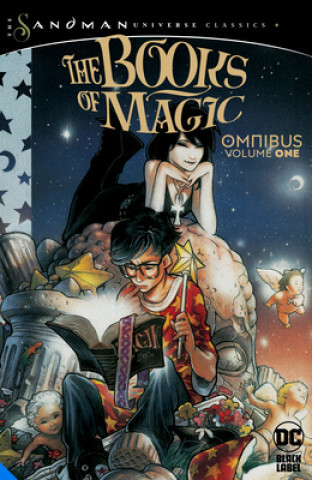
A collection of the Sandman Universe like you've never seen before What do two dead boys and a normal 13-year-old have in common? The ability to save the world. Charles and Edwin are dead. They're also detectives. Tim Hunter is alive. H
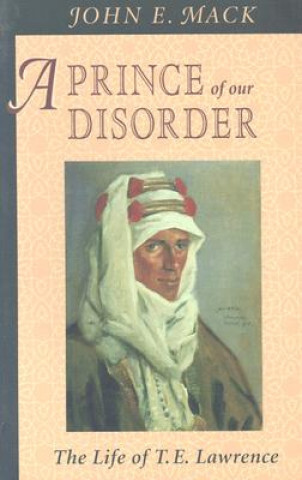
John Mack explores the relationship between Lawrence's inner life and his historically significant actions. Interviews, correspondence, access to War Office dispatches and unpublished letters provide the basis for Macks's investigation of the psychological dimensions of Lawrence's personality. In addition, Mack examines the history, politics, and sociology of the time in order to weigh the real forces with which Lawrence contended and which impinged upon him.
Diodorus Siculus, Greek historian of Agyrium in Sicily, ca. 8020 BCE, wrote forty books of world history, called "Library of History, " in three parts: mythical history of peoples, non-Greek and Greek, to the Trojan War; history to Alexander's death (323 BCE); history to 54 BCE. Of this we have complete Books IV (Egyptians, Assyrians, Ethiopians, Greeks) and Books XIXX (Greek history 480302 BCE); and fragments of the rest. He was an uncritical compiler, but used good sources and reproduced them faithfully. He is valuable for details unrecorded elsewhere, and as evidence for works now lost, especially writings of Ephorus, Apollodorus, Agatharchides, Philistus, and Timaeus. The Loeb Classical Library edition of Diodorus Siculus is in twelve volumes.
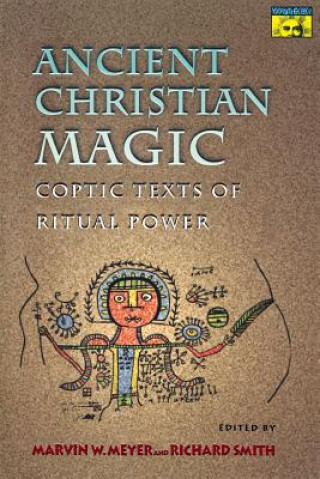
This thought-provoking collection of magical texts from ancient Egypt shows the exotic rituals, esoteric healing practices, and incantatory and supernatural dimensions that flowered in early Christianity. These remarkable Christian magical texts include curses, spells of protection from 'headless powers' and evil spirits, spells invoking thunderous powers, descriptions of fire baptism, and even recipes from a magical 'cookbook'. Virtually all the texts are by Coptic Christians, and they date from about the 1st-12th centuries of the common era, with the majority from late antiquity. By placing these rarely seen texts in historical context and discussing their significance, the authors explore the place of healing, prayer, miracles, and magic in the early Christian experience, and expand our understanding of Christianity and Gnosticism as a vital folk religion.
Frozen sadness - what we have when we cannot really know what we have lost. This is what Pauline Boss illuminates, and helps to ease. It could be a loved one still alive yet lost to a person: a soldier son missing in action, or a constantly travelling spouse. In another kind of ambiguous loss, the loved one may be physically present but beyond a person's reach - such as someone with Alzheimer's disease.
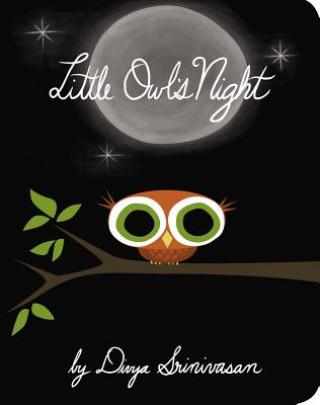
It's evening in the forest and Little Owl wakes up from his day-long sleep to watch his friends enjoying the night. A full moon rises and Little Owl can't understand why anyone would want to miss it. Could the daytime be nearly as wonderful? This heartwarming twist on the bedtime book is not in a board book format. Full color.
Herodotus the great Greek historian was born about 484 BCE, at Halicarnassus in Caria, Asia Minor, when it was subject to the Persians. He travelled widely in most of Asia Minor, Egypt (as far as Assuan), North Africa, Syria, the country north of the Black Sea, and many parts of the Aegean Sea and the mainland of Greece. He lived, it seems, for some time in Athens, and in 443 went with other colonists to the new city Thurii (in South Italy), where he died about 430. He was 'the prose correlative of the bard, a narrator of the deeds of real men, and a describer of foreign places' (Murray). Herodotus's famous history of warfare between the Greeks and the Persians has an epic dignity which enhances his delightful style. It includes the rise of the Persian power and an account of the Persian empire; a description and history of Egypt; and a long digression on the geography and customs of Scythia. Even in the later books on the attacks of the Persians against Greece there are digressions. All is most entertaining and produces a grand unity. After personal inquiry and study of hearsay and other evidence, Herodotus gives us a not uncritical estimate of the best that he could find. The Loeb Classical Library edition of Herodotus is in four volumes.
Aulus Gellius (ca. 123170 CE) is known almost wholly from his "Noctes Atticae, " 'Attic Nights', so called because it was begun during the nights of an Attic winter. The work collects in twenty books (of Book VIII only the index is extant) interesting notes covering philosophy, history, biography, all sorts of antiquities, points of law, literary criticism, and lexicographic matters, explanations of old words and questions of grammar. The work is valuable because of its many excerpts from other authors whose works are lost; and because of its evidence for people's manners and occupations. Some at least of the dramatic settings may be genuine occasions. The Loeb Classical Library edition of "Attic Nights" is in three volumes.