Saate puidust aialaua ääres koos pere ja sõpradega lõõgastuda. Kvaliteetne materjal: naturaalse viimistlusega tiikpuu. See on kulunud, põletusahjus kuivanud ja peenelt lihvitud, et anda sellele väga sile välimus. Tiikpuu on äärmiselt tugev ja ilmastikukindel.Kokkupandav disain: aialaua saab hõlpsaks liigutamiseks ja transportimiseks kokku panna. Saate lauda hoiustada vähema ruumiga, kui seda ei kasutata.Suur lauaplaat: laual on mahukas lauaplaat. Saate sellele asetada suupisted, joogid ja mis tahes lemmikkaunistused.Kasulik auk: söögilaua lauaplaadis on kasulik auk, kuhu saab asetada vihma- või päikesevarju. See pakub varju suviseks perekogunemiseks või pärastlõunaseks teeks sõpradega.Lai kasutusala: laual on ajatu disain ja see sobib peaaegu iga sisekujundusega. Saate selle paigutada oma koju või kaubanduslikule terrassile, aeda, rõdule jne. Hea teada:Selleks, et õuemööbel püsiks ilus, soovitame seda kaitsta veekindla kattega.p>• Turvalised maksemeetodid: Paypal, pangaülekanne, deebet- ja krediitkaardid, Trustly • Uhiuus toode. 2-aastane garantii sularahas kohaletoimetamise.Tasuta tarne
Highly portable, concise, and informative, this is the essential guide for identifying Southern Africa's most visible wildlife. Featuring full-color photos of more than 400 species of birds, mammals, snakes, lizards, and insects, Wildlife of Southern
Vertigo (1958) is widely regarded as not only one of Hitchcock's best films, but one of the greatest films of world cinema. Made at the time when the old studio system was breaking up, it functions both as an embodiment of the supremely seductive visual pleasures that 'classical Hollywood' could offer and - with the help of an elaborate plot twist - as a laying bare of their dangerous dark side. The film's core is a study in romantic obsession, as James Stewart's Scottie pursues Madeleine/Judy (Kim Novak) to her death in a remote Californian mission. Novak is ice cool but vulnerable, Stewart - in the darkest role of his career - genial on the surface but damaged within. Although it can be seen as Hitchcock's most personal film, Charles Barr argues that, like Citizen Kane, Vertigo is at the same time a triumph not so much of individual authorship as of creative collaboration. He highlights the crucial role of screenwriters Alec Coppel and Samuel Taylor and, by a combination of textual and contextual analysis, explores the reasons why Vertigo continues to inspire such fascination.In his foreword to this special edition, published to celebrate the 20th anniversary of the BFI Film Classics series, Barr looks afresh at Vertigo alongside the recently-rediscovered 'lost' silent The White Shadow (1924), scripted by Hitchcock, which also features the trope of the double, and at the acclaimed contemporary silent film The Artist (2011), which pays explicit homage to Vertigo in its soundtrack.
This edition of Badges of the British Army presents a wholly new, completely revised guide for the collector. All the photographs are new, and the coverage extended to encompass the badges that had appeared since the book was first published. Autorid: F. Wilkinson
Today we know what no previous generation knew: the history of the universe and of the unfolding of life on Earth. Through the astonishing combined achievements of natural scientists worldwide, we now have a detailed account of how galaxies and stars, planets and living organisms, human beings and human consciousness came to be. And yet we thirst for answers to questions that have haunted humanity from the very beginning. What is our place in the 14-billion-year history of the universe? What roles do we play in Earth's history? How do we connect with the intricate web of life on Earth? In Journey of the Universe Brian Thomas Swimme and Mary Evelyn Tucker tell the epic story of the universe from an inspired new perspective, weaving the findings of modern science together with enduring wisdom found in the humanistic traditions of the West, China, India, and indigenous peoples. The authors explore cosmic evolution as a profoundly wondrous process based on creativity, connection and interdependence, and they envision an unprecedented opportunity for the world's people to address the daunting ecological and social challenges of our times.Journey of the Universe transforms how we understand our origins and envision our future. Though a little book, it tells a big story - one that inspires hope for a way in which Earth and its human civilizations could flourish together. This book is part of a larger project that includes a documentary film, an educational DVD series, and a website. The film and the DVD series were released in 2011.
Written in 1833-4, when Marx was barely twenty-five, this astonishingly rich body of works formed the cornerstone for his later political philosophy. In the Critique of Hegel's "Doctrine of the State", he dissects Hegel's thought and develops his own views on civil society, while his Letters reveal a furious intellect struggling to develop the egalitarian theory of state. Equally challenging are his controversial essay, "On the Jewish Question and the Economic and Philosophical Manuscripts", where Marx first made clear his views on alienation, the state, democracy and human nature. Brilliantly insightful, Marx's "Early Writings" reveal a mind on the brink of one of the most revolutionary ideas in human history - the theory of Communism. This translation fully conveys the vigour of the original works. The introduction, by Lucio Colletti, considers the beliefs of the young Marx and explores these writings in the light of the later development of Marxism.
What is the meaning of memory in the information age? When all knowledge is seemingly digitised and available for reference at any time, do we actually need human memory? One consequence of the proliferation of digitization is the deterioration of our capacity to remember a symptom that is apparent in a steady increase in dementia within contemporary society. Rudolf Steiner indicates that memory is the determining factor in awareness of oneself. Even a partial loss of memory leads to loss of self-consciousness and the sense of our I. Thus, memory is crucial for the development of I-consciousness not only for the individual, but for humanity as a whole. Rudolf Steiners research on memory, recollection and forgetting has many implications for the way we learn, for inner development and spiritual growth. This unique selection of passages from his works offers insights into how consciousness can remain autonomous and creative in a digital environment. It also provides ideas for improving education and emphasizes the importance of life-long learning. Chapters include: The Development of Memory Throughout Human History; The Formation of Memory, Remembering and Forgetting in the Human Individual; Remembering and Forgetting in Connection with Education; How Remembering and Forgetting are Transformed by the Schooling Path Imagination and Inspiration; Remembering Backwards (Rückschau) and Memory Exercises; Subconscious Memories of the Pre-birth Period and of Life Between Death and a New Birth; Memory and Remembering after Death; The Development of Memory in the Future. Autorid: Rudolf Steiner, J. Collis, P. King, A. Neider, A. Neider
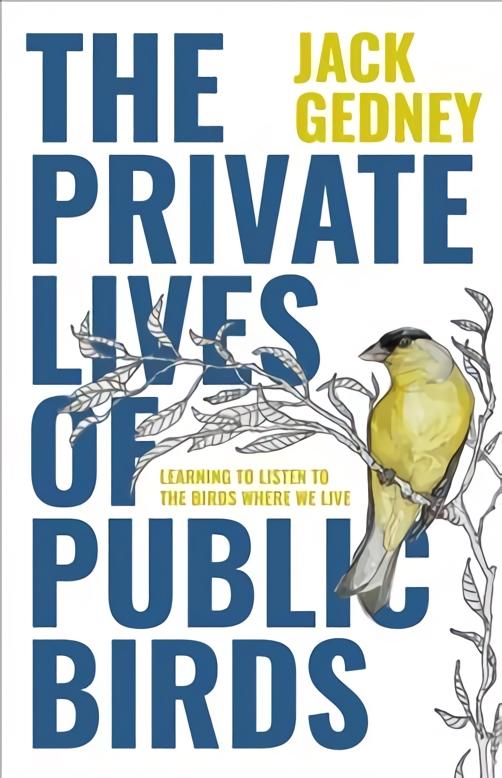
"Gedney shares his devotion to everyday Western birds in fifteen essays. Each essay illuminates the life of a single species and its relationship to humans, and how these species can help us understand birds in general"-- Through 15 essays, each of which illuminates the life of a single species and its relationship to humans, a dedicated birdwatcher and teacher draws us into his enchanted world of these not-so-ordinary birds where we learn to understand what theyre saying. Illustrations. A book to help the ordinary birdwatcher appreciate the fascinating songs, stories, and science of common birdsJack Gedneys studies of birds provide resonant, affirming answers to the questions: Who is this bird? In what way is it beautiful? Why does it matter? Masterfully linking an abundance of poetic references with up-to-date biological science, Gedney shares his devotion to everyday Western birds in fifteen essays. Each essay illuminates the life of a single species and its relationship to humans, and how these species can help us understand birds in general. A dedicated birdwatcher and teacher, Gedney finds wonder not only in the speed and glistening beauty of the Annas hummingbird, but also in her nest building. He acclaims the turkey vultures and red-tailed hawks roles in our ecosystem, and he venerates the inimitable California scrub jays work planting acorns. Knowing that we hear birds much more often than we see them, Gedney offers his experts ear to help us not only identify bird songs and calls but also understand what the birds are saying. The crowd at the suet feeder will never look quite the same again. Join Gedney in the enchanted world of these not-so-ordinary birds, each enlivened by a hand-drawn portrait by artist Anna Kus Park. Autorid: Jack Gedney, Anna Kus Park
Freshly vampiric Lucy Westenra thirsts for revenge in the second and final book of this Dracula retelling from critically acclaimed author Julie C. Dao.Lucy Westenra, the flirtatious, wealthy, and beautiful debutante who once dazzled London society, is no more. Manipulated into thinking that Vlad understood her fervent darkness, she has become his bitter, blood-spattered, and lifeless bride.Now en route to join his other brides in the Carpathians, Lucy writhes in pain each time she attempts to speak Vlad's name. She dreams of finding solace in the arms of her loved ones: her suitor, Arthur Holmwood, and her best friend, Mina Murray Harker. Instead, she is hunted by her former friends, Dr. Van Helsing and Quincey Morris, and tormented by the memory of the people she has killed in bloodlust.But Lucy will not relinquish hope nor give up on escaping Vlad's violent grip. Much like the monster who once wandered into her dreams and gave her a glimpse of his heart's desire, she is determined to commune with Mina and Arthur, no matter the outcome. She must know once and for all whether their love for her persists-and if it can withstand her abandonment of her own humanity.The long journey ahead will take Lucy to places unknown, where both familiar darkness and new light await. But will she step out of the mist and into the sun to embrace the vastness of her new immortal existence?The stunning conclusion of a duology that reimagines Dracula from the perspective of Lucy Westenra, So Blooms the Dawn is perfect for fans of Penny Dreadful and Danielle L. Jensen.Praise for Now Comes the Mist "A lush, thoughtful, seductive reimagining of the Dracula mythos that had me under its thrall from page one, Dao's darkly dreamy book will leave you thirsting for more. Let Lucy sink her teeth into you and draw you into her new world." -Kiersten White, #1 New York Times-bestselling author of Hide, Mister Magic, and Lucy Undying "This novel will leave you breathless and make you question what you thought you knew about the original tale. Julie C. Dao is the master of nuanced, complex female leads who will not just demand but forcibly take exactly what they deserve." -Beth Revis, New York Times-bestselling coauthor of Night of the Witch "[A] refreshing and clever gothic romance . . . Haunting and atmospheric . . . Fans of dark vampire romance will be delighted." -Publishers Weekly "A wonderful read! I was spellbound by this vivid reimagining of a Dracula myth that is at once enthralling, haunting, and darkly romantic." -Sue Lynn Tan, USA Today-bestselling author of Daughter of the Moon Goddess "Dazzling, sensual, sparkling with danger. Lucy Westenra is a force of nature in Dao's capable hands, taking control of her own story with a vengeance long overdue. A vibrant, chilling reimagining that feels wholly its own." -Natalie Mae, author of the Kinder Poison trilogy"A sultry gothic that hooked me from the first sentence. Every page of this lush Dracula retelling is imbued with danger and darkness. It's a beguiling book and one I can't recommend enough." -Alexis Henderson, author of The Year of the Witching "Wild, wicked, sensuous fun. Now Comes the Mist is for all the dark romantics, the lovers of drama, and the ones who want to get bitten." -Wendy Xu, bestselling author and illustrator of The Infinity Particle
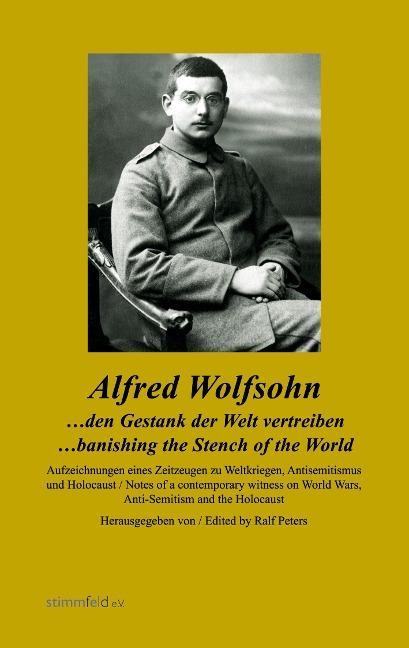
Das Buch stellt eine zweisprachige (deutsch/engl.) Sammlung von Aufzeichnungen dar, die der deutsche Stimmlehrer Alfred Wolfsohn in mehreren Manuskripten hinterlassen hat. Darin formuliert er seine Erinnerungen an Deutschland in der ersten Hälfte des 20. Jahrhunderts aus seiner Sicht eines deutschen Juden. Die Erinnerungen betreffen seine Erfahrungen mit dem Antisemitismus, als Soldat im 1. Weltkrieg und die Zeit im Nationalsozialismus. Wolfsohn emigrierte kurz nach der Reichspogromnacht am 9. November 1938 nach London, wo er bis zu seinem Tod 1962 lebte. Außerdem beschäftigen sich Wolfsohn¿s Aufzeichnungen mit Leben und Werk der deutschen Künstlerin Charlotte Salomon, für die Wolfsohn in Berlin für einige Zeit eine Art Mentor war. Charlotte Salomon wurde mit 26 Jahren von den Nazis in Auschwitz ermordet. Das Buch ist ein Zeitzeugnis von hohem Rang, geschrieben von einem Autor, der in der Lage ist, seine schlimmsten Erfahrungen nicht nur zu beschreiben, sondern auch in einem größeren Zusammenhang zu analysieren. Wolfsohn verbindet einen klaren Blick mit einer durch und durch menschlichen Haltung. Die kommt auch in seinem Ansatz zur Stimmentwicklung zur Geltung, die in diesen Erinnerungen immer wieder aufscheint.
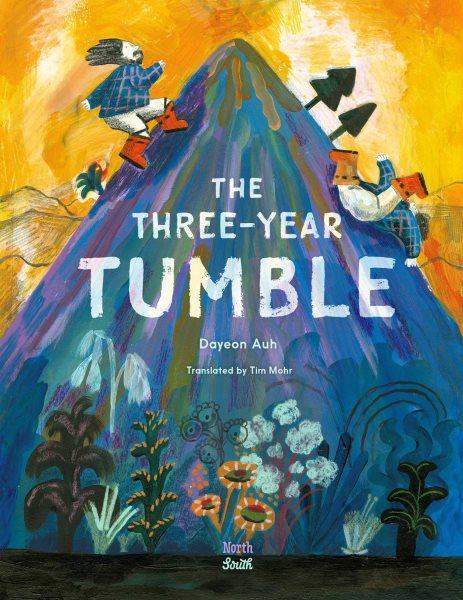
Based on the traditional Korean folktale Samnyeongogae (Three-Year Mountain Pass"), this picture book parable by Korean-German artist Dayeon Auh features a fateful mountain, a superstitious grandfather, and a granddaughter with a clever perspective on life.Legend says that anyone who falls down Misfortune Mountain has three years left to live. Grandfather must travel over the treacherous mountain to get to the market, but one day catastrophe happens and he tumbles down! The doctor says he is perfectly healthy, but Grandfather feels the end is near . . . until his granddaughter comes to visit and makes a different calculation about his fate. From then on, the legend of the mountain takes on a new meaning and everyone finds themselves eager to tumble down it. A fable that demonstrates how a change in ones mindset can make a positive impact. Autorid: Dayeon Auh, Tim Mohr
Did religion disappear with modernization and the secularization reforms that changed the relation between religion and state throughout the European empires and nation states from late nineteenth century onwards? Or was religion rather transformed becoming a part of the new social and national imaginaries on the road from European empires to African, Middle Eastern, European Union- and Post-Soviet nation states? What are the historical roots behind the divisions of state, church and education that characterized the late nineteenth and during the twentieth century? What has been the role of education in this context, both with regard to political reforms targeting the education systems and with regard to broader public enlightenment efforts and modernization of the state? Connecting scholars across the fields of history and historical sociology of education, church history and historical religion research and political history, and covering the time span from the early modern period and up until the present, this volume explores how education reform has functioned as an arena for the political project of secularization and in which way this contributed to transforming and revitalizing religion.