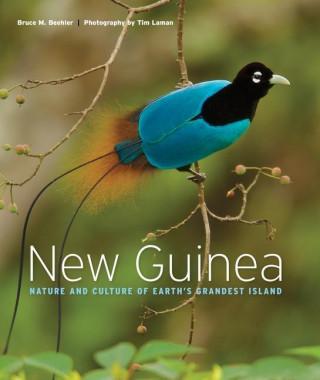
An enthralling exploration of the biologically richest island on Earth, featuring more than 200 spectacular color images by award-winning National Geographic photographer Tim LamanIn this beautiful book, Bruce Beehler, a renowned au
Language: English, Binding: Hardback, Number of pages: 1024, Publishers: Princeton University Press, Author: Patrick Baker, ISBN-13: 9780691183831, Date of issue: 2025
Language: English, Binding: Hardback, Number of pages: 320, Publishers: Princeton University Press, Author: Shane Bobrycki, ISBN-13: 9780691189697, Date of issue: 2024
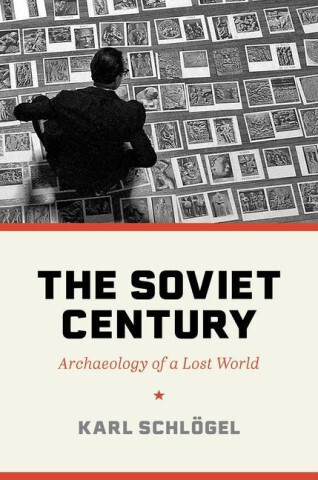
Language: English, Binding: Hardback, Number of pages: 928, Publishers: Princeton University Press, Author: Karl Schlögel,Rodney Livingstone, ISBN-13: 9780691183749, Date of issue: 2023
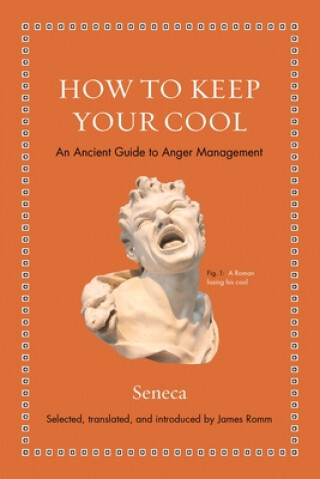
Timeless wisdom on controlling anger in personal life and politics from the Roman Stoic philosopher and statesman SenecaIn his essay "On Anger" (De Ira), the Roman Stoic thinker Seneca (c. 4 BC-65 AD) argues that anger is the most d
A masterful new translation of one of Kierkegaard's most engaging worksIn the Sermon on the Mount, Jesus tells his followers to let go of earthly concerns by considering the lilies of the field and the birds of the air. S ren Kierkegaard's
Philipp Ther- a firsthand witness to many of the transformations, from Czechoslovakia during the Velvet Revolution to postcommunist Poland and Ukraine- offers a sweeping narrative filled with vivid details and memorable stories. He describes how liberalization, deregulation, and privatization had catastrophic effects on former Soviet Bloc countries. He refutes the idea that this economic "shock therapy" was the basis of later growth, arguing that human capital and the transformation from below determined economic success or failure. Most important, he shows how the capitalist West's effort to reshape Eastern Europe in its own likeness ended up reshaping Western Europe as well, in part by accelerating the pace and scope of neoliberal reforms in the West, particularly in reunified Germany. Finally, bringing the story up to the present, Ther compares events in Eastern and Southern Europe leading up to and following the 2008-9 global financial crisis.
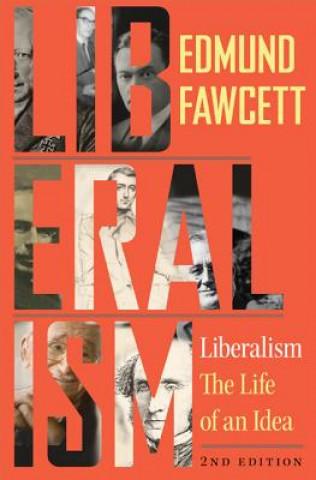
Despite playing a decisive role in shaping the past two hundred years of American and European politics, liberalism is no longer the dominant force it once was. In this expanded and updated edition of what has become a classic history of liberalism, Edmund Fawcett traces its ideals, successes, and failures through the lives and ideas of exemplary thinkers and politicians from the early nineteenth century to today. Significant revisions--including a new conclusion--reflect recent changes affecting the world political order that many see as presenting new and very potent threats to the survival of liberal democracy as we know it. A richly detailed account of a vulnerable but critically important political creed, this book reminds us that to defend liberalism it is vital to understand its character and history
In today's world, the leisure class has been replaced by a new elite. Highly educated and defined by cultural capital rather than income bracket, these individuals earnestly buy organic, carry canvas tote bags, and breast-feed their babies. They care about
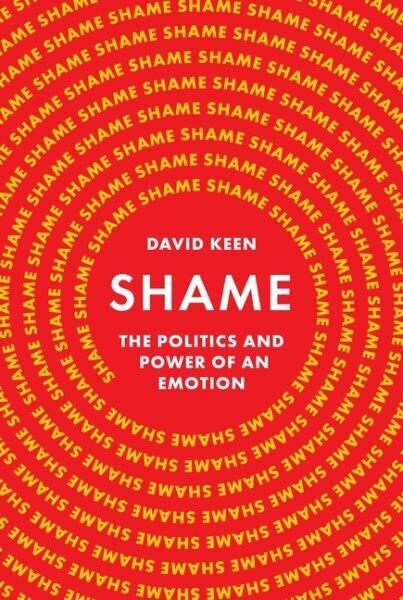
The uses of shame (and shamelessness) in spheres that range from social media and consumerism to polarized politics and mass violenceToday, we are caught in a shame spirala vortex of mutual shaming that pervades everything from politics to social media. We are shamed for our looks, our culture, our ethnicity, our sexuality, our poverty, our wrongdoings, our politics. But what is the point of all this shaming and countershaming? Does it work? And if so, for whom?In Shame, David Keen explores the function of modern shaming, paying particular attention to how shame is instrumentalized and weaponized. Keen points out that there is usually someone who offers an escape from shameand that many of those who make this offer have been piling on shame in the first place. Self-interested manipulations of shame, Keen argues, are central to understanding phenomena as wide-ranging as consumerism, violent crime, populist politics, and even war and genocide. Shame is political as well as personal. To break out of our current cycle of shame and shaming, and to understand the harm that shame can do, we must recognize the ways that shame is being made to serve political and economic purposes.Keen also traces the rise of leaders on both sides of the Atlantic who possess a dangerous shamelessness, and he asks how shame and shamelessness can both be damaging. Answering this question means understanding the different types of shame. And it means understanding how shame and shamelessness interactnot least when shame is instrumentalized by those who are selling shamelessness. Keen points to a perverse and inequitable distribution of shame, with the victims of poverty and violence frequently being shamed, while those who benefit tend to exhibit shamelessness and even pride. Autorid: David Keen
How American race law provided a blueprint for Nazi Germany Nazism triumphed in Germany during the high era of Jim Crow laws in the United States. Did the American regime of racial oppression in any way inspire the Nazis? The unsettling answer is yes. In Hitlers American Model, James Whitman presents a detailed investigation of the American impact on the notorious Nuremberg Laws, the centerpiece anti-Jewish legislation of the Nazi regime. Both American citizenship and antimiscegenation laws proved directly relevant to the two principal Nuremberg Lawsthe Citizenship Law and the Blood Law. Contrary to those who have insisted otherwise, Whitman demonstrates that the Nazis took a real, sustained, significant, and revealing interest in American race policies. He looks at the ultimate, ugly irony that when Nazis rejected American practices, it was sometimes not because they found them too enlightened but too harsh. Indelibly linking American race laws to the shaping of Nazi policies in Germany, Hitlers American Model upends the understanding of Americas influence on racist practices in the wider world. Autorid: James Q. Whitman
Philosophical wisdom and practical advice for overcoming the problems of middle ageHow can you reconcile yourself with the lives you will never lead, with possibilities foreclosed, and with nostalgia for lost youth? How can you accept the failings of the past, the sense of futility in the tasks that consume the present, and the prospect of death that blights the future? In this self-help book with a difference, Kieran Setiya confronts the inevitable challenges of adulthood and middle age, showing how philosophy can help you thrive.You will learn why missing out might be a good thing, how options are overrated, and when you should be glad you made a mistake. You will be introduced to philosophical consolations for mortality. And you will learn what it would mean to live in the present, how it could solve your midlife crisis, and why meditation helps.Ranging from Aristotle, Schopenhauer, and John Stuart Mill to Virginia Woolf and Simone de Beauvoir, as well as drawing on Setiyas own experience, Midlife combines imaginative ideas, surprising insights, and practical advice. Writing with wisdom and wit, Setiya makes a wry but passionate case for philosophy as a guide to life. Autorid: Kieran Setiya
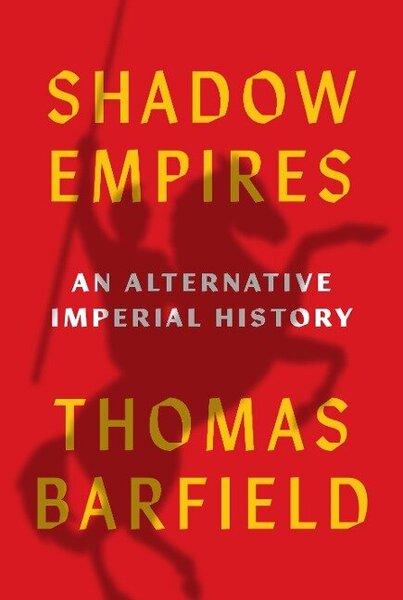
An original study of empire creation and its consequences, from ancient through early modern timesThe worlds first great empires established by the ancient Persians, Chinese, and Romans are well known, but not the empires that emerged on their margins in response to them over the course of 2,500 years. These counterempires or shadow empires, which changed the course of history, include the imperial nomad confederacies that arose in Mongolia and extorted resources from China rather than attempting to conquer it, as well as maritime empires such as ancient Athens that controlled trade without seeking territorial hegemony. In Shadow Empires, Thomas Barfield identifies seven kinds of counterempire and explores their rise, politics, economics, and longevity.What all these counterempires had in common was their interactions with existing empires that created the conditions for their development. When highly successful, these counterempires left the shadows to become the worlds largest empiresfor example, those of the medieval Muslim Arabs and of the Mongol heirs of Chinggis Khan. Three former shadow empiresManchu Qing China, Tsarist Russia, and British Indiamade this transformation in the late eighteenth century and came to rule most of Eurasia. However, the DNA of their origins endured in their unique ruling strategies. Indeed, world powers still use these strategies today, long after their roots in shadow empires have been forgotten.Looking afresh at the histories of important types of empires that are often ignored, Shadow Empires provides an original account of empire formation from the ancient world to the early modern period. Autorid: Thomas J. Barfield
"In this work, the prominent political philosopher Philip Pettit embarks on a massive undertaking to offers major new accounts of the foundations of the state and the nature of justice. In doing so Pettit builds a new theory of what the state is and whatit ought to be, addresses the normative question of how justice serves as a measure of the success of a state, and the way it should operate in relation to its citizens and other people"-- "An examination of the capacities of the state to serve the cause of peace and justice. The future of our species depends on the state-on how effectively states resist corporate capture, religious zealotry, and nationalist mania, and how they find a way to work together so that the earth heals and its peoples prosper. Are states up to the task? In this book, the prominent political philosopher Philip Pettit examines the capacities of the state to serve peace and justice both within its borders and beyondthem. Doing so, he breaks new ground by making the state the focus of political theory and by presenting a persuasive, historically informed image of an institution that lies at the center of our lives.Offering an account that is more realist than utopian, stipulating that certain institutions are unlikely to be eliminable but are capable of being improved, Pettit explores the organizational function and structure of the state. He offers a theory and rationale of the state under conditions in which rulers have a real power to achieve things, but not so much power that they can ignore those over whom they rule. In light of that theory, Pettit explores the form that a functional state should ideally take. He contends that it must satisfy a basic ideal of statehood that is arguably presupposed by the richer ideal of justice. Only if states approximate this functional ideal will they be able to deal with the age-old problems of extreme poverty and bitter discord as well as those that loom over the coming centuries, including climate change, population growth, and nuclear arms"-- A major new account of the state and its importance by a leading political philosopherThe future of our species depends on the state. Can states resist corporate capture, religious zealotry, and nationalist mania? Can they find a way to work together so that the earth heals and its peoples prosper? Or is the state just not up to the task? In this book, the prominent political philosopher Philip Pettit examines the nature of the state and its capacity to serve goals like peace and justice within and beyond its borders. In doing so, he breaks new ground by making the state the focus of political theorywith implications for economic, legal, and social theoryand presents a persuasive, historically informed image of an institution that lies at the center of our lives.Offering an account that is more realist than utopian, Pettit starts from the function the polity is meant to serve, looks at how it can best discharge that function, and explores its ability to engage beneficially in the life of its citizens. This enables him to identify an ideal of statehood that is a precondition of justice. Only if states approximate this functional ideal will they be able to deal with the perennial problems of extreme poverty and bitter discord as well as the challenges that loom over the coming centuries, including climate change, population growth, and nuclear arms. Autorid: Philip Pettit
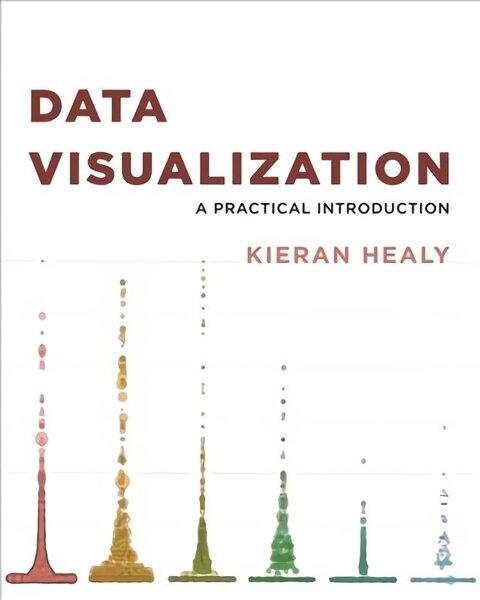
An accessible primer on how to create effective graphics from dataThis book provides students and researchers a hands-on introduction to the principles and practice of data visualization. It explains what makes some graphs succeed while others fail, how to make high-quality figures from data using powerful and reproducible methods, and how to think about data visualization in an honest and effective way.Data Visualization builds the readers expertise in ggplot2, a versatile visualization library for the R programming language. Through a series of worked examples, this accessible primer then demonstrates how to create plots piece by piece, beginning with summaries of single variables and moving on to more complex graphics. Topics include plotting continuous and categorical variables; layering information on graphics; producing effective small multiple plots; grouping, summarizing, and transforming data for plotting; creating maps; working with the output of statistical models; and refining plots to make them more comprehensible.Effective graphics are essential to communicating ideas and a great way to better understand data. This book provides the practical skills students and practitioners need to visualize quantitative data and get the most out of their research findings.Provides hands-on instruction using R and ggplot2Shows how the tidyverse of data analysis tools makes working with R easier and more consistentIncludes a library of data sets, code, and functions Autorid: Kieran Healy
The most remarkable history of biology that has ever been written.Michel Foucault Nobel Prizewinning scientist François Jacobs The Logic of Life is a landmark book in the history of biology and science. Focusing on heredity, which Jacob considers the fundamental feature of living things, he shows how, since the sixteenth century, the scientific understanding of inherited traits has moved not in a linear, progressive way, from error to truth, but instead through a series of frameworks. He reveals how these successive interpretive approachesfocusing on visible structures, internal structures (especially cells), evolution, genes, and DNA and other moleculeseach have their own power but also limitations. Fundamentally challenging how the history of biology is told, much as Thomas Kuhns Structure of Scientific Revolutions did for the history of science as a whole, The Logic of Life has greatly influenced the way scientists and historians view the past, present, and future of biology. Autorid: François Jacob, Matthew Cobb
A sweeping history of Ireland's native gods, from Iron Age cult and medieval saga to the Celtic Revival and contemporary fiction Irelands Immortals tells the story of one of the worlds great mythologies. The first account of the gods of Irish myth to take in the whole sweep of Irish literature in both the nations languages, the book describes how Irelands pagan divinities were transformed into literary characters in the medieval Christian eraand how they were recast again during the Celtic Revival of the late nineteenth and early twentieth centuries. A lively narrative of supernatural beings and their fascinating and sometimes bizarre stories, Mark Williamss comprehensive history traces how these godsknown as the Túatha Dé Danannhave shifted shape across the centuries. We meet the Morrígan, crow goddess of battle; the fire goddess Brigit, who moonlights as a Christian saint; the fairies who inspired J.R.R. Tolkiens elves; and many others. Irelands Immortals illuminates why these mythical beings have loomed so large in the worlds imagination for so long. Autorid: Mark Williams
Quantum physicist, New York Times bestselling author, and BBC host Jim Al-Khalili offers a fascinating and illuminating look at what physics reveals about the worldShining a light on the most profound insights revealed by modern physics, Jim Al-Khalili invites us all to understand what this crucially important science tells us about the universe and the nature of reality itself.Al-Khalili begins by introducing the fundamental concepts of space, time, energy, and matter, and then describes the three pillars of modern physicsquantum theory, relativity, and thermodynamicsshowing how all three must come together if we are ever to have a full understanding of reality. Using wonderful examples and thought-provoking analogies, Al-Khalili illuminates the physics of the extreme cosmic and quantum scales, the speculative frontiers of the field, and the physics that underpins our everyday experiences and technologies, bringing the reader up to speed with the biggest ideas in physics in just a few sittings. Physics is revealed as an intrepid human quest for ever more foundational principles that accurately explain the natural world we see around us, an undertaking guided by core values such as honesty and doubt. The knowledge discovered by physics both empowers and humbles us, and still, physics continues to delve valiantly into the unknown.Making even the most enigmatic scientific ideas accessible and captivating, this deeply insightful book illuminates why physics matters to everyone and calls one and all to share in the profound adventure of seeking truth in the world around us. Autorid: Jim Al-Khalili
A carefully designed and lavishly illustrated photographic guideThis innovative and carefully designed photographic guide provides a concise introduction to the identification of the 246 birds most likely to be seen in Great Britain and Ireland. It is the perfect book for anyone wanting to put a name to the birds in their garden, local area or on visits farther afield. Packed with hundreds of stunning photos showing the birds in their many variations, and written and designed by a team of experienced birdwatchers, this is the ideal companion for anyone interested in learning more about the wild birds around us.Covers the 246 birds most likely to be seen, plus another 30 or so scarce but regular migrantsCarefully designed to be user-friendly and accessibleLavishly illustrated with more than 1,000 stunning colour photographsEasy to use and written in plain English Autorid: Rob Hume, Robert Still, Andy Swash, Hugh Harrop, David Tipling
From the winner of the Turing Award and the Abel Prize, an introduction to computational complexity theory, its connections and interactions with mathematics, and its central role in the natural and social sciences, technology, and philosophy Mathematics and Computation provides a broad, conceptual overview of computational complexity theorythe mathematical study of efficient computation. With important practical applications to computer science and industry, computational complexity theory has evolved into a highly interdisciplinary field, with strong links to most mathematical areas and to a growing number of scientific endeavors. Avi Wigderson takes a sweeping survey of complexity theory, emphasizing the fields insights and challenges. He explains the ideas and motivations leading to key models, notions, and results. In particular, he looks at algorithms and complexity, computations and proofs, randomness and interaction, quantum and arithmetic computation, and cryptography and learning, all as parts of a cohesive whole with numerous cross-influences. Wigderson illustrates the immense breadth of the field, its beauty and richness, and its diverse and growing interactions with other areas of mathematics. He ends with a comprehensive look at the theory of computation, its methodology and aspirations, and the unique and fundamental ways in which it has shaped and will further shape science, technology, and society. For further reading, an extensive bibliography is provided for all topics covered. Mathematics and Computation is useful for undergraduate and graduate students in mathematics, computer science, and related fields, as well as researchers and teachers in these fields. Many parts require little background, and serve as an invitation to newcomers seeking an introduction to the theory of computation. Comprehensive coverage of computational complexity theory, and beyond High-level, intuitive exposition, which brings conceptual clarity to this central and dynamic scientific discipline Historical accounts of the evolution and motivations of central concepts and models A broad view of the theory of computation's influence on science, technology, and society Extensive bibliography Autorid: Avi Wigderson
A masterpiece of Arabic love poetry in a new and complete English translationThe Translator of Desires, a collection of sixty-one love poems, is the lyric masterwork of Muhyiddin Ibn Arabi (11651240 CE), one of the most influential writers of classical Arabic and Islamic civilization. In this authoritative volume, Michael Sells presents the first complete English translation of this work in more than a century, complete with an introduction, commentary, and a new facing-page critical text of the original Arabic. While grounded in an expert command of the Arabic, this verse translation renders the poems into a natural, contemporary English that captures the stunning beauty and power of Ibn Arabis poems in such lines as A veiled gazelles / an amazing sight, / her henna hinting, / eyelids signalling // A pasture between / breastbone and spine / Marvel, a garden / among the flames!The introduction puts the poems in the context of the Arabic love poetry tradition, Ibn Arabis life and times, his mystical thought, and his romance with Ni?am, the young woman whom he presents as the inspiration for the volumea relationship that has long fascinated readers. Other features, following the main text, include detailed notes and commentaries on each poem, translations of Ibn Arabis important prefaces to the poems, a discussion of the sources used for the Arabic text, and a glossary.Bringing The Translator of Desires to life for contemporary English readers as never before, this promises to be the definitive volume of these fascinating and compelling poems for years to come. Autorid: Michael Sells, Muhyiddin Ibn 'Arabi
Most executives today recognize the competitive advantage of human capital, and yet the talent practices their organizations use are stuck in the twentieth century. Typical HR talent-planning processes (which are too expensive and take too long to implement) are designed for predictable environments, traditional ways of getting work done, and organizations where "lines and boxes" still define how people are managed. As work and organizations have become more fluid--and business strategy is no longer about planning years out but about sensing and seizing new opportunities and adapting to a constantly changing environment--companies must deploy talent in new ways to remain competitive.Written for CEOs and leaders across the organization, Talent Wins provides a much-needed framework for transforming how companies acquire, manage, and deploy talent--for today's agile, digital, analytical, technologically driven strategic environment--and for creating the HR function the business needs. With examples of companies that are well along the path of reinventing their approaches to talent, such as Amgen, AT&T, BlackRock, GE, Haier, J&J, and PepsiCo, as well as the juggernauts and the start-ups of Silicon Valley, this book provides leaders with a seven-part plan for:Integrating talent and capitalMaking talent drive strategyDesigning and redesigning the work of the organizationScaling up individual talentCreating an M&A strategy for talentReinventing the role of HRLiving the talent agendaProviding deep, expert insight and advice for what needs to change and how to change it, Talent Wins is the definitive book for reimagining and creating the talent-driven organization. Radical Advice for Reinventing Talent--and HRMost executives today recognize the competitive advantage of human capital, and yet the talent practices their organizations use are stuck in the twentieth century.Typical talent-planning and HR processes are designed for predictable environments, traditional ways of getting work done, and organizations where "lines and boxes" still define how people are managed. As work and organizations have become more fluid--and business strategy is no longer about planning years ahead but about sensing and seizing new opportunities and adapting to a constantly changing environment--companies must deploy talent in new ways to remain competitive.Turning conventional views on their heads, talent and leadership experts Ram Charan, Dominic Barton, and Dennis Carey provide leaders with a new and different playbook for acquiring, managing, and deploying talent--for today's agile, digital, analytical, technologically driven strategic environment--and for creating the HR function that business needs. Filled with examples of forward-thinking companies that have adopted radical new approaches to talent (such as ADP, Amgen, BlackRock, Blackstone, Haier, ING, Marsh, Tata Communications, Telenor, and Volvo), as well as the juggernauts and the startups of Silicon Valley, this book shows leaders how to bring the rigor that they apply to financial capital to their human capital--elevating HR to the same level as finance in their organizations.Providing deep, expert insight and advice for what needs to change and how to change it, this is the definitive book for reimagining and creating a talent-driven organization that wins. Autorid: Ram Charan, Dominic Barton, Dennis Carey
Why elites always rule democraciesand why recognizing that reality can help us respond to the crisis of democracy todayA central paradox of democracies is that they are always ruled by elites. What can democracy mean in this context? Today, it is often said that a populist revolt against elites is driving democratic politics throughout the West. But in Elites and Democracy, Hugo Drochon argues that democracy is more accurately and usefully understood as a perpetual struggle among competing elitesbetween rising elites and ruling elites. Real political change comes from the interaction between social movements and elite political institutions such as parties. But, although true democracythe rule of the peoplemay never be achieved, striving towards it can bring about worthwhile democratic results.At the turn of the twentieth century, Gaetano Mosca, Vilfredo Pareto, and Robert Michels put forward elite theories of democracy and gave us terms such as the ruling class and elites itself. Drawing on their work and tracing the history of democratic thought through figures such as Joseph Schumpeter, Robert Dahl, C. Wright Mills, and Raymond Aron, Elites and Democracy reveals that this fundamentally elitist basis of democracydemocracy understood as competition between eliteswas there all along. The challenge is to think it anew.Moving away from procedural or principled conceptions of democracy, Elites and Democracy develops a dynamic theory of democracy, one grounded in movement. With current politics defined by a populist backlash against elites, dynamic democracy offers the tools we urgently need to understand our contemporary predicament and to act upon it. Autorid: Hugo Drochon
The rise to power and eventual fall from grace of the Oxbridge intellectualAfter World War II, the academics of Oxford and Cambridge—the dons—formed an unusual kind of university-based, establishment-connected intelligentsia. Unlike intellectuals in other countries, often anti-establishment outsiders, the dons of Oxbridge enjoyed secure and even cosy connections with those in power. In Twilight of the Dons, Colin Kidd examines the golden age of Britain’s Oxford- and Cambridge-based intellectual elites—and how their influence waned when Oxbridge’s links to the establishment began to fray. Kidd explores a series of episodes and themes that range from the dons’ confrontations with student protesters in the 1960s to their reaction to the rise of Thatcherism in the 1980s. The cast of characters includes many of twentieth-century Britain’s most famous intellectuals—Elizabeth Anscombe, Isaiah Berlin, Edmund Leach, J. H. Plumb and Hugh Trevor-Roper, to name just a few. Kidd describes the multiple important roles played by dons in World War II, the countercultural force of convert Catholicism and the strange phenomenon of Tory Marxism. He examines the dons’ attitudes towards America and France—as seen in their engagement in the debates over the Kennedy assassination and the awkward reception of Lévi-Strauss’s anthropology. When Oxbridge came under assault, it was first by a modernising, technocratic Left in the early 1960s, then by student radicals in the late 1960s and finally by the Thatcherite Right—in whose rise, Kidd shows, some dons were complicit. As deference to Oxbridge intelligentsia declined, a reassessment of the place of dons in British public life began.
HYDRAGENIST NIISUTAV geelkreem. NIISUTAB, VÄRSKENDAB, KIRGASTAB. Sisaldab ainulaadset rehüdreerivat ensüümi, mis stimuleerib naha võimet end niisutada. Koos hüaluroonhappega tagab nahale mugavustunde ja sära. Normaalsele ja segatüüpi nahale, ka tundlikule. Lierac uurimislabor aastast 1975. Testitud nahaarstide järelevalve all. 98 % koostisosadest on looduslikku päritolu. Vegan.