"An absolutely fantastic book just the thing to inspire future Lionesses!" Beth Mead, Lioness Shoot for the stars with Sammy Striker! From Oscars Prize-shortlisted Catherine Emmett and bestselling illustrator Joe Berger, Sammy Striker and the Football Cup is an empowering story for young footie fans, about friendship, football, and having the courage to believe in yourself. Sammy Striker is NEVER found without a football at her feet, and one day at the park, she's spotted by Melissa McDream who coaches the Under 8s National Team! Sammy is a dribbler-extraordinaire, headed straight for the top. But, as the Football Cup gets closer, Sammy's shots on goal go a bit . . . wonky. Will Sammy work out that it's what makes her DIFFERENT that will help them win the final? Autorid: Catherine Emmett, Joe Berger
"Community Archaeology presents the results of an investigation of wetland heritage in eastern Australia, with important contributions to the archaeology of the Tasmanian Midlands and the New England Tablelands. In this first substantial project in thesebioregions since 1991, OSL and radiocarbon dating at lagoon sites provided dates going back to 8000 BP, significantly extending previous information. In both regions a range of stone artefact scatters were recorded adjacent to lagoons, suggesting associated ceremonial activities. Across the regions, new OSL dates were obtained for lunette formation. These were unexpectedly diverse, with OSL dates not clustered around the Last Glacial Maximum at 20k. With sediment particle sizes suggesting both wind and water deposition, quite individual local lunette depositional histories not closely related to global climates are indicated. The book also contributes to the important global field of community engagement and education. Unlike most projects where Aboriginal people are involved in commercial archaeology, this project focussed on research. Community Elders were research team partners during fieldwork and training. Work-integrated-learning, at University and on-country locations, proved very successful as a learning approach for young participants"-- Community Archaeology presents the results of an investigation of wetland heritage in eastern Australia, with important contributions to the archaeology of the Tasmanian Midlands and the New England Tablelands. In this first substantial project in these bioregions since 1991, OSL and radiocarbon dating at lagoon sites provided dates going back to 8000 BP, significantly extending previous information. In both regions a range of stone artefact scatters were recorded adjacent to lagoons, suggesting associated ceremonial activities. Across the regions, new OSL dates were obtained for lunette formation. These were unexpectedly diverse, with OSL dates not clustered around the Last Glacial Maximum at 20k. With sediment particle sizes suggesting both wind and water deposition, quite individual local lunette depositional histories not closely related to global climates are indicated. The book also contributes to the important global field of community engagement and education. Unlike most projects where Aboriginal people are involved in commercial archaeology, this project focussed on research. Community Elders were research team partners during fieldwork and training. Work-integrated -learning, at University and on-country locations, proved very successful as a learning approach for young participants. Autorid: Wendy Beck, Catherine Clarke, Robert Haworth
The walled town of Barqish in interior Yemen ancient Yathill of the Sabaeans and Minaeans was for Alessandro de Maigret (1943-2011) one of the archaeological marvels not just of Yemen, but of the entire Near East. Established as an oasis settlement in the semi-desert depression of the Jawf, it became in the 1st millennium BCE a thriving caravan station on the incense route and a famed place of worship, controlled by rich rulers and merchants. Topography and trade made it a crucible of South Arabian and foreign traditions, and on several occasions, it was a border town disputed between rival powers. A sustained archaeological effort to investigate the site and area began in 1986 by the Italian Archaeological Mission, led by de Maigret, and developed in two phases. In 1989-1992 the temple of the patron god was excavated, while between 2003-2007 a range of new excavations were undertaken, including a second temple, a sounding, a dissection of the tell's edge outside the Minaean wall, and a cemetery. Presented across two volumes, Volume 1: Excavations of Temple B and related research and restoration is particularly devoted to the temple of god Athtar dhu-Qab (Temple B), dated to the second half of the 1st millennium BCE. Six chapters fully illustrate its excavation, architecture, restoration, findings, inscriptions, and dating. The contribution of this work and monument to regional history transcends its local significance. The report is framed by ten chapters detailing the historiography of research on Barqish, the initial surveys carried out in 1986-1987, the architecture and restoration of Temple A together with the extramural excavation at the adjacent curtain wall, the cultic equipment, and radiocarbon datings. The nine contributors are leading scholars in the above fields and include recognized experts in South Arabian archaeology. The core of Volume 2: Extramural excavations in Area C and overview studies is a final report on Area C, an exploratory dissection through the western edge of the Barqish mound outside the curtain wall, and a unique operation for Yemen until now. Eight chapters detail the excavation, stratigraphy, and geoarchaeology (from about 800 BCE to the present), in addition to radiocarbon chronology, cultural finds, animal and plant remains, economy, major historical events, and unique evidence for trade. Four further chapters offer a glimpse of settlement archaeology for Sabaean Yathill and the survey of a religious centre to the west, together with a first typology of Minaean pottery and an epigraphic and political-historical overview for Barqish and the Jawf. The contributors are recognized experts in South Arabian archaeology. Autorid: Sabina Antonini, Francesco G. Fedele
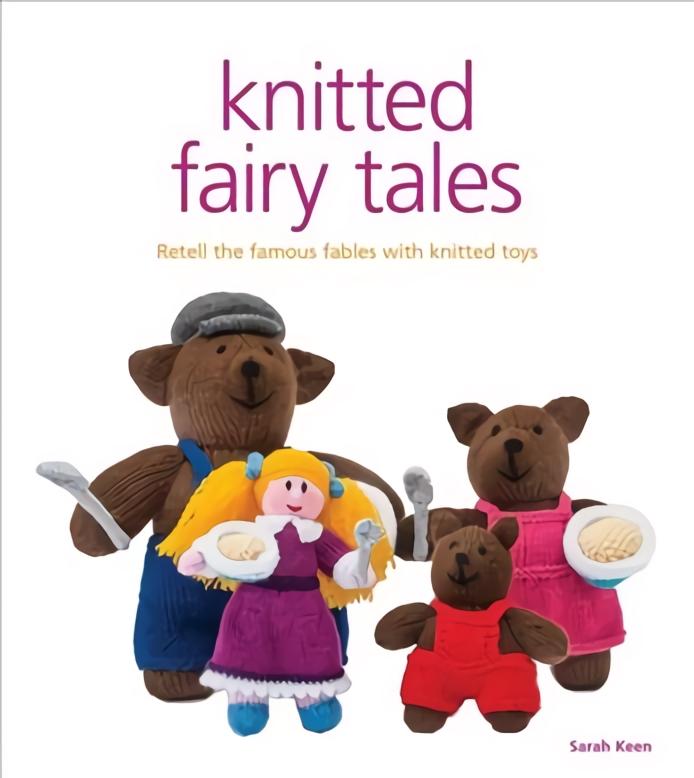
This title features 15 fun and fabulous characters to knit and recreate some of the most well-loved fairy tales, including Cinderella and Puss in Boots. It includes clearly presented, easy-to-follow knitting patterns and a comprehensive illustrated techniques section. It features plenty of colour photographs to guide the reader along. Be spellbound by this beautiful book full of fun and fabulous characters to knit and recreate 15 of the well-loved fairy tales, including Cinderella, Hansel and Gretel, Puss in Boots, Snow White and the Seven Dwarfs and Little Red Riding Hood. Made from washable, readily available DK yarn, these knitted characters will bring the fairy tales to life for young children, encouraging imaginative play and conversation. You will find all the information you need on techniques, tools and materials, plus there will be plenty of photographs of each character from different angles so you can clearly see how your knitting should look as you work your way through the projects. Autorid: S Keen
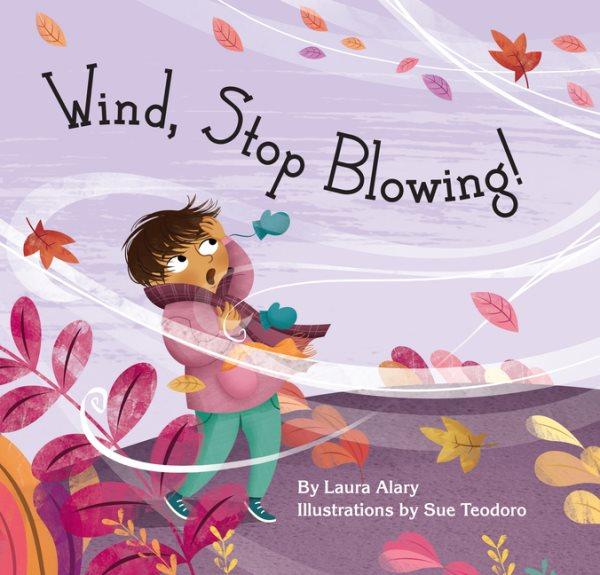
Benjamin Snooks despises the wind: it makes a mess of things, disturbs his life, and upsets his plans, but when he tries to stop it from blowing, he discovers making peace with it is a wiser path. Wind, stop blowing! shouts Benjamin Snooks. Until one day the wind answers back in this playful and light-hearted story about flexibility and accepting change.Benjamin Snooks does not simply dislike the wind. He despises and detests it. From the time he was a baby and sand blew in his face, he decided that the wind was nothing but trouble: it makes a mess of things, disturbs his life, and upsets his plans. But when Benjamin Snooks tries to stop the wind from blowingor at least escape ithe discovers that making peace with it is a wiser path.Wind, Stop Blowing! reveals the problems we create when we cling too tightly to our expectations of how things ought to be. It gently invites children to consider better ways to respond to lifes small setbacks and changes. Autorid: Laura Alary, Sue Teodoro
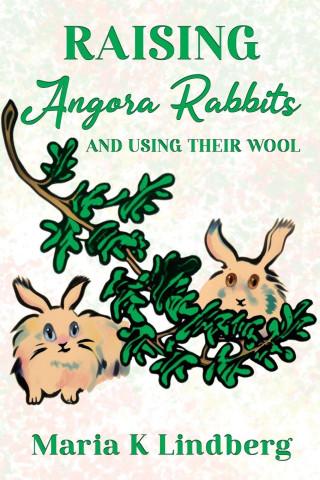
Whether you're a curious beginner or a lifelong fiber artist, Raising Angora Rabbits and Using Their Wool offers a warm, practical, and personal look into the charming world of angora rabbits. Maria K. Lindberg brings decades of hands-on experience to this part how-to, part memoir, guiding readers through everything from choosing the right breed to caring for your rabbits, harvesting their luxurious wool, and crafting it into beautiful, wearable art.With over 100 full-color photos and illustrations, this book provides detailed, beginner-friendly instruction on spinning, felting, and fiber preparation, all while sharing heartwarming (and sometimes hilarious) stories of rabbit antics and rural life. Alongside expert tips, readers will find encouragement, inspiration, and the gentle reminder that fiber crafting is as much about connection and patience as it is about skill.Perfect for homesteaders, hobby farmers, 4-H families, and fiber lovers of all kinds, this book celebrates not just the rabbits and their wool, but the lifestyle that comes with raising them.
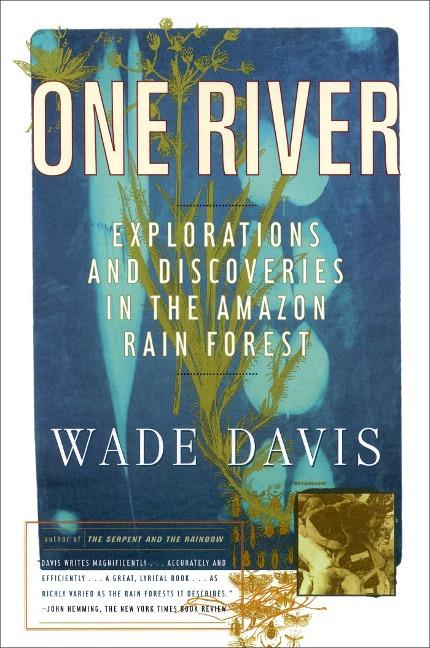
The story of two generations of scientific explorers in South America—Richard Evans Schultes and his protégé Wade Davis—an epic tale of adventure and a compelling work of natural history.In 1941, Professor Richard Evan Schultes took a leave from Harvard and disappeared into the Amazon, where he spent the next twelve years mapping uncharted rivers and living among dozens of Indian tribes. In the 1970s, he sent two prize students, Tim Plowman and Wade Davis, to follow in his footsteps and unveil the botanical secrets of coca, the notorious source of cocaine, a sacred plant known to the Inca as the Divine Leaf of Immortality.A stunning account of adventure and discovery, betrayal and destruction, One River is a story of two generations of explorers drawn together by the transcendent knowledge of Indian peoples, the visionary realms of the shaman, and the extraordinary plants that sustain all life in a forest that once stood immense and inviolable.
My Inner Doggie Is Growling A Doggone Magical Adventure to Name & Tame Big Anger Welcome! By selecting this fun, interactive book, you have joined a movement of heart-centered grown-ups committed to making the world a kinder, safer place. Children face increasing stress and aggression, sometimes leading to self-harm or harming others. Inspired by my students, I was moved to write My Inner Doggie Is Growling (the first in a series) to reverse this worrisome trend by starting with a misunderstood emotion: anger. Angry kids need help, and so do their grown-ups! Drawing on my experiences as a parent, teacher, school psychologist and child trauma specialist, I share unique secrets for taming that "inner doggie" that is sometimes acted out; and sometimes stifled. Anger isn't bad. It's necessary for setting boundaries. As a Somatic Experiencing® therapist*, I've seen how discovering the physical sensations linked to emotions fosters self-awareness. Using crayons or markers to map a variety of feelings on the "Inner Doggie" and "Gingerbread Cookie Kid" allow kids to notice their nervous and sensory-motor systems' comfortable and uncomfortable sensations. Drawing and coloring are easy ways to express what words cannot. These activities offer non¿threatening access to the body's story, where stress and anger live. By exploring, discovering, befriending and naming the physical sensations underlying charged emotions, kids develop regulation skills. Aunt Nellie provides wise and magical coloring guidelines that include both internal resources and challenges. When kids share their sensation and emotion maps with a caring adult, they are empowered to settle, ground and find calm in the eye of the storm. Self-awareness emerges during the process of drawing, which causes a pause long enough for kids to sense the fire in the belly and tense muscles ready to fight-thus interrupting a cycle of unconscious impulsive behavior. With mindful consciousness kids grow in emotional maturity rather than "flipping their lids," as Dr. Dan Siegel calls it! This book is perfect for families, educators, and therapeutic settings. With Love & Appreciation, Maggie Kline
This book aims to provide a summary of the current archaeological framework for investigations of the Modern Age in the Basque Country, and to make proposals for developing these practices in the future. Post-medieval archaeology is currently going through a critical phase of consolidation and disciplinary redefinition across Europe, where mere proposals or ambitions are becoming tangible scientific and disciplinary realities. This renovation is most evident in Southern Europe, where, until recently, these studies have been treated as somewhat marginal. The convergence of new actors and disciplines (historical archaeology, archaeology of the post-medieval centuries, professional archaeology, ethnoarchaeology or archaeological sciences), the promotion of new patrimonialization initiatives, and the creation of new action frameworks as a result of the deep economic crisis of the years 2007-2008 are some of the factors that have shaped current approaches to the archaeology of the Modern Age. Focussing on archaeological studies of the Modern Age located in the Basque Country, Arqueología de la Edad Moderna en el País Vasco y su entorno recognises the main themes investigated (cities, rural spaces, funeral spaces, consumption and production, communications systems, maritime archaeology), detects some of the strengths and weaknesses, and proposes new lines of action and disciplinary consolidation. In short, this volume aims to provide a summary of the current archaeological framework for investigations of the Modern Age in the Basque Country, and to make proposals for developing these practices in the future. Autorid: Idoia Grau Sologestoa, Juan Antonio Quirós Castillo
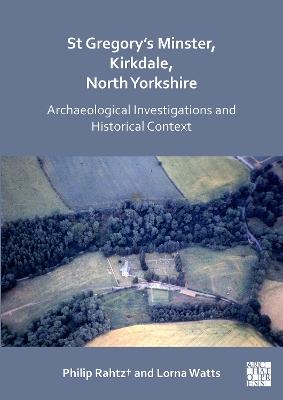
The result of c. 20 years of work on and around the church of St Gregory's Minster, Kirkdale, North Yorkshire, this work is concerned primarily with the 8th century onwards, but also extends the time-period of this isolated site, particularly for the post-Roman to middle Saxon period, but also as an earlier probably religious landscape. St Gregory's Minster, Kirkdale, North Yorkshire: Archaeological Investigations and Historical Context is the result of circa 20 years of work on and around the church of St Gregory's Minster, Kirkdale, North Yorkshire. It is primarily concerned with material relating to approximately the late 8th century onwards, detailing the fabric as well as excavations around the church and in the fields immediately adjacent. Associated material culture was sparse but reflected high-status. It is open to doubt whether any building was identified to equate with the earliest Anglo-Saxon artefacts, although these are considered too numerous to have been introduced to the site subsequently. A succession of three church buildings are linked to a putative focus on the north side of the church, to which, it is argued, pre-Conquest elite burials were orientated. A pre-Conquest 'building site' to the north of the churchyard overlays an area of earlier burials.Against the background of this data, it is argued that the area of Kirkdale may have been linked to the neighbouring Roman villa of Beadlam. The church's dedication to St Gregory is suggested to be important in understanding the milieu of its Christian origins and to its regional significance at one stage of its development. A possible evolution in the character of lordship is explored, from circumstances marked only by high-status objects to conditions that can be linked more securely to a secular family associated with the nearby town of Kirkbymoorside. Finally, Kirkdale's position in the landscape is considered and an explanation sought for the long use of this non-settlement locale. Autorid: Philip Rahtz, Lorna Watts
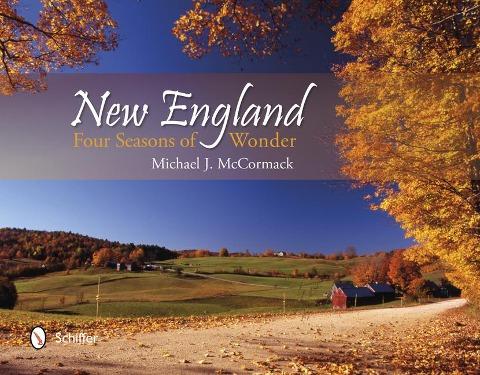
New England is a land of evocative grandeur, defined by its remarkably varied terrain, history, culture, and renowned weather. This book binds these diverse elements together, highlighting the regions spectacular four season climate. As seen in over 380 gorgeous color photos from the lofty summit of New Hampshires Mount Washington to the legendary Green Monster of Bostons Fenway Park and from the dreamy shores of Maines Acadia National Park to the leafy Litchfield Hills of Connecticut the four seasons of New England are explored from both well known and out of the way locales within this famed six state corner of the northeastern United States. Whether it is reveling in the glory of a setting summer sun over a Cape Cod beach or stepping out of the moment with a lighted Christmas celebration in Quincy Market, New England and its distinctive seasonal changes captured here will stir the imagination. By the time you are done, you will understand why this is known as one of the worlds most beautiful regions.
Filled with 13 vintage postcards from the early 1900s through the 1940s depicting iconic New York City landmarks, this 12-month calendar brings classic Gotham to life for art lovers, museum visitors, and armchair travelers. Explore the lush lawns of Central Park. Visit legendary sites such as the Brooklyn Bridge and the Statue of Liberty. And revel in the famed nightlife of Times Square and Rockefeller Center. All the postcards included are from the world-renowned collection of The Metropolitan Museum of Art. Features include: 7 x 7 (7 x 14 open)a great size for small spaces Printed on FSC® certified paper with soy-based ink Plastic-free packaging Planning spread for SeptemberDecember 2026 Spans JanuaryDecember 2027 Official major world holidays and observances Moon phases, based on Universal Time Information about each work of art shown Autorid: The Metropolitan Museum Of Art