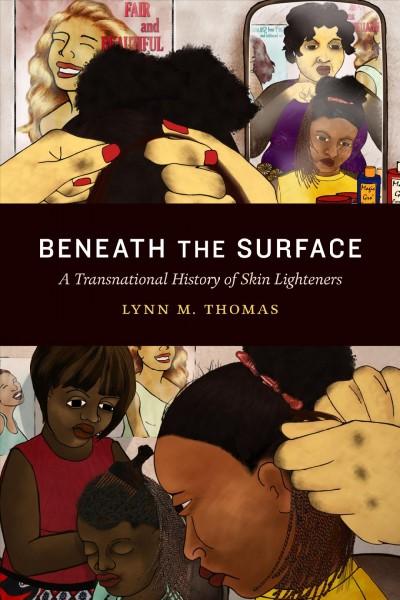
"BENEATH THE SURFACE explores the use of skin lighteners within South Africa, and across Africa and the diaspora. While skin color has been a marker of difference from the precolonial era to the post-Apartheid, postcolonial present, Lynn Thomas emphasizes the varied ways in which differences in skin color, tone, and texture became tied to regimes of value in white-dominant societies. However, Thomas does not dismiss skin lighteners as merely the adherence to an imposed valuation of white skin; instead, she tracks the remarkable development of social and political formations that shaped the appeal of a social object that lightened skin. Thomas builds a framework for assessing objects as part of an aesthetic and technological infrastructure that works through and with consumer capitalism to generate new forms of aesthetic beauty and establish skin tone as a marker for respectability and modernity transnationally. Through showcasing these multivocal desires for lighter skin, Thomas reintroduces the context of black entrepreneurship and consumerism within both national and international markets and creates space for understanding skin lightening as a productive site for both political and aesthetic struggle against a global racial order."-- Provided by publisher. Lynn M. Thomas constructs a transnational history of skin lighteners in South Africa and beyond, theorizing skin and skin color as a site for antiracist struggle and lighteners as a technology of visibility that both challenges and entrenches racial and gender hierarchies. For more than a century, skin lighteners have been a ubiquitous feature of global popular culture&;embraced by consumers even as they were fiercely opposed by medical professionals, consumer health advocates, and antiracist thinkers and activists. In Beneath the Surface, Lynn M. Thomas constructs a transnational history of skin lighteners in South Africa and beyond. Analyzing a wide range of archival, popular culture, and oral history sources, Thomas traces the changing meanings of skin color from precolonial times to the postcolonial present. From indigenous skin-brightening practices and the rapid spread of lighteners in South African consumer culture during the 1940s and 1950s to the growth of a billion-dollar global lightener industry, Thomas shows how the use of skin lighteners and experiences of skin color have been shaped by slavery, colonialism, and segregation as well as by consumer capitalism, visual media, notions of beauty, and protest politics. In teasing out lighteners&; layered history, Thomas theorizes skin as a site for antiracist struggle and lighteners as a technology of visibility that both challenges and entrenches racial and gender hierarchies. Autorid: Lynn M. Thomas